


Request Quote
(Ships tomorrow)
Phoenix Contact 1877504 Terminal Block - Equivalent & Substitute Parts
Part Overview
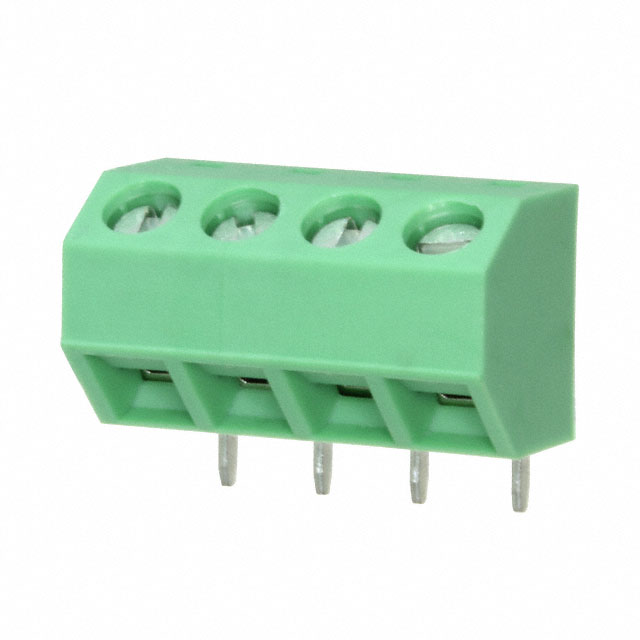
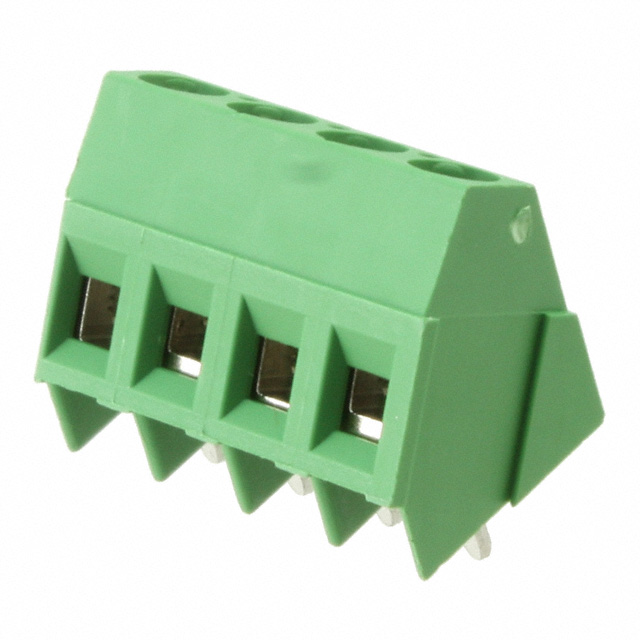
The Phoenix Contact 1877504 is a 4-position wire-to-board terminal block from the COMBICON SMKDSNF series, designed for PCB mounting with a 55° mating angle and 5.08mm pitch. This component is currently active in production and widely used in industrial control and power distribution applications. Substitute parts may be required due to supply constraints, design revisions, or application-specific performance requirements that demand alternative electrical or mechanical characteristics.
Substiute Parts
Key Parameters
| Parameter | Value |
|---|---|
| Manufacturer Part Number | 1877504 |
| Manufacturer | Phoenix Contact |
| Series | COMBICON SMKDSNF |
| Positions Per Level | 4 |
| Pitch | 0.200" (5.08mm) |
| Mating Orientation | 55° (125°) Angle with Board |
| Current Rating | 10 A |
| Voltage Rating | 300 V |
| Wire Gauge | 14-30 AWG |
| Mounting Type | Through Hole |
| Wire Termination | Screw - Rising Cage Clamp |
| Housing Material | Polyamide (PA), Nylon |
| Screw Thread | M3 |
| Torque - Screw | 0.5-0.6 Nm (4.4-5.3 Lb-In) |
| RoHS Status | RoHS Compliant |
| Moisture Sensitivity Level | 1 (Unlimited) |
| Product Status | Active |
Substitute Part Grouping Explanation
The TE Connectivity AMP Connectors 282847-4 qualifies as a substitute for the Phoenix Contact 1877504 based on the following critical parameters:
Matching Parameters:
- 4 positions per level
- 0.200" (5.08mm) pitch spacing
- 300 V voltage rating
- Through-hole PCB mounting
- Screw-based rising cage clamp termination
- M3 screw thread
- RoHS compliance
- MSL 1 rating
Differing Parameters:
- Mating angle: 35° (145°) versus 55° (125°)
- Current rating: 17.5 A versus 10 A
- Wire gauge range: 12-30 AWG versus 14-30 AWG
- Screw torque: 0.79 Nm versus 0.5-0.6 Nm
- Housing material: Polyamide (PA66) Nylon 6/6 versus Polyamide (PA) Nylon
- Contact plating: Brass - Tin Plated (substitute) versus unspecified (main part)
Substitution is valid when the application permits the alternative mating angle and can accommodate the higher current capacity and torque specifications of the substitute part.
Parameter Comparison
| Parameter | Phoenix Contact 1877504 | TE Connectivity 282847-4 |
|---|---|---|
| Positions Per Level | 4 | 4 |
| Pitch | 0.200" (5.08mm) | 0.200" (5.08mm) |
| Mating Orientation | 55° (125°) Angle with Board | 35° (145°) Angle with Board |
| Current Rating | 10 A | 17.5 A |
| Voltage Rating | 300 V | 300 V |
| Wire Gauge | 14-30 AWG | 12-30 AWG |
| Mounting Type | Through Hole | Through Hole |
| Wire Termination | Screw - Rising Cage Clamp | Screw - Rising Cage Clamp |
| Screw Thread | M3 | M3 |
| Torque - Screw | 0.5-0.6 Nm (4.4-5.3 Lb-In) | 0.79 Nm (7.0 Lb-In) |
| RoHS Status | RoHS Compliant | ROHS3 Compliant |
| Moisture Sensitivity Level | 1 (Unlimited) | 1 (Unlimited) |
| Product Status | Active | Active |
Engineering Selection Recommendations
Both the Phoenix Contact 1877504 and TE Connectivity 282847-4 maintain active product status and meet RoHS compliance requirements. The TE Connectivity part carries ROHS3 certification, indicating compliance with the most current regulatory standards.
Selection between these parts depends on mechanical fit and electrical requirements. The 55° mating angle of the Phoenix Contact part is fixed and cannot be altered; applications requiring this specific angle must use the original part. The TE Connectivity substitute offers a 35° mating angle, which represents a significant geometric difference and requires PCB layout compatibility verification.
The TE Connectivity 282847-4 provides higher current capacity (17.5 A versus 10 A) and accepts finer wire gauges (12 AWG minimum versus 14 AWG minimum). These characteristics make it suitable for applications with higher power demands. The increased screw torque specification (0.79 Nm) reflects the enhanced mechanical design of the substitute part.
Both parts utilize M3 screw threads and rising cage clamp termination, ensuring compatibility with standard installation procedures and tooling.
Frequently Asked Questions (FAQ)
Q: Can the TE Connectivity 282847-4 be used as a direct replacement for the Phoenix Contact 1877504?
A: Direct replacement is not possible due to the different mating angles (35° versus 55°). PCB connector receptacles are designed for specific mating angles. Physical interference or poor mating contact will result if the angle is not compatible with the mating connector. Verify that your mating connector accepts a 35° angle before substituting.
Q: What is the significance of the different current ratings?
A: The Phoenix Contact part is rated for 10 A maximum current, while the TE Connectivity part is rated for 17.5 A. The substitute part can safely handle higher current loads. If your application requires currents exceeding 10 A, the TE Connectivity part is suitable. If your application operates below 10 A, both parts are acceptable from a current perspective.
Q: Are there wire gauge compatibility differences?
A: The Phoenix Contact part accepts 14-30 AWG wire, while the TE Connectivity part accepts 12-30 AWG wire. The TE Connectivity part accommodates larger diameter conductors (12 AWG). If your design uses 12 or 13 AWG wire, only the TE Connectivity part is compatible. For 14-30 AWG wire, both parts are compatible.
Q: What does the different screw torque specification mean?
A: The Phoenix Contact part requires 0.5-0.6 Nm torque, while the TE Connectivity part requires 0.79 Nm torque. These specifications define the tightening force for the terminal screw. Using incorrect torque can result in loose connections or wire damage. Installation procedures must follow the specific torque value for each part.
Q: Are both parts RoHS compliant?
A: Yes. The Phoenix Contact part is RoHS Compliant, and the TE Connectivity part is ROHS3 Compliant. ROHS3 represents the current regulatory standard. Both parts meet environmental compliance requirements for restricted substance use.
Q: What is the MSL rating and why is it the same for both parts?
A: MSL (Moisture Sensitivity Level) 1 indicates unlimited shelf life with no special moisture control requirements during storage or handling. Both parts carry this rating, meaning standard storage conditions are acceptable for both components.
Alternative Parts

SJ6012L2TP
Littelfuse Inc.
6 Alternative Parts

JMK107BBJ476MA-RE
Taiyo Yuden
10 Alternative Parts

GMK107BBJ475MA-T
Taiyo Yuden
5 Alternative Parts
SJ6020N2ARP
Littelfuse Inc.
3 Alternative Parts
SJ6025R2ATP
Littelfuse Inc.
4 Alternative Parts

2474-05L
API Delevan Inc.
1 Alternative Parts

4590R-684K
API Delevan Inc.
1 Alternative Parts

CM6560R-334
API Delevan Inc.
1 Alternative Parts

CM6460-104
API Delevan Inc.
1 Alternative Parts

5526-12
API Delevan Inc.
1 Alternative Parts