



Request Quote
(Ships tomorrow)
Amphenol RF 172196 N Type Coaxial Connector Receptacle Equivalent & Substitute Parts
Part Overview
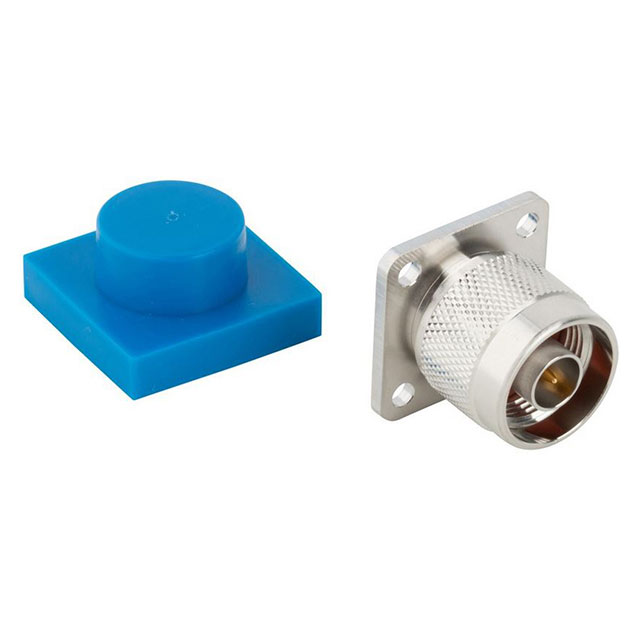
The Amphenol RF 172196 is an N Type Connector Receptacle with male pin configuration, designed for 50 Ohm RF applications. This panel mount component features solder tab termination and operates across frequencies up to 11 GHz. The part is Active in product status and maintains full RoHS compliance. Substitute parts are identified to provide alternative termination options while maintaining core electrical and mechanical specifications for applications requiring different solder connection methods.
Substiute Parts
Key Parameters
| Parameter | Value |
|---|---|
| Connector Style | N Type |
| Connector Type | Receptacle, Male Pin |
| Impedance | 50 Ohms |
| Mounting Type | Panel Mount |
| Mounting Feature | Flange |
| Fastening Type | Threaded |
| Frequency - Max | 11 GHz |
| Number of Ports | 1 |
| Operating Temperature | -65°C ~ 165°C |
| Voltage Rating | 1500 V |
| Mating Cycles | 500 |
| Insertion Loss | 0.15 dB |
Substitute Part Grouping Explanation
Substitution between Amphenol RF 172196 and 172118 is based on electrical and mechanical parameter equivalence. Both parts maintain identical specifications across connector style (N Type), connector type (Receptacle, Male Pin), impedance (50 Ohms), mounting configuration (Panel Mount with Flange), fastening method (Threaded), frequency rating (11 GHz maximum), operating temperature range (-65°C ~ 165°C), voltage rating (1500 V), mating cycles (500), and insertion loss (0.15 dB).
The primary distinction between these parts is the contact termination method: the 172196 uses Solder Tab termination, while the 172118 uses Solder Cup termination. Both termination types are solder-based shield termination methods suitable for different PCB assembly and cable connection requirements. All other electrical parameters, material specifications (Brass body with Gold-plated center contact, PTFE dielectric), and performance characteristics remain equivalent.
Parameter Comparison
| Parameter | 172196 | 172118 | Match Status |
|---|---|---|---|
| Manufacturer | Amphenol RF | Amphenol RF | Identical |
| Connector Style | N Type | N Type | Identical |
| Connector Type | Receptacle, Male Pin | Receptacle, Male Pin | Identical |
| Contact Termination | Solder Tab | Solder Cup | Different |
| Shield Termination | Solder | Solder | Identical |
| Impedance | 50 Ohms | 50 Ohms | Identical |
| Mounting Type | Panel Mount | Panel Mount | Identical |
| Mounting Feature | Flange | Flange | Identical |
| Fastening Type | Threaded | Threaded | Identical |
| Frequency - Max | 11 GHz | 11 GHz | Identical |
| Number of Ports | 1 | 1 | Identical |
| Operating Temperature | -65°C ~ 165°C | -65°C ~ 165°C | Identical |
| Voltage Rating | 1500 V | 1500 V | Identical |
| Mating Cycles | 500 | 500 | Identical |
| Insertion Loss | 0.15 dB | 0.15 dB | Identical |
| Center Contact Material | Brass | Brass | Identical |
| Body Material | Brass | Brass | Identical |
| Body Finish | White Bronze | White Bronze | Identical |
| Center Contact Plating | Gold | Gold | Identical |
| Dielectric Material | Polytetrafluoroethylene (PTFE) | Polytetrafluoroethylene (PTFE) | Identical |
| Product Status | Active | Active | Identical |
| RoHS Status | RoHS Compliant | ROHS3 Compliant | Both Compliant |
| Moisture Sensitivity Level (MSL) | 1 (Unlimited) | 1 (Unlimited) | Identical |
| ECCN | EAR99 | EAR99 | Identical |
| HTSUS | 8536.69.4010 | 8536.69.4010 | Identical |
Engineering Selection Recommendations
Both the Amphenol RF 172196 and 172118 are Active products with full regulatory compliance. The 172196 carries RoHS Compliant certification, while the 172118 carries ROHS3 Compliant certification, indicating enhanced compliance standards for the substitute part. The 172118 additionally carries REACH Affected status.
Selection between these parts is determined by termination method requirements. The 172196 with Solder Tab termination is suitable for applications requiring tab-based solder connections to PCB pads. The 172118 with Solder Cup termination is suitable for applications requiring cup-based solder connections, typically for cable or wire termination. Both parts deliver identical electrical performance, frequency response, impedance characteristics, and environmental operating specifications.
Current inventory availability shows 922 pieces of the 172196 and 1406 pieces of the 172118 in stock as new original components.
Frequently Asked Questions (FAQ)
Q: Can the 172196 and 172118 be used interchangeably in all applications?
A: These parts are electrically and mechanically equivalent across all RF performance parameters, impedance, frequency rating, and environmental specifications. Interchangeability depends on the specific termination method required by the application. The Solder Tab termination of the 172196 and Solder Cup termination of the 172118 serve different PCB assembly and connection methodologies. Selection must be based on the assembly process and connection interface of the target application.
Q: What is the difference between Solder Tab and Solder Cup termination?
A: Solder Tab termination features a flat tab extending from the connector body for direct solder connection to PCB pads or traces. Solder Cup termination features a cup-shaped cavity designed to accept wire or cable for solder connection. Both are solder-based termination methods; the choice depends on whether the connection is to a PCB pad or to a cable conductor.
Q: Are both parts RoHS compliant?
A: Yes. The 172196 is RoHS Compliant. The 172118 is ROHS3 Compliant, which represents a more recent and stringent compliance standard. Both parts meet RoHS requirements for hazardous substance restrictions.
Q: What is the maximum frequency rating for these connectors?
A: Both the 172196 and 172118 are rated for maximum frequency operation up to 11 GHz, maintaining 50 Ohm impedance across this frequency range with 0.15 dB insertion loss.
Q: What is the operating temperature range?
A: Both parts operate across the temperature range of -65°C to 165°C, suitable for industrial and high-temperature RF applications.
Q: How many mating cycles are these connectors rated for?
A: Both the 172196 and 172118 are rated for 500 mating cycles, indicating the expected number of connect/disconnect operations before performance degradation.
Q: What materials are used in the connector construction?
A: Both parts feature Brass body material with White Bronze finish, Brass center contact material with Gold plating, and Polytetrafluoroethylene (PTFE) dielectric material. These material specifications are identical between the two parts.
Q: What is the voltage rating?
A: Both connectors are rated for 1500 V, suitable for high-voltage RF applications within the specified frequency range.
Q: Is the 172118 a direct replacement for the 172196?
A: The 172118 is a functional equivalent with identical electrical and mechanical specifications except for the contact termination method. It serves as a substitute when Solder Cup termination is required instead of Solder Tab termination. PCB layout and assembly process compatibility must be confirmed before substitution.
Alternative Parts

SJ6012L2TP
Littelfuse Inc.
6 Alternative Parts

JMK107BBJ476MA-RE
Taiyo Yuden
10 Alternative Parts

GMK107BBJ475MA-T
Taiyo Yuden
5 Alternative Parts
SJ6020N2ARP
Littelfuse Inc.
3 Alternative Parts
SJ6025R2ATP
Littelfuse Inc.
4 Alternative Parts

2474-05L
API Delevan Inc.
1 Alternative Parts

4590R-684K
API Delevan Inc.
1 Alternative Parts

CM6560R-334
API Delevan Inc.
1 Alternative Parts

CM6460-104
API Delevan Inc.
1 Alternative Parts

5526-12
API Delevan Inc.
1 Alternative Parts