



Request Quote
(Ships tomorrow)
16TTS12 SCR Thyristor Equivalent & Substitute Parts
Part Overview
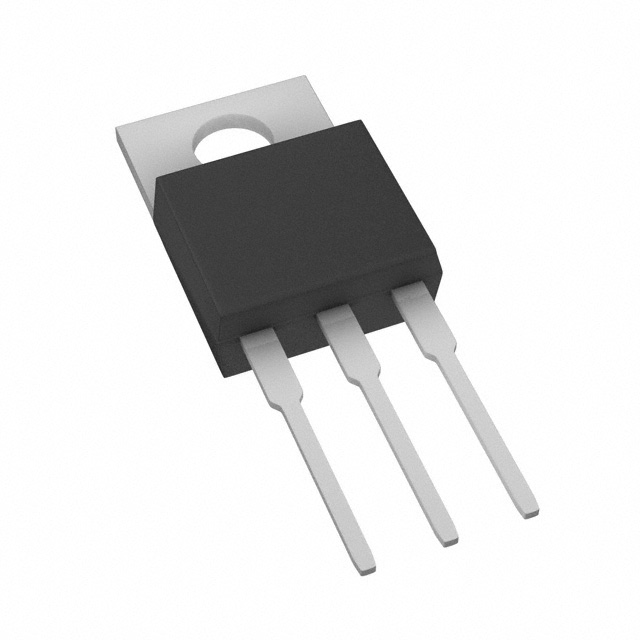
The 16TTS12 is a 1.2 kV, 16 A standard recovery silicon-controlled rectifier (SCR) manufactured by Vishay General Semiconductor - Diodes Division in a TO-220-3 through-hole package. This component is classified as obsolete, making identification of functionally equivalent alternatives necessary for ongoing design support and procurement continuity. The 16TTS12 serves applications requiring medium-voltage thyristor switching with standard recovery characteristics and through-hole mounting compatibility.
Substiute Parts
Key Parameters
| Parameter | Value | Unit |
|---|---|---|
| Voltage - Off State | 1.2 | kV |
| Current - On State (It (RMS)) (Max) | 16 | A |
| Voltage - Gate Trigger (Vgt) (Max) | 2 | V |
| Current - Gate Trigger (Igt) (Max) | 60 | mA |
| Voltage - On State (Vtm) (Max) | 1.4 | V |
| Current - Hold (Ih) (Max) | 100 | mA |
| Operating Temperature Range | -40 to 125 | °C |
| Package / Case | TO-220-3 | — |
| Mounting Type | Through Hole | — |
| SCR Type | Standard Recovery | — |
Substitute Part Grouping Explanation
Substitution of the 16TTS12 is determined by strict equivalence across the following critical parameters:
- Voltage Rating (Off State): Must equal 1.2 kV to maintain circuit voltage protection margins
- Current Rating (It (RMS)): Must meet or exceed 16 A to handle design load requirements
- Gate Trigger Characteristics: Vgt and Igt must remain within compatible ranges to preserve gate drive circuit design
- On-State Voltage (Vtm): Must be comparable to minimize thermal and efficiency changes
- Package and Mounting: TO-220-3 through-hole configuration is mandatory for mechanical and thermal interface compatibility
- SCR Type: Standard recovery classification ensures switching behavior consistency
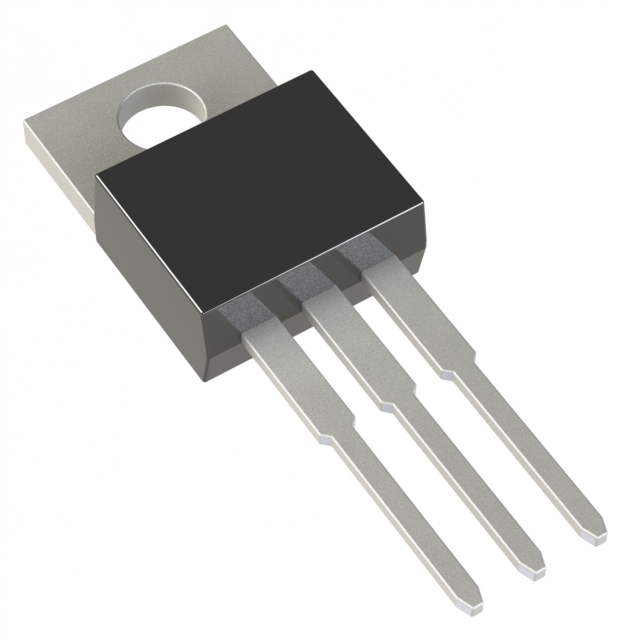
The identified substitute parts—CS19-12HO1 (IXYS) and SCT1225B (SMC Diode Solutions)—maintain the 1.2 kV voltage class and TO-220-3 package while offering equal or superior current ratings and gate trigger performance.
Parameter Comparison
| Parameter | 16TTS12 (Vishay) | CS19-12HO1 (IXYS) | SCT1225B (SMC) | Unit |
|---|---|---|---|---|
| Voltage - Off State | 1.2 | 1.2 | 1.2 | kV |
| Current - On State (It (RMS)) (Max) | 16 | 29 | 25 | A |
| Voltage - Gate Trigger (Vgt) (Max) | 2 | 1.5 | 1.5 | V |
| Current - Gate Trigger (Igt) (Max) | 60 | 28 | 40 | mA |
| Voltage - On State (Vtm) (Max) | 1.4 | 1.6 | 1.6 | V |
| Current - Hold (Ih) (Max) | 100 | 50 | 120 | mA |
| Operating Temperature Range | -40 to 125 | -40 to 125 | -40 to 125 | °C |
| Package / Case | TO-220-3 | TO-220-3 | TO-220-3 | — |
| SCR Type | Standard Recovery | Standard Recovery | Standard Recovery | — |
| Product Status | Obsolete | Active | Obsolete | — |
| RoHS Status | Non-compliant | ROHS3 Compliant | ROHS3 Compliant | — |
Engineering Selection Recommendations
CS19-12HO1 (IXYS) is the primary substitute for the 16TTS12. This part maintains the 1.2 kV voltage class and TO-220-3 package while providing superior current handling (29 A vs. 16 A). The CS19-12HO1 carries active product status and ROHS3 compliance, ensuring long-term availability and regulatory alignment. Gate trigger requirements are more favorable (Vgt 1.5 V, Igt 28 mA), reducing gate drive circuit stress. This part is suitable for direct replacement in applications where the 16 A current rating is adequate or where higher current margin is beneficial.
SCT1225B (SMC Diode Solutions) serves as a secondary substitute, offering 25 A current rating with the same 1.2 kV voltage class and TO-220-3 package. While classified as obsolete, this part provides ROHS3 compliance and intermediate current performance between the original and the IXYS alternative. The SCT1225B may be selected where inventory availability or cost considerations favor this option, provided long-term supply is verified.
Both substitutes maintain electrical and mechanical compatibility with the 16TTS12 across all critical parameters. Selection between CS19-12HO1 and SCT1225B should prioritize product status, supply chain continuity, and application current margin requirements.
Frequently Asked Questions (FAQ)
Q: Can the CS19-12HO1 directly replace the 16TTS12 in existing designs?
A: Yes. Both parts share the 1.2 kV voltage rating, TO-220-3 package, and standard recovery SCR classification. The CS19-12HO1 provides higher current capacity (29 A vs. 16 A), lower gate trigger voltage (1.5 V vs. 2 V), and lower gate trigger current (28 mA vs. 60 mA). These characteristics are compatible with 16TTS12 circuit designs and do not require modification.
Q: What is the significance of the gate trigger parameters (Vgt and Igt)?
A: Gate trigger voltage (Vgt) and gate trigger current (Igt) determine the signal level required to turn the SCR on. Lower values reduce gate drive circuit complexity and power consumption. The CS19-12HO1 and SCT1225B both feature lower Vgt (1.5 V) compared to the 16TTS12 (2 V), simplifying gate drive design while maintaining compatibility.
Q: Why is the TO-220-3 package critical for substitution?
A: The TO-220-3 package defines the physical footprint, pin configuration, and thermal interface. All three parts use this package, ensuring mechanical fit on printed circuit boards and compatibility with existing heatsinking solutions. Package mismatch would require board redesign and thermal re-analysis.
Q: What does "standard recovery" SCR type mean for substitution?
A: Standard recovery refers to the turn-off switching characteristic. All three parts use this classification, ensuring consistent switching behavior and recovery time performance. Substitution with different SCR types (such as fast recovery) would alter circuit timing and require design verification.
Q: How do the current ratings affect part selection?
A: The 16TTS12 is rated for 16 A (RMS). The CS19-12HO1 (29 A) and SCT1225B (25 A) both exceed this rating, providing design margin and thermal headroom. Selection should verify that the application current does not exceed the chosen substitute's rating and that thermal management remains adequate.
Q: What is the impact of RoHS compliance on substitution?
A: The 16TTS12 is RoHS non-compliant, while both CS19-12HO1 and SCT1225B are ROHS3 compliant. For new designs or applications subject to RoHS regulations, the compliant substitutes are required. For legacy systems, compliance status may not affect electrical performance but may influence procurement and supply chain decisions.
Q: Are there differences in hold current (Ih) between these parts?
A: Yes. The 16TTS12 has Ih of 100 mA, the CS19-12HO1 has 50 mA, and the SCT1225B has 120 mA. Hold current is the minimum current required to keep the SCR conducting after gate signal removal. Lower hold current (CS19-12HO1) may simplify circuit design, while higher hold current (SCT1225B) requires higher load current to maintain conduction. Circuit design should verify compatibility with the chosen substitute's hold current specification.
Alternative Parts

SJ6012L2TP
Littelfuse Inc.
6 Alternative Parts

JMK107BBJ476MA-RE
Taiyo Yuden
10 Alternative Parts

GMK107BBJ475MA-T
Taiyo Yuden
5 Alternative Parts
SJ6020N2ARP
Littelfuse Inc.
3 Alternative Parts
SJ6025R2ATP
Littelfuse Inc.
4 Alternative Parts

2474-05L
API Delevan Inc.
1 Alternative Parts

4590R-684K
API Delevan Inc.
1 Alternative Parts

CM6560R-334
API Delevan Inc.
1 Alternative Parts

CM6460-104
API Delevan Inc.
1 Alternative Parts

5526-12
API Delevan Inc.
1 Alternative Parts