


Request Quote
(Ships tomorrow)
1210HS-331EKFS Equivalent & Substitute Parts Reference
Part Overview
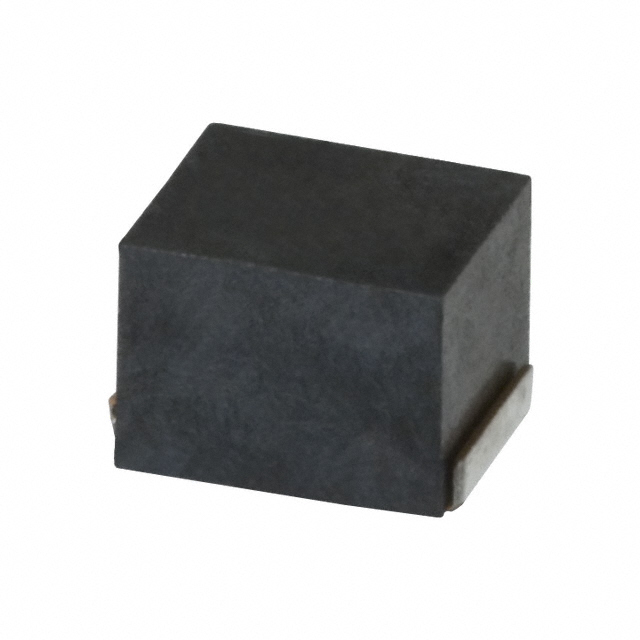
The 1210HS-331EKFS is a 330 nH unshielded drum core wirewound inductor manufactured by Delta Electronics/Components. This surface mount component is rated for 530 mA continuous current with a DC resistance of 250 mOhm and operates across the temperature range of -40°C to 85°C. The part is classified as obsolete, necessitating identification of active equivalent alternatives for ongoing design requirements and procurement needs.
Substiute Parts
Key Parameters
| Parameter | Value |
|---|---|
| Inductance | 330 nH |
| Inductance Tolerance | ±10% |
| Current Rating | 530 mA |
| DC Resistance (DCR) | 250 mOhm |
| Core Type | Ferrite Drum Core |
| Shielding | Unshielded |
| Package / Case | 1210 (3225 Metric) |
| Mounting Type | Surface Mount |
| Operating Temperature Range | -40°C to 85°C |
| Q @ 25.2 MHz | 35 |
| Self Resonant Frequency | 400 MHz |
Substitute Part Grouping Explanation
Substitution of the 1210HS-331EKFS is determined by the following critical parameters:
Inductance Value: All substitute parts must maintain 330 nH inductance to ensure circuit functionality.
Package / Case: All substitutes must use the 1210 (3225 Metric) surface mount package to maintain PCB layout compatibility and mechanical fit.
Core Material & Type: All substitutes utilize ferrite drum core construction, maintaining electromagnetic performance characteristics.
Shielding Configuration: All substitutes are unshielded, consistent with the original design.
Current Rating Compatibility: Substitute parts must support the application's current requirements. The original part is rated for 530 mA; substitute parts rated at 450 mA represent a reduction in current capacity and require circuit-level evaluation.
DC Resistance: Substitute parts with higher DCR values (400 mOhm vs. 250 mOhm) result in increased power dissipation and must be assessed for thermal performance impact.
Operating Temperature Range: Substitute parts rated to 105°C provide extended thermal operating margin compared to the original 85°C specification.
Compliance & Certifications: Substitute parts maintain RoHS3 compliance and MSL Level 1 rating. The NLV32T-R33J-EFD variant includes AEC-Q200 automotive qualification.
Parameter Comparison
| Parameter | 1210HS-331EKFS (Delta) | NLV32T-R33J-EF (TDK) | NLV32T-R33J-EFD (TDK) |
|---|---|---|---|
| Manufacturer | Delta Electronics/Components | TDK Corporation | TDK Corporation |
| Product Status | Obsolete | Active | Active |
| Inductance | 330 nH | 330 nH | 330 nH |
| Inductance Tolerance | ±10% | ±5% | ±5% |
| Current Rating (Amps) | 530 mA | 450 mA | 450 mA |
| DC Resistance (DCR) | 250 mOhm | 400 mOhm Max | 400 mOhm Max |
| Core Type | Ferrite Drum Core | Ferrite Drum Core | Ferrite Drum Core |
| Shielding | Unshielded | Unshielded | Unshielded |
| Q @ 25.2 MHz | 35 | 30 | 30 |
| Self Resonant Frequency | 400 MHz | 300 MHz | 300 MHz |
| Operating Temperature Range | -40°C to 85°C | -40°C to 105°C | -40°C to 105°C |
| Package / Case | 1210 (3225 Metric) | 1210 (3225 Metric) | 1210 (3225 Metric) |
| Mounting Type | Surface Mount | Surface Mount | Surface Mount |
| RoHS Status | ROHS3 Compliant | ROHS3 Compliant | ROHS3 Compliant |
| MSL Rating | 1 (Unlimited) | 1 (Unlimited) | 1 (Unlimited) |
| Ratings | - | - | AEC-Q200 |
| Packaging | - | Tape & Reel (TR) | Tape & Reel (TR) |
Engineering Selection Recommendations
For General Commercial Applications:
The NLV32T-R33J-EF (TDK) serves as the primary substitute for the obsolete 1210HS-331EKFS. Both parts maintain identical inductance values, package dimensions, and core construction. The substitute offers active product status with continued manufacturing support. The tighter inductance tolerance (±5% vs. ±10%) provides improved circuit performance consistency. Extended operating temperature range to 105°C accommodates broader thermal environments.
Design Considerations for Current Rating Reduction:
The substitute parts are rated for 450 mA continuous current compared to the original 530 mA specification. Applications operating at or near the original 530 mA rating require thermal analysis to confirm acceptable performance at the reduced current capacity. The increased DC resistance (400 mOhm vs. 250 mOhm) results in higher I²R losses and must be evaluated for power dissipation impact in the specific circuit topology.
For Automotive and Qualified Applications:
The NLV32T-R33J-EFD (TDK) variant includes AEC-Q200 automotive qualification, making it suitable for automotive-grade designs. This variant maintains identical electrical specifications to the NLV32T-R33J-EF while providing additional reliability certification for automotive environments.
Compliance & Regulatory:
Both substitute parts maintain ROHS3 compliance and MSL Level 1 moisture sensitivity rating, ensuring compatibility with standard manufacturing and storage protocols. The NLV32T-R33J-EFD provides additional automotive-grade reliability documentation.
Frequently Asked Questions (FAQ)
Q: Can the NLV32T-R33J-EF and NLV32T-R33J-EFD be used interchangeably?
A: Both parts share identical electrical specifications (330 nH inductance, 450 mA current rating, 400 mOhm DCR, ±5% tolerance) and physical package dimensions (1210 / 3225 Metric). The primary difference is AEC-Q200 automotive qualification on the EFD variant. Selection depends on application requirements; automotive designs should specify the EFD variant.
Q: What is the impact of the 80 mA current rating reduction?
A: The substitute parts are rated for 450 mA versus the original 530 mA. For applications operating below 450 mA, no impact occurs. For applications requiring higher current, thermal analysis of the increased DCR (400 mOhm vs. 250 mOhm) is necessary to confirm acceptable power dissipation and temperature rise within the circuit's thermal budget.
Q: How does the increased DC resistance affect circuit performance?
A: The substitute parts exhibit 400 mOhm maximum DCR compared to 250 mOhm in the original part. This 150 mOhm increase results in higher resistive losses proportional to I². At 450 mA, the additional power dissipation is approximately 32.4 mW. Circuit designs sensitive to inductor losses require evaluation of this parameter.
Q: Are the physical dimensions compatible with existing PCB layouts?
A: Yes. Both substitute parts use the 1210 (3225 Metric) package with identical maximum seated height of 0.094" (2.40mm). PCB footprints designed for the original part accommodate the substitute parts without modification.
Q: What is the significance of the tighter inductance tolerance on the substitute parts?
A: The substitute parts offer ±5% inductance tolerance compared to ±10% on the original part. This tighter tolerance reduces circuit-to-circuit variation and improves performance consistency in applications sensitive to inductance value drift.
Q: Do the substitute parts support the original operating temperature range?
A: The substitute parts extend the operating temperature range to -40°C to 105°C, compared to -40°C to 85°C on the original part. This provides additional thermal margin and supports applications in higher-temperature environments.
Q: What is the difference in self-resonant frequency between the original and substitute parts?
A: The original part exhibits 400 MHz self-resonant frequency; substitute parts are specified at 300 MHz. For applications operating near or above 300 MHz, frequency response characteristics require evaluation to confirm acceptable performance.
Alternative Parts

SJ6012L2TP
Littelfuse Inc.
6 Alternative Parts

JMK107BBJ476MA-RE
Taiyo Yuden
10 Alternative Parts

GMK107BBJ475MA-T
Taiyo Yuden
5 Alternative Parts
SJ6020N2ARP
Littelfuse Inc.
3 Alternative Parts
SJ6025R2ATP
Littelfuse Inc.
4 Alternative Parts

2474-05L
API Delevan Inc.
1 Alternative Parts

4590R-684K
API Delevan Inc.
1 Alternative Parts

CM6560R-334
API Delevan Inc.
1 Alternative Parts

CM6460-104
API Delevan Inc.
1 Alternative Parts

5526-12
API Delevan Inc.
1 Alternative Parts