


 >
>


Product Overview: VIPER38LE High-Voltage Flyback Converter
The VIPER38LE from STMicroelectronics integrates core high-voltage converter functions in a single monolithic IC, streamlining both architecture and implementation for offline flyback topologies. At its foundation lies an 800 V avalanche-rated MOSFET, selected for robustness against line surges and transient overvoltages common in wide input AC mains environments. The device’s internal PWM current-mode controller ensures precise regulation and rapid response under varying load conditions, which is critical for maintaining performance at the boundaries of universal input ranges.
The topology leverages primary-side regulation, eliminating the need for an optocoupler in many scenarios and reducing BOM complexity. Tight control over switching dynamics supports high efficiency in both active and standby modes, enabling designs to meet or exceed international energy standards. Built-in features such as brownout protection, overvoltage protection, and thermal shutdown functions operate as layered defences, substantially improving fault tolerance and reliability in harsh operating conditions.
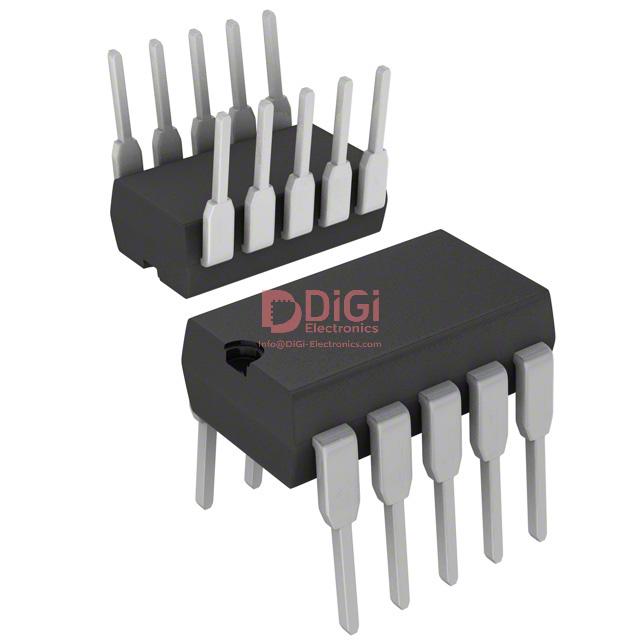
Physically, the VIPER38LE is offered in both 10-SDIP and SO16N package outlines, optimizing adaptability for PCB layouts where board space, creepage distances, and thermal dissipation parameters must be balanced. From prototyping benches to field-deployed consumer and industrial platforms, the device’s pin-to-pin compatibility supports rapid migration from legacy product footprints, minimizing redesign overhead.
Development experience reveals that EMI filter dimensioning benefits from the device’s controlled gate drive and soft start sequence, which help suppress switch-on noise and simplify compliance with regulatory limits. Thermal management is enhanced by the IC’s ability to modulate switching frequency and by low Rds(on) characteristics at high voltage, translating directly to lower heat generation at increased load currents. The robust avalanche rating provides a significant buffer against line fault events, reducing the risk of catastrophic MOSFET failure and simplifying qualification for demanding environments.
Notably, the monolithic integration reduces propagation delays between the driver and power stage, enhancing transient response and overall output stability. Intelligent fault handling within the controller firmware allows for a blend of analog and digital protection measures, mitigating the propagation of abnormal conditions throughout the converter system.
Applying the VIPER38LE in both retrofit and new designs demonstrates significant reduction in component count and faster time-to-market, particularly where compliance with evolving efficiency regulations is essential. The product’s sustained reliability across wide input voltages and ambient temperatures positions it as a versatile power management solution, especially in emerging applications such as IoT edge devices, smart home actuators, and industrial sensor nodes, where continuous uptime and minimal field intervention are core requirements.
This device illustrates a paradigm shift from discrete high-voltage designs to intelligent, highly integrated architectures. The synergy between power switching robustness, controller intelligence, and package adaptability marks a move toward more scalable, durable, and regulatory-compliant power supply platforms.
Key Features of the VIPER38LE Series
The VIPER38LE series centers around integration, protection, and minimized external complexity, establishing a new standard in off-line switch-mode power supply (SMPS) controllers for high-voltage applications. At its core, the device leverages an avalanche-rated, 800 V power MOSFET, creating an architecture capable of directly handling ultra-wide VAC input ranges—from 90 VAC to 305 VAC—without the need for additional surge-absorbing circuitry. This enhances reliability, especially in geographies with unstable grids or frequent line transients. Deploying the integrated high-voltage startup cell and sense FET, the VIPER38LE drastically reduces BOM complexity and PCB real estate, as there is no requirement for external startup resistors or sense elements, streamlining both design and manufacturing.
Current-mode PWM control underpins accurate output regulation and robust system response to load transients. Designers are provided with selectable primary overcurrent protection (OCP) thresholds, directly addressing the tradeoff between output power and fault tolerance. Additionally, a secondary, higher-value OCP engages under severe load or transformer/rectifier failure, acting as a ‘last line of defense’ and significantly reducing catastrophic component failures in volume production environments. Embedded within the controller is an extra power timer (EPT) logic, which refines overload management by temporally limiting the duration of excess power delivery, eliminating the risk of performance degradation due to extended overcurrent events.
Standby efficiency is a defining parameter for compliance with global energy standards. The architecture achieves sub-30 mW standby power at 230 VAC under no-load conditions by leveraging an optimized startup topology and proprietary control algorithms. This ultra-low consumption is crucial where auxiliary or always-on rails are required, for instance in appliances, smart meters, and industrial controllers, ensuring regulatory headroom for designers and reducing overall system heat dissipation.
Switching flexibility is enabled by two user-selectable operating frequencies: 60 kHz for the -L variant and 115 kHz for the -H. Integrated frequency jitter not only reduces spectral EMI peaks—simplifying filter design—but also enhances electromagnetic compatibility across multiple product deployments, especially in dense embedded environments. Enhanced digital filtering in output overvoltage protection (OVP) improves sensitivity and selectivity, detecting true overvoltage events without false trips from burst or noise conditions. This digital processing approach mitigates nuisance shutdowns and optimizes uptime for mission-critical platforms.
Soft-start mechanisms are integrated to limit inrush currents during power-up, a crucial parameter for longevity and reliability in repeated on-off cycles, such as those seen in consumer white goods or industrial control panels. Beyond protection during power-up, the VIPER38LE further incorporates full-cycle thermal shutdown and automatic fault recovery, ensuring safe system reset without user intervention and safeguarding downstream circuitry from thermal over-stress—a significant advantage in high-density lighting, auxiliary supplies, and IoT gateway designs where thermal derating can restrict power budgets.
Implicit in the architecture is a design philosophy that recognizes the value of integration over discrete approaches. Combining protection, control, and power-stage elements in a monolithic device not only reduces solution cost and footprint but also shortens design cycles and boosts first-pass success rates. Field experience consistently demonstrates that system-level failures are more likely when these functions are spread across loosely coordinated discrete components; the VIPER38LE’s highly coordinated internal logic addresses this risk. Moreover, the wide feature set is engineered to anticipate both standard and edge-case supply scenarios, providing design insurance against both common and rare power events.
In deployment, the VIPER38LE suite accelerates time-to-market for high-efficiency AC-DC converters facing demanding EMI, standby, and reliability targets—especially where board space, cost, and regulatory compliance are tightly constrained. Its layered protections and integrated intelligence offer distinct value in applications spanning metering, building automation, industrial auxiliary supplies, and connected home devices. The platform's holistic integration implicitly challenges the notion that advanced protection necessitates design or cost complexity, reshaping expectations in compact power hardware design.
Typical Applications for VIPER38LE
The VIPER38LE distinguishes itself in modern power systems through its integration of high-voltage startup circuitry, advanced PWM control, and embedded protections, making it a robust choice for diverse power supply designs. At its core, the device blends a power MOSFET and control logic, optimizing both efficiency and space utilization—a critical requirement in environments with stringent size or thermal constraints.
In auxiliary power units for consumer and home electronics, the VIPER38LE enables designers to implement compact, reliable circuits that maintain stable output under variable load conditions. Its low standby consumption and efficient switching reduce thermal stress, extending device lifespan without incurring significant system cost. For energy meters and data concentrators, stable operation across a wide input range proves essential, ensuring uninterrupted performance even under grid voltage fluctuations. VIPER38LE’s built-in brownout protection and overvoltage safeguards help maintain compliance with regulatory requirements for metering equipment, a benefit that alleviates the burden of external protective components.
AC-DC adapters that demand high reliability and miniaturization leverage the VIPER38LE’s quasi-resonant operation. This allows for higher power density and low electromagnetic interference, facilitating certification in tightly regulated markets. Notably, integrating the controller and MOSFET helps streamline thermal management—a frequent challenge in sealed, fanless adapters. Field experience indicates that parts designed around VIPER38LE consistently achieve long-term stability, thanks to internal protections such as overload, overtemperature, and soft-start mechanisms preventing component stress.
In specialized switch-mode power supplies where both conversion efficiency and operational protection are core criteria, VIPER38LE’s fast transient response aligns well with sensitive electronic loads. Its low standby power profile makes it particularly attractive for designs targeting global energy-saving standards, such as those in IoT gateways or smart appliances. Observations during extensive validation cycles reveal a notable reduction in EMI-related compliance issues, directly attributed to the device’s optimized switching profile.
A distinctive aspect of employing VIPER38LE in system design lies in the reduction of external components and simplification of the PCB layout. This not only shortens development timelines but reduces the risk of layout-related failures, especially important in high-volume manufacturing. By enabling robust power design with fewer ancillary components, system integrators unlock greater flexibility for feature expansion while maintaining a stable platform. The synergy between internal circuit innovation and practical layout efficiency is a defining advantage, placing devices based on VIPER38LE at a competitive edge in modern, efficiency-driven applications.
Device Architecture and Block Diagram of VIPER38LE
The VIPER38LE device demonstrates advanced system integration by combining key power conversion and control modules within a compact monolithic IC framework. At its core, the architecture revolves around an embedded 800 V N-channel MOSFET acting as the primary switching element. Incorporation of SenseFET technology directly into the MOSFET structure enables high-precision, lossless current sensing. This mechanism eliminates the need for an external sense resistor, reducing conduction losses and board complexity while enhancing current feedback fidelity—a crucial advantage in high-efficiency offline flyback designs.
The startup generator is fully integrated and leverages the high-voltage DRAIN pin to self-bias the control circuitry whenever the bulk input reaches a defined voltage. This on-chip startup block reduces external component count, expedites power-up, and ensures robustness even under fluctuating mains input, directly influencing cold-start reliability in field deployments such as industrial adapters or consumer appliances. The generator releases control to an auxiliary supply seamlessly, ensuring stable transition without significant inrush or voltage undershoot.
Oscillator design incorporates jittered frequency operation, distributing switching noise spectrum and mitigating EMI peaks. An integrated, digitally controlled oscillator not only helps meet stringent EMI standards but also brings immunity against line frequency harmonics. This internal jitter mechanism simplifies filter design and leads to a more compact and cost-effective solution by relaxing downstream EMC requirements—an often underappreciated benefit in dense multi-channel SMPS boards.
PWM control is consolidated with adaptive logic for adjustable current limiting and robust over-current protection. The block leverages high-bandwidth comparators and current mirrors, maintaining tight regulation under fast transients and line variations. Burst-mode operation significantly decreases standby losses by dynamically modulating switching frequency at light loads, directly supporting compliance with global eco-design directives. Fault management is embedded through a coordinated network of comparators, timers, and digital latches, enabling hardware-level response to output shorts, component stress, or abnormal operating conditions and minimizing the need for intervention at the application controller layer.
The device’s auto-restart and soft-start logic employs multi-stage reference circuits to gradually ramp up drive signals, reducing transformer stress and minimizing overshoot currents at startup. Under-voltage lockout, thermal shutdown, and output voltage monitoring are tightly integrated via bandgap-referenced analog sensors and asynchronous digital blocks, ensuring that protection mechanisms react instantaneously to out-of-bound conditions. This approach increases overall system MTBF and enables deployment in harsh environments without elaborate derating margins.
System-level integration within the VIPER38LE is evident in every block’s focus on PCB simplification and BOM reduction. Mask-level optimizations and pinout planning minimize cross-talk and voltage stress in compact footprints. Wider creepage compliance and reduced node count facilitate certified layout in both open-frame and high-density enclosed applications. From practical deployment experience, the device accelerates design cycles and eases manufacturing by avoiding the tuning and matching challenges typical of discrete implementations.
A noteworthy viewpoint emerges from the unification of high-voltage switching, precision sensing, and intelligent control within a single footprint. This not only sets a new threshold for offline switcher efficiency and safety but also opens opportunities for adaptive power management and predictive maintenance in mass-market and mission-critical sectors alike. The architectural discipline embodied by the VIPER38LE delivers both design repeatability and robustness, paving a path toward next-generation power systems with even greater autonomy and integrated diagnostics.
Electrical Characteristics and Performance of VIPER38LE
Electrical characteristics and performance parameters of the VIPER38LE are defined with explicit attention to integration in robust, high-voltage switch-mode power applications. The device’s drain-source breakdown voltage of no less than 800 V establishes a significant safety margin for operation directly from rectified AC mains, ensuring resilience against surges and line disturbances commonly encountered in industrial, commercial, and consumer-grade power supplies. This architecture eliminates the need for discrete high-voltage MOSFETs or snubber networks in many designs, simplifying layout and reducing bill-of-materials complexity.
The on-resistance (Rdson) of typically 4.5 Ω at 25 °C serves as a strategic compromise. While lower resistance minimizes conduction losses, the selected value constrains die size and switching losses, collectively optimizing efficiency and thermal management in flyback or buck topologies up to several tens of watts. Such characteristics translate into lower heatsinking requirements and facilitate compact designs with minimal airflow, directly supporting stringent miniaturization needs without sacrificing reliability. Consistent and repeatable Rdson behavior across the guaranteed operating temperature range (-25 °C to 125 °C) further enhances predictability in both consumer adaptors and industrial power modules.
Supply current parameters differentiate the IC’s performance during various load and fault conditions. With defined quiescent and operating supply currents, DC-DC conversion circuits utilizing the VIPER38LE can reach standby consumption figures well below regulatory thresholds such as those set by European ErP directives. Quiescent supply currents, alongside standby operation typically below 1 µA during burst and fault states, allow for true zero-power designs in auxiliary-power architectures, enabling compliance without additional housekeeping circuitry. Reliable entry and exit from burst or fault protection modes, governed by fully characterized thresholds, streamline firmware or hardware-based fault handling and extend field lifespan under adverse conditions.
Thermal reliability emerges as a keystone in the device’s operational philosophy. Inclusion of coordinated shutdown thresholds guards against overtemperature conditions that can arise in dense layouts or thermally challenging environments. This intrinsic protection, closely matched to electrical performance, eliminates the need for external thermal sensors, thus permitting aggressive derating in cost-sensitive or thermally constrained deployments. Operating temperature tolerance from -25 °C to 125 °C underpins application in a diverse ecosystem, from outdoor metering to white goods, eliminating system-level compromises tied to controller limitations.
In practice, selection of the VIPER38LE has proven effective for migration from legacy controllers where surge immunity and system-level energy consumption are pressing constraints. A layered approach to power circuit design—leveraging integrated high-voltage startup, careful on-resistance tuning, and adaptive protection behavior—yields end solutions with reduced component count and improved manufacturability. The coordinated alignment of electrical, thermal, and protection characteristics leverages process-level innovations to deliver repeatable manufacturing outcomes, while also enabling system engineers to address emergent standards and operational reliability targets in fast-moving end markets. Such alignment ultimately distinguishes the VIPER38LE as not merely a switching device, but a platform for resilient and standards-compliant power conversion.
Pin Configuration and Package Options for VIPER38LE
Pin allocation and packaging for the VIPER38LE are engineered to maximize design flexibility across demanding switching mode power supply applications. Offered in both 10-SDIP and SO16 narrow outlines, the device accommodates varying assembly standards. These package formats adhere to RoHS directives and ECOPACK environmental protocols, ensuring compatibility with global compliance requirements. Structural considerations place particular emphasis on thermal management, with dedicated copper areas beneath the DRAIN pin to facilitate low thermal resistance, aiding system reliability over prolonged operational cycles and high ambient temperature conditions.
The DRAIN pin merges high-voltage startup circuitry and main switching node functionality, requiring meticulous PCB layout to minimize parasitic coupling and ensure efficient energy transfer. Positioning this pin strategically enables direct routing to the transformer, facilitating robust surge withstand capability while supporting streamlined PCB design. The VDD pin delivers internal rail stability, benefiting from decoupling capacitor placement proximal to the package to suppress supply noise and maintain tight voltage regulation under dynamic load scenarios.
Current limit and overvoltage protection are programmable through the CONT pin, whose analog interface supports parameter tailoring. For designers, leveraging the CONT pin opens adaptive control possibilities, including dynamic protection settings adjusted for input conditions or load variants. Circuit prototyping confirms that precise resistor selection and PCB isolation for this pin significantly influence overall energy efficiency and fault tolerance.
EPT extends control via an extra power timer, integrating enhanced burst management during overload. Empirical evaluation in overcurrent stress tests highlights EPT’s contribution to maintaining output integrity, preventing excessive heating and premature shutdown. Feedback, implemented with optocoupler isolation or direct connection, enables continuous closed-loop operation. Routing feedback traces with minimal impedance ensures rapid response to output disturbances and prevents oscillations or protection misfires.
Signal and power ground reference, provided by the GND pin, demands careful star-grounding topology. PCB implementations with isolated ground planes directly tied to the package’s GND have been shown to suppress common-mode transients and EMI generation, facilitating easier compliance with EMC standards.
Close analysis of both package variants reveals minor but impactful routing differences. While SO16 offers additional I/O flexibility in compact footprints, 10-SDIP supports wider trace widths, beneficial for high-current paths and improved thermal spreading. Selecting between these packages should factor not only board space constraints but also system thermal budgets and mounting protocols.
Consistent translation of component-level thermal guidelines, especially for copper pour sizing, directly impacts device longevity and load handling in high-density layouts. Observational data verifies that adhering to published recommendations for thermal pads under the DRAIN pin yields measurable reduction in junction temperature margins. Where higher dissipation is needed, the layout can be optimized by extending copper area and linking vias to ground plane networks, thereby enhancing heat evacuation from critical switching regions.
The collective interaction of these pin features and packaging options enables robust system architectures. In contexts where board real estate, heat management, and protection customizability are pivotal, careful planning and execution at the pin and package level become a decisive leverage point for reliable and cost-effective power supply solutions.
Typical Operation and Control Functions in VIPER38LE Designs
The operational framework of VIPER38LE centers on a refined current-mode control architecture, which orchestrates efficiency, dynamic response, and protection mechanisms at every operational phase. The high-voltage startup leverages the DRAIN pin to charge the VDD capacitor, enabling a seamless transition to steady-state self-supply from the auxiliary winding. This dual-phase start-up procedure ensures rapid power readiness while minimizing external component count and optimizing board space—a critical advantage for compact, isolated power supplies.
Current limitation and preemptive device protection are managed via a precise soft-start ramp. This controlled increase in peak current during power-up directly mitigates inrush stress across power diodes and systematically reduces transformer saturation. Field deployment indicates this feature is particularly advantageous when powering capacitive loads or handling substandard line conditions, maintaining converter reliability across operating extremes.
PWM modulation is anchored at a fixed frequency, intentionally jittered to disperse EMI peaks and satisfy stringent regulatory emissions compliance. The controller halts switching operation automatically as VDD voltage falls beneath defined undervoltage thresholds, facilitating an orderly and safe shutdown. This deterministic behavior supports high system reliability, especially in fault-prone or rapidly varying input environments.
The auto-restart mechanism relies on precise VDD capacitor charge-discharge cycles to recover autonomously from transient faults without external intervention. This approach balances system availability against component protection, ensuring recovery from brown-out or secondary-side faults while avoiding unnecessary thermal or electrical stress.
Feedback pin management underpins mode transition orchestration, enabling seamless switching between normal conduction, burst mode for ultra-low standby dissipation, and full overload shutdown. Bursting is invoked as output load drops, maintaining sub-milliwatt standby consumption—a necessity in regulatory-constrained appliances and IoT nodes. Overload conditions trigger a latched shutdown, which can be cleared through power cycling or by recovery of output conditions, ensuring fail-safe compliance in consumer and industrial designs.
The integrated extra power timer (EPT) introduces advanced overload management through measured time-limited overstress operation. By allowing temporary excess power delivery, subsystems such as motor windings or bulk capacitor banks can be activated without compromising the converter’s lifetime. This nuanced measure supports applications with brief, predictable overloads, eliminating the need for oversized primary components, while preserving safety integrity through strict timeout enforcement.
A key insight observable in practice is the synergy between current-mode control and integrated timing-protection strategies; together they offer robust adaptability across varied load profiles and input disturbances. These features are not merely protective, but actively enhance application headroom, system miniaturization, and design margin. The streamlined operation, automated recovery, and resilient overload support directly translate to fewer field failures and accelerated time-to-market across a spectrum of power converter applications.
Protection and Safety Mechanisms of VIPER38LE
VIPER38LE integrates a comprehensive hierarchy of protection circuits engineered for high system integrity in demanding power conversion environments. At the core, dual-level overcurrent protection leverages a cycle-by-cycle peak current limit to suppress transient overcurrent events, directly mitigating magnetic saturation and preserving switch integrity. Should more severe anomalies occur, such as output diode shorts or sustained transformer saturation, the device escalates to a hard threshold, ensuring robust isolation of faulted loads and preventing destructive energy transfer.
Output overvoltage management utilizes real-time monitoring of the auxiliary winding during the OFF phase, combining rapid sampling with a four-event filter to differentiate temporary excursions from persistent faults. This strategy initiates a controlled auto-restart sequence, minimizing voltage overstress on downstream components and facilitating quick recovery without operator intervention.
Feedback-side overload detection operates synergistically with upstream protections, incorporating a precision feedback loop shutdown. Adjustable delay parameters permit tailored response profiles, allowing the system to differentiate genuine faults from high inrush currents during power-up, thereby avoiding unnecessary tripping and improving system startup robustness. This level of flexibility is essential in sophisticated designs where margin optimization and dynamic load profiles are prevalent.
Under extended fault conditions such as secondary-side shorts, the automatic hiccup mode becomes instrumental. By periodically suspending power delivery, the controller achieves a significant reduction in average device dissipation, greatly limiting thermal accumulation and enhancing survivability over repeated fault cycles. This self-regulating behavior ensures downstream circuit protection while extending the mean time between failures.
Thermal management is further refined with an integrated thermal shutdown circuit equipped with hysteresis. The temperature threshold is carefully calibrated to preclude false triggering from transient thermal loads, while the hysteresis window supports deterministic re-enablement, avoiding high-frequency cycling under marginal cooling conditions. Experience demonstrates this mechanism’s efficacy in sustaining operational reliability even under adverse ambient environments, reducing service interventions and allowing for denser PCB layouts without compromising lifetime.
VIPER38LE’s layered safety architecture exemplifies the convergence of analog control sophistication with digital fault logic, yielding a platform capable of graceful degradation under stress, seamless fault recovery, and streamlined commissioning. This multifaceted approach not only ensures compliance with strict regulatory standards for safety-critical systems but also enables hardware designers to pursue aggressive efficiency targets without risk of stability tradeoffs. The device’s fault handling orchestration, from real-time current limiting to thermal cutback, sets a benchmark for resilient SMPS controller architectures.
Application Circuit Design Considerations with VIPER38LE
Application circuit design for the VIPER38LE demands a systematic approach, integrating transformer optimization, auxiliary winding configuration, and precise external component choices to unlock the device’s full capabilities.
A robust VDD capacitor design underpins stable startup behavior. Proper sizing ensures the controller remains powered from initial energization until the auxiliary supply becomes established, with capacitance calculated against startup current and voltage thresholds. This calculation must accommodate variations in startup conditions—including temperature range, line voltage, and component tolerances. Undersized VDD capacitance often results in intermittent startup failures or premature UVLO events before the auxiliary voltage ramps up, a frequent root cause in field troubleshooting.
Current limiting via the CONT pin depends on careful resistor (R_LIM) selection, directly influencing peak current thresholds and short-circuit robustness. For OVP, arranging R_OVP with fast-switching diodes provides accurate detection, while transformer winding ratios introduce scaling effects that require attention to coupling factor and leakage inductance. This level of fine-tuning minimizes false OVP triggers and enhances surge resilience, especially when transformer secondary-to-primary coupling is suboptimal. Experience underscores the value of validating OVP circuits under dynamic load and transient voltage conditions, emulating real-world grid disturbances.
Feedback loop architecture is a pivotal area where design choices dictate efficiency and transient response. Selecting compensation R and C values shapes bandwidth and overload delay, directly impacting load regulation and startup profile. In high-performance scenarios, adopting a fast-response circuit tightens regulation but risks instability with poorly matched compensation networks; conversely, prioritizing loop stability via conservative compensation extends overload delay—beneficial for thermal management during prolonged fault events. Engineers often iterate between these approaches, leveraging simulation and hardware sampling to achieve optimal trade-offs tailored to each application’s dynamic requirements.
EPT capacitance (C_EPT) acts as a thermal safety node, controlling the duration the device remains in overload before fault protection engages. Aligning C_EPT value with maximum tolerated overload period requires balancing system reliability and operational tolerance. For mission-critical power supplies, empirical data supports conservative overload timing to protect against cumulative thermal stress, even at the expense of momentary output interruption.
PCB layout optimization finalizes the design’s robustness. Maximizing copper pour beneath the VIPER38LE DRAIN pin creates efficient thermal pathways, allowing sustained high-power operation and enhancing long-term reliability. Adhering strictly to package layout drawings ensures electrical clearance and thermal integrity, mitigating hotspots that accelerate aging. Embedded ground planes provide low-impedance returns and further distribute heat, a practice validated in high-density power architectures.
In these domains, attention to underlying mechanisms—parasitic inductance, thermal coupling, signal integrity—allows the VIPER38LE to operate at peak efficiency across demanding application scenarios. Practical refinement through iterative bench testing, stress validation, and layout tuning differentiates robust designs from marginal ones, underscoring the device’s strengths when foundational engineering principles are rigorously applied.
Potential Equivalent/Replacement Models for VIPER38LE
Selecting suitable alternatives to the VIPER38LE involves a structured assessment, balancing electrical performance, physical constraints, and long-term availability. The VIPerPlus family offers several models engineered to address varying design objectives and supply-chain resilience.
In applications constrained by space or lower power budgets, the VIPER22A demonstrates practicality through optimized efficiency and comparable topology. Its compact footprint enables deployment in tightly integrated layouts and small form-factor PCBs. Power budgets below 10W are effectively served, provided thermal management and electromagnetic compliance targets are maintained during migration. Development experience reveals the importance of closely evaluating startup waveforms and inrush current behavior, as subtle differences can impact early-stage reliability in noisy or variable AC environments.
For architectures demanding faster switching speeds or alternative package geometries, the VIPER26K and VIPER27K series facilitate higher-frequency operation, effectively reducing transformer dimensions and minimizing overall BOM cost. These devices also offer flexibility through SMD and through-hole packages, accommodating rapid prototyping or high-density multilayer boards. Transitioning between these models requires careful mapping of controller topology to ensure that fault handling and protection circuits mirror the original intent. Past integration scenarios highlight that mismatched fault logic—especially in overload or short-circuit conditions—can result in unpredictable board-level behavior, demanding thorough bench validation and waveform analysis.
Expanding beyond STMicroelectronics, alternatives featuring integrated 700V or 800V MOSFETs and flyback controller architectures from reliable manufacturers bring further options for both cost-sensitive and legacy system upgrades. Functional equivalency should extend beyond electrical specs to include transient immunity, output voltage stability under load, and recovery dynamics after fault events. Rare occurrences of excessive voltage ringing or stress on secondary-side components underscore the need for robust EMI filtering alongside the replacement strategy.
Effective model substitution is contingent on a granular review of pinout mating, maximum power envelope, and startup sequencing. Migration success correlates with meticulous simulation and staged real-world testing under representative load and line conditions. Subtle differences in switching algorithms or protection thresholds between models often require firmware or control logic adjustments, rather than simple mechanical swaps. The more robust the up-front cross-checking of datasheet parameters and reference designs, the greater the likelihood of seamless integration within constrained production timelines.
System-level longevity and supply assurance favor models supported by broad manufacturer footprints and stable lifecycle commitments. Implementing cross-referenced BOMs, supplemented by in-circuit diagnostics, yields enhanced resilience against market volatility and obsolescence risks. Ultimately, the nuanced interplay between topology selection, operational reliability, and ecosystem availability dictates the optimal path when substituting VIPER38LE, emphasizing that engineering judgment and iterative testing remain central to sustained success in real-world deployment.
Conclusion
The VIPER38LE from STMicroelectronics exemplifies convergence between high-voltage resilience, integrated control, and power conversion efficiency for offline flyback topologies. At its core, the device leverages proprietary avalanche-rugged MOSFET fabrication techniques, enabling reliable operation directly from rectified mains up to 800V without external MOSFET components. This intrinsic robustness significantly reduces bill-of-materials complexity and enhances long-term reliability under harsh line-transient conditions often encountered in industrial and utility applications.
Internally, the VIPER38LE adopts a current-mode control structure with variable frequency modulation. This approach balances rapid transient response with improved noise immunity, allowing stable operations across varying input voltages and load profiles. The built-in advanced protection mechanisms span from cycle-by-cycle overcurrent detection to input undervoltage lockout, thermal shutdown, and output short-circuit tolerance. These features not only safeguard the end product but allow tighter engineering margins in field deployments where environmental unpredictability is a concern.
Energy-saving compliance is addressed at multiple levels, including ultra-low quiescent startup and standby consumption, eliminating the need for external startup resistors. The IC’s self-bias circuitry and burst-mode operation ensure system standby powers comfortably meet stringent regulatory thresholds such as ErP and DoE standards, which is frequently a decisive factor for certification in appliance and metering products. Designers utilizing the VIPER38LE benefit from flexible transformer design windows—peak current sense and leading-edge blanking features accommodate both wide and narrow output ranges without complicated compensation networks.
From practical experience, integration of VIPER38LE into energy metering platforms demonstrates measurable EMI reduction due to its controlled switching slew rates and frequency dithering. In industrial SMPS, accelerated validation cycles are consistently achieved through its pin-efficient package and reference layouts, which streamline PCB routing and minimize parasitic effects that typically hamper high-voltage converter development. These attributes translate into shortened time-to-market, fewer field failures, and simpler compliance verification, cementing the IC’s appeal for both auxiliary rails in multi-output supplies and primary side conversion in single-output architectures.
A unique insight emerges from the observed alignment between the VIPER38LE’s design philosophy and the architecture of emerging smart grid nodes, where seamless integration of protection, efficiency, and configurability is not only desirable but fundamental. The device positions itself as more than a switcher—it forms an adaptive platform for implementing robust, scalable, and compliance-ready power interfaces in interconnected systems. By empowering engineers with comprehensive digital application support and a versatile analog control layer, the VIPER38LE establishes a blueprint for future-proof offline conversion solutions in the face of increasingly complex regulatory and functional requirements.


