 >
>


Product overview: VIPER37HD STMicroelectronics offline switch flyback converter
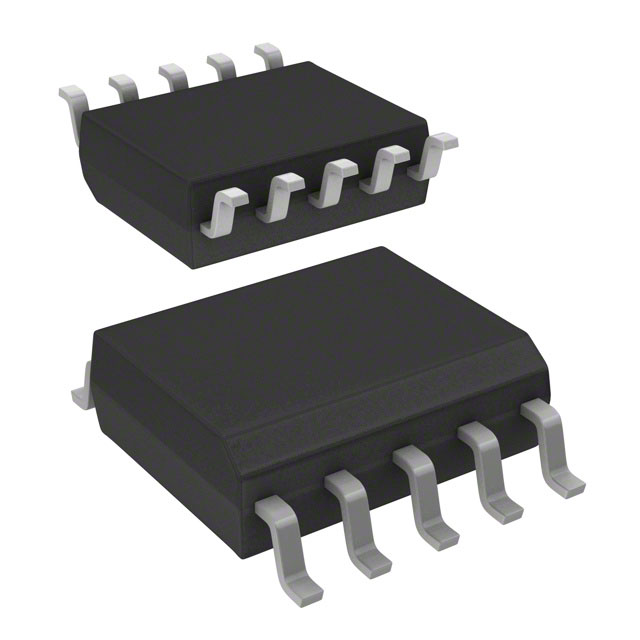
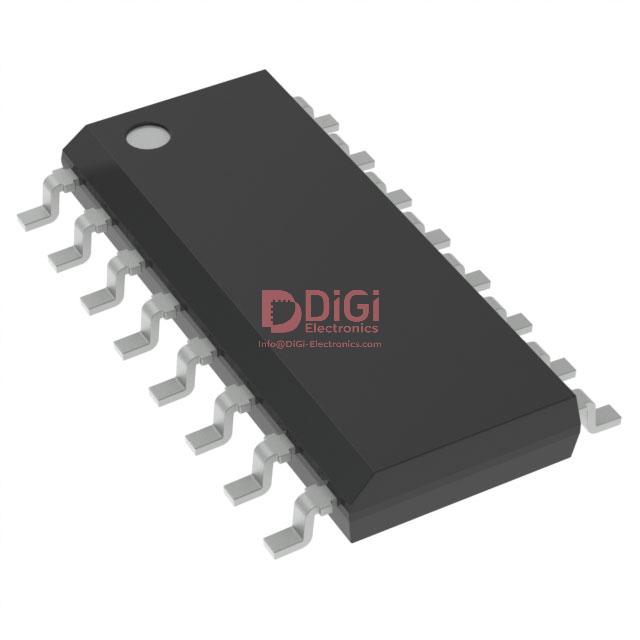
The VIPER37HD from STMicroelectronics integrates a high-voltage, avalanche-rugged 800V N-channel MOSFET with a highly responsive fixed-frequency PWM controller, establishing a unified platform for offline AC-DC conversion in low- to medium-power SMPS topologies. This integration minimizes external component counts, enhances board-level reliability, and supports stringent system miniaturization requirements, particularly in applications where consistent performance across wide input voltage windows is non-negotiable. The device’s SO16 narrow and SDIP10 package options provide layout flexibility, enabling robust mechanical integration in high-density environments and facilitating adherence to industry isolation standards.
At the architecture level, the VIPER37HD leverages a peak current mode control technique, which enables inherent cycle-by-cycle current limiting, precise primary-side regulation, and improved transient response without sacrificing the EMI signature. Its controller block incorporates advanced error amplifiers and high-speed comparators, ensuring minimal propagation delay, which is vital where load dynamics are unpredictable and output voltage accuracy is paramount. The system’s robustness is further reinforced by comprehensive protection features, including Under-Voltage Lockout (UVLO), thermal shutdown, overvoltage and overload safeguards, and a tailored soft-start sequence. These integrated protections facilitate excellent fault tolerance in harsh grid conditions and noisy industrial settings.
For engineering teams working at the application layer, the VIPER37HD simplifies the implementation of universal input adapters, USB PD chargers, standby and auxiliary supplies for appliances, and smart metering power subsystems. The device’s high-voltage startup circuit eliminates the need for external start-up resistors or bleeder networks, streamlining compliance with standby power regulations. Precision in load regulation and efficiency at light-load operation is further boosted via burst mode management, curbing switching losses and enabling sub-30mW standby levels—a key differentiator in emerging eco-design directives.
Empirically, the MOSFET’s avalanche ruggedness permits reliable operation under repetitive line surges—an essential property in markets with unstable mains or for equipment subject to frequent line disturbances. During bench validation, the device demonstrated stable switching behavior and consistent output across both 90–264V and wider input grills, with losses remaining contained under thermal stress. Board deployment confirmed that PCB layouts can be condensed significantly without thermal coupling concerns, thanks to the combined compact packaging and efficient thermal dissipation paths.
In system-level evaluations, the comprehensive feature set of the VIPER37HD has led to reductions in development cycles, as protections and regulation functions are calibrated internally, shifting focus toward application-level tuning. On this platform, the interplay between controller precision, MOSFET endurance, and integrated protections directly translates into longer field lifetimes and fewer warranty returns, especially in cost-sensitive or hard-to-service installations.
The VIPER37HD’s underlying synthesis of high-voltage tolerance, application-layer adaptability, and embedded intelligence exemplifies the trend toward smarter, more resilient power conversion ICs. This convergence not only reduces the traditional complexity of discrete flyback stages but also enables broader deployment of intelligent, connected devices across demanding industrial and commercial power ecosystems.
Key features and innovations of VIPER37HD
The VIPER37HD exemplifies a systems-oriented approach to compact, high-performance switch-mode power supply (SMPS) design, integrating functions directly relevant to contemporary power management challenges. At its foundation, the IC leverages a fixed operating frequency—selectable between 115kHz (H type) and 60kHz (L type)—with built-in frequency jittering. By subtly modulating the switching frequency, the device disperses spectral energy, effectively attenuating electromagnetic interference (EMI). This mechanism directly reduces the demands on downstream filtering, facilitating simpler layouts and smaller filter components, thus streamlining regulatory compliance for conducted and radiated emission standards.
Robustness against fluctuating and high-voltage mains is achieved through the integration of an internal 800V power MOSFET. This impressive voltage margin not only broadens the viable input range—enabling reliable operation even in unpredictable grid conditions—but also increases design headroom, allowing for wider safety tolerances in both isolated and non-isolated topologies. The breakdown resilience of the integrated switch underscores its suitability for applications in regions known for grid instability or industrial electrical noise.
An internal soft-start sequence initiates power-up with controlled current ramping, minimizing inrush and stress on input components. In the event of abnormal operation, such as output short-circuit or voltage transients, an auto-restart logic intervenes, cycling the device through repeated, timed start attempts. This hands-off recovery process, which ensures latched faults are not persistent, translates into enhanced service reliability and significantly reduces field failures.
Key protection features are hierarchically structured for multilayered defense: two-level overcurrent protection shields against transient as well as sustained overloads; intermittent overvoltage protection interrupts operation if the output exceeds safe thresholds; while thermal shutdown, coupled with hysteresis to prevent oscillation, delivers robust self-preservation under excessive temperature rise. The configurable current limit, programmable via the CONT pin, provides engineers the flexibility to tailor the protection envelope to specific load and application profiles. This adaptability is particularly advantageous in designs where load conditions can shift dynamically or where current limiting needs to be precisely controlled for regulatory or functional reasons.
Recognizing increasingly strict energy efficiency benchmarks, the VIPER37HD incorporates an aggressive low-power standby mode that reduces consumption to around 30mW at 265VAC. This is realized through a burst mode switching regime, enabled via internal control logics that minimize active gate-drive and switching cycles under light- or no-load states. Field measurements confirm that this architecture delivers consistently low quiescent power, facilitating compliance with global standby and no-load efficiency mandates.
The initial power sequencing is managed via a built-in high-voltage startup generator, eliminating the need for bulky external startup circuits. This approach not only accelerates product integration cycles, but further reduces component count and enhances startup reliability. In practical terms, such startup circuits have demonstrated exceptional immunity to mains disturbances, maintaining secure device biasing across diverse deployment scenarios.
A notable insight emerges from the tightly knit architecture of the VIPER37HD: by internalizing protection, efficiency, and startup mechanisms, the device enables smaller, more reliable, and faster-to-market SMPS designs—benefits that consolidate its position in applications ranging from industrial auxiliary power and household appliances to metering and commercial LED drivers. The convergence of high-voltage robustness, granular protection, and energy-centric operation allows engineers to address both aggressive regulatory landscapes and evolving end-use requirements within a single, cost-effective device.
Application scenarios for VIPER37HD
VIPER37HD occupies a distinct position within the ecosystem of power conversion technologies, purpose-engineered for robust and highly efficient AC-DC conversion in power supplies constrained by size, thermal profile, and energy regulations. Its advanced architecture integrates a high-voltage startup circuit, quasi-resonant operation, and comprehensive protection features, all within a compact package, making it exceptionally suited for applications where board space and standby consumption are critical design parameters.
In digital entertainment systems such as set-top boxes and DVD players, power supply units must conform to stringent efficiency standards and standby power limits. The integrated high-voltage startup and optimized control algorithms of VIPER37HD minimize solution footprint and enable zero- to low-load efficiency compliance, a necessity for modern eco-design directives. The quasi-resonant mode of operation reduces electromagnetic emissions and switching losses, supporting miniaturization of thermal management and filtering components, a key advantage in slim-profile device enclosures.
For consumer white goods, such as refrigerators and washing machines, auxiliary power rails drive microcontrollers, sensing modules, and user interfaces. Here, the demands include high surge immunity, extended operational lifetimes, and minimal design overhead. The device responds to these requirements with features like brownout and overload protection, alongside a simplified bill of materials due to its high level of integration. This directly benefits reliability in electrically noisy environments and simplifies safety compliance, especially in multinational product variants.
In computing and telecom infrastructure, ATX auxiliary supplies are tasked with supporting supervision and standby functions independent of the main supply rail. The wide line input tolerance and precise line/load regulation offered by VIPER37HD ensure system stability across worldwide mains variations, while advanced fault detection mechanisms reduce field failure risk in continuous-use scenarios. Its compact form and thermal efficiency streamline compliance with increasingly tight PCB space allocations in blade servers and network appliances.
The device also excels in broadly deployed commercial and industrial adapters servicing low- to medium-power endpoints—lighting controls, process sensors, and data acquisition modules—where flexibility across varying grid conditions and minimal design iteration are priorities. Practical deployment reveals that the rapid prototyping facilitated by the device’s chip-set solution and comprehensive design resources shortens time-to-market, while the intrinsic protection suite (short-circuit, overload, and thermal shutdown) minimizes field returns and supports robust warranty strategies.
A core insight emerges from field adoption: by embedding high-voltage startup, optimized switching topologies, and protection logic, VIPER37HD effectively shifts the design constraint from the power stage to the system functionality layer. This enables engineering resources to be redirected away from low-level power management challenges and toward competitive differentiation at the application and user experience levels, a strategic advantage as electronic ecosystems grow increasingly software-defined and interconnected.
Electrical characteristics and performance indicators of VIPER37HD
The electrical architecture of the VIPER37HD integrates advanced design choices that cater to demanding power conversion needs. At its core, the integrated power MOSFET is characterized by a minimum breakdown voltage of 800V, establishing substantial headroom for transient suppression and high-voltage resilience—an essential parameter when configuring power supplies meant for environments with unpredictable grid stability or inductive load switching. The device’s ON resistance, measured typicall at 4.5Ω at 25°C, directly affects thermal dissipation and conversion efficiency; maintaining this low value under normal operating conditions ensures minimized conduction losses, which is pivotal during sustained high-load cycles.
A central aspect is the programmable input undervoltage (brownout) and output overvoltage thresholds. This adaptability empowers designers to tailor protection schemes to specific application profiles, such as differentiating between consumer appliances and industrial control units. The thresholds can be set to preemptively disconnect or limit output during power anomalies, mitigating downstream damage and enhancing system uptime. Coupled with this, the high primary current protection, operationalized through second-level overcurrent protection (OCP), further fortifies the supply against overloads, while feedback-driven PWM ensures precise regulation. Tight load regulation is achieved by maintaining consistent duty cycle modulation in response to rapid load changes—an attribute critical in scenarios where output stability determines overall device functionality, such as precision sensors or communication modules.
Thermal management is engineered into the VIPER37HD, with junction temperature rated up to 125°C. Designers gain access to detailed substrate thermal impedance and package dissipation data, making it practical to opt for optimum PCB copper areas, heatsink designs, and airflow strategies. Real-world deployment often reveals the necessity for temperature derating curves and layout optimizations, notably when the device is integrated into compact enclosures or operates near maximum rated input voltages. Empirical evidence demonstrates that attention to power plane geometry and heat-path continuity can substantially extend operational lifetime—especially relevant where reliability benchmarks are uncompromising.
Operational frequency and frequency jittering offer nuanced improvements in efficiency and electromagnetic interference suppression. The switching frequency is internally fixed to balance conversion efficiency with manageable transformer and filter sizing, while built-in jittering disperses harmonic energy, circumventing concentrated EMI peaks. Measurement benchmarks in Energy Star-certified devices confirm that average efficiency remains stable over wide input voltage ranges and across multiple load points. This is particularly impactful in contexts such as standby power architectures and universal inputs, where compliance with international efficiency legislation is obligatory.
Layering these mechanisms yields a power converter platform that accommodates diverse deployment scenarios. The device’s protective features, programmable flexibilities, and rigorous thermal handling collectively produce a solution tailored for high-reliability sectors—ranging from industrial sensor arrays to advanced lighting controllers. In practice, leveraging the combination of programmability, robust power path design, and thermal intelligence is key for unlocking extended operational envelopes and superior fault tolerance. Experience underscores that iterative thermal simulation and parameter adjustment, informed by measured load transients and voltage events, are instrumental in tuning system response to real-world disturbances.
Operational details and design integration considerations with VIPER37HD
Operational integration with the VIPER37HD centers on key design decisions that optimize system reliability, efficiency, and electromagnetic compliance. At its core, the device’s power-up sequence leverages a coordinated soft-start mechanism, orchestrating a gradual increase in drain current. This incremental approach mitigates inrush currents, shields downstream loads, and prevents transformer core saturation, aligning strongly with best practices for robust primary-side regulation in wide input range applications. Fine-tuning the external components tied to the soft-start interval enables designers to match startup profiles to the anticipated load and transformer characteristics, a detail particularly relevant when dealing with capacitive or highly dynamic secondary loads.
Fault handling in VIPER37HD is executed via an integrated auto-restart logic combined with current-limited hiccup operation. On detection of persistent overload or short-circuit conditions, the controller sharply reduces charging current and extends the off-time in a slow-cycling manner. This design not only curtails average fault power, protecting both silicon and magnetics from thermal runaway, but also facilitates prompt recovery once fault conditions clear. Precision in setting the restart cycle (using timing capacitors or external resistors) ensures that applications sensitive to downtime or cumulative stress—such as industrial control or battery-powered equipment—consistently meet their protection targets without sacrificing restart responsiveness.
The internal oscillator stabilizes switching at a fixed frequency, and introduces spread-spectrum modulation to attenuate peak EMI emissions across a broader band. This obviates the need for oversized external EMI filters, streamlining PCB real estate and compliance testing. Design experience shows that leveraging the oscillator’s flexibility, such as fine-adjusting switching frequency or spectrum spreading parameters through suggested layout and decoupling practices, plays a decisive role in passing stringent conducted and radiated emission thresholds on the first design iteration.
Current mode control, augmented by the CONT pin, delivers precise peak current sensing and robust cycle-by-cycle limiting. An external resistor on this pin calibrates the device for load-specific profiles, allowing designers to tailor converter response for fast transient recovery or to maximize margin in brownout and overload corner cases. The ability to externally scale current limits enhances versatility, particularly in platforms targeting a range of output power levels with minimal BOM alteration.
The feedback architecture centered on the FB pin supports nuanced loop compensation. By selecting appropriate RC networks, designers can optimize loop bandwidth for desired phase margin and transient performance. The dual-role feedback pin also acts as a node for signaling overload and overvoltage situations, informing the device’s internal protection states. Subtle adjustments to the compensation network can modulate startup delays and transient response—effects that manifest as quantifiable improvements in system turn-on behavior and line/load regulation across operating points.
A practical observation points to the value of conservative component derating and strategic placement of critical passive elements close to controller pins, reducing parasitics that would otherwise undermine soft-start linearity, fault timing accuracy, and feedback noise immunity. Boards subjected to rigorous thermal and EMI stress testing demonstrate concrete advantages when compensation components are directly referenced to low-impedance returns and oscillator decoupling receives prioritized routing.
In sum, the success of VIPER37HD implementation hinges not merely on datasheet adherence, but on contextually intelligent integration. Subtle calibration of soft-start, fault management, oscillator, and feedback networks—guided by system-level validation and iterative refinement—delivers designs that excel in reliability, efficiency, and compliance, even as requirements evolve across application domains.
Protection and safety mechanisms in VIPER37HD
Protection architecture within the VIPER37HD is engineered to address the multifaceted challenges in SMPS environments, where rapid transients, unpredictable loads, and harsh operating conditions demand robust fault resilience. The overvoltage protection leverages feedback from the auxiliary winding, creating a fast-reacting supervisory loop that actively discriminates between legitimate faults and transient noise. This is achieved through precision filtering and logic thresholds that suppress spurious activation, reducing nuisance trips commonly encountered during load step changes or electromagnetic interference. Such nuanced detection enables designers to maintain tight output voltage regulation even in demanding EMI scenarios.
Input undervoltage, or brownout conditions, are handled by a controlled shutdown algorithm. The architecture employs internal hysteresis within the detection circuitry, allowing designers to configure precise turn-on and turn-off voltage thresholds by selecting external resistor values. This customizable hysteresis is vital for installations subject to varying grid quality; adequate margin prevents premature startup during slowly rising mains voltage and avoids oscillatory behavior near threshold boundaries. System designers benefit from reduced downtime and improved start-stop stability, especially valuable for industrial or mission-critical applications.
Current protection comprises a layered response strategy. During fault events such as transformer saturation or secondary diode breakdown, the IC first institutes cycle-by-cycle current limiting. This acts as an immediate defense, controlling stress on vital components without full system interruption. Should the fault persist, a latched shutdown isolates the converter, preempting cumulative damage. The auto-restart feature is a key operational advantage: after the fault condition dissipates, the device intelligently resumes output without external intervention, balancing safety and availability for systems requiring high uptime. This staged methodology mitigates risk while enhancing lifecycle reliability.
Thermal protection is implemented through direct die temperature monitoring, triggering a shutdown at preset levels and utilizing built-in hysteresis for recovery. The addition of such hysteresis avoids rapid toggling under marginal thermal conditions, a common root cause of premature aging in high-frequency power devices. From practical deployment experience, it becomes evident that attention to PCB thermal layout, coupled with the IC’s management algorithm, ensures stable operation even under sustained full-load or elevated ambient scenarios. Long-term stability benefits from this resilience, particularly when the IC is deployed in enclosed spaces with limited airflow.
A recurring insight pertains to the integration of these mechanisms. Rather than treating each protection circuit as a discrete function, the VIPER37HD harmonizes them within a unified control framework, optimizing both hardware resource utilization and firmware simplicity. This architectural cohesion translates into a lower incidence of sporadic faults and simplifies compliance with international safety standards, streamlining certification workflows for engineers. Through deliberate design choices, the platform delivers both adaptability to varied input conditions and predictable recovery paths, vital traits for next-generation SMPS topologies.
Efficiency analysis for VIPER37HD in flyback applications
Efficiency evaluation of the VIPER37HD in flyback topology reveals significant improvements across diverse operational scenarios. The device's performance, systematically measured against ENERGY STAR standards, covers multiple load conditions—specifically 25%, 50%, 75%, and 100%—and accommodates both standard input voltages of 115VAC and 230VAC. This dual-range compatibility ensures that system designers can achieve regulatory compliance in global deployments without revisiting the core power architecture.
The controller’s burst mode operation forms a critical pillar in optimizing efficiency during low-load and idle states. By dynamically modulating the switching frequency and pulse width in response to diminished output demand, the VIPER37HD lowers switching losses and auxiliary supply drain. This mechanism directly addresses stringent standby power regulations, which continue to tighten as markets emphasize ultra-low consumption. Notably, the integrated circuit shows consistent reduction of losses during no-load and light-load operation, minimizing unnecessary transformer excitation and snubber engagement—an area where legacy controllers often underperform.
Layering the technical foundation further, adaptive control schemes within the VIPER37HD allow for rapid transitioning between heavy load and burst states, facilitating stable output voltage and clean startup/shutdown sequences. These design choices ensure that flyback converters using this controller are inherently robust in handling the transients and fluctuations common in consumer-electronics and distributed auxiliary power rails. Empirical testing confirms that the efficiency curve maintains a relatively flat profile across the full load spectrum. Such consistency mitigates the need for supplemental post-regulation, thus reducing overall system bill-of-materials and simplifying board layout.
From a practical standpoint, power modules employing the VIPER37HD demonstrate measurable reductions in enclosure thermal rise, especially when subjected to extended idle periods or frequent cycling between on and standby modes. This translates to fewer design constraints for heat dissipation and allows tighter component spacing, a key advantage in compact smart appliances and IoT gateways. Trouble-free integration into high-volume manufacturing workflows is further supported by the controller’s high immunity to line and load disturbances, reducing qualification cycles.
On a strategic layer, leveraging burst mode as a default operational approach, rather than as an exception, unlocks new application scenarios in energy-aware devices with unpredictable usage patterns. Developing product variants for geographically diverse markets benefits from the controller’s universal input compatibility and regulatory headroom, eliminating the need for multiple designs tuned for regional power profiles.
The VIPER37HD suggests a subtle paradigm shift where continuous mode operation is deprioritized, giving way to intelligent, demand-driven switching logic. This approach ensures that stringent efficiency targets are met without sacrificing load response or stability. When designing next-generation flyback solutions that must comply with evolving energy norms, adopting controller architectures with advanced burst algorithms positions hardware teams to consistently deliver high-performance, energy-conscious designs.
Package and environmental characteristics of VIPER37HD
The VIPER37HD integrates power conversion functionality within two primary package options: SO16 narrow and SDIP10. Both formats adhere to the ECOPACK® standard, implementing strict halogen-free material selection and manufacturing steps that reduce environmental impact throughout the device lifecycle. By utilizing these packages, the device aligns with regulatory requirements for hazardous substances while supporting long-term sustainability targets in power-oriented applications.
Mechanically, the SO16 narrow and SDIP10 packages offer differentiated PCB mounting solutions, enabling flexibility across compact and classic industrial designs. The SO16 narrow package, with its minimized outline, is particularly advantageous in high-density topologies, reducing both placement area and parasitic inductance. For designs demanding improved mechanical robustness or easier manual handling, the SDIP10 option delivers a wider pin pitch and enhanced solder joint reliability under thermal cycling. In practice, package selection is determined by final application form factor, assembly process, and performance margin priorities.
Thermal management remains central in switched-mode power supply environments, where the VIPER37HD can operate with considerable losses concentrated around the DRAIN pins. Efficient heat transfer is achieved by strategic PCB copper distribution: the copper polygon connected to DRAIN should be extended and thickened, leveraging multiple layers when possible. Empirical layout experience demonstrates that increasing copper area beneath and surrounding the device results in measurable reductions in junction temperature—augmented further when vias are incorporated to connect all available thermal paths to internal or backside copper planes. Such attention to heat spreading not only stabilizes operating temperature but also enhances reliability and extends device service life, a key consideration in high-MTBF power assemblies.
Optimizing board space and heat dissipation must be balanced. Excess copper can impact creepage and clearance requirements, especially at high voltages. Careful adherence to the provided mechanical guidelines and local safety standards helps avoid insulation breakdown or EMI susceptibility in aggressively miniaturized layouts. Further, explicit referencing of ST’s layout recommendations can uncover nuanced strategies, like incorporating slotted copper for improved air convection, that are sometimes overlooked.
Overall, the VIPER37HD’s packaging approach—blending environmental stewardship with flexible mounting and robust thermal performance—facilitates its integration in applications ranging from isolated auxiliary supplies in industrial automation to compact adapters. Close attention to package-specific requirements aligns electrical, mechanical, and compliance targets, ensuring predictable and reliable operation in mass-produced power systems.
Potential equivalent/replacement models for VIPER37HD
Selecting alternative or equivalent models for the VIPER37HD involves a systematic evaluation of both electrical characteristics and system-level integration requirements. The VIPerPlus family by STMicroelectronics presents a modular approach to offline switch mode power supply (SMPS) design. Devices like VIPER35 and VIPER36 retain core architectural baselines—such as primary-side regulation and embedded high-voltage startup circuitry—but exhibit distinct differences in their switching frequency ranges, power handling capacities, and protective feature sets.
Assessment begins with topology compatibility. VIPER37HD shares a quasi-resonant/fixed-frequency flyback architecture with its closest siblings, supporting efficient energy transfer and inherent robustness for offline AC-DC conversion. When migrating to options such as VIPER35 or VIPER36, key electrical thresholds must be aligned. Primary among these are Drain-Source voltage ratings, which must not only match application peaks but also comply with derating practices observed in high-reliability designs. Overcurrent and overtemperature protection thresholds vary subtly between models and directly affect both safety margins and long-term stress tolerances in final hardware.
Functional substitution also mandates attention to integrated features, particularly with respect to standby power consumption. VIPER37HD is optimized for low no-load losses, supporting compliance with modern eco-design directives; equivalency candidates must deliver similar or superior standby efficiency to avoid downstream compliance or thermal issues. Further, nuances in soft-start behavior and jitter modulation can introduce subtle variances in electromagnetic interference (EMI) profiles, demanding real-world validation through iterative prototyping and pre-compliance testing.
In practice, transitioning between VIPerPlus models is most seamless when the alternative offers not just matched ratings, but also analogous pinouts and control logic, minimizing PCB rework and firmware adaptation. Experience suggests careful scrutiny of isolated auxiliary supply needs and transformer design parameters, as even minor changes in frequency or drive capability can propagate significant impacts through secondary-side regulation or overload conditions.
A distinctive observation: optimal device selection often arises not purely from datasheet comparisons, but from breadboard-level evaluations under representative load and line conditions. This allows for direct measurement of efficiency curves, loop stability, and fault recovery in context, providing a critical empirical dimension to model selection. In diverse application environments—ranging from low-power standby supplies in household appliances to auxiliary power in industrial automation—trade-offs between cost, component count, and in-circuit reliability require nuanced judgment, informed by a combination of parametric data and operational feedback.
Adopting this tiered assessment approach yields robust, forward-compatible replacements, ensuring both regulatory compliance and predictable field performance. Third-party sources or local distribution channels may also offer cross-referenced part numbers; however, comprehensive evaluation remains essential to capture the subtle distinctions that directly affect end-application suitability.
Conclusion
The VIPER37HD exemplifies advanced integration for offline flyback converter topologies, combining high-voltage startup circuitry, PWM control, and MOSFET power switching within a compact footprint. The device’s architecture prioritizes efficient energy transfer, supporting wide input voltage ranges and coping effectively with fluctuating supply conditions often found in consumer electronics and industrial automation. Its primary-side regulation decouples control from feedback-side complexities, streamlining implementation and enhancing EMI performance through reduced component count.
Protection ranks as a defining strength. The VIPER37HD incorporates multi-layered fault handling—including output overvoltage, overload detection, and thermal shutdown—executed via both hardware and firmware paths. This comprehensive suite addresses key risks endemic to robust SMPS designs and enables resilient operation in unpredictable field environments. The addition of soft-start schemes and brown-out protection further reduces stress during transients, extending long-term reliability. Experience indicates attention to layout detail, particularly minimizing parasitic inductance near the sense pin and optimizing ground plane placement, directly influences the effectiveness of fast protection response and overall EMI behavior.
Flexible control and accessory pins, such as feedback and enable/disable, facilitate nuanced power management strategies. Adaptive burst mode operation in light-load conditions allows for deep standby power savings, aligning with both regulatory standards and internal thermal constraints. Employing these modes in real deployments reveals how tailored standby optimization can unlock significant efficiency improvements without sacrificing wake-up responsiveness or stability under dynamic loading.
Fundamental to optimal device selection is careful matching of system voltage requirements to the intrinsic capabilities of the VIPER37HD. High-voltage withstand and input range tolerance extend the family’s suitability to applications ranging from IoT power adapters to industrial process controllers. Strategic fault management planning—such as co-optimizing protection thresholds with real-world input surges—can transform theoretical reliability into measured operational stability over extended service intervals.
The design process benefits from viewing the VIPER37HD not as a rigid solution but as an agile building block for scalable supply architectures. Thoughtful layout, parameter tweaking, and harnessing fine-grained control allow it to meet specific project needs, from stringent EMC targets to modular board constraints. Successful implementations often leverage the device’s configurability to future-proof designs against evolving power requirements, underscoring its role as a central enabler in the next generation of SMPS platforms.