 >
>


Product overview: VIPER28LN STMicroelectronics VIPerPlus family
The VIPER28LN, belonging to the STMicroelectronics VIPerPlus family, exemplifies an advanced class of integrated solutions for offline flyback converter architectures. At its core, the device integrates an 800 V avalanche-rugged power MOSFET, purposefully designed to handle high primary-side voltage stress scenarios with superior reliability. This enables direct operation from rectified 230 V mains, streamlining designs for universal input and reducing the necessity for input stage protection elements. The MOSFET’s robust avalanche withstand capability is pivotal for applications in industrial control, home appliances, and auxiliary power supplies, where transient overvoltages can jeopardize less resilient architectures.
The embedded PWM current-mode controller orchestrates the switching process with precise cycle-by-cycle control, supporting both constant voltage and constant current regulation strategies. This configuration inherently facilitates tight output regulation, improved transient response, and straightforward loop compensation, which are central to meeting modern efficiency and emission standards. Its current-mode topology further provides intrinsic overcurrent protection—critical in minimizing risk during fault events—while also enabling quasi-resonant and fixed-frequency operation for noise-sensitive or stringent EMI environments.
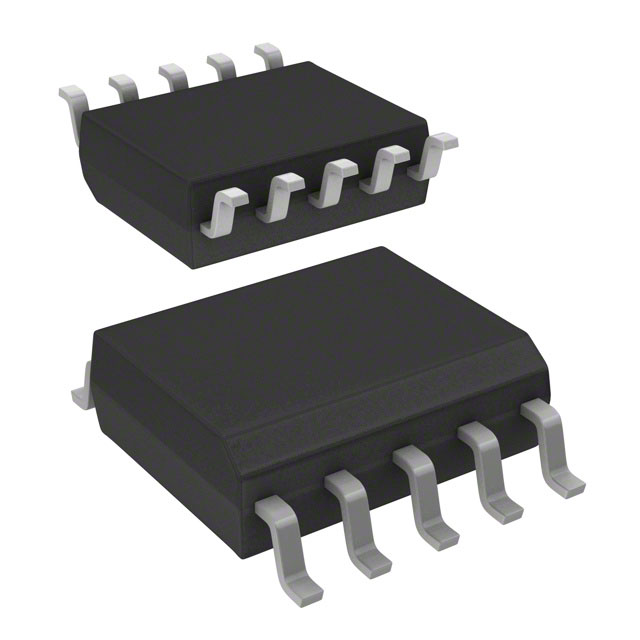
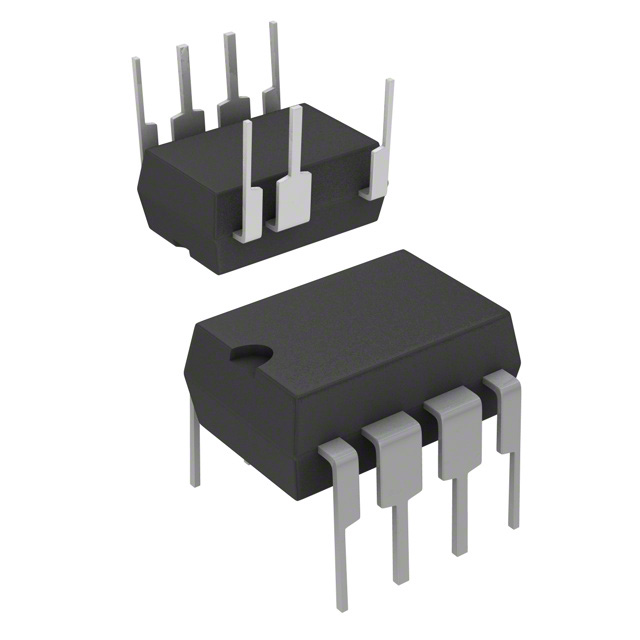
Package options include DIP-7 and SO16 narrow outlines, supporting both through-hole and surface-mount assembly. This flexibility accommodates optimized thermal management and high component density, which is essential in compact SMPS (switched-mode power supply) designs. When paired with the reduced component count resulting from integration, PCB space savings become substantial, directly contributing to bill-of-materials optimization and faster assembly cycles.
Key protection features are natively embedded. The VIPER28LN offers overvoltage, overload, and thermal shutdown protections, all organically coordinated within the device’s internal state machine. Under- and over-voltage protections bolster system resilience, particularly in regions with unstable mains supply. The internal start-up circuit supports efficient cold start operation, eliminating the need for bulky external resistors and enhancing stand-by power characteristics—a significant advantage in standby and always-on applications requiring sub-30 mW efficiency targets.
From a practical deployment perspective, the VIPER28LN’s intrinsic integration brings measurable benefits in real-world SMPS topologies. Notably, designs demonstrate high first-pass yield due to fewer external critical-path components, reducing debug and iteration cycles. Supply designs for metering, lighting, and industrial IoT leverage the device’s high-voltage immunity, achieving compliance with global energy standards such as Energy Star, ErP Lot 6, and similar programs. The integrated architecture not only minimizes application footprint but also simplifies EMI filtering, as current loop and snubber requirements are relaxed through controller-level soft switching and controlled dV/dt management.
A nuanced consideration in leveraging the VIPER28LN lies in system-level optimization across thermal and EMI domains. Compact integration allows for creative PCB layouts that dissipate heat efficiently via ground planes and strategic trace routing. At the same time, the carefully tuned switching characteristics support designs that need to meet CISPR 22 or equivalent EMI directives with modest external filtering.
Underlying this integration is a strategic approach to power supply robustness and efficiency, achieved through the synergy of high-voltage process technology and application-focused system protection. The VIPER28LN demonstrates that consolidation of critical functions—not just integration of silicon blocks—shapes modern power conversion platforms, enabling both rapid design cycles and enduring field reliability.
Features and benefits of the VIPER28LN STMicroelectronics VIPerPlus family
The VIPER28LN from the STMicroelectronics VIPerPlus family exemplifies an integrated approach to efficient and robust power conversion, tailored to wide-ranging requirements in modern power electronic systems. At the core of its architecture, the device incorporates an 800 V avalanche-rugged MOSFET, delivering resilience against voltage spikes and accommodating ultra-wide AC input ranges. This wide tolerance is pivotal for globally deployed equipment facing unpredictable grid conditions, streamlining design for regions with fluctuating line voltages and regulatory diversities.
Energy efficiency is rigorously addressed through mechanisms that minimize standby consumption, with the device attaining levels as low as 30 mW at 230 V AC under no-load operation. Such low quiescent power directly supports compliance with international eco-design directives, enabling high efficiency ratings without intricate auxiliary circuitry. Designers can exploit this characteristic to meet standby power constraints in applications such as chargers, household appliances, and industrial control modules.
Electromagnetic interference mitigation is achieved through selectable switching frequencies—60 kHz for the 'L' variant and 115 kHz for 'H' type—paired with frequency jittering. By dispersing spectral energy, switching noise is attenuated, facilitating the design of systems positioned within stringent EMI envelopes. This jittering approach effectively lowers peak emissions, proving indispensable for products certified under tight regulatory standards. In practical implementation, this feature alleviates the reliance on extensive EMI filtering or shielding, contributing to a streamlined PCB layout and optimized component selection.
The high-voltage startup and integrated sense FET remove the necessity for additional external components, which simplifies circuitry and reduces the overall bill of materials. This consolidation is particularly advantageous when rapid prototyping or volume production is a priority; less external hardware translates to improved manufacturing yield and reduced assembly complexity. PCB designers experience greater flexibility in trace routing and component placement, permitting more compact, thermally optimized module layouts.
Power management encompasses several protective and adaptive functionalities. Soft-start operation moderates inrush current, minimizing stress on both primary-side and output components during initial power-up. This gradual ramp-up is essential in extending component longevity and averting nuisance tripping in upstream fuse and breaker systems. Additionally, the programmable extra power timer (EPT) grants temporary overload tolerance, a critical feature where transient loads (such as motor starts or capacitive charging events) might otherwise trigger premature fault events. This dynamic control empowers robust operation during challenging load scenarios without compromising long-term device reliability.
A nuanced insight emerges from the way these features interlock: system design using the VIPER28LN is not merely a matter of component selection, but of strategic architecture. Integrating startup, current sensing, EMI reduction, and adaptive protection at the silicon level fosters both functional reliability and manufacturability. Successful deployment in field conditions frequently hinges on such holistic integration, where operational margins and regulatory requirements converge. This synergy supports the rapid development of compact, compliant, and cost-effective switched-mode power supplies, tailored for diverse end applications from consumer electronics to industrial instrumentation.
Typical applications of the VIPER28LN STMicroelectronics VIPerPlus family
The VIPER28LN from the STMicroelectronics VIPerPlus family illustrates a high degree of integration tailored for modern switch-mode power supply (SMPS) architectures. At its core, the device combines a rugged high-voltage MOSFET with an advanced current-mode controller, enabling efficient AC-DC conversion in scenarios where form factor, safety, and energy consumption are tightly constrained. The monolithic integration eliminates the need for an external high-voltage startup circuit, simplifying PCB layout and reducing BOM count—key factors in fast-paced consumer electronics design.
Central to its adoption in auxiliary SMPS, the VIPER28LN's robust start-up management and low standby power facilitate compliance with global efficiency standards. This makes it an optimal choice for standby and always-on rails in smart televisions, set-top boxes, and digital appliances, where regulatory pressure on energy consumption is continuously rising. Built-in protection features—such as over-voltage, overload, and thermal shutdown—translate to less external circuitry and consistent long-term field reliability. In smart energy meter and data concentrator designs, these protections align well with industry requirements for uninterrupted service and extended operational lifespan.
A distinctive aspect emerges in the device’s ability to operate efficiently in both isolated and non-isolated (buck) topologies, thus accommodating various isolation and safety regulations encountered in global deployments. Its quasi-resonant operation reduces EMI and switching losses, minimizing the need for additional filtering components—an important consideration for designers working in densely populated PCB environments or aiming for aggressive miniaturization.
Further experience with the VIPER28LN highlights the value of its embedded error amplifier and precise reference circuitry. These features simplify loop compensation and enable tight output regulation even under wide line and load variations. This level of performance remains critical in metering and automation systems, where stable operation during brownout and surges is vital. The support for wide input voltage ranges enhances suitability for markets with volatile grid conditions, while the device’s compact package supports double-sided PCB assembly and space-constrained housing.
The VIPER28LN demonstrates that reliability is anchored in both hardware protection and intrinsic electrical robustness. Device-level parameter consistency ensures smooth ramp-up from prototype to mass production, reducing field returns and troubleshooting overhead. By addressing the nuanced requirements of modern power supply systems, such controllers become key enablers for connected, energy-aware devices—establishing a platform not just for compliance, but for differentiated product design in evolving application segments.
Electrical ratings and performance characteristics of the VIPER28LN STMicroelectronics VIPerPlus family
The VIPER28LN from the STMicroelectronics VIPerPlus family exemplifies a well-engineered integration of high-voltage MOSFET and control logic suited for demanding switching power supply applications. At the device’s core is an 800 V BVDSS MOSFET with maximum RDS(on) of 7 Ω specified at 25°C, ensuring resilience against voltage transients typically encountered in primary-side conduction scenarios. This robust rating not only safeguards against spurious surges during turn-on and abnormal line conditions but also streamlines snubber network requirements, effectively reducing BOM complexity.
Thermal endurance is another critical attribute; the device is rated for operational ambient down to -25°C and a junction ceiling of 125°C. This thermal latitude extends its applicability across a spectrum of industrial installations, from compact adapters in sealed casings to open-frame systems subjected to wide environmental swings. In implementation, the natural derating curve is progressive, so conservative power budgeting at elevated temperatures improves field reliability and allows margining against less-than-ideal heat dissipation.
Performance scaling is governed by enclosure and cooling provisions. Under a 50°C ambient, fully enclosed, non-ventilated adapters deliver reliable continuous output when strictly adhering to the thermal dissipation profile. For open-frame arrangements, especially with supplemental heat sinking or well-engineered airflow, the device sustains higher continuous and short-duration peak power levels. Experimentally, board layout optimization—minimum trace inductance, maximized copper area under the power FET, strategic via placement—yields measurable reductions in hotspot formation and overall temperature rise, thus expanding the viable operating envelope.
Within the controller, a precise feedback loop maintains load regulation across varying output demands, achieved without sacrificing dynamic response. Burst mode operation is invoked under light load, curbing switching losses and improving efficiency at standby, while embedded overload protection ensures the controller disables switching in fault scenarios before device limits are approached. This proactive management of both regulation and protection states ensures compliance with global energy and safety standards with minimal external circuitry.
A notable insight is the convergence of high-voltage stress tolerance and efficient control sequencing in the VIPER28LN, which enables direct connection to rectified mains without the penalty of excessive external protection or auxiliary start-up circuits. In practical terms, design cycles benefit from a reduction in iterations; thermal characterization and EMI compliance are more predictable owing to the stable, repeatable nature of the IC’s integrated features. The net effect is a marked decrease in design risk for high-voltage, medium-power offline converter topologies, encouraging widespread adoption in applications where longevity and compliance are prioritized.
Operational principles of the VIPER28LN STMicroelectronics VIPerPlus family
The VIPER28LN device from STMicroelectronics integrates compact power conversion architecture with precise control mechanisms, tailored for off-line flyback converters in low- to medium-power applications. At its core, the current-mode PWM strategy drives a robust balance between dynamic response and noise management. Its oscillator, featuring selectable and pseudo-randomized jittered frequencies, effectively spreads EMI energy across the spectrum, reducing peak emissions—a crucial advantage in designs subject to stringent electromagnetic compatibility standards. The oscillator synchronizes with an internal current-sense circuit, ensuring leading-edge blanking and accurate current measurements. This interplay allows rapid adjustment to load transients, as instantaneous primary current information directly influences the modulation cycle, minimizing overshoot and recovery times after load steps.
Startup circuitry is anchored by a high-voltage current generator, activated solely when the input bulk voltage crosses a calibrated threshold. This threshold management prevents premature IC operation and guarantees that the downstream circuitry is shielded from sub-optimal startup conditions. The device's soft-start sequence is orchestrated through time-controlled incrementing of the drain current limitation, thereby minimizing initial peak currents. This approach avoids core saturation and reduces mechanical and thermal stress on transformer windings and rectifying elements, promoting longer lifetimes for both active and passive components.
Current limit configuration employs the CONT pin, which interacts with external resistors to adapt maximum drain current to the specific transformer magnetics and desired power output window. This flexibility supports tight optimization of converter protections, aligning overcurrent behavior with both energy handling limits and ferrite cross-section. Fine-tuning through the CONT network enables reduced overspecification of power components, shrinking BOM costs and improving thermal design margins—a critical edge for space-constrained or cost-sensitive products.
Power-down operations are embedded with dependable sequencing: during shutdown, tightly managed gate control delivers a monotonic decrease in output voltage, ruling out voltage glitches that can destabilize downstream logic or microcontroller circuits. The integrated discharge path ensures persistent smoothness, even during abrupt input removal, supporting digital systems that mandate controlled supply slope-down to prevent brownout or latch-up.
In fault handling, the VIPER28LN exhibits self-recovering resilience. The auto-restart logic identifies fault persistence via sustained input, output, or thermal abnormalities. Operation remains suspended until all monitored parameters stabilize within safe bounds, after which a fresh startup cycle is initiated. This closed-loop fault management contributes to high system uptime and greatly diminishes the risk of cascading damage, particularly in unattended or mission-critical appliance designs.
Taken collectively, the VIPER28LN’s combination of precision analog timing, adaptive current sense, comprehensive fault logic, and noise-mitigation tactics exemplifies a strongly engineered, field-proven approach to compact flyback supply design. When adopted in practical converter layouts, these operational principles can yield marked reductions in both EMC debugging cycles and wounded-component replacements, while supporting reliable field operation even in demanding or unpredictable power environments. The key lies in the effective interplay between device configurability and integrated diagnostics, empowering engineers to deliver robust, cost-effective power solutions across a spectrum of consumer and industrial applications.
Protection and fault management in the VIPER28LN STMicroelectronics VIPerPlus family
The core of VIPER28LN’s protection and fault management lies in its tightly integrated, multi-level architecture. At the most fundamental layer, overcurrent protection is engineered with a dual-threshold approach: a standard selectable limit ensures operational flexibility for varying transformer, output, and load designs, while the second-stage cutoff (IDMAX) acts as a hard barrier against catastrophic events such as transformer core saturation, secondary-side diode failure, or direct output shorts. This hardware-level granularity is critical in high-reliability applications, where safeguarding passive and active components from prolonged stress directly extends system operating life and reduces field failure rates.
Output overvoltage protection leverages a digitally implemented comparator with adaptive noise filtering, operating on the auxiliary winding feedback. This architecture sharply distinguishes genuine overvoltage incidents from transients induced by electromagnetic interference or load switching, since a persistent threshold violation across multiple cycles is required before protection triggers. This design facilitates stable operation in electrically noisy industrial environments and prevents nuisance shutdowns, a frequent concern in power supply production lines. The auto-restart mechanism ensures that, upon clearance of the abnormal condition, supplies can recover autonomously, streamlining both end-user experience and remote maintenance strategies.
Flexible overload handling is made possible by the extra power timer (EPT) circuit. This function, whose response period is defined by an external capacitor, enables the converter to sustain short overload spikes—commonplace during inrush or motor start-up—without defaulting to a shutdown. The fine-tuning of this interval accounts for real-world safety margins, where temporary overloads are benign but protracted events signal genuine faults. Practically, configuring EPT in accordance with observed load profiles during commissioning can markedly reduce unnecessary downtime, balancing both protection fidelity and availability.
The insertion of thermal shutdown logic with tailored hysteresis further underscores the focus on resilience. The on-chip temperature sensor continuously monitors silicon die temperature, decisively pulling the IC into a protected idle state if thermal thresholds are exceeded. Hysteresis allows clean re-engagement only after sufficient cooling, ensuring that power cycling due to borderline thermal events does not induce output oscillation, a frequent source of component stress in less-sophisticated designs. This protective sequencing is pivotal in compact or poorly ventilated power supplies, especially in consumer and industrial embedded applications.
All fault protection circuits default to an auto-restart mode with reduced repetition rate, aligning with best practices in high-efficiency switch-mode supply design. By modulating the recovery frequency, the device curtails average fault energy dissipation, thus mitigating stress not only on the IC but also on downstream passive elements and connected load circuitry. This approach, which reflects a modern shift from simple latch-off schemes, harmonizes fail-safe operation with opportunities for rapid system reinitialization, leading to both robust protection and service continuity.
The structural alignment of these features within the VIPER28LN platform demonstrates an advanced approach to integrated power management, moving beyond classic single-fault response and providing layered, context-aware protection. Insight from system-level deployments confirms that configuring each mechanism to reflect the specific thermal, electrical, and operational environment during the design phase boosts overall supply resilience and significantly reduces unplanned maintenance interventions. By embedding flexible, digitally assisted fault management circuits, the device mitigates a wide spectrum of field failure scenarios—ultimately enabling designers to deliver efficient, maintenance-friendly, and highly reliable power systems across a broad range of industrial and consumer domains.
Pin configurations and circuitry considerations for the VIPER28LN STMicroelectronics VIPerPlus family
Pin configurations and circuit design for the STMicroelectronics VIPER28LN device necessitate a detailed understanding of each functional terminal and their role within switched-mode power topologies. Central to this is the drain (DRAIN) pin, which supports direct connection to high-voltage rails. Adequate layout of copper pours beneath this pin is not optional but a prerequisite for maintaining junction temperature within specification; multi-layer PCB arrangements with stitched vias further reduce thermal resistance and enhance power handling in restricted airflow environments. Empirical results indicate that maximizing the copper landing, with a clear path to ground reference, both improves heat dispersion and minimizes parasitics that could affect switching behavior.
The CONT pin, which configures the Over-Current Protection (OCP) and Over-Voltage Protection (OVP) thresholds, interacts dynamically with external resistive dividers and, in some designs, zener clamps. Precise selection of RLIM and ROVP values involves iterative calculation and bench optimization, integrating worst-case tolerance stacking to guarantee operation across the entire supply voltage and temperature range. Margins must be baked into protection thresholds, accounting for transformer capacitance, wire resistance, and device aging to avoid false trips or missed fault events.
The FB (Feedback) pin anchors the regulation loop and acts as the gatekeeper for overload protection (OLP). The architecture of the feedback network is pivotal: designers often weigh the trade-off between snappy loop response and immunity to noise-induced false triggers. The capacitive and resistive composition of the feedback divider not only determines voltage setpoints but also sculpts the frequency compensation profile. For instance, increasing the feedback capacitor value can lengthen OLP delay, allowing the circuit to accommodate inrush currents during cold start without unnecessary interruptions, but excessive delay may transiently expose downstream stages to overcurrent risk. Test-driven adjustment of this network in the real application environment yields optimal recovery dynamics and robust protection activation.
EPT (Extra Power Timer) support extends the controller’s overload management. Proper dimensioning of the timer elements mitigates output faults from sustained overload without inducing excessive thermal strain on components. Matching timer duration to the application's inrush and overload envelope involves iterative bench validation under real power-up scenarios, which ensures system-level resilience.
Application experience underscores the importance of pin placement in minimizing high-frequency loop area, thereby reducing EMI signature and improving regulatory compliance. Isolating analog and high-voltage switching paths, with direct return traces for feedback signals, mitigates common-mode disturbances and increases predictability in both power-up and fault conditions.
Achieving high reliability in VIPER28LN-based designs ultimately depends on a holistic approach: fine-tuning circuit values, validating layout for both thermals and noise, and constructing protection networks with adequate headroom for the full operating life. Continuous synthesis of schematic simulation, thermal analysis, and empirical prototyping leads to superior converter behavior over the device’s lifecycle, preempting latent field failures and streamlining compliance with demanding power standards.
Package and mechanical data for the VIPER28LN STMicroelectronics VIPerPlus family
The VIPER28LN, a member of the STMicroelectronics VIPerPlus family, is available in both DIP-7 and SO16N packages. These industry-standard form factors streamline the integration process into new and existing PCB designs, supporting efficient handling during automated pick-and-place as well as facilitating manual assembly workflows. Detailed mechanical data, including pin mapping, body dimensions, and precise thermal mass metrics, serve as critical inputs for layout engineers optimizing pad design, hole sizing, and soldering profiles. The mechanical robustness and precise tolerances of these packages directly translate to predictable yield rates and lower defectivity during reflow and wave soldering.
ECOPACK® compliance is embedded in every stage of package design and material selection, aligning the device with stringent international directives on hazardous substances, such as RoHS. The initiative extends beyond prohibiting lead or halogens, emphasizing recyclability and end-of-life considerations for electronic assemblies, thereby reducing environmental burden downstream. For engineering teams, this compliance minimizes supply chain risk and facilitates global distribution by pre-certifying compatibility with regulatory frameworks in diverse regions.
Thermal management is often a limiting factor in switch-mode power supply IC deployment. The VIPER28LN’s thermal characteristics are quantified in its package specifications, allowing a rational approach to heat dissipation strategy—whether by leveraging copper pours beneath the device or optimizing airflow across the SO16N footprint. The differential in thermal resistance between DIP-7 and SO16N packages can inform risk-based decisions during derating analysis, especially under elevated ambient conditions or constrained enclosures. Dimensional drawings, along with co-planarity and lead-finish data, further ensure solder joint integrity over extended life cycles characterized by repeated thermal excursions.
Practical deployment scenarios include high-density offline power supplies, lighting controls, and auxiliary bias generators, where footprint minimization and regulatory compliance are tightly coupled requirements. Teams have found that the uniformity of the package facilitates automated optical inspection (AOI) routines and improves post-reflow test coverage, resulting in measurable reductions in field returns. Additionally, adopting ECOPACK®-certified components streamlines documentation burdens during product certification audits.
Overall, the VIPER28LN’s package selection, mechanical fidelity, and environmental focus embody a convergence of manufacturability, compliance, and reliability—key attributes for modern power system design and volume production.
Potential equivalent/replacement models for the VIPER28LN STMicroelectronics VIPerPlus family
When evaluating substitutes for the VIPER28LN from STMicroelectronics’ VIPerPlus product family, a methodical approach that layers analysis from semiconductor architecture through application fit is critical. The VIPER28LN is an integrated high-voltage off-line flyback converter IC, widely used for compact AC-DC designs requiring high efficiency, robust protection, and minimal external components. Its core refers to a monolithic solution combining a PWM controller and a power MOSFET, optimized for primary-side regulation.
The immediate substitution pool includes other VIPerPlus devices, such as VIPER22A, VIPER25H, or VIPER31. These variants retain the essential topology but may present adjustments in maximum breakdown voltage (BVDSS), RDS(on), switching frequency, or protection features. For instance, higher-voltage members might deliver greater insulation margin but at the cost of increased conduction losses or altered loop response. Output power profiles and thermal constraints can shift across the series, requiring nuanced selection to maintain power budget and thermal integrity.
Migrating to solutions from other vendors introduces further complexity. Competitive devices from Infineon (e.g., ICE3BRxxx series), ON Semiconductor (NCP1200 family), or Power Integrations (TinySwitch or LinkSwitch lines) typically integrate a similar power MOSFET and primary-side control. However, subtle differences in burst-mode implementations, soft-start profiles, or brown-in/brown-out behavior can influence EMI, start-up reliability, and no-load consumption—parameters especially relevant in low-standby or energy-harvesting applications. Each vendor may offer proprietary protection and fault management (like extended overtemperature or dual-level overcurrent protection), necessitating a line-by-line feature match against system requirements.
Close scrutiny of electrical characteristics ensures functional and reliability targets are met. For instance, a lower RDS(on) typically benefits overall efficiency in high-duty operation but may influence EMI behavior or require layout adjustment to manage switching spikes. A wider operating temperature range supports deployment in demanding or poorly ventilated environments. The footprint and pin-out directly affect PCB compatibility—minor displacement or exotic packages may cascade into inadvertently complex redesigns, impacting procurement timelines and qualification overhead.
Selection extends to practical experience derived from prior design cycles. Converter ICs with stable supply availability, robust application notes, and responsive FAE support reduce risk during bring-up and validation. On many occasions, subtle incompatibilities—such as different soft-start timings or CS pin behavior—are only revealed in in-circuit performance, underscoring the value of bench evaluation rather than strict reliance on data sheets or cross-reference tools alone. Overlooking even a minor analog behavior difference, such as feedback pin biasing or UVLO threshold mismatch, can compromise system startup or protection response under edge conditions.
A nuanced viewpoint emerges: while functional equivalence is quantifiable, true replacement suitability is multidimensional. Systems benefit from prioritizing not just datasheet alignment, but deep architectural synergy—favoring devices with proven field robustness, supply chain stability, and application breadth. This layered, application-driven selection model streamlines qualification, supports second sourcing without undue engineering burden, and ensures long-term maintainability—a vital consideration as converter ICs underpin critical node architectures in both industrial and consumer domains.
Conclusion
The VIPER28LN device from STMicroelectronics' VIPerPlus family leverages a streamlined integration strategy, combining controller and high-voltage MOSFET within a single compact package. This architecture directly addresses the efficiency and reliability bottlenecks typical of offline AC-DC flyback designs. The embedded high-voltage MOSFET enables the elimination of discrete switching transistors, minimizing both layout complexity and electromagnetic interference susceptibility. Engineers can optimize thermal performance and PCB area utilization by leveraging the device’s compact form factor, which also reduces the bill of materials.
Protection mechanisms are multi-layered. Overvoltage, overload, and overtemperature protection are enforced through precise, internally implemented feedback and shutdown routines. This design paradigm supports robust fault tolerance, critical in environments subject to variable input transients or unpredictable load profiles. Such integrated safeguards enable continuous operation across wide input voltage ranges, ensuring regulatory compliance and decreasing downtime risks in field deployments.
Configurability extends to feedback loop topology, operating frequency selection, and output power calibration. Flexible pin assignment supports various startup and standby modes, facilitating rapid adaptation to differing efficiency or standby consumption requirements. Package options are designed to harmonize with automated assembly lines, promoting assembly consistency and reducing defects. Reviewing the device datasheet in conjunction with PCB simulation tools yields practical benefits; for instance, tuning the snubber network and transformer design based on empirical EMI measurements leads to further refinements in overall system efficiency.
When qualifying alternatives, a systematic benchmark should be structured around switching loss metrics, overall power density, and resilience under abnormal operating conditions. For applications in metering, white goods, or industrial process control, the VIPER28LN’s balanced feature set permits seamless migration between low and mid-power segments, supporting combinations of isolated and non-isolated topologies without extensive redesign. An adaptive mindset—treating device selection as a continuous optimization process, not a one-time specification—extracts maximum value from the versatile VIPER28LN platform.
Emphasizing the underlying mixed-mode control algorithms employed in the VIPER28LN, a unique insight emerges: the integration of self-protection features not only simplifies design but also advances predictive maintenance strategies, as trip events and abnormal behaviors can be programmatically monitored and fed into system analytics. This approach enhances power supply reliability through both hardware and data-driven diagnostics, reinforcing the converter’s suitability for agile and scalable embedded platforms.