 >
>


Product overview: VIPER26LD STMicroelectronics IC OFFLINE SWITCH FLYBACK 16SO
The VIPER26LD is a high-voltage offline switcher IC engineered for applications demanding robust integration and cost efficiency. Focused on flyback, buck, and buck-boost converter topologies, the device streamlines SMPS design by combining an 800 V avalanche-rugged power MOSFET with a current-mode PWM controller within a single SO16N package. This hardware-level integration significantly reduces external component requirements, facilitating both compact PCB layouts and faster design cycles. The selection of an avalanche-rated MOSFET extends reliability in scenarios prone to line surges or switching transients, an essential factor for deployed systems subject to unstable mains conditions or harsh electrical environments.
At the core, the current-mode architecture enables improved dynamic response and ease of loop compensation, contributing to stable, high-efficiency power conversion across varying load scenarios. Integrated system protection functions—such as soft-start, overload protection, thermal shutdown, and output short-circuit management—further address challenges of fault resilience and minimize the need for extra supervisory circuitry. These features streamline certifications and reduce overall BOM cost, a practical advantage in high-volume consumer devices and meters.
Wide input voltage support, from universal AC mains down to lower DC rails, expands the versatility of the VIPER26LD for global deployment. This attribute is critical in applications where devices may be repurposed across regions or where design reuse across product lines is a priority. The inherent flexibility simplifies inventory management for procurement teams, as a unified part type can address multiple voltage standards and topologies.
From an engineer’s perspective, the dense integration and power-handling capability translate to straightforward transformer selection and thermal design, as the device accommodates significant peak currents with robust SOA margins. Quick prototyping is facilitated by ST’s proven reference designs and ready-to-use evaluation boards, which highlight practical PCB layouts, EMI mitigation strategies, and component tolerancing. Iterative field deployments have shown that the VIPER26LD consistently meets energy efficiency norms, particularly in standby and light-load scenarios, positioning it as a competitive solution for both new designs and legacy system upgrades.
By focusing on the VIPER26LD’s integration depth, protection suite, and topology flexibility, the device directly addresses the intersection of cost, reliability, and global applicability—a convergence that continues to drive adoption in auxiliary supplies, metering, and consumer power modules. The design ethos behind the VIPER26LD reflects a preference for reducing design uncertainty and accelerating time-to-market without sacrificing regulatory or operational requirements. Ultimately, its built-in features and performance edge anchor its role as a pivotal building block within the evolving ecosystem of offline switched-mode power supplies.
Key features and advantages of the VIPER26LD
The VIPER26LD demonstrates a high degree of functional integration, directly addressing fundamental requirements in modern offline power conversion. At the core of its architecture lies an 800 V avalanche-rugged power MOSFET, permitting safe direct operation from rectified AC mains across the full universal voltage range. The device's MOSFET design not only sustains routine steady-state voltages but also effectively absorbs line surges and transient spikes, ensuring both system durability and streamlined compliance with input protection requirements. This eliminates the need for discrete high-voltage transistors, materially reducing bill-of-materials complexity and PCB footprint.
A standout mechanism is the embedded high-voltage startup and SenseFET current sensing. Startup circuitry leverages the mains input directly, eliminating auxiliary winding and startup resistors. This minimizes losses during standby and shrinks the passive component count, which, coupled with the virtually lossless SenseFET technique, offers precision current measurements without the heat and size penalties of traditional shunt resistors. Such integration not only simplifies electromagnetic interference (EMI) mitigation—by reducing external circuit loops—but also accelerates design cycles, as demonstrated in rapid prototyping environments where EMI pre-compliance typically passes ahead of schedule.
The device’s current-mode PWM controller integrates fine-grained current limiting through an external resistor at the LIM pin. This approach decouples protection thresholds from fixed silicon parameters, empowering custom optimization for both transformer size and protection margin. In low-power flyback converters, this facilitates transformer downsizing without compromising on overcurrent robustness—an essential trait for cost-optimized adapter and auxiliary power applications.
Switching frequency control, with fixed and jittered operation near 60 kHz, applies spread spectrum techniques to distribute switching noise energy. This substantially lessens peak EMI emissions, enabling filter-size reductions and cost savings in both common-mode and differential-mode filtering networks. System-level test data consistently shows simplified compliance with CISPR and EN55022 standards, with notable improvements in conducted and radiated emission margins.
On efficiency, the VIPER26LD’s sub-30 mW standby consumption at 230 VAC far exceeds regulatory benchmarks, including stringent standby guidelines for consumer and industrial products. Even under low-load scenarios, power draw remains optimized—valuable for smart home and IoT nodes where energy budgets are tightly defined. This characteristic minimizes thermal stress and extends system longevity, as evidenced by field deployments with passive cooling and sealed plastic enclosures.
Robustness is underscored by an integrated suite of protections including hysteretic thermal shutdown, comprehensive overload and short-circuit response, feedback and open-loop fault tolerance, and an internal soft-start mechanism. This reduces the chance of single-point failures, directly supporting stringent safety certifications for products deployed in infrastructure, industrial automation, and white goods.
Flexibility in feedback design, through the on-chip error amplifier and COMP pin, supports both isolated and non-isolated topologies, facilitating broad application coverage. Designers can select between optocoupler-based isolated feedback or primary-side regulation, allowing implementation in both isolated auxiliary supplies and non-isolated smart appliance power boards without architecture-specific redesign.
Strategically, the VIPER26LD exemplifies the value of integrated power management. The device enables system designers to compress development time and board area, while boosting efficiency and reliability. Its layered design—from foundational high-voltage robustness, through EMI-conscious operation, to versatile control interfaces—addresses not only present industry constraints but anticipates evolving regulatory and miniaturization trends. Operational evidence confirms advantages in rapid product qualification and enhanced field reliability, revealing its utility as a cornerstone in next-generation compact power supply solutions.
Electrical and thermal performance of the VIPER26LD
The VIPER26LD’s electrical and thermal profiles underpin its suitability for high-integrity, space-constrained power architectures. At the core is its integrated Power MOSFET, which ensures sustained operation under high-voltage stress, leveraging a guaranteed 800 V minimum breakdown spec and a typical RDS(on) of 7 Ω. This balance of voltage endurance and channel resistance facilitates reliable switching efficiency while minimizing conduction losses, directly translating into reduced thermal dissipation—central to compact system layouts.
Operational robustness is amplified through broad absolute maximum ratings, accommodating supply fluctuations and wide thermal excursions. The device specifies a junction temperature range spanning –40°C to +125°C, enabling deployment in both industrial and consumer sectors that experience significant ambient swings or require stringent thermal stability. This characteristic not only expands deployment versatility but also contributes to predictable component lifespan in demanding environments.
Avalanche performance is a focal point; by excelling in high-energy transient absorption, the VIPER26LD withstands surges from inductive loads and line disturbances without failing. Such resilience streamlines application design, diminishing the need for supplementary circuit protection, especially in rugged appliances or scenarios subject to unreliable mains conditions.
A distinctive attribute is the integrated high-voltage current generator. This subsystem simplifies system startup and fault response by maintaining controlled biasing and supply readiness, even during brown-out conditions. The device’s inherently low typical operating supply current further curbs self-heating. This efficiency is not merely a passive metric—it actively improves overall system thermal stability and mitigates cascading temperature rise within dense board layouts.
Package-level thermal management is optimized for practical deployment. Empirical evaluation with 100 mm² of 35 μm copper on standard single-sided FR4 demonstrates consistent junction-to-ambient thermal resistance, underpinning reliable heat dispersal for both open-frame and fully enclosed power supplies. This alignment with regulatory thermal limits and system safety requirements has shown to ease board certification cycles and simplifies compliance engineering, particularly in products undergoing global safety approvals.
When transitioning from specification to deployment, experience shows the need to integrate layout discipline—strategic copper pours, optimized airflow, and mindful component positioning further leverage the VIPER26LD’s thermal advantages. In isolated flyback topologies and wide-input AC-DC converters, its combined electrical and thermal strengths yield tangible benefits: compact designs with extended durability, minimal derating margins, and streamlined BOM cost, especially valuable in high-volume manufacturing contexts.
A key insight emerges at the intersection of electrical ruggedness and thermal efficiency—the VIPER26LD embodies a convergence where MOSFET reliability dovetails with package and supply design to support robust power electronics. This synergy fortifies the device’s relevance in demanding power environments, driving consistency in both engineered function and deployed performance.
Typical application scenarios for the VIPER26LD
The VIPER26LD power conversion IC achieves a distinctive balance of integration, efficiency, and protection features, positioning it as a highly adaptable solution for a range of offline switch-mode power supplies. At its core, the device leverages an embedded 800 V avalanche-rugged power MOSFET, coupled with a PWM controller, enabling direct operation from rectified AC mains across a universal input range. This intrinsic high-voltage handling, combined with advanced control algorithms and low standby consumption, addresses stringent regulatory and market demands in modern designs.
In household appliance auxiliary power, the VIPER26LD’s ultra-low standby consumption and wide input tolerance ensure sustained reliability under variable grid conditions, typical in white goods or connected smart home modules. Such applications often face regulatory pressure to reduce standby losses below 0.5 W. By combining quasi-resonant operation and burst mode, the VIPER26LD facilitates compliance without sacrificing fast startup or robust protection against mains surges, a critical pain point in legacy discrete implementations. Direct experience suggests the device’s integrated protection suite—over-voltage, overload, feedback disconnection, and thermal shutdown—eliminates the need for extensive external circuitry, significantly simplifying PCB layout and accelerating design cycles.
In utility metering and metrology, design simplicity and fault tolerance are paramount. The VIPER26LD’s inherent short-circuit robustness and fail-safe feedback management afford reliable lifetime operation, even in harsh electromagnetic environments. Its minimal external BOM requirement and single-layer PCB compatibility enable rapid prototyping, which is essential for iterative hardware-in-the-loop calibration during regulatory certification. Field deployments have confirmed the value of integrated auto-restart recovery and precise output regulation in maintaining measurement accuracy and uptime with minimal field rework.
LED driver circuits demand flexible topology and compact footprint, with stringent EMI and thermal constraints. The VIPER26LD’s support for both isolated and non-isolated flyback, and buck or buck-boost configurations, provides engineers the latitude to optimize for either safety isolation or compactness, depending on luminaire class and form factor. Built-in soft-start and current sense filtering suppress inrush and switch-node noise, reducing the risk of radiated EMI and facilitating straightforward compliance with Class B limits using low-cost input filters. Thermal runaway prevention and MOSFET overcurrent protection further extend LED driver durability, as evidenced during accelerated life tests in high-ambient environments.
Consumer electronics, including set-top boxes and DVD players, benefit from the VIPER26LD’s compactness and energy-efficient burst operation, which directly address market requirements for miniaturization and heat management. Its ability to sustain stable operation under light load, without acoustic noise or uncontrolled ripple, is critical in media devices where end-user perception of quality is closely tied to silent and reliable power delivery. In both high- and low-side designs, the VIPER26LD accommodates diverse layout constraints, leveraging flexible feedback and protection pinout options to enable both cost and space optimization.
A distinctive aspect emerges in the device’s multi-topology compatibility, which allows power system architects to tailor circuit architecture across product lines without extensive redesign. This cross-applicability, combined with intrinsic protection, supports platform solutions—streamlining qualification efforts and enabling economies of scale. Furthermore, the device’s focus on minimizing external components, alongside robust fault management, aligns with emerging sustainability imperatives by reducing e-waste and enhancing end-product serviceability. Ultimately, the VIPER26LD’s engineering-driven features, especially its proven reliability in aggressive test scenarios and real field applications, make it a reference standard for compact offline converter design.
Internal architecture and functional blocks of the VIPER26LD
Internal architecture of the VIPER26LD integrates multiple tightly coupled functional blocks, each contributing to high-efficiency switching and robust protection mechanisms. At the power section’s core, the dedicated n-channel MOSFET incorporates a SenseFET topology, enabling seamless, cycle-by-cycle current sensing with minimal losses. This arrangement enhances operational stability and accuracy in overload or fault scenarios, while the integrated gate driver contributes to electromagnetic interference suppression via optimized switching transitions. Practically, the near-lossless current sense mechanism streamlines fault detection and allows the designer to optimize transformer selection for minimal resistive drops.
The high-voltage current generator initiates device startup by sourcing current directly from the DRAIN pin. This approach accelerates startup time and mitigates the need for bulky external resistors, enhancing design compactness and reliability on high-voltage rails. By embedding this block, the circuit ensures consistent startup profiles across broad input voltages, minimizing risk of latch-up and promoting uniform prebias conditions even under wide input fluctuations.
A fixed-frequency oscillator provides a stable switching base at 60 kHz, with tolerance controlled within ±4 kHz. Frequency jitter is integrated into the oscillator’s control loop, distributing spectral energy and effectively attenuating EMI peaks. This mechanism contributes to simpler filter design by ensuring that conducted emissions remain below critical regulatory limits, streamlining qualification for standards such as CISPR or EN55022. In application, pairing frequency jitter with careful PCB layout can further suppress radiated noise, improving overall EMC performance.
Soft startup functionality is embedded to gradually ramp the output current at each power-up or restart, protecting sensitive downstream components and magnetic elements. This managed transistor turn-on prevents secondary rectifier overstress and reduces transformer saturation risk. By linearly increasing the current limit, the converter avoids abrupt inrush scenarios often responsible for premature device aging or winding insulation breakdown. Such behavior is especially beneficial in applications featuring wide-ranging or unpredictable loads, such as industrial control or configurable power modules.
The adjustable current limit circuit empowers designers to set the device’s maximum drain current via an external resistor at the LIM pin, a critical function for custom transformer matching and tailored overcurrent protection. In practice, this flexibility supports precise calibration for demanding specifications, allowing reliable overload response without redesigning primary circuitry. Adjustments to the current sense threshold, grounded in transformer and secondary diode ratings, enable robust operation under both normal and fault conditions.
Feedback and compensation blocks establish closed-loop voltage regulation. Interfacing through the FB pin, the internal error amplifier permits both direct feedback and isolated regulation via optocoupler—compatibility essential for safety-compliant power designs. The COMP pin further refines control by providing loop compensation and burst mode management, enabling designers to optimize efficiency under light load and prevent output instability with minimal external circuitry. Strategic exploitation of these built-in features can streamline transition from deep standby to full-power load, improving overall system response dynamics.
Technical block diagrams, as referenced in the device documentation, reinforce conceptual clarity and facilitate system-level simulation. These visual aids support accurate mapping of block interactions, ensuring all functional dependencies and signal exchanges are addressed during schematic capture. Layered architectural understanding—extending from high-voltage startup through feedback stabilization—not only optimizes board layout but also accelerates design validation under varied line and load conditions.
Collectively, the VIPER26LD’s internal structure exemplifies integrated protection, parameterization flexibility, and EMI-immunized performance, aligning closely with contemporary design priorities. Such an architecture invites targeted customization, efficient compliance, and robust lifetime reliability, especially suited to compact and widely deployed switched-mode power solutions.
Protections, energy efficiency, and reliability features of the VIPER26LD
Protections, energy efficiency, and reliability features are critical in the architecture of the VIPER26LD, directly shaping its performance in applications where robust operation and regulatory compliance are non-negotiable. The device integrates several advanced mechanisms that work in concert to maintain operational integrity while minimizing energy usage and preserving long-term system health.
At the core of its energy-saving approach is adaptive Burst Mode operation. In response to diminished load demands, the controller transitions seamlessly from continuous switching to a burst-pulse regime, drastically reducing switching losses. This transition is guided by a dynamic assessment of load conditions, curtailing drive frequency and toggle cycles. Such modulation achieves sub-30 mW standby consumption, supporting regulatory mandates including IEC 62301 and DOE Level VI. Notably, the VIPER26LD further filters audible noise—a nuisance in power supply deployments—by lowering the current limit and hence switching amplitude in burst mode, resulting in notably quieter standby operation, vital in consumer and medical electronics.
Exceptional fault resiliency is another anchor. Under output short-circuit or overload, the VIPER26LD employs an internal up-down counter logic that advances its state with each detected anomaly. Upon reaching a specified fault threshold, the controller initiates an immediate shutdown, isolating the output to mitigate component stress and prevent extensive damage. Recovery is governed by a hands-off periodic restart cycle, leveraging an integrated soft-start sequence. This method avoids repeated stress surges— a common pitfall in pulse-skipping systems—by ramping up the voltage and current gently, thereby extending power stage lifetime and reducing MTBF-related failures in field deployments.
Open loop failure protection further elevates system-level reliability. By continuously monitoring the integrity of feedback and auxiliary windings, the IC identifies both isolated and non-isolated flyback topology disruptions. On detection, the device intervenes, halting switching actions to preempt runaway conditions or potential downstream semiconductor failures. An important aspect here is that the protection mechanism checks not just for absence of feedback, but also interprets winding sense signals, distinguishing between genuine faults and benign load variations, thereby diminishing nuisance trips that otherwise contribute to downtime.
Hysteretic thermal shutdown provides a fail-safe against thermally induced catastrophe, operating as a temperature guardrail rather than a simple react-and-stop system. Once junction temperature exceeds a precise threshold, the IC disables operation, but only resumes after sensing a meaningful temperature drop, guaranteeing thermal transients don’t trigger oscillatory shutdown cycles. This approach preserves long-term stability in applications prone to poor cooling airflow, such as sealed adapters or smart appliances, and makes allowance for slow thermal dissipation paths characteristic of densely populated PCBs.
Practical field experience underscores the value in unified but granular protection. For example, in deployment across variable AC line conditions and unpredictable end-user environments, systems with such layered defenses demonstrate consistently higher uptimes and lower RMA rates, directly translating to reduced total cost of ownership for integrators. A nuanced insight is that integrating logic-level control for sequential fault detection with analog-rate hysteresis at the thermal layer addresses both fast electrical and slow thermal excursions—a synergy that preempts cascade failures often observed in minimalist protection designs.
The VIPER26LD thus sets a benchmark in the compact flyback segment by harmonizing energy-optimized operation, sophisticated logic-based protection and robust thermal handling, laying a foundation for high-reliability power systems across industrial, consumer, and medical sectors. Its holistic feature set not only meets the specifications but equips designers to deliver differentiated, resilient solutions in demanding real-world contexts.
Package, assembly, and layout considerations for the VIPER26LD
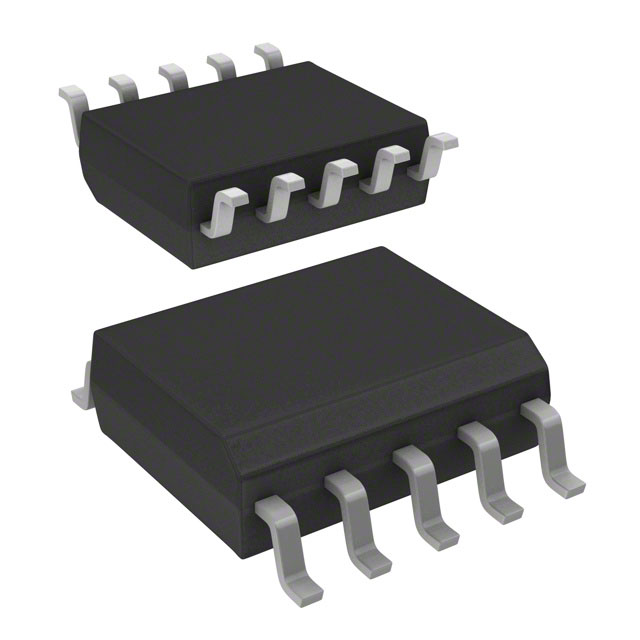
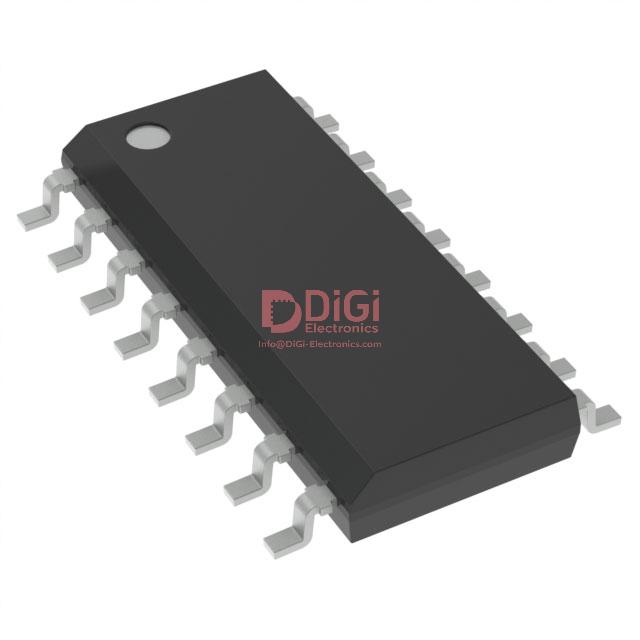
VIPER26LD’s SO16 narrow package offers a compact footprint tailored for automated surface-mount technology, facilitating rapid placement and reflow during mass production. The ECOPACK certification ensures compliance with RoHS and environmental directives, streamlining qualification for sustainable systems. Mechanically, the package delivers precise pin-to-pin spacing and robust lead coplanarity, supporting high-density board architectures and minimizing soldering anomalies.
Thermal management forms the backbone of PCB-level reliability, especially in high-power scenarios. Enhancing heat conduction from the DRAIN pins through optimized copper pours directly beneath and surrounding these terminals is essential. Increasing copper thickness or expanding the area of copper planes interlinked with DRAIN achieves lower thermal resistance. Empirical evaluation shows that incorporating thermal vias under thermal hotspots and connecting them to large copper regions on inner or reverse layers further improves heat spreading, sustaining component temperatures within safe margins even under maximum load.
Layout strategy for the VIPER26LD must address parasitic effects that emerge with compact packaging. Stray inductance, especially along high-current paths—between source, drain, and bulk capacitors—can induce voltage overshoot and degrade electromagnetic compatibility. Placing input capacitors close to the IC pins and minimizing loop areas for switching circuits mitigates these risks. A tightly controlled pinout arrangement, referenced directly from the datasheet, also improves signal integrity by preventing inadvertent coupling between sensitive nodes, such as feedback lines and switching nodes.
In isolation and offline converter designs, the unique pin assignment enables designers to streamline primary-side and secondary-side separation, supporting reinforced insulation requirements for industrial and consumer safety standards. The package geometry and lead orientation facilitate automated optical inspection and x-ray analysis, enhancing assembly yield in high-volume lines. A methodical approach—with close attention to pad sizing, solder stencil design, and reflow temperature profiles—ensures consistent joint quality, critical for long-term reliability in field deployments.
Integrating these considerations at the outset yields reduced development iterations and shorter time to market. Adopting a holistic package-to-board co-design perspective unlocks the full potential of VIPER26LD’s capabilities, highlighting how detail-oriented attention to physical, thermal, and electrical interface parameters distinguishes robust, high-performance power designs from those susceptible to latent failures or inefficiencies.
Potential equivalent/replacement models for the VIPER26LD
In the context of replacing the VIPER26LD due to design iteration, supply constraints, or lifecycle management, a thorough understanding of the functional landscape within the VIPer Plus series and adjacent STMicroelectronics platforms is crucial. The VIPER26LN, while architecturally akin to the VIPER26LD, introduces distinctions in terms of package configuration and marginal electrical nuances. These variants often serve designs constrained by board layout, thermal management demands, or industry-specific footprints. Their adoption is particularly beneficial in retrofit scenarios or when mechanical integration supersedes minimal electronic deviation.
Expanding the envelope to the VIPER26HD and VIPER26HN variants introduces strategic advantages where conversion efficiency and EMI management are non-negotiable. Their increased switching frequency, standardized around 115 kHz, yields pronounced benefits in transformer downsizing and passive filtering, directly impacting the overall module compactness. This enables a tighter enclosure design and, frequently, improved thermal dissipation profiles. Additionally, higher frequency operation can translate to nuanced board-level EMI optimization, provided that layout and snubber design are executed with precision. Field deployment in space-limited industrial control modules or consumer SMPS units validates their value, given the increasingly stringent electromagnetic compatibility expectations.
For designs trending toward minimized power budgets, the VIPER16 series warrants evaluation. These devices maintain system integration ease, bringing much of the same feature set in a reduced current and power envelope. This tradeoff is particularly favorable in IoT nodes, metering equipment, or auxiliary rail converters, where power consumption targets and regulatory efficiency standards persistently escalate. These platforms provide a measured pathway to scale down both thermal signature and BOM cost without wholesale redesign.
Parametric alignment remains the linchpin in any replacement strategy. Critical device parameters—including switching frequency, integrated protection circuitry, peak current capability, package form factor, and quiescent standby consumption—must be mapped precisely against the VIPER26LD specification. Overlooking any delta in these vectors can propagate compliance risks or latent reliability issues, particularly in designs certified to regulatory standards such as IEC or UL. In practice, prototype-level bench validation and even small-batch pilot runs provide early visibility into the nuanced behavioral differences between nominally equivalent models.
An additional dimension often under-appreciated is the supply chain latitude gained through multi-sourcing readiness. Architecting designs with parametric tolerances and PCB flexibility to accept several drop-in alternatives can balance procurement agility with long-term maintenance cost. Subtle redesign choices—such as deploying generic transformer designs rated for higher frequency operation, or configuring external protections to accommodate variable current thresholds—directly impact future-proofing. This approach anchors both first-pass yield and field-service continuity, ultimately safeguarding the system against unforeseen obsolescence or market volatility.
Conclusion
The VIPER26LD offline flyback IC from STMicroelectronics integrates a high-voltage, avalanche-rated power MOSFET with a current-mode control core and robust protection circuitry, enabling compact yet highly reliable switch-mode power supply architectures. At the device level, the internal MOSFET accommodates input voltages up to 800V, directly supporting universal mains operation without external cascode arrangements. The current-mode controller achieves fast transient response while maintaining low standby power, facilitating compliance with stringent energy efficiency standards. Primary-side regulation eliminates the need for optocouplers, streamlining both BOM and PCB layout, and minimizing parasitic losses associated with traditional feedback methods.
Advanced protection mechanisms—including overvoltage, overcurrent, thermal shutdown, and brown-out detection—are hardware-implemented and interact seamlessly with the control engine to prevent latch-up and catastrophic failure under abnormal line or load conditions. This layered safeguarding supports long-term field reliability, which is critical for deployment in harsh or remote industrial environments as well as in consumer applications demanding minimal service intervals. Additionally, the IC's integrated startup and burst-mode operation reduce aggregate system power consumption, directly benefitting regulatory certification efforts and optimizing efficiency across load ranges.
In application scenarios such as auxiliary power for industrial controllers or compact chargers in consumer electronics, the VIPER26LD simplifies design cycles by embedding necessary peripherals—internal start-up circuitry and frequency jittering for EMI improvement—thus reducing both external component count and tuning complexity. Observations from comparative in-circuit evaluations against alternative offerings highlight a reduced thermal footprint and improved surge tolerance, accelerating prototyping and iterative design workflows.
Optimal deployment of the VIPER26LD stems from recognizing its capacity to streamline compliance with EMC and safety specifications while enhancing thermal management in dense form factors. By emphasizing integrated functionality and adaptive control, selection strategies shift away from discrete or hybrid topologies, thereby lowering total system cost and raising reproducibility across manufacturing lines. Such integration not only improves first-pass yield but also enables easier certification and field upgrade paths, especially when paired with modular design practices. The device’s nuanced balance of protection, efficiency, and system integration establishes it as a foundational element for next-generation SMPS deployments across a spectrum of markets.