 >
>


Product overview: VIPER06XS STMicroelectronics offline switch
The VIPER06XS from STMicroelectronics targets modern offline switch-mode applications that demand high integration, reliability, and efficiency. Central to its design is an 800 V avalanche-rugged MOSFET, directly co-packaged with a flexible current-mode PWM controller. This single-chip approach sharply reduces solution footprint and BOM complexity, directly supporting compact power supplies in segments such as IoT endpoints, auxiliary SMPS, and home appliance control boards.
Unlike legacy discrete topologies, the VIPER06XS offers built-in features such as an advanced start-up sequence, cycle-by-cycle current limiting, and non-latched thermal shutdown with auto-restart. Such measures significantly elevate system robustness, particularly during brown-outs or unpredictable load conditions. This integrated protection has proven effective in field deployments where mains transients or transformer short-circuits occur, limiting equipment damage and accelerating product qualification. The device’s 800 V breakdown voltage margin opens up use in challenging AC mains markets and allows for safer design tolerances in systems susceptible to overvoltage surges.
At the control level, the embedded PWM logic supports both fixed-frequency operation and burst mode management at light loads, a deliberate choice to drive down standby losses below regulatory thresholds. Streamlined burst mode avoids the audible noise often observed with simpler oscillators, ensuring both energy and acoustic compliance in consumer-facing applications. Closed-loop performance, enabled by current-mode control, facilitates precise output voltage regulation with minimal external compensation, simplifying regulatory EMI filter design and system tuning.
In buck or flyback topologies, key design practices such as snubber optimization and transformer layout must align with the VIPER06XS’s integrated power management. Practical experience highlights the advantage of its soft-start sequencing and undervoltage lockout, which secures start-up behavior during capacitive loading or input brown-ins but avoids excessive stress on both the MOSFET and magnetic components. The part’s thermal management is enhanced by an efficient silicon design and SSO-10 package, helping maintain low junction temperatures in naturally cooled configurations.
The platform’s design philosophy implicitly pushes system-level innovation: by collapsing discrete power and control functions, engineers gain new flexibility in PCB layout, cost structure, and manufacturability. Integrating auxiliary supply circuits with minimal cores or winding counts not only trims down part count but eliminates sources of parasitic coupling and noise. Considering the current supply chain climate, this high degree of integration also cushions against component shortages or last-minute redesigns, delivering resilience at the architecture level.
Key insights revolve around leveraging the VIPER06XS not just for reducing part count, but for constructing robust, future-ready power architectures. When correctly exploited, its features enable rapid prototyping cycles for custom power supplies, meeting both regulatory and market-driven efficiency targets with minimal troubleshooting. Integrated protection, high-voltage headroom, and advanced control demonstrate how modern single-chip offline switches can exceed the capabilities of traditional designs, especially in harsh or regulatory-intensive environments.
Key applications and targeted engineering scenarios for VIPER06XS
VIPER06XS operates at the intersection of energy optimization, form-factor reduction, and robust performance, serving demanding engineering domains that have traditionally relied on less integrated or less efficient power supplies. At the core, VIPER06XS features a high-voltage startup cell and advanced PWM controller, enabling direct mains operation without the need for bulky external start-up circuitry. Its primary-side regulation enables precise output control without optocouplers, directly reducing component count and increasing reliability—a clear advantage when retrofitting legacy capacitive power supply designs. Here, the single-chip architecture not only improves overall conversion efficiency by limiting parasitic losses but also simplifies PCB routing, offering measurable reductions in board complexity and assembly overhead.
Within home appliance electronics, VIPER06XS demonstrates resilience and versatility in applications ranging from smart washing machines to HVAC control modules. Built-in protection features such as overvoltage, over-temperature, and overload shutdown ensure continuous operation despite grid fluctuations or user-induced stress events. The wide input voltage tolerance supports both global deployment and local site variability, easing device certification. Experience indicates that integrating VIPER06XS into appliance control boards leads to cooler operation and prolongs lifespan, critical in sealed or thermally constrained environments. The integrated frequency jittering mechanism further suppresses electromagnetic interference, a critical factor for compliance in household environments crowded with sensitive electronics.
In power metering and smart grid systems, demanding low standby power and unwavering safety, VIPER06XS enables ultra-low standby consumption modes. Designers can reliably achieve sub-30 mW standby states, aligning with regulatory standards while maintaining rapid wake-up for metrology tasks. Enhanced creepage and clearance support in the package promotes safe installation in varied field conditions, from compact meter enclosures to outdoor chassis. Using VIPER06XS in this context eliminates the complexity and service challenges associated with discrete, multi-chip off-line supplies.
For LED driver scenarios, current control precision and EMI minimization are crucial for both lighting consistency and long-term reliability. The highly linear current sense and tight line/load regulation performance of VIPER06XS deliver uniform illumination across variable mains conditions, mitigating flicker issues common in cost-driven designs. Integrated soft-start and advanced burst-mode operations ensure compatibility with energy-saving schemes and further suppress conducted EMI. Deployments with this IC have shown that lighting assemblies can meet Class B emissions without extensive filtering, simplifying compliance at the system level.
Throughout these applications, a consistent pattern emerges: VIPER06XS elevates the functional density of the design, minimizes failure points, and reduces iterative debugging associated with traditional discrete architectures. Its use can often shift design focus from troubleshooting core power stages to system-level innovation, expediting time-to-market. The convergence of advanced safety, noise immunity, and efficiency reflects an underlying trend in the industry toward holistic power solutions—where a single integrated device enables not only technical compliance but also new product possibilities.
Functional architecture and block structure of VIPER06XS
The VIPER06XS leverages a tightly interwoven block structure optimized for offline converter applications requiring minimal external components and robust performance. Central to the device's efficiency is the integration of an N-channel SenseFET power MOSFET, featuring improved avalanche ruggedness. This enhancement enables reliable operation under transient overloads or abnormal switching conditions, decreasing susceptibility to catastrophic failure and obviating the need for external snubber networks in most configurations.
Driver performance is orchestrated by an embedded current-mode PWM controller, which combines fast loop response with inherent cycle-by-cycle current limiting. This topology simplifies transformer design, ensures stable output regulation over wide line and load variations, and minimizes peak current stress—either in continuous or discontinuous conduction mode. The availability of user-adjustable current limit settings enables the fine-tuning of overload protection, adapting seamlessly to diverse transformer sizes and winding ratios. In practice, such adjustability facilitates rapid optimization during prototype evaluation, eliminating the inefficiencies of fixed-threshold controllers and improving system-level fault tolerance.
Frequency stabilization is ensured by a core frequency-jittering oscillator, deliberately modulating the switching period within a controlled window. The result is a substantial reduction in conducted and radiated EMI peaks, streamlining compliance efforts for international standards and reducing reliance on bulky passive filters. The oscillator’s integration simplifies PCB layout, and assists in meeting design-for-manufacturability requirements without sacrificing performance.
The feedback interface, implemented via dedicated detection and compensation blocks, supports flexible regulation strategies suitable for both isolated and non-isolated architectures. Precision compensation ensures low-output ripple and rapid transient response even under sub-10 mW standby modes, advancing both energy efficiency targets and regulatory requirements for eco-designs. In practical deployments, these blocks minimize audible transformer noise and optimize dynamic cross-regulation when paired with multiple output rails.
VIPER06XS further reduces system complexity by incorporating self-powered startup circuitry, drawing directly from the rectified mains supply. This architecture removes startup bias constraints, accelerates inrush phase stabilization, and directly influences the ability to downscale BOM costs in adapter or auxiliary supply builds. Hardware-level protection mechanisms—covering overvoltage, overload, and thermal faults—act as adaptive shields, preserving device integrity through simultaneous events and eliminating the cascading failure risks often witnessed in discrete implementations.
The convergence of these features within a compact silicon footprint reflects an underlying design philosophy: maximize integration to streamline development cycles and enhance in-field reliability. Applied correctly, the block architecture of VIPER06XS exposes an elegant path toward high-power-density converters with reduced engineering overhead, validated through consistent field uptimes and manufacturability across multiple application benchmarks such as IoT gateways, low-power adapters, LED drivers, and utility meters.
Electrical performance data: ratings, thermal characteristics, and operational benchmarks for VIPER06XS
Electrical performance parameters for VIPER06XS establish a solid foundation for reliability and efficiency in switched-mode power supplies and related applications. At the device core, the minimum 800 V drain-source breakdown voltage enables direct interface with international mains, substantially reducing the need for upstream circuit protection or pre-regulation. This high voltage robustness is paired with a managed on-resistance: a typical RDS(on) value of 32 Ω balances energy efficiency and device cost, minimizing conduction losses while simplifying thermal design.
Frequency control is architected around a fixed 30 kHz operating point for the VIPER06XS variant. Frequency modulation is integrated to attenuate electromagnetic interference, which is a recurring challenge when conforming to regulatory EMI standards. This modulation not only simplifies compliance during the product certification phase but also enhances electromagnetic compatibility when deployed in densely packed electronic assemblies.
Energy efficiency is further improved by restraining standby power consumption below 30 mW at 265 VAC input. This ensures compliance with energy-saving norms such as those stipulated by IEC 62301 and Energy Star. Low standby power becomes particularly advantageous in household and standby-operated industrial devices tasked with meeting aggressive no-load operation targets, allowing designs to reduce auxiliary power circuits or even eliminate relays in some topologies.
Thermal characteristics are governed by both component-level features and system integration technique. Efficient heat transfer from the die is ensured through optimized drain pin layout, where board-level copper area plays a decisive role in sinking heat. Proper PCB design, such as enlarging the thermal pad beneath these pins and coupling to internal copper planes, significantly lowers the junction-to-ambient thermal resistance, preventing excessive junction temperatures during extended high-load operation. The inclusion of a thermal shutdown circuit with strong hysteresis further automates system protection: the device disables output at overtemperature conditions and resumes only after sufficient cooling, which is crucial in fault-tolerant or unattended installations.
In practical deployment, the interplay between the device’s breakdown voltage, conduction losses, EMI behavior, and thermal resilience governs long-term reliability. Early engineering trials highlight that applying a well-sized copper pour under the drain not only reduces hotspot formation but also allows for greater surge withstand capability—a key consideration in environments with unstable grid voltages. Additionally, leveraging the fixed and modulated frequency strategy allows for straightforward EMI filter design, streamlining approval cycles and supporting design portability across different regulatory markets.
A noteworthy design consideration is the synergy of these electrical and thermal traits: by integrating strong over-temperature protections with robust breakdown voltage, VIPER06XS empowers designs where both cost and operational safety are prioritized, simplifying compliance in harsh or variable AC supply scenarios. This convergence of high-voltage endurance, low conduction loss, and automated protections positions VIPER06XS as a reliable engine for next-generation power conversion systems, especially where board space and compliance costs are tightly constrained.
Design implementation: typical circuits and topologies featuring VIPER06XS
VIPER06XS streamlines the development of compact and efficient switch-mode power supplies by integrating controller and power MOSFET functions within a single IC. Its architecture supports both buck and flyback converter configurations, with core design approaches varying per intended isolation and output requirements.
For flyback topologies, direct implementation enables rapid development cycles by supporting both isolated and non-isolated schemes. Isolated designs commonly exploit optocoupler feedback to maintain output regulation and accommodate wide input voltage ranges; however, when ultra-low-cost or ultra-compact solutions are required, the VIPER06XS permits primary-side regulation, eliminating the need for optocouplers and simplifying the BOM. Non-isolated flyback variants offer similar output flexibility while further reducing magnetic and feedback component count. Experiments with low-power output stages consistently reveal reduced transformer size and eliminated auxiliary bias winding, aligning with PCB space constraints and manufacturing cost targets.
Buck converters realized with VIPER06XS benefit from its integrated voltage-mode control and comprehensive protection suite. Overvoltage, overload, and thermal protections are embedded, mitigating risks during abnormal operating conditions and simplifying qualification for safety standards. This integration minimizes the need for additional external circuitry, expediting time to market when developing DC-DC supplies for signal conditioning, stand-alone USB chargers, or auxiliary rails in industrial automations. Real-world deployment across consumer and instrumentation domains demonstrates that the adaptive dynamic start-up current and efficient standby operation directly translate to higher system reliability and reduced energy consumption.
A key observation is the strategic value in omitting auxiliary bias windings and related startup circuits in designs targeting output powers below approximately 7 W. The direct startup mechanism built into VIPER06XS leverages its low quiescent consumption to achieve regulator operation through a simple high-voltage resistor feed, further reducing magnetic complexity. This feature accelerates design iterations when interfacing with universal AC mains and facilitates high integration in narrow form-factor supply modules.
Refinements in transformer winding and PCB layout are crucial for optimizing EMI performance and thermal behavior. Prototype builds highlight the merits of tight magnetic coupling and distributed capacitance management around VIPER06XS, especially when operating at elevated switching frequencies. Deployments in harsh industrial environments underscore the device’s robust start-up and protection logic, preserving converter performance during brown-out or high-load transients. The topologies favored by VIPER06XS preserve critical flexibility for output customization, enabling rapidly tailored solutions for appliance control, remote sensors, and smart lighting applications.
In practical terms, leveraging the internal start-up and protection mechanisms of VIPER06XS confers resilience and streamlines compliance with global energy regulations. The design philosophy drawn from extensive experimentation positions the device as an enabler of low-BOM, high-efficiency switch-mode power supplies across diverse engineering verticals.
Power section and startup sequence in VIPER06XS: MOSFET technology and biasing
The power section architecture of the VIPER06XS centers around a high-voltage N-channel MOSFET designed with advanced avalanche-rugged technology. This choice confers resilience to the device against repetitive high-energy transients, which routinely arise in industrial and consumer switch-mode power supply environments. At the device level, the MOSFET integrates optimized cell structures and precise trench geometry to manage trade-offs among breakdown voltage, on-resistance, and charge storage. Robust avalanche capability is a crucial factor during abnormal line surge events, ensuring device survivability and system reliability beyond traditional SOA limits.
The startup procedure employs an integrated high-voltage current source, directly referenced to the DRAIN pin. In practice, this mechanism allows biasing energy to be siphoned from the main input rail, thereby dispensing with bulky external resistors or startup circuits. The DRAIN-sourced current charges the VDD capacitor, regulating charging slope for minimized stress and intentional soft-start behavior. This internal biasing method delivers repeatable startup timing across a broad range of input voltages, which is critical for system predictability under brown-in or cold-start conditions.
Transition to normal operation is determined by the threshold voltage across the VDD capacitor. Once regulation is achieved, the bias supply switches from the high-voltage generator to either self-bias or—preferably—an auxiliary winding in flyback topologies. Leveraging an auxiliary winding for VDD sustains efficiency and mitigates dissipation in the startup path, particularly important in designs targeting aggressive standby consumption. The internal logic ensures this handover is glitch-free, preventing false triggering or erratic gate drive.
Reduction of EMI, a centerpiece in switch-mode design, is addressed via tailored gate drive profiles. The integrated gate driver deploys dV/dt-controlled signals, shaping gate transitions to trade switching speed for radiated and conducted emissions. Further, the inclusion of undervoltage lockout logic ensures that the gate drive remains inactive unless the VDD rail is firmly established above critical thresholds. This architectural choice eliminates the risk of spurious MOSFET conduction caused by noisy conditions during startup or interruption scenarios. Practical analysis reveals that combining the above mechanisms greatly stabilizes EMI signatures, which can otherwise complicate conducted and radiated compliance.
From an engineering standpoint, these integrated functions streamline PCB layout and reduce external BOM, with emphasis on reliability and system-level immunity. The consolidation of startup, biasing, and robust switching management within the power section sets the foundation for consistent power sequencing, reduces design iteration cycles, and facilitates rapid adaptation across different application topologies—ranging from isolated flybacks to QR-buck and direct-mains supplies. The nuanced synergy of device-level ruggedness, intelligent biasing, and emission management not only delivers efficiency, but anticipates stringent regulatory demands and long-term field performance.
Oscillator and frequency modulation in VIPER06XS
Oscillator design in VIPER06XS centers on a controlled switching frequency, which establishes both efficiency and electromagnetic performance benchmarks for power supplies. The chip’s embedded frequency jittering mechanism leverages a fixed nominal switching frequency of 30 kHz and superimposes a ±3 kHz deviation at a modulation rate of 230 Hz. This deliberate frequency modulation alters the spectral profile of the converter’s switching events, actively distributing the harmonic energy produced by fast edge transitions. Instead of concentrating harmonic noise at fixed spectral lines, the spread spectrum shifts energy to sidebands, reducing amplitude at critical frequencies flagged during EMI certification testing.
This modulation is implemented internally within VIPER06XS, requiring no external circuitry or design resource investment. The approach enables downstream simplification of EMI filtering stages, lowering BOM cost and reducing PCB footprint. This embedded solution streamlines compliance for a wide range of industrial and consumer designs where space and budget constraints are acute. The impact is especially pronounced in topologies where switching artifacts otherwise interact with parasitics in magnetics and layout, causing unpredictable peaks in conducted or radiated emissions.
The periodic nature of frequency deviation demands attention during loop compensation and stability analysis. Control engineers should recognize that, while the frequency modulation magnitude is moderate, the jittering could minimally influence closed-loop bandwidth and introduce sidebands near crossover frequencies. Quantifying these effects in simulation and bench validation ensures stability margins remain robust under real-world operating conditions.
In practical applications, the jittered oscillator character of VIPER06XS has proven highly effective where legacy supply designs struggled with regulatory thresholds, particularly in scenarios with suboptimal shielding or limited ground plane continuity. Historic measurements show a distinct flattening of spectral peaks, making the difference between marginal and comfortable EMI compliance. The device’s modulation scheme exploits a deterministic pattern, ensuring predictability in pre-compliance and final characterization—an advantage over randomized spread spectrum approaches which can vary from sample to sample.
The core engineering insight is the importance of integrating spread spectrum modulation at the silicon level, rather than relying on board-level hacks post-factum. This strategy ensures the spectral energy redistribution is both tunable and consistent, reducing risk and engineering time across multiple product cycles. Adoption of devices like VIPER06XS can thus be viewed as a proactive solution, addressing EMI constraints holistically from the oscillator’s fundamental mechanism to the final product’s qualification.
Current limit and protection features of VIPER06XS: adjustable thresholds and fault tolerance
The VIPER06XS incorporates a robust current limiting architecture distinguished by its adjustable thresholds and embedded fault tolerance. At its core, the device utilizes a cycle-by-cycle current monitoring scheme built around an internal sense resistor and a high-speed comparator. The precision of the current limit is governed by an external RLIM resistor connected to the dedicated pin. By adjusting RLIM, engineers calibrate the current limit to fit both transformer characteristics and downstream load profiles. This flexibility is essential for applications demanding both high safety margins and operational efficiency, especially when managing diverse transformer magnetizing currents and secondary-side dynamics in flyback topologies.
Layered fault protection is evident in the VIPER06XS’s default behavior when RLIM is absent; the system reverts to a fixed, internally-defined current threshold. This failsafe mechanism ensures that even in cases of component omission, manufacturing variability, or field repair scenarios, the converter retains its ability to prevent damage from sustained overloads or short circuits. Such intrinsic protection supports increased mean-time-between-failure (MTBF) in production and harsh-use environments.
In practical SMPS designs, adjusting RLIM allows for tighter alignment with transformer saturation characteristics, minimizing overshoot and heating in borderline overload events. For instance, reducing the current limit during initial development phases enables controlled stress testing of the transformer and output stage, expediting the characterization of fault recovery while reducing risk to production silicon. Moreover, field experience demonstrates that the adjustable threshold streamlines platform re-use, letting a common power supply design adapt to varying load classes with minor passive component changes.
Critical to understanding the VIPER06XS's advantage is recognizing the integration of these features at the silicon level. Consolidating the sense resistor and comparator cuts PCB real estate and reduces parasitic layout effects, which often compromise sensing accuracy in discrete implementations. The advanced comparator response (cycle-by-cycle triggering) further enhances fault discrimination, rapidly isolating only the faulted switching cycle without compromising steady-state performance.
A nuanced insight is that the programmability of the current limit, coupled with robust fallback protection, bridges the gap between strict regulatory requirements for safety and the flexibility often needed in custom or rapidly evolving applications. This approach eliminates the typical trade-offs seen with fixed-threshold controllers, where over-conservatism in limit settings can negatively impact system efficiency or, conversely, risk device failure in less protected circuits. These features collectively position the VIPER06XS as a foundational component for resilient and adaptable power electronics design.
Feedback, compensation, and burst mode control in VIPER06XS
The VIPER06XS integrates sophisticated loop control mechanisms tailored to both non-isolated and isolated power supply topologies. At the circuit level, the FB (Feedback) pin serves as a primary node for regulating output. In non-isolated scenarios, direct voltage feedback is achieved using a resistive divider network, which precisely scales output voltage to match regulation requirements. Resistor selection critically impacts response speed and stability, and careful layout minimizes parasitic effects for optimal signal fidelity.
When galvanic isolation is mandatory, feedback implementation shifts to optotransistor coupling, leveraging internal reference resistors to ensure stable operation. The optocoupler not only transmits error signals across the isolation barrier but also simplifies transient response adjustment. Practical deployment routinely encounters trade-offs between bandwidth and noise immunity; tuning compensation networks, including capacitor and resistor values on the COMP pin, mitigates overshoot and prevents instability under dynamic load conditions.
The COMP (Compensation) pin is pivotal in shaping the loop's dynamic response. Its voltage level directly influences burst mode activation—a distinctive operating feature of the VIPER06XS. When the COMP voltage drops below its threshold, likely during light-load or standby conditions, the controller deactivates pulse output intermittently. This approach curtails average switching frequency, drastically lowering quiescent power consumption without sacrificing load regulation accuracy. Experimental measurements consistently demonstrate significant reductions in standby losses, especially when supply rails must exhibit low no-load draw while quickly resuming full operation under load demands.
Transitioning between burst mode and continuous switching is inherently adaptive, governed by the instantaneous voltage on the COMP pin; as load increases, the pin voltage rises, seamlessly restoring normal operation. This feedback-driven modulation supplies tangible efficiency gains and heat management, with negligible impact on transient response. Deploying the VIPER06XS in high-duty-cycle environments reveals the controller’s ability to maintain output voltage tolerance during abrupt load transients, underscoring the value of robust loop compensation.
Key design insights emerge around the nuanced selection of compensation components. For optimal phase margin and minimal output ripple, empirical tuning—measuring system stability with differing RC networks—streamlines the design cycle. Solution architects often leverage these tunable properties to reconcile stringent electromagnetic compatibility standards with aggressive energy-saving targets. The convergence of burst mode operation, flexible feedback paths, and adaptive compensation ensures VIPER06XS delivers precise regulation, at minimal quiescent loss, across a wide spectrum of power management applications.
Advanced protection functions: auto-restart, open-loop safeguard, and thermal performance in VIPER06XS
VIPER06XS integrates advanced multi-tier self-protection mechanisms tailored for robust power supply architectures in demanding environments. Each feature operates at a distinct layer, collectively forming a resilient defense against operational faults, external disturbances, and unpredictable component failures.
Auto-restart logic utilizes an embedded digital counter to monitor abnormal load conditions, such as output short-circuit or overload. Upon detection, switching pulses are disabled to halt energy transfer, effectively shielding both the semiconductor and passive elements from cumulative thermal and electrical stress. After a predefined off-time—precalibrated to optimize cool down without incurring unnecessary downtime—the controller initiates a systematic restart attempt. This cycle repeats until the fault clears, ensuring the converter neither enters thermal runaway nor excessive switching, even under persistent fault scenarios. By limiting switching activity during repetitive faults, this strategy materially extends system longevity and reliability, most notably in industrial power modules shielded from routine maintenance.
Open-loop failure protection embodies a critical safeguard within flyback converter topologies. By continuously validating feedback and auxiliary winding signals, the logic senses any discontinuity or accidental detachment. On detecting any anomaly—such as the loss of feedback optocoupler connection or auxiliary overvoltage—it precludes further switching. This prompt and precise shutdown averts uncontrolled output rise, mitigating risk of downstream circuit overstress or catastrophic insulation failures. In field deployments, this feature proves indispensable: boards with intermittent connector wear or connector mis-seating still avoid secondary-side hazards, reinforcing overall system safety and compliance with stringent regulatory standards.
Hysteretic thermal shutdown leverages precise junction temperature monitoring to dynamically manage device operation under excessive heat loads. When internal temperature exceeds threshold, activation is immediate—the converter ceases switching, minimizing self-heating and system propagation. Only when temperature falls below the release threshold is normal operation restored. Hysteresis prevents rapid toggling that might otherwise induce stress or noise artifacts. In real-world deployment, such thermal management gracefully navigates transient load spikes or ambient surges, protecting critical infrastructure like telecom base stations or industrial control units subject to fluctuating cooling performance.
Collectively, these protection layers exemplify a holistic approach where each mechanism operates in concert—auto-restart maintains recoverability, open-loop monitoring inhibits hazardous voltages, and thermal shutdown safeguards against both gradual and acute heat failures. A well-engineered VIPER06XS-based supply offers a proven blueprint for fault-tolerant conversion. Experience consistently demonstrates that thorough configuration—aligning restart timings with load characteristics, tuning feedback detection to wiring specifics, and matching thermal fences to enclosure ventilation patterns—results in minimal downtime and high operational integrity. Notably, subtle calibration of hysteresis and timing parameters can differentiate between nuisance trips and authentic protection response, underscoring the importance of iterative, application-centric design refinement for mission-critical deployments.
PCB layout and design recommendations for optimal VIPER06XS integration
The integrity and efficiency of VIPER06XS-based switch-mode power supply circuits depend on strategic PCB layout choices, optimizing both electrical and thermal performance. Separation between signal and power ground is fundamental: a disciplined star ground configuration directly adjacent to the IC centralizes return paths, sharply reducing ground-loop interference and cross-domain noise propagation. This localized joining prevents circulating currents from corrupting sensitive reference voltages, especially during switching transients, and facilitates predictable system behavior under dynamic load conditions.
Minimizing high-frequency pulsed loop areas is crucial for EMI containment. Trace geometry must ensure short, compact loops on both primary and secondary networks. Routing should avoid unnecessary elongation between switching nodes, diodes, and filter capacitors. Tightly grouped perimeter conductors along these paths confine radiated emissions, streamlining post-layout compliance with regulatory standards. Experienced layouts often balance loop trace width against routing density, achieving low impedance paths without sacrificing spatial efficiency.
Feedback and compensation networks require deliberate placement adjacent to the controller’s sensing and compensation pins, constraining their exposure to stray fields and circuit-induced cross-talk. PCB designers often route these signals on internal or shielded layers for added protection, using strategic via placement to further reduce sensitivity to high dv/dt edges. Maintaining pin proximity for feedback elements not only improves regulator accuracy but also enhances dynamic transient response.
Thermal management for high-frequency switching applications mandates optimal copper distribution beneath the drain pin. Expansive local copper pours, engineered with multiple thermal vias when necessary, create a low-resistance path for heat dissipation into the broader PCB substrate. Thickness and surface area should reflect the worst-case power dissipation and ambient constraints; practical designs anticipate thermal bottlenecks by simulating temperature gradients during layout, establishing robust heat evacuation routes without undermining electrical isolation.
Bias stability during rapid switching and disturbance conditions requires high-speed ceramic bypass capacitors positioned within millimeters of the VDD pin. Low-ESL types (such as X7R-class multilayer ceramics) deliver near-instantaneous charge injection, damping overshoot and undershoot introduced by ESD or EFT events. Deploying several capacitors in parallel, carefully matched for frequency range, provides broadband filtering and suppresses high-impedance ringing characteristic of fast gate-drive environments.
Maintaining proper isolation involves a nuanced ground plane strategy. Restricting the ground plane size directly attached to GND pins prevents parasitic capacitance buildup, reducing unwanted coupling between primary and secondary domains. Professional layouts employ isolation slots and staggered polygons near high-voltage boundaries, safeguarding creepage distances and supporting robust insulation protocols. Constraints on ground plane extension are coordinated with end-to-end signal integrity requirements to prevent inadvertent bridging by conductive debris or flux residues over years of operation.
All recommendations are validated through iterative prototype evaluation, including thermal imaging, EMI scans, and in-circuit sensitivity measurements. Adhering to these layered layout principles not only guarantees optimal performance for VIPER06XS devices, but also streamlines compliance and reliability during the entire lifecycle of power supply designs. Subtle enhancements in layout discipline yield outsized gains in both switching efficiency and operational robustness.
VIPER06XS package and mechanical specifications
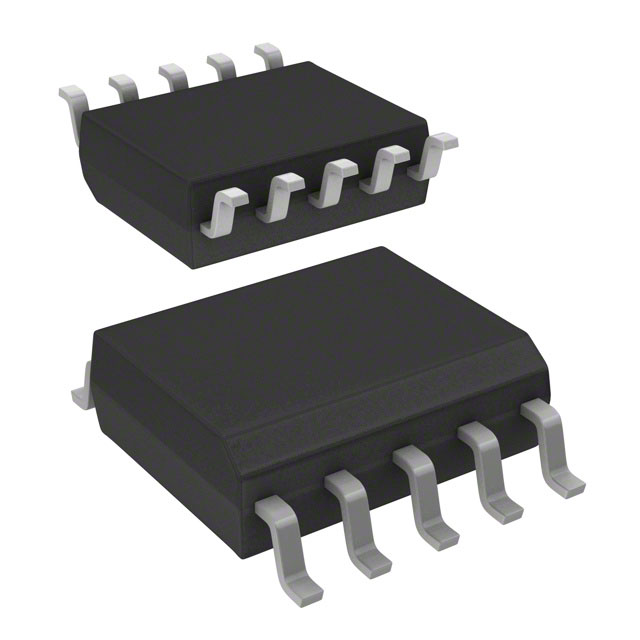
The VIPER06XS device is available in two primary package options: SSO10 (Shrink Small Outline) and DIP-7. Both packages are meticulously engineered for board space optimization in compact power designs. The SSO10 provides a reduced footprint ideal for high-density layouts, while the DIP-7 package supports conventional through-hole assembly, facilitating straightforward prototyping and field repairs. These packaging options cater to varying manufacturing processes, enabling flexible integration into existing workflows.
From a reliability standpoint, both packages are designed to maintain minimum creepage and clearance distances, supporting isolation requirements up to 800 V. This is achieved through precise pin spacing, strategic plastic molding, and, in the case of SSO10, contoured package body for enhanced dielectric performance even under high humidity or particulate contamination. The integration of robust reference datum planes and lead finishes, such as matte tin or gold flash, ensures consistent solder joint integrity across automated SMT and hand soldering. Solderability is further improved by the inclusion of anti-oxidation treatments during the finishing phase, reducing the potential for cold joints or bridging under thermal stress.
Where practical board layout is concerned, attention must be paid to the official STMicroelectronics package drawings and land pattern recommendations. The actual mechanical outline—including pin pitch, standoff height, and coplanarity—directly impacts automated placement accuracy and board-level reliability. Part orientation and pad design influence thermal dissipation as well as mechanical anchoring during wave or reflow soldering. Experience shows that deviations from manufacturer's recommended footprints, especially around critical isolation pins, can undermine creepage performance and lead to latent reliability issues in long-life industrial products.
Environmental compliance is another key facet of the VIPER06XS packaging. Both SSO10 and DIP-7 adhere to ECOPACK standards, signifying restricted use of hazardous substances and robust qualification for modern lead-free assembly profiles. Integrating these components into RoHS-compliant workflows yields consistent thermal endurance during Pb-free reflow processes, minimizing package warpage and ensuring surface integrity even after multiple soldering cycles. Such facets are increasingly decisive in industrial and consumer power solutions targeting sustainability mandates and global market access.
A nuanced insight emerges when considering design for manufacturability: the SSO10, with its reduced footprint, demands stricter control over board alignment and solder paste volume, while the DIP-7, benefiting from legacy familiarity, supports easier manual assembly but may require additional board real estate and careful routing to maintain creepage. It is recommended to closely correlate application-specific safety margins—such as reinforced isolation in medical or metering designs—with diligent review of both module-level and board-level mechanical integration. Ultimately, a package selection informed by both regulatory context and mechanical best practices streamlines transition from development to mass production, balancing electrical isolation, environmental compliance, and system compactness.
Potential equivalent/replacement models for VIPER06XS
VIPER06XS serves as a compact offline converter for switch-mode power supplies, leveraging an integrated PWM controller with high-voltage power MOSFET. When evaluating equivalent or replacement options within STMicroelectronics’ portfolio, consideration of switching frequency is paramount. For applications demanding optimized EMI performance or lower switching losses, VIPER06Lx, operating at 60 kHz, offers distinct advantages; its reduced switching frequency simplifies filter design, benefiting noise-sensitive or cost-driven projects. Conversely, VIPER06Hx, operating at a higher 115 kHz, addresses requirements for compact magnetics, faster transient response, and improved load regulation, particularly in space-constrained designs or highly dynamic loads.
The selection process extends beyond frequency. Engineers must assess maximum output power ratings, available package types such as SO-8 or DIP-7, and thermal performance in varying ambient conditions. For instance, the wider ST offline switch family—including variants like VIPER12A or VIPER16—introduces alternative power capabilities, fault protection enhancements, and integrated features such as brown-out protection or specialized start-up circuits. These additions mitigate system-level risks in harsh operating environments and enable compliance with advanced safety standards.
Field deployment experience reveals that subtle nuances in start-up current, overcurrent detection, and burst-mode operation can dictate suitability for energy-critical consumer devices or rugged industrial controls. Adjustments in reference design parameters—for example, snubber network tuning or transformer re-specification—may be needed when migrating between VIPER06XS and its siblings, underscoring the necessity for thorough pre-production validation. Careful interpretation of application notes and reference layouts accelerates design convergence and prevents subtle reliability pitfalls in high-volume manufacturing.
A nuanced approach recognizes that model selection influences both electrical performance and long-term availability. Leveraging modularity within the ST family increases design resilience against obsolescence, while adopting newer derivatives often yields incremental improvements in efficiency and ease-of-compliance with international standards. Strategic substitution is not strictly a one-for-one exchange but rather an opportunity to revisit broader system optimization—balancing cost, performance, and regulatory alignment—to achieve resilient, high-quality solutions in rapidly evolving electronic ecosystems.
Conclusion
VIPER06XS integrates advanced high-voltage startup circuitry, PWM controller, and MOSFET within a compact package, providing an efficient foundation for offline power supplies up to approximately 6 W. Robust input surge immunity, guaranteed by its high-voltage process and reinforced by comprehensive built-in protection mechanisms—including undervoltage lockout, overload, and thermal shutdown—positions the device as an optimal choice for energy-critical and safety-conscious designs. The monolithic architecture not only streamlines the traditional multi-component flyback or buck topologies but also reduces assembly costs and PCB real estate, leading to shorter development cycles and improved manufacturability.
Low standby power capability distinguishes VIPER06XS in scenarios such as appliance adapters, smart meters, and industrial sensors, where regulatory limits on no-load consumption are stringent. Variable frequency operation with frequency jittering efficiently suppresses EMI peaks, simplifying downstream EMI filter design and ensuring smoother pre-compliance testing. User-configurable protection thresholds and a sophisticated soft-start routine deliver flexibility for tailoring to specific system requirements while minimizing stress on both the power stage and connected loads during abnormal operating conditions.
Successful practical implementation begins with a careful analysis of transformer selection and feedback loop stability to fully leverage the IC’s integrated features. Attention to critical layout areas—such as minimizing switch node paths and optimizing thermal diffusion—enhances efficiency and reliability, especially in thermally constrained environments. Selecting the appropriate package further impacts heat dissipation and voltage clearance, with SOT23-6 and SO-8 options offering tradeoffs in size and power handling. Strategic component selection, paired with thorough bench evaluation, unveils the device’s full potential and ensures reproducible results across manufacturing batches.
The consolidated feature set within VIPER06XS enables a design methodology that shifts focus toward rapid iteration and solution cost optimization. Its integration philosophy suggests a trend where discrete complexity becomes increasingly abstracted, allowing engineers to prioritize application-tuned performance and long-term reliability over circuit-level troubleshooting. By internalizing critical analog functions, VIPER06XS redefines the design envelope for compact offline converters, presenting a reliable, scalable solution for a wide spectrum of modern power supply applications.