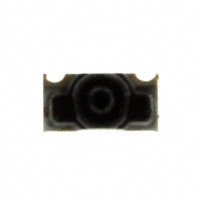
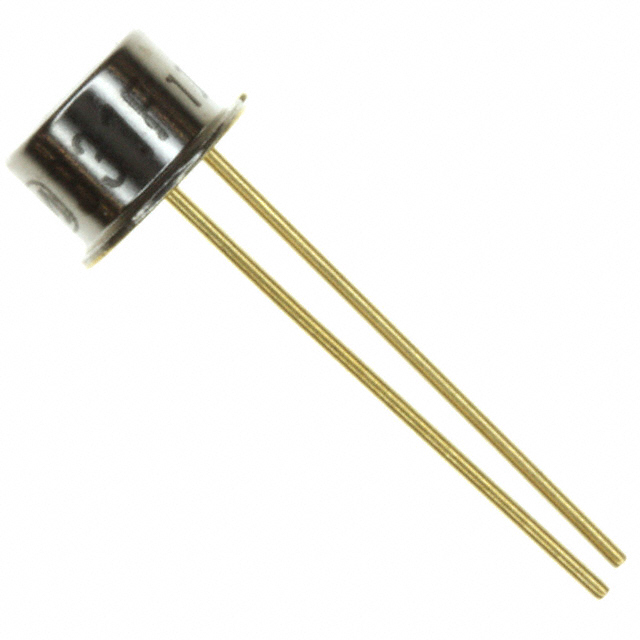
PT4800F >
PT4800F
Sharp Microelectronics
SENSOR PHOTO 860NM SIDE VIEW RAD
3356 Pcs New Original In Stock
Phototransistors 860nm Side View Radial
Request Quote (Ships tomorrow)
*Quantity
Minimum 1
PT4800F Sharp Microelectronics
5.0 / 5.0 - (192 Ratings)

PT4800F

Product Overview

7925306

DiGi Electronics Part Number

PT4800F-DG
PT4800F

Description

SENSOR PHOTO 860NM SIDE VIEW RAD

Inventory

3356 Pcs New Original In Stock
Phototransistors 860nm Side View Radial
Quantity
Minimum 1

Purchase and inquiry

Quality Assurance

365 - Day Quality Guarantee - Every part fully backed.

90 - Day Refund or Exchange - Defective parts? No hassle.

Limited Stock, Order Now - Get reliable parts without worry.

Global Shipping & Secure Packaging

Worldwide Delivery in 3-5 Business Days

100% ESD Anti-Static Packaging

Real-Time Tracking for Every Order

Secure & Flexible Payment

Credit Card, VISA, MasterCard, PayPal, Western Union, Telegraphic Transfer(T/T) and more

All payments encrypted for security

Request Quote (Ships tomorrow)
* Quantity
Minimum 1
(*) is mandatory
We'll get back to you within 24 hours

PT4800F Technical Specifications

Category Optical Sensors, Phototransistors

Manufacturer Sharp Microelectronics

Packaging -

Series -

Product Status Obsolete

Voltage - Collector Emitter Breakdown (Max) 35 V

Current - Collector (Ic) (Max) 20 mA

Current - Dark (Id) (Max) 100 nA

Wavelength 860nm

Viewing Angle 70°

Power - Max 75 mW

Mounting Type Through Hole

Orientation Side View

Operating Temperature -25°C ~ 85°C (TA)

Package / Case Radial

Datasheet & Documents

HTML Datasheet

PT4800F-DG

Environmental & Export Classification

RoHS Status RoHS non-compliant
Moisture Sensitivity Level (MSL) 1 (Unlimited)
ECCN EAR99
HTSUS 8541.49.7080

Additional Information

Other Names
425-1010-5
Standard Package
50

Reviews

5.0/5.0-(Show up to 5 Ratings)
陽***曲
December 02, 2025
5.0
物流速度快到令人驚喜,從下單到收貨只花了很短的時間,效率滿分!
Lumière***érieure
December 02, 2025
5.0
En plus d’une livraison rapide, leur système de logistique était très transparent et précis.
Drea***aver
December 02, 2025
5.0
Packaging was comprehensive; it arrived in perfect condition and works great.
Golde***rizon
December 02, 2025
5.0
They keep their stock plentiful and their support team always ready to help.
Gen***Soul
December 02, 2025
5.0
The level of post-purchase support I receive is exceptional.
Mea***Muse
December 02, 2025
5.0
The customer service team is friendly, resourceful, and always ready to help.
Coba***reams
December 02, 2025
5.0
Their commitment to excellence in both product quality and after-sales support is admirable.
Publish Evalution
* Product Rating
(Normal/Preferably/Outstanding, default 5 stars)
* Evalution Message
Please enter your review message.
Please post honest comments and do not post ilegal comments.

Frequently Asked Questions (FAQ)

Can the PT4800F be used as a drop-in replacement for the Vishay TEKT5400S in an industrial encoder application, and what circuit adjustments are needed to avoid false triggering?

The PT4800F is not a direct drop-in replacement for the Vishay TEKT5400S due to differences in spectral response, dark current, and mechanical orientation. While both are 860nm phototransistors, the PT4800F has a higher dark current (100 nA max vs. 50 nA for TEKT5400S) and side-view radial packaging, which may affect alignment in reflective encoder setups. To prevent false triggering in high-noise environments, increase the pull-up resistor value and add a low-pass RC filter at the output. Also verify optical alignment—since the PT4800F emits from the side, housing modifications may be required to maintain proper beam coupling. Always validate under full operating temperature range (-25°C to 85°C) to ensure stability.

What are the key reliability risks when using the PT4800F in outdoor applications near its 85°C upper temperature limit, and how can thermal derating improve lifespan?

Operating the PT4800F near its 85°C maximum ambient temperature significantly increases leakage current and reduces carrier mobility, accelerating degradation of the phototransistor’s gain and response time. Prolonged exposure can lead to permanent sensitivity loss or early failure. To mitigate risk, implement thermal derating by keeping the device below 70°C in practice—especially if mounted near heat sources. Use a heatsink or increase PCB copper area under the leads to improve heat dissipation. Additionally, reduce the collector current (Ic) below the 20 mA max during high-temperature operation to lower junction temperature. Monitor dark current drift over time, as it’s a leading indicator of thermal stress in silicon photodetectors like the PT4800F.

How does the 70° viewing angle of the PT4800F impact optical design in narrow-beam proximity sensing, and what lens or aperture modifications are recommended?

The PT4800F’s 70° viewing angle makes it unsuitable for narrow-beam applications without optical modification, as it captures ambient light from a wide field, increasing susceptibility to false triggers from off-axis sources. For precise proximity sensing, integrate a small aperture (e.g., 2–3 mm diameter) directly in front of the sensor to restrict the acceptance angle to ~20–30°. Alternatively, use a collimating lens or light pipe to focus incoming 860nm IR signals. Be cautious of mechanical tolerances—misalignment between the emitter and PT4800F due to the side-view orientation can further degrade signal-to-noise ratio. Always test under real-world lighting conditions, including sunlight, which contains strong 860nm components that can saturate the sensor.

Since the PT4800F is obsolete and RoHS non-compliant, what are compliant alternatives with similar performance, and what redesign considerations apply when switching to a surface-mount option?

Compliant alternatives to the obsolete PT4800F include the Everlight PT908-7B-F (850nm, side-view, through-hole) or the Vishay BPW34FS (surface-mount, 870nm). However, the BPW34FS requires a full layout redesign due to SMD packaging and different pinout. When migrating, account for the PT4800F’s radial lead spacing (typically 2.54 mm) versus SMD pad geometries. Also, the BPW34FS has a wider spectral range and higher dark current—recalibrate gain stages and threshold levels in your signal chain. If maintaining through-hole is critical, consider the Lite-On LTR-301, but verify mechanical fit due to differing lens shapes. Always conduct EMI and thermal testing, as newer packages may have different parasitics and thermal resistance.

What precautions should be taken when designing a fail-safe circuit with the PT4800F in safety-critical applications like automated door sensors, given its lack of built-in fault detection?

The PT4800F lacks internal diagnostics, so relying solely on its output for safety functions in door sensors creates a single-point failure risk. Implement redundant sensing (e.g., dual PT4800Fs in parallel with independent signal paths) or combine it with a secondary detection method (e.g., ultrasonic or capacitive). Use a watchdog timer in the MCU to monitor expected signal transitions—if the PT4800F output remains static beyond a timeout, trigger a fault state. Additionally, protect against LED emitter failure by monitoring forward current and using a feedback loop. Since the PT4800F is sensitive to ambient IR, install optical filters (e.g., 860nm bandpass) to reject interference from sunlight or other IR sources. Always validate the complete system under fault conditions per IEC 60335-1 or relevant safety standards.

Quality Assurance (QC)

DiGi ensures the quality and authenticity of every electronic component through professional inspections and batch sampling, guaranteeing reliable sourcing, stable performance, and compliance with technical specifications, helping customers reduce supply chain risks and confidently use components in production.

Quality Assurance
Counterfeit and defect prevention

Counterfeit and defect prevention

Comprehensive screening to identify counterfeit, refurbished, or defective components, ensuring only authentic and compliant parts are delivered.

Visual and packaging inspection

Visual and packaging inspection

Electrical performance verification

Verification of component appearance, markings, date codes, packaging integrity, and label consistency to ensure traceability and conformity.

Life and reliability evaluation

DiGi Certification
Blogs & Posts
PT4800F CAD Models
productDetail
Please log in first.
No account yet? Register