PT381 >
PT381
Sharp Microelectronics
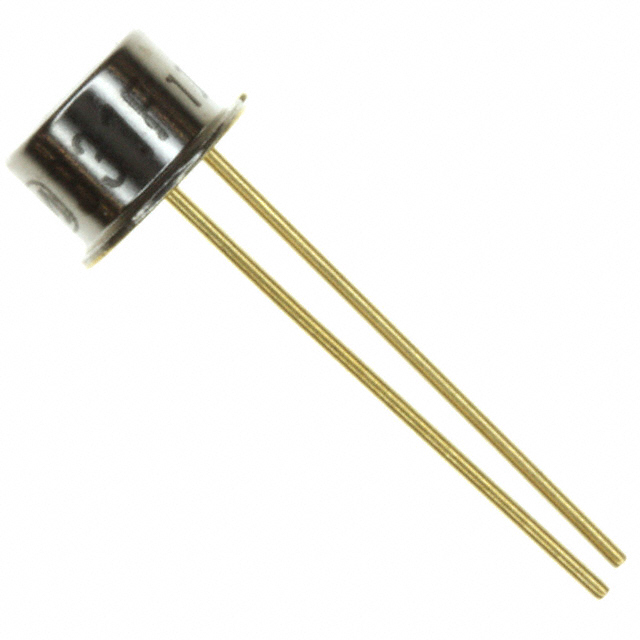
SENSOR PHOTO 800NM TOP VIEW T1
33855 Pcs New Original In Stock
Phototransistors 800nm Top View T-1
Request Quote (Ships tomorrow)
*Quantity
Minimum 1
PT381
5.0 / 5.0 - (490 Ratings)

PT381

Product Overview

7925496

DiGi Electronics Part Number

PT381-DG
PT381

Description

SENSOR PHOTO 800NM TOP VIEW T1

Inventory

33855 Pcs New Original In Stock
Phototransistors 800nm Top View T-1
Quantity
Minimum 1

Purchase and inquiry

Quality Assurance

365 - Day Quality Guarantee - Every part fully backed.

90 - Day Refund or Exchange - Defective parts? No hassle.

Limited Stock, Order Now - Get reliable parts without worry.

Global Shipping & Secure Packaging

Worldwide Delivery in 3-5 Business Days

100% ESD Anti-Static Packaging

Real-Time Tracking for Every Order

Secure & Flexible Payment

Credit Card, VISA, MasterCard, PayPal, Western Union, Telegraphic Transfer(T/T) and more

All payments encrypted for security

Request Quote (Ships tomorrow)
* Quantity
Minimum 1
(*) is mandatory
We'll get back to you within 24 hours

PT381 Technical Specifications

Category Optical Sensors, Phototransistors

Manufacturer Sharp Microelectronics

Packaging -

Series -

Product Status Obsolete

Voltage - Collector Emitter Breakdown (Max) 35 V

Current - Collector (Ic) (Max) 20 mA

Current - Dark (Id) (Max) 100 nA

Wavelength 800nm

Viewing Angle 40°

Power - Max 75 mW

Mounting Type Through Hole

Orientation Top View

Operating Temperature -25°C ~ 85°C (TA)

Package / Case T-1

Datasheet & Documents

HTML Datasheet

PT381-DG

Environmental & Export Classification

RoHS Status RoHS non-compliant
Moisture Sensitivity Level (MSL) 1 (Unlimited)
ECCN EAR99
HTSUS 8541.49.7080

Additional Information

Other Names
Q2035361
Standard Package
50

Reviews

5.0/5.0-(Show up to 5 Ratings)
Forê***crète
December 02, 2025
5.0
Un véritable plaisir d’acheter à DiGi Electronics, avec leur emballage éco responsable.
Mystè***nvolé
December 02, 2025
5.0
Leurs équipes sont très professionnelles pour le support après-vente.
MèreN***relle
December 02, 2025
5.0
Service client disponible et toujours prêt à aider.
Her***ele
December 02, 2025
5.0
Bei DiGi Electronics sind Qualität und Kundenservice feste Grundpfeiler des Erfolgs.
Bold***lorer
December 02, 2025
5.0
The professionalism in their logistics operations is truly impressive.
Fre***loom
December 02, 2025
5.0
The shipping speed exceeded my expectations, and the response from customer service was rapid.
Moonb***Waves
December 02, 2025
5.0
DiGi offers budget-friendly prices with an eco-conscious approach—winning combination.
Publish Evalution
* Product Rating
(Normal/Preferably/Outstanding, default 5 stars)
* Evalution Message
Please enter your review message.
Please post honest comments and do not post ilegal comments.

Frequently Asked Questions (FAQ)

Can the Sharp Microelectronics PT381 phototransistor be safely replaced with a Vishay TEKT5400SL in a through-hole optical switch design operating at 24V and 800nm, and what are the key reliability risks?

While the Vishay TEKT5400SL shares similar spectral response (850nm peak) and mechanical footprint (T-1, top view), it is not a drop-in replacement for the PT381 due to critical differences in dark current and voltage handling. The TEKT5400SL has a higher dark current (up to 500 nA vs. PT381’s 100 nA max), which can cause false triggering in low-light or high-sensitivity applications. Additionally, although both support 30–35V breakdown, the PT381’s tighter dark current spec makes it more reliable in precision detection circuits. If replacing due to PT381 obsolescence, add a pull-down resistor or Schmitt trigger to mitigate noise, and validate thermal performance—especially if operating near the 85°C limit—since leakage increases with temperature.

What design constraints should I consider when using the PT381 in a high-humidity industrial environment, given its through-hole T-1 package and non-RoHS status?

The PT381’s non-RoHS compliance and through-hole T-1 package introduce long-term reliability risks in high-humidity environments. The lead-based solder and older encapsulation materials are more susceptible to moisture ingress and corrosion over time, especially without conformal coating. Although MSL 1 indicates unlimited floor life under dry conditions, real-world humidity can still degrade performance through oxidation of internal bonds or lens fogging. To mitigate, apply a silicone-based conformal coating (e.g., Dow Corning 1-2577) and ensure adequate creepage distance on the PCB. Also, avoid rapid thermal cycling, which can induce microcracks in the epoxy lens—common in non-RoHS legacy optoelectronics like the PT381.

How does the 40° viewing angle of the PT381 impact alignment tolerance in a reflective optical sensor setup, and what mechanical design adjustments are needed to avoid signal dropout?

The PT381’s 40° full viewing angle (typically measured at 50% relative sensitivity) demands precise mechanical alignment in reflective or slotted switch applications. Misalignment beyond ±15° from normal incidence can cause significant signal attenuation due to the narrow angular response. Unlike wider-angle sensors (e.g., 60°+), the PT381 requires tighter tolerances in emitter-detector spacing and housing design. Use alignment pins or snap-fit guides in the enclosure, and consider a collimating lens or light pipe if mounting flexibility is limited. Also, ensure the IR LED emitter (e.g., Sharp GL5528) is co-aligned within ±5° to maximize coupled flux—misalignment here compounds losses and reduces effective sensing range.

Is the PT381 suitable for battery-powered applications requiring ultra-low standby current, and how does its 100 nA dark current compare to modern alternatives like the Everlight ALS-PT19?

The PT381’s 100 nA max dark current is relatively low for a legacy phototransistor, but it may still be too high for ultra-low-power battery applications (e.g., IoT sensors with multi-year lifespans). In contrast, the Everlight ALS-PT19 offers comparable sensitivity at 850nm but with a typical dark current of just 1 nA—two orders of magnitude lower. However, the ALS-PT19 uses a surface-mount package (0805), requiring PCB redesign. If retrofitting a PT381-based design, consider adding a pulsed drive circuit to the IR LED and sampling only during illumination to minimize average current. But for new designs, migrating to a modern SMD alternative reduces quiescent load and extends battery life significantly.

What are the risks of continuing to use the obsolete PT381 in new production, and how can I future-proof my design against supply chain discontinuation?

Using the obsolete PT381 in new production poses significant supply chain and compliance risks. Although 33,751 units are currently in stock, Sharp Microelectronics has discontinued support, meaning no new batches will be manufactured. This creates single-source dependency and potential counterfeit exposure. Additionally, the PT381’s non-RoHS status may violate environmental regulations in EU or medical markets. To future-proof, initiate a redesign using a RoHS-compliant, in-production alternative such as the Kingbright APT2012PBC (T-1 equivalent, 870nm, 50 nA dark current) or the Rohm RPM061N. Perform full characterization including temperature drift, rise/fall time, and SNR under worst-case conditions. Maintain the PT381 as a last-resort fallback only, and document a sunset plan for end-of-life (EOL) scenarios.

Quality Assurance (QC)

DiGi ensures the quality and authenticity of every electronic component through professional inspections and batch sampling, guaranteeing reliable sourcing, stable performance, and compliance with technical specifications, helping customers reduce supply chain risks and confidently use components in production.

Quality Assurance
Counterfeit and defect prevention

Counterfeit and defect prevention

Comprehensive screening to identify counterfeit, refurbished, or defective components, ensuring only authentic and compliant parts are delivered.

Visual and packaging inspection

Visual and packaging inspection

Electrical performance verification

Verification of component appearance, markings, date codes, packaging integrity, and label consistency to ensure traceability and conformity.

Life and reliability evaluation

DiGi Certification
Blogs & Posts
PT381 CAD Models
productDetail
Please log in first.
No account yet? Register