>
>


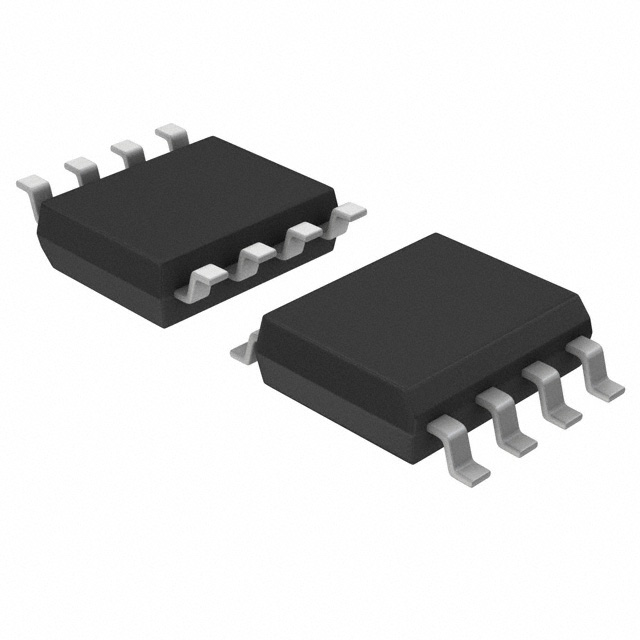
Product overview: Sharp Microelectronics PC9D10 optoisolator series
Sharp Microelectronics’ PC9D10 optoisolator series delivers high-performance, dual-channel optical isolation for logic-level signal transmission in demanding environments. Architected around proprietary OPIC (Optical IC) technology, each channel integrates a photodetector and signal conditioning circuitry within a single monolithic die, dramatically reducing the signal path and minimizing parasitic capacitance. This integration translates into rapid response times and ensures tight channel-to-channel consistency, directly addressing the timing skew often seen in traditional multi-component photocouplers.
The 8-DIP standard package streamlines PCB layout and supports drop-in compatibility for designers optimizing compact, high-density subsystems. The open-collector outputs deliver flexible interfacing with wide-voltage logic circuits, and facilitate wired-AND configurations for fail-safe system architectures. The 2500V rms isolation voltage imparts robust galvanic isolation, not only enhancing signal integrity but also meeting stringent functional safety and EMI requirements in industrial automation, measurement, and programmable logic controller (PLC) domains.
Compliance is validated with UL file No. 64380, reflecting attention to recognized safety benchmarks crucial in mains-powered equipment and electrically noisy settings. The dual-channel topology is particularly advantageous in serial digital communication links and differential signal isolation, enabling simultaneous handling of two independent signals without board space penalties. This configuration not only benefits multiplexed sensor feedback circuits, but also supports compact motor drive I/O and isolated data acquisition modules, where per-channel performance stability is critical to system reliability.
Leveraging OPIC’s monolithic integration mitigates common failure modes associated with discrete optical interfaces, such as LED degradation and inconsistent transfer ratios. The closed signal processing loop stabilizes output across temperature, supply variations, and component aging—directly benefitting deployment scenarios with continuous duty cycles or wide operating ranges. Implementing PC9D10 in backplane isolation illustrates the advantage: equal-length traces and paired isolator channels achieve minimal propagation delay differential, simplifying timing budget analysis in synchronous systems.
The series demonstrates that tight design coupling between photonic sensing and electronic processing is often the optimal strategy for achieving both electrical dependability and top-tier transmission fidelity in harsh environments. This approach extends the assurance of safety-certified isolation beyond regulatory compliance to tangible reductions in board complexity and long-term maintenance. The device’s engineering-centric construction and appropriately chosen package underscore a design philosophy prioritizing signal robustness and scalability in practical industrial ecosystems.
Key electrical and performance characteristics of Sharp Microelectronics PC9D10
Sharp Microelectronics’ PC9D10 isolates high-speed interfaces by leveraging an optocoupler design optimized for rapid propagation. Its typical delays for both tPHL and tPLH transitions are precisely specified at 50ns when loaded with 350Ω. This response window is engineered for compatibility with synchronous digital protocols where deterministic signaling is essential and timing margin must be preserved for clock-data coordination. Deploying the PC9D10 in digital buses or serializer/deserializer links, engineers may reliably cascade multiple gates without cumulative latency threatening logic integrity—a recurring constraint in mixed-voltage board layouts or high-density field interfaces.
At the device's core, the optically coupled architecture achieves a CMTI of 500V/μs. This figure marks resilience against abrupt ground potential differences and transient surges, which are prevalent in motor control units, inverter I/O, or broadcast base stations prone to electrical noise. By exceeding the noise immunity threshold required by modern serial systems, the PC9D10 becomes a strategic component for designers seeking to safeguard low-level signals in environments subject to cross-domain interference and power switching spikes. Past experience in deploying isolators in automation panels reveals that inferior CMTI not only risks logic faults but often manifests as premature component failure—emphasizing the significance of the PC9D10’s specification.
Forward input current parameters are tightly controlled, with IFHL rated at a maximum of 5mA. This low-drive requirement allows for direct interfacing from CMOS and TTL outputs, eliminating the need for intermediate buffering and streamlining PCB routing in densely packed modules. This approach minimizes input stage stress, evidenced by robust operational stability even during prolonged high-frequency toggling. Integration into edge-node controllers and factory data concentrators demonstrates that reduced input drive translates into measurable gains in thermal margins and long-term reliability, crucial for maximizing system uptime.
The ambient temperature range from 0–70°C ensures operational consistency across both workstation enclosures and factory-floor junctions. When validated against typical industry deployments, these parameters accommodate temperature swings without derating, thereby maintaining interface throughput in uncontrolled settings. In test environments, circuit designers routinely profile collector dissipation, input-output characteristics, and timing propagation with variances in supply voltage and temperature—generating baseline models for system-level emulation. The empirical dependency of propagation delay on input amplitude and ambient temperature flags a subtle vector for timing skew; hence, simulation tools should incorporate measured transfer functions to capture nuanced behaviors under field conditions.
Power integrity is reinforced through recommendations for local decoupling. Placement of a ceramic capacitor—0.01 to 0.1 μF—within 1cm of VCC to ground pins is essential to suppress parasitic oscillations and power supply ripple ingress. Board-level validation repeatedly underscores that failure to localize filtering results in sporadic output fetching errors or indefinite reset states, especially during simultaneous switching noise events. This insight guides layout engineers to integrate bypass schemes early in design iterations, prioritizing noise isolation at the component level. Such practical refinements in layout methodology consistently reduce post-production debugging time and stabilize mission-critical communication links.
A layered examination of the PC9D10 thus reveals an intersection of speed, immunity, and minimal power draw—attributes resonant with the requirements of modern digital isolation. Strategic selection, guided by both observed device responses and theoretical models, unlocks predictable performance scalability for complex signal domains. Engineering insights distilled from applied deployments reinforce its value proposition in high-speed, noise-prone network hierarchies.
Design considerations and recommended operational practices for Sharp Microelectronics PC9D10
The PC9D10, with its open-collector output topology, enables seamless integration into heterogeneous logic systems. This output configuration not only facilitates level shifting between TTL, CMOS, and custom logic rails but also supports wired-OR functions, streamlining inter-device signaling on shared lines. Careful pull-up resistor selection is recommended—balancing propagation speed against power dissipation remains central. For timing-critical designs, minimizing pull-up resistance sharpens edge rates, but this must be weighed against increased standby currents. In scaling multi-signal systems, the inherent high-impedance output state simplifies bus expansion but demands rigorous attention to noise margins and signal integrity, especially in electrically dense environments.
Adhering to the absolute maximum ratings, specifically input current and collector-emitter voltage, underpins operational robustness. Continuous operation within the recommended boundaries, including strict observance of temperature de-rating curves, ensures predictable performance—even as thermal stress or power cycling challenge phototransistor gain and CTR (Current Transfer Ratio) stability over device lifetime. Notably, thermal management strategies, such as optimized air flow and deliberate component spacing, directly influence long-term photo-coupler reliability in densely packed control modules.
Layout at the PCB level demands particular attention to isolation barriers intrinsic to optocoupler operation. Routing high-frequency or switching power traces away from the isolation boundary suppresses unwanted capacitive coupling and mitigates transient-induced disturbances. Signal propagation characteristics, including rise and fall times, are sensitive to stray capacitance and trace inductance—keeping signal paths short and well-referenced to ground maintains timing fidelity. During assembly, preserving a solder distance of at least 2mm from the package’s lead base for under 10 seconds is essential for avoiding thermal ingress into the opto-die, thereby averting junction degradation and premature aging.
Given the device’s susceptibility to electrostatic discharge, typical ESD-handling precautions—grounded work surfaces, wrist straps, and anti-static packaging—form the baseline for process safety. For deployments where electromagnetic noise, high voltages, or frequent static transients are present, layering PCB ground planes and localized filtering can enhance system immunity. Additionally, referencing Sharp’s broader suite of optoelectronic design guidelines reveals methodology for margin-testing and fault tolerance, which prove valuable in scaling from prototype to mass production.
Integrating the PC9D10 in high-uptime, electrically harsh systems reinforces the need for system-level redundancy—designers can leverage its optical isolation in tandem with digital diagnostics to provide layered failure containment. Experience demonstrates that secondary side voltage drifts or excessive insulation stress can often be traced to minute PCB contamination or underestimated creepage requirements in mixed-voltage zones. Addressing such edge cases at the outset preempts returns and unplanned maintenance. The intersection of meticulous component handling, judicious layout, and dynamic system testing defines best practice for extracting both resilience and performance from the PC9D10 optocoupler class.
Application scenarios for Sharp Microelectronics PC9D10
Sharp’s PC9D10 addresses isolation challenges in high-speed digital circuits, leveraging optoelectronic coupling to ensure robust separation of signal domains. Its design targets scenarios where eliminating ground loops and mitigating common mode noise are not optional, but foundational for system integrity. At the physical layer, the device’s quick response and low propagation delay permit reliable transmission of fast-changing signals while preserving signal fidelity. Galvanic isolation is realized without compromising timing margins, making the PC9D10 suitable for interface circuits bridging microcontrollers, FPGAs, or logic devices operating across disparate voltage domains.
In computer peripherals and microcomputer systems, PC9D10 enables USB, LVDS, or similar high-throughput links to decouple controller logic from external devices. This measure sharply reduces susceptibility to conducted EMI and ground offsets, which frequently degrade system-level communication. In practical deployment, designers capitalize on the device’s high common-mode transient immunity, particularly critical in environments susceptible to switching noise or ESD events. Implementation within high-speed line receivers in test instrumentation further leverages the PC9D10’s ability to isolate analog front-ends from digital processing units, thus shielding sensitive measurement circuits from digital switching artifacts.
Within digital audio applications, the emphasis extends beyond pure signal transfer to the preservation of timing precision and bit integrity. Use of the PC9D10 here blocks spurious noise paths that readily couple through power connections or PCB ground planes, a subtle source of jitter and bit errors in high-fidelity signal chains. Audio DACs, ADCs, and sample-rate converters benefit from this isolation not just in noise terms but also for compliance reasons, especially where safety and electromagnetic compatibility are audited.
In data transfer equipment where continuous operation is imperative, such as telecommunications gateways and networked storage, the PC9D10’s swift switching enables high channel density without introducing thermal or power design overhead. Its integration is common in isolation stages for serial links, backplane interfaces, and industrial fieldbus terminators, where compliance with regulatory and functional safety requirements often mandates multi-level protection. Actual deployments reveal that layering the PC9D10 with surge suppressors, TVS diodes, or even redundant signaling pathways greatly enhances overall system resilience—an insight especially relevant in fields like energy automation or process control.
For domains demanding exceptional fail-safety, such as transportation safety circuits, gas detectors, or alarm systems, the role of the PC9D10 extends to supporting redundancy and fault monitoring schemes. However, it remains essential to pair device selection with system-level diagnostics and fallback strategies. This layered approach not only fulfills compliance but also anticipates real-world fault profiles, an engineering insight crucial for achieving true mission-critical reliability.
Optimal use of the PC9D10 depends on understanding that isolation is an enabler, not an endpoint. Effective signal isolation unlocks new system architectures—modular, scalable, and inherently resistant to cascading failures—provided it is combined with comprehensive circuit protection and real-world margin analysis. Viewed holistically, the device’s utility emerges not just from datasheet figures but from experience-informed design, foresight in anticipating parasitic effects, and willingness to integrate multiple protection layers for long-term field robustness.
Potential equivalent/replacement models for Sharp Microelectronics PC9D10
Opting for equivalent or replacement devices for the Sharp Microelectronics PC9D10 requires a layered focus on critical optocoupler parameters and thorough assessment of system-specific integration. Devices meeting the following attributes should be prioritized: dual-channel optoisolation for efficient signal separation within compact footprints, open-collector output stages ensuring flexible logic interfacing and simplified external pull-up configuration, and high isolation voltage ratings (≥2500V rms) vital for safety compliance in high-potential domains such as industrial control and power supply feedback loops.
The propagation delay specification, preferably under 100ns, directly affects loop stability and data integrity in high-speed digital or analog feedback paths. Ensuring a comparable common-mode transient immunity (CMTI, ≥500V/μs) guards against erratic switching behavior in electrically noisy environments and is particularly relevant in switched-mode power supplies and inverter designs. High CMTI maintains system timing reliability, minimizing risks of signal misinterpretation under rapid voltage transients. Devices with suboptimal CMTI, even if electrically compatible, may compromise the noise margin and degrade field reliability when subjected to fast-switching transients common in motor drives or isolated ADC front ends.
Packaging remains a nontrivial selection filter; established manufacturers such as Panasonic and Toshiba offer DIP-form optoisolators that often align well with existing PCB layouts, expediting drop-in replacement and reducing redesign overhead. However, physical fit must be consolidated with parametric equivalence: datasheet cross-evaluation of input-output isolation, CTR (current transfer ratio) tolerances, and device certifications (e.g., UL, VDE) is mandatory for regulatory and system-level assurance. Factory or field experiences indicate that minor mismatches in CTR can require external resistor value adjustments, hence pre-emptive signal margin validation shortens troubleshooting cycles.
Beyond catalog matching, the subtle nuances in real-world installations—such as susceptibility to PCB leakage currents at high isolation voltages or thermal behavior under sustained switching—underscore the need to review both absolute and derated ratings across operating temperature and humidity ranges. Advanced replacements from select vendors may present enhanced CMTI, allowing for design margin optimization against future system upgrades or higher-level EMC requirements.
Rather than relying solely on data-driven equivalence, layering in firsthand board-level qualification for several candidate devices consolidates both electrical and environmental robustness. This approach closes the gap often left by catalog specifications, ensuring seamless transitions, improved system resilience, and mitigation of supply chain risks. In summary, a methodical balance of core electrical characteristics, regulatory fit, and practical integration nuances determines the success of replacing or upgrading the PC9D10 in operational circuits.
Precautions and regulatory compliance for Sharp Microelectronics PC9D10
Sharp Microelectronics’ PC9D10 requires meticulous attention to handling practices and stringent design protocol to fulfill safety and reliability targets. The manufacturer’s guidelines delineate the permissible scope of deployment, explicitly restricting the device to typical general-purpose electronics while prohibiting use in high-dependability environments—such as nuclear plant control, critical telecommunications infrastructure, or life-support applications—where catastrophic failure poses unacceptable risk. This policy is rooted in rigorous internal qualification data and emphasizes the necessity of component derating, protection circuitry, and controlled thermal profiles within approved electronic designs.
Regulatory compliance begins with clear adherence to both international and domestic export regulations, as device usage may fall under dual-use or technology transfer controls, depending on the target market and end user. Engineers must assess component certifications against prevailing standards, evaluating directives such as RoHS, WEEE, and any specific requirements for electromagnetic compatibility or product safety. Empirical evidence from deployment cycles demonstrates that early verification of certification status, especially in multi-jurisdictional projects, streamlines regulatory documentation and avoids late-stage design backtracking.
Integration into product prototypes and manufacturing lines mandates close synchronization with Sharp’s official device specification sheets. This encompasses electrical and mechanical parameters, as well as prescribed mounting, soldering, and environmental safeguards. Field analysis reveals that strict process discipline in ESD prevention, moisture control, and automated optical inspection minimizes early-life failures and post-market recalls. Firms that invest in operator training and in-line parameter monitoring typically observe measurable improvements in device longevity and warranty cost reduction.
From a systems engineering perspective, leveraging the PC9D10 in its intended context involves not only component-level validation but also a comprehensive understanding of application-specific risk profiles. Robustness is engendered through iterative design reviews, simulating fault conditions and confirming operational margins under worst-case scenarios. Deviating from published design limits, even in minor ways, consistently correlates with increased RMA rates and compliance audit failures; thus, sharp focus on documentation fidelity and traceability in the configuration management process is essential.
A recurring insight from deployment in mass production environments is the criticality of closed-loop feedback between failure analysis and initial design intent. Prompt escalation and root-cause analysis of any field issues allow rapid containment and design remediation, reinforcing the overall compliance and safety ecosystem around the PC9D10 series. Through disciplined application of these layered precautions and regulatory strategies, electronics manufacturers can extract maximum functional value from the device while minimizing operational and compliance liabilities.
Conclusion
The Sharp Microelectronics PC9D10 optocoupler is engineered to address the dual challenges of electrical isolation and signal integrity in high-speed digital interface architectures. At its core, the PC9D10 leverages an open-collector output configuration, enabling seamless integration into varied logic families while supporting multi-channel topologies for parallel data transfer. This structural choice permits precise control over pull-up voltage levels, optimizing signal amplitude and edge rates without compromising stray impedance or propagation delay.
Isolation fidelity is achieved through reinforced dielectric barriers, allowing the device to withstand substantial common-mode transients and operate safely across system boundaries experiencing disparate ground potentials. Careful attention to creepage and clearance distances within the package ensures robust insulation, supporting compliance with international safety certifications such as UL and IEC standards. In practice, reliable isolation underpins fail-safe data transmission in harsh environments, including industrial automation and medical electronics, where inadvertent ground faults or surges are routine concerns.
The PC9D10’s high-speed electrical characteristics—fast turn-on and turn-off times paired with minimal pulse width distortion—equip designers to preserve timing margins in low-latency protocols like SPI, UART, or custom synchronous buses. Optimized input sensitivity reduces susceptibility to noise and false triggering, a critical factor when routing signals in densely packed PCBs or across extended traces exposed to EMI. Experience suggests that careful PCB layout, including short signal paths and shielded routing, yields the best results for jitter minimization and data fidelity.
Deployment success hinges on matching the PC9D10’s rated isolation voltage, CTR spread, and operating range with application-specific requirements. Strategic selection of external resistors allows fine-tuning of switching thresholds and power dissipation, while parallel use of multiple channels streamlines layout and reduces board footprint in multi-lane communication links. Notably, the device’s thermal performance under continuous switching loads remains consistent, minimizing long-term drift in opto-electronic parameters—an often underestimated yet impactful factor in high-availability systems.
Efficient usage of the PC9D10’s architecture presents opportunities for innovative isolation schemes, such as star-grounded multi-domain systems or galvanically separated sensor networks. Prior prototyping demonstrates that employing staggered power domains and careful synchronization can further enhance system resilience without introducing bottlenecks or crosstalk artifacts. Ultimately, strategic adoption in mission-critical designs can bolster long-term reliability and regulatory compliance, especially where isolation is both a functional necessity and a safeguard against undefined states or hazardous conditions.