>
>


Product overview: Sharp Microelectronics PC817XI optoisolator series
The PC817XI optoisolator series from Sharp Microelectronics exemplifies targeted engineering solutions for galvanic isolation in high-voltage and signal integrity-critical segments. Its core mechanism is grounded in leveraging optical coupling: input-side infrared LED emission is detected by a phototransistor, transducing electrical signals while enforcing strict physical separation. This architecture fundamentally restricts ground loop formation and parasitic cross-talk, ensuring robust reliability for both low-level logic and interfacing high-voltage subsystems.
A defining attribute of the PC817XI series is its 5000 Vrms isolation voltage, achieved through controlled spacing, specialized encapsulation, and precise semiconductor alignment. The optoisolator not merely blocks direct electric conduction but actively shields against voltage transients and surges, making it suitable for use in inverter gates, switching regulators, and safety interlocks. The transistor output type is especially compatible with straightforward signal processing chains, supporting TTL and CMOS logic levels with minimal propagation delay. Its single-channel arrangement plays into scenarios where channel granularity and compact signal routing are priorities—for instance, feedback paths in switched-mode power supplies or state monitoring within motor control units, where fine isolation and packaging footprint directly enhance overall system integrity.
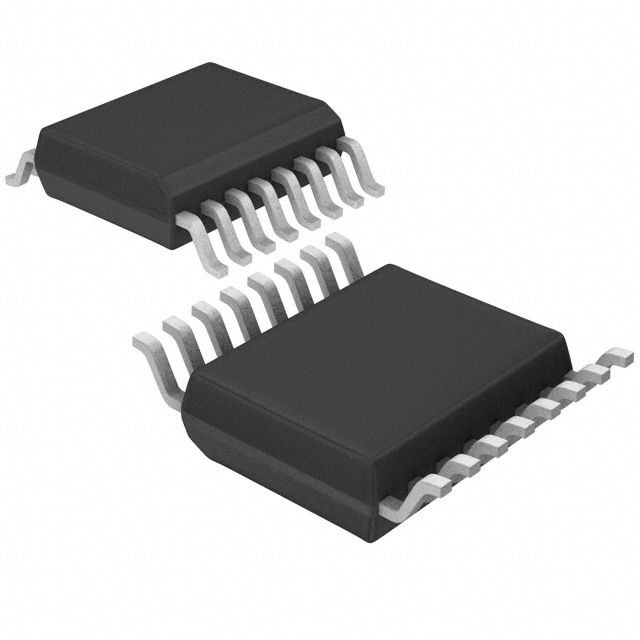
In surface-mount L4-SMD packaging, the device integrates seamlessly onto PCBs with automated assembly workflows. This format minimizes parasitic lead inductance, optimizing EMI performance and supporting high-density layouts for modern hardware requirements.
Deploying PC817XI in live systems reveals a balance of speed and isolation: real-world applications benefit from its stable propagation characteristics and low leakage current, with minimal drift over time even under repetitive surges or elevated ambient temperatures. Signal fidelity persists in environments prone to electrical noise or momentary faults, allowing for consistent circuit protection and trouble-free long-term operation. Engineering best-practices often dictate inclusion of optoisolators like the PC817XI in designs where separation of control from power is essential, leveraging them for strategic segmentation or safety compliance without complex supporting circuitry.
The optoisolator’s functionality demonstrates that forward-thinking system design hinges on the nuanced management of interface boundaries. PC817XI’s blend of mechanical precision, optical isolation, and electrical compatibility encapsulates an optimal trade-off for today’s integration-focused and safety-conscious applications. Advanced implementations take advantage not only of the component’s isolation metrics but also its predictable switching dynamics, integrating it as a foundational element in scalable, fault-tolerant architectures across a spectrum of industrial control, communication, and clean-energy domains.
Key functional characteristics of the PC817XI optoisolator
The PC817XI optoisolator integrates a gallium-arsenide infrared LED and a silicon NPN phototransistor within a compact package, enabling robust optical coupling across its input-output barrier. This design delivers galvanic isolation, a critical feature that ensures electrical separation between control domains and high-voltage subsystems. The high isolation voltage rating, typically in the kilovolt range, protects sensitive signal processing components against transient surges or ground potential differences, extending system longevity and reliability in industrial automation, motor drives, and power supply units.
Core to the optoisolator’s mechanism is efficient photon generation and collection, promoting a fast switching response and consistent transfer characteristics. The phototransistor’s linear operation within specified collector currents and forward input currents supports reliable signal reproduction, with propagation delays tightly controlled, particularly under low input drive conditions. This precise behavior allows seamless integration of the PC817XI into digital logic-to-power interfaces, where timing coherence and logic-level fidelity are paramount.
Application-wise, the device excels in scenarios requiring microcontroller insulation from relays, triacs, or direct AC mains switching. Its single-channel configuration minimizes cross-talk and electromagnetic interference, optimizing both noise immunity and device layout. Practical deployment frequently involves placing the PC817XI between low-voltage digital outputs and optically isolated control tracks, where the predictable current transfer ratio (CTR) stabilizes input-to-output response. This supports design scalability—substituting optoisolators in circuit arrays without necessitating recalibration.
Field observations highlight the impact of ambient temperature and input drive variations on CTR, suggesting that thermal management and input pulse shaping further enhance performance. For instance, implementing series resistors tuned to optocoupler input characteristics not only limits surge currents but also improves long-term phototransistor stability. Strategic PCB layout, with dedicated ground paths and shielded traces, maximizes isolation and mitigates external EMI risks.
Inherent to the PC817XI's architecture is the balance between high integration capability and system-level protection, fostering modularity and streamlined diagnostics. Rapid failure detection is possible by monitoring output saturation levels and collector-emitter voltages, allowing predictive maintenance in mission-critical settings. The optoisolator’s repeatability in signal transfer establishes trust in automated control logic, supporting design philosophies favoring redundancy and compartmentalization.
The decisive advantage stems from pairing robust isolation mechanisms with efficient signal translation, shaping the PC817XI as a preferred choice in tightly regulated environments. This design orientation not only meets stringent safety standards but also facilitates rapid prototyping and manufacturability, underscoring its significance in evolving engineering workflows.
Electrical and isolation specifications of the PC817XI series
The PC817XI series is distinguished by its robust electrical isolation capabilities, centered around its 5000 Vrms isolation voltage. This high dielectric withstand voltage embodies the internal optoelectronic architecture: a gallium arsenide infrared emitter optically coupled to a silicon phototransistor. The separation achieved through this configuration mitigates the risk of voltage transients propagating from the output to the input side or vice versa, which is critical in mixed-voltage and noisy industrial environments.
Examining the device’s input side, forward current parameters align with standard low-power LED operation, enabling direct interfacing with microcontroller GPIOs and PLC output cards. The typical forward voltage threshold ensures predictable drive requirements, allowing for straightforward bias resistor selection to balance power efficiency and reliable switching, even in scenarios with long wiring runs or EMC constraints.
On the output side, the phototransistor’s voltage and current ratings are optimized for signal transmission, supporting collector-emitter voltages suited to TTL, CMOS, and industrial logic levels. The clean switching characteristics simplify integration into high-speed digital signaling or slow-moving analog sensor loops. Practical deployment sees the PC817XI frequently inserted between low-voltage logic and high-voltage actuator drivers, ensuring fault isolation while minimizing propagation delay and signal distortion.
A core design consideration is the interplay between the isolation barrier and the device’s common-mode transient immunity. In field scenarios, the ability of the PC817XI to maintain logic integrity when subjected to rapid dv/dt events exceeds basic isolation metrics, directly influencing its reliability in frequency inverter feedback, power metering, or distributed control systems. Addressing PCB layout, maintaining creepage and clearance distances defined by the device package, alongside optimal routing for input and output traces, further safeguards signal integrity and insulation performance.
In complex architectures where unintentional ground loops or potential equalization currents may exist, choosing components with conservative isolation ratings like the PC817XI reduces the risk of cumulative failure mechanisms. The repeatability of its isolation voltage, coupled with low input drive requirements, underscores its versatility in both retrofit and greenfield designs. This layered approach to isolation specification, combining empirical performance with sound engineering judgment, is pivotal for robust, future-proof system design.
Packaging and integration considerations for PC817XI
Sharp’s PC817XI employs an L4-SMD small outline surface-mount package, reflecting optimization for contemporary PCB assembly lines. The physical profile maintains low lateral and vertical dimensions, enabling effective placement in tightly populated circuit boards, such as those encountered in drive circuits, sensor input modules, or power management systems where isolation is critical and available board real estate is minimal. The package geometry aligns precisely with standard reflow soldering profiles, ensuring consistent and reliable solder joints during automated assembly; this mitigates risks involving thermal stress or misalignment during pick-and-place operations, which are notable concerns in high-speed manufacturing environments.
Mechanistically, the SMD footprint reduces parasitic inductance and capacitance relative to bulkier through-hole variants, particularly valuable for high-frequency signal isolation or rapid switching scenarios—such as optically-coupled gate drivers or data communication lines in industrial control architectures. The reduced height profile minimizes shadowing effects and thermal stacking, allowing for denser vertical integration in multilayer boards without compromising on heat dissipation or EMI performance. These attributes collectively streamline the overall routing strategy. Designers frequently leverage ladders or parallel PC817XI arrays to scale isolation channels, a practice facilitated by the uniform pad layout and predictable spacing provided by the L4-SMD enclosure.
Procurement cycles benefit from standardization: the package complies with JEDEC and RoHS directives, smoothing inventory logistics and easing cross-sourcing during supply fluctuations. From a practical perspective, SMD-packaged optocouplers like the PC817XI consistently demonstrate less rework and failure rate versus their through-hole counterparts, supporting lower defect rates and more robust traceability in traceable, automated SMT lines. In vertically differentiated manufacturing environments—where downstream test and debugging time pressures are acute—these characteristics contribute to reliable module yields and manageable lifecycle costs.
Integration strategies often rely on the high mounting stability and solder reliability inherent to the package design, supporting system reliability in vibration-prone applications such as mobile industrial equipment. Careful attention to solder paste formulation and stencil aperture design in the paste deposition phase prevents tombstoning or cold solder joints. Additionally, engineers may exploit the reduced footprint to maintain safety regulatory clearances while accommodating additional features on constrained boards, optimizing both electrical performance and certification compliance.
Ultimately, the PC817XI’s L4-SMD package exemplifies a balance between manufacturability and electrical integrity—an approach that not only simplifies layout and processing steps but also bolsters system-level reliability in high-density, isolation-critical applications. Iterative design cycles are noticeably more efficient, as the matching of package standards and predictable integration outcomes enables seamless transitions from prototyping to full-scale manufacturing. This convergence of mechanical, electrical, and logistical optimization marks out the PC817XI as a component well-suited for demanding integration scenarios across diverse industrial sectors.
Potential equivalent/replacement models for PC817XI optoisolator series
When evaluating possible replacements for the Sharp PC817XI optoisolator series, a systematic approach begins with a granular analysis of crucial technical parameters. At the device level, isolation voltage serves as a foundational specification, dictating the voltage differential the optoisolator can reliably withstand between input and output. Compatibility in isolation voltage ensures the alternate component maintains insulation integrity and meets standards required in safety-critical designs, notably in industrial and consumer power systems. It is advisable not only to match the datasheet value but also to consider test conditions and certification details, such as UL or VDE recognition, which can differ subtly between manufacturers.
Package form factor constitutes the next hierarchy of concern. The PC817XI series is typically supplied in a compact single-channel SMD package; replacements must provide identical or close footprint and pinout to facilitate a drop-in solution and prevent mechanical or layout rework. Deviations in package height or pad dimensions can affect automated assembly and long-term reliability, especially when dealing with high-volume PCB production or constrained envelopes. The phototransistor output configuration, including the presence of an internal base lead or its omission, influences both switching dynamics and the possibility for external gain tuning, impacting both bandwidth and output linearity in signal isolation paths.
Widely recognized alternatives to the PC817XI series include models such as Toshiba TLP785, Vishay 4N35S, and Everlight EL817, each exhibiting a comparable mix of isolation voltage ratings, SMD package options, and guaranteed CTR (Current Transfer Ratio) windows. While headline specs are critical, deeper attention to secondary parameters—such as CTR degradation over temperature and time, output leakage current, and forward voltage variation—improves long-term circuit predictability. These factors influence failure rates and performance drift, especially in applications exposed to temperature cycling or humid environments, as seen in metering or HVAC controllers. Leveraging manufacturer-specific evaluation boards and qualifying parts under targeted operating scenarios helps capture subtleties in real-world performance not evident from typical datasheets.
In fast-paced projects or shortage events, rapid cross-qualification of optoisolator models becomes necessary. Utilizing parameterized search tools within BOM management systems can accelerate shortlisting of legitimate equivalents. Key practice includes requesting representative production samples and running them through application-specific validation routines—measuring propagation delay, CTR stability, and output noise resilience under anticipated load and environmental conditions. Such empirical data is often more conclusive than nominal datasheet alignment.
Ultimately, while functional matching of isolation voltage, package type, and output characteristics forms the core framework for selection, sustained reliability and compliance demands a multi-layered review. By integrating both specification-driven and empirical qualification steps, optoisolator interchangeability can be achieved without sacrificing system robustness, even in regulated domains such as medical diagnostics or grid-tied equipment. This layered analysis, moving from electrical fundamentals to application-informed testing, ensures seamless substitution and longer product lifecycles, minimizing redesign overhead and supply chain disruptions.
Environmental compliance and certification details for PC817XI
Environmental compliance for the PC817XI series is anchored in a robust framework of third-party certifications that attest not only to its electrical and mechanical integrity but also to rigorous process controls at the manufacturing stage. The device consistently meets critical industry benchmarks for high-voltage isolation, a feature central to safeguarding circuits in diverse operational contexts. Certifications typically cover key standards such as UL and VDE approvals, which serve as objective validators for insulation performance, material flammability ratings, and long-term reliability under thermal and electrical stress.
From a design and procurement standpoint, these certifications serve as a foundational assurance when integrating the PC817XI into systems subjected to regulatory scrutiny. Engineers can leverage the device’s proven isolation distance and high common-mode transient immunity to confidently address safety codes in industrial automation panels, switch-mode power supplies, and consumer energy management modules. By aligning with globally recognized test protocols, the product streamlines risk assessments during both initial qualification and ongoing conformity evaluations, reducing unforeseen compliance costs and deployment delays.
Pragmatic experience indicates that incorporating certified optocouplers like the PC817XI accelerates approvals for finished assemblies, especially in cross-border product launches demanding multi-standard compatibility. A notable design advantage stems from the device’s harmonized certificates—procurement teams can support vendor audits, while manufacturing retains flexibility to scale production without revisiting component-level compliance documentation. This interoperability translates into a simplified bill-of-materials management process and more efficient product lifecycle maintenance.
A subtle but critical insight lies in the interplay between compliance and real-world reliability. The certification process compels rigorous environmental and electrical stress testing, minimizing latent failure modes that could otherwise bypass less formalized screening regimes. This enhances field performance consistency, particularly essential for mission-critical control and signal isolation tasks.
In high-density electronics, certification details are more than just regulatory artifacts; they become intrinsic elements in risk mitigation and system resilience, shaping the application suitability of the PC817XI across global markets and varying operational tempos. The device exemplifies how methodical integration of compliance can catalyze both quality and innovation throughout the electronics supply chain.
Conclusion
Sharp Microelectronics' PC817XI optoisolator serves as a versatile isolation component, integrating a high isolation voltage rating with optimized DIP package geometries and strong certifications such as UL and VDE. The internal architecture leverages a gallium arsenide infrared LED optically coupled to a high-gain phototransistor output stage, forming a low-leakage, robust barrier against transient and steady-state voltages. This intrinsic galvanic isolation is critical in suppressing ground loops and common-mode transients found in noisy industrial and high-voltage domains. Isolation voltage ratings up to 5 kVrms and creepage distances tailored through mold design provide design margin for compliance with international safety standards, enabling confident use in grid-connected interfaces or line monitoring systems.
The PC817XI's electrical characteristics, including CTR ranges maintained across temperature and operational lifespan, ensure output signal fidelity—a key parameter in analog and digital signal interfacing, especially when operating across diverse environmental conditions. The compact packaging simplifies PCB layout, supporting high-density board configurations without imposing thermal or spatial constraints. Lead forming options and tape-and-reel availability streamline pick-and-place automation in volume manufacturing, reducing process variability and supporting supply chain continuity.
In application scenarios such as switch-mode power supply feedback, microcontroller-based signal level shifting, or PLC input/output modules, the PC817XI's speed and noise immunity minimize timing and EMC-related failures. Its performance in signal integrity endures repeated switching cycles, making it suitable not only for general optocoupling but also for long-term deployment in safety-critical infrastructure. Specific deployments benefit from the device's stable CTR and minimized LED input current, preserving power budgets in battery-backed or energy-conscious systems.
Navigating product selection hinges on aligning CTR, isolation voltage, and input forward current with system-level requirements, along with mechanical footprint compatibility and certification needs. The PC817XI’s adherence to standard pinouts and its extensive design-in history lower design risks and facilitate cross-referencing during component lifecycle management. Leveraging its unique blend of electrical and mechanical characteristics expedites qualification cycles and supports modular architectures common in scalable automation and power conversion platforms. In emerging applications where regulatory scrutiny and reliability expectations intensify, the PC817XI anchors robust isolation strategies without sacrificing manufacturability or long-term availability.