 >
>


Product overview of the Sharp PC814X optoisolator
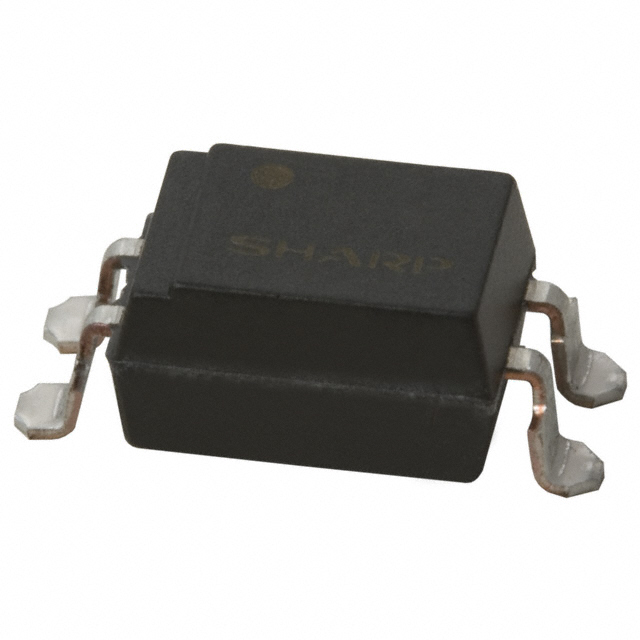
The Sharp PC814X optoisolator integrates an infrared LED and a phototransistor in a compact 4-DIP package, achieving robust electrical isolation by converting an input signal into an optically coupled output. Utilizing the physical separation provided by its internal barrier, this device effectively blocks high voltages and transient spikes, supporting an isolation voltage up to 5000 Vrms—a metric that underscores its suitability for circuits exposed to differential ground potentials and fault conditions. The core optoelectronic mechanism ensures that electrical noise originating on the input side is prevented from propagating to the output, thereby preserving signal integrity in demanding environments.
In practical deployment, the PC814X simplifies the task of interfacing low-level logic systems with high-voltage control equipment. Its transistor-output architecture enables flexible interfacing with both analog inputs and digital microcontrollers, while maintaining low switching latency. This current-transfer configuration also accommodates moderate switching frequencies with stable response characteristics, allowing designers to balance speed and noise immunity by adjusting drive currents and load resistances. Insights from real-world applications highlight the advantage of employing a single-package solution such as the PC814X in dense PCB layouts, where both footprint minimization and creepage/clearance requirements govern component selection.
Underpinning its performance is a coupling system optimized to withstand repeated surges and wide operating temperature ranges—a necessity in industrial automation panels and power conversion modules, where thermal and electrical stress routinely challenge component reliability. The PC814X’s consistent CTR (current transfer ratio) across its operating range avoids ambiguity in circuit design, enabling predictable output levels for protection relays, fault sensors, and communication interfaces. Experience reveals that careful attention to LED drive current—kept within recommended specifications—can yield long-term operational stability and mitigate degradation of the optoelectronic interface.
Beyond its technical merits, the PC814X embodies a convergence of safety and efficiency, providing not only isolation but also facilitating the segmentation of functional blocks within complex systems. Such division enables easier maintenance, rapid diagnostics, and scalable upgrades. In high-noise or high-voltage domains, the optoisolator’s inherent immunity to electromagnetic interference stands out as a reliable safeguard against unintended current paths or common-mode transients, thereby protecting downstream electronics and enhancing system robustness. This strategic integration of optical isolation positions the PC814X as a pivotal, engineering-centric solution across diverse applications, steadily anchoring electrical design to the dual pillars of functional safety and operational efficiency.
Primary applications and target use cases for the Sharp PC814X
The Sharp PC814X optoisolator serves as a critical isolation component in electronic system architectures where safe and reliable signal transfer between circuits of differing potentials is required. Its operation is centered on an internal infrared LED-phototransistor pair, enabling robust galvanic isolation that mitigates risks associated with high-voltage transients and ground loop currents.
At the hardware interface layer, the PC814X is commonly employed in switch-mode power supplies. Here, it enables feedback signal transmission from secondary to primary circuits without compromising safety, particularly across transformer isolation barriers. Its fast switching characteristics and high isolation voltage rating ensure that sensitive PWM control logic is shielded from noise and surges typically present in power conversion environments.
In motor drive and servo control circuits, the PC814X is integrated to decouple control signals from high-power switching elements such as IGBTs and MOSFETs. This prevents destructive transients and electrical disturbances from propagating into low-voltage control domains. The optoisolator’s compact DIP package and low CTR (current transfer ratio) degradation over time substantially increase reliability in repetitive switching applications. Experience shows that careful selection of input current limiting resistors and attention to load resistor values on the output side are essential to optimize signal fidelity in these high-noise environments.
Signal isolation interfaces within microcontroller-based instrumentation further exploit the PC814X’s capabilities. Its consistent performance across a broad temperature range and immunity to common-mode noise facilitate accurate sensor data acquisition even in the presence of EMI sources or variable ground references. In tightly regulated monitoring equipment, deploying the PC814X in differential or unipolar feedback paths demonstrates consistent suppression of cross-domain interference, resulting in cleaner, more deterministic logic transitions.
For industrial automation systems, the PC814X acts as a safeguard in digital I/O channels and communication lines. Isolation provided by each unit not only prevents ground potential differences from inducing spurious signals, but also supports compliance with safety standards governing operator and equipment protection. Within high-density control panels, its low input drive requirements and high common-mode transient immunity reduce the complexity of interface circuitry, streamlining design integration while supporting robust signal transmission.
Effective application of the PC814X hinges on detailed attention to PCB layout, minimizing parasitic capacitance and routing input/output traces to maximize isolation. Subtle design choices, such as Kelvin connections for output load resistors or staggered activation in multiplexed circuits, can further enhance overall system integrity. The enduring value of the PC814X lies in its reliability: when quality and repeatability matter—especially in environments subject to electrical abuse or stringent safety audits—it provides a proven path for secure signal transfer without sacrificing performance.
Technical features and performance characteristics of the PC814X
The PC814X functions as a highly integrated optoisolator, centered on a paired combination of a gallium arsenide infrared LED and a silicon phototransistor. This configuration establishes galvanic isolation between input and output, providing physical decoupling essential for disrupting ground loops, suppressing common-mode interference, and managing high-voltage differentials. The optical transmission path within the device acts as a barrier to electrical noise and transient voltages, while the optically induced response of the phototransistor ensures accurate and reliable signal replication.
The inner workings of the PC814X are engineered for dependable transfer characteristics. Its isolation voltage of 5000 Vrms is a pivotal parameter, supporting stringent safety requirements typical in industrial automation, grid-tied systems, and high-voltage motor drivers. This robust isolation not only shields sensitive low-voltage circuitry from hazardous line voltages but also enables compliance with regulatory insulation standards. In scenarios where external disturbances such as switching spikes and lightning surges are prevalent, the effectiveness of the isolation barrier is a key determinant in ensuring both equipment longevity and operator safety.
Performance metrics such as input forward voltage, requisite driving current, and the CTR play a significant role in circuit integration. CTR, defined as the ratio of output collector current to input LED current, is a crucial factor for circuit designers. Stable CTR across temperature and aging cycles underpins predictable system response, eliminating the need for frequent recalibration or excessive component derating. In practical applications, designers often select biasing resistors to set the LED drive current above the recommended minimum, creating margin against CTR drift and manufacturing variances.
The output phototransistor’s open-collector arrangement enables straightforward interfacing to digital logic levels via pull-up resistors, while accommodating a wide range of supply voltages and logic families. This topological flexibility accelerates prototyping and favors modular design, whether the enhancement-mode output drives microcontroller pins, relay bases, or analog signal processing stages. Fast switching characteristics—low propagation delay and sharp transition edges—facilitate timing-critical applications such as PWM signal transfer, digital isolator replacement, or feedback paths in switched-mode power supplies. Low output capacitance further supports high-speed operation by minimizing cross-talk and signal deformation.
In deployment, the PC814X often demonstrates high immunity to electromagnetic disturbances when routed and shielded appropriately. Board-level practices—such as separating high and low-voltage traces, observing creepage and clearance rules, and employing decoupling—directly complement the device’s isolation properties, resulting in robust EMC performance even in noisy environments. Long-term observations show that failure rates remain low under correct LED current operation, and optoisolator degradation is rare when proper derating for ambient temperature is applied.
Instrumentally, the optoelectronic isolation mechanism within the PC814X resolves a wide array of legacy interfacing challenges, making it an enabler for system reliability in harsh electrical environments. Its application versatility derives not just from its electrical specifications, but from the way its architecture decouples functional subsystems, supporting both circuit safety and design agility across disciplines such as industrial controls, process automation, and power electronics. Real-world integration confirms that leveraging the PC814X in control signal transmission establishes a balance between protective isolation and minimal signal latency, resulting in tightly controlled and resilient system behavior.
Package, isolation, and reliability attributes of the PC814X
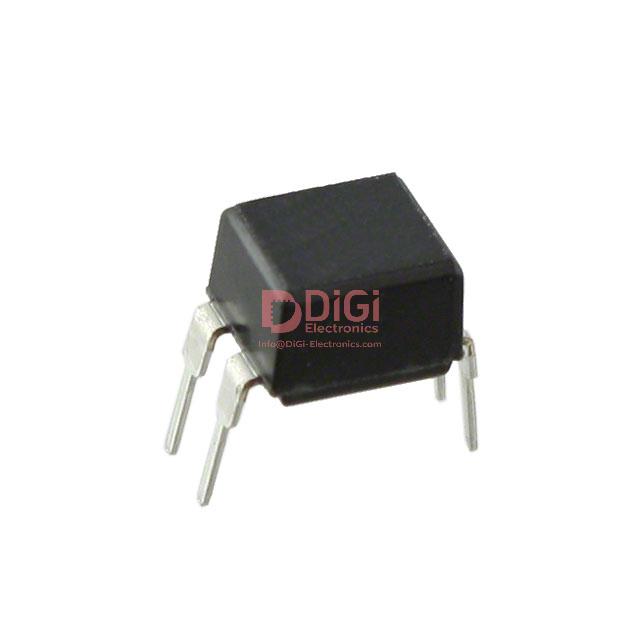
The PC814X employs a 4-pin dual in-line (4-DIP) encapsulation, a packaging standard that aligns well with both manufacturing efficiency and system-level reliability demands. The 4-DIP format simplifies both initial placement and subsequent rework or field servicing by providing clear pin orientation and generous lead spacing for through-hole soldering. This footprint ensures consistent mechanical retention under repeated thermal cycling and provides a natural barrier to creepage and clearance failures, optimizing the dielectric path for robust insulation.
Central to its utility in power and signal isolation architectures, the PC814X delivers a 5000 Vrms isolation voltage across the input-output boundary. Such high-voltage isolation is achieved through precise internal spacing and the use of epoxy or silicone resin encapsulants with high comparative tracking index (CTI) values, minimizing the likelihood of surface conduction even in humid or contaminated environments. This directly supports system compliance with safety standards such as IEC 61010 or UL 1577, enabling use in industrial automation, grid-connected energy storage, and medical diagnostic platforms. When designing high-reliability input modules or feedback loops, the demonstrated isolation margin helps mitigate common-mode disturbances and voltage transients, reducing the risk of interface damage during surge events.
Reliability stems not only from electrical isolation, but also from Sharp’s process controls and material choices in device construction. The PC814X employs an all-solid-state optoelectronic coupling, eliminating wear-out mechanisms associated with moving components or mechanical interface contacts. This intrinsic robustness yields high mean time to failure (MTTF), allowing deployment in mission-critical roles where maintenance access is limited or downtime is costly. In vibration or shock-prone environments, such as transport systems or automated equipment, the rigid package, together with a monolithic internal die attach process, minimizes the potential for microcracking or interfacial debonding—a common root cause of parametric drifts.
Field experience across industrial control retrofits has demonstrated that the 4-DIP PC814X resists conformal coating infiltration and solder stress better than alternatives with finer lead pitches or plastic-molded SMD formats. This is particularly advantageous when deployed in systems subjected to wash cleaning or in regions with variable power line quality. The solid isolation structure is also less susceptible to leakage-path formation due to dust or ionic contaminants that might develop during long-term board operation.
From an engineering perspective, the PC814X’s package and isolation attributes complement advanced circuit protection strategies, forming a cornerstone in the design of safety barriers and feedback isolation schemes. This approach simplifies compliance documentation and accelerates system certification cycles. Its reliability record, supported by empirical field returns, establishes the device as a dependable choice where continuous operation and strict safety are non-negotiable. Integrating the PC814X within high-voltage interfaces not only satisfies regulatory criteria but also elevates system robustness against real-world electrical and mechanical stresses.
Potential equivalent/replacement models for the Sharp PC814X
Evaluating optoisolator alternatives for the Sharp PC814X requires a systematic approach grounded in both parametric matching and supply chain reliability. The foundational technical mechanisms that define equivalence begin with the core insulation capabilities; isolation voltage is not negotiable, as subpar ratings jeopardize system safety certifications and noise immunity. Selecting replacements within the 5000 Vrms isolation envelope ensures regulatory compliance and robust signal integrity, especially in industrial control and power interface applications.
Current transfer ratio (CTR) is the next primary filter, driving effective signal coupling across varying drive conditions. Equivalent or higher CTR not only retains logic margins but also sustains low input drive requirements, simplifying upstream circuit adaptation and potentially reducing total power dissipation. Close attention is warranted for input forward current and output transistor characteristics; even minor shifts can prompt requalification or introduce timing variations in fast-switching designs.
Commercial practice frequently leverages detailed datasheet benchmarking between offerings from global brands known for maturity in optoelectronics. Renesas, Toshiba, Lite-On, Everlight, and Vishay frequently offer direct PC814X replacements. The scrutiny of temperature range, CTR degradation curves, and the combination of leadframe plating and case material stability becomes particularly valuable in rigorous mission profiles. Of note, package compatibility—mechanical, solderability, and footprint—often acts as a final gating factor, as even marginal discrepancies propagate into rework or derating requirements on populated PCBs.
Application experience suggests verifying not only electrical performance but also manufacturability and long-term availability, as supply continuity forms a silent cornerstone for sustaining legacy product lines. Dual-sourcing arrangements frequently surface when supply risk must be mitigated; careful qualification via functional testing and AQL-based incoming quality checks reinforces operational resilience. Field returns analysis of historical optoisolator substitutions emphasizes the value of robust incoming inspection parameters, particularly after process changes at the die or package level.
Deep analysis of historical component redesigns underscores the benefit of balancing datasheet-driven selection with pilot line trials to observe real-world interaction effects, such as PCB stress responses and system-level transient immunity shifts. The interconnected trade-offs between cost, electrical fit, and procurement simplicity reinforce a context-aware selection paradigm: opt for substitutes with not only equivalent ratings, but also demonstrated system-level dependability under worst-case operating envelopes.
Integrating these insights into cross-referencing workflows enables engineering teams to confidently transition between hardware platforms, preserve performance ceilings, and streamline qualification cycles—an engineered response to both market turbulence and end-of-life scenarios in discrete optoisolation.
Conclusion
The Sharp PC814X optoisolator offers a robust approach to galvanic isolation in contemporary electronic systems, integrating a phototransistor output within a 4-DIP package to achieve 5000 Vrms withstand voltage. At the circuit level, the internal LED-phototransistor configuration ensures that signal transfer is exclusively optical, eliminating conductive coupling paths and minimizing common-mode noise propagation. The device architecture supports stable operation across a broad temperature range and maintains low input drive requirements, optimizing both energy consumption and board layout flexibility for high-density environments.
Selecting optoisolators such as the PC814X involves careful consideration of isolation voltage, turn-on/off response, and CTR stability under voltage, temperature, and aging stress. In practical deployment, these factors dictate error margins in digital communication, influence fault-tree analysis for safety ratings, and determine long-term system reliability. The wide input current range of the PC814X enables flexible interface with logic levels from TTL to microcontroller CMOS, while the collector–emitter voltage rating accommodates transient conditions commonly found in industrial motor controls and power supply feedback loops.
Comparison with alternative isolators highlights the balance between input current requirements, speed, and insulation resistance. PC814X, with its proven electrical and mechanical reliability, aligns well with regulatory demands such as UL and IEC 60747, facilitating qualification in sectors where certification workflow affects project timelines. In automotive applications, for example, the device ensures secure separation between low-voltage logic and high-voltage actuator circuits, with internal insulation sufficient to withstand automotive surge transients across a vehicle’s lifetime.
Experience with field implementations underscores the necessity of thorough board-level design reviews to minimize parasitic capacitance and leakage paths surrounding the isolation barrier. Careful routing and air-gap management, as well as adherence to recommended creepage and clearance distances, reinforce the intrinsic isolation capability of the PC814X. Timely detection of optoisolator degradation through in-circuit monitoring further supports predictive maintenance strategies in mission-critical platforms.
In summary, the PC814X’s blend of reliable high-voltage isolation, versatile packaging, and consistent optoelectronic response enables engineers to architect resilient systems that address both present and evolving safety and noise resilience standards. Its adoption is best guided by rigorous technical benchmarking, real-case performance history, and a clear understanding of isolation as a multidimensional engineering parameter—encompassing not just electrical separation, but also manufacturability, signal fidelity, and system longevity.