>
>


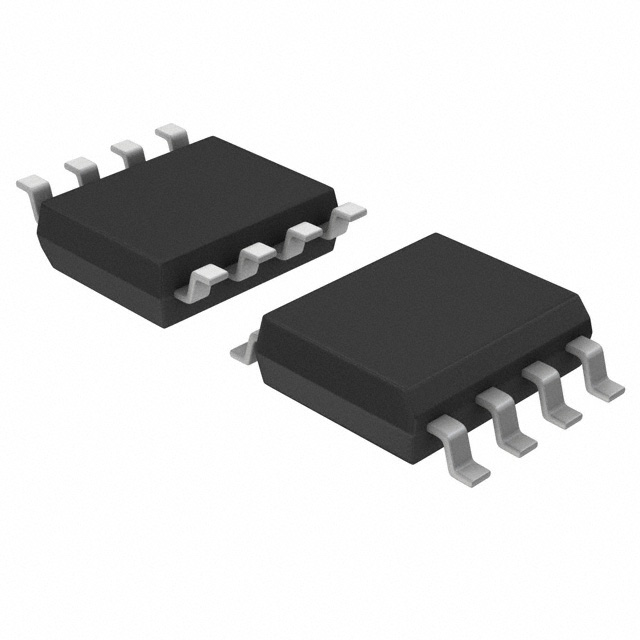
Product overview: PC410L optoisolator from Sharp Microelectronics
The PC410L optoisolator from Sharp Microelectronics exemplifies precision engineering in optical signal isolation. At its core, the device utilizes a non-coherent GaAlAs infrared LED coupled with an integrated OPIC photodetector, forming a bidirectional optical transmission path that ensures robust galvanic isolation. This separation is pivotal for safeguarding low-voltage logic circuits from transient voltages and EMI originating on the high-voltage side. The hybrid construction achieves high common-mode transient immunity (CMTI), effectively blocking disruptive spikes or surges without sacrificing signal fidelity—a feature critical in industrial automation, power inverters, and precision control systems.
Design parameters are tightly controlled to optimize both speed and reliability. The PC410L features logic-compatible output thresholds, enabling direct interfacing with microcontrollers and digital logic circuits. Its fast switching characteristics, with propagation delays minimized by optical alignment and semiconductor process refinement, ensure stable operation in demanding high-frequency environments. Real-world deployment shows that it operates reliably in conditions ranging from densely packed switching power supplies to PLC input modules, where isolation margins must be strictly maintained. Its lead-free construction, coupled with full RoHS compliance, removes barriers for design teams addressing global regulatory mandates while reducing contamination risk during assembly.
Electrically, the optoisolator maintains low input current requirements, permitting direct control from a range of logic families without the need for auxiliary drive stages. This efficiency removes potential failure points and simplifies circuit layout. The photodetector’s integrated amplification and noise filtering allow fidelity even with fast rise/fall times or noisy signal sources. System architects utilize these attributes to implement circuit segments with floating grounds or disparate voltage domains, confident in the device’s ability to maintain clear data paths under operational stress.
The device’s performance envelope stands out when evaluated in transient-heavy application scenarios. For example, motor drive feedback lines often contend with high dV/dt conditions and radiated EMI; implementation of PC410L units in these data lines counters feedback-induced false triggering and achieves sustained uptime. In high-density PCBs, thermal resistance and minimal package size position the device for easy integration, contributing to optimized layouts and enhanced reliability in high-volume production.
A critical insight emerges regarding the architecture’s longevity. The non-coherent LED-photodetector pairing balances spectral response for low dispersion and temperature drift, securing signal integrity over extended use cycles. This design philosophy underscores an implicit commitment to field-proven isolation performance rather than speculative features—a distinction impacting supply chain selection during product lifecycle planning.
Selecting the PC410L thus aligns system robustness with environmental compliance and electrical reliability. The technical approach embodied in its design suggests that achieving isolation must encompass not just immediate circuit protection, but broader system resilience, supporting noise-free data transfer and predictable logic behavior even in aggressively stressful environments. This layered perspective reinforces the optoisolator’s role as a foundational component in high-integrity circuit design.
Key features and performance parameters of PC410L optoisolator
The PC410L optoisolator leverages a robust internal architecture centered on an infrared LED coupled with a high-gain phototransistor, forming a galvanically isolated interface ideal for precision signal transmission across different voltage domains. By engineering the optical coupling path with high clarity and optimizing the emission-reception alignment, the device reaches data rates up to 10 Mbps with minimal signal distortion. This performance is sustained by a combination of low parasitic input-output capacitance and carefully managed rise/fall times, enabling effective rejection of high-frequency common-mode noise while limiting inter-channel crosstalk.
The device’s isolation strength, specified at 3750 Vrms, meets stringent regulatory and industrial demands for user and circuit safety, particularly in environments susceptible to hazardous overvoltages. This rating benefits from the optoisolator’s encapsulation process, which ensures uniform dielectric barriers and prevents surface creepage. Engineers working with gate drivers for power semiconductors or serial communications in high-voltage domains regularly exploit this isolation margin, knowing it withstands repeated stress without degraded performance.
A standout parameter is the common-mode transient immunity rating of 10 kV/μs. Real-world deployment in switched-mode power supplies and industrial control systems frequently exposes the optoisolator to abrupt voltage swings. The PC410L’s design not only shields the logic-side electronics but also preserves data integrity when subjected to rapid transients—a consequence of optical path purity and selected semiconductor materials that minimize response lag to external disturbances.
Thermal reliability is reinforced through wide operating limits (-40°C to +85°C). This versatility supports unerring function in outdoor installations, automation panels, and harsh industrial sites. Unanticipated cold or heat excursions are countered by robust lead frame construction and solder-compatible pin finishes, with SnCu or palladium/gold flash providing corrosion resistance and reflow stability. Field experience indicates that reliability under thermal cycling is markedly improved when utilizing these finishes, reducing solder joint failures on high-density PCBs.
Physical miniaturization, with a typical mass of 0.1 g, addresses layout constraints in compact power modules and multi-channel interface boards. The package form factor facilitates dense placement with minimal stray pickup, supporting both signal and safety design goals. Integration into automated assembly lines further benefits from the consistent mechanical tolerances of the PC410L, easing high-speed pick-and-place and reflow processes without risk of pin misalignment.
The open-collector output structure adds flexibility when building interfacing logic, enabling shared lines for wired-AND configurations or straightforward level translation. Feedback loops in motor control or sensor data acquisition commonly employ such outputs for robust error detection and fast fault response.
Overall, the PC410L presents a convergence of high-speed operation, isolation robustness, and installation flexibility that is increasingly demanded in mixed-voltage digital systems. By carefully balancing optical and electrical performance characteristics, it achieves resilience in application scenarios fraught with noise, transients, and thermal stress. Deployment experience suggests that optoisolators with this profile not only safeguard downstream electronics but also streamline design verification cycles, particularly where regulatory and long-term reliability metrics are decisive.
Application scenarios and design recommendations for PC410L optoisolator
The PC410L optoisolator leverages an integrated phototransistor output to achieve precise, galvanically isolated signal transfer, making it optimal for applications demanding robust isolation and high signal fidelity. At its core, the device employs an infrared-emitting diode and a phototransistor, encapsulated to prevent direct electrical connection. This architecture is fundamental for interrupting ground loops and mitigating common-mode noise—a persistent challenge in complex mixed-voltage systems. The optoisolator thus finds synergy with microcontroller interfaces that must coexist alongside high-voltage subsystems, where even minor leakage can induce erratic behavior or component degradation.
In office automation, audio-visual, and telecommunication equipment, the PC410L delivers stable logic level conversion and superior noise rejection, sustaining data integrity even amidst electrically turbulent operating environments. Measurement instrumentation and industrial controls benefit from its immunity to transient disturbances, enabling reliable feedback paths in switch-mode power supplies and motor drive circuits. Here, isolation not only protects sensitive signal lines but also helps meet increasingly stringent EMC compliance requirements.
Precision and high-reliability applications—such as railway signaling or safety interlocks—impose additional design constraints. For these environments, integrating dual-redundant signal paths and self-checking diagnostics at the circuit level enhances both fault tolerance and maintainability. The PC410L’s performance is maximized by locating a low-ESR bypass capacitor of 0.01 μF or higher across its supply rails, strategically reducing power line-induced errors. Placement within a few millimeters of the device pins minimizes trace inductance and helps suppress high-frequency ripple, a key tactic when deploying optoisolators in dense circuit layouts.
Input side practices are equally critical. Preventing voltage excursions below ground across any pin is essential, as such events can upset the internal biasing and compromise isolation performance. Current transfer ratio (CTR) stability over a prolonged operational life hinges on accounting for optoelement aging—LED output tends to decline, raising the threshold input current for reliable switching. Provisioning for at least double the specified minimum input current from the outset preempts margin loss, insulating the system from the drift that accumulates with time and temperature cycling.
Empirical analysis reveals that optoisolator-driven designs achieve best-in-class signal robustness when matched to the correct collector load conditions and input drive profiles. Fast recovery capability under pulse-width modulation or rapidly switching industrial environments validates its utility where deterministic timing is paramount. From a system perspective, the cumulative effect of meticulous grounding, power decoupling, and conservative input provisioning delivers not only immediate functional gains but a substantial reduction in field failure rates—a decisive advantage in both consumer and industrial sectors.
Ultimately, the PC410L’s design flexibility, once integrated with thoughtful circuit architecture and lifetime-aware provisioning, transforms it from a basic signal isolator into a keystone component for forward-compatible system designs. This approach underwrites not just compliance with present-day standards but also positions platforms to accommodate evolving requirements for safety, electromagnetic resilience, and operational longevity.
Environmental compliance and safety certifications of PC410L optoisolator
The PC410L optoisolator represents a component engineered for both environmental sustainability and operational safety, conforming to global compliance benchmarks. Its adherence to the European RoHS directive (2002/95/EC) eliminates critical hazardous substances, including lead, cadmium, hexavalent chromium, and designated brominated flame retardants like PBB and PBDE. This material composition ensures minimal ecological footprint during production, usage, and end-of-life processing. Alignment with China’s electronic information products pollution control requirements further demonstrates a commitment to low-toxicity design, with every regulated constituent stringently managed below locally and internationally mandated thresholds. In manufacturing settings, supply chain traceability systems often integrate with material declaration protocols to continuously verify substance compliance. Any deviations within procurement or supplier batches trigger immediate quarantines and corrective action, securing the device’s status for eco-sensitive markets.
The safety certification profile strengthens the PC410L’s suitability for use within systems that demand electrical isolation. Endorsement from Underwriters Laboratories (UL; Model No.: PC410L, UL file No.: E64380) authenticates its integration into circuits where operator and circuit protection are paramount. This independent evaluation encompasses insulation withstand, creepage, and clearance distances, addressing common risks such as cross-channel voltage surges and leakage currents. Practical design cycles frequently incorporate the PC410L to satisfy regulatory acceptance and to expedite time-to-market during product approvals in regions where third-party certification is not merely advantageous but indispensable. Its isolation characteristics enable safe signal transfer in applications such as SMPS feedback loops, industrial controls, and consumer electronics that must conform to world safety codes.
Despite robust certifications, the device’s limitation to non-extreme environments shapes application boundaries. Specifically, the PC410L is neither rated nor constructed for nuclear, irradiation, or high-integrity life-support scenarios. Its optoelectronic structure is not engineered for resilience to intense ionizing radiation or mission-critical continuous operation, where fail-safe design and redundant barriers are required. Strategic component selection often pivots on such exclusion clauses; the device is ideally applied where environmental soundness and certified insulation are decisive factors but where the application profile matches its operational envelope.
This convergence of rigorous environmental and safety compliance, coupled with explicit application demarcation, positions the PC410L as a reliable, standards-ready solution for designers prioritizing both product stewardship and regulatory efficiency. Judicious deployment within its defined scope enables predictable lifecycle management, streamlined certification workflows, and integration into advanced system topologies—while simultaneously safeguarding against compliance liabilities. This approach reflects a broader engineering trend that leverages strict adherence to global norms not only as risk mitigation, but as a source of sustained competitive advantage within regulated electronics ecosystems.
Packaging, storage, and handling of PC410L optoisolator
The PC410L optoisolator's packaging design prioritizes both electrostatic discharge (ESD) protection and mechanical resilience, employing heat-pressed A-PET carrier tape engineered to dissipate static. Multi-layer static-protective barriers are integrated into the tape material and reel assembly, minimizing charge accumulation during high-speed pick-and-place operations on automated SMT lines. Each reel accommodates 3000 units, optimizing both shipping efficiency and feeder load cycles on the production floor.
Storage protocols for the PC410L are guided by moisture sensitivity and contact oxidation risks, which are principal concerns for hybrid optoelectronic devices. The recommended thermal envelope of 5–30°C with relative humidity capped at 70% suppresses moisture ingress into the encapsulant and prevents solderability degradation of device leads. Shielding from direct sunlight is not merely to prevent photodegradation of external plastics, but critically, to eliminate the risk of latent photo-induced charge in the optoelectronic interface—especially relevant for phototransistor couplers. Such exposure has been observed in uncontrolled storage to induce threshold drifts and inconsistent CTR values post-assembly.
When evaluating mechanical stresses, practical experience emphasizes the importance of minimizing both vibrational and shock loads. The A-PET carrier tape, while effective against moderate impacts, reaches its mechanical limits with severe drops or compressive stacking. This imposes strict handling constraints during warehouse logistics and assembly line setup. An inadvertent reel drop or improper tote stacking can cause micro-cracks in the internal silicon die or leadframe, seldom visible but capable of manifesting as early-life failures once powered.
The handling strategy extends beyond the moment of unpacking for assembly. Workstations in ESD-controlled zones are outfitted with conductive bins and grounded surfaces, with operators using wrist straps, to prevent any quiescent charge from coupling to device terminals. A direct workflow integration is advantageous—devices fetched from shielded reels should be mounted swiftly to avoid ambient exposure, especially in tropic or high humidity factory conditions, reducing the incidence of moisture-related delamination defects and solderability anomalies.
An implicit insight emerges around lifecycle management: while many focus solely on environmental controls, consistent monitoring of ambient metrics and procedural discipline in transit stages proves equally vital. It is often overlooked that trace humidity spikes or a single stacking stress event can propagate quality escapes, only to surface later in final product testing. Thus, robust traceability and handling audits in the PC410L supply chain reinforce not only device reliability but systemic yield integrity for high-reliability applications, from industrial control modules to medical isolation barriers.
Reliability, inspection, and recommended operating conditions for PC410L optoisolator
The PC410L optoisolator is engineered to meet stringent reliability standards through an integration of robust manufacturing oversight and rigorous electrical screening. Outgoing inspection adheres to the ISO 2859 sampling system, enabling early detection of potential deviations by statistically validating critical electrical parameters for each production lot. Test points include forward voltage, which serves as a baseline for junction integrity, and reverse current, an indicator of die passivation quality. Output logic levels and the input threshold current are evaluated to guarantee consistent digital interfacing, minimizing the risk of logic errors even under device aging or system supply fluctuation. Insulation resistance and isolation voltage tests further reinforce the device’s role as a galvanic barrier, directly influencing certification for functional safety in industrial automation.
Inspection methodology extends beyond electrical metrics to encompass physical attributes—evaluating lead integrity, mold seams, and encapsulation quality. Surface visual screening identifies latent mechanical vulnerabilities that could propagate under thermal cycling or mechanical shock. This multilayered inspection sequence not only rejects outright nonconformities but effectively tracks yield drift, supporting continual process tuning.
Operational robustness across a wide temperature range is achieved through optimal optoelectronic coupling and material selection. The device maintains stable photoresponse and transfer ratio, essential for reliable switching in variable thermal and humid environments common to industrial control panels or power systems. Layered failure analysis suggests that safeguarding optical path quality—by controlling resin clarity and emitter/phototransistor alignment—directly correlates to sustained signal fidelity over time.
Reliability validation integrates statistical confidence through defined test regimes, referencing EIAJ ED 4701. Here, a 90% confidence level at 10 or 20 LTPD aligns with accepted norms for mission-critical components, balancing test coverage against screening resources. Such granularity in qualification translates in practice to confidence in long-term field deployments, reducing maintenance cycles and unscheduled downtimes.
Adhering strictly to recommended operating conditions is foundational for maximizing service life. Drive currents must be dimensioned to prevent degradation of the LED emitter, favoring derated operation where ambient profiles show frequent excursions toward upper temperature limits. Electrostatic discharge (ESD) mitigation on the phototransistor output is critical, as repeated transient exposure can cause gradual gain loss or triggering anomalies, particularly in densely-integrated control PCBs. Conformal coating or judicious PCB layout can substantially raise immunity.
Field experience suggests that proper socketing during assembly and avoidance of excessive board handling minimize latent microcrack formation, which remains a leading root cause for after-market isolation failures. Furthermore, integration into circuits featuring soft-start mechanisms or inrush current limiting can meaningfully influence lifetime projections, especially in repetitive switching applications.
A nuanced perspective recognizes that component reliability is not solely dictated by device-level robustness but also by the fit between specification and environment. Selecting isolation devices such as the PC410L on the basis of long-term performance data—rather than solely on initial test pass/fail—enables predictive maintenance frameworks and system-level risk mitigation. This holistic approach is instrumental when targeting industrial or infrastructure domains where disturbance immunity and uptime are paramount.
Soldering and assembly considerations for PC410L optoisolator
Soldering and assembly protocols for the PC410L optoisolator are architected to maintain the device's functional integrity across varied integration environments. The primary mechanisms underlying successful integration center on thermal management, wettability of soldered joints, and resin stability within the component structure. Soldering by flow techniques requires the temperature to remain at or below 270°C, with strict exposure limitations of ten seconds; a controlled pre-heating phase between 100°C and 150°C for at least half a minute minimizes thermal shock and supports consistent flux activation. In production, it is observed that uniform pre-heat profiles effectively reduce cold solder joint rates, especially when the optoisolator's lead geometry is leveraged for optimal heat transfer.
Reflow soldering introduces repeatability and high throughput, leveraging tailored thermal profiles. For the PC410L, reflow is permissible for up to two cycles, with each phase mapped precisely against solder paste characteristics and the melt point of lead-free alloys. Reliability studies suggest that maintaining ramp and soak periods in accordance with joint mass mitigates delamination risk and microcracking in resin, preserving isolation properties. Hand soldering is reserved for repair or small-scale runs, requiring exacting process control: tip temperature below 400°C and contact not exceeding three seconds. Experience in low-volume, high-mix settings demonstrates that pairing fine-tipped irons with low-activation flux achieves consistent fillet without compromising package seals.
Assembly outcomes hinge on a rigorous match between solder chemistry, board pad design, and configuration parameters. For instance, the selection of no-clean solder versus water-soluble flux influences downstream cleaning processes and device encapsulation integrity. Board layout, specifically pad dimensions and thermal reliefs, has a significant effect on joint formation and the heat distribution profile during soldering; precision in these elements is shown to lower rework rates and sustain electrical isolation standards.
Post-solder cleaning demands careful solvent selection and process timing to avoid resin stress. Alcohol-based agents are effective within the prescribed temperature ceiling of 45°C and immersion capped under three minutes; practical results indicate that gradual solvent agitation, rather than forceful immersion, minimizes residue without attacking the molding compounds. Ultrasonic cleaning remains conditional, with its suitability contingent on pre-validation using production fixtures. Empirical testing has revealed that resonance frequencies and bath duration must be strictly tailored; excessive exposure can induce micro-crack propagation in package resin, presenting latent reliability risks.
Effective soldering and cleaning strategies for the PC410L optoisolator pivot on harmonizing underlying heat and chemistry interactions with process controls. Close attention to pre-qualification of all parameters, validated on representative board builds, forestalls downstream failures and ensures robust optoelectronic isolation. Embedded in these practices is the insight that iterative thermal profiling, empirical process mapping, and tailored chemistry converge to deliver assembly outcomes aligned with the long-term reliability requirements for optically isolated circuits.
Potential equivalent/replacement models for PC410L optoisolator
Exploring drop-in replacements or equivalents for the PC410L optoisolator necessitates a finely-grained comparison across electrical, mechanical, and regulatory dimensions. The PC410L is engineered for bidirectional signaling with high-speed response and robust isolation, often deploying OPIC technology to optimize propagation delay and noise immunity. When identifying suitable alternatives within Sharp’s OPIC photocoupler portfolio, engineers should scrutinize the isolation voltage, typically 3750 Vrms or rated per safety norms, alongside the common-mode transient immunity (CMTI), which directly influences system resilience in industrial or inverter environments prone to voltage spikes.
Logic output compatibility remains essential for seamless interface with microcontrollers or logic ASICs, requiring attention to output type and VIH/VIL voltage thresholds. Package constraints often drive selection, particularly in crowded PCBs or retrofit scenarios; maintaining JEDEC-standard footprints avoids board redesign while securing mechanical robustness. Multifunctional variants with integrated driver capability or higher CTR (current transfer ratio) may address lineage gaps where the PC410L previously defined system timing or signal integrity.
A layered approach to vetting competitor solutions, such as models from Toshiba’s TLP series or Vishay’s VOM series, must account for subtleties like propagation delay skew, isolation material lifespan, and susceptibility to EMI. UL, cUL, and VDE certifications substantiate international deployment while facilitating quality audits; their absence or deviation in alternative sources could introduce compliance risk during system recertification or field upgrades. Supply chain agility also matters: aligning with manufacturers demonstrating robust market presence and proactive obsolescence mitigation minimizes the operational impact of EOL announcements.
Field experience shows that waveform integrity can subtly degrade if second-source parts underperform in CMTI or exhibit longer turn-on/turn-off delays, particularly in gate drive or digital comms circuits. In scenarios with marginal design headroom, minor shifts in photocoupler performance exacerbate ground bounce and propagation jitter. Direct engineering engagement with vendor FAE teams, combined with full-case qualification, can preempt latent fit discrepancies, especially when scaling new optoisolators across multisite installations or legacy platforms.
Ultimately, proactively benchmarking possible equivalents under real signaling loads and stress conditions ensures that substitution preserves both system safety and reliability. Elevated attention to datasheet cross-verification, complemented by in-circuit evaluation, delivers the highest assurance of durable and compliant drop-in replacements for the PC410L in both new and existing applications.
Conclusion
The PC410L optoisolator from Sharp Microelectronics integrates high-speed digital response with advanced galvanic isolation, forming a foundation for secure signal transfer in systems exposed to disparate voltage domains. Central to the device’s architecture is a GaAlAs infrared emitting diode optically coupled to a high-gain phototransistor, combining low input drive requirements with rapid propagation characteristics. This structure minimizes logic delay distortion while maintaining robust isolation, allowing seamless interfacing between TTL, CMOS, or mixed logic families even in electrically noisy environments.
Electrical isolation parameters, including high isolation voltage and low leakage current, support the protection of sensitive microcontroller inputs, digital communication lines, and industrial automation interfaces. In particular, the device’s guaranteed minimum isolation withstand voltage facilitates its use within safety-critical node separation, such as between control and power stages in AC drive inverters and medical instrumentation. Rigorous conformity to international safety standards, including UL, cUL, VDE, and EN/IEC certifications, further ensures suitability for deployment where regulatory compliance is as crucial as performance.
The PC410L’s operating envelope is engineered for stability across broad temperature ranges and under varied line transient conditions. Its stable current transfer ratio (CTR) and low jitter characteristics preserve signal timing integrity, even under thermal or electrical stress, a prerequisite for high-speed data communication modules, programmable logic controllers, and hybrid signaling backplanes. The environmentally-conscious construction, with full RoHS compliance, addresses sustainability standards without compromising device reliability—a strategic advantage as global directives tighten.
Implementation benefits extend into manufacturability, with standard dual-in-line packaging enabling automated insertion and soldering, thus streamlining PCB layout for high-density assemblies. When deployed in densely integrated power systems or signal multiplexers, the PC410L reduces board area requirements compared to discrete isolation alternatives, simplifying mechanical constraints while maintaining robust separation.
Field deployment has demonstrated the optoisolator effectively suppresses ground loops and mitigates common-mode noise in multi-rail architectures, a recurring source of digital faults in control flow and instrumentation busses. Notably, strict adherence to Sharp’s recommended creepage and clearance design rules further enhances dielectric margins and system-level EMC performance, leading to minimized maintenance intervention over extended service intervals.
Constant evolution in system speed and safety expectations heightens the role of such components. Leveraging the PC410L, design cycles benefit not only from the inherent reliability and international certification but also from reduced post-deployment troubleshooting and increased resilience to future compliance audits. This positions the PC410L as a compelling solution for both new system architecture and legacy circuit upgrades where digital isolation and operational certainty are design non-negotiables.