>
>


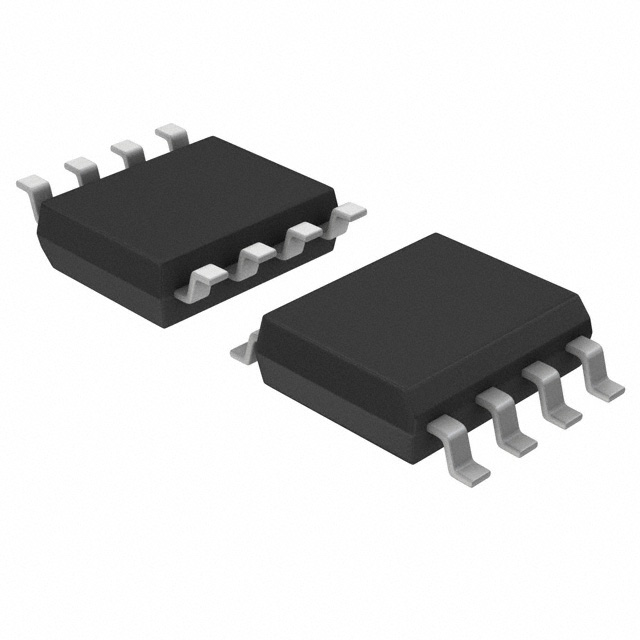
Product Overview: PC900V0NIPXF Optoisolator from Sharp Microelectronics
The PC900V0NIPXF optoisolator from Sharp Microelectronics is designed for precision signal isolation in digital circuit architectures, where electrical separation between logic domains is paramount. At its core, the device employs an integrated infrared emitting diode (IRED) and a monolithic OPIC photodetector, orchestrating optoelectronic coupling with minimal propagation delay. The underlying mechanism leverages the photon emission from the IRED in response to input signals, which then modulate the OPIC’s output stage, efficiently translating optical transitions back into electrical logic states. This arrangement ensures that high-frequency signals maintain integrity even when bridging different voltage levels or ground references.
Engineered to sustain insulation voltages up to 5,000 Vrms, the PC900V0NIPXF mitigates risks associated with transients and potential differences, effectively protecting sensitive microcontroller I/O or FPGA interfaces from ground loops and surge events. The surface-mount 6-pin package enables compact PCB layouts, critical for applications prioritizing density and reliability, such as industrial control systems or high-speed communication modules. By offering an open collector output compatible with TTL and LSTTL thresholds, the device supports standard pull-up configuration for flexible voltage interfacing and facilitates cascading in bus topologies without additional buffering.
Operational nuances reveal advantages in environments prone to high EMI or power surges, where galvanic isolation is not negotiable. Deployments in PLC input conditioning and isolated data transmission underscore its stability under harsh ambient conditions. The optoisolator’s optimized current transfer ratio and fast switching characteristics allow it to function dependably in multiplexed signaling or fault monitoring circuitry, where timing accuracy and consistent state latching are critical.
Practical use illuminates subtle challenges in layout management and thermal considerations. Placing the PC900V0NIPXF strategically on the board, away from noisy power traces, preserves signal clarity. Experience confirms that matching input drive current to application-specific requirements, while monitoring propagation delay across extended temperature ranges, results in predictable performance. Integrating the device into serial interfaces or remote sensor readout amplifies long-term system reliability—especially where optical isolation counters unpredictable voltage spikes.
This optoisolator’s combination of high isolation, logic compatibility, and compact packaging supports scalable system designs without compromising safety or signal fidelity. The implicit value emerges when it enables modular upgrades in distributed architectures, minimizing requalification cycles. An engineered approach to isolation, as exemplified by the PC900V0NIPXF, transforms potential vulnerability into predictable, robust interconnects, informing future-centric design practices where protection and performance converge.
Key Features and Performance Advantages of PC900V0NIPXF
The PC900V0NIPXF optocoupler leverages a robust 6-pin DIP package architecture, engineered for seamless adaptation within both through-hole and SMT designs. By offering gullwing lead options, it facilitates straightforward routing on PCBs with varying density requirements. This mechanical flexibility directly addresses constraints typical in modern miniaturized systems, where board real estate and assembly compatibility are critical factors. The double transfer mold construction extends reliability under thermal stress and ensures compatibility with high-temperature flow soldering processes, contributing to elevated yield and production throughput. This package integrity also delivers improved moisture resistance and dimensional stability, key prerequisites for extended operational lifetimes in demanding industrial environments.
From an electrical standpoint, the normal OFF behavior—embodied in the open collector output configuration—streamlines integration with diverse logic circuits. This topology allows designers to freely select pull-up voltages and incorporate mixed-voltage logic, reducing circuit complexity in mixed-signal boards. The wide input voltage range, spanning 3 V to 15 V, further accommodates multi-platform compatibility, simplifying inventory strategies and supporting rapid development across standard and custom power domains. This flexibility translates into expedited prototyping iterations, an advantage frequently realized in controller interface designs that must interface with varying control voltages.
Environmental compliance represents another axis of differentiation. Adherence to lead-free and RoHS standards aligns with global regulatory trends and market demand for sustainable components. This proactive design approach not only eliminates potential barriers in international deployments but also guarantees long-term availability by synchronizing with evolving marketplace requirements. Such considerations often prove essential in qualification phases for automotive or medical applications, where material restrictions can dictate vendor selection.
The interplay between package design and electrical versatility encapsulates the device's core strengths. Direct integration into automated assembly flows has shown measurable reductions in defect rates, notably under high-mix production scenarios involving both legacy and advanced host platforms. The PC900V0NIPXF’s adaptable output circuit facilitates low-side or high-side switching schemes, supporting robust isolation with minimal propagation delay—a critical attribute in precision feedback loops and signal conditioning chains found in industrial controls and home automation systems.
One emergent insight concerns the strategic value of configurability in discrete optocoupler design. The ability to tailor both mechanical attachment and electrical connectivity enables cross-generational upgrades, minimizing long-term support cost and streamlining transition strategies between system revisions. Practical field deployments have consistently demonstrated that such devices, chosen for their modularity and standards compliance, outperform more rigid alternatives in scenarios involving frequent design changes or multi-standard interoperability requirements. This underlines a forward-looking approach: selecting components not solely for point-solution optimization but for lifecycle resilience and broad deployment potential.
Applications of PC900V0NIPXF in Modern Electronic Systems
The PC900V0NIPXF, as a high-performance photocoupler, addresses demanding requirements in digital signal transmission where signal integrity and isolation are paramount. At the core, its optically-coupled architecture establishes a galvanic barrier, preventing high-voltage transients from propagating between system domains. This direct separation underpins robust common mode transient immunity (CMTI), often exceeding 10 kV/μs, which is critical in noisy, high-switching environments. The internal GaAs infrared LED and phototransistor pair, encapsulated within a precisely engineered module, minimize parasitic capacitance, further enhancing high-frequency noise rejection. As a result, the PC900V0NIPXF assures stable operation even as system voltages vary or when switching artifacts are present.
Practical implementations illustrate the device’s tangible advantages. In industrial automation, especially within programmable logic controllers (PLCs), the photocoupler forms a boundary between sensitive microcontroller inputs and field-level devices actuating motors, relays, or sensors. This configuration sharply reduces the risk of false triggering from electrical surges or induced noise, which frequently plague complex I/O networks in distributed control architectures. Through precise digital signal coupling, the PC900V0NIPXF facilitates reliable command transmission and feedback, sustaining uptime in mission-critical automation lines.
A second prevalent scenario involves integration within PC peripheral hardware, where the device is deployed to isolate USB or data communication lines from the core processing ground plane. Here, ground loop disruptions are mitigated, and the significant CMTI ensures that electromagnetic interference—typically radiated from adjacent power switching supplies—does not impede data exchange. Such implementation directly translates to fewer field failures and improved device interoperability, especially in industrial or laboratory computing environments.
In the domain of electronic musical instruments, the need for high fidelity logic transitions and immunity to stage or studio interference is pronounced. The PC900V0NIPXF serves in MIDI interfaces and digital audio hardware, preserving timing timing precision and minimizing jitter. Its fast response time and immunity profile protect sensitive digital sections from power stage fluctuations, upholding sonic quality and system responsiveness during live performance or recording.
From a systems design perspective, careful PCB layout and grounding considerations amplify the utility of the PC900V0NIPXF. Optimal performance is achieved when signal traces are kept short and separated from high-power pathways, and when decoupling strategies are implemented to suppress residual noise at both the transmitter and receiver ends. Experience indicates that investing in these foundational practices unlocks the full value of the device's isolation specs, particularly under regulatory compliance constraints such as IEC 61010-1.
Underlying these applications is a strategic shift toward circuit partitioning and modularization, enabled by reliable optoisolation elements. The PC900V0NIPXF, by virtue of its proven robustness, plays a pivotal role in these system architectures—not only safeguarding logic integrity but also enabling flexible, scalable system upgrades without compromise to safety or performance thresholds. The trajectory of modern electronic design increasingly values devices that, like the PC900V0NIPXF, act as seamless bridges between digital domains and high-voltage or noise-prone subcircuits, forming the backbone of resilient and future-ready platforms.
Internal Structure and Pin Configuration of PC900V0NIPXF
The PC900V0NIPXF is designed with a compact internal structure that brings together an infrared emitter diode directly coupled with an integrated OPIC (Optical IC) photodetector. This arrangement reduces signal propagation delay and minimizes electromagnetic interference, delivering a robust optical isolation barrier suitable for high-speed digital signal transmission. By embedding both the photo-detection element and its signal conditioning circuits onto a single chip, the OPIC design enhances linearity, temperature stability, and operational repeatability—critical properties in demanding digital systems.
The device's six-pin configuration streamlines PCB layout and simplifies integration into standard isolation coursework. The anode (Pin 1) and cathode (Pin 2) connect to the driving signal, enabling precise forward current control for the emitter diode. Pin 3 remains unconnected, providing layout flexibility. The output (Pin 4) utilizes an open collector topology, a preferred approach for flexible level shifting and interfacing with logic circuits of varying voltage domains. This output type enables straightforward implementation of wired-AND logic functions, which is advantageous in bus arbitration and multi-source communication environments. The ground (Pin 5) and supply voltage (Vcc, Pin 6) complete the required connections for the output stage, ensuring consistent performance even under fluctuating supply conditions.
In practical applications, the open collector output not only allows graceful sharing of communication lines among multiple devices but also grants engineers the ability to select custom pull-up voltages for optimized compatibility with standard TTL or CMOS logic families. This benefits mixed-voltage system environments, where isolation and logic-level translation are essential. Field experience shows that the PC900V0NIPXF maintains stable switching thresholds and low output leakage, even after repeated thermal cycling, due to the maturity of OPIC integration and careful internal shielding.
A key insight is that the monolithic OPIC approach inherently improves common-mode transient immunity, which is vital for interference-prone industrial and medical systems. This resilience extends the device’s application range into data acquisition, feedback signal isolation, and microcontroller interfacing. Optimizing the LED driving current yields a favorable trade-off between response time and long-term reliability.
Overall, the architectural choices in the PC900V0NIPXF—including the unified OPIC module and open collector logic output—demonstrate a shift towards higher integration and flexibility in optoelectronic isolation. These features empower high-density, multi-voltage system design while maintaining rigorous standards for safety and operational integrity.
Absolute Maximum Ratings and Electrical Characteristics of PC900V0NIPXF
Absolute maximum ratings of the PC900V0NIPXF optoisolator establish the operational boundaries necessary for reliable performance in industrial control and automation systems. Isolation voltage rated at 5.0 kVrms AC for one minute reflects stringent design intent for safety-critical signal transfer, preventing breakdowns and leakage paths between high-voltage and low-voltage circuits during transient conditions. Such ratings enable confident deployment in motor drives, programmable logic controllers, and process interfaces, where the inter-domain voltage differences demand robust galvanic isolation.
Thermal stability across 0°C to 70°C confirms suitability for environments managed through HVAC or standard industrial enclosure practices. The selected temperature range addresses both device longevity and signal integrity concerns, reducing risks associated with parameter drift under variable ambient conditions. This range also minimizes the likelihood of degradation in input-output transfer characteristics, contributing to simplified lifecycle management in deployed systems.
Electro-optical parameters present a foundation for seamless integration with common logic families. Input current thresholds are engineered to align with TTL and LSTTL logic levels, eliminating interface conversion circuitry and supporting direct drive from digital controllers. Propagation delay metrics have been tightly controlled; swift signal transmission, often in the sub-1 µs domain, limits timing uncertainty in synchronous device networks. Output voltage parameters ensure proper logic level recovery on the secondary side, facilitating error-free digital communication in pulse-driven applications such as data acquisition and fault monitoring modules.
Characteristic curves including forward input current versus ambient temperature and supply current versus voltage serve as essential resources for modeling dynamic circuit behavior. These data sets provide visibility into the impact of environmental and supply fluctuations, supporting predictive maintenance efforts and pre-emptive fault analysis during design verification. Experienced practitioners leverage these profiles for fine-tuning system response in mixed-signal environments, recognizing that real-world performance often depends on nuanced interactions beyond component datasheet minima and maxima.
The layered approach to absolute ratings and electrical properties allows for customized application in diverse settings, from isolated sensor nodes to high-voltage inverter control boards. Continued refinement in optoisolator interface standardization, as seen in the PC900V0NIPXF, reduces design complexity and narrows the opportunity for integration errors. Across practical deployment, attention to the interplay between isolation strength and signal fidelity yields superior system resilience. Emphasis on comprehensive electrical characterization, not just threshold values, accelerates effective design cycles and promotes operational safety in both factory-floor and commercial product contexts.
Mechanical and Packaging Specifications for PC900V0NIPXF
The PC900V0NIPXF optocoupler is designed to address the stringent demands of modern SMT assembly, providing both standard and wide gullwing lead-form options to optimize for either high-density layout or board-edge deployment. The gullwing lead configuration not only enhances coplanarity—critical for minimizing solder joint defects during reflow—but also simplifies automated optical inspection by clearly exposing solder fillets. With an individual device weight of 0.35 grams, the PC900V0NIPXF maintains compatibility with high-speed pick-and-place machinery, reducing placement errors and supporting throughput optimization in volume production environments.
SnCu (tin-copper) lead plating is engineered to deliver stable solderability across multiple reflow cycles, an increasingly relevant feature given extended dwell times in complex multi-zone ovens. This plating selection eliminates the risk of lead contamination, aligning with global RoHS directives while maintaining robust intermetallic formation at the solder joint. Consistency in solder wetting has empirically shown reduced incidence of tombstoning and lateral drift, especially on boards with fine-pitch patterns.
Device marking follows a methodical scheme that encodes production lot and date information in a concise 2-digit format, overlaid with country-of-origin (Japan) notation. This approach enables seamless lot-traceability throughout the device lifecycle, allowing for exact root-cause identification in the event of field failures or process deviations. Leveraging such unambiguous traceability practices minimizes downtime during failure analysis and accelerates closed-loop corrective action processes in manufacturing systems with large batch volumes.
Packaging flexibility is integral in streamlining both in-bound logistics and surface-mount line preparation. Sleeving supports manual and low-volume installations where device orientation control is crucial. Tape-and-reel packaging, compliant with conventional EIA standards, ensures compatibility with automated feeders and meets requirements for vacuum-sealed, moisture-sensitive component management. Consistent reel tension and pocket dimensions minimize mechanical stress on leads and enable reliable sequential placement, which has proven essential in lean manufacturing setups focused on throughput and yield.
Integrating these mechanical and packaging considerations at the component specification stage directly translates to lower field return rates, reduced rework, and higher system reliability—established through practical observations across diversified assembly lines. Balancing compact mechanical design with industry-standard marking and packaging delivers a scalable solution for designers prioritizing both manufacturability and supply chain resilience. In rapidly evolving production environments, components such as the PC900V0NIPXF set the baseline for integrating SMT-ready optocouplers with traceable, high-yield assembly processes.
Design and Handling Considerations for PC900V0NIPXF
The PC900V0NIPXF requires meticulous attention to electrostatic discharge when designing assembly procedures. Its detection transistor features a gate structure that is highly susceptible to charge accumulation, so employing grounding wrist straps, ESD mats, and ionizing blowers during handling is fundamental. These measures minimize transient voltage events, preserving device integrity across mass production and field deployment.
Optimizing power integrity involves strategic selection and placement of bypass capacitors. A 0.01μF multilayer ceramic capacitor, placed within millimeters of the Vcc and GND pins, effectively reduces supply ripple and attenuates high-frequency transients. Board-level validation typically reveals that resonance artifacts can be further mitigated by supplementing with a larger-value bulk capacitor, if layout constraints allow, without introducing unwanted delay. Observing trace routing symmetry and minimizing loop area in the Vcc-GND return path enhances decoupling performance, especially under pulsed load conditions found in switching applications.
Internal to the PC900V0NIPXF, parasitic diodes form at the semiconductor junctions. When external pins are pulled below ground for even a brief interval, these diodes forward-bias, resulting in current injection that may cause latch-up or irreversible damage. This necessitates strictly limiting negative transients and avoiding scenarios such as undershoot from fast-switching signals or accidental voltage reversal during system bring-up. Experience regularly demonstrates that precision layout—combined with robust power sequencing and clamp diodes on vulnerable pins—offers superior resilience against latch-up, supporting long-term reliability in densely integrated circuits.
Practical application reveals additional dimension to these considerations: deploying the device in environments with fluctuating or noisy backplanes demands even stricter adherence to ESD and supply decoupling strategies. Observed improvements in MTBF stem from integrated ESD protection and careful routing traces shielded from adjacent aggressors. In high-volume automation, leveraging automated handling tools within well-characterized ESD zones further reduces device variation, confirming the benefit of systematic process control. These holistic techniques not only meet the basic functional requirements but push operational lifetime and system robustness beyond conventional benchmarks.
Manufacturing and Assembly Guidelines for PC900V0NIPXF
Manufacturing and Assembly Guidelines for PC900V0NIPXF emphasize compatibility with diverse industrial soldering processes to ensure optimal integration within automated assembly lines. The device is engineered to accommodate reflow, flow, and manual soldering methods, each governed by specific time-temperature profiles. These profiles are tailored to preserve package integrity, particularly focusing on the stability of the internal optoelectronic connection and the mechanical robustness of the resin encapsulant.
In reflow soldering scenarios, thermal profiles must be tightly controlled to avoid thermal stress gradients, which otherwise risk microcracks in the resin or delamination at the leadframe interface. Precise preheat, soak, reflow, and cooling stages are delineated to avoid exceeding the material’s glass transition threshold, thereby minimizing changes in moisture absorption or internal strain. Such control is paramount in applications demanding high voltage isolation, where even minor flaws can precipitate long-term reliability issues or immediate device failure under electrical surge conditions. Flow soldering benefits from similar profile constraints, but close attention should be paid to dwell times and lead-wetting angles, which impact joint fillet morphology and ongoing mechanical stability.
Hand soldering offers increased process flexibility but introduces operator-induced variability. Utilizing temperature-regulated soldering tools with calibrated tip geometries can enhance process repeatability. Edge case experience demonstrates that prolonged dwell times or excessive localized heating may lead to discoloration or resin outgassing, necessitating a standardized protocol for single-point rework to avoid latent defects.
Post-soldering cleaning protocols converge on the use of approved alcohol-based solvents, selected for their non-reactivity towards polymer housings and consistency in removing flux residues. The process must regulate mechanical agitation and solvent exposure time to maintain pin plating integrity, preventing ionic contamination that can undermine insulation resistance. Ultrasonic cleaning, though effective, introduces an additional variable of cavitation energy. It is imperative to validate specific cleaning recipes—frequency, power, immersion duration—as dissimilarities in device geometry or mounting orientation result in differential energy distribution, potentially inducing microcracks or affecting optical coupling path alignment.
From empirical observation, process yield optimization hinges on pre-soldering component baking, especially when devices are exposed to humid storage environments. Integrating in-line automated inspection immediately post-reflow accelerates detection of solder joint anomalies or warpage, which, left unchecked, can propagate as latent field failures. Application deployment in automotive, power management, or industrial control systems clearly benefits from this multilayered, quality-focused approach, as these sectors impose extended service life and elevated safety margins on optoisolation devices such as the PC900V0NIPXF.
Layered engineering controls—spanning material science, thermal management, assembly automation, and post-process validation—constitute the backbone for robust device integration. Subtle process refinements, such as gradual ramp rates and diligent operator training in hand solder scenarios, yield compounding improvements in manufacturing robustness and in-service device reliability.
Environmental, Compliance, and Safety Information for PC900V0NIPXF
PC900V0NIPXF incorporates a robust compliance framework designed to meet international environmental and safety benchmarks. At its core, the product demonstrates full adherence to RoHS directives, eliminating hazardous substances such as lead, mercury, and cadmium from all manufacturing stages. This constraint not only reduces ecological footprint but also streamlines supply chain integration for enterprises targeting global markets with consistent regulatory expectations. The result is a component ready for deployment in designs where regulatory conformance is not optional but foundational.
The optical isolator’s double protection isolation is documented under UL1577, ensuring inter-circuit isolation suitability in demanding applications. This certifies the device for a voltage withstand profile that engineers routinely employ in both industrial automation and consumer electronics, where signal integrity and operator safety are pivotal. Integration of such certification into project workflows enables accelerated qualification cycles, as third-party validation mitigates risk and reduces the need for additional component-level stress testing.
The package resin carries a UL 94V-0 flammability rating, a decisive factor in system-level product safety. Layered flame-retardant mechanisms within the molding compound achieve self-extinguishment thresholds demanded by electronic assemblies exposed to thermal variation and transient fault conditions. This elevates reliability and aligns with modern fire safety regulations, facilitating broader use in enclosed, high-density installations.
DIN EN60747-5-2 (VDE) approvals, available for select device options, offer compatibility with rigorous European safety protocols for optoelectronic devices. These additional certifications expedite market entry for products destined for EMEA regions and reinforce the component’s reputation in environments with heightened regulatory scrutiny, such as medical instrumentation and public infrastructure systems.
The avoidance of ozone-depleting compounds and regulated brominated flame retardants throughout manufacturing illustrates a forward-thinking approach to lifecycle environmental management. Experience confirms that such exclusion policies simplify phase-out strategies in the event of regulatory shifts, future-proofing platforms against potential liabilities tied to legacy materials. This proactive approach supports enterprise-wide sustainability targets and positions the PC900V0NIPXF as a reliable cornerstone for eco-conscious product lines.
The integration of these certification standards and material selections into the PC900V0NIPXF reflects emerging trends where component-level compliance forms the backbone of streamlined engineering workflows. By addressing not only current but anticipated future standards, the device exemplifies a holistic risk-mitigation strategy—balancing operational integrity, global market agility, and expanded design flexibility.
Potential Equivalent/Replacement Models for PC900V0NIPXF
When selecting substitutes for the PC900V0NIPXF, an in-depth evaluation begins with the functional parameters that define optical isolation in digital circuits. The PC900V0NIPXF, as part of Sharp’s established PC900V0NSZXF family, offers a logic-output phototransistor configuration, characterized by a predetermined isolation voltage, digital compatibility thresholds, and a standardized DIP packaging profile. For true form, fit, and function replacements, attention must be paid to output logic levels, CTR performance over temperature and aging, as well as input forward current requirements. Manufacturing and legacy considerations dictate that pin assignments and case dimensions precisely align to mitigate requalification work.
Alternative solutions can be sourced among various industry leaders such as Toshiba, Vishay, and Lite-On, who offer logic-output optoisolators with comparable or superior dielectric withstand voltages and matching pinouts. Beyond datasheet parity, true interchangeability requires confirmation of response time characteristics, device creep distances, and regulatory compliance—namely UL, CSA, and VDE certificates. In many high-reliability or safety-centric circuits, small discrepancies in propagation delay or input drive can trigger unexpected timing edge conflicts or result in non-compliance with system-level EMC requirements. Real-world application often reveals that switching from one vendor’s unit to another, even with nominally equivalent ratings, can induce subtle variations in threshold voltages or output current capabilities, necessitating circuit-level margin adjustments.
A discerning perspective recognizes that supply chain instability or obsolescence risk intensifies the value of drop-in compatible components. The most robust sourcing strategies integrate alternative components validated through in-circuit qualification and accelerated stress testing, uncovering edge-case behaviors that may be masked in bench measurements. Feedback from production environments indicates that replacement models with superior insulation systems or slightly higher CTR can introduce long-term stability within high-temperature or high-vibration domains, especially in industrial I/O or power-supply feedback loops.
Evolving standards and shrinking tolerance for redesigns heighten the relevance of thorough upfront equivalency analysis. A tiered approach—beginning with parameter matching, advancing to PCB-level fit, and concluding with certification verification—forms the basis for minimizing project risk and maximizing interchangeability. It is critical to regard the PC900V0NIPXF as a reference point within a broader ecosystem of optoisolator solutions, prioritizing lifecycle resilience and functional reliability when making selection or substitution decisions.
Conclusion
The Sharp Microelectronics PC900V0NIPXF optocoupler occupies a key position in signal isolation thanks to its high isolation voltage specification, enabling safe separation between control and power domains in mixed-voltage systems. This characteristic reduces vulnerability to ground loops or transient spikes, particularly in inverter circuits, industrial automation, and power supply feedback loops. The integration of logic-compatible input thresholds streamlines interface design, minimizing the need for level-shifting or additional buffering, which in turn supports reduced bill-of-materials complexity and layout constraints.
Internally, the device employs a high-gain phototransistor that translates rapid input transitions into discrete, noise-immune output states. The construction leverages a resilient insulation package that resists creepage and ensures operational integrity during voltage surges, as commonly encountered in noisy industrial environments. Its mechanical footprint complies with lead-free, RoHS, and halogen-free directives, facilitating seamless adoption in projects governed by stringent environmental or regulatory requirements.
From a practical perspective, attention to recommended PCB layout—such as maintaining adequate creepage distances and minimizing exposure to flux residues during soldering—directly impacts the long-term reliability of isolation performance. Techniques such as guard trace implementation or conformal coating can further suppress leakage currents when the device operates in high humidity or in the presence of conductive contamination.
Selecting the PC900V0NIPXF also delivers tangible procurement and lifecycle management advantages. With supply chain stability, clear datasheet parameters, and broad compatibility with automated optical inspection (AOI) requirements, the device aligns well with both prototype and high-volume manufacturing flows. In field installations, its resistance to environmental stress reduces failure rates, lowering service costs and downtime risks.
A key viewpoint emerges: robust optocoupler isolation is as much about the holistic integration of device, board, and process discipline as about rated specifications. Overlooking layout, solder practice, or application context negates the inherent strengths of the component. Ultimately, the PC900V0NIPXF offers not just signal isolation but a platform for design assurance, where well-executed usage consistently translates to operational reliability across diverse, high-reliability digital infrastructure.