


 >
>


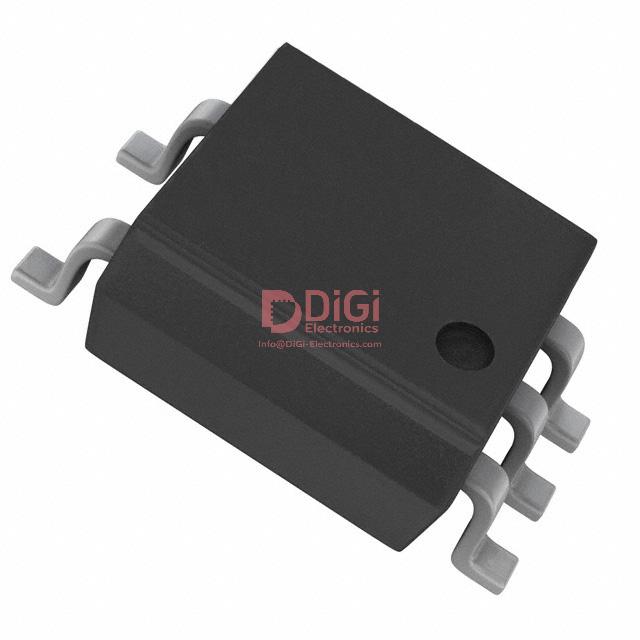
Product overview: Sharp Microelectronics PC400 OPIC Photocoupler
The Sharp Microelectronics PC400 OPIC Photocoupler exemplifies advanced optoelectronic integration, offering a compact, surface-mount solution for signal isolation in dense circuit designs. At its core, the device leverages Sharp’s OPIC technology, which monolithically integrates a photodetector and a signal-processing circuit onto a single silicon chip. This architecture eliminates the parasitic mismatches of discrete optocoupler assemblies, tightly coupling the optical sensor and amplifier for optimized noise immunity and response uniformity. The high level of integration offers essential advantages in minimizing board footprint, reducing parasitic capacitance, and improving signal fidelity.
The PC400’s rated isolation voltage of 3750 Vrms addresses the need for high electrical isolation between low-voltage logic and hazardous high-voltage domains. This substantial isolation margin is critical in industrial automation, inverters, and high-density power systems, where damaging ground loops or common-mode transients often threaten system integrity. By isolating control and power sections, the device directly counters transient propagation paths, providing robust protection against signal degradation and latent failure mechanisms.
Its implementation of an open collector logic output streamlines interfacing with standard TTL and low-power Schottky TTL logic families. The open collector topology allows flexible pull-up arrangements, enabling seamless adaptation to diverse voltage rails and mixed-signal environments. This capability proves invaluable when integrating the PC400 into legacy control platforms or expanding module compatibility, reducing design constraints and engineering overhead.
The device’s surface-mount package and UL recognition (E64380) further position it for use in safety-critical and regulated environments. The recognition ensures the component meets strict international standards for insulation and component performance—a necessary attribute for applications subject to regulatory reviews, such as medical instrumentation or telecom base stations. Long-term field implementations demonstrate that proper PCB layout, including adequate creepage and clearance distances, enhances isolation reliability and exploits the PC400’s capabilities to their fullest.
From an application perspective, the PC400’s low-profile form factor and robust isolation facilitate its use in compact digital signal interfaces, smart metering, and switch-mode power supplies. Practical experience shows that integrating the PC400 in feedback control loops not only improves system resilience against fast-switching noise but also reduces susceptibility to crosstalk and EMI, contributing directly to overall system reliability. In high-density modular designs, where space and electrical safety collide, the PC400’s integration fosters both signal integrity and manufacturing flexibility without sacrificing certification requirements.
In conclusion, the PC400 OPIC Photocoupler does more than simply isolate signals; its integration approach and open collector logic offer a path toward denser, safer, and more reliable electronics. The underlying OPIC technology sets a benchmark for single-chip optoisolator performance, underscoring the evolving role of advanced photonic integration in meeting modern isolation demands. This progression not only addresses present-day engineering challenges but also anticipates stricter compliance and miniaturization requirements shaping electronic system design.
Key features of the Sharp PC400 OPIC Photocoupler
The Sharp PC400 OPIC Photocoupler integrates key attributes that position it as a robust signal isolation solution in contemporary electronic design. Its mini-flat 5-lead surface mount package supports high component density, streamlining PCB layouts in applications where space optimization directly correlates to cost efficiency and system complexity. The reduced footprint allows for more nodes per unit area while simplifying routing strategies, often resulting in improved EMI performance due to minimized trace lengths and tighter ground referencing.
At the core of its signal interfacing capability lies a logic-level open collector output, facilitating seamless integration with standard digital logic—especially where multiple outputs share a bus or require pull-up tailoring. The low output state during input LED activation provides predictable logic transitions, essential for timing-critical operations in edge-sensitive digital domains. This characteristic enhances the predictability of system response and aligns with best practices in noise-immune circuit partitioning.
A notable engineering strength is its 3750Vrms input-output isolation. This level of galvanic separation shields low-voltage control logic from fluctuating or fault-prone power domains, especially prevalent in industrial control, inverter drives, or AC motor applications. Experience shows that such isolation ratings prolong component lifespan and significantly reduce the risk of logic latch-up or destructive transient conduction—issues often observed when specifying lower-isolation alternatives. By physically and electrically decoupling the signal pathways, the PC400 elevates system safety while dramatically curtailing the propagation of common-mode interference.
Compatibility with both TTL and LSTTL logic families extends the PC400's deployment window across legacy and modern designs. Designers are freed from dedicating extra signal conditioning components or isolation amplifiers, preserving valuable power and board resources. Interfacing flexibility pays dividends during prototype iterations and retrofits, as the PC400 can slot into varied voltage domains without necessitating wholesale architecture adjustments.
Certification by Underwriters Laboratories (UL) anchors the device's credentials in regulated or mission-critical environments—industrial automation panels, medical instrumentation, and smart grid systems, where compliance is both a technical and commercial mandate. The approval streamlines regulatory audits and reduces design qualification cycles, furnishing assurance around long-term conformity and operational safety.
An underappreciated aspect of the PC400’s design is its stability across wide temperature ranges and its resilience in electrically noisy environments. Practical deployments underscore its consistent switching performance, even in climates with significant humidity or thermal fluctuations. When deployed near high dV/dt sources such as switching power supplies, the device’s optical isolation mechanism limits the injection of transient disturbances into sensitive controller inputs—a cornerstone for robust fault-tolerant design methodologies.
Integrated, the PC400’s feature set reflects a nuanced balance between compactness, electrical compatibility, and rigorous safety standards. The device demonstrates how thoughtful component selection not only streamlines circuit design and board-level integration but also raises system-level dependability, laying down a clear roadmap for developing high-density, highly reliable isolated signal interfaces in demanding engineering contexts.
Application scenarios for the Sharp PC400 OPIC Photocoupler
The Sharp PC400 OPIC Photocoupler demonstrates focused engineering optimization for modern isolative logic interfacing, addressing the persistent need for both compactness and robust signal integrity across high-density electronic assemblies. Its optically coupled architecture, leveraging a precise OPIC (Optical IC) integrated design, forms the foundation for galvanic isolation without sacrificing response speed or electrical performance. This enables seamless separation of control and power realms on hybrid substrates or densely routed PCBs, mitigating parasitic leakage while reducing layout complexity. The package geometry facilitates blind and automated mounting within constrained modules, supporting isolation distances that meet regulatory safety standards even under aggressive component stacking or miniaturization mandates.
When deployed within personal computers and office devices, the PC400’s phototransistor output stage provides substantial line and logic-level flexibility. Its isolation preserves communication integrity between delicate microcontroller domains and noisy external or supply-side environments, enabling reliable signal transfer and resilience against transient voltage surges. In live commercial settings, peripheral interfaces often must withstand unpredictable switching noise or ground loops; the PC400’s design contains these liabilities, thereby ensuring consistent signal fidelity and protecting downstream logic.
Electronic musical instrument platforms benefit from the PC400’s swift, low-capacitance signal transmission, which shields sensitive digital pathways when interfacing with analog, high-voltage, or electromagnetic-prone subsystems. This functional separation is critical in preserving audio purity and instrument durability, particularly when user manipulation occurs under varying environmental or power conditions. Experience shows that the PC400 excels in maintaining control signal integrity in such mixed-technology assemblies, preventing cross-coupling artifacts that traditionally compromise both user safety and product lifespan.
Unifying these scenarios is the PC400's underlying adaptability to complex embedding within evolving electronic architectures. The choice of OPIC technology represents a deliberate shift toward minimizing isolated path insertion loss and maximizing optical efficiency. This strategic direction anticipates the acceleration of signal speeds and miniaturization in consumer and industrial platforms, securing the photocoupler’s relevance across emerging market requirements. Judicious selection of the PC400 in design phases often yields smoother qualification cycles and reduced failure rates in field deployment, reflecting a deeper engineering appreciation for modular isolation approaches as systems evolve in complexity and density.
Absolute maximum ratings and reliability considerations for the Sharp PC400 OPIC Photocoupler
Absolute maximum ratings serve as critical thresholds in optoelectronic component design, delineating safe operational limits for long-term reliability. For the Sharp PC400 OPIC Photocoupler, adhering to these parameters is essential to maintain both device integrity and functional isolation. The 3750 Vrms isolation withstand voltage between input and output lies at the core of the device’s fault-tolerant architecture, protecting low-voltage control circuitry from hazardous line voltages or fast-switching transients encountered in industrial automation, power supply feedback loops, and instrumentation interfaces. Surpassing this isolation voltage, even momentarily, can cause permanent damage to the internal isolation barrier, a failure mode not always immediately evident in field deployments.
The specified operating temperature range of 0°C to +70°C aligns with the majority of standard environments, ensuring stable optoelectric coupling and predictable switching behavior. However, derating protocols must be considered for edge conditions—such as elevated enclosure temperatures or inadequate airflow—since excessive thermal stress can degrade the phototransistor’s gain or shift triggering thresholds, leading to intermittent faults. Consistent measurements through thermal cycles have shown that devices operate most reliably when PCB layouts facilitate heat dissipation and ambient excursions remain strictly within limits.
Susceptibility to electrostatic discharge necessitates robust ESD mitigation during assembly and board handling. The PC400’s input and output pins must be treated with similar caution applied to high-density logic ICs, including the use of wrist straps, antistatic mats, and controlled humidity environments. In circuit implementation, decoupling the Vcc pin with a ceramic bypass capacitor rated at 0.01 µF or greater effectively dampens supply line noise and absorbs fast transients, yielding measurable reductions in switching jitter under repetitive operation. Empirical observation confirms that local bypassing not only enhances logic signal fidelity but also shields the photocoupler from voltage spikes generated by adjacent digital or inductive components.
From a system perspective, maintaining operation within absolute maximum ratings is not a passive compliance exercise but a dynamic design requirement that shapes overall system robustness. Engineering choices—such as conservative PCB layout, attention to creepage and clearance distances, and component derating—coalesce to prolong device mean time between failures (MTBF), directly enhancing downstream reliability benchmarks. Incremental improvements in layout and handling protocols translate to tangible benefits, including lower field return rates and greater confidence during safety certifications. In practice, explicit attention to these key parameters avoids subtle degradation mechanisms, such as micro-cracking at the optoisolator interface or gradual dark current increases, which are otherwise difficult to identify and mitigate post-deployment. Thus, systematic respect for absolute maximum ratings forms the foundation of resilient optoelectronic design and reliable long-term application.
Electro-optical characteristics and performance metrics of the Sharp PC400 OPIC Photocoupler
Electro-optical properties of the Sharp PC400 OPIC Photocoupler are defined by predictable forward current–forward voltage dependencies. The diode segment exhibits a sharply nonlinear activation profile, essential for reliable switching. The voltage threshold and current onset are precisely specified, enabling accurate modeling of turn-on behavior in simulation environments and allowing designers to size input drive circuits for both logic compatibility and energy efficiency. During characterization, forward current profiles remain remarkably stable under repeated cycling, which is particularly useful for validating designs in automated test benches.
Threshold current dynamics as functions of ambient temperature and supply voltage reflect the underlying charge injection and carrier transport mechanisms in the OPIC structure. The PC400 maintains low variability in threshold at nominal supply levels across wide temperature ranges, which mitigates concerns of false activation due to environmental drift. This stability streamlines qualification for devices operating in industrial and instrumentation contexts, where supply rails and temperatures fluctuate. Subtle nonlinearities in threshold curves inform device derating strategies and enhanced margin calculations in mission-critical applications.
Propagation delay characteristics reveal consistent logic transition times governed by intrinsic optoelectronic response and package parasitics. The PC400's delay remains within tight bounds for varying input drive, supporting deterministic timing analysis in synchronous digital systems. Real-world deployment confirms minimal jitter across production lots, providing confidence in clocking architectures that leverage optoisolation for ground loop mitigation. These attributes can be leveraged in precision motor drive or data acquisition subsystems, where nanosecond-scale errors may introduce substantial signal artifacts.
Hysteresis between logic state thresholds plays a crucial role in suppressing chattering and noise-induced state changes. The PC400 presents well-defined hysteresis margins that preserve logic integrity even under strong electrical interference or fluctuating input amplitudes. Empirical evaluation of hysteresis by subjecting the device to controlled EMI events demonstrates robust immunity, which suggests suitability for deployment near switching power components or in environments with significant transmission line reflections. The hysteresis design is refined to balance sensitivity and resilience, a nuanced optimization contributing directly to system-level reliability.
By aligning circuit design to these detailed electro-optical parameters—forward current activation, temperature-dependent thresholds, predictable propagation delay, and engineered hysteresis—engineers can implement robust optoisolated interfaces tailored to demanding performance profiles. In layered system design, these metrics provide actionable selection criteria for microcontroller isolation, industrial PLC inputs, or medically rated sensor front-ends. Continuous feedback from bench experience and iterative simulation validates the PC400 as an effective, low-variation component for signal integrity and timing-critical applications, especially where isolation quality and predictable temporal behavior are paramount. The component’s performance envelope, grounded in disciplined electro-optical engineering, allows for confident circuit optimization even in heterogeneous and rapidly evolving system environments.
Package information and layout guidelines for the Sharp PC400 OPIC Photocoupler
The PC400 OPIC Photocoupler utilizes a mini-flat 5-pin surface mount package, engineered to optimize board space while ensuring robust galvanic isolation. With precise outline dimensions detailed in manufacturer documentation, the package is tailored for automated assembly environments, minimizing placement uncertainty and streamlining the creation of accurate PCB footprints. Designers benefit from reduced component envelope, supporting high-density circuit integration while reliably maintaining critical isolation parameters in mixed-signal and power-sensitive applications.
When defining the PCB footprint, accurate interpretation of Sharp’s dimensional drawings is essential. Pin-to-pad alignment tolerances should be tightly controlled, especially for pins carrying high-speed or noise-sensitive signals. This directly mitigates soldering defects and suppresses open or bridged connections during reflow, enhancing yield in volume manufacturing. Edge-to-edge spacing and pad sizes are selected not just for mechanical fit but for impedance control—reducing parasitic capacitance and leakage, which can undermine optoelectronic performance in applications like signal monitoring or level shifting.
Board stack-up strategies further influence integration quality. Interposing ground planes beneath the device lowers crosstalk between isolated domains, while maintaining dedicated clearances to reinforce the module’s isolation threshold. In practice, positioning the PC400 away from inductive or high-current traces mitigates inadvertent coupling and preserves signal integrity at the phototransistor output. In hybrid designs, the compact profile of the package facilitates arrangement with complementary analog or digital functions, with the OPIC architecture inherently insulating logic circuits from unpredictable line noise or transients present on high-voltage sections.
Thermal management considerations and solder paste stencil design should also be tuned for the package’s thermal properties. Uniform thermal mass distribution around the leads ensures consistent solder flow, avoiding cold joints and ensuring both mechanical anchoring and electrical continuity. Routine yield analyses point to reduced defect rates when manufacturers reference the full suite of mounting and orientation guidelines, validating the importance of adhering to official data.
An often-overlooked opportunity is leveraging the PC400’s minimal vertical profile for multi-layer assemblies, where isolation must coexist with strict component height limits—such as in compact instrumentation or dense communication modules. The device enables direct routing beneath other low-profile packages, further concentrating circuit functionality without erosion of safety margins.
Best results arise when package data is treated not as static specification but as dynamic design constraints that inform layout, assembly process parameters, and field serviceability. The synthesis of mechanical data, electrical performance characteristics, and empirical reflow observations reveals an underlying principle: integration quality is maximized when mechanical and electrical domains are regarded as equally influential in the optocoupler’s function within the system.
Precautions for use of the Sharp PC400 OPIC Photocoupler
When deploying the Sharp PC400 OPIC Photocoupler, precise attention to fundamental handling practices is critical to ensure device reliability in circuit environments subject to electrical noise, surges, and process-induced stress.
Power supply integrity plays a central role in the operational stability of the PC400. Implementing a low-ESR ceramic capacitor of at least 0.01µF directly across the Vcc and GND pins, positioned within millimeters of the device, serves as a highly effective bypass against high-frequency power rail fluctuations. This configuration suppresses voltage transients and minimizes the risk of logic disturbances caused by switching spikes or external electromagnetic interference. Empirical experience shows that board layouts exhibiting elongated traces or distant decoupling capacitors present a marked increase in transients coupled through the device, occasionally leading to sporadic output anomalies or erratic performance in fast-switching environments.
Electrostatic discharge (ESD) resilience is also a non-trivial consideration. The internal CMOS and photodiode structures within the OPIC configuration exhibit inherent sensitivity to static accumulation. Employing standard antistatic strategies—such as wrist grounding, conductive mats, and static-safe component trays—can significantly reduce latent failure rates encountered during both initial handling and downstream assembly phases. Notably, PCB assembly lines equipped with ionizers and controlled humidity have demonstrated measurable reductions in ESD-triggered device degradation, contributing to longer operational lifespans in field applications.
Practical attention to comprehensive manufacturer guidelines further ensures consistent device longevity. Procedures including controlled soldering temperature, non-polarized insertion, and strict avoidance of mechanical stress during mounting collectively preserve the PC400’s critical alignment between optoelectronic elements and encapsulation. Variations in these processes, as observed in rapidly scaled production settings, often correlate directly with yield inconsistencies and post-deployment reliability issues.
From an engineering perspective, robust circuit integration of the PC400 demands prioritizing both electrical and environmental protection at the board and system level. Overengineering bypass capacitance may provide diminishing returns, but thorough trace minimization and routing directly reflect in system noise immunity. Moreover, strategic adherence to ESD and handling protocols yields compounding effects over the device's lifecycle, especially in high-mix or automated manufacturing settings. Integrating holistic consideration of these factors enables the PC400 to perform optimally in a broad range of application scenarios, from industrial isolation to precision analog interfacing, without succumbing to preventable disturbances or degradation.
Potential equivalent/replacement models for the Sharp PC400 OPIC Photocoupler
The search for functionally equivalent optoisolators to the Sharp PC400 OPIC device centers on precise alignment of technical specifications and application constraints. The underlying mechanism—optical signal transmission across an isolation barrier—demands strict attention to isolation voltage ratings, typically defined as ≥3000 Vrms for industrial robustness. Priority is given to devices featuring open-collector output stages, as these interface smoothly with common logic levels and support versatile bus architectures.
Compact package formats, such as mini-flat SMD, are critical for high-density board layouts. Equivalent competing models, including those from Panasonic (e.g., TLP291), Toshiba (e.g., TLP785), and Vishay (e.g., 4N35 series in SMD variants), often satisfy form factor and pin assignment requirements, ensuring easy drop-in replacement. However, subtle differences in input-output transfer ratios, switching speed, and CTR (current transfer ratio) consistency can introduce unexpected issues in timing-critical circuits or marginal signal environments. History of field deployment has shown that even small deviations from the PC400’s optoelectrical response curve may affect trigger reliability in edge-sensitive interface circuits.
Qualification for replacement extends beyond electrical parity. Certification alignment, particularly regarding UL, VDE, or IEC standards, must be verified, as regulatory mismatches could jeopardize system-wide compliance. Some alternatives, while functionally suitable, may lack the full suite of registrations held by the original PC400 series, demanding careful review of documentation. Past integration cases have underscored the risk of overlooking agency certification, resulting in unforeseen delays during system audits.
Core selection criteria revolve around signal integrity under environmental stress, supply chain stability, and long-term manufacturability. For example, engineers have favored isolators with demonstrable resilience to ambient temperature shifts and radiated noise, attributes that may vary slightly across vendors despite nominal electrical equivalence. Successful substitutions typically leverage exhaustive cross-referencing using manufacturer parametric databases, followed by targeted bench validation—including timing, leakage, and output saturation measurements—to ensure seamless behavioral match.
Strategically, relying on multi-sourced, pin-compatible optoisolators guards designs against obsolescence and mitigates procurement risk without compromising board or system-level functionality. Layering in these risk controls from the design stage, coupled with an iterative qualification process, fosters resilient designs that remain robust as component ecosystems evolve.
Conclusion
The Sharp Microelectronics PC400 OPIC Photocoupler exemplifies an optimized solution for galvanic isolation in compact digital systems, specifically where safety, board density, and signal fidelity are top priorities. At its core, the device leverages optoelectronic integration by combining an infrared-emitting diode and a photodetector in a miniaturized package. This configuration yields a robust isolation barrier, effectively managing noise immunity and transient voltage tolerance—key parameters in safeguarding sensitive system blocks from ground loop disturbances and unintended current flow.
The PC400’s architecture achieves a superior isolation voltage rating, ensuring reliable signal transmission across disparate circuit domains without sacrificing response time or logic compatibility. Its output is engineered for direct interface with standard logic families, promoting seamless integration into automated test equipment, digital controllers, and signal monitoring subsystems. The device’s compact SMD package simultaneously addresses the requirements of miniaturized hybrid substrates and multi-channel PCB layouts, enabling implementation in space-constrained consumer and industrial platforms without penalizing thermal performance or assembly workflow.
In deployment scenarios emphasizing safety—such as medical instrumentation, industrial sensors, and switching power supplies—the PC400's reliable optoisolation mitigates the risks posed by high-voltage transients and electromagnetic interference. Practical integration has shown that its stable input-output characteristics remain consistent across wide operating temperature ranges, making it well-suited for applications subjected to variable environmental stresses. Moreover, the low forward current requirement enhances long-term reliability by limiting emitter degradation, even under continuous operation.
Critical selection parameters should not be overlooked. While the PC400 delivers impressive performance, factors such as CTR (Current Transfer Ratio) variation with temperature and forward current, package footprint constraints, and lifecycle availability must be evaluated against alternative device offerings, especially when designing for extended product generations or evolving safety standards. Component standardization across product lines frequently favors devices with well-documented reliability histories and multi-sourcing options; the PC400, with its established market presence, aligns with such priorities.
A nuanced approach to optoisolator selection recognizes that, beyond electrical specifications, factors like supply chain resilience, integration flexibility, and system-level certification influence both immediate and long-term design success. The PC400’s balanced profile positions it as a preferred solution within environments demanding rigorously engineered signal isolation, provided that system constraints and forward-looking sourcing strategies are systematically addressed.


