 >
>


Product overview: KSZ9563RNXI Gigabit Ethernet Switch by Microchip Technology
The KSZ9563RNXI, engineered by Microchip Technology, exemplifies the current integration trend in Ethernet switching for industrial and real-time networks. This device consolidates three fully featured MAC units with two embedded 10/100/1000BASE-T PHYs, minimizing board real estate and streamlining supply chains. Such dense integration directly addresses constraints in space-sensitive industrial control systems, power-over-Ethernet applications, and distributed real-time embedded systems, where deterministic performance and minimal latency remain mission-critical.
At its core, the switch adheres to the IEEE 802.3 standard, guaranteeing robust interoperability with established Ethernet infrastructures. The embedded PHYs deliver wire-speed packet forwarding and line-rate performance, supporting auto-negotiation and crossover detection to eliminate the need for manual configuration or special cabling. Each MAC unit is tightly coupled with configurable buffers and filtering logic, enabling hardware-based frame prioritization and flexible VLAN provisioning without requiring complex external logic. The third port’s ability to interface via RGMII, MII, or RMII offers direct scalability for applications extending beyond three ports, bridging the switch fabric with FPGAs, SoCs, or external network nodes.
The KSZ9563RNXI’s advanced feature set reveals an understanding of evolving industrial requirements. Its support for time-sensitive networking (TSN) primitives, such as IEEE 1588v2 time stamping, allows precise clock synchronization over Ethernet—a requisite for coordinated motion control or synchronized data acquisition in automation networks. The provision of granular QoS policies, supported by traffic prioritization and ingress/egress shaping, empowers engineers to segregate critical real-time control messages from bulk traffic, eliminating jitter and ensuring predictable throughput in bandwidth-constrained environments.
Power-management capabilities also elevate design flexibility. The switch’s energy-efficient Ethernet compliance and programmable power-down modes facilitate deployment in remote endpoints or solar-powered devices, prolonging operational life without compromising link reliability. Real-world deployment demonstrates how these features permit aggressive power budgets in distributed nodes, supporting the rising density of sensor networks without frequent maintenance cycles.
From an architectural perspective, the high degree of integration reduces not only the bill of materials but also potential points of failure in harsh environments. Fewer external components yield improved EMC performance and simplified PCB layout. In environments where downtime drives significant operational cost, the KSZ9563RNXI’s diagnostics and remote management interfaces enable preemptive fault isolation and recovery, supporting long-term maintainability.
Examining application scenarios, the switch aligns well with factory automation, machine vision, and edge-processing units deployed in deterministic communication environments. Its configurable interfaces and industrial-grade reliability form the backbone of hybrid networks, where both legacy controllers and modern compute nodes must harmoniously coexist. A particularly insightful deployment pattern emerges in flexible network topologies—daisy-chained or ring architectures—where the device’s forwarding logic inherently supports fast failover and simplified network expansion.
This device illustrates a convergence of network efficiency, deterministic control, and system cost optimization. In tightly-coupled cyber-physical systems, careful selection and deployment of the KSZ9563RNXI can directly impact system-level robustness, lifecycle cost, and future scalability, embedding value well beyond the mere features listed in the datasheet.
Key features and technology highlights of KSZ9563RNXI
The KSZ9563RNXI represents a high-integration gigabit Ethernet switch tailored for systems requiring precise timing and advanced network segmentation. At its architectural core, the device leverages a non-blocking, wire-speed switching fabric, which ensures deterministic, low-latency packet forwarding even under full-load traffic conditions. Such characteristics are critical for embedded and industrial applications where jitter and throughput consistency must be tightly controlled.
Interface versatility is fundamentally addressed through native support for standard MII, RMII, and RGMII protocols. These interfaces simplify system integration by accommodating a wide range of processors and PHY configurations. Notably, two of the switch's three ports incorporate fully integrated IEEE 802.3-compliant 10/100/1000BASE-T PHYs, reducing external component requirements and routing complexity on the host PCB. This tight PHY-switch integration minimizes interference and guarantees signal reliability, a frequent concern in dense or noise-prone control environments.
From a switching logic perspective, the KSZ9563RNXI distinguishes itself with an enhanced Layer 2+ engine. In addition to baseline MAC-based forwarding, the device’s Access Control List (ACL) capability enables granular traffic classification and enforcement. This supports advanced functions such as filtering based on Layer 2/Layer 3 identifiers, rate limiting, ingress/egress blocking, and protocol-based prioritization. Practical deployment shows that implementing ACLs at the switch level relieves processing load from the host CPU and allows hard-wired security or QoS policies to be enforced with minimal latency.
Synchronization features are particularly impactful for time-sensitive networking scenarios. The hardware-accelerated IEEE 1588v2 Precision Time Protocol (PTP) and IEEE 802.1AS AVB provide sub-microsecond clock synchronization required for distributed control, motion, and media systems. Integrated hardware timestamping ensures deterministic delay measurement, essential for E2E and P2P PTP profiles. Notably, the switch supports both transparent clock and ordinary clock modes, allowing deployment flexibility across cascaded network topologies. Deployment experiences in harsh industrial automation highlight that when the KSZ9563RNXI's PTP functions are paired with precise reference oscillators, network-wide synchronization below 100ns jitter is reliably achieved, enabling closed-loop feedback networks.
Advanced network management is fully supported via hardware acceleration for VLAN tagging, traffic prioritization, and multicast group management. Up to 128 active VLAN groups can be configured, leveraging a 4096-ID pool, which supports fine-grained network partitioning—a critical requirement in converged IT/OT scenarios. Four independent hardware priority queues provide deterministic Quality of Service, where latency-sensitive traffic (such as real-time control frames or AV streams) can be isolated and expedited without software intervention. IGMP and MLD snooping are handled in hardware, enabling dynamic multicast filtering for bandwidth optimization in complex layer-2 domains—this is especially relevant for streaming applications and fieldbus emulation over Ethernet.
Finally, additional features including per-port mirroring and comprehensive packet filtering add substantial diagnostic visibility for troubleshooters, allowing in-line stream capture without impacting wire speed performance. These attributes set the KSZ9563RNXI apart as a robust switching solution where deterministic timing, reliable media access, hardware-level traffic engineering, and ease of integration must align. In systems design, judicious allocation of critical flows to hardware-supported priority queues and careful clock architecture yield substantial improvements in both performance consistency and debug transparency, underscoring the practical value of feature-integrated switches in modern embedded networks.
Architecture and functional capabilities of KSZ9563RNXI
The KSZ9563RNXI is built around a highly efficient switch fabric that delivers true line-rate data forwarding, which is critical for deterministic environments requiring precise and predictable latency. Its implementation of the store-and-forward mechanism ensures error checking and enables intelligent handling of variable-length Ethernet frames, reducing the risk of packet loss in noisy or high-traffic scenarios. At a silicon level, the 4096-entry address look-up table provides robust MAC address learning and filtering capabilities, supporting rapid network topology changes and high node density without compromising on lookup latency. The shared 128 kByte frame buffer functions as a dynamic congestion control domain, allowing bursts or jitter to be absorbed and sequence integrity to be maintained even under asymmetric or unpredictable traffic flows.
The queuing architecture is designed to support strict QoS policies. Deep buffer pools and multi-level priority queues allow fine-grained classification and prioritization of packets, directly addressing the requirements of industrial and measurement systems where real-time performance is non-negotiable. The ingress and egress rate limiting functions are implemented per port, providing deterministic bandwidth isolation and policing. This is crucial in system integration scenarios with mixed-priority traffic—such as synchronizing critical sensor data streams and less time-sensitive control messages within the same network fabric. Practical deployment confirms these mechanisms significantly reduce contention and packet jitter, simplifying system-level software and reducing reliance on time-wasting compensation logic at endpoints.
IEEE 802.1Q VLAN support is comprehensive, encompassing per-port tagging and untagging operations, which allows intricate traffic segmentation without the need for external processing. This, combined with protocol compliance for RSTP and MSTP, extends applicability to complex network topologies typical of redundant industrial rings or star-plus-chain configurations. Integration into such architectures is streamlined further by the rapid convergence and automatic fault recovery supported by the hardware, improving operational reliability and network uptime—especially under scenarios of transient link failures or hot-plug events.
Configurability extends to the MAC port block, which features flexible host interface support. It can bridge seamlessly to external PHYs for copper or fiber uplinks, extend to cascaded switch environments, or connect directly to a host CPU via standard interfaces such as RMII or RGMII. The digital I/O voltage scalability (1.8 V, 2.5 V, and 3.3 V) ensures compatibility with a wide spectrum of host devices, from low-power MCUs to advanced FPGAs and SoCs. This reduces passive component requirements and simplifies both system layout and power domain management in multi-voltage designs.
From a practical perspective, leveraging these architectural features enables rapid prototyping and deployment of resilient edge networking devices. For example, in a modular automation controller network, deploying the KSZ9563RNXI as a core switch substantially reduces engineering complexity—buffer management mitigates protocol-induced jitter, VLANs isolate time-critical motion commands, and spanning tree support automatically adapts to changes in physical topology without manual reconfiguration. These capabilities, when combined, create a flexible platform for converged industrial networking that minimizes downtime and supports future scalability.
A notable insight is that the device’s architecture allows for optimal trade-offs between scalability, flexibility, and deterministic performance, positioning it as a foundational component in evolving time-sensitive networks. Its granular control and robust hardware resources address systemic integration risks early, enabling confident deployment even in demanding industrial and instrumentation settings.
Switch management and interface options in KSZ9563RNXI
Switch management in the KSZ9563RNXI is architected to facilitate comprehensive control and monitoring across multi-port Ethernet networks. Central to this is the versatile register access, supporting both high-speed SPI—operating at frequencies up to 50MHz for rapid data exchange—and I2C for broader compatibility in embedded environments. In-band management expands flexibility, allowing control and status monitoring directly over standard traffic ports without disrupting network throughput or requiring dedicated management pins. This approach simplifies integration into diverse system topologies, reduces pin count, and enables dynamic reconfiguration or monitoring even when physical access is constrained.
At the PHY level, the standard MDIO/MDC interface is implemented for direct management of transceiver parameters. This interface is critical for precise control of link negotiation, monitoring of link health, and alignment with IEEE 802.3 specifications. MDIO provides deterministic access to PHY status registers, making it indispensable for automated diagnostics, remote firmware updates, and fine-grained performance tuning in both development and production environments.
Diagnostics form a pivotal part of the KSZ9563RNXI’s value proposition. The LinkMD feature leverages time-domain reflectometry to detect opens, shorts, and to estimate cable lengths. This toolset enables rapid localization of wiring issues during installation or maintenance, significantly reducing mean time to repair (MTTR) and system downtime. In practical deployments, LinkMD’s real-time feedback greatly streamlines initial system bring-up, allowing efficient validation of field terminations and proactive avoidance of bandwidth or reliability degradation due to cabling faults.
Selecting between management interfaces depends on system requirements and deployment scale. SPI’s high throughput is suited for applications demanding rapid configuration cycles or high-frequency polling, such as industrial automation with stringent real-time constraints. I2C offers simpler electrical connectivity and is favored in scenarios where bus sharing, EMC considerations, or legacy controller compatibility are prime concerns. In-band management proves advantageous in space-constrained modules or PoE-enabled nodes, where minimal PCB footprint and reduced pin count are priorities.
Experience indicates that judicious use of LinkMD during rollout not only prevents latent connectivity issues but also provides baseline cable diagnostics for future maintenance. Leveraging MDIO for deep PHY status retrieval enhances predictive maintenance strategies, as trends in error counters or negotiable link speeds can reveal incipient hardware problems or environmental stressors.
A layered integration of these management and diagnostic mechanisms forms the backbone of resilient, scalable Ethernet networking with the KSZ9563RNXI. Effective usage hinges on selecting the most appropriate interface for the specific application context and combining proactive diagnostics with real-time control to maintain optimal operational efficiency.
Power management and energy efficiency in KSZ9563RNXI
Power management and energy efficiency in the KSZ9563RNXI center on precision control of operational states tailored for embedded and industrial environments that face stringent power constraints. At the foundation, the device integrates the IEEE 802.3az Energy-Efficient Ethernet (EEE) standard, enabling intelligent negotiation between link partners to minimize energy usage during idle network activity. When data transmission pauses, both MAC and PHY rapidly synchronize into low-power idle states, significantly reducing baseline energy draw without compromising link responsiveness upon activity detection.
Port-level power gating extends this efficiency—unused ports can be selectively deactivated, preventing static leakage currents that can dominate in systems with partially populated topologies or dynamically reconfigured segments. Wake-on-LAN (WoL) further optimizes standby energy profiles. By monitoring for specific packet signatures, the switch can transition from deep sleep to operational mode almost instantly, facilitating rapid service resumption while constraining overall system idle power.
Dynamic clock control operates at a finer granularity. By scaling internal clock domains in real time according to traffic intensity and system demands, the KSZ9563RNXI suppresses excess toggling and capacitor charging within digital logic. This clock domain management not only responds to macro-level traffic but also adapts power consumption to subtle workload variations, addressing scenarios where traffic bursts or intermittent surges could otherwise escalate the device’s energy footprint.
Architecture flexibility is demonstrated by the device’s broad operating voltage range (3.135V to 3.465V), permitting seamless integration into heterogeneous power distribution scenarios typical in custom and legacy designs. This voltage tolerance supports mixed-voltage backplanes, battery-backed subsystems, and redundant supply schemes, avoiding the need for extensive power rail conversion or strict regulator precision, thus improving overall design resilience.
Experiences in deployment reveal that, in fielded industrial gateways, aggressive use of port-level power controls in conjunction with EEE yields measurable reductions in long-term power costs, especially in installations with sparse or cyclic network activity. Additionally, system-level validation consistently confirms that WoL restores link activity with sub-second latency—crucial for applications with strict recovery SLAs. Notably, the transition between power states remains robust even in high-EMI environments, an often-overlooked concern for deployment near heavy machinery.
A critical insight emerges when considering network switch subsystem integration: energy-saving gains are maximized when power management controls are embedded within higher-level orchestration scripts or network management stacks, allowing for workload-aware, adaptive energy policies rather than static configuration. This approach enables the KSZ9563RNXI to serve not as a passive component but as an active participant in holistic system power optimization—transforming foundational mechanisms into tangible, application-driven advantages within distributed, power-constrained deployments.
Package information and integration considerations for KSZ9563RNXI
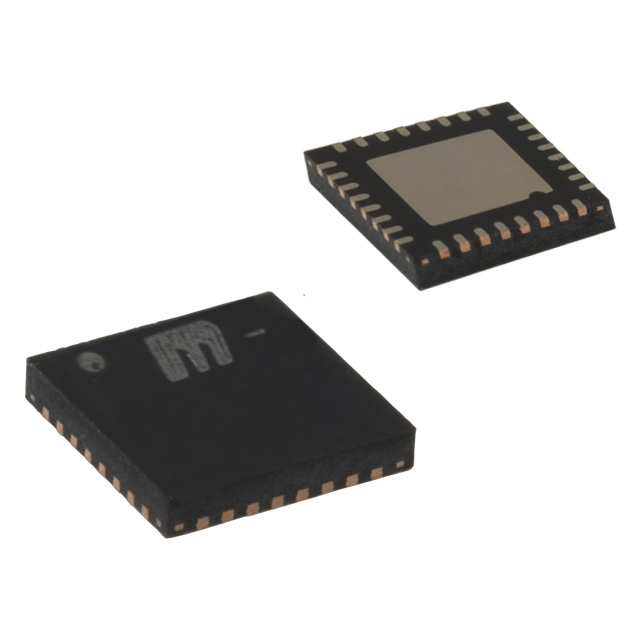
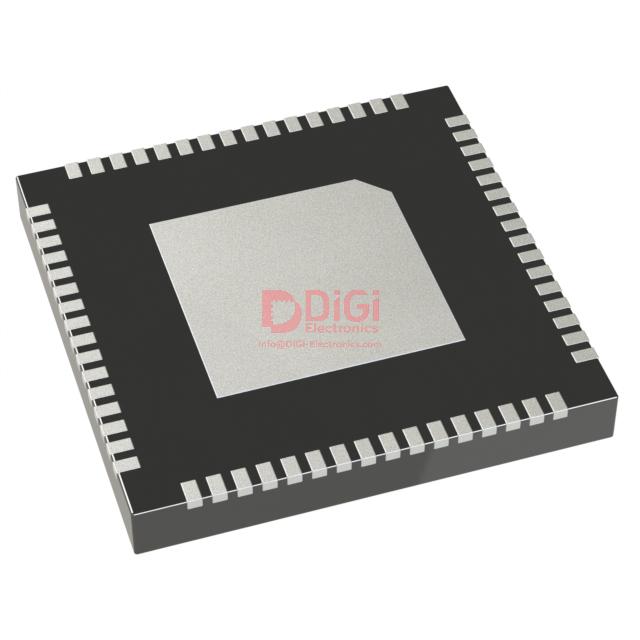
The KSZ9563RNXI, encapsulated in a 64-lead Very Thin Quad Flat No-Lead (VQFN) package with an 8x8mm profile, delivers a high component density ideal for space-constrained network interface applications. At the package level, the inclusion of an exposed thermal pad on the underside directly addresses thermal bottlenecks that can arise due to increased power densities common in multi-port Ethernet switch devices. This pad functions as a direct heat conduit, transferring thermal energy from the IC die into the PCB, which significantly reduces the thermal resistance junction-to-board.
Effective integration begins with precise alignment to the manufacturer’s recommended land pattern. Implementing multiple thermal vias beneath the exposed center pad is a primary mechanism for maximizing heat extraction. Thermal vias should mechanically connect this pad to large copper planes within the PCB’s internal layers, efficiently spreading dissipated power and stabilizing the device temperature under continuous operation. Practical scenarios confirm that using a dedicated ground plane layer, with a grid of tightly spaced vias (typically 0.3 to 0.5mm in diameter placed 1mm pitch apart), can reduce board hot-spots and support stable switch performance over extended temperature ranges. This configuration also mitigates electromigration risks, extending product reliability, especially pertinent for long-life industrial systems.
The VQFN form factor also demands careful soldering profile selection during assembly. The planarity and minimal lead form factor of this package are optimized for automated pick-and-place processes but require uniform paste stencil application to avoid voiding under the thermal pad. Consistent practice includes a segmented stencil aperture for the center pad, controlling paste volume and ensuring both mechanical strength and optimal thermal contact post-reflow. These considerations converge to promote reliable solder joints and minimize thermal impedance at the die-to-board interface.
Signal integrity benefits from the low-inductance path provided by the exposed pad and short lead connections. Crosstalk and electromagnetic interference risks are inherently lowered when the package is paired with ground vias and contiguous copper reference planes. The mechanical rigidity introduced by the compact QFN outline additionally supports vibration tolerance in harsh environments—a non-trivial design advantage for ruggedized networking equipment.
Optimizing for real-world deployment extends beyond PCB construction: conservative design margins should consider trace impedance planning, ensuring matched geometry for high-speed MII/RMII/GMII signals routed from the KSZ9563RNXI leads. Integrating configuration EEPROMs and crystals near the device is facilitated by the efficient pinout and thermal pad orientation—demonstrating that a well-executed integration is a combined function of mechanical layout, electrical discipline, and thermal management.
Overall, the deployment of the KSZ9563RNXI in an 8x8mm VQFN package exemplifies a synergy between miniaturization and robust operation. Leveraging exposed pad thermal structures and disciplined PCB integration practices, designers are positioned to fully exploit the switch’s industrial-grade reliability and high-speed capabilities, transforming packaging constraints into opportunities for durable high-density network designs.
Environmental and regulatory compliance of KSZ9563RNXI
The KSZ9563RNXI from Microchip Technology is engineered to conform to rigorous environmental and regulatory frameworks, ensuring seamless integration across diverse application domains. Its RoHS3 compliance eliminates six hazardous substances, including lead and cadmium, from all material compositions, aligning with global eco-design directives and simplifying cross-border procurement and deployment. The conformance to REACH requirements further assures users of minimized SVHC (Substances of Very High Concern) presence through the supply chain, reducing downstream risk and simplifying documentation efforts during customer audits or product certifications.
Attention to component reliability is addressed by its MSL 3 (Moisture Sensitivity Level 3, 168 hours) rating, which facilitates compatibility with standardized lead-free soldering practices used in automated assembly lines. This attribute is critical in high-mix production environments or contexts subject to varying storage and handling cycles; it helps prevent moisture-induced failures such as popcorning during reflow, thereby supporting long-term product reliability.
In practical terms, the KSZ9563RNXI’s compliance profile accelerates design cycles by eliminating the need for extended material validation and supporting regulatory submissions in automotive, industrial, and networked embedded systems. This reduces overhead in qualification processes, especially where multi-market releases are planned. Additional value is realized in scenarios involving direct customer-facing solutions, as reduced environmental impact is increasingly a procurement differentiator.
A closer examination of its compliance mechanisms also reveals that Microchip’s supply ecosystem offers robust traceability and batch-level documentation support. This not only ensures faster root-cause analyses in case of non-conformance but also builds confidence for OEMs and system integrators dealing with stringent end-customer requirements.
The KSZ9563RNXI exemplifies how environmental and regulatory foresight, embedded early at the component level, aligns the engineering lifecycle—encompassing design, assembly, deployment, and maintenance—with evolving legislative realities and practical field demands. This holistic alignment reduces time-to-market, lowers lifecycle risks, and strengthens supply-chain resilience across complex electronics value chains.
Potential equivalent/replacement models for KSZ9563RNXI
When assessing alternatives to the KSZ9563RNXI, attention first centers on matching essential hardware capabilities. Substitutes within the Microchip KSZ series, such as KSZ9567, KSZ9893, or KSZ9477, should be evaluated based on port density, media interface flexibility (RGMII, SGMII, MII), and compatibility with existing board layouts. For projects requiring extended temperature stability or specific QFN/LQFP package constraints, detailed scrutiny of datasheet specifications minimizes downstream re-spin risks. Key application scenarios—industrial automation, timed audio/video bridging, or energy-sensitive embedded designs—may prioritize not only IEEE 1588v2 PTP and AVB support, but also low-latency forwarding, integrated MAC/PHY functions, and manageable power envelopes.
Comparative analysis of forwarding capacity typically guides the selection for bandwidth-intensive segments. Here, internal switch architecture and address lookup efficiency directly influence real-world throughput in congested network environments. Reviewing protocol support—including VLAN, QoS, and security features—helps align switch selection with standardized network frameworks, reducing implementation friction. Practical experience suggests anticipated integration effort scales with the similarity of register maps and software driver compatibility across candidate models. Early-stage design decisions benefit from using Microchip’s product matrix to isolate pin-compatible variants, especially in projects where rapid prototyping or drop-in replacement is essential.
Package compatibility remains an engineering constraint often underestimated during initial planning. If the chosen alternative diverges in footprint or thermal characteristics, PCB modifications may be inevitable. A disciplined approach combines datasheet cross-referencing with simulation tools to preempt physical or electrical conflicts. For designs prioritizing long-term maintainability, favoring devices with proven multi-vendor ecosystem support—such as reference Linux drivers or third-party diagnostic utilities—accelerates functional validation.
In application domains leveraging time-sensitive operations, experience highlights the importance of internal clocking precision for IEEE 1588 and AVB features. Not all KSZ-series variants implement the same hardware timestamping granularity, influencing network determinism and overall system stability. Benchmarking early PTP synchronization cycles under representative traffic loads clarifies real-world performance envelopes.
A layered technical review ensures that the selected switch IC not only matches performance targets but also balances lifecycle cost and integration effort. Considering potential migration paths within the KSZ family, forward compatibility with evolving network standards presents an implicit advantage, especially where system expansion is likely. Ultimately, effective replacement selection depends on an engineered synthesis of specification alignment, historical integration insight, and strategic flexibility within the networking hardware portfolio.
Conclusion
The KSZ9563RNXI Gigabit Ethernet switch from Microchip Technology integrates a sophisticated switch engine designed for deterministic packet forwarding, minimizing jitter and latency across time-critical networks. The device implements advanced scheduling and traffic prioritization mechanisms compatible with Time-Sensitive Networking (TSN) standards, including IEEE 802.1Qav and 802.1AS, which facilitate precise timing and synchronization essential for automation, robotics, and industrial control systems. Underlying hardware support for cut-through and store-and-forward switching, combined with on-chip buffer management, optimizes data reliability while ensuring minimal propagation delay even under high network load.
Interfacing flexibility is realized through multi-format support, including RGMII, SGMII, MII, and GMII, enabling straightforward integration into varied hardware platforms. Practical deployment often leverages its programmable port configuration and broad VLAN support to segment networks securely and efficiently. The switch’s Layer 2/3 management capabilities extend to IGMP snooping, rate limiting, and QoS enforcement, offering granular control over traffic flows and multicast handling. These features collectively promote scalable network architectures and reduce time spent on software stack adaptation.
Deployment scenarios reveal further advantages in resource-limited environments, where the KSZ9563RNXI’s compact form factor and integrated power management circuits simplify PCB layout and supply design considerations. The device’s extended temperature range and ESD protection bolster resilience in harsh environments typical of edge gateways or machine-to-machine links. Engineers frequently exploit the onboard diagnostic functions and real-time monitoring to fine-tune performance, preemptively identify faults, and optimize bandwidth usage—techniques that accelerate production rollout while minimizing maintenance overhead.
Application-tailored configuration is critical for maximizing value. Adaptive adjustment of queue thresholds and TSN profiles has direct impact on minimizing cycle-to-cycle variation in synchronized communication schemes, such as motion control in interconnected PLC networks. Comparative benchmarking against competing switches with similar features reveals the KSZ9563RNXI’s optimized balance between integration effort, protocol coverage, and lifecycle longevity, especially in rapidly evolving IIoT gateways and modular automation platforms. The architecture supports seamless firmware upgrades, which preserves compatibility with new standards, thereby reducing future obsolescence risks.
Continued iterative validation using real traffic patterns is essential to fully harness the switch’s capabilities. Investing time in early prototyping and automated regression testing exposes subtle interoperability and timing challenges, allowing informed adjustments to MAC configurations and topology choices. In practice, the KSZ9563RNXI’s engineering-centric design streamlines the path from concept to production-ready industrial Ethernet systems, reinforcing its position as a robust and forward-looking switching solution for demanding, mission-critical deployments.