TLV2711CDBVR >
TLV2711CDBVR
Texas Instruments
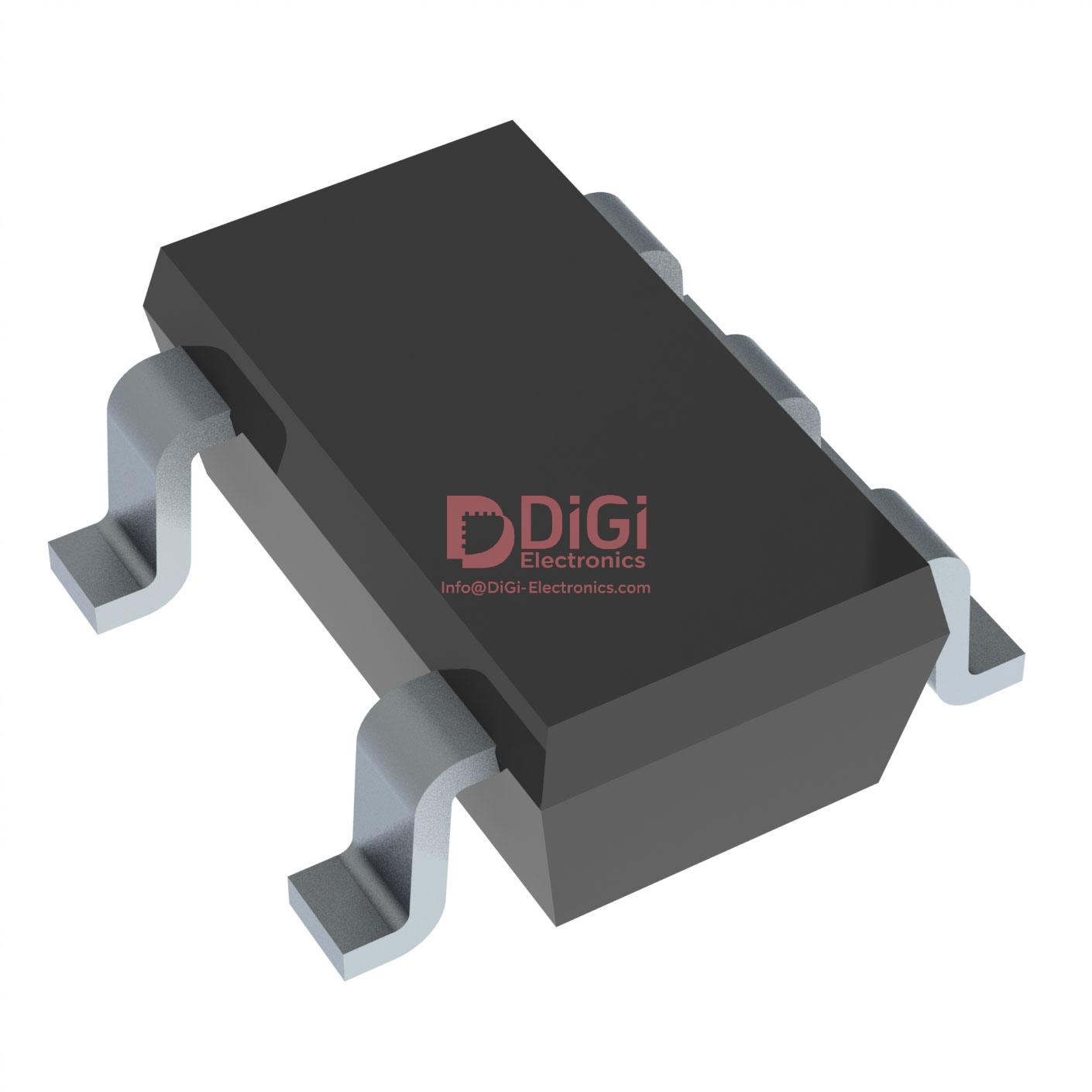
IC OPAMP GP 1 CIRCUIT SOT23-5
4747 Pcs New Original In Stock
General Purpose Amplifier 1 Circuit Rail-to-Rail SOT-23-5
Request Quote (Ships tomorrow)
*Quantity
Minimum 1
TLV2711CDBVR Texas Instruments
5.0 / 5.0 - (251 Ratings)

TLV2711CDBVR

Product Overview

12814301

DiGi Electronics Part Number

TLV2711CDBVR-DG

Manufacturer

Texas Instruments
TLV2711CDBVR

Description

IC OPAMP GP 1 CIRCUIT SOT23-5

Inventory

4747 Pcs New Original In Stock
General Purpose Amplifier 1 Circuit Rail-to-Rail SOT-23-5
Quantity
Minimum 1

Purchase and inquiry

Quality Assurance

365 - Day Quality Guarantee - Every part fully backed.

90 - Day Refund or Exchange - Defective parts? No hassle.

Limited Stock, Order Now - Get reliable parts without worry.

Global Shipping & Secure Packaging

Worldwide Delivery in 3-5 Business Days

100% ESD Anti-Static Packaging

Real-Time Tracking for Every Order

Secure & Flexible Payment

Credit Card, VISA, MasterCard, PayPal, Western Union, Telegraphic Transfer(T/T) and more

All payments encrypted for security

In Stock (All prices are in USD)
  • QTY Target Price Total Price
  • 1 0.6234 0.6234
Better Price by Online RFQ.
Request Quote (Ships tomorrow)
* Quantity
Minimum 1
(*) is mandatory
We'll get back to you within 24 hours

TLV2711CDBVR Technical Specifications

Category Linear, Amplifiers, Instrumentation, Op Amps, Buffer Amps

Manufacturer Texas Instruments

Packaging Cut Tape (CT) & Digi-Reel®

Series LinCMOS™

Product Status Active

Amplifier Type General Purpose

Number of Circuits 1

Output Type Rail-to-Rail

Slew Rate 0.025V/µs

Gain Bandwidth Product 65 kHz

Current - Input Bias 1 pA

Voltage - Input Offset 450 µV

Current - Supply 13µA

Current - Output / Channel 50 mA

Voltage - Supply Span (Min) 2.7 V

Voltage - Supply Span (Max) 10 V

Operating Temperature 0°C ~ 70°C

Mounting Type Surface Mount

Package / Case SC-74A, SOT-753

Supplier Device Package SOT-23-5

Base Product Number TLV2711

Datasheet & Documents

HTML Datasheet

TLV2711CDBVR-DG

Environmental & Export Classification

RoHS Status ROHS3 Compliant
Moisture Sensitivity Level (MSL) 1 (Unlimited)
REACH Status REACH Unaffected
ECCN EAR99
HTSUS 8542.33.0001

Additional Information

Other Names
-296-10651-1-DG
-TLV2711CDBVRG4
-296-10651-1
-TLV2711CDBVR-NDR
-TLV2711CDBVRG4-NDR
2156-TLV2711CDBVR
296-10651-6
296-10651-1
TEXTISTLV2711CDBVR
296-10651-2
Standard Package
3,000

Alternative Parts

PART NUMBER
MANUFACTURER
QUANTITY AVAILABLE
DiGi PART NUMBER
UNIT PRICE
SUBSTITUTE TYPE
XC221A1100MR
Torex Semiconductor Ltd
1783
XC221A1100MR-DG
0.0062
Similar
TLV2711CDBVRG4
Texas Instruments
4647
TLV2711CDBVRG4-DG
0.0062
MFR Recommended
XC221A1200MR
Torex Semiconductor Ltd
2810
XC221A1200MR-DG
0.0062
Similar

Reviews

5.0/5.0-(Show up to 5 Ratings)
햇***한밤
December 02, 2025
5.0
포장 부스러기나 냄새도 없어서 매우 만족스러웠습니다.
彎***虹
December 02, 2025
5.0
售後服務的回應速度快且親切,讓我感受到品牌的用心與重視客戶。
Refug***Verre
December 02, 2025
5.0
DiGi Electronics prouve qu’on peut allier écologie, prix et qualité.
Lebe***otiz
December 02, 2025
5.0
Ihre Preise sind im Vergleich unschlagbar, und der Service darüber hinaus sehr zuverlässig.
あさ***しずく
December 02, 2025
5.0
高品質な製品と親切なスタッフに支えられて、安心して購入できます。とても満足しています。
月のさ***アキラ
December 02, 2025
5.0
配送の速さとエコ素材の包装がとても印象的で、安心して購入できます。サービスに満足しています。
Spark***right
December 02, 2025
5.0
Every purchase and support interaction has reinforced my trust in DiGi Electronics.
Publish Evalution
* Product Rating
(Normal/Preferably/Outstanding, default 5 stars)
* Evalution Message
Please enter your review message.
Please post honest comments and do not post ilegal comments.

Frequently Asked Questions (FAQ)

When designing the TLV2711CDBVR into a battery-powered sensor interface, what risks should I consider with its 65 kHz gain bandwidth product in low-voltage rail-to-rail operation?

The TLV2711CDBVR's 65 kHz gain bandwidth product limits its ability to accurately amplify higher-frequency signals, especially when used in low-voltage applications (e.g., 2.7V) where internal headroom is constrained. In battery-powered sensor interfaces—such as temperature or pressure sensors with slow-varying outputs—this bandwidth is typically sufficient. However, if your signal has fast transients or you're using it in active filtering (e.g., anti-aliasing), verify the closed-loop bandwidth with your gain setting. Additionally, ensure the load capacitance is minimized (<50 pF) to avoid instability due to phase margin reduction. Consider using a small series resistor (e.g., 10–47 Ω) near the output if driving capacitive loads to maintain stability. Always simulate open-loop gain and phase in your configuration using TI’s TINA-TI tools to confirm stability margins under actual supply and load conditions.

Can the TLV2711CDBVR replace the MAX4475 or LPV521 in existing PCB designs without layout changes, and what design-in trade-offs should I evaluate?

The TLV2711CDBVR is pin-compatible with the MAX4475 and LPV521, all being single SOT-23-5 packaged rail-to-rail CMOS amplifiers, allowing direct replacement without layout changes. However, differences in slew rate (TLV2711CDBVR: 0.025 V/µs vs. LPV521: 0.35 V/µs) and bandwidth (65 kHz vs. LPV521’s 1 MHz) mean that signal fidelity may degrade in higher-speed applications. Also, while the TLV2711CDBVR has an extremely low input bias current (1 pA), ideal for high-impedance sensor interfaces, its slower response can increase settling time in pulsed systems. Validate step response and DC accuracy under your load and supply voltage. If your design uses aggressive power-down modes, confirm the quiescent current (13 µA) aligns with system duty cycling goals. Use bypass capacitance (100 nF ceramic) close to V+ to maintain stability during intermittent operation.

What reliability risks arise when operating the TLV2711CDBVR near its maximum 10 V supply voltage in industrial environments with temperature fluctuations?

Operating the TLV2711CDBVR at or near its 10 V maximum supply voltage in fluctuating industrial environments increases long-term reliability risks, especially when combined with temperatures approaching 70°C (its upper limit). While the SOT-23-5 package has no internal thermal shutdown, sustained high voltage and temperature can accelerate parametric drift, particularly in input offset voltage (450 µV max). Ensure a derating margin—ideally operate below 8.5 V—and verify the actual supply rail under load, as poor regulation or transients can exceed 10 V. In systems with inductive loads or long traces, use overvoltage protection (e.g., small TVS diode on V+) to prevent latch-up or damage. Monitor power supply noise; exceeding 10 V momentarily—even briefly—risks permanent failure due to gate oxide breakdown in the LinCMOS™ input stage.

How does the TLV2711CDBVR’s 1 pA input bias current impact sensor signal integrity in high-impedance pH probe circuits?

The TLV2711CDBVR’s ultra-low 1 pA input bias current makes it well-suited for high-impedance pH probe applications, where probe outputs can exceed 1 GΩ impedance. A higher bias current (e.g., in bipolar amplifiers like LMV321) would cause significant voltage drop across the probe, leading to measurement errors or drift. However, achieving optimal performance requires careful PCB layout: use guarded traces around the input pins, avoid leakage paths by removing solder mask on high-impedance nodes, and clean the board thoroughly to prevent ionic contamination. Also, pair the TLV2711CDBVR with high-value feedback resistors (>10 MΩ) only if low humidity is assured—otherwise, leakage currents dominate. For stability with capacitive probes, consider adding a small feedback capacitor (1–10 pF) to reduce noise gain peaking.

What are the key stability and startup concerns when using the TLV2711CDBVR in a rail-to-rail precision buffer at 3.3 V with capacitive loading?

When using the TLV2711CDBVR as a rail-to-rail precision buffer at 3.3 V, capacitive loading (e.g., from ADC inputs or cables) can cause ringing or oscillation due to reduced phase margin. The device is not unity-gain stable with direct capacitive loads over ~50 pF. To mitigate this, add a small isolation resistor (20–100 Ω) between the output and the capacitor to decouple the load. Alternatively, use input lead compensation by placing a capacitor across the feedback resistor if used in non-unity gain. During startup, ensure the power supply ramps cleanly above 2.7 V; slow or noisy supply rise times could cause output phase inversion or latch-up in CMOS amplifiers. Include a local 100 nF X7R bypass capacitor and consider a soft-start circuit in battery-powered systems to avoid transient input stress.

Quality Assurance (QC)

DiGi ensures the quality and authenticity of every electronic component through professional inspections and batch sampling, guaranteeing reliable sourcing, stable performance, and compliance with technical specifications, helping customers reduce supply chain risks and confidently use components in production.

Quality Assurance
Counterfeit and defect prevention

Counterfeit and defect prevention

Comprehensive screening to identify counterfeit, refurbished, or defective components, ensuring only authentic and compliant parts are delivered.

Visual and packaging inspection

Visual and packaging inspection

Electrical performance verification

Verification of component appearance, markings, date codes, packaging integrity, and label consistency to ensure traceability and conformity.

Life and reliability evaluation

DiGi Certification
Blogs & Posts
TLV2711CDBVR CAD Models
productDetail
Please log in first.
No account yet? Register