TLV2211CDBVT >
TLV2211CDBVT
Texas Instruments
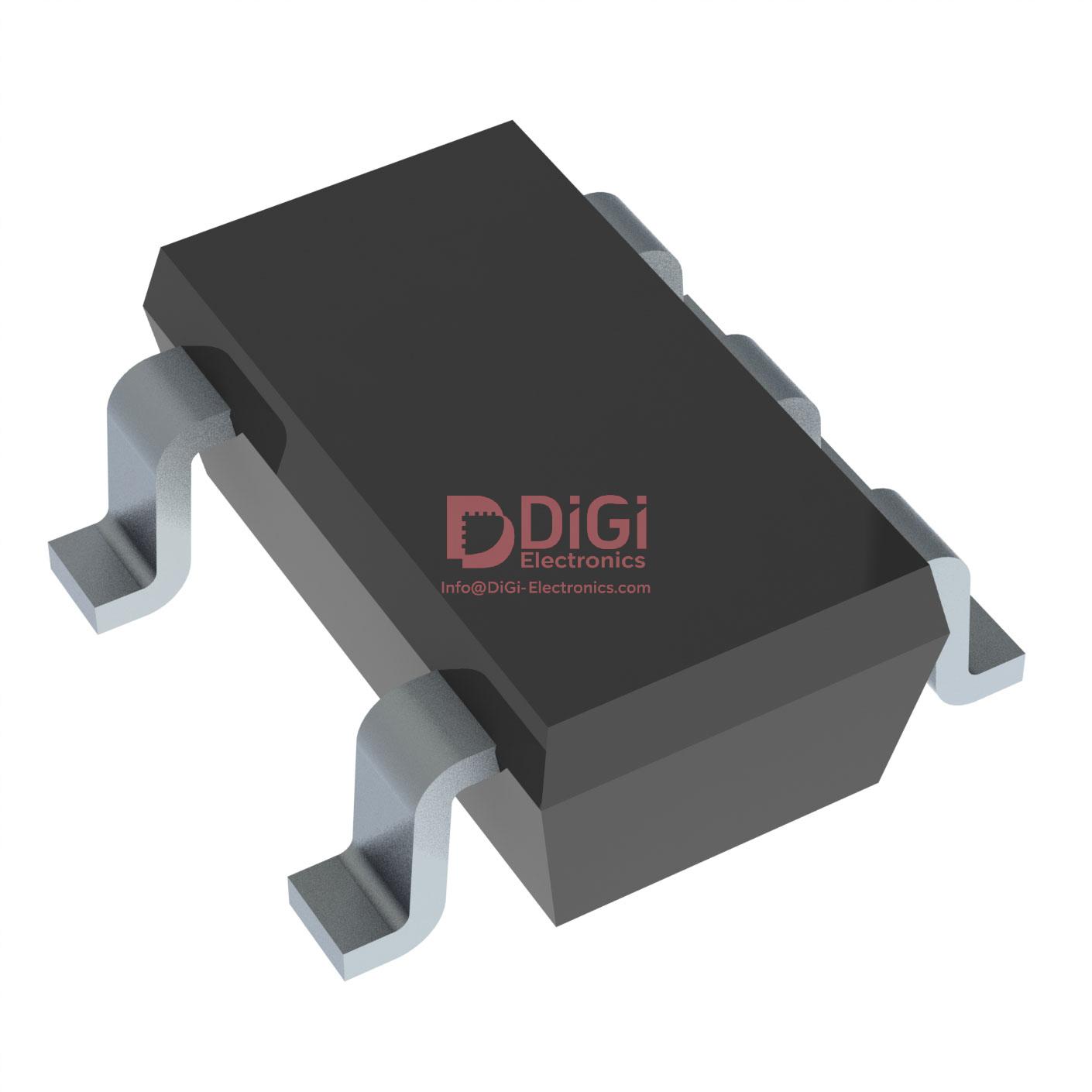
IC OPAMP GP 1 CIRCUIT SOT23-5
5074 Pcs New Original In Stock
General Purpose Amplifier 1 Circuit Rail-to-Rail SOT-23-5
Request Quote (Ships tomorrow)
*Quantity
Minimum 1
TLV2211CDBVT Texas Instruments
5.0 / 5.0 - (185 Ratings)

TLV2211CDBVT

Product Overview

12813683

DiGi Electronics Part Number

TLV2211CDBVT-DG

Manufacturer

Texas Instruments
TLV2211CDBVT

Description

IC OPAMP GP 1 CIRCUIT SOT23-5

Inventory

5074 Pcs New Original In Stock
General Purpose Amplifier 1 Circuit Rail-to-Rail SOT-23-5
Quantity
Minimum 1

Purchase and inquiry

Quality Assurance

365 - Day Quality Guarantee - Every part fully backed.

90 - Day Refund or Exchange - Defective parts? No hassle.

Limited Stock, Order Now - Get reliable parts without worry.

Global Shipping & Secure Packaging

Worldwide Delivery in 3-5 Business Days

100% ESD Anti-Static Packaging

Real-Time Tracking for Every Order

Secure & Flexible Payment

Credit Card, VISA, MasterCard, PayPal, Western Union, Telegraphic Transfer(T/T) and more

All payments encrypted for security

In Stock (All prices are in USD)
  • QTY Target Price Total Price
  • 1 1.2019 1.2019
Better Price by Online RFQ.
Request Quote (Ships tomorrow)
* Quantity
Minimum 1
(*) is mandatory
We'll get back to you within 24 hours

TLV2211CDBVT Technical Specifications

Category Linear, Amplifiers, Instrumentation, Op Amps, Buffer Amps

Manufacturer Texas Instruments

Packaging Cut Tape (CT) & Digi-Reel®

Series LinCMOS™

Product Status Last Time Buy

Amplifier Type General Purpose

Number of Circuits 1

Output Type Rail-to-Rail

Slew Rate 0.025V/µs

Gain Bandwidth Product 65 kHz

Current - Input Bias 1 pA

Voltage - Input Offset 450 µV

Current - Supply 13µA

Current - Output / Channel 50 mA

Voltage - Supply Span (Min) 2.7 V

Voltage - Supply Span (Max) 10 V

Operating Temperature 0°C ~ 70°C

Mounting Type Surface Mount

Package / Case SC-74A, SOT-753

Supplier Device Package SOT-23-5

Base Product Number TLV2211

Datasheet & Documents

HTML Datasheet

TLV2211CDBVT-DG

Environmental & Export Classification

RoHS Status ROHS3 Compliant
Moisture Sensitivity Level (MSL) 1 (Unlimited)
REACH Status REACH Unaffected
ECCN EAR99
HTSUS 8542.33.0001

Additional Information

Other Names
TLV2211CDBVTG4-DG
2156-TLV2211CDBVT
296-32366-2
TLV2211CDBVTG4
TLV2211CDBVT-DG
296-32366-1
296-32366-6
TEXTISTLV2211CDBVT
Standard Package
250

Alternative Parts

View Details
PART NUMBER
MANUFACTURER
QUANTITY AVAILABLE
DiGi PART NUMBER
UNIT PRICE
SUBSTITUTE TYPE
TLV27L1IDBVR
Texas Instruments
17464
TLV27L1IDBVR-DG
0.0105
MFR Recommended

Reviews

5.0/5.0-(Show up to 5 Ratings)
새***기
December 02, 2025
5.0
항상 기대 이상으로 빠른 배송과 친절한 고객 서비스에 만족합니다.
햇***한날
December 02, 2025
5.0
배송이 빠르고 안전하게 도착했으며, 사후 서비스도 만족스럽습니다.
Glaube***limmer
December 02, 2025
5.0
Einfacher Zugriff auf alle Produkte via der übersichtlichen Website. Das macht das Einkaufen schnell und effizient.
Sereni***treams
December 02, 2025
5.0
The shipping was prompt, and the prices are very pocket-friendly. Highly recommended.
Tran***lSoul
December 02, 2025
5.0
Timeliness and packaging are their strengths—always exceeding expectations.
Starl***tream
December 02, 2025
5.0
The packaging was thoughtfully done, with multiple layers of protection.
Publish Evalution
* Product Rating
(Normal/Preferably/Outstanding, default 5 stars)
* Evalution Message
Please enter your review message.
Please post honest comments and do not post ilegal comments.

Frequently Asked Questions (FAQ)

Can the TLV2211CDBVT operate reliably in battery-powered sensor circuits where supply voltage drops below 3V, and how does its rail-to-rail output behave near the lower rail under load?

Yes, the TLV2211CDBVT is well-suited for low-voltage battery-powered applications with a minimum supply voltage of 2.7V. Its rail-to-rail output stage allows the signal to swing within approximately 10mV of the lower and upper supply rails under light loads. However, output drive capability degrades near the lower rail when sourcing or sinking more than 1mA. For reliable performance in low-power sensors, ensure the load impedance is ≥10kΩ and consider adding a small pull-up resistor if precise low-level switching is required. Monitor output headroom during deep battery discharge, especially when operating near 2.7V with moderate current demands.

What are the risks of using the TLV2211CDBVT instead of the TLV27L1IDBVR in a precision signal conditioning stage, and when does the trade-off make sense?

Replacing the TLV27L1IDBVR with the TLV2211CDBVT introduces trade-offs in bandwidth and slew rate: the TLV2211CDBVT has a 65 kHz GBW and 0.025 V/µs slew rate, compared to 1.4 MHz and 0.9 V/µs for the TLV27L1IDBVR. This makes the TLV2211CDBVT unsuitable for signals above ~10 kHz or fast transients. However, the TLV2211CDBVT offers lower input bias current (1 pA vs 2 pA) and slightly better input offset voltage (450 µV vs 550 µV), making it preferable for high-impedance, low-frequency sensors like pH probes or photodiodes where minimal loading and precision DC gain matter more than speed. Use the TLV2211CDBVT only when bandwidth needs are under 10 kHz and ultra-low power (13 µA) is critical.

How does the TLV2211CDBVT perform in high-temperature industrial environments, and what precautions should be taken given its 0°C to 70°C rated operating temperature?

The TLV2211CDBVT is specified for operation only up to 70°C, making it unsuitable for industrial environments exceeding this threshold without derating. While the device may function beyond 70°C, parameters like input offset voltage and bias current can drift significantly, risking signal integrity in precision applications. For designs near or outside this limit, consider thermal management (heatsinking, airflow) or switch to a wider-temperature alternative like the MCP6001, rated to 125°C. If using the TLV2211CDBVT in a marginally hot enclosure, simulate worst-case drift and validate stability under thermal load to avoid calibration errors.

What are the key layout considerations when integrating the TLV2211CDBVT in a mixed-signal PCB to minimize noise and leakage currents, given its ultra-low input bias current?

Due to the TLV2211CDBVT's ultra-low 1 pA input bias current, PCB surface leakage can dominate input error. Use guard rings around the input pins, routed to a clean guard voltage (e.g., mid-supply or input common-mode level), to shunt leakage currents. Avoid flux residues by specifying no-clean flux or thorough cleaning. Use high-impedance input traces kept short and away from high-voltage or switching nodes. Prefer FR4 with conformal coating if operating in humid environments. Power supply decoupling with a 100 nF ceramic capacitor close to the VDD pin reduces noise coupling, especially critical given the device’s limited gain bandwidth and susceptibility to ripple.

Is the TLV2211CDBVT a viable drop-in replacement for aging LMV7215 or LMC6482 in legacy designs, and what compatibility risks should be evaluated?

The TLV2211CDBVT is not a direct drop-in for LMV7215 or LMC6482 due to differences in pinout, speed, and drive capability. While all are single rail-to-rail op-amps in SOT-23-5, the LMV7215 has a different pin configuration (output on pin 1 vs inverting input), risking PCB layout errors. The LMC6482 has comparable input bias current but higher GBW (1 MHz) and drive strength. Swapping in the TLV2211CDBVT may degrade system response and increase distortion in AC-coupled stages. If replacing due to obsolescence, redesign the local circuit—buffer high-speed signals, verify start-up behavior under light loads, and re-characterize stability with existing feedback networks to avoid oscillation due to lower bandwidth.

Quality Assurance (QC)

DiGi ensures the quality and authenticity of every electronic component through professional inspections and batch sampling, guaranteeing reliable sourcing, stable performance, and compliance with technical specifications, helping customers reduce supply chain risks and confidently use components in production.

Quality Assurance
Counterfeit and defect prevention

Counterfeit and defect prevention

Comprehensive screening to identify counterfeit, refurbished, or defective components, ensuring only authentic and compliant parts are delivered.

Visual and packaging inspection

Visual and packaging inspection

Electrical performance verification

Verification of component appearance, markings, date codes, packaging integrity, and label consistency to ensure traceability and conformity.

Life and reliability evaluation

DiGi Certification
Blogs & Posts
TLV2211CDBVT CAD Models
productDetail
Please log in first.
No account yet? Register