TLV2211CDBVR >
TLV2211CDBVR
Texas Instruments
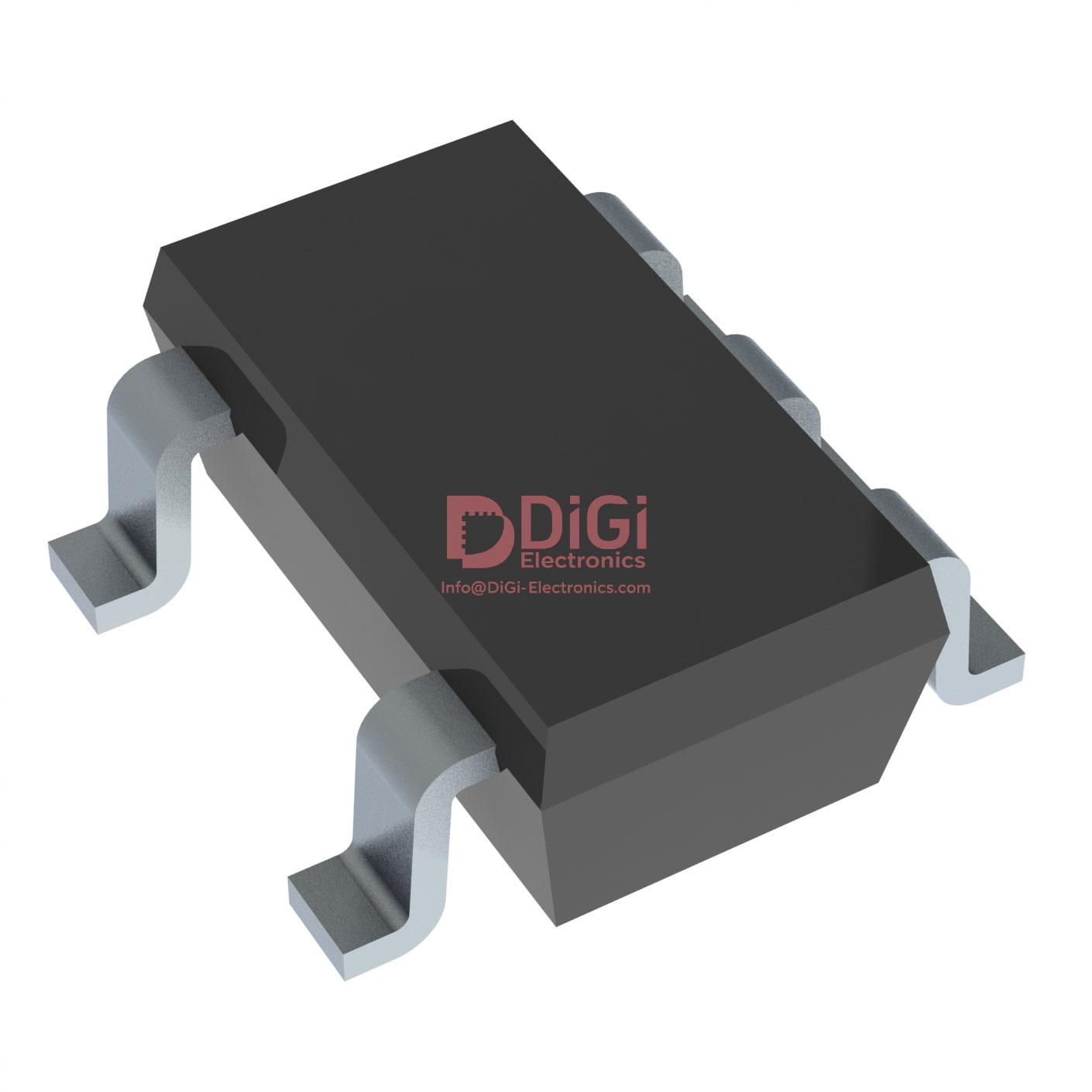
IC OPAMP GP 1 CIRCUIT SOT23-5
6511 Pcs New Original In Stock
General Purpose Amplifier 1 Circuit Rail-to-Rail SOT-23-5
Request Quote (Ships tomorrow)
*Quantity
Minimum 1
TLV2211CDBVR Texas Instruments
5.0 / 5.0 - (441 Ratings)

TLV2211CDBVR

Product Overview

12900159

DiGi Electronics Part Number

TLV2211CDBVR-DG

Manufacturer

Texas Instruments
TLV2211CDBVR

Description

IC OPAMP GP 1 CIRCUIT SOT23-5

Inventory

6511 Pcs New Original In Stock
General Purpose Amplifier 1 Circuit Rail-to-Rail SOT-23-5
Quantity
Minimum 1

Purchase and inquiry

Quality Assurance

365 - Day Quality Guarantee - Every part fully backed.

90 - Day Refund or Exchange - Defective parts? No hassle.

Limited Stock, Order Now - Get reliable parts without worry.

Global Shipping & Secure Packaging

Worldwide Delivery in 3-5 Business Days

100% ESD Anti-Static Packaging

Real-Time Tracking for Every Order

Secure & Flexible Payment

Credit Card, VISA, MasterCard, PayPal, Western Union, Telegraphic Transfer(T/T) and more

All payments encrypted for security

In Stock (All prices are in USD)
  • QTY Target Price Total Price
  • 1 6.2487 6.2487
Better Price by Online RFQ.
Request Quote (Ships tomorrow)
* Quantity
Minimum 1
(*) is mandatory
We'll get back to you within 24 hours

TLV2211CDBVR Technical Specifications

Category Linear, Amplifiers, Instrumentation, Op Amps, Buffer Amps

Manufacturer Texas Instruments

Packaging Cut Tape (CT) & Digi-Reel®

Series LinCMOS™

Product Status Last Time Buy

Amplifier Type General Purpose

Number of Circuits 1

Output Type Rail-to-Rail

Slew Rate 0.025V/µs

Gain Bandwidth Product 65 kHz

Current - Input Bias 1 pA

Voltage - Input Offset 450 µV

Current - Supply 13µA

Current - Output / Channel 50 mA

Voltage - Supply Span (Min) 2.7 V

Voltage - Supply Span (Max) 10 V

Operating Temperature 0°C ~ 70°C

Mounting Type Surface Mount

Package / Case SC-74A, SOT-753

Supplier Device Package SOT-23-5

Base Product Number TLV2211

Datasheet & Documents

HTML Datasheet

TLV2211CDBVR-DG

Environmental & Export Classification

RoHS Status ROHS3 Compliant
Moisture Sensitivity Level (MSL) 1 (Unlimited)
REACH Status REACH Unaffected
ECCN EAR99
HTSUS 8542.33.0001

Additional Information

Other Names
TEXTISTLV2211CDBVR
-296-10500-1
-TLV2211CDBVR-NDR
296-10500-6
2156-TLV2211CDBVR
-296-10500-1-DG
TLV2211CDBVRG4
-TLV2211CDBVRG4-NDR
296-10500-1
296-10500-2
TLV2211CDBVRG4-DG
-TLV2211CDBVRG4
Standard Package
3,000

Alternative Parts

View Details
PART NUMBER
MANUFACTURER
QUANTITY AVAILABLE
DiGi PART NUMBER
UNIT PRICE
SUBSTITUTE TYPE
TLV27L1IDBVR
Texas Instruments
17464
TLV27L1IDBVR-DG
0.0105
MFR Recommended
TSX631AILT
STMicroelectronics
9134
TSX631AILT-DG
0.6149
MFR Recommended

Reviews

5.0/5.0-(Show up to 5 Ratings)
Sky***amer
December 02, 2025
5.0
I highly recommend DiGi Electronics for their quality and friendly service.
Radi***Rain
December 02, 2025
5.0
Their careful packaging shows a commitment to quality and customer satisfaction.
Bri***Sky
December 02, 2025
5.0
Their product quality gives me peace of mind every time I use their electronics.
Peac***lPeak
December 02, 2025
5.0
DiGi Electronics' pricing advantage makes it easy to get premium packaging without breaking the bank.
Ether***Dream
December 02, 2025
5.0
Affordable prices and sustainable packaging—DiGi Electronics is winning my loyalty.
Celes***lPulse
December 02, 2025
5.0
DiGi Electronics’ focus on customer service makes them stand out in the industry.
Skyli***reams
December 02, 2025
5.0
They offer quality products that are also budget-friendly.
Publish Evalution
* Product Rating
(Normal/Preferably/Outstanding, default 5 stars)
* Evalution Message
Please enter your review message.
Please post honest comments and do not post ilegal comments.

Frequently Asked Questions (FAQ)

Is the TLV2211CDBVR suitable for replacing a higher-bandwidth op-amp like the MCP6001 in a low-power sensor interface circuit, and what are the key performance trade-offs I should evaluate?

Replacing the MCP6001 with the TLV2211CDBVR in a sensor interface is feasible only if your signal bandwidth remains below ~10 kHz, due to the TLV2211CDBVR’s 65 kHz gain bandwidth product and very low 0.025 V/µs slew rate. While both are rail-to-rail, micro-power op-amps, the TLV2211CDBVR consumes slightly less supply current (13 µA vs. 100 µA), making it better for battery longevity—but its slower response may distort higher-frequency sensor signals or cause phase lag in feedback loops. Always simulate transient response and verify settling time meets your ADC sampling requirements before committing to the TLV2211CDBVR in dynamic applications.

Can I use the TLV2211CDBVR in a 3.3V industrial control system operating near 70°C ambient, and how does its temperature rating impact long-term reliability?

The TLV2211CDBVR is rated for 0°C to 70°C operation, so it can be used in a 3.3V industrial system—but only if the internal power dissipation and PCB thermal design keep the junction temperature within this range. At 70°C ambient, even minor self-heating from output drive or supply current can push the die toward its thermal limit, potentially accelerating aging or causing drift in input offset voltage (specified at 450 µV, but may increase with temperature). For extended reliability in borderline thermal conditions, consider derating the output current below 50 mA and ensuring adequate copper pour under the SOT-23-5 package. If your system regularly exceeds 60°C, evaluate alternatives like the TSX631AILT, which offers a wider industrial temperature range.

What are the risks of substituting the TLV2211CDBVR with the suggested alternative TLV27L1IDBVR in a precision voltage reference buffer application?

Substituting the TLV2211CDBVR with the TLV27L1IDBVR introduces two key risks: first, the TLV27L1IDBVR has a higher input bias current (25 pA vs. 1 pA), which may cause significant errors when buffering high-impedance voltage references or DAC outputs; second, while both have similar supply current, the TLV27L1IDBVR’s gain bandwidth is 350 kHz—much higher than the TLV2211CDBVR’s 65 kHz—which could lead to instability if your feedback network was tuned for the slower device. Always re-evaluate noise, stability, and DC accuracy in your specific circuit before substitution, especially in high-impedance nodes where picoampere-level leakage matters.

How does the TLV2211CDBVR’s ultra-low supply current affect noise performance and stability in a photodiode transimpedance amplifier design?

The TLV2211CDBVR’s 13 µA supply current enables exceptional battery life but comes at the cost of higher voltage noise density and limited bandwidth, making it poorly suited for high-gain photodiode transimpedance amplifiers (TIAs). Its low slew rate (0.025 V/µs) and modest GBW (65 kHz) restrict usable feedback capacitance and increase susceptibility to oscillation with capacitive photodiodes. Additionally, the lack of a dedicated low-noise architecture means input-referred noise may dominate weak photocurrent signals. For such applications, consider a purpose-built TIA op-amp like the OPA380 or MCP6V31, which offer better noise-performance trade-offs despite higher quiescent current.

Given that the TLV2211CDBVR is in Last Time Buy status, what should I consider when qualifying a drop-in replacement for high-volume production?

With the TLV2211CDBVR in Last Time Buy status, immediate action is required to avoid line stoppages. When qualifying a drop-in replacement—such as the TSX631AILT or TLV27L1IDBVR—verify not only pin compatibility but also critical dynamic parameters: input bias current (affects DC accuracy), slew rate (impacts transient response), and output drive under load. Conduct side-by-side testing across temperature and supply voltage extremes, especially in your actual PCB layout, as parasitics can expose stability differences. Also confirm long-term availability and lifecycle status of the substitute; the TSX631AILT, for example, offers better temperature range and is actively supported, making it a more future-proof choice despite minor performance deviations.

Quality Assurance (QC)

DiGi ensures the quality and authenticity of every electronic component through professional inspections and batch sampling, guaranteeing reliable sourcing, stable performance, and compliance with technical specifications, helping customers reduce supply chain risks and confidently use components in production.

Quality Assurance
Counterfeit and defect prevention

Counterfeit and defect prevention

Comprehensive screening to identify counterfeit, refurbished, or defective components, ensuring only authentic and compliant parts are delivered.

Visual and packaging inspection

Visual and packaging inspection

Electrical performance verification

Verification of component appearance, markings, date codes, packaging integrity, and label consistency to ensure traceability and conformity.

Life and reliability evaluation

DiGi Certification
Blogs & Posts
TLV2211CDBVR CAD Models
productDetail
Please log in first.
No account yet? Register