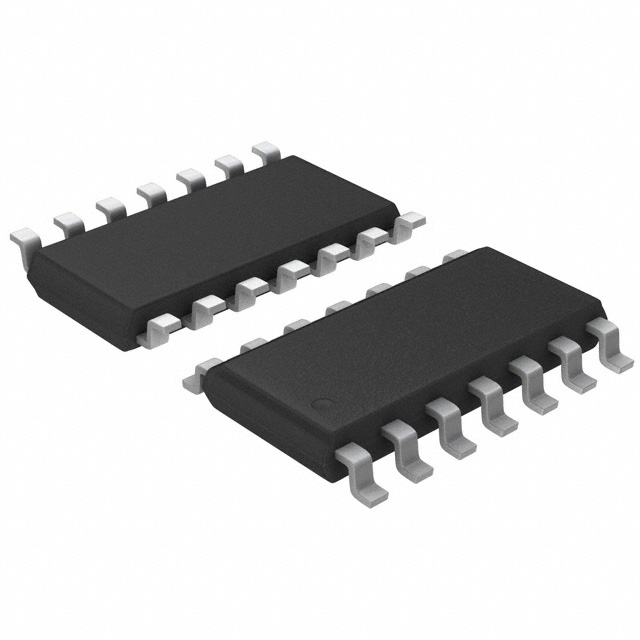
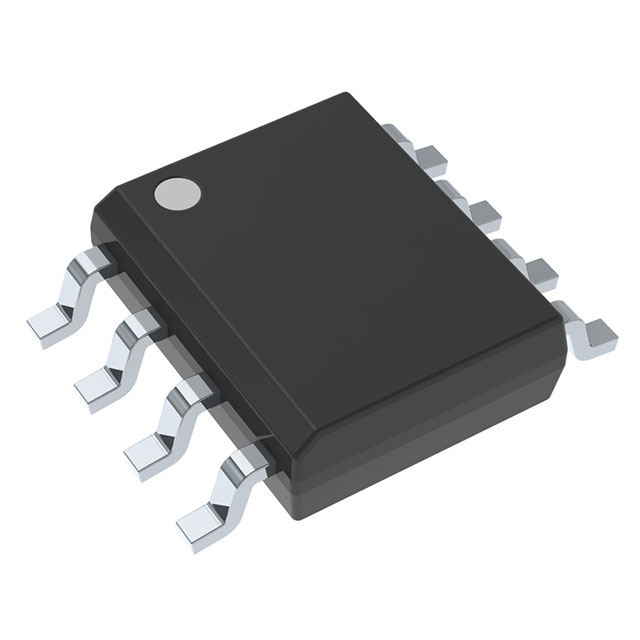
OPA2191IDR >
OPA2191IDR
Texas Instruments
IC CMOS 2 CIRCUIT 8SOIC
10450 Pcs New Original In Stock
CMOS Amplifier 2 Circuit Rail-to-Rail 8-SOIC
Request Quote (Ships tomorrow)
*Quantity
Minimum 1
OPA2191IDR Texas Instruments
5.0 / 5.0 - (106 Ratings)

OPA2191IDR

Product Overview

12800981

DiGi Electronics Part Number

OPA2191IDR-DG

Manufacturer

Texas Instruments
OPA2191IDR

Description

IC CMOS 2 CIRCUIT 8SOIC

Inventory

10450 Pcs New Original In Stock
CMOS Amplifier 2 Circuit Rail-to-Rail 8-SOIC
Quantity
Minimum 1

Purchase and inquiry

Quality Assurance

365 - Day Quality Guarantee - Every part fully backed.

90 - Day Refund or Exchange - Defective parts? No hassle.

Limited Stock, Order Now - Get reliable parts without worry.

Global Shipping & Secure Packaging

Worldwide Delivery in 3-5 Business Days

100% ESD Anti-Static Packaging

Real-Time Tracking for Every Order

Secure & Flexible Payment

Credit Card, VISA, MasterCard, PayPal, Western Union, Telegraphic Transfer(T/T) and more

All payments encrypted for security

In Stock (All prices are in USD)
  • QTY Target Price Total Price
  • 1 1.1812 1.1812
Better Price by Online RFQ.
Request Quote (Ships tomorrow)
* Quantity
Minimum 1
(*) is mandatory
We'll get back to you within 24 hours

OPA2191IDR Technical Specifications

Category Linear, Amplifiers, Instrumentation, Op Amps, Buffer Amps

Manufacturer Texas Instruments

Packaging Cut Tape (CT) & Digi-Reel®

Series -

Product Status Active

Amplifier Type CMOS

Number of Circuits 2

Output Type Rail-to-Rail

Slew Rate 7.5V/µs

Gain Bandwidth Product 2.5 MHz

Current - Input Bias 5 pA

Voltage - Input Offset 5 µV

Current - Supply 140µA (x2 Channels)

Current - Output / Channel 65 mA

Voltage - Supply Span (Min) 4.5 V

Voltage - Supply Span (Max) 36 V

Operating Temperature -40°C ~ 125°C

Mounting Type Surface Mount

Package / Case 8-SOIC (0.154", 3.90mm Width)

Supplier Device Package 8-SOIC

Base Product Number OPA2191

Datasheet & Documents

Manufacturer Product Page

OPA2191IDR Specifications

HTML Datasheet

OPA2191IDR-DG

Environmental & Export Classification

RoHS Status ROHS3 Compliant
Moisture Sensitivity Level (MSL) 2 (1 Year)
REACH Status REACH Unaffected
ECCN EAR99
HTSUS 8542.33.0001

Additional Information

Other Names
296-45467-6
296-45467-1
296-45467-2
Standard Package
2,500

Reviews

5.0/5.0-(Show up to 5 Ratings)
聽***音
December 02, 2025
5.0
送貨速度快,包裝也很仔細,產品耐用性非常出色,非常滿意。
Miro***eRêve
December 02, 2025
5.0
Leur large gamme de produits avec un traitement efficace est la clé de notre réussite dans l’approvisionnement.
Inn***ight
December 02, 2025
5.0
Their product variety means I never run out of new things to try.
Brig***istas
December 02, 2025
5.0
Overall, DiGi Electronics excels in inventory management and post-sale customer support.
Lun***cho
December 02, 2025
5.0
I appreciate the detailed product descriptions and easy-to-use filtering options that help me narrow down choices efficiently.
Blis***lBay
December 02, 2025
5.0
Excellent packaging prevented any damage during transit, demonstrating great attention to detail.
Sunki***dVibes
December 02, 2025
5.0
Their focus on quality and price makes them a standout brand.
Peac***lPath
December 02, 2025
5.0
The materials used are top-notch, reflecting a high standard of quality and reliability.
Drea***aver
December 02, 2025
5.0
DiGi Electronics offers incredible value for money while maintaining high quality standards.
Publish Evalution
* Product Rating
(Normal/Preferably/Outstanding, default 5 stars)
* Evalution Message
Please enter your review message.
Please post honest comments and do not post ilegal comments.

Frequently Asked Questions (FAQ)

When replacing a legacy bipolar op-amp like the LM358 with the OPA2191IDR in a low-power sensor interface circuit, what critical design risks should I evaluate to avoid unexpected performance degradation?

Replacing the LM358 with the OPA2191IDR introduces several key considerations: while the OPA2191IDR offers superior precision (5 µV offset vs. 2–7 mV on LM358) and lower input bias current (5 pA vs. 20–200 nA), its CMOS input stage is more susceptible to latch-up and ESD damage in high-impedance sensor nodes. Additionally, the OPA2191IDR’s rail-to-rail output swing near the negative rail may not fully reach 0 V under light loads, unlike the LM358’s true ground-sensing output. Ensure your feedback network and load conditions don’t cause output saturation near rails, and add input protection diodes if interfacing with high-impedance sources. Also verify supply sequencing—unlike the LM358, the OPA2191IDR is not tolerant of input voltages beyond the supply rails, so transient overshoots must be clamped.

Can the OPA2191IDR safely drive a 100 pF capacitive load directly in a unity-gain buffer configuration without stability issues, and what mitigation strategies are recommended if oscillation occurs?

The OPA2191IDR is not optimized for direct driving of heavy capacitive loads (>50 pF) in unity-gain configurations and may exhibit peaking or oscillation with a 100 pF load due to phase margin degradation. While its internal compensation supports moderate capacitive loads, TI’s datasheet recommends isolating the load with a small series resistor (10–100 Ω) between the output and capacitor to dampen resonance. For critical applications, add a feedback capacitor (e.g., 1–10 pF) across the feedback resistor to improve phase margin. Always validate stability via transient simulation or bench testing with actual load capacitance, including PCB parasitics, as layout-induced inductance can exacerbate ringing.

How does the OPA2191IDR compare to the Analog Devices ADA4661-2 in high-temperature industrial environments, particularly regarding long-term drift and reliability at 125°C?

The OPA2191IDR and ADA4661-2 are both precision dual CMOS op-amps rated for -40°C to 125°C, but the OPA2191IDR has a lower initial offset voltage (5 µV vs. 25 µV) and better long-term stability due to TI’s advanced trimming process. However, the ADA4661-2 features higher open-loop gain (130 dB vs. 120 dB) and better PSRR (110 dB vs. 100 dB), making it more robust in noisy power environments. At sustained 125°C operation, the OPA2191IDR’s offset drift (0.3 µV/°C typical) remains excellent, but ensure proper thermal management—its 8-SOIC package has limited heat dissipation. For mission-critical systems, consider derating supply voltage and using guard rings to minimize leakage currents that can affect precision at high temperatures.

Is it safe to operate the OPA2191IDR with a single 5 V supply when interfacing with a 3.3 V microcontroller ADC, and how should I handle input overvoltage protection if the signal source can exceed 5 V?

Yes, the OPA2191IDR can operate on a single 5 V supply (within its 4.5 V to 36 V range), and its rail-to-rail output can swing close enough to ground (typically within 50 mV under light load) to interface safely with a 3.3 V ADC. However, if the input signal can exceed 5 V, you must protect the inputs—the OPA2191IDR has no internal overvoltage clamping. Use external Schottky diodes (e.g., BAT54S) from each input to V+ and GND to limit voltage excursions, and include a series resistor (1 kΩ to 10 kΩ) to limit diode current. Avoid relying on the internal ESD diodes, as they’re not rated for continuous overvoltage. This protects against damage while preserving the amplifier’s low bias current and precision.

What layout and grounding practices are essential when using the OPA2191IDR in a high-impedance photodiode transimpedance amplifier to prevent noise and leakage errors?

In high-impedance photodiode applications, the OPA2191IDR’s ultra-low input bias current (5 pA) is advantageous, but layout is critical to maintain performance. Use a guard ring connected to the inverting input (or virtual ground) around high-impedance traces to shunt surface leakage currents away from the photodiode node. Keep the feedback resistor physically close to the inverting input and minimize copper area on that node. Use a solid ground plane beneath the amplifier but avoid routing noisy digital signals under the op-amp. Power supply bypassing with a 100 nF ceramic capacitor placed within 2 mm of the supply pins is mandatory—add a 10 µF bulk capacitor if supply impedance is high. Also, ensure the photodiode’s cathode/anode connections are shielded or routed away from AC lines to prevent coupling, as even picoampere-level leakage can dominate the signal.

Quality Assurance (QC)

DiGi ensures the quality and authenticity of every electronic component through professional inspections and batch sampling, guaranteeing reliable sourcing, stable performance, and compliance with technical specifications, helping customers reduce supply chain risks and confidently use components in production.

Quality Assurance
Counterfeit and defect prevention

Counterfeit and defect prevention

Comprehensive screening to identify counterfeit, refurbished, or defective components, ensuring only authentic and compliant parts are delivered.

Visual and packaging inspection

Visual and packaging inspection

Electrical performance verification

Verification of component appearance, markings, date codes, packaging integrity, and label consistency to ensure traceability and conformity.

Life and reliability evaluation

DiGi Certification
Blogs & Posts
OPA2191IDR CAD Models
productDetail
Please log in first.
No account yet? Register