LM393DGKRG4 >
LM393DGKRG4
Texas Instruments
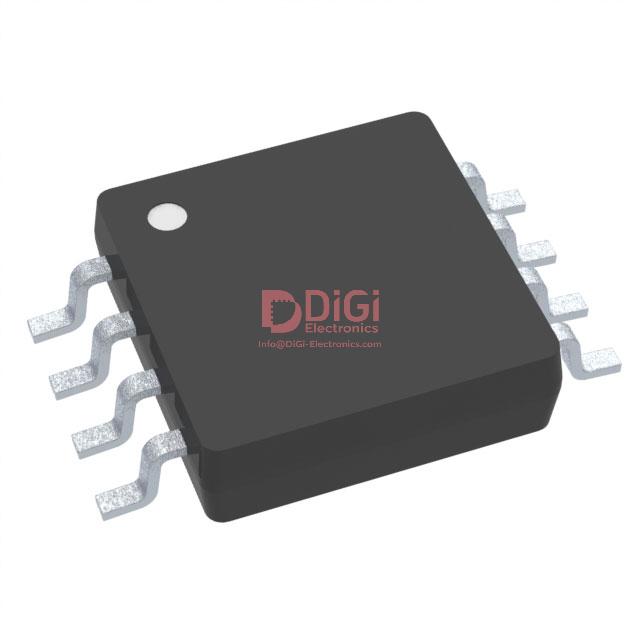
IC COMPARATOR 2 DIFF 8VSSOP
5404 Pcs New Original In Stock
Comparator General Purpose Open-Collector, Rail-to-Rail 8-VSSOP
Request Quote (Ships tomorrow)
*Quantity
Minimum 1
LM393DGKRG4 Texas Instruments
5.0 / 5.0 - (105 Ratings)

LM393DGKRG4

Product Overview

1316855

DiGi Electronics Part Number

LM393DGKRG4-DG

Manufacturer

Texas Instruments
LM393DGKRG4

Description

IC COMPARATOR 2 DIFF 8VSSOP

Inventory

5404 Pcs New Original In Stock
Comparator General Purpose Open-Collector, Rail-to-Rail 8-VSSOP
Quantity
Minimum 1

Purchase and inquiry

Quality Assurance

365 - Day Quality Guarantee - Every part fully backed.

90 - Day Refund or Exchange - Defective parts? No hassle.

Limited Stock, Order Now - Get reliable parts without worry.

Global Shipping & Secure Packaging

Worldwide Delivery in 3-5 Business Days

100% ESD Anti-Static Packaging

Real-Time Tracking for Every Order

Secure & Flexible Payment

Credit Card, VISA, MasterCard, PayPal, Western Union, Telegraphic Transfer(T/T) and more

All payments encrypted for security

In Stock (All prices are in USD)
  • QTY Target Price Total Price
  • 1 0.1433 0.1433
  • 200 0.0554 11.0800
  • 500 0.0535 26.7500
  • 1000 0.0525 52.5000
Better Price by Online RFQ.
Request Quote (Ships tomorrow)
* Quantity
Minimum 1
(*) is mandatory
We'll get back to you within 24 hours

LM393DGKRG4 Technical Specifications

Category Linear, Comparators

Manufacturer Texas Instruments

Packaging Cut Tape (CT) & Digi-Reel®

Series -

Product Status Obsolete

Type General Purpose

Number of Elements 2

Output Type Open-Collector, Rail-to-Rail

Voltage - Supply, Single/Dual (±) 2V ~ 36V, ±1V ~ 18V

Voltage - Input Offset (Max) 5mV @ 30V

Current - Input Bias (Max) 0.25µA @ 5V

Current - Output (Typ) 20mA

Current - Quiescent (Max) 2.5mA

CMRR, PSRR (Typ) -

Propagation Delay (Max) -

Hysteresis -

Operating Temperature 0°C ~ 70°C

Package / Case 8-TSSOP, 8-MSOP (0.118", 3.00mm Width)

Mounting Type Surface Mount

Supplier Device Package 8-VSSOP

Base Product Number LM393

Datasheet & Documents

HTML Datasheet

LM393DGKRG4-DG

Environmental & Export Classification

RoHS Status ROHS3 Compliant
Moisture Sensitivity Level (MSL) 1 (Unlimited)
REACH Status REACH Unaffected
ECCN EAR99
HTSUS 8542.39.0001

Additional Information

Other Names
296-35908-1
LM393DGKRG4-DG
296-35908-2
296-35908-6
Standard Package
2,500

Alternative Parts

View Details
PART NUMBER
MANUFACTURER
QUANTITY AVAILABLE
DiGi PART NUMBER
UNIT PRICE
SUBSTITUTE TYPE
BA2903SFVM-TR
Rohm Semiconductor
4354
BA2903SFVM-TR-DG
0.0047
MFR Recommended
LM393ST
STMicroelectronics
62312
LM393ST-DG
0.0166
Direct
LM393DGKR
Rohm Semiconductor
507969
LM393DGKR-DG
0.0094
MFR Recommended
BA2903HFVM-CTR
Rohm Semiconductor
6355
BA2903HFVM-CTR-DG
0.0524
Similar
LM2903YST
STMicroelectronics
5876
LM2903YST-DG
0.0009
Upgrade

Reviews

5.0/5.0-(Show up to 5 Ratings)
달***간
December 02, 2025
5.0
배송이 언제나 정확하고 신속하게 처리돼서 기대 이상이에요. 오랜 고객으로서 계속 믿고 주문하고 있어요.
青***間
December 02, 2025
5.0
每次合作都很滿意,因為他們的庫存充足且售後反應快,值得長期合作。
Ombre***tomne
December 02, 2025
5.0
DiGi Electronics optimise ses processus logistiques pour offrir un service de qualité supérieure.
Wildfl***rWander
December 02, 2025
5.0
DiGi Electronics provides clear pricing details upfront, which builds trust and confidence.
Sere***ySoul
December 02, 2025
5.0
I value their prompt and helpful after-sales service, which exceeds my expectations.
Publish Evalution
* Product Rating
(Normal/Preferably/Outstanding, default 5 stars)
* Evalution Message
Please enter your review message.
Please post honest comments and do not post ilegal comments.

Frequently Asked Questions (FAQ)

What are the key design risks when replacing an obsolete LM393DGKRG4 in a battery-powered industrial sensor circuit, and how can I ensure reliable operation with a modern substitute like the LM393DGKR?

The LM393DGKRG4 is now obsolete, so relying on it for new designs introduces supply chain and long-term reliability risks. When replacing it with the pin-compatible LM393DGKR (same 8-VSSOP package and electrical specs), verify that your PCB layout accommodates minor process variations in input offset voltage—especially critical in low-voltage (2–5V) battery applications where a 5mV offset can represent >1% error. Additionally, confirm that your pull-up resistor values are optimized for the open-collector output; using too high a value (e.g., >10kΩ) may slow rise time and increase power consumption in always-on systems. Always revalidate noise margins under real-world EMI conditions, as layout sensitivity can differ slightly between fabrication batches despite identical datasheet parameters.

Can I use the LM393DGKRG4 in a 48V automotive overvoltage protection circuit given its 36V maximum supply rating, and what failure modes should I anticipate if I exceed this limit?

No, the LM393DGKRG4 has an absolute maximum supply voltage of 36V (or ±18V dual), so using it in a 48V automotive system violates its ratings and risks catastrophic failure due to oxide breakdown or latch-up. Even transient voltage spikes common in automotive environments (e.g., load dump) can permanently damage the device. Instead, consider a higher-voltage comparator like the LM393ST (rated to 44V) or add a front-end voltage clamp (e.g., Zener + series resistor) to limit the input to safe levels—but note this adds propagation delay and reduces accuracy. For robust designs, TI’s TLV170 series offers rail-to-rail inputs and outputs with 36V+ capability and better ESD protection, though at a higher cost.

How does the open-collector output of the LM393DGKRG4 affect signal integrity in a high-speed digital interface, and what pull-up resistor value should I choose to balance speed, power, and noise immunity?

The LM393DGKRG4’s open-collector output requires an external pull-up resistor, which forms an RC time constant with parasitic capacitance (typically 5–15pF from traces and load). For high-speed edges (e.g., >100kHz signaling), a 1kΩ pull-up provides ~15ns rise time but draws ~5mA at 5V—problematic in low-power designs. A 4.7kΩ resistor reduces quiescent current to ~1mA but increases rise time to ~70ns, potentially causing timing errors in fast control loops. Use 2.2kΩ as a practical compromise, and always place the pull-up close to the comparator to minimize loop area and radiated noise. Avoid using the internal pull-ups of microcontrollers, as they’re often too weak (20–50kΩ) for reliable switching.

Is the LM393DGKRG4 suitable for precision threshold detection in a 3.3V medical device, and how does its input offset voltage impact accuracy compared to newer alternatives like the BA2903SFVM-TR?

While the LM393DGKRG4 can operate at 3.3V, its maximum input offset voltage of 5mV introduces significant error in precision medical sensing (e.g., ECG or glucose monitoring), where thresholds may need ±1mV accuracy. The BA2903SFVM-TR, a modern substitute, offers a typical offset of 0.5mV and lower input bias current (5nA vs. 250nA), making it far better suited for high-impedance sensor interfaces. However, the BA2903SFVM-TR uses a different 8-MSOP package, so verify footprint compatibility. If redesign isn’t feasible, add software calibration or use a precision reference to compensate for the LM393DGKRG4’s offset—but this increases BOM cost and complexity. Always test across temperature (0–70°C) since offset drift isn’t specified in the LM393DGKRG4 datasheet.

What thermal and layout considerations are critical when placing the LM393DGKRG4 near a power MOSFET in a motor control application, and how can I prevent false triggering due to ground bounce?

In motor control circuits, the LM393DGKRG4’s analog inputs are highly susceptible to ground bounce and thermal gradients when placed near switching MOSFETs. Keep the comparator at least 10mm away from high-di/dt traces and use a solid ground plane beneath it—but avoid running noisy return currents under the device. Connect the input signals via short, shielded traces with series resistors (100–470Ω) to dampen ringing. Since the LM393DGKRG4 lacks built-in hysteresis, add 5–10mV of external positive feedback (e.g., 100kΩ from output to non-inverting input) to prevent oscillation during slow input transitions. Also, ensure the 8-VSSOP package’s thermal pad (if used) is properly soldered to prevent localized heating, which can shift the input offset and cause drift over time.

Quality Assurance (QC)

DiGi ensures the quality and authenticity of every electronic component through professional inspections and batch sampling, guaranteeing reliable sourcing, stable performance, and compliance with technical specifications, helping customers reduce supply chain risks and confidently use components in production.

Quality Assurance
Counterfeit and defect prevention

Counterfeit and defect prevention

Comprehensive screening to identify counterfeit, refurbished, or defective components, ensuring only authentic and compliant parts are delivered.

Visual and packaging inspection

Visual and packaging inspection

Electrical performance verification

Verification of component appearance, markings, date codes, packaging integrity, and label consistency to ensure traceability and conformity.

Life and reliability evaluation

DiGi Certification
Blogs & Posts
LM393DGKRG4 CAD Models
productDetail
Please log in first.
No account yet? Register