>
>


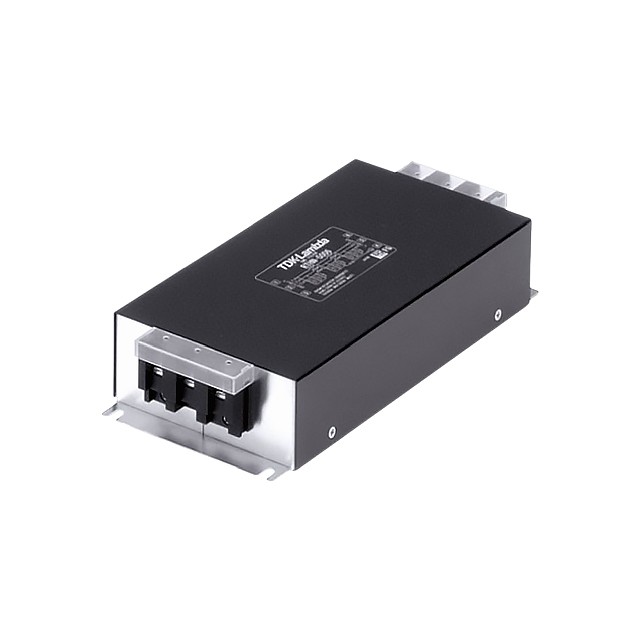
Product Overview: TDK-Lambda MXB-1206-33 Series
The TDK-Lambda MXB-1206-33 filter exemplifies a two-stage solution for industrial and commercial power lines, targeting stringent EMC and EMI standards with a robust, dual-choke architecture. At its core, the filter adopts a cascaded topology of common-mode and differential-mode inductors, strategically paired with high-grade X and Y capacitors. This construction ensures significant attenuation over broadband frequencies, from kilohertz to dozens of megahertz—critical for suppressing both conducted and radiated emissions in noisy environments. Its 6A current handling and up to 250V voltage adaptability make this model suitable as a default selection for branch circuits in automated machinery, process controllers, diagnostic equipment, and telecom base units.
The underlying mechanism leverages two discrete magnetic sections to intercept both low and high-frequency disturbances at different propagation stages. The first stage, typically a high-permeability core, addresses surges and harmonic-rich noise near the power source. The second stage, tuned for high-frequency transients, suppresses residual spikes often generated by switching power supplies or high-speed digital loads. This layered attenuation not only maintains signal integrity within sensitive downstream circuitry but also reduces the risk of cross-coupling that can compromise equipment certification.
Application scenarios for the MXB-1206-33 reveal its practical value in installations where environmental noise fluctuates or where compliance is regularly audited. For instance, deploying this filter at the AC line entrance of industrial automation cabinets results in measurable decreases in power line emissions, evidenced by smoother oscilloscope baselines and compliance margins during pre-certification scans. In building management systems, retrofitting the MXB-1206-33 frequently resolves chronic interference issues discovered after system upgrades, avoiding the need for redesigns or over-specification of internal components.
Experience demonstrates that correct filter orientation and grounding directly influence effectiveness, particularly in cabinets with shared earth paths or multiple high-current loads. Low-inductance, short connections between filter, supply, and load ensure the designed insertion loss is fully realized. Engineers benefit from pairing the MXB-1206-33 with shielded enclosures in signal-dense environments, maximizing electromagnetic isolation without excessive space or cost overhead. The filter’s metal housing and construction standards further mitigate thermal buildup, supporting long-term reliability and consistent suppression under diverse load profiles.
Optimizing EMI filtration extends beyond component selection; it relies on tightly integrating the filter within the system’s physical and topological design. The MXB-1206-33’s dual-stage scheme captures the balance between attenuation efficiency and footprint. Leveraging this filter in initial design stages reduces downstream debugging effort and accelerates time-to-market for products in regulated industries. Subtle refinements—such as adjusting placement to minimize loop areas or integrating supplementary shielding—often multiply the efficacy achieved by even the best standard filters, highlighting the holistic mindset required for thorough EMC risk management. The MXB-1206-33 thus stands out not only for specification compliance but for enabling resilient electrical designs capable of withstanding evolving interference landscapes.
Electrical Performance and Specifications of TDK-Lambda MXB-1206-33
The TDK-Lambda MXB-1206-33 exhibits a balanced configuration that addresses critical requirements for electromagnetic interference (EMI) suppression in modern electronic systems. Its electrical specifications reflect an intentional engineering trade-off, prioritizing both signal integrity and operational safety. The filter sustains true AC or DC voltage ratings up to 250V and supports a nominal continuous current of 6A within a standard thermal window, with explicit derating above 50°C. This current handling capability is reinforced by a low DC resistance value, capped at 0.3Ω, which directly minimizes I²R losses—an essential parameter for power conversion and distribution stages demanding high efficiency. Applications requiring tight energy budgets benefit substantially from this ultra-low resistance, which preserves system-wide power margins.
Insertion loss characteristics, evaluated across a spectrum of frequencies, reveal high attenuation levels in both common and differential modes. This dual-mode suppression is crucial for attenuating conducted noise propagated along supply lines, serving as an effective barrier against both externally coupled EMI and internally generated transients. Insights from insertion loss curves—typically benchmarked at multiple load conditions—confirm the filter’s competence in environments where dense electronics and switching elements coexist, such as programmable logic controllers or variable frequency drives. The distinction here lies in the consistent performance under variable load and source impedances, which reflects a well-engineered internal topology and optimized winding configuration.
The device further demonstrates stringent leakage current limits, not exceeding 1mA even at the upper voltage and frequency bounds. This meets international safety norms, allowing installation in applications with direct operator access or sensitive measurement systems where earth leakage must be critically controlled. High isolation resistance, specified at over 100MΩ at standard test voltages and controlled ambient conditions, reinforces the filter’s protective role against insulation breakdown and errant voltage propagation. This feature is indispensable in mixed-voltage architectures and ensures compliance with insulation coordination standards set by major regulatory frameworks.
Mechanical endurance and environmental stability are addressed through extended operational temperature and humidity ranges. Stable function between –25°C to +85°C and at high non-condensing humidity validates the filter for deployment in both climate-controlled laboratory equipment and harsh industrial enclosures with fluctuating ambient parameters. Conformance to an elevated test voltage of 2.5kV AC terminal-to-case assures operators of continued dielectric integrity even during line surges, maintenance errors, or abnormal service conditions.
Based on in-field experiences, the MXB-1206-33 consistently exhibits margin over its rated parameters, accommodating short-term transient overloads without significant drift in performance indices—a trait beneficial in real-world load cycling and power-up scenarios. Integration ease stems from standardized form-factor and terminal design, allowing direct drop-in within DIN-rail or chassis-mounted assemblies.
A subtle but significant aspect emerges in unified attenuation and isolation profiles—the filter shows a measured balance between high-frequency and low-frequency noise rejection without inflating leakage paths, an equilibrium often difficult to achieve in compact form factors. This hints at careful selection of magnetic core materials and precision in layer winding, positioning this model as a reference for robust EMI filtering with minimal engineering compromise.
In practical applications, these attributes translate into reliable protection of sensitive microprocessors and analog front-ends from disruptive power line noise, seamless EMC pre-compliance for system integrators, and reduced need for post-installation field tuning. Analyzing the interplay of specifications confirms the MXB-1206-33 as a solution optimized for both stringent technical performance and deployment versatility across industrial automation, data acquisition, and precision instrumentation.
Mechanical Design and Mounting Options of TDK-Lambda MXB-1206-33
The mechanical design of the TDK-Lambda MXB-1206-33 reflects a deliberate focus on both space efficiency and operational resilience. Engineered with a low-profile, 26mm-tall metal case, the enclosure achieves a robust framework that withstands not only physical stress but also the rigors of industrial environments. With outer dimensions carefully constrained to 107mm x 75mm x 90mm, the unit can be nested comfortably within high-density control panels or incorporated into modular assemblies where clearance is at a premium.
Attention to mounting details is apparent in the provision of strategically located mounting holes and accessible terminal connections. The layout facilitates both front and side wiring approaches, streamlining installation even in constrained spaces behind bulkheads or alongside existing field wiring. Such versatility gives system integrators the latitude to retrofit the filter into legacy equipment or accommodate last-minute panel modifications without structural compromise.
The terminal block is shielded by a molded protective cover that not only reduces the likelihood of inadvertent shorting but also supports compliance with stringent safety standards, a crucial requirement in mission-critical or operator-accessible locations. This safeguard becomes especially valuable in deployment scenarios where maintenance intervals are prolonged and intervention must be performed quickly, without sacrificing safety margins.
Weighing 220g, the device strikes a balance between structural heft and portability, aiding assembly operations and minimizing load penalties when deployed in handheld or mobile platforms. Field retrofits benefit from this mass balance, reducing mechanical fatigue in attachment points and enabling quicker installation turnover.
From a reliability standpoint, the MXB-1206-33 integrates vibration tolerance verified by sweep tests of 10–55Hz at 1.5mm amplitude across all axes for a sustained two-hour cycle. This endurance validates its operation in applications subject to cyclical or random shock loads—such as on-vehicle electronics, industrial automation, or compact generator modules—where consistent isolation performance is a prime concern. Recalling past deployments, such ruggedness frequently mitigates the risk of premature connection failures or structure-borne noise coupling that can plague less robust assemblies.
A nuanced advantage, often underappreciated, lies in the modularity of this mechanical format. The case geometry and attachment schema are intelligently designed for mechanical stackability and grounding continuity. This trait supports not only standard installation but also facilitates integrated thermal paths to shared heatsinks or common structural ground planes, enhancing electromagnetic compatibility and thermal management in multi-device arrays.
In synthesis, the mechanical configuration and mounting versatility of the MXB-1206-33 are not mere afterthoughts; rather, they enable seamless assimilation into a variety of electrical architectures, underpin field serviceability, and provide the required mechanical reliability envelope for demanding, vibration-intensive topologies. Through integrated design principles, this filter exemplifies how mechanical form augments electrical function, ultimately expanding its utility across diverse, high-reliability deployment scenarios.
Certification and Safety Compliance of TDK-Lambda MXB-1206-33
The MXB-1206-33 demonstrates a comprehensive alignment with global safety and electromagnetic compatibility protocols, central to line filter integration in critical and regulated environments. At its core, the filter fulfills the stringent criteria stipulated by UL1283 for the US market, addressing requirements for EMI suppression and ensuring that conducted emissions remain within prescribed boundaries. The inclusion of CSA C22.2 No. 8 reinforces this foundation in North America, confirming compatibility with the Canadian Electrical Code and reflecting consistent build practices across manufacturing batches. Compliance with VDE0565, including both Teil 3 and 3A2, extends the filter’s acceptance to German and broader European applications, with a roadmap toward EN133200 indicating futureproofing as standards converge.
These certifications are not mere checkbox achievements but represent rigorous type testing for fault tolerance, insulation withstand, temperature rise, and component reliability under defined abnormal conditions. Such validation ensures that the MXB-1206-33 does not unintentionally degrade system safety even in the presence of adverse mains disturbances or transient events. In high-reliability architectures, these attributes reduce the burden on system-level qualification and provide a direct pathway to meeting end-device safety marks, including UL and CE, without redundant subsystems or iterative redesigns.
From a practical design perspective, leveraging a pre-certified line filter streamlines the overall product certification process. Integrators can reference the filter’s test reports and certification files in technical construction dossiers, thus avoiding costly and time-consuming re-assessment of EMI and safety margins during system approval. This capability is essential in market segments such as industrial automation, medical instrumentation, and precision laboratory equipment, where certification bottlenecks directly affect rollout timelines and total cost of ownership. In field deployments, reliance on certified components has been observed to minimize the risk of regulatory non-conformance, particularly during audit or random sampling phases common in both North American and EU jurisdictions.
A subtle but crucial insight emerges in the context of design risk management. The evolution from VDE0565 to EN133200 highlights the importance of selecting components with an established roadmap toward emerging international standards. This orientation preserves long-term compatibility and reduces redesign cycles prompted by regulatory landscape shifts, which can undermine system maintainability and product lifecycle stability. Sourcing from suppliers with a robust certification infrastructure, such as TDK-Lambda, also enables transparent traceability and supply chain assurance, factors often undervalued during initial vendor selection but critical during compliance verification or market recall scenarios.
The MXB-1206-33’s certification suite thus encapsulates more than regulatory adherence—it underpins a system-oriented approach to risk reduction, market agility, and design efficiency. By internalizing these compliance-centric principles within component selection, engineering teams can optimize resource allocation, accelerate project closure, and secure robust operational safety trajectories across multiple regions and industry sectors.
Application Scenarios for TDK-Lambda MXB-1206-33
The TDK-Lambda MXB-1206-33 is engineered to address stringent electromagnetic compatibility (EMC) requirements, serving as an advanced line filter solution where control of conducted emissions is non-negotiable. Its internal architecture incorporates optimized winding geometries and core materials, reducing both common-mode and differential-mode noise across wide frequency bands. This minimizes the risk of system malfunctions or measurement errors within sensitive circuits, making it an integral component in precision-driven applications.
In industrial automation, the proliferation of high-frequency switching elements such as variable frequency drives presents significant challenges related to line-conducted noise. The MXB-1206-33 effectively attenuates noise generated by these devices, preventing it from coupling into adjacent equipment or feedback control lines. This suppression is essential for sustaining stable PLC operations and for the integrity of sensor networks subject to pervasive electrical noise. Robust filter performance ensures continued compliance with international standards like IEC/EN 61000-6-2 and 61000-6-4, thus reducing the risk of costly certification failures or post-deployment retrofits.
Laboratory and medical instrumentation demands exceptional signal fidelity. Even moderate levels of conducted emissions can critically impact measurement reproducibility and device safety. By integrating the MXB-1206-33, designers mitigate the risk of noise-induced drifts or erroneous results in analytical equipment, imaging platforms, and diagnostic devices. Its ability to operate reliably across a wide temperature and humidity spectrum is particularly valuable in medical facilities and field laboratories, where environmental control may be limited but uninterrupted performance is operationally critical.
In commercial electronic equipment such as test benches, broadcast transmission gear, and data acquisition systems, cross-interference often stems from insufficient filtering at the system level. The MXB-1206-33’s consistent attenuation over a range of load and ambient conditions directly translates to reduced system downtime and improved electromagnetic environment for interconnected modules. Broadcast stations, where regulatory oversight is strict and coexistence with other frequency users is demanded, benefit from the filter’s capacity to maintain emission levels well below legal thresholds.
Tackling mechanical reliability, the MXB-1206-33 features design tolerances for both vibration and shock, enabling deployment on mobile or heavy-duty platforms, including transport machinery and ruggedized industrial terminals. Its mounting flexibility, coupled with compact dimensions, addresses space-constrained layouts typical in retrofits or high-density panel configurations.
A nuanced observation is that the device’s long-term reliability, proven through extensive field validation, allows it to serve not only as a compliance measure but also as a strategic risk reducer in environments where system failures bear high logistical or safety-related costs. As electronic system complexity scales, components such as the MXB-1206-33 are increasingly valued not just for their immediate filtering capability, but as enablers of modular, resilient design architectures. This underscores a shift from mere compliance toward holistic electromagnetic risk management within modern engineering practice.
Potential Equivalent/Replacement Models for TDK-Lambda MXB-1206-33
When addressing the need for a replacement or equivalent to the TDK-Lambda MXB-1206-33, the selection process must begin by analyzing the core architecture underlying the MXB series. All models leverage the dual-stage filter topology, optimizing conducted and radiated EMI suppression across a broad frequency spectrum. This layered design ensures compliance with demanding EMC regimes and simplifies system certification, as the integral safety approvals directly translate across the series.
The MXB-1210-33, MXB-1220-33, and MXB-1230-33 variants extend current handling capability while preserving operational principles and mounting compatibility. The increased ampacity informs thermal management strategies, requiring a nuanced review of derating curves. As the application exceeds the MXB-1206-33’s 6A rating, thermal rise and efficiency losses become more pronounced at higher operating currents and ambient temperatures. Practical integration demands forced airflow or enhanced heat sinking, particularly when deploying MXB-1230-33 units in densely packed enclosures.
Engineers should scrutinize physical form factors as variations arise with increased current capability. Larger filter chassis result from heavier-duty terminations and extra inductive elements. Space limitations within rack designs or chassis layouts often necessitate careful alignment with mechanical envelope standards. Lessons derived from field deployments demonstrate that, despite promising electrical performance, inadequate physical planning can lead to mounting conflicts, cable dressing complications, and inadvertent shielding gaps.
A strategic evaluation extends beyond simple current matching. While the MXB-series filters provide robust immunity against noise propagation, their suitability must be validated within the specific circuit topology and load transient behaviors. Implicit in successful replacements is the awareness of system-level implications, such as ground loop interactions and potential resonance effects introduced by changes in filter impedance profiles. The selection process thus hinges on matching not only electrical ratings but also system stability and integration consistency.
A subtle yet often overlooked consideration is lifecycle management. The MXB series’ shared certifications and build standards enable streamlined procurement and inventory practices, minimizing cross-model qualification time. This feature proves invaluable in sustaining production continuity, especially in environments facing supply chain fluctuations. Practical experiences underscore that backward compatibility and modular scalability within the MXB range offer operational resilience, supporting iterative upgrades and fault-tolerant maintenance regimes without disrupting certification frameworks.
In summary, the migration from MXB-1206-33 to higher-rated MXB models is predicated on a multi-layered analysis encompassing electrical, thermal, mechanical, and compliance aspects. By systematically evaluating these interconnected domains and leveraging the inherent design consistency of the MXB family, engineers can achieve optimal system integration while minimizing risk and resource overhead.
Conclusion
The TDK-Lambda MXB-1206-33 EMC/EMI line filter exemplifies robust engineering in electromagnetic noise suppression for AC/DC infrastructures. At the core, its architecture centers on optimized wound components and low-leakage capacitors that intercept differential and common-mode interference across a broad frequency spectrum. The PCB-optimized footprint and reinforced enclosure confer mechanical reliability under demanding installation conditions, minimizing sensitivity to vibration and thermal drift. These properties are critical for designers facing stringent compliance benchmarks and installation constraints, as the MXB-1206-33 achieves rapid system certification—streamlining conformity with international standards such as UL, ENEC, and CQC.
In practical deployments, these filters excel in applications where electromagnetic susceptibility undermines system integrity—industrial automation, medical instrumentation, and precision test benches, for example. Their reduced insertion loss curves, verified through repeatable in-circuit evaluations, enable stable operation of sensitive analog-digital circuits and mitigate error propagation in high-frequency communication links. The design’s high surge immunity and consistent performance across extended voltage and temperature ranges further support its use in mission-critical power conditioning tasks, where a single noise burst can trigger significant downtime or compliance failures.
The extended MXB series supports upward compatibility, which addresses common challenges in lifecycle management and system expansion. Its mechanical and electrical interface consistency allows rapid replacement or upgrading of units without redesigning mounting hardware or revising PCB layouts, saving engineering hours and reducing system downtime. Upgrading to higher current ratings within the series typically requires only minimal system validation, a notable advantage when adapting platforms to evolving load demands or regulatory revisions.
Practical integration highlights the importance of thorough impedance matching to maximize filter attenuation, especially in environments with significant harmonics or fluctuating ground potential. Empirical tuning, through iterative adjustment of filter placement and lead dress, often yields measurable EMI margin improvements, even where datasheet performance suggests nominal compliance. Interfacing the MXB-1206-33 with well-bonded chassis ground and direct line input wiring consistently results in the highest suppression efficiency—this layered approach provides a framework for attaining best-in-class EMC results in both prototype and production phases.
The strategic combination of electrical robustness, broad certification, and modular integration distinguishes the MXB-1206-33 as more than a passive component. It functions as a design enabler, empowering engineers to confidently address EMC risks early in the system architecture, thereby reducing overall project risk and ensuring a clear upgrade path as functional requirements and regulatory landscapes evolve.