 >
>


Product overview of the VIPER28LD series from STMicroelectronics
The VIPER28LD series from STMicroelectronics exemplifies a highly integrated approach to offline flyback conversion for auxiliary power supplies, balancing robustness and efficiency within a compact SO16 narrow package. At the core, the device integrates an avalanche-rugged 800 V MOSFET together with a current-mode PWM controller, creating a single-chip solution that simplifies power supply topologies for demanding industrial and consumer applications. Its 60 kHz nominal switching rate is optimized for both electromagnetic compatibility and low no-load consumption, aligning with the latest international energy-efficiency standards.
Thermal and electrical robustness are engineered into the device through careful silicon layout and a packaging strategy that enables effective heat dissipation even in space-constrained, high-density PCBs. This facilitates reliable operation up to 16 W in open-frame designs, with margin for transient events and controlled derating under varying ambient conditions. Practical deployment reveals the value of such integration—PCB complexity reduces, EMI filter networks shrink, and there is less risk of parasitic-induced failure due to shorter power loops and improved ground referencing. Furthermore, the avalanche-rated MOSFET ensures resilience against input line surges and repetitive over-voltage events, a crucial parameter for designs exposed to unstable mains environments.
The VIPER28LD adopts a current-mode control core, ensuring precise regulation of output voltage while offering inherent cycle-by-cycle current limiting. This architecture streamlines loop compensation and supports fast transient response, critical for the reliable powering of microcontrollers, signal conditioning, or sensor modules in embedded systems. Protection features such as startup current limiting, thermal shutdown, and hiccup-mode overload response further minimize the need for external circuitry, reducing bill-of-materials costs and points of failure during field deployment.
The device’s compliance with RoHS3 and unstressed REACH status signals global production readiness, a non-negotiable criterion in diverse regulatory landscapes. This makes the VIPER28LD not only viable but appealing for large-scale or multinational supply chains, where design reuse and certification agility are essential competitive advantages. In application, the VIPER28LD’s architecture facilitates rapid prototyping and field customization, enabling design teams to iterate fast across end-product variants without extensive redesign of the power stage.
A significant insight emerges in the realm of auxiliary supplies for LED lighting, metering, or industrial controls: the combination of high-voltage handling, compactness, and integrated protections translates directly into prolonged system life and reduced service interventions. This level of integration sets a progressive benchmark for the next generation of offline converters, suggesting that future efficiency and reliability standards will converge further on such cohesive, single-IC solutions.
Applications of VIPER28LD in engineering scenarios
The VIPER28LD integrates a robust high-voltage startup mechanism with a primary-side regulation architecture, making it purpose-built for demanding power conversion tasks across consumer, residential, and industrial domains. Its internal high-voltage MOSFET and PWM controller operate cohesively, enabling efficient conversion for auxiliary supplies found in energy meters, building automation nodes, and remote sensors. The device excels where compact size, isolated outputs, and stringent safety compliance converge with system-level requirements.
At the circuit design level, the VIPER28LD addresses the challenge of direct operation from universal mains (85–265 VAC), leveraging reinforced isolation and high-voltage endurance. Its topology allows for isolated flyback configurations that satisfy IEC safety standards, supporting both Class II and reinforced insulation systems. This feature streamlines EMC compliance and simplifies layout, removing the need for extra protective components in many platforms. When deployed in smart energy data concentrators or industrial controllers, the multi-mode operation—covering both low and intermittent high load bursts—effectively manages thermal profile and efficiency, even under wide input fluctuations.
In the context of standby and auxiliary adapter applications, the VIPER28LD’s ability to deliver up to 26W under peak loads—provided that PCB layout and thermal dissipation are judiciously optimized—permits significant flexibility in system design. Strategic placement of heat sink surfaces and attention to copper pour dimensions around the device maximize power delivery while maintaining reliability within JEDEC thermal derating guidelines. Experience indicates that, with carefully managed EMI filtering and snubber selection, supply start-up and transient immunity become highly predictable, reducing commissioning time and minimizing unforeseen system rework.
A unique strength lies in its integrated protection suite, encompassing over-voltage, over-temperature, and over-current detection. These features enable resilient performance under adverse operating conditions—a necessity for geographically distributed embedded platforms where maintenance opportunities are rare. In modular industrial controls and building automation panels, this immunity translates to tangible reductions in field failures and downstream downtime.
The broad input voltage acceptance, combined with a universal package footprint, facilitates rapid adoption in designs spanning legacy AC mains and newer, globalized infrastructure. This backward and forward compatibility accelerates platform standardization and bill-of-materials reduction, supporting agile product design cycles. Notably, the device’s efficiency at light loads positions it advantageously as regulatory mandates on standby energy tighten worldwide—a factor of increasing relevance in future-proofing both consumer and industrial grade solutions.
Within the evolving ecosystem of smart connectivity and distributed sensing, the VIPER28LD’s design philosophy underscores the necessity for power conversion solutions that are not only technically robust but also inherently adaptable to site- and application-specific constraints. Its convergence of integration, protection, and universal compatibility ultimately drives measurable value across a broad array of next-generation engineered systems.
Functional architecture and operation principles of VIPER28LD
The VIPER28LD’s functional architecture reflects an integration-centric approach, where several high-voltage and control elements are consolidated to optimize board space and reliability. The high-voltage startup circuitry initiates the converter without reliance on external passive networks, directly harnessing input line voltage. This startup generator accelerates the readiness of the controller, optimizing cold-start times and supporting robust operation even in noisy environments. Such built-in functionality often allows for a more compact PCB layout, improves EMI performance, and enhances overall system ruggedness—effectively lowering assembly complexity for mass production setups or field deployments.
Core operational management in VIPER28LD centers on the current-mode PWM controller, which employs a sense FET to monitor primary current with precision. This facilitates tight control over switch timing and direct response to changing load conditions. Current sense information, combined with oscillator-generated frequency jitter, mitigates the formation of harmonics, thus suppressing both conducted and radiated EMI at the source. The integrated soft-start logic further modulates the initial ON-time, reducing voltage overshoot and inrush currents, a crucial feature when interfacing with sensitive downstream loads such as microcontrollers or RF modules.
The device’s functional blocks provide engineering-level granularity for system optimization. The CONT pin allows designers to calibrate current limits and to implement real-time output voltage monitoring, supporting adaptive responses to load changes. The EPT (Extra Power Timer) mechanism introduces intelligent fault management: in overload or short-circuit scenarios, extended power delivery is managed temporally, offering a calculated window for fault clearance before protection is triggered. This aspect increases supply robustness in transient overload environments, as can occur with capacitive loads or motor start-ups.
VIPER28LD’s feedback pin architecture integrates advanced output regulation logic, achieving high efficiency at both full and light loads. This direct feedback enables dynamic duty-cycle adjustment for regulation accuracy, which translates to reduced system-level power losses—particularly crucial in low standby power applications such as IoT nodes or remote sensors. Auto-restart mechanisms further fortify the system against persistent faults; quick recovery after trips minimizes service downtime and aids in meeting stringent operational safety standards.
In practical deployment, the device demonstrates low component count and high tolerance to input surges, streamlining manufacturing and enhancing maintainability. Typical power supply designs realized around the VIPER28LD show improved EMI compliance without the traditional trade-offs in size or thermal performance. Notably, the layered protection—spanning soft-start, EPT, and fast auto-restart—establishes a paradigm where the supply is both resilient and agile, capable of handling real-world stressors such as brown-outs, overloads, and output shorts. This concurrent focus on efficiency, integration, and protection underscores a shift toward smarter converter architectures that anticipate diverse application demands and enable seamless scaling from consumer-grade to industrial use-cases.
Key features and advanced protection mechanisms of VIPER28LD
The VIPER28LD exemplifies a convergence of high-efficiency power conversion with layered protection features designed for rugged embedded environments. At its core, dual-level overcurrent protection (OCP) utilizes selectable threshold parameters, enabling precise adaptation to various transformer and rectifier configurations. This nuanced approach mitigates risks associated with transformer core saturation and secondary-side diode failure, preserving both device integrity and system-level robustness even in unpredictable fault scenarios. In practical deployment, fine-tuning OCP thresholds according to transformer characteristics or layout constraints directly impacts long-term reliability and MTBF figures.
The output overvoltage protection (OVP) combines tight analog tolerance with integrated digital noise filtering. This dual modality ensures not only that transient events are accurately discriminated from persistent faults but also that voltage excursions stemming from load dump or rapid line disturbances are promptly contained. Such capabilities render the VIPER28LD particularly suitable for industrial applications where voltage stability is paramount—examples include precision motor controllers and remote sensing nodes subject to utility grid fluctuations.
Short-circuit protection is realized through cycle-by-cycle current limiting, a mechanism that responds to excessive load instantly, preventing catastrophic failures at the switching MOSFET. This protective layer, coupled with the discrete thermal shutdown circuitry, forms a holistic shield against both electrical and thermal stresses. Notably, the self-protecting thermal logic benefits high-density designs where heat dissipation is constrained; in real-time monitoring, the shutdown threshold remains stable under repeated thermal cycling, reassuring designers when specifying for extended service intervals.
Efficiency optimizations manifest in the 30 mW no-load power consumption under 230 VAC, a figure that passes stringent regulatory standards for standby losses. Where full performance is unnecessary, burst-mode operation dynamically curtails switch conduction times, driving down both core losses and acoustic noise—an asset in consumer and outdoor electronics where silent standby is required. The soft-start algorithm tempers input capacitance charging currents during initial power-up, sidestepping voltage overshoot events that can stress downstream components. Engineering practice frequently calls for evaluation of soft-start intervals to harmonize with high-inrush transformer setups.
EMI suppression is augmented by jittered switching frequency operation, diffusing spectral emissions typically concentrated around central switching harmonics. This design aspect owes its effectiveness to controlled pseudo-randomization of the oscillator cycle, reducing the need for excessive filtering and enabling compliance with global EMC mandates even on compact, high-density PCBs. System designers often leverage this feature to relax layout constraints or to decrease BOM cost by minimizing external filter stages.
The Extra Power Timer (EPT) mechanism provides a calculated temporal window for handling acute overload conditions. During this interval, output drive is sustained above default limits, accommodating temporary overloads such as relay activation or transient inrush without tripping protection prematurely. Application experience suggests that properly dimensioned EPT settings allow for reliable operation in dynamic load environments—such as motor start-up or capacitive charging—without sacrificing circuit safety for legitimate surges.
Taken holistically, the VIPER28LD’s architecture facilitates predictable power delivery and robust fault immunity in both single- and multi-output SMPS design. Layered protection mechanisms not only streamline certification in regulated markets but also accelerate design iterations by minimizing dependency on external safeguarding circuitry. The interplay of selectable thresholds, adaptive timing, and analog-digital protection continuum forms a scalable blueprint for reliable, cost-effective power stage engineering in evolving applications.
Electrical ratings and performance benchmarks for VIPER28LD
The VIPER28LD establishes itself as a versatile primary-side controller, engineered for high-voltage offline power applications where stringent electrical parameters directly influence system reliability and efficiency. At its core, the integration of an 800 V-rated MOSFET enables direct connection to rectified AC mains, simplifying front-end bill of material and reinforcing isolation strategies vital for compact adapter topologies. The 3 A pulse drain current capacity expands the MOSFET’s operational envelope, supporting transformer magnetization surges, capacitive loads during switch-on, and robust short-term handling of inrush transients—a critical consideration when tuning soft-start or overload management schemes.
Thermal performance also demands consistent scrutiny in dense PCB layouts. The device sustains a maximum power dissipation of 1.5 W at 60°C ambient (SO16), primarily limited by package thermal impedance and board layout. This constraint underscores the importance of optimized copper areas beneath the device footprint and thoughtful placement relative to other hot spots. Under typical system design, the VIPER28LD realizes 13 W output in sealed enclosures, a common scenario in adapter use where convection cooling is restricted. In open-frame or vented situations, practical power delivery extends to 16 W continuous, while brief overloads up to 26 W become viable by virtue of the IC’s pulse-handling capability, provided that thermal time constants and protection thresholds are carefully profiled during design validation.
A broad operating temperature range (-40°C to +150°C) aligns with deployment in geographically diverse regions and mission-critical equipment, from consumer electronics to industrial PLCs and metering. This range is especially beneficial in designs subjected to rigorous thermal cycling, where material aging and parametric drift must be minimized for long-term stability. Intelligent supervision is achieved through precise undervoltage and overvoltage thresholds on both VDD and feedback (FB) pins. These features enforce deterministic startup and controlled shutdown sequences, critical for avoiding failed boots or restarts under brownout and surge scenarios. Particularly in high-uptime infrastructure or safety-related actuators, this level of voltage discipline mitigates risk of latent hardware faults.
In electrically hostile environments, the VIPER28LD’s 2 kV HBM ESD resilience ensures consistent field operation, even in installations susceptible to line transients or indirect electrostatic exposure. Actual implementation reveals that strategic PCB design, such as minimizing loop areas and proper guarding of sensitive pins, further leverages the IC’s robustness, reducing susceptibility to spurious switching or latch-up events.
Ultimately, the design flexibility inherent in the VIPER28LD supports rapid adaptation across diverse applications, where high-voltage stress, controlled energy delivery, and autonomy of protection converge. True optimization emerges through nuanced understanding of the interplay between device-level constraints and system-level requirements, allowing for resilient power platforms with minimal compromise between efficiency, footprint, and fault tolerance.
Package options and pin configuration details for VIPER28LD
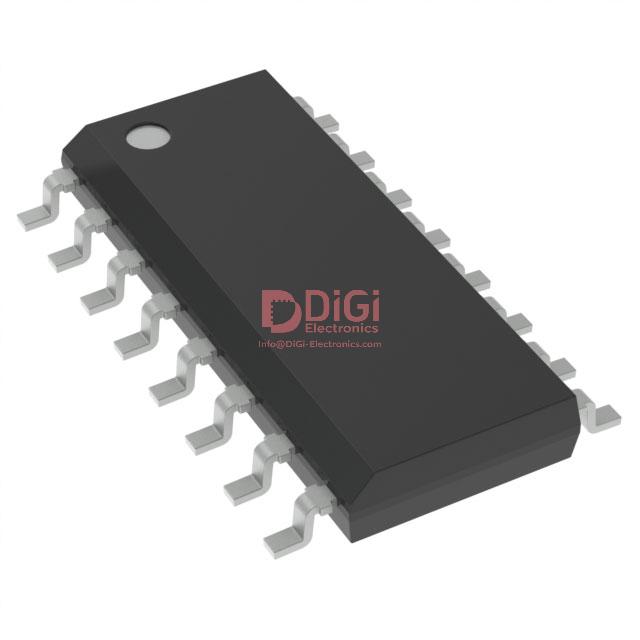
The VIPER28LD leverages a SO16 narrow package format, an optimal choice that balances PCB footprint constraints with the need for effective heat dissipation and electrical isolation. The package design integrates multiple DRAIN pins, each engineered as a direct interface for high-voltage switching and optimized to function as low-resistance thermal paths. This multi-pin approach enhances the device’s power-handling capability by distributing both current conduction and thermal load, which mitigates local temperature rise and increases long-term reliability, especially under sustained full-load operation.
GND pins are deliberately allocated to serve dual purposes: ensuring a stable logical ground reference for the control circuitry and providing a robust low-impedance return path for the power stage. This segregation of ground and source returns reduces susceptibility to common-mode noise and improves overall system EMC performance. Leveraging dedicated ground connections in high-frequency switching topologies is a proven strategy to prevent ground bounce, which can otherwise introduce jitter on the control signals or cause erratic switching behavior.
A single VDD pin supplies the primary control section, supporting both startup and steady-state operation. The pin’s internal connection architecture allows efficient charging from high-voltage DRAIN pins during initial power-up, quickly biasing the internal controller and enabling quasi-instantaneous circuit activation. This self-biasing feature is critical in offline flyback designs, eliminating the need for bulky external startup resistors and contributing to a more compact and reliable layout.
The CONT pin is engineered for functional versatility; it can be configured to program the current limit setpoint using external resistors or facilitate output voltage monitoring for fault detection. The analog programmability of this pin enables precise tailoring of the converter’s operational envelope to specific application requirements, such as over-current protection thresholds or secondary-side feedback integration—an essential factor in safety-critical or tightly regulated power designs.
Feedback (FB) pin functionality is tightly integrated with regulation and burst-mode management. By sampling the output voltage, the FB pin provides a negative feedback loop to the internal PWM controller, maintaining output stability across the entire load range and enabling adaptive burst-mode operation. This results in superior efficiency at light loads by cyclically disabling switching when demand drops, effectively limiting standby consumption and meeting increasingly stringent energy standards.
The inclusion of the EPT pin extends the device’s power management flexibility. By allowing for extra power modes or programmable thresholds, the EPT pin supports advanced standby or auxiliary loading scenarios, such as adaptive housekeeping supplies or intelligent load shedding, which are increasingly prevalent in modern embedded power supplies.
Unused pins are internally left unconnected. This intentional design decision not only simplifies PCB routing—reducing trace congestion and eliminating the risk of unintended signal coupling—but also minimizes potential assembly missteps. It effectively streamlines the handling and inspection procedures during manufacturing, contributing to overall yield improvement.
A proven practical approach involves maximizing copper area beneath the DRAIN pins on the PCB to further enhance thermal dissipation. Careful placement of bypass capacitors close to the VDD and GND pins is critical for high-frequency noise suppression. Decoupling techniques, combined with vigilant separation of control and power traces, materially improve noise immunity and functional safety.
It becomes evident that the VIPER28LD’s package and pinout are the result of a system-level perspective, not merely device-centric optimization. Key design insights center on exploiting the inherent physical and electrical characteristics of the package—using pin redundancy for heat management, partitioning critical ground returns for noise control, and embedding flexible pins for maximum configurability. These solutions address typical engineering challenges found in robust offline flyback conversion, positioning the VIPER28LD as a highly adaptable choice for both cost-sensitive and performance-oriented applications.
Potential equivalent/replacement models for VIPER28LD
When assessing potential substitutes for the VIPER28LD, it is essential to examine both architectural commonality and application-driven differentiation across the VIPer™ Plus family. The VIPER28LN, VIPER28HN, and VIPER28HD each embody the fundamental quasi-resonant flyback topology and robust set of integrated protections, including output overvoltage, overload, and thermal shutdown, characteristic of the series. This consistent core design streamlines cross-model qualification, significantly reducing design-in risk and validation overhead for engineers under second sourcing mandates.
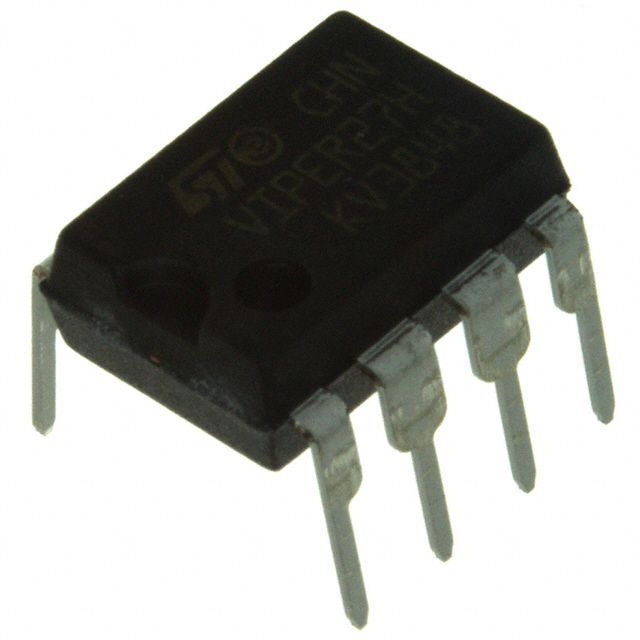
A primary point of divergence lies in package selection. The VIPER28LN provides a DIP-7 through-hole option, facilitating straightforward hand-assembly or wave solder flow, particularly advantageous in low-to-medium volume or legacy hardware refresh scenarios. Selection of the VIPER28HD, with its SO16N surface-mount footprint, enables higher component density and simplified automated assembly, directly impacting PCB area optimization and cost metrics. Such dimensional flexibility expands the design reach of the flyback controller platform into both retrofit and compact new-build systems.
Switching frequency enhancements further distinguish model capability. The VIPER28HN’s default 115 kHz operation unlocks the use of smaller, lower-cost transformer cores and output inductors, translating into tangible system miniaturization and improved dynamic load response—criteria frequently prioritized in consumer appliance and IoT endpoint supply modules. However, higher switching rates demand more diligent PCB layout to mitigate radiated EMI and hot-spot generation: meticulous ground return routing and input filtering prove decisive here, reflecting nuanced board-level electromagnetic compatibility practices gained from iterative prototyping.
Within this product family, architectural consistency ensures that firmware and analog feedback networks typically transfer between variants with minimal adaptation, preserving design intent while expediting time-to-market. Yet, subtle differences in maximum source voltage and package thermal impedance warrant close scrutiny during design reviews, particularly where operating margins or environmental stresses approach datasheet limits.
Selecting among these alternatives hinges on reconciling board mechanical constraints, assembly flow, and frequency-driven performance trade-offs. Strategic model choice not only assures long-term component availability but also anchors a scalable power supply platform capable of flexing across generations of system designs. By leveraging the nuanced strengths of each variant—whether for improved manufacturability, space savings, or performance tuning—a differentiated and future-ready power topology emerges, built atop the stable foundation of the VIPer™ Plus core architecture.
Conclusion
The VIPER28LD by STMicroelectronics embodies a robust and integrated approach to high-voltage offline flyback conversion, effectively addressing the stringent requirements of modern auxiliary power supply design. At its core, this converter merges a 1050 V avalanche-rugged power MOSFET with a current-mode PWM controller, streamlining EMI performance and gate driving complexity while minimizing external component count. The intrinsic support for primary-side regulation not only eliminates the need for optocouplers but also reduces susceptibility to secondary-side faults, yielding increased stability and simplicity—a critical leverage point in compact and cost-sensitive topologies.
Advanced protection mechanisms, including overvoltage, overload, and thermal shutdown, operate in tandem with brown-in/out capability to extend field reliability, particularly where input mains quality is variable or unpredictable. Configurable operation parameters, such as adjustable switching frequency and soft-start profiles, enable tailored optimization for both standby and active operational modes. This adaptivity facilitates efficiency improvements across the load range, supporting compliance with evolving regulatory mandates on standby power and harmonized efficiency standards.
In terms of real-world engineering practice, selection of the VIPER28LD requires nuanced assessment of package constraints and thermal environment. Its compact packages—available in SO16N, DIP-7, and others—suit space-limited or high-density circuit boards, but demand careful PCB layout to ensure adequate heat dissipation and creepage margins under high-voltage stress. Matching the converter’s switching frequency envelope and peak current design limits to the application's dynamic load profile optimizes both performance and EMI behavior, a critical consideration during iterative prototyping and certification cycles.
Analyzing potential equivalent models within the VIPer family or across competing portfolios is essential for maintaining continuity under fluctuating supply chain conditions. Cross-qualification not only insulates the design from obsolescence risk but establishes flexibility for regional manufacturing and multi-sourcing strategies. By focusing on these practical integration vectors—robust electrical characteristics, mechanical compatibility, and supply resilience—the VIPER28LD can be leveraged to create highly reliable, efficient, and compliant power solutions across applications ranging from industrial controllers to advanced home automation systems.
The underlying design philosophy evident in the VIPER28LD emphasizes risk mitigation, design flexibility, and lifecycle productivity, encouraging power supply engineers to adopt a modular, future-proof approach. Through tight technical integration and broad configuration latitude, it establishes itself not merely as a functional component but as a strategic enabler for next-generation auxiliary power topologies.