TS27M4CD >
TS27M4CD
STMicroelectronics
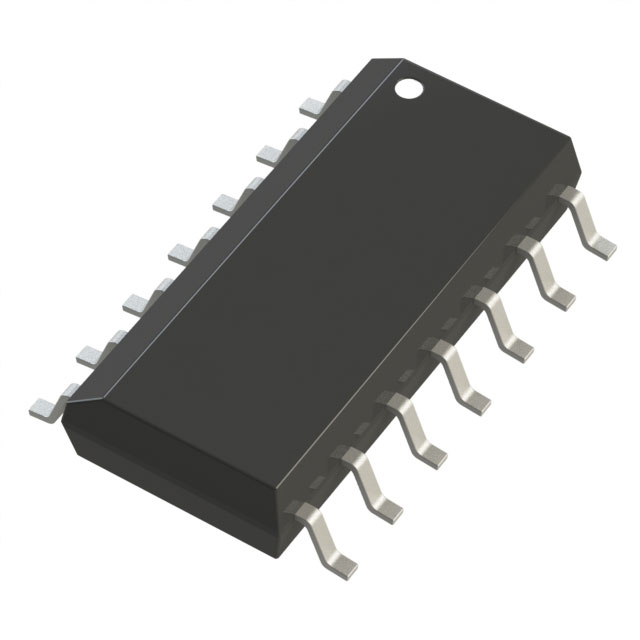
IC CMOS 4 CIRCUIT 14SO
1486 Pcs New Original In Stock
CMOS Amplifier 4 Circuit 14-SO
Request Quote (Ships tomorrow)
*Quantity
Minimum 1
TS27M4CD STMicroelectronics
5.0 / 5.0 - (187 Ratings)

TS27M4CD

Product Overview

12871663

DiGi Electronics Part Number

TS27M4CD-DG
TS27M4CD

Description

IC CMOS 4 CIRCUIT 14SO

Inventory

1486 Pcs New Original In Stock
CMOS Amplifier 4 Circuit 14-SO
Quantity
Minimum 1

Purchase and inquiry

Quality Assurance

365 - Day Quality Guarantee - Every part fully backed.

90 - Day Refund or Exchange - Defective parts? No hassle.

Limited Stock, Order Now - Get reliable parts without worry.

Global Shipping & Secure Packaging

Worldwide Delivery in 3-5 Business Days

100% ESD Anti-Static Packaging

Real-Time Tracking for Every Order

Secure & Flexible Payment

Credit Card, VISA, MasterCard, PayPal, Western Union, Telegraphic Transfer(T/T) and more

All payments encrypted for security

Request Quote (Ships tomorrow)
* Quantity
Minimum 1
(*) is mandatory
We'll get back to you within 24 hours

TS27M4CD Technical Specifications

Category Linear, Amplifiers, Instrumentation, Op Amps, Buffer Amps

Manufacturer STMicroelectronics

Packaging -

Series -

Product Status Obsolete

Amplifier Type CMOS

Number of Circuits 4

Output Type -

Slew Rate 0.6V/µs

Gain Bandwidth Product 1 MHz

Current - Input Bias 1 pA

Voltage - Input Offset 1.1 mV

Current - Supply 150µA (x4 Channels)

Current - Output / Channel 45 mA

Voltage - Supply Span (Min) 3 V

Voltage - Supply Span (Max) 16 V

Operating Temperature 0°C ~ 70°C

Mounting Type Surface Mount

Package / Case 14-SOIC (0.154", 3.90mm Width)

Supplier Device Package 14-SO

Base Product Number TS27M4

Datasheet & Documents

HTML Datasheet

TS27M4CD-DG

Environmental & Export Classification

RoHS Status ROHS3 Compliant
Moisture Sensitivity Level (MSL) 1 (Unlimited)
REACH Status REACH Unaffected
ECCN EAR99
HTSUS 8542.33.0001

Additional Information

Standard Package
50

Alternative Parts

View Details
PART NUMBER
MANUFACTURER
QUANTITY AVAILABLE
DiGi PART NUMBER
UNIT PRICE
SUBSTITUTE TYPE
TLC27M9IDR
Texas Instruments
4951
TLC27M9IDR-DG
1.5779
Similar
TLC274CD
Texas Instruments
1767
TLC274CD-DG
0.0132
Similar
LM2902M/NOPB
Texas Instruments
2664
LM2902M/NOPB-DG
0.0089
Similar
LM2902QDRG4Q1
Texas Instruments
6058
LM2902QDRG4Q1-DG
0.1804
Similar
TLC27L4ACD
Texas Instruments
10108
TLC27L4ACD-DG
0.0059
Similar

Reviews

5.0/5.0-(Show up to 5 Ratings)
Ail***Rêve
December 02, 2025
5.0
J'apprécie la clarté des tarifs chez DiGi Electronics, il n'y a jamais de surprises à la caisse.
Ombre***ineuse
December 02, 2025
5.0
Je suis très satisfait des prix compétitifs chez DiGi Electronics, sans compromettre la qualité.
Harmo***Notes
December 02, 2025
5.0
I’ve never had to wait long for my orders from DiGi Electronics, thanks to their optimized logistics network.
Blissf***oments
December 02, 2025
5.0
Their customer support team is always courteous and effective.
Mysti***ments
December 02, 2025
5.0
DiGi Electronics’ price advantages support my long-term technological needs.
Gol***Hour
December 02, 2025
5.0
Excellent service from start to finish—fast shipping and helpful support.
Serena***nBloom
December 02, 2025
5.0
DiGi Electronics' logistics team is top-notch — my package arrived ahead of schedule, and tracking info was consistently updated.
Peace***Pulse
December 02, 2025
5.0
We are pleased with how their extensive catalog enables us to keep up with educational innovations.
Gleami***ourney
December 02, 2025
5.0
Efficient inventory practices improve overall supply chain resilience.
Publish Evalution
* Product Rating
(Normal/Preferably/Outstanding, default 5 stars)
* Evalution Message
Please enter your review message.
Please post honest comments and do not post ilegal comments.

Frequently Asked Questions (FAQ)

Can I use the TS27M4CD as a drop-in replacement for the TLC27M9IDR in a low-power signal conditioning circuit, and what design-in risks should I consider despite similar CMOS architectures?

The TS27M4CD can serve as a functional alternative to the TLC27M9IDR in low-power applications due to similar CMOS input stages and supply current (150µA per channel), but it is not a drop-in replacement without verification. Key differences include the TS27M4CD's lower gain bandwidth product (1 MHz vs. up to 2.7 MHz on TLC27M9IDR) and slightly higher input offset voltage (1.1 mV vs. 0.5 mV typical). In precision signal conditioning, this could affect loop stability or DC accuracy. Additionally, the TS27M4CD is marked as obsolete, so long-term availability is a risk for production designs. Always verify slew rate (0.6 V/µs) compatibility in dynamic applications and ensure layout accommodates the 14-SOIC footprint to avoid thermal or signal integrity issues during replacement.

What are the main reliability concerns when operating the TS27M4CD near its maximum 16 V supply voltage in an industrial temperature environment?

Although the TS27M4CD is rated for a 3–16 V supply, prolonged operation near 16 V in industrial environments (approaching 70°C) increases long-term stress on the CMOS oxide layers, potentially accelerating parameter drift or failure. Since the device has no extended temperature grade (limited to 0°C–70°C), ambient self-heating from load currents (up to 45 mA/channel) or PCB hot spots can push internal junctions beyond safe limits. To mitigate risk, derate the supply voltage to ≤14 V, ensure adequate copper pour for heat dissipation, and avoid capacitive loading >100 pF to prevent oscillation under high gain. Also consider the device's obsolete status—reliability data may no longer be actively updated by STMicroelectronics.

How does the 1 pA input bias current of the TS27M4CD benefit high-impedance sensor interfaces, and what PCB layout practices prevent leakage currents from degrading performance?

The ultra-low 1 pA input bias current of the TS27M4CD makes it ideal for interfacing high-impedance sensors like pH electrodes, photodiodes, or piezoelectric transducers where even nanoampere-level leakage would introduce significant error. However, real-world performance depends on PCB layout: contamination, humidity, or flux residue can create surface leakage paths exceeding the amplifier’s bias current. To preserve accuracy, use guard rings around input traces connected to a low-impedance node (e.g., output or common), increase creepage distances (>1 mm), apply conformal coating, and route high-impedance traces only on the top layer with ground plane cuts beneath. Avoid vias in input paths and clean the board thoroughly after assembly.

When replacing the LM2902M/NOPB with the TS27M4CD in a single-supply rail-to-rail input upgrade, what key performance trade-offs should be evaluated?

Swapping the LM2902M/NOPB with the TS27M4CD improves input common-mode range (rail-to-rail CMOS vs. bipolar limited), supports lower input bias current (1 pA vs. 20 nA), and reduces power per channel. However, trade-offs include lower slew rate (0.6 V/µs vs. 0.3–0.7 V/µs depending on supply), potentially slower transient response, and absence of rail-to-rail output swing specification in the TS27M4CD—outputs may not drive within 100 mV of the rails under load. Additionally, the TS27M4CD’s higher input offset voltage (1.1 mV max) may require calibration in precision applications where the LM2902M/NOPB performs better. Verify stability with capacitive loads and consider the obsolete status for new designs.

What design constraints limit the use of TS27M4CD in battery-powered, multi-channel data acquisition systems despite its low supply current?

While the TS27M4CD draws only 150µA per channel—making it attractive for battery-powered systems—its 1 MHz gain bandwidth and 0.6 V/µs slew rate constrain high-channel-count or rapidly switching multiplexed inputs. If the ADC sampling rate exceeds 10 kSPS, the amplifier may not settle accurately between cycles, introducing cross-talk or distortion. Additionally, the input bias current, while ultra-low, becomes variable with input voltage (especially near rails), requiring DC blocking or AC coupling in some topologies. The device’s obsolete status also limits lifecycle support, and its 14-SOIC package lacks modern power-saving shutdown modes found in newer alternatives. Always verify start-up time and stability into the ADC’s input capacitance to avoid system-level performance degradation.

Quality Assurance (QC)

DiGi ensures the quality and authenticity of every electronic component through professional inspections and batch sampling, guaranteeing reliable sourcing, stable performance, and compliance with technical specifications, helping customers reduce supply chain risks and confidently use components in production.

Quality Assurance
Counterfeit and defect prevention

Counterfeit and defect prevention

Comprehensive screening to identify counterfeit, refurbished, or defective components, ensuring only authentic and compliant parts are delivered.

Visual and packaging inspection

Visual and packaging inspection

Electrical performance verification

Verification of component appearance, markings, date codes, packaging integrity, and label consistency to ensure traceability and conformity.

Life and reliability evaluation

DiGi Certification
Blogs & Posts
TS27M4CD CAD Models
productDetail
Please log in first.
No account yet? Register