>
>


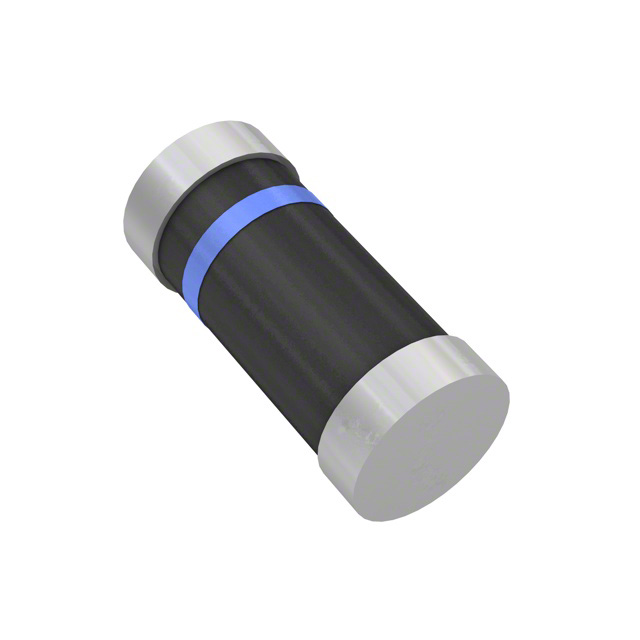
Product overview of TMMDB3 (TMMB3) DIAC STMicroelectronics
The TMMDB3, also marked as TMMB3, is a surface-mount DIAC engineered by STMicroelectronics for stringent triggering functions in modern, space-efficient electronic assemblies. Its Mini MELF (MINIMELF) package delivers essential integration benefits for densely populated PCBs, maximizing board area utility and enhancing assembly reliability. This configuration streamlines automated manufacturing and reflow soldering processes, reducing placement errors often encountered with larger through-hole DIACs.
At its core, the TMMDB3 leverages symmetrical breakover voltage characteristics, ensuring consistent bidirectional operation—a critical requirement for alternating current control. The specified breakover voltage spectrum, typically centered at 32V but ranging from 28V to 36V, is optimized for predictable gate triggering of devices such as TRIACs and SCRs. This voltage regulation mechanism minimizes timing dispersion in phase control applications, directly contributing to stable lamp dimming profiles or proportional motor speed control circuits. The narrow voltage window also reduces susceptibility to noise-triggered misfires, supporting robust gate drive integrity across variable load conditions.
The device’s 2A maximum on-state current rating supports the necessary pulse discharge for reliable semiconductor switching, even under fast repetitive cycling, mitigating the risk of false or incomplete triggering. The underlying silicon structure and passivation techniques furnish high durability against thermal stresses typically present in compact controller modules, preserving electrical parameters throughout extended operational lifecycles. During installation and commissioning of AC control platforms, immediate repeatability of trigger behavior is observed, decreasing circuit calibration overhead.
Integrating the TMMDB3 into gate trigger networks unlocks smoother turn-on curves and improved wave-shaping. For instance, in single-phase dimmer designs or time-proportional controller boards, deploying this DIAC within the firing circuit consistently yields reduced phase jitter and better synchronization with the AC cycle, advancing both electromagnetic compatibility and end-system efficiency. Empirical tuning during prototyping often demonstrates the DIAC’s advantage in filtering out minor supply perturbations, allowing precise adjustment of trigger points with minimal component drift.
The combination of compact footprint, precision voltage threshold, and robust current capacity defines the TMMDB3 as an optimal choice for designers targeting reliable and low-profile AC switching solutions. A noticeable improvement arises when balancing trigger accuracy against assembly complexity, as this device streamlines both hardware and firmware considerations. The thoughtful alignment of its electrical parameters to prevailing application needs underlines industry movement toward highly integrated, consistently performing trigger components in the evolving field of AC power control.
Core functional principles and working mechanism of TMMDB3 (TMMB3) DIAC
The TMMDB3 (TMMB3) DIAC operates fundamentally as a bidirectional trigger device, leveraging a controlled breakover voltage mechanism to enable precise activation of downstream power switching components. At the device level, its semiconductor structure is engineered to remain in a high-impedance, non-conductive state across a wide span of AC input voltages. Upon reaching the breakover threshold—a parameter tightly regulated during manufacturing—the DIAC demonstrates an abrupt transition from blockade to conductive mode. This snap-action characteristic provides a highly deterministic response, minimizing latency and interaction with spurious transients in the input signal.
From an electrical engineering standpoint, the symmetrical construction of the DIAC is particularly advantageous. Both forward and reverse voltage waveforms encounter an identical conduction profile, which eliminates the necessity for device alignment or orientation compensation in the circuit. This enables straightforward PCB integration in phase control applications, such as light dimmers, fan speed regulators, and other systems requiring bidirectional switching. Symmetry also ensures harmonized triggering of bilateral switches, thereby enhancing reliability and manufacturability in series production environments.
Noise immunity within the DIAC's operational envelope demonstrates a robust tolerance to AC line perturbations. By defining a distinct and repeatable threshold before conduction initiates, the DIAC acts as an effective filter against line voltage fluctuations, mitigating false firing events that could otherwise compromise the stability or lifespan of attached TRIAC devices. Engineers routinely exploit this property in tightly specified firing angle control, balancing the demands of consistent energy delivery and suppression of electrical noise.
Practical deployment of the TMMDB3 (TMMB3) DIAC highlights additional dimensions of its performance. The snap-on characteristic translates to tightly synchronized TRIGGER events, a trait especially important in high-frequency or phase-specific actuation scenarios. In field installations, DIACs have demonstrated long-term stability, provided transient suppression and thermal management protocols are rigorously applied. In densely packed control circuitry, the device’s inherent bidirectionality reduces inventory complexity and supports more compact board layouts, yielding both space and cost efficiencies.
One core insight emerges from application-centric analysis: the DIAC’s breakover sharpness can be strategically leveraged to define the operational window of complex AC control systems. Engineering refinements in threshold uniformity and manufacturing consistency continue to expand the device’s utility across next-generation modulation and control applications, underlining the ongoing relevance of meticulously engineered switching elements within modern power electronics architectures.
Electrical characteristics and performance data for TMMDB3 (TMMB3) DIAC
Electrical characteristics of the TMMDB3 (TMMB3) DIAC are defined by a precisely controlled breakover voltage ($V_{BO}$) ranging from 28V to 36V, with a nominal value of 32V. This narrow tolerance window allows circuit designers to achieve reliable, predictable triggering thresholds in AC phase control and lamp-dimming circuits, where uniform switching onset is critical for repeatability and performance. The temperature coefficient of $V_{BO}$ is engineered for minimal drift at standard $T_{j} = 25^\circ$C, supporting thermal stability in densely populated or high-frequency assemblies.
Once the breakover point is reached, the DIAC transitions rapidly to the on-state, enabling a maximum current of 2A. This rating ensures compatibility with the gate drive requirements of medium-power TRIACs and SCRs. The steep fall in dynamic resistance post-trigger results in clean, noise-immune triggering pulses; this property is vital for tight timing control in zero-cross and phase-firing applications. Designers benefit from the device’s specified pulse-handling capacity and short rise-time, enabling consistent performance in environments with fast-changing load conditions or high-inrush scenarios.
Understanding the voltage-current characteristic curve, especially the negative resistance region, provides insight into circuit stability during the commutation phase. Devices with poorly shaped transition curves risk double-triggering or false turn-on, especially in circuits vulnerable to supply-line interference. The TMMDB3 (TMMB3) addresses these risks through carefully tuned silicon junction geometry, contributing to the device’s resilience against nuisance tripping and improved EMI immunity.
Thermal performance is heavily influenced by mounting conditions and PCB copper area beneath the DIAC. In practice, implementations that optimize thermal conduction consistently sustain the specified breakover parameters across wider temperature gradients, preventing unwanted drift and enhancing system durability. It is observed that even small increments in forced airflow or underlying copper pad area yield measurable gains in cycle-to-cycle stability, especially under pulsed-load operation.
Gate pulse duration and amplitude compatibility allow for flexible timing adjustment within the associated phase-control drive circuits. Fine-tuning these parameters tailors the DIAC response for various load types, from highly capacitive scenes in electronic ballasts to more resistive environments found in heater regulation. Successfully engineered trigger circuits based on the TMMDB3 demonstrate minimal pulse jitter and sharpened turn-on transitions, directly impacting system efficiency and reducing wear in switching elements.
Close examination of long-term field operation reveals that the device’s robust junction construction extends effective working life, even when subjected to frequent cycling and moderate over-voltage events. The absence of significant parameter drift over time positions the TMMDB3 (TMMB3) as a reliable baseline in challenging industrial power-control environments, securing its relevance where maintenance intervals are tightly controlled and downtime incurs disproportionate costs.
In sum, the TMMDB3 (TMMB3) DIAC reflects a convergence of controlled breakover voltage, robust current ratings, precise thermal response, and reliable repetitive switching. Careful thermal and current-handling engineering, paired with attention to mounting and pulse conditioning, elevates it as a preferred choice for critical phase-triggering and gate drive applications. Analysis suggests that aggressive adherence to device datasheets, coupled with empirical evaluation of thermal and electrical margins, reliably boosts both functional integrity and service longevity in a broad spectrum of electronic control scenarios.
Application scenarios and engineering integration for TMMDB3 (TMMB3) DIAC
The TMMDB3 (TMMB3) DIAC features an optimized electrical specification that addresses critical requirements in AC line triggering. Its inherent bidirectional switching capability allows precise and repeatable threshold conduction, supporting reliable triggering in phase-control circuits. The device operates with well-defined breakover voltages, translating into predictable turn-on points for downstream SCR or Triac gates. This mechanism directly benefits applications demanding synchronized waveform control, such as dimming actuators and speed controllers.
In motor dimmer and lighting dimmer implementations, particularly those based on Triac or SCR topologies, the DIAC’s tight voltage tolerance minimizes spurious triggering, thereby suppressing flicker and false starts under variable AC conditions. In practice, its symmetrical characteristics ensure uniform operation across half-cycles, contributing to smoother power modulation in resistive and inductive loads. When used as part of an oscillator timing stage, the TMMDB3 (TMMB3) facilitates sharply defined charge-discharge thresholds, enhancing timing precision and repeatability—attributes critical in clocked modulation or phase firing circuits.
Triggering compact and legacy-type ballasts—such as those found in CFL and TL systems—demands components capable of stable low-current operation and resilience to line noise. The DIAC’s low capacitance and fast response limit its susceptibility to electromagnetic interference, enabling robust ignition sequences even in electrically noisy environments. LED driver circuits, especially those employing minimalistic BOM and discrete layouts, also benefit from the DIAC’s compact Mini MELF footprint. This form factor streamlines PCB placement and fosters high-density integration without sacrificing electrical clearance or avalanche robustness.
Integration of the TMMDB3 (TMMB3) DIAC into densely layered architectures offers additional leverage for designers targeting minimalist, reliable, and scalable solutions. Direct gate drive simplifications emerge, as the DIAC absorbs gate transient spikes and filters harmonics, eliminating peripheral snubber or filter components. This consolidation not only reduces assembly costs and part inventories but also improves long-term circuit durability—a crucial advantage in mass-market consumer devices.
Empirically, DIAC-driven phase controllers show enhanced startup consistency and reduced waveform distortion compared to architectures built with discrete zener or transistor-based kick-off stages. The resulting circuit simplicity and thermal stability allow for more aggressive miniaturization efforts, where heat dissipation paths are limited and trace lengths must be minimized for EMI compliance.
Conceptually, the TMMDB3 (TMMB3) DIAC can be seen as more than a passive trigger—its precision-engineered voltage characteristic makes it an active enabler for modular and convergent analog control systems. In applications where lifecycle cost, board area, and performance uniformity intersect as critical metrics, this DIAC provides an elegant compromise. Its adoption supports a design philosophy centered on reliable low-complexity triggering, scalable across both legacy and emerging power electronics platforms.
Packaging, compliance, and PCB considerations for TMMDB3 (TMMB3) DIAC
The TMMDB3 (TMMB3) DIAC utilizes the Mini MELF surface-mount package, engineered for optimal integration into automated assembly lines. This cylindrical package geometry not only ensures consistent component orientation during pick-and-place operations but also supports high-speed reflow soldering, reducing cycle times and minimizing thermal stress on adjacent PCB elements. The Mini MELF format exhibits robust mechanical stability, mitigating risks of component misalignment or tombstoning, even when subjected to varying solder paste volumes or minor board warpage—a common occurrence in dense power control boards.
In terms of regulatory compliance, adoption of the ECOPACK guidelines by STMicroelectronics confirms adherence to global restrictions on hazardous substances, including RoHS and REACH directives. This proactive compliance framework streamlines cross-border procurement and simplifies certification during end-product audits. Furthermore, ECOPACK compliance inherently reduces the risk of supply chain interruptions related to environmental directives, supporting stable long-term sourcing strategies. These advantages become especially pronounced in markets, such as industrial lighting control and consumer appliance boards, where both environmental credentials and proven reliability are paramount and frequently audited by end customers.
From a PCB design perspective, precise mechanical documentation—including recommended footprints, land patterns, and solder mask requirements—facilitates optimal electrical and thermal interconnection. The tight control over pad geometry directly influences solder joint quality, which is critical in repetitive surge events characteristic of DIAC-based triggering circuits. Providing these reference designs at an early stage allows layout engineers to mitigate hot-spot formation, optimize current paths, and maintain process yield across variable production lots.
When balancing design miniaturization with regulatory mandates, the TMMDB3 (TMMB3) package and compliance paradigm addresses the dual imperatives of board area conservation and global market acceptance. With experience in high-density, mixed-signal boards, the availability of standardized, environmentally compliant SMD packages such as Mini MELF not only reduces layout iterations but also streamlines qualification cycles. This intersection of robust engineering documentation, formal compliance, and proven package reliability forms a pragmatic foundation for rapid, scale-ready product development in applications that cannot compromise on size, compliance, or long-term sourcing continuity.
Potential equivalent/replacement models for TMMDB3 (TMMB3) DIAC
Identifying replacement options for TMMDB3 (TMMB3) DIACs hinges on a detailed understanding of the device’s switching characteristics and mechanical constraints. The DIAC’s primary value lies in its consistent breakover voltage, typically centered at 32V, which defines its trigger precision in phase control applications such as lamp dimming and motor speed regulation. Substitutes must therefore tightly match this breakover window, generally between 28V and 36V, to prevent undesirable variation in firing angles and resultant load performance fluctuations.
Current handling capability also sets a strict benchmark. Devices with equal or superior pulse surge ratings ensure robust operation under repetitive transient conditions commonly encountered in triac triggering circuits. Empirically, alternatives with a pulse current tolerance at or above TMMDB3’s baseline prevent premature failures during inrush-heavy load cycles or under low-impedance surge fault conditions. Package compatibility is non-negotiable; the Mini MELF footprint must be matched for seamless soldering and automated pick-and-place workflow continuity. Deviations here complicate layout, thermal management, and mechanical integrity during reflow cycles.
Further, electrical symmetry, a critical DIAC attribute, must be preserved. Devices exhibiting minimal variation in breakover voltage across both polarity axes ensure consistent firing regardless of ac line phase, directly affecting dimming linearity and system electromagnetic interference. Engineering validation cycles should include bench measurement under real waveform conditions to uncover any second-order asymmetries not listed in datasheets.
ECOPACK, RoHS, and related environmental compliance are now standard procurement filters. Replacements need verifiable conformance documentation. Any part lacking third-party green process certification risks complicating global supply and regulatory audits.
Through iterative reverse-benchmarking, select offerings from vendors such as STMicroelectronics, ON Semiconductor, or Littelfuse often intersect these criteria. However, not all meet the Mini MELF envelope or provide guaranteed symmetrical behavior within the desired voltage spread. Reviewing production lots for parameter drift and repeatedly referencing manufacturer curve traces can reveal latent sourcing pitfalls.
A subtle but impactful insight is the value of conservative parameter margining. Choosing DIACs with slightly lower specified minimum breakover voltages within standard variance trims the risk of cold-miss triggering at low mains voltages, especially near system design tolerance edges. This nuance often surfaces only after extended field deployment, where cumulative tolerances and supply fluctuations interact.
Ultimately, systematic cross-referencing of datasheets, leveraging sample-based empirical testing, and thorough documentation flow combine to underpin successful TMMDB3 (TMMB3) DIAC replacement with full electrical, mechanical, and standards continuity. This holistic approach reduces requalification cycles and ensures consistent board-level and end-application reliability across varying operational envelopes.
Conclusion
The TMMDB3 (TMMB3) DIAC from STMicroelectronics occupies an integral niche in surface-mount triggering applications, particularly where compact design and robust electrical behavior are paramount. At its core, the DIAC features sharp breakover voltage symmetry, resulting from precise doping and device geometry. This symmetry directly translates into predictable bidirectional triggering, a fundamental requirement in AC switching circuits engaging with TRIACs or similar power devices.
Manufactured to exacting tolerances, the TMMDB3 demonstrates consistent breakover thresholds, minimizing phase control variance and ensuring conformance with control loop requirements. Such stability yields clear benefits in circuits governing dimmers, motor speed controls, and electronic ballasts, where any drift or asymmetry could induce flicker or cause thermal stress. Integrated into multi-layer PCBs, the SMD footprint reduces parasitic effects, enabling high-density layouts and allowing thermal dissipation planning, further increasing reliability under repeated surges.
The device’s encapsulation enhances environmental resistance, supporting extended life cycles in demanding installations. Its compliance with international standards expedites approval in safety-critical assemblies, simplifying the upstream design review. Further, leveraging the TMMDB3’s low holding current unlocks precise triggering even with low gate current SCR/TRAIC counterparts, reducing component stress and improving switching margin, particularly beneficial in low-power or energy-efficient product designs.
From procurement to deployment, its combination of mechanical ruggedness and electrical predictability streamlines supply chain integration. Device qualification histories indicate strong batch uniformity, minimizing calibration adjustments during assembly line tests and contributing to overall reduced production time.
A notable advantage becomes evident when scaling up to high-volume designs: the device’s well-documented parameter stability introduces fewer corner-case errors during both prototyping and mass production. This allows for a systematic, parameter-driven approach to circuit tuning rather than ad hoc compensation.
In practice, leveraging the TMMDB3’s performance envelope facilitates not only compliance and performance but also design elasticity, enabling engineers to focus on application-level innovation rather than discrete-level reliability challenges. Ultimately, the device’s characteristics align closely with stringent performance predictability, energy efficiency mandates, and sustainable lifecycle expectations typical in contemporary power control systems.