>
>


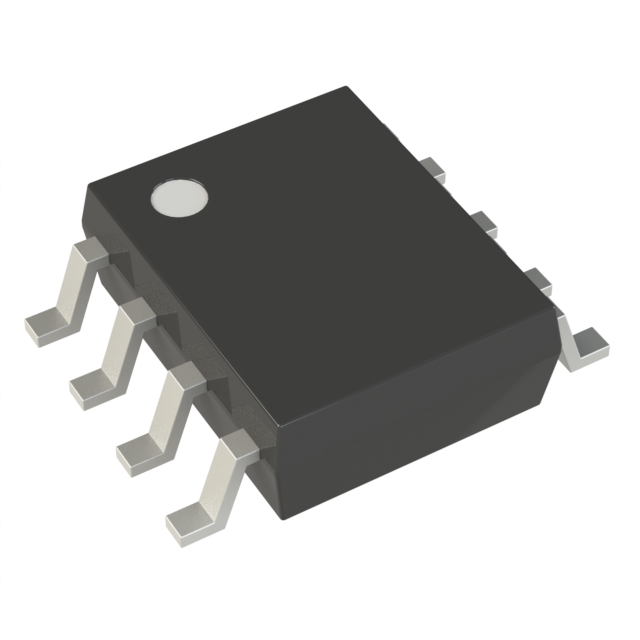
Product overview: TDE1798DP intelligent power switch from STMicroelectronics
The TDE1798DP from STMicroelectronics represents a robust single-channel intelligent power switch, integrating advanced output control and comprehensive fault management within an 8-pin Mini-DIP form factor. Engineered for deployment in complex automation and industrial control scenarios, its architecture consolidates an array of protection and diagnostic functionalities, making it well-suited for direct interfacing with logic-level control circuits while reliably handling inductive and resistive loads.
At the core, the TDE1798DP is designed to manage loads up to 500mA across a wide supply voltage range of 6V to 35V. The device employs bipolar technology, enabling stable high-side switching and precise current delivery, even during transient-heavy operation such as relay, solenoid, or small motor actuation. Integrated overtemperature shutdown, short-circuit protection, and under-voltage lockout mechanisms underscore the device’s aptitude for demanding electrical environments where operational continuity is paramount.
The protection logic is not only autonomous but also self-recovering, greatly reducing the need for external supervisory circuits. Fast fault detection and built-in diagnostic outputs allow rapid isolation of abnormal conditions at the application level. Such capabilities are particularly valuable in distributed automation nodes, motor driver modules, and process control interfaces—scenarios where space constraints and reliability targets converge. The intelligent latch-off and reset modes embedded in the TDE1798DP streamline system-level fault recovery, leading to reduced downtime during overload or thermal fault events.
Interface flexibility is a significant differentiator; the device accepts both standard TTL and CMOS logic inputs. This enables seamless integration into both legacy and modern control platforms, minimizing redesign efforts. The logic-compatible input thresholds further facilitate direct connection to microcontrollers or programmable logic devices without intermediate buffering, reducing total solution cost and board complexity.
From an implementation perspective, applications in multi-channel relay switching benefit from the TDE1798DP’s low quiescent current and minimal external component requirement. This allows dense pack-out on PCBs and simplifies wiring harnesses, directly impacting reliability and manufacturability. Experience shows that the device’s inherent protection features substantially extend actuator and switch lifetimes in fielded equipment, particularly under frequent switch cycles or variable load conditions.
A core insight emerges from observing the device’s consistent performance in adverse operating environments: the strategic integration of protection and diagnostic intelligence close to the load eliminates many systemic vulnerabilities typically addressed further upstream. This approach leads to higher fault tolerance and more predictable system behavior under stress, informing not only device selection but also holistic system architecture design.
In summary, the TDE1798DP’s combination of current handling, intrinsic protections, and control interface versatility positions it as a foundational element for next-generation industrial automation, relay matrix, and distributed power switching solutions, where compactness, reliability, and diagnostics-driven maintenance are key drivers.
Key features and benefits of TDE1798DP
The TDE1798DP intelligent power switch demonstrates a tightly integrated feature set tailored for robust output stage design in industrial and automotive domains. Central to its architecture is high current drive capability—supporting up to 0.5A continuous output—which permits direct actuation of relays, solenoids, incandescent lamps, and compact DC motors without intermediate drivers. This native strength translates into streamlined bill of materials and increased reliability for systems requiring scalable channel counts, as the switch’s full rated current is available across its operating voltage range without excessive thermal derating, provided that appropriate PCB copper thickness and thermal dissipation have been provisioned.
Operating voltage flexibility forms a core design advantage. The TDE1798DP permits stable operation with supply voltages from 6V to 35V, covering common industrial rails such as 12V, 24V, and 28V. This span not only supports standardization across platforms but helps mitigate supply variation risks in decentralized or legacy installations. Such a broad operating envelope increases system robustness when transient undervoltage or overvoltage conditions are anticipated.
Interfacing versatility is achieved through differential logic-compatible inputs. This characteristic enables the device to interface seamlessly with both TTL and CMOS logic, as well as other variants present in mixed-technology environments. The device’s tolerance for input voltage levels exceeding its own supply voltage (V_CC) eliminates the need for complex voltage translation or level-shifting chips, minimizing signal path delay and board area. In practical terms, this enables control logic to coexist with high-side switches even if they are powered from disparate voltage domains—a recurring scenario in distributed control panels or modular automation equipment.
A significant engineering benefit arises from the built-in fast demagnetization circuitry, designed to handle the energy absorbed when switching inductive loads such as relays and solenoids. The TDE1798DP can absorb up to 150mJ without an external flyback diode, which removes the risk of diode selection mismatches and their associated failures under surge events. This integration also streamlines PCB layout, as high-current recirculation paths are managed internally by the device, reducing trace-induced voltage overshoots and facilitating straightforward EMC compliance during product qualification.
For applications where output channel expansion or redundancy is required, the device’s capability to be connected in parallel becomes critical. Paralleling support is engineered to address current-sharing across connected outputs, thus leveraging built-in synchronized reset and alarm notification signaling. This mechanism ensures that fault conditions are accurately detected and reported without ambiguity, enabling coordinated system-level protection strategies. Proper current sharing, based on meticulous PCB routing and recommended layout symmetries, ensures that no device is subjected to thermal or electrical overstress, even under transient fault recovery cycles.
An implicit insight here is that the TDE1798DP’s design encourages a modular approach to both hardware scaling and fault management. Its feature set, particularly logic interface decoupling and load management integration, anticipates system expansion and evolving requirements without necessitating substantive redesigns. This positions the device not just as a discrete switch, but as a foundation for architecting resilient, flexible power distribution layers in demanding industrial contexts. In deployments where diagnostic speed and maintainability weigh heavily, the device’s integrated signaling and protection circuitry materially reduce troubleshooting time and enable predictive maintenance frameworks to be implemented at the application firmware level.
Internal protection functions and reliability mechanisms in TDE1798DP
Internal protection functions within the TDE1798DP define a multi-layered approach to device reliability, positioning the power switch as a resilient component in mission-critical control circuits. By embedding granular fault-management mechanisms, the TDE1798DP minimizes the risk of downstream failures and system-wide malfunctions.
The short-circuit protection architecture operates bidirectionally, continuously monitoring both output-to-positive supply and output-to-ground conditions. When abnormal current flow is detected, internal digital logic rapidly isolates the affected channel. This mitigates junction overstress and preserves both the integrity of the device and the connected load. In field environments where wiring errors or inductive loads can dynamically cause unforeseen shorts, this preemptive action is vital for maintaining high mean time between failures.
A precision thermal shutdown subsystem forms a second line of defense. On-chip silicon temperature sensors sample the junction temperature in real-time. If internal heat dissipation exceeds defined thresholds, a comparator triggers a hardware interrupt, disconnecting the output driver. This intervention is not simply passive; the system can be set to either automatically recover after thermal normalization or await an explicit reset signal, allowing for tailored thermal management strategies at application level. During rigorous bench testing, thermal shutdown typically engages before the onset of latch-up or irreversible package degradation, underscoring the effectiveness of this feedback mechanism.
The inclusion of open ground protection further addresses system-level vulnerabilities. The device autonomously interprets ground faults and forces the output into a non-destructive state, thus preventing unpredictable logic levels that could compromise operational safety or trigger false system behaviors. This characteristic streamlines power distribution topology design, particularly in modular systems where ground continuity can be disrupted during hot-plug or maintenance operations.
Integrated alarm outputs offer real-time fault indication, bridging device diagnostics with supervisory controllers. Dual sink/source capability ensures compatibility across diverse logic families and isolation techniques. These alarm signals provide granular insight, allowing instantaneous identification of device status changes, which is essential for deterministic response in safety-rated architectures.
Applying these mechanisms within automation, automotive, and process control domains reveals their value. Devices subjected to recurring load cycles, voltage surges, or system reconfiguration demonstrate long-term reliability, maintaining both uptime and predictable fault containment. The combination of hardware-accelerated protection and configurable behaviors equips designers to optimize both protection and response as dictated by the unique system constraints, rather than relying on universal, less adaptive methodologies. A cross-sectional analysis of deployment scenarios demonstrates that such integrated features lead to reduced need for external protection circuitry, streamlined PC board layouts, and minimized maintenance cycles over the device’s operational life.
The TDE1798DP exemplifies a shift from purely functional switching to intelligent fault-resilient infrastructure, where embedded protection logic coalesces with application-level control to establish a robust, self-protecting node within modern power distribution systems.
Electrical and thermal performance characteristics of TDE1798DP
The TDE1798DP integrates robust electrical and thermal properties suited for medium-power driver applications. Its maximum output current of 0.5A addresses requirements for driving inductive or resistive loads, while the broad operating junction temperature (-25°C to +85°C) ensures reliability across diverse environments encountered in embedded and industrial systems. The device’s power supply capability, accommodating voltages up to 35V, offers design latitude for both 24V and 12V system architectures, with adequate headroom for transient conditions without risk of device degradation.
A central electrical feature is the high input voltage tolerance that remains uncoupled from the device’s V_CC. This enables straightforward interfacing with logic circuits of varying voltage domains, facilitating greater flexibility during system integration and simplifying design validation across the product’s voltage range. The low offset voltage specification translates to precise threshold setting for switching operations, effectively minimizing false triggering or erratic behavior—critical in applications such as relay drivers and actuator control where deterministic behavior is demanded.
On the thermal management side, the TDE1798DP’s thermal profile and recommended derating practices underpin robust long-term operation. While the junction temperature is capped at 150°C, designers must account for heat dissipation by allocating adequate PCB copper areas or supplementary heat sinks, especially when approaching maximum load in high-ambient conditions. Empirically, maintaining a conservative derate as ambient temperatures increase ensures stable output characteristics and mitigates the risk of thermal runaway. Application of multi-layer PCBs to maximize copper thermal mass and the strategic placement of thermal vias can further distribute heat efficiently, extending the component’s operational limits.
In practical deployment, device selection often pivots around its predictable thermal response and linear derating curve. When the TDE1798DP is used in compact enclosures, implementation of airflow or thermal pads can further enhance dissipation. The accuracy of the reference offset under dynamic conditions aligns with feedback circuits and diagnostic monitoring, supporting fault-tolerant architectures where response speed and precision are paramount.
The TDE1798DP’s design enables straightforward scalability within modular systems. By leveraging its high voltage tolerance, engineers can unify control logic across subsystems, reducing BOM complexity without compromising protection margins. Its well-defined thermal and electrical envelopes streamline qualification processes, allowing for consistent calibration during pre-production and expediting time-to-market for board-level assemblies. As embedded designs continue to shrink in size without sacrificing performance, this device’s balanced parameter set offers a reliable foundation for high-density, precision-driven applications.
Application scenarios and engineering considerations for TDE1798DP
The TDE1798DP serves as a robust power interface solution tailored to demanding inductive and motor control environments. Its internal architecture is engineered to handle rapid demagnetization of inductive loads, such as solenoids, relays, and small DC motors, by integrating active clamp circuitry and energy-dissipation mechanisms that reliably absorb up to 150mJ per event. This eliminates the need for discrete flyback diodes or snubbers in most applications, directly simplifying the system BOM and improving response time, particularly in high-frequency switching scenarios.
For DC motor control, the device enables precise two-quadrant operation, supporting dynamic direction reversal without the introduction of deadtime. This is critical for applications where system agility and minimal latency are essential, such as robotics actuators, material handling, or valve drives. By incorporating built-in protection—including overcurrent, thermal shutdown, and under-voltage lockout—the TDE1798DP maintains the safety envelope even under transient or fault conditions. These intrinsic safeguards make the device favorable for mission-critical systems, as failure modes are localized and predictable, reducing the risk of cascading faults.
In scenarios where drive currents must exceed 0.5A, parallel operation becomes necessary. The IC’s design allows clean synchronization of alarm and reset lines across multiple channels, achieving consistent fault reporting and centralized reset logic. However, in such topologies, close matching of supply and reference potentials is mandatory to avoid current hogging. Special care must be taken when integrating external clamping networks; mismatched voltage thresholds can induce uneven demagnetization, causing thermal stress and degrading long-term reliability. Optimal performance is achieved through selection of fast-response, low-variability clamps and meticulous PCB trace symmetry, ensuring thermal balancing and safe operation across all devices.
The TDE1798DP also provides a secure interface between low-voltage microcontroller buses and high-voltage load domains, leveraging its logic-compatible control inputs and galvanic isolation. This supports straightforward adoption in systems where EMC compliance, noise immunity, and fail-safe logic transitions are non-negotiable—industrial automation, building management, and automotive subsystems notably benefit from this capability. Deployments in harsh environments reveal that the device’s input filtering and noise rejection offer stability even with significant ground shift or electrical interference, minimizing spurious switching and extending field uptime.
A nuanced takeaway arises in the context of evolving system integration practices: embedding the TDE1798DP in modular architectures yields significant returns in maintainability and diagnostic clarity. By centralizing status feedback and integrating local protection, the overall burden on system-wide fault recovery routines is reduced, fostering greater transparency and serviceability. This design principle enhances scalability and modular field replacement, particularly valuable in distributed control panels or multiplexed actuator arrays common in process automation.
Overall, the TDE1798DP stands as a reference platform uniting fast inductive load handling, resilient motor control, and strong interface characteristics. Its judicious use in modular, high-reliability systems underscores the practical insight that integrated protection and diagnostic features are not mere conveniences but pivotal enablers in modern engineering workflows, especially where uptime, compactness, and safety dominate design objectives.
Integration flexibility and system compatibility of TDE1798DP
Integration flexibility and system compatibility of the TDE1798DP stem from its robust input architecture and expansive supply voltage range. The device enables straightforward interfacing with a variety of logic families, including TTL and CMOS, and supports both single and dual supply rails from 8V up to 45V. This inherent adaptability permits designers to deploy the TDE1798DP across diverse platforms, whether retrofitting legacy control hardware or accelerating the development cycle for next-generation embedded modules. Pin-level compatibility with standard logic signals minimizes the need for buffer stages or signal conditioning, thus streamlining PCB layouts and reducing bill-of-materials complexity.
Signal integrity and operational resilience are further guaranteed by the input stage's tolerance to voltage fluctuations and noise, which is particularly advantageous during field upgrades or in electrically harsh industrial automation environments. In one deployment scenario, leveraging the broad supply range mitigated the need for subsystem voltage conversion, which decreased power dissipation and minimized thermal footprint. The status outputs and reset/synchronization features act as both active diagnostic nodes and event coordination agents, enabling real-time feedback loops without complex external supervisors. For example, incorporating these signals into control firmware permitted rapid fault detection and automatic recovery sequences, reducing downtime and extending equipment lifecycle.
The modularity of the TDE1798DP facilitates abstraction of peripheral logic, empowering scalable designs that can be adjusted or repurposed via straightforward hardware changes. Systems built around this driver display increased serviceability, as uniform signal handling and self-monitoring capabilities simplify maintenance diagnostics and upgrades. The architecture subtly encourages a standardized approach to logic-level interfacing in automation networks, contributing to long-term compatibility and system robustness. The device thus serves not just as a physical interface, but as a catalyst for predictable integration strategies across evolving electronic ecosystems.
Potential equivalent/replacement models for TDE1798DP
Evaluating alternatives to the TDE1798DP requires a detailed comparison across electrical characteristics, protection circuits, and system-level compatibility. The TDE1798DP, a high-side intelligent power switch, integrates features such as short-circuit protection, overload recovery, and input logic thresholding, which are critical for robust load management and fault tolerance in industrial automation or automotive control units. Replacement candidates must reproduce these capabilities, not just nominal ratings, to sustain reliability under equivalent operational stresses.
Within the STMicroelectronics catalog, the TDE1799 is engineered around similar input logic requirements and protection architecture, thus streamlining migration at the PCB and firmware levels. The transition between these devices maintains seamless interface behavior, particularly in scenarios where input impedance, reference voltage, and logic-high/low consistency are decisive for cascade control design. When analyzing external alternatives, intelligent high-side switches from other reputable vendors—such as Infineon’s PROFET or Texas Instruments’ TPSxH series—present viable options, contingent on the alignment of maximum voltage tolerances, continuous output current capacity, and diagnostic feedback features.
The complexity of interchangeability extends beyond raw specifications. Actual deployment reveals nuances related to pin layouts, thermal management thresholds, and propagation delays during switching events. Experience shows that minor deviations in fault signaling logic or current sense accuracy can manifest as maintenance overheads or latent reliability risks, especially in precision mechatronics circuits or distributed sensor arrays. Engineers often pre-qualify replacements by deploying breadboard validations or targeted in-circuit emulation to uncover second-order effects, such as electromagnetic compatibility shifts or cross-talk susceptibility.
Analyzing datasheets in isolation yields incomplete insight; targeted review of reference designs and errata supplements reveals system interactions that highlight real-world performance boundaries. Supply chain flexibility demands option diversity, yet practical substitution hinges on maintaining end-to-end signal integrity and ensuring error-free operation within calibrated load profiles. Core consideration lies in the holistic matching of switching dynamics, input interface logic, and protective behavior, rather than relying solely on headline current and voltage metrics.
Unique scenarios, such as integration with isolated microcontroller inputs or operation within wide ambient temperature swings, further narrow viable model selection. Strategic experience points to the importance of modular test plans and proactive consultation with application engineering resources, fostering solutions that extend beyond transactional component replacement toward proactive system robustness. This layered approach elevates supply chain confidence while advancing design resilience across evolving market and technical requirements.
Conclusion
The TDE1798DP intelligent power switch from STMicroelectronics exemplifies advanced design in solid-state load control by integrating a comprehensive suite of robust protection features, contributing to system reliability in complex automation and industrial networks. At the device's core, sophisticated mechanisms such as overcurrent, overtemperature, and short-to-ground protection are implemented at the silicon level, enabling immediate fault response and minimizing the risk of catastrophic system failure. These embedded protections do not introduce significant propagation delays, maintaining the switch’s responsiveness while safeguarding downstream circuitry.
Extending beyond raw protective capability, the TDE1798DP’s electrical characteristics accommodate a wide operational envelope, with input logic compatibility spanning TTL and CMOS levels. This wide interface versatility ensures seamless adoption into both legacy and modern control architectures without necessitating auxiliary conditioning or redesign of existing signal chains. The device’s output drive is engineered for inductive and capacitive loads, illustrating an attention to the nuanced demands of solenoid, relay, and motor actuation circuits. Thermal management design includes an intelligent shutdown and automatic restart strategy, a feature that streamlines diagnostics and reduces maintenance intervention in field deployments.
Practical integration benefits are evident in the device’s compact packaging, high integration density, and reduction of required external components. This reduces overall PCB real estate and design complexity—key parameters when retrofitting aging systems or scaling new platforms. Diagnostic reporting is addressed via feedback pinout support, offering precise status readout without intrusive circuitry, which aligns well with contemporary requirements for remote monitoring and predictive maintenance.
Operational experience shows that, especially where fault tolerance is non-negotiable—such as conveyor actuators, distributed valve banks, and safety-interlocked environments—the TDE1798DP maintains functional continuity under transient conditions that might compromise less integrated solutions. Adoption in modular control panels highlights an ability to accelerate commissioning cycles while ensuring standardized protection across diverse channel configurations.
This device’s combination of protection depth, broad tolerance, and actionable diagnostics reflects a mature understanding of system-level needs in demanding environments. The approach is not confined to the discrete device, but extends throughout the system design, enabling architects to enforce reliability standards and lifecycle predictability with minimal engineering overhead. In forward-looking automation and process control infrastructures, where intelligent, diagnostic-rich switching is expected to be standard, the TDE1798DP positions itself as an integral component, balancing technical sophistication with pragmatic implementation.