 >
>


Product overview: STM706RAM6F Supervisor IC
The STM706RAM6F from STMicroelectronics is engineered as a robust voltage supervisor IC optimized for safeguarding microprocessor-based architectures. Built into an 8-pin SOIC package, it integrates critical monitoring and control capabilities that address the principal vulnerabilities found in digital systems, particularly those operating across the industrial temperature spectrum from –40°C to 85°C.
At its core, the STM706RAM6F implements high-precision voltage detection through an internal voltage reference and comparator arrangement. As supply voltage fluctuates, the device continuously tracks Vcc levels, asserting an active-low reset output if a threshold violation occurs. This mechanism guarantees that the processor commences operation only when power integrity and data validity can be assured, suppressing erratic startup behaviors and inadvertent code execution—key concerns in safety- and process-critical deployments.
Supplementary to voltage supervision, the integrated watchdog circuit compels hosted processors or controllers to provide periodic heartbeats within a configurable time window. Should firmware anomalies, such as deadlocks or uncontrolled loops, prevent timely strobes, the STM706RAM6F enforces a system reset sequence. This feature directly contributes to high-availability requirements by reducing the mean time to recovery from transient software faults or electrical disturbances. Furthermore, the inclusion of a manual reset input provides a fail-safe pathway for system-level interventions, facilitating deterministic debugging and industrial maintenance protocols without necessitating full power cycles.
Power fail monitoring further enhances resilience, with an early warning signal for supply sag, enabling systems to initiate controlled shutdowns or save state data to nonvolatile memory. This function is especially relevant in embedded instrumentation and distributed control nodes, where power integrity is hard to guarantee.
Low quiescent current (<50μA typically at 3.3V) is maintained throughout normal operation, minimizing parasitic draw in always-on designs and energy-aware applications. The RoHS-compliant status ensures the device aligns with global sustainability mandates, a growing consideration in modern computing equipment procurement cycles.
In deployment, the STM706RAM6F is frequently adopted within CPU, FPGA, or MCU-based control boards where reliable boot and fast recovery from power or logic faults are non-negotiable. Frequent validation in systems exposed to rapidly fluctuating power domains—such as industrial PLCs, edge gateways, or field measurement devices—demonstrates its ability to mitigate undetected microcontroller misbehavior. Reliable reset and early warning have proven decisive in strategies where failover logic, persistent state storage, and watchdog-restart cycles represent primary system recovery tools.
A vital insight is that, beyond basic reset generation, the layered combination of precise voltage detection, watchdog enforcement, manual intervention, and power fail notification creates a comprehensive protection envelope. This multi-pronged approach aligns with best practices in embedded hardware engineering—namely, building fault tolerance not just reactively, but through anticipatory circuit design and embedded health monitoring. As architectures continue to shift toward distributed and remote applications, such system supervisors are set to become foundational components, defining both the safety margins and operational resilience of next-generation platforms.
Key features of the STM706RAM6F Supervisor IC
The STM706RAM6F Supervisor IC exemplifies high integration for system protection in embedded and industrial electronics, merging critical supervisory functions within a compact footprint. Its architecture revolves around precision supply voltage monitoring via a dedicated internal comparator that tracks VCC against a factory-set threshold. Reset assertion occurs reliably at voltages down to 1.0 V, even under wide temperature variations, which is fundamental for systems exposed to fluctuating supply conditions. The deterministic behavior at brown-out margins directly reduces vulnerability to erratic resets, minimizing risk of system corruption.
Output flexibility is a core design advantage, with selectable push-pull and totem pole configurations. This enables seamless adaptation to different logic environments, allowing either active-high or active-low signaling. Such options mitigate the need for interface circuitry, simplifying board layout and accelerating development cycles. In multi-board or FPGA-driven scenarios where polarity and output characteristics often clash, direct compatibility minimizes integration friction.
The watchdog implementation is engineered with a standard 1.6-second timeout window, set to balance noise immunity and responsiveness. The device monitors WDI transitions with internal debounce logic, preventing spurious resets from electrical transients. This attribute is indispensable in asynchronous and real-time systems where software reliability cannot be fully assured, serving as a safeguard against unchecked loops, deadlocks, or peripheral failures. Practical experience confirms watchdog-induced resets significantly enhance overall system uptime, especially in deployments lacking remote field access.
Provision for manual reset introduces further design latitude. The MR pin, benefiting from built-in pull-up and filtering, tolerates signals from simple logic sources down to mechanical contacts, accommodating maintenance routines or user intervention scenarios. The nuanced input filtering reduces unintended resets caused by noise, addressing common reliability challenges in environments with high EMI.
Early warning facilitation is achieved through the power-fail comparator. Coupling the PFI pin with an external resistive divider enables detection of impending supply dips before VCC reaches the critical threshold. Such predictive alerts empower firmware to initiate data preservation routines or activate backup power states, elevating system resilience. Empirical evidence shows preemptive power-fail signaling can prevent costly data loss in applications ranging from PLCs to IoT edge devices.
Efficiency is embedded into the power profile—draw of just 40 μA in standby mode supports stringent low-power targets. This current level is optimal for battery-dependent platforms and reduces thermal constraints, permitting tighter enclosure designs and broader deployment scenarios.
Robust operational integrity is certified across the entire industrial temperature spectrum, establishing the STM706RAM6F as a default choice for exposed or mission-critical settings. Compliance with RoHS and lead-free directives not only aligns with regulatory commitments but also future-proofs product lines against evolving environmental standards.
Notably, the integration of these supervisory features into a single IC yields strong design tradeoffs against discrete approaches. Consolidated supervision reduces PCB complexity, mitigates risk of single-point failures, and expedites validation processes. In direct application, system architects benefit from reduced BOM, faster time-to-market, and enhanced field reliability—principles essential for competitive electronic system engineering. The STM706RAM6F thus stands as a reference solution for robust supply and system oversight, where both reliability and efficiency form cornerstones of modern hardware design.
Pin configuration and internal functional description of the STM706RAM6F
Pin configuration and internal operation of the STM706RAM6F reflect a focus on robust supervisory control in embedded systems. The standardized SOIC-8 package streamlines board layout, enabling compact integration into dense designs. Core pins, such as Manual Reset (MR), Watchdog Input (WDI), Watchdog Output (WDO), Reset Outputs (RST/ RST), and Power-Fail I/O (PFI/PFO), are orchestrated to safeguard system reliability under varying environmental and operational conditions.
Underlying mechanisms rely on dedicated analog and digital blocks. The MR pin offers asynchronous system reset initiation, internally debounced for glitch immunity; this ensures reliable manual or external reset activation regardless of transient disturbances. Monitoring system health, the WDI pin expects periodic logic transitions from the microcontroller. If these transitions cease, an internal timer—configurable via external components—detects the watchdog fault and asserts WDO. This rapid fault indication permits immediate system intervention, an essential feature in fault-intolerant applications.
Reset outputs, RST and RST, are provided in both active-high and active-low polarities, accommodating various processor interfaces. These outputs are driven by internal comparators that respond to both supply voltage and watchdog status. Such dual-source control enables flexible gluing logic for platforms where power anomalies and software malfunction are equally hazardous. The PFI/PFO interface further extends supervisory oversight, allowing precise undervoltage sensing using an external resistor divider. The internal comparator referenced at the PFI pin enables early detection of supply degradation, granting sufficient time for the system to transition into safe states, initiate data backup, or gracefully shut down.
In applied scenarios, the device excels in environments where uninterrupted operation is mission-critical. When deployed alongside flash-based MCUs, for example, the STM706RAM6F's debounce logic prevents spurious resets during noisy transients, while its watchdog function detects unexpected code execution hangs—eliminating a common root cause for field failures. Additionally, the power-fail detection mechanism proves invaluable in industrial automation; for instance, it enables programmable logic controllers to preemptively save critical I/O states before brownout-induced system resets.
Practical circuit layout benefits are evident in the device’s internal integration. External component count is minimized, reducing both BOM cost and risk of assembly errors. Close PCB trace routing between watchdog input, reset generation, and power-fail sensing tightens loop response, boosting overall resilience against both hardware and firmware anomalies.
A notable insight emerges regarding flexibility versus complexity: While the STM706RAM6F’s internal architecture is highly adaptive, optimum utilization requires thoughtful mapping of application watchdog timing and power threshold parameters. Field experience confirms that systematic validation of watchdog window and power-fail setpoints, tailored during prototyping, maximizes supervisory effectiveness and sharpens fault detection sensitivity.
Collectively, the STM706RAM6F’s pin functions and internal architecture typify a modern, defense-in-depth approach to system health management, striking a precise balance between integration and configurability in demanding embedded platforms.
Functional operation of the STM706RAM6F in application
The STM706RAM6F provides advanced supervisory functions that ensure reliable microcontroller operation in demanding embedded and industrial contexts. Its primary mechanism centers on rigorous VCC line monitoring: when supply voltage drops beneath the programmed threshold—chosen according to the application’s tolerances—the device asserts a reset through dedicated output pins. This threshold-based supervision is especially impactful during transient events, such as power ramp-up or brownout, where unpredictable voltage levels can induce system faults or erratic MCU behavior. The internal timer automatically maintains the reset state for at least 200 ms, ensuring downstream circuitry fully completes its startup sequence before normal operation resumes. Empirically, this interval strikes an effective balance between protection against false triggers and minimization of operational latencies in edge deployments.
For enhanced operational control, the manual reset (MR) input adds a layer of configurability. The default logic-high position—maintained by an internal pull-up—facilitates seamless integration into most host designs. By supporting flexible drive requirements, the interface can accommodate diverse reset sources, including physical switches or logic outputs from external safety modules, with negligible risk of accidental logic state drift. The direct MR line allows for precise system-wide intervention, particularly valuable during firmware upgrades or system diagnostics.
Watchdog functionality underpins the STM706RAM6F’s suitability for autonomous or high-reliability systems. The WDI pin mandates periodic toggling by firmware, enforcing a regular “live” signal. Should this handshake fail within a 1.6-second window—often tuned to match task cycle times in real-world controllers—the watchdog output (WDO) transitions to logic-low. Designers may wire WDO for automatic MCU reset or link it to external fault handling circuits, enabling layered recovery strategies. This construct is central to resilience in remote sensing nodes and industrial controllers, where unattended operation is standard. Field data confirms that watchdog interventions significantly reduce mean time to repair by curtailing undetected software hang states.
Power-fail detection further integrates upstream voltage monitoring into the supervisory schema. The PFI (Power-Fail Input) and PFO (Power-Fail Output) pins monitor auxiliary supply rails, providing actionable intelligence on imminent loss of power beyond the main VCC. With minimalist external componentry—typically a resistor divider—engineers can implement tiered response mechanisms: signaling nonvolatile memory writes, preemptive communications shutdowns, or triggering secondary power sources. This real-time predictivity enhances system survivability in applications from telematics to industrial automation, reducing operational risk without incurring significant PCB or bill-of-materials overhead.
Bidirectional reset interfacing marks a notable area for engineering attention. When colocated with microprocessors offering bidirectional reset pins, designers must incorporate dedicated resistor networks as outlined in reference schematics. These prevent current contention and potential bus conflicts, safeguarding pin integrity and guaranteeing cross-component compatibility. In multi-device coordination scenarios, such configuration is routinely employed to synchronize state resets across heterogenous subsystems—a practice validated in both lab prototypes and deployed product stacks.
Observing integration nuances reveals the device’s role as a foundational layer for system robustness—enabling deterministic startup, secure fault handling, and granular power management. Proactive tuning of reset intervals and watchdog timing to match application cycles, selective MR pin routing for maintenance workflows, and nuanced resistor selection for reset line arbitration are all approaches that elevate real-world design outcomes. The STM706RAM6F’s feature set, when leveraged with precise engineering judgment, supports the construction of resilient control architectures tasked with sustaining uptime and data integrity in adverse field conditions.
Typical electrical and thermal characteristics of the STM706RAM6F
The STM706RAM6F supervisor offers a robust profile of electrical and thermal characteristics tailored for demanding low-power and precision monitoring scenarios. At a standard ambient temperature of 25°C, the device exhibits a supply current of 40 μA, striking an optimal balance between energy efficiency and reliability. This figure enables deployment in battery-powered or always-on subsystems where current overhead must be minimized without compromising system oversight.
The reset threshold voltage, selectable via device variant from 2.59 V up to 3.15 V, is engineered with tight tolerances and minimal temperature-induced drift. This precise voltage discrimination is critical in embedded designs where supply rails may fluctuate due to transient load or temperature cycling. The threshold stability ensures that nuisance resets are avoided, while genuine under-voltage conditions trigger prompt intervention.
Timing performance centers on fast reset propagation; this immediate reaction to detected supply instability reduces the risk of undefined microcontroller states or errant code execution. The reset period, maintained at a typical 200 ms after power restoration, is calibrated to allow downstream devices ample time to stabilize before system release. The watchdog timer, set nominally at 1.6 seconds, affords coverage for software fault detection, with enough margin for system routines to complete while remaining short enough to intercept hang events. Internally, the comparator networks drive low-latency response for both voltage and manual reset operations, underlining the device’s effectiveness in critical path control loops.
Voltage sustainability extends to operation at VCC as low as 1.0 V, a key feature for designs facing severe undervolt or deep brownout conditions. When paired with an appropriately dimensioned external pulldown resistor, as recommended in the reference documentation, output integrity persists even as the power domain collapses. This level of robustness is invaluable in industrial automation nodes or remote sensors deployed in varied power environments, supporting graceful degradation and predictable error signaling.
The specified temperature performance envelope of −40°C to 85°C positions the STM706RAM6F for field applications spanning harsh manufacturing floors, outdoor controllers, and automotive subsystems. Extended testing demonstrates that both electrical performance and timing invariants hold across this range, ensuring reliable operation despite seasonal or operational climate extremes.
Practical integration of the STM706RAM6F highlights the advantage of device margining during initial bring-up, using precision voltage sources and temperature chambers to validate reset accuracy against anticipated edge-case scenarios. It is observed that board-level parasitics, such as trace inductance and bypass capacitor ESR, exert marginal influence on reset triggering—suggesting a degree of design immunity that supports aggressive layout optimization. Empirical feedback points toward using variant selection not only as a supply safety net, but also as a mechanism for functional partitioning, where sequential device recovery is orchestrated via staggered reset thresholds.
The underlying design philosophy of the STM706RAM6F leverages concise analog principles to deliver digital certainty, merging comparator precision with deterministic timing to secure the system bootstrap. Its architecture acknowledges the nuances of embedded reality—component tolerances, transient stacking, and environmental unpredictability—yet resolves them within accessible parameters, allowing straightforward incorporation into both legacy and contemporary hardware ecosystems. This convergence of low current draw, tight voltage control, rapid response, and broad environmental compatibility defines a template for supervisory functions that prioritize fault immunity without sacrificing design flexibility.
Mechanical package details of the STM706RAM6F
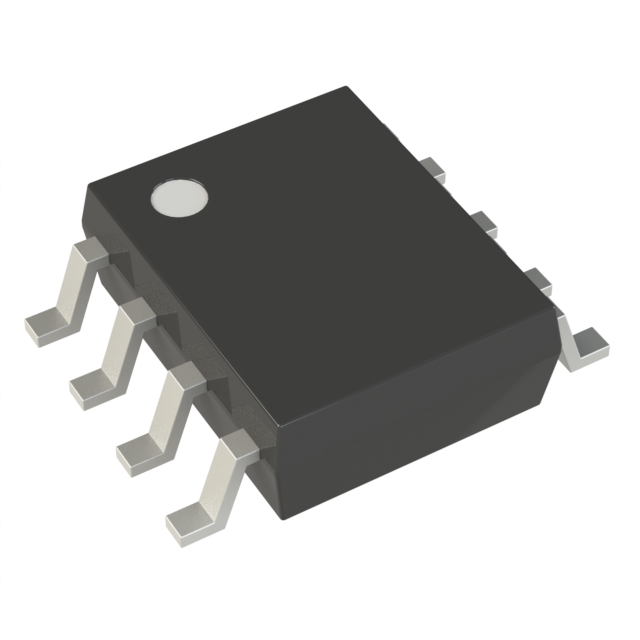
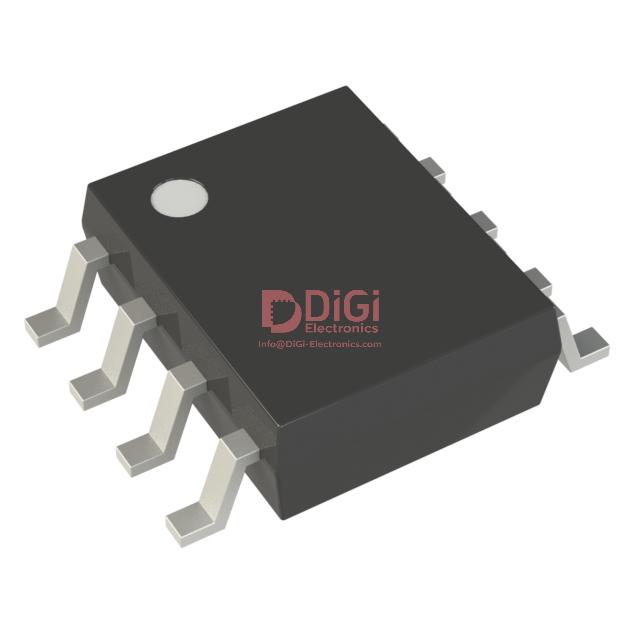
The STM706RAM6F is offered in two distinct package configurations tailored for varied board design requirements. The primary format utilizes the SO8 (Small Outline Integrated Circuit, 8-lead) plastic package, characterized by its 150-mil body width. This dimension, paired with a standard lead pitch, promotes robust solder joint formation and maintains compatibility with automated pick-and-place operations—a recurring necessity in high-throughput board assembly lines. The SO8’s mechanical stability and well-established footprint further streamline debugging and reliability analysis, especially during thermal cycling or vibration testing.
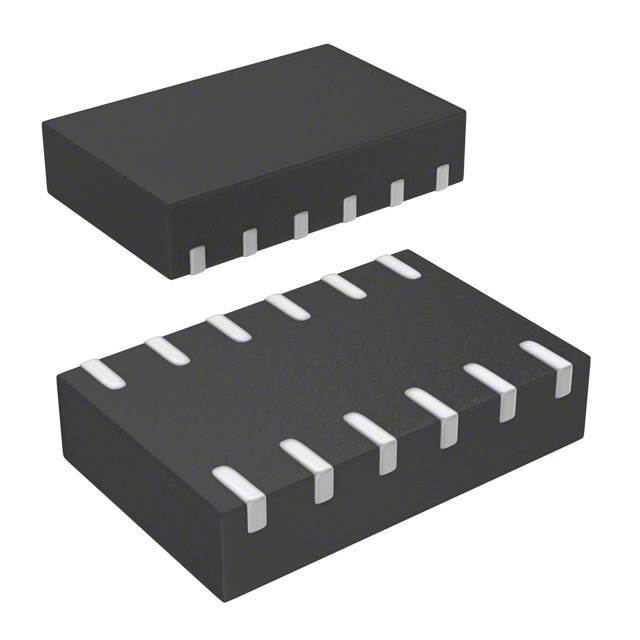
An alternative format, the TSSOP8 3x3mm thin shrink package, conserves PCB real estate through its reduced lateral dimensions while maintaining electrical performance. This miniaturized profile addresses constraints encountered in dense layouts, such as portable or battery-powered subsystems, where saving even a few square millimeters can impact the final product’s size and weight. Despite its compact form, the TSSOP8 offers adequate lead accessibility for optical inspection, which eases quality assurance for assembly lines emphasizing visual verification or automated X-ray analysis.
Both the SO8 and TSSOP8 meet stringent ECOPACK and RoHS directives, signaling their exclusion of hazardous substances and alignment with evolving international environmental policies. Such compliance is not merely regulatory, but directly influences supply chain sustainability and long-term product availability—critical parameters in selecting components for platforms intended for extended production cycles or demanding green certifications.
During PCB development, precise reference to the manufacturer’s mechanical drawings and footprint recommendations is essential. Deviations commonly arise when transitioning between package types or when optimizing trace impedance and thermal paths. A subtle but prevalent design pitfall involves neglecting the influence of solder mask expansion in tightly packed layouts, occasionally compromising manufacturing yield or electrical integrity. Meticulous adherence to the given land pattern specifications resolves most first-pass assembly issues, while also facilitating automated optical inspection and rework scenarios.
Each package variant presents trade-offs. The SO8 excels in prototyping and socket-based workflows, owing to its robust leads and thermal profile, while the TSSOP8’s slender outline aligns with integration-driven products where board area and component stacking are major priorities. Selection typically derives from balancing spatial constraints, manufacturing capability, and reliability targets. Considering these elements, integrating the STM706RAM6F within diverse design topologies not only necessitates a technical understanding of its mechanical package details, but also a strategic approach to lifecycle and compliance planning.
Potential equivalent/replacement models for the STM706RAM6F
Selection of equivalent or replacement supervisors for the STM706RAM6F requires a precise understanding of the device’s functional core and electrical characteristics. The STM706RAM6F is a voltage supervisor integrating essential functions such as power-supply monitoring, manual reset, and watchdog timing with a specified reset threshold and output polarity. Within the same STM70x series, alternatives like the STM706T, STM706S, and STM706R offer functional parity, differing primarily in reset threshold voltages or polarity options. This allows tuning supervisory action to the system’s supply voltage stability and logic requirements, enabling targeted optimization for various MCU families or voltage domains.
The choice of STM706P emphasizes interface adaptability through its active-high reset output, directly matching systems deploying positive-logic reset schemes. This attribute enhances flexibility in mixed-logic environments, facilitating seamless substitution where minimal redesign of control logic is desired.
When extending the search beyond the STM70x line, several parameters become mission-critical in cross-vendor evaluations. Precise alignment of the reset threshold ensures consistent undervoltage detection, as undervalue can compromise startup or cause indeterminate MCU states, while overvalue may lead to unintended resets. Integrating a watchdog timer necessitates matching the timeout period closely; variations can inadvertently mask or misdetect firmware stalls, impacting system reliability.
Power-fail warning capability emerges as a non-trivial discriminator, especially within data-retentive architectures. A supervisor supporting early power-fail indication allows pre-shutdown data handling, mitigating corruption risk during erratic supply behavior. Package compatibility, although seemingly logistic, intersects with board design constraints such as pin-out compatibility, mounting technology, and thermal performance. A mismatch may introduce costly board rework or signal integrity concerns in high-speed designs.
Datasheet diligence cannot be overstated; even among “drop-in” replacements, nuances in operating temperature range, ESD rating, or quiescent current may become significant in low-power or harsh-environment applications. Empirical validation in target system boards often reveals subtle behavioral discrepancies—such as reset pulse duration or propagation delay variance—under dynamic load or brownout conditions. These nuances, rarely apparent in spec sheets, determine actual system robustness.
Ultimately, while parametric matching provides a strong initial filter, long-term system integrity depends on anticipating circuit tolerances, interface conventions, and operational edge cases. Layered selection criteria, verified across schematic, PCB, and in-situ test perspectives, yield the most resilient substitution strategies for supervisory circuits in embedded platforms.
Conclusion
The STM706RAM6F Supervisor IC exemplifies a robust protection architecture for embedded microprocessor and logic designs. It integrates voltage monitoring, watchdog timer, manual reset, and power-fail detection into a single, low-power component. This coalescence of functions directly addresses the key failure modes encountered in digital systems—undervoltage operation, software hang conditions, and unpredictable supply interruptions—by providing assurance of system integrity without complicating the signal chain or inflating resource budgets.
At the circuit level, precision voltage detector thresholds safeguard against supply sags that could cause indeterminate processor behavior or data corruption. The device initiates reset pulses when voltage falls below preset values, guaranteeing startup and operation within safe voltage margins. Practical deployment has shown that strict threshold adherence maintains system reliability, especially across variable loads and fluctuating input sources common in industrial environments. Consistently, engineering choices favor the STM706RAM6F for its minimal quiescent current—a decisive factor for battery-powered and low-energy platforms—enabling extended operational lifecycles.
The built-in watchdog timer enables periodic validation of software responsiveness. By requiring firmware to reset the watchdog within set intervals, fault conditions such as code lock-up or infinite loops trigger automatic system reset, streamlining fault recovery and mitigating downtime. Hands-on deployment reveals that tuning the watchdog interval to the application’s real-time constraints is vital, preventing both unnecessary resets and missed error conditions.
Manual reset input offers direct external control, simplifying debugging, system maintenance, and application-specific reset strategies. During prototyping, wiring the manual reset to external test points accelerates troubleshooting and validation, making the function not only a design safeguard but also a development tool.
Power-fail detection circuitry further extends resilience to anticipated loss scenarios. It flags imminent supply loss, granting system logic time to execute shutdown sequences or preserve critical data. This preemptive signaling proves indispensable in instrumentation and critical computing where graceful degradation is essential.
Physical packaging and pin compatibility with broader STM70x series devices enhance flexibility for design reuse and substitution. When alternate parts are required, engineering diligence applied to voltage thresholds and I/O polarity selection ensures system compatibility and uninterrupted performance in field deployment.
Subtle but significant, consolidating supervisory functions into the STM706RAM6F reduces external component demand and board space, streamlining BOMs and layout. This not only cuts costs but also strengthens signal fidelity by minimizing parasitic paths and layout complexity. Design teams leveraging this IC for new or retrofit applications observe increased MTBF and simplified compliance to industry safety standards.
System designers seeking foundational reliability and manageability frequently select the STM706RAM6F for applications spanning industrial controls, instrumentation interfaces, and embedded computing, where high uptime, safe recovery, and compact integration remain paramount. The device architecture underscores a preferred systems-level approach: using intelligent signal supervision as a core reliability strategy, rather than as an add-on, ensures that platforms meet operational and regulatory requirements with lasting efficiency.