 >
>


Product overview – STM32L412R8T6 Microcontroller
The STM32L412R8T6 microcontroller, anchored by the ARM Cortex-M4 core with a clock speed of up to 80 MHz, exemplifies an optimized convergence of computational throughput and energy conservation. Distinct architectural choices drive its ultra-low-power profile: multiple dynamic power domains, advanced clock gating, and a finely granulated power management unit ensure that inactive modules draw negligible current. This microcontroller further incorporates stop and standby modes, dramatically reducing consumption during system inactivity, and facilitating rapid wake-up—critical for both battery-powered devices and duty-cycled sensor networks.
Embedded within its 64 KB flash and 40 KB SRAM is a fault-resilient approach to memory management. The integration of parity checking at the hardware level significantly bolsters data integrity, particularly important in medical, industrial, and safety-oriented applications where silent corruption poses operational risks. Practical field deployment has highlighted the value of this feature within data-logging systems subject to electromagnetic disturbances, where the prompt detection of single-bit errors contributes directly to system stability.
The device’s robust analog and digital peripheral set enables efficient signal acquisition and processing pipelines. Key modules—such as a fast 12-bit ADC, multiple low-power timers, configurable GPIOs, and versatile communication interfaces (I2C, SPI, UART)—coalesce to support mixed-signal measurement and control. The ADC, with its flexible trigger sources and sampling speeds, enhances responsiveness in environmental monitoring, while the hardware cryptography and CRC generators provide security and reliability in wireless and IoT contexts. Embedded engineers commonly exploit these features in asset tracking nodes, using low-power timers and wake-up logic to schedule sensor reads and radio transmissions at precise intervals, thus maximizing operational life on limited energy reserves.
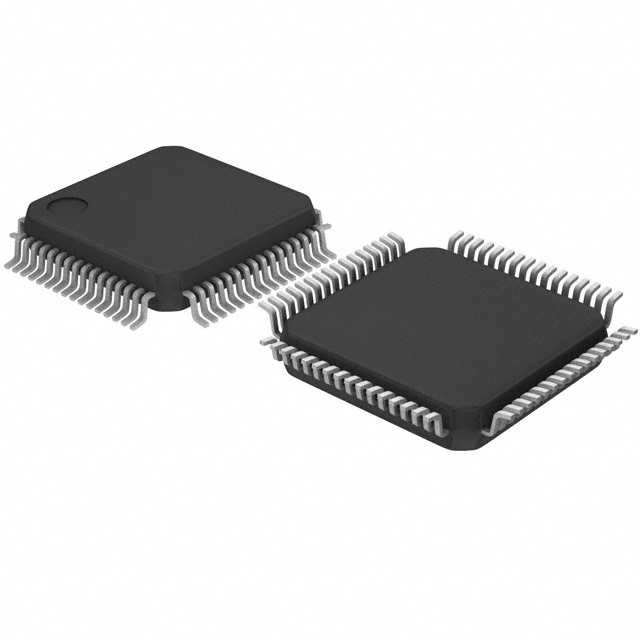
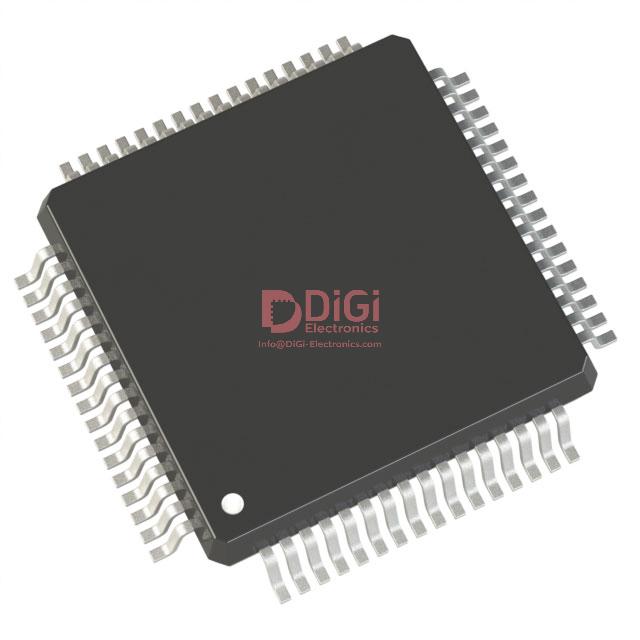
From a design integration standpoint, the compact 64-LQFP (10×10 mm) form factor simplifies PCB layout for space-constrained scenarios without sacrificing thermal efficiency or pin accessibility. The MCU's compatibility with a wide supply range and its tolerance to voltage fluctuations ease the task of power supply design, which is especially advantageous in applications that harvest or scavenge energy from varied sources.
A consistent theme emerges in deploying the STM32L412R8T6 within distributed embedded systems: the ability to strategically trade computation speed, peripheral activity, and memory use against power budget, all within a tightly unified hardware platform. By aligning system-level design with the device's granular power states and reliable memory safeguards, engineers achieve both functional richness and extended maintenance cycles. In edge AI or real-time sensor fusion deployments, the Cortex-M4’s DSP instruction set and FPU can be leveraged for local signal filtering, classification, or control loop closure—remarkably, without exceeding stringent energy constraints. This demonstrates that with thorough architectural understanding and methodical exploitation of hardware features, demanding applications in wearables, precision agriculture, and portable instrumentation can be realized with superior efficiency and resilience.
Core architecture and processing features – STM32L412R8T6
The STM32L412R8T6 leverages an ARM Cortex-M4 CPU equipped with an integrated floating-point unit, enabling high-precision computational tasks often encountered in advanced signal processing workflows. DSP instruction extensions, combined with the hardware FPU, facilitate efficient execution of complex algorithms such as digital filtering and spectral analysis, thus expanding applicability in domains where both processing throughput and numerical accuracy are critical. Performance is further elevated by the inclusion of the Adaptive Real-Time Accelerator (ART Accelerator™), a subsystem that minimizes memory access latency by allowing zero-wait-state instruction fetches directly from embedded flash. This architecture produces deterministic execution profiles, reducing jitter in control loops and real-time data acquisition systems.
Memory management and subsystem safety mechanisms are engineered through the integration of a hardware memory protection unit (MPU), providing granular access control to memory segments and safeguarding against errant code execution. The CRC unit underpins integrity validation across firmware and data transactions, presenting a hardware-assisted solution for rapid error detection in communication or storage layers. A flexible interconnect matrix orchestrates peripheral access, permitting concurrent communication between the CPU core and multiple hardware blocks without resource contention. This arbitration strategy enhances multitasking efficiency, particularly in systems with simultaneous sensor acquisition, signal processing, and control output requirements.
Deployment in industrial sensor nodes and medical instrumentation demonstrates immediate benefits: the zero-latency flash execution yields stable real-time response, critical for time-sensitive measurements and control outputs. Adaptive resource allocation by the interconnect matrix mitigates latencies during periods of high peripheral demand, preserving task determinism and system throughput. Reliability features—such as the MPU and CRC unit—simplify compliance with regulatory standards and reduce development effort for fault-tolerant designs.
Subtle synthesis of computation, memory management, and data integrity protection reflects a holistic design philosophy. The architecture encourages streamlined firmware development by abstracting low-level hazard protection and resource arbitration, ultimately enabling robust application deployment in space- and power-constrained embedded systems. Continuous exposure to diverse deployment scenarios reinforces the importance of integrating deterministic execution, safety constructs, and flexible resource sharing, especially when scaling from simple sensing tasks to multi-modal embedded processing environments.
Memory subsystem and protection – STM32L412R8T6
The STM32L412R8T6 microcontroller integrates a thoughtfully architected memory subsystem, balancing code integrity, robust isolation, and data resilience. At its core lies a 64 KB single-bank embedded flash, optimized for code execution with advanced proprietary readout protection. This mechanism not only prevents unauthorized extraction of critical firmware but also supports secure over-the-air updates and facilitates compliance with evolving IoT security standards. The fine-grained readout protection levels allow flexible configuration, adapting security postures to different engineering scenarios, from full mass erase protection during production to selective debug enablement in development phases.
Complementing the flash, the device incorporates 40 KB SRAM, architected for both performance and resilience. Eight kilobytes of this SRAM section leverage hardware-based parity checking, providing a first line of fault tolerance against soft errors—an essential feature in applications sensitive to electromagnetic interference or operating in harsh environments. This design allows for critical variable allocation within the parity-protected region, ensuring error detection without significant CPU intervention or performance compromise.
Memory accessibility and compartmentalization are supported through a sophisticated memory mapping scheme. Fixed address spaces streamline code design, while flexible remapping facilitates bootloader deployment and secure firmware update. The integrated memory protection unit (MPU) and firewall mechanism enforce execution barriers between trusted and untrusted regions, offering tangible mitigation against runtime attacks such as stack smashing or code injection. The firewall architecture, in particular, ensures that protected code and data segments remain isolated—even during DMA operations—enabling developers to partition application logic and sensitive assets effectively.
Persistent system context is preserved using dedicated backup registers. These registers retain stored values through low-power states and after most reset events, enabling reliable management of security keys, sensor calibration data, or system state indicators. This retention capability is especially relevant for mission-critical applications where state recovery and minimal downtime are paramount.
Addressing nonvolatile data requirements, the microcontroller extends EEPROM-like emulation within its flash subsystem, underpinned by proprietary, endurance-optimized flash technology. This approach simplifies the storage of user configuration parameters and device identification fields without the complexity of discrete EEPROM hardware. In practice, the flash-based emulation supports atomic writes and reliable cycling, achieving a pragmatic compromise between write endurance, latency, and simplified PCB design.
A nuanced appreciation emerges when interleaving these elements: the STM32L412R8T6’s memory subsystem forms a coherent, engineer-oriented foundation, balancing stringent security features, structured error detection, and versatile memory mapping. This inherently supports streamlined integration in compact IoT end nodes, medical instrumentation, and industrial field devices, where nonvolatile data integrity, runtime isolation, and rapid state restoration are vital project requirements. Such specific partitioning of memory functions underscores a design philosophy geared toward minimizing system-level risk while maintaining development agility and long-term reliability.
Power management and low-power operation – STM32L412R8T6
Power management forms the core of the STM32L412R8T6 microcontroller’s architecture, engineered for superior energy efficiency under diverse workload and operating conditions. The device’s FlexPowerControl framework allows stable performance across a broad supply range (1.71 V to 3.6 V), ensuring adaptability to various power sources, including depleted batteries and fluctuating rails in portable use cases. This flexibility streamlines integration into hardware platforms requiring both longevity and robust safety margins, mitigating risks associated with voltage drops or transients without board-level intervention.
At the foundation of its low-power reputation are meticulously architected operational states. Shutdown mode achieves an industry-leading current draw near 16 nA, effectively preserving critical state for persistent applications such as asset tracking beacons during prolonged inactivity. Transitioning to Standby mode (32 nA standard, 245 nA with RTC retention), the microcontroller maintains essential timekeeping or minimal data preservation, enabling functionality such as scheduled, time-based resume or low-duty-cycle sensor sampling—a pattern encountered in smart meters and autonomous sensor nodes.
The Stop modes, offering as low as 0.7 μA consumption, reveal a balanced compromise for applications demanding periodic system reactivity while still extending operational lifetime on constrained energy budgets. Design practice leverages these deep sleep states to minimize average current: event-driven firmware selectively enters Stop mode during idle periods, interfacing with wake sources (GPIO, timers, or communication peripherals) to resume activity with a minimal 4 μs latency. This wake-up time, competitive even among contemporary ultra-low-power MCUs, supports interactive operations such as gesture recognition or instant touch response in medical wearables, where latency is tightly bounded.
Run modes offer further granularity through selectable power conversion subsystems. In linear LDO mode, efficiency at 79 μA/MHz enables reliable operation where simplicity and predictability are prioritized. Alternatively, use of the internal Switched-Mode Power Supply (SMPS) lowers runtime consumption dramatically to 28 μA/MHz, which directly extends device lifetime in energy harvesting or coin-cell powered deployments. Firmware strategies often exploit dynamic switching between LDO and SMPS based on workload and noise constraints, negotiating trade-offs between electromagnetic compatibility considerations and raw efficiency.
Practical deployment highlights the need for robust peripheral gating and selective clocking, as idle digital and analog blocks must be systematically powered down to capitalize on silicon potential. Architectural support for independent VBAT operation further reinforces resilience; battery-backed RTC and SRAM retention ensure operation continuity through main supply interruptions—a vital requirement in safety-critical domains and remote sensing arrays.
The STM32L412R8T6 exemplifies a mature, system-centric approach to low-power design, not merely by headline current figures but through the rich configurability in hardware and peripheral domains. Holistic power management—coupled with deterministic wake performance and adaptive run-time efficiency—empowers seamless migration from proof-of-concept prototypes to volume production in battery- and energy-constrained verticals. This layered approach, combining granular power states with crisp architectural interventions, illustrates the evolution of embedded systems toward true ultra-low-power intelligence.
Analog and mixed-signal capabilities – STM32L412R8T6
The STM32L412R8T6 demonstrates a tightly integrated analog and mixed-signal architecture tailored for high-performance sensor interfaces and precise signal conditioning. At its core, dual 12-bit ADC units deliver up to 5 Msps throughput, supporting rapid acquisition of fast-changing signals. Hardware-driven oversampling upgrades resolution to 16 bits, effectively lowering quantization noise and enhancing measurement accuracy, particularly in applications where subtle signal variations must be discerned reliably. An embedded operational amplifier, featuring programmable gain, accommodates a broad range of sensor outputs, ensuring optimal signal scaling before digitization. This flexibility proves especially advantageous when interfacing with sensors whose output spans low to high amplitudes or presents impedance-matching challenges.
A dedicated analog comparator facilitates threshold-based event detection, markedly reducing processor overhead for time-critical operations such as motor position monitoring or environmental transitions. Coupled with advanced, on-chip temperature and voltage monitoring functions, systems benefit from improved reliability—vital when deploying the MCU in medical diagnostics equipment or distributed industrial control nodes where self-diagnostics and real-time feedback constrain downtime.
The integrated capacitive touch controller extends analog capabilities beyond measurement into interactive HMI domains, supporting up to twelve distinct channels. This design enables complex user interfaces, including touchkeys, sliders, and rotary controls, without resorting to external ICs. Achieving stable touch sensing in industrial environments often requires adaptive baseline management and effective noise rejection strategies; the STM32L412R8T6’s low-leakage inputs and configurable filters streamline these requirements, minimizing false triggers across varying humidity and EMI conditions.
In practice, deploying the ADC in oversampling mode significantly boosts low-level sensor accuracy, evident in precision thermistors used for vital sign monitoring where environmental noise can mask subtle changes. Likewise, leveraging the programmable op-amp permits streamlined PCB layouts—eliminating discrete amplifier channels—thus reducing component count and assembly complexity. Direct comparator output to the MCU’s interrupt lines facilitates low-latency alarm systems in process automation.
A notable insight emerges in the symbiotic interaction between these analog blocks. Signal conditioning via the op-amp, instantaneous event detection by the comparator, and high-speed ADC acquisition form a tightly coupled chain that delivers both rapid response and high fidelity. This architecture positions the STM32L412R8T6 as a singular solution for mixed-signal system requirements, offering both essential measurement accuracy and versatile peripheral integration. The layered approach to hardware flexibility, supported by robust application-driven features, ensures that system designers can achieve both optimization and scalability across diverse use cases.
Integrated connectivity and communication interfaces – STM32L412R8T6
The STM32L412R8T6 microcontroller presents a multi-layered communication framework designed to address the evolving demands of embedded systems. At its core, the device incorporates a suite of connectivity options: three independent I²C interfaces supporting Fast-mode Plus, SMBus, and PMBus standards; a triplet of USARTs with specialized protocol support for ISO 7816 (smart card interfacing), LIN (automotive communication), and IrDA (infrared data exchange); a dedicated low-power UART enabling efficient wake-up detection from sleep modes. These are complemented by two standard SPIs, as well as an advanced Quad SPI interface capable of higher throughput for external memory access or display control. The built-in USB 2.0 full-speed controller employs crystal-less operation with an integrated clock recovery system (CRS), streamlining hardware design for portable or space-constrained applications.
This diverse portfolio of protocols enables seamless integration across various communication paradigms. In fieldbus networks, the STM32L412R8T6’s comprehensive I/O capabilities—featuring up to 52 fast pins, most of which tolerate 5 V signals—facilitate robust interaction with legacy systems and industrial-grade peripherals. The infrared interface provides additional flexibility for remote data exchange in environments where wireless or optical transmission is preferred. Meanwhile, the low-power UART and wake-up logic contribute to energy-optimized topologies, a key consideration for battery-operated endpoints and sensor nodes.
Practical deployment often leverages the microcontroller’s multi-protocol USARTs, programmable pin mapping, and external interrupt functionalities. For instance, multi-protocol gateways in industrial automation utilize concurrent USART and SPI channels to bridge disparate subsystems—enabling parallel processing of smart card authentication, diagnostic LIN traffic, and real-time data acquisition from SPI-connected ADCs. The crystal-less USB, backed by the CRS, reduces bill of materials complexity while maintaining reliable enumeration in consumer electronics, simplifying compliance with USB standards in cost-sensitive designs.
Experience suggests that the combination of high I/O count and voltage tolerance is instrumental when retrofitting or upgrading fieldbus installations, where signal levels and protocol standards can vary unpredictably. Interfacing with both 3.3 V and 5 V domains in mixed-signal environments, engineers benefit from the microcontroller’s electrical resilience, minimizing the need for external level shifters and enhancing long-term reliability. The ability to simultaneously deploy multiple serial buses—each with customizable speed and protocol layer support—creates an architecture well-suited for scalable modular solutions, such as distributed automation panels or smart instrumentation.
From a design perspective, tightly coupling SPI or Quad SPI memory accesses with interrupt-driven communication routines on USARTs streamlines time-critical operations, especially in applications requiring deterministic response or secure data handling. The STM32L412R8T6’s coherent integration of connectivity and peripheral features promises reduced latency, higher throughput, and simplified software development cycles for multi-protocol edge nodes. The inclusion of features such as crystal-less USB and FM+ I²C further implies readiness for compact and mobile device categories, where component count and physical space are limiting factors.
Overall, this device exemplifies a platform engineered for versatility and integration. Its layered communication architecture not only facilitates interoperability across established and emerging protocols but also enables the synthesis of new application classes in industrial and consumer domains. The strategic provision of high-performance interfaces—optimized for both speed and energy efficiency—positions the STM32L412R8T6 as a foundational element in next-generation embedded systems, driving architectures that prioritize flexibility, scalability, and reliability.
Timers, watchdogs, and real-time control – STM32L412R8T6
Timers, watchdogs, and real-time control on the STM32L412R8T6 are orchestrated to address distinct requirements in embedded system design, particularly where determinism and reliability are non-negotiable. At the foundation, the device integrates multiple timer modules, each architected for targeted roles within a layered control framework. The 16-bit advanced timer stands out with its enhanced event-generation logic and complementary PWM outputs, supporting sophisticated applications such as three-phase motor control or precision actuator drive. Its dedicated hardware dead-time insertion, programmable break inputs, and synchronization mechanisms reduce CPU intervention and enable robust response to critical events, enhancing system safety especially in power electronics.
General-purpose timers, accessible via flexible input capture and output compare channels, facilitate accurate measurement of input pulse widths, frequency counting, and generation of any time-based waveform. This flexibility is vital for sensor interfacing and protocol emulation, where microsecond timing granularity preserves signal integrity under variable processing loads. Low-power timers extend this capability during deep sleep and stop modes, sustaining duty-cycled peripheral activity while balancing energy consumption, which is crucial in battery-constrained deployments. The configuration options allow seamless migrations from full-performance to low-power operation, manifesting in practical scenarios like adaptive sensor polling in periods of inactivity.
Basic timers provide programmable intervals for system tick generation or background housekeeping, decoupling routine tasks from mainline application flow. This segregation streamlines real-time performance by relegating low-priority activities and interrupts.
Safety and system integrity leverage two distinct watchdog circuits. The independent watchdog (IWDG) operates on a discrete RC oscillator, immune to main clock failures, ensuring recovery from runaway code or peripheral lockup. The window watchdog (WWDG) imposes constraints on refreshing cadence, catching both stalling and errant fast refresh cycles, thereby detecting a broader class of software anomalies. Proper implementation demands disciplined refresh logic encoding in health indicators or main loop checkpoints, leading to faster recovery from transient or latent faults—a principle validated in field deployments where unexpected resets pinpoint software regressions, enabling iterative improvement.
Real-time clock (RTC) operation persists across all low-power domains, maintaining sub-second accuracy through calendar, alarm, and fine-grained calibration controls. Clock source selection between LSE (Low-Speed External) crystal and LSI (Low-Speed Internal) oscillator allows trade-offs between precision and simple bill-of-materials. The RTC’s backup domain allows timestamp retention and independent alarm wake events, which is indispensable for applications such as IoT edge nodes requiring secure timestamping, periodic measurements, or autonomous scheduling in ultra-low-power states. Practical use cases benefit from the RTC’s tamper detection features, ensuring traceability, and its event routing capabilities, for waking up from shutdown upon external triggers—an elegant solution in remote data logging or asset management environments.
This structural layering of timers and watchdogs, tightly coupled with advanced power management and hardware redundancy, underpins a resilient real-time control architecture in the STM32L412R8T6. The design prioritizes maximum coverage for timing, safety, and low-power operation, addressing both immediate responsiveness and long-term field reliability. The integration strategy anticipates future scaling needs, offering a platform suitable for emerging embedded intelligence paradigms where time, energy, and dependability intersect.
Development support and debug features – STM32L412R8T6
The STM32L412R8T6 microcontroller delivers a tightly integrated suite of development support and debugging capabilities engineered for streamlined system prototyping and robust deployment. At its core, it employs industry-standard debug interfaces, notably SWD and JTAG, ensuring compatibility across a broad ecosystem of emulators and trace tools. These protocols facilitate granular access to internal resources and real-time inspection of register states, substantially accelerating firmware validation cycles. Complementing these, the Embedded Trace Macrocell™ (ETM) enables non-intrusive trace recording of program flow, allowing engineers to pinpoint bottlenecks and analyze intermittent faults with high temporal resolution, which is particularly valuable in event-driven embedded systems.
Device identification and lifecycle traceability are reinforced by a unique 96-bit device ID embedded into each chip. This hardware signature supports secure provisioning and batch tracking, simplifying the implementation of anti-counterfeit measures and in-field authenticity checks. The ID’s integration into the microcontroller’s silicon allows reliable fingerprinting within automated test benches or cloud-based device management solutions, eliminating the risk of duplication and facilitating secure firmware distribution channels.
For development acceleration, the microcontroller incorporates a multi-channel DMA engine. The fourteen independent channels enable parallel, CPU-free data movement across peripherals—such as ADC, UART, SPI, and memory blocks. This architecture minimizes interrupt overhead and frees up processing cycles for higher-level control logic, resulting in measurable improvements in power consumption and responsiveness. In practical deployment, configuring the DMA to propagate sensor data directly to memory at high sampling rates reduces latency and elevates system throughput without sacrificing deterministic behavior.
Robustness against software faults and security breaches is maintained through integrated code integrity mechanisms. The STM32L412R8T6 features a hardware-enforced firewall, which segments memory space and peripheral access, containing errant or malicious code execution within defined boundaries. This partitioning is indispensable in safety-critical designs, where isolation of system domains constrains the attack surface and simplifies certification. In tandem, the CRC calculation module allows real-time validation of received or stored data packets, enforcing end-to-end data integrity checks that are typical in industrial control or medical instrumentation. These capabilities embody an architecture that anticipates both efficiency and resilience, indicating a design philosophy aligned with contemporary embedded system requirements.
Experience indicates the greatest engineering leverage emerges when debug and integrity features are orchestrated to perform concurrent diagnostics during runtime, rather than as isolated validation stages. Deploying DMA-triggered data acquisition while ETM trace records execution patterns, in concert with periodic CRC checks, streamlines fault isolation and expedites reliability assessments. This multi-layered integration not only shortens development timeframes but also enhances long-term system maintainability.
Physical, environmental, and compliance details – STM32L412R8T6
The STM32L412R8T6, housed in a compact 64-pin LQFP, integrates advanced packaging choices with strict adherence to environmental and safety mandates. The LQFP form factor ensures efficient board utilization, facilitating high-density layouts and reducing overall device footprint, which streamlines both prototyping and volume production processes. Tolerance to ambient temperatures between –40°C and +85°C directly addresses the demands of industrial automation, data acquisition, and outdoor consumer electronics, where components must maintain full reliability despite significant thermal cycling.
Environmental compliance is addressed comprehensively. The part achieves RoHS3 and REACH conformance without compromise in electrical performance, aligning with global directives and reducing risks in export-oriented system designs. Its Moisture Sensitivity Level 3 (168 hours) aligns with typical surface-mount production flows, supporting cost-effective reflow soldering while imposing reasonable controls on package exposure prior to processing. This enables seamless integration into automated assembly lines, eliminating unexpected failures due to moisture absorption and popcorning during reflow.
Electrical robustness is a design highlight. Operating from a single supply voltage, the STM32L412R8T6 integrates on-chip regulators and features brown-out detection circuitry. This combination not only reduces external component count but also improves system tolerance to power supply fluctuations. Under volatile supply or transient conditions typical in harsh or mobile environments, the brown-out protection mitigates risk of unpredictable behavior, ensuring fail-safe operation. In this manner, the device architecture reduces engineering overhead in power integrity analysis, improving both time-to-market and long-term field robustness.
Practical deployments in sensor interfaces and field controllers validate these hardware protections. The internal voltage regulation allows close integration with low-noise analog front-ends, while stable operation is observed even under repeated exposure to surge or brown-out events. The underlying reliability results from careful co-optimization of silicon process, package design, and system-level electrical safeguards, minimizing design margin uncertainties.
A notable insight emerges from the embedded system context: integrating environmental and compliance features at the device level directly translates to fewer design constraints at the system level, supporting wider deployment scenarios and reducing total lifecycle costs. This makes the STM32L412R8T6 particularly suitable for edge applications where board real estate, supply chain assurance, and maintenance intervals are tightly constrained.
Potential equivalent/replacement models – STM32L412R8T6
An in-depth evaluation of potential equivalent and replacement models for the STM32L412R8T6 requires understanding the fundamental microcontroller architecture and examining the nuanced differences within the STM32L412 series. All STM32L412 variants share a common ARM Cortex-M4 core and feature similar low-power operation modes, making cross-compatibility in both firmware and hardware achievable with minimal adaptation. Selection within the L412 series—such as STM32L412CB, STM32L412KB, STM32L412RB, or their specific memory configurations like STM32L412C8 and STM32L412K8—primarily hinges on parameters such as FLASH/RAM sizing, package form factor, and number of I/O lines. Pin-compatible devices like the STM32L412RB simplify replacement in board layouts, while more compact packages (e.g., STM32L412KB) benefit dense sensor modules or space-constrained designs.
Assessing beyond the immediate family, devices in the wider STM32L4 range introduce expanded capabilities. Models with increased FLASH memory or richer peripheral sets, including enhanced USB support or additional ADC channels, offer a future-proofing strategy while maintaining software portability across the L4 architecture. Integrating these alternate devices is facilitated by STM32CubeMX and HAL/LL libraries, which abstract hardware differences and mitigate porting effort. In practice, application-driven requirements—such as heightened computational needs for signal processing or extended connectivity for IoT gateways—often motivate migration to these higher-tier parts.
The decision process benefits from prototyping with generic evaluation boards, where side-by-side benchmarking clarifies distinctions in power consumption, wake-up times, and peripheral response under real workload conditions. Pinout mapping tools and flexible clock tree configurations further ease hardware transitions between models. Ultimately, striking an optimal balance between feature set, bill-of-materials cost, and long-term supply continuity determines the preferred alternative. Anticipating potential end-of-life notifications or extended lead times can be mitigated by maintaining a shortlist of drop-in compatible MCUs and modularizing firmware to accommodate marginal hardware variations. A design philosophy that prioritizes cross-family interoperability not only cushions supply chain volatility but also permits rapid scaling and adaptation as project requirements evolve.
Conclusion
The STM32L412R8T6 microcontroller exemplifies the convergence of low-power architecture and robust processing resources, meeting the most demanding requirements of deeply embedded systems. At its core lies the Arm Cortex-M4 processor, equipped with a single-precision FPU and optimized instruction sets that facilitate DSP operations directly in hardware. This results in streamlined real-time signal processing within power-sensitive applications such as wearables, portable medical devices, and industrial IoT nodes. The deterministic response profile, coupled with a fast wake-up from stop modes, extends battery lifespans without sacrificing computational precision or throughput.
Integrated analog-mixed signal peripherals—including high-resolution ADCs, DAC, comparators, and ultra-low-power timers—address the complexities of sensor interfacing and analog front-end conditioning. These components are engineered to minimize leakage and parasitic power consumption while maintaining high accuracy, thereby reducing system cost and design overhead often encountered in discrete solutions. The advanced direct memory access (DMA) controller enables seamless data movement between peripherals and memory, offloading the CPU and boosting overall system efficiency in real-time tasks.
Onboard memory protection units and flexible memory mapping reinforce software reliability and safety, preventing common runtime faults and containing errant behaviors. This hardware-level security is essential in firmware-over-the-air architectures and environments subject to faults or field updates. Runtime stability is further enhanced by robust clock supervision, integrated brownout reset, and error detection mechanisms, collectively forming a comprehensive strategy for autonomous fault response.
Connectivity is a critical dimension, and the STM32L412R8T6 offers extensive options—ranging from high speed SPI and I²C to low-power USART and multi-channel DMA triggering. These interfaces accommodate a wide spectrum of external components, complex networks of digital sensors, and communication with other controllers or gateways. Secure boot, true random number generation, and cryptographic acceleration safeguard data integrity and device authentication, vital in edge-core transactional systems where privacy and trust are essential.
The microcontroller benefits from compliance with industrial and medical standards, underscoring its suitability for regulated environments. Pin-to-pin and package compatibility across the STM32L4 family yields significant design agility, facilitating upgrades or modifications without PCB redesign and supporting modular product strategies. This cross-compatibility, allied with a mature software ecosystem of HAL drivers and middleware, accelerates both prototyping and scaling in production environments.
Incremental experience has proven that meticulous attention to low-leakage board design, coupled with leveraging deep-sleep states and peripheral gating, unlocks substantial real-world current savings. Tuning internal voltage regulators, exploiting power domains, and minimizing wake-up latency are practical engineering levers frequently deployed for challenging energy budgets in battery-operated deployments.
The STM32L412R8T6 thus occupies a strategic position for those seeking to balance power, integration, and reliability. Its architecture enables high-frequency data processing and decision-making at the edge without a trade-off in operational endurance, outlining the path toward scalable and adaptive embedded platforms that can evolve parallel to emerging application requirements.