STLED524 >
STLED524
STMicroelectronics
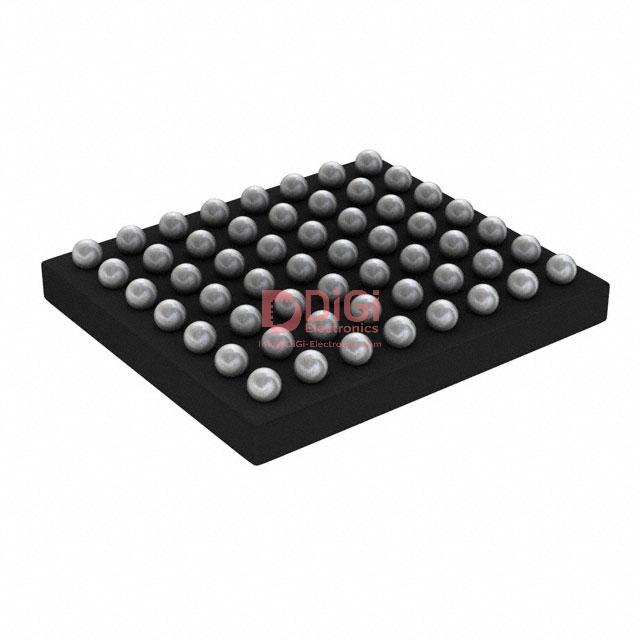
IC DRVR DOT MATRIX 56CSP
16612 Pcs New Original In Stock
LED Driver 56-CSP (3.4x3.0)
Request Quote (Ships tomorrow)
*Quantity
Minimum 1
STLED524 STMicroelectronics
5.0 / 5.0 - (69 Ratings)

STLED524

Product Overview

8177997

DiGi Electronics Part Number

STLED524-DG
STLED524

Description

IC DRVR DOT MATRIX 56CSP

Inventory

16612 Pcs New Original In Stock
LED Driver 56-CSP (3.4x3.0)
Quantity
Minimum 1

Purchase and inquiry

Quality Assurance

365 - Day Quality Guarantee - Every part fully backed.

90 - Day Refund or Exchange - Defective parts? No hassle.

Limited Stock, Order Now - Get reliable parts without worry.

Global Shipping & Secure Packaging

Worldwide Delivery in 3-5 Business Days

100% ESD Anti-Static Packaging

Real-Time Tracking for Every Order

Secure & Flexible Payment

Credit Card, VISA, MasterCard, PayPal, Western Union, Telegraphic Transfer(T/T) and more

All payments encrypted for security

In Stock (All prices are in USD)
  • QTY Target Price Total Price
  • 1 1.6405 1.6405
Better Price by Online RFQ.
Request Quote (Ships tomorrow)
* Quantity
Minimum 1
(*) is mandatory
We'll get back to you within 24 hours

STLED524 Technical Specifications

Category Power Management (PMIC), Display Drivers

Manufacturer STMicroelectronics

Packaging Cut Tape (CT) & Digi-Reel®

Series -

Product Status Active

Display Type LED

Configuration Dot Matrix

Interface SPI

Digits or Characters -

Voltage - Supply 2.7V ~ 5.5V

Operating Temperature -30°C ~ 85°C

Mounting Type Surface Mount

Package / Case 56-UFBGA, CSPBGA

Supplier Device Package 56-CSP (3.4x3.0)

Base Product Number STLED524

Datasheet & Documents

HTML Datasheet

STLED524-DG

Environmental & Export Classification

RoHS Status ROHS3 Compliant
Moisture Sensitivity Level (MSL) 1 (Unlimited)
REACH Status REACH Unaffected
ECCN EAR99
HTSUS 8542.39.0001

Additional Information

Other Names
497-14898-6
497-14898-1
497-14898-2
Standard Package
5,000

Reviews

5.0/5.0-(Show up to 5 Ratings)
Plum***gère
December 02, 2025
5.0
Service après-vente exceptionnel, leur équipe accompagne chaque étape avec courtoisie.
さく***の約束
December 02, 2025
5.0
コスパ良く、エコな包装も非常に気に入っています。
ほた***かり
December 02, 2025
5.0
アフターサービスが充実していて、安心して購入できます。
Brigh***rizons
December 02, 2025
5.0
Shopping on their website always feels safe and straightforward.
Fros***Light
December 02, 2025
5.0
The wide array of options combined with clear pricing makes DiDigital Electronics a reliable brand.
Golde***rizon
December 02, 2025
5.0
I always find their products to be of steady quality, which builds my confidence.
Whisp***ngWind
December 02, 2025
5.0
We are always impressed by how rapidly DiGi Electronics addresses our after-sales questions.
Free***wing
December 02, 2025
5.0
Every transaction with DiGi Electronics affirms their commitment to consistent quality.
Joyf***rails
December 02, 2025
5.0
The durability and reliability of DiGi Electronics' products make them a trusted choice for gamers.
Publish Evalution
* Product Rating
(Normal/Preferably/Outstanding, default 5 stars)
* Evalution Message
Please enter your review message.
Please post honest comments and do not post ilegal comments.

Frequently Asked Questions (FAQ)

How does the STLED524 handle thermal dissipation in high-density dot matrix LED designs, and what PCB layout practices should I follow to avoid overheating in compact displays?

The STLED524 manages thermal performance through its 56-CSP (3.4x3.0) package, which requires careful PCB thermal design due to limited surface area for heat dissipation. In high-current or high-brightness dot matrix applications, ensure at least 2 internal ground planes and use thermal vias under the exposed pad to transfer heat to the board's inner layers. Avoid placing nearby power components without thermal relief. For sustained operation near 85°C ambient, derate the maximum current per channel and monitor junction temperature using local thermal sensors if available. Poor thermal design risks dimming inconsistency or long-term reliability degradation in the STLED524’s driver array.

Can the STLED524 safely replace the MAX6966 in a legacy automotive display design, and what are the key interface and timing compatibility risks?

While both the STLED524 and MAX6966 drive dot matrix LEDs via SPI, direct replacement requires caution. The STLED524 operates at 2.7V–5.5V with SPI clock speeds up to 10MHz, whereas the MAX6966 has different register mapping and open-drain outputs, which may cause signal level incompatibility. Additionally, the MAX6966 supports individual LED current programming per channel, while the STLED524 uses grouped current control—potentially causing brightness mismatch in existing layouts. Carefully validate register settings, SPI polarity (CPOL/CPHA), and output drive strength to avoid flickering or incorrect illumination patterns. Test dynamic brightness transitions under voltage ripple conditions typical in automotive 12V systems.

What noise and EMI mitigation techniques should I use when integrating the STLED524 in portable medical display applications where signal integrity is critical?

Integrating the STLED524 in sensitive medical devices demands strict EMI control due to its switching LED current paths. Route SPI lines away from analog signals and use series damping resistors (22–33Ω) near the STLED524’s input pins to reduce high-frequency ringing. Place 100nF ceramic bypass capacitors as close as possible to each VDD pin, and add a 1–4.7µF bulk capacitor on the 3.3V rail to suppress transient spikes. Consider operating the STLED524 at a lower SPI clock frequency (<5MHz) to reduce harmonic emissions, and ensure the ground plane is solid beneath the 56-CSP footprint. Unshielded displays near ECG or EEG circuits can pick up switching noise, so validate EMI performance in the final enclosure with display at full brightness.

How does the operating temperature range of -30°C to 85°C impact the STLED524’s performance in outdoor LED signage, and are there risks of current drift or latch-up at temperature extremes?

The STLED524 is rated for -30°C to 85°C, making it suitable for many outdoor environments, but designers must account for thermal drift in LED forward current, which varies with junction temperature. At sustained high temperatures, the internal reference may shift, leading to brightness non-uniformity across large panels. In cold environments, startup delay can affect initialization via SPI—ensure the MCU holds reset active until the supply stabilizes. Avoid rapid power cycling in freezing conditions, as thermal stress on the CSPBGA package may exacerbate solder fatigue. Implement a soft-start routine in firmware and validate SPI communication stability across the full range using extended temperature testing. Also, monitor for potential latch-up in noisy outdoor power rails—add TVS diodes on the VDD line when used in 12V systems with inductive loads.

Is the STLED524 a drop-in replacement for the TI TLC5946 in constant-current LED string applications, and what are the implications of its dot matrix configuration on channel flexibility?

The STLED524 is not a direct replacement for the TLC5946 due to fundamental architectural differences. The TLC5946 offers 16 constant-current sinks with 12-bit PWM per channel, ideal for grayscale control in alphanumeric or graphic arrays, whereas the STLED524 is optimized for multiplexed dot matrix scanning with limited per-row current adjustment. If used in a static drive application, the STLED524 may exhibit lower brightness resolution and reduced grayscale fidelity. Additionally, the TLC5946 supports daisy-chaining via open-drain outputs, while the STLED524 relies on standard SPI—an incompatibility in legacy chains. For migration, redesign the PWM timing and current calibration routines, and simulate cross-talk between multiplexed rows to avoid ghosting in the display driven by the STLED524.

Quality Assurance (QC)

DiGi ensures the quality and authenticity of every electronic component through professional inspections and batch sampling, guaranteeing reliable sourcing, stable performance, and compliance with technical specifications, helping customers reduce supply chain risks and confidently use components in production.

Quality Assurance
Counterfeit and defect prevention

Counterfeit and defect prevention

Comprehensive screening to identify counterfeit, refurbished, or defective components, ensuring only authentic and compliant parts are delivered.

Visual and packaging inspection

Visual and packaging inspection

Electrical performance verification

Verification of component appearance, markings, date codes, packaging integrity, and label consistency to ensure traceability and conformity.

Life and reliability evaluation

DiGi Certification
Blogs & Posts
STLED524 CAD Models
productDetail
Please log in first.
No account yet? Register