


 >
>


Product overview – STIEC45-30AS STMicroelectronics TVS Diode Series
The STIEC45-30AS forms a critical element within the STMicroelectronics Transil TVS diode portfolio, optimized for high-reliability protection in modern electronic supply architectures. Its core functionality centers on clamping transient overvoltages to levels compatible with downstream semiconductor tolerances, directly mitigating risks from power line surges and electrostatic discharge events. Incorporated using the widely adopted SMC (DO-214AB) footprint, it matches established automated assembly processes and supports efficient board-level integration.
At the die level, the STIEC45-30AS employs a silicon avalanche breakdown architecture. This structure ensures minimal capacitance and ultrafast response times, essential for maintaining signal integrity while neutralizing rapid overvoltage transients. Operating unidirectionally, the diode is polarized for DC supply rail safeguarding, ensuring low leakage currents during steady-state operation and redirecting surge currents instantaneously during faults. This capability is explicitly validated for compatibility with IEC 61000-4-5 test pulses, giving quantified assurance for surge immunity in compliance-driven industrial designs.
Engineers often encounter challenges in balancing surge robustness with component footprint and parasitic loading. The STIEC45-30AS addresses these through its compact packaging and low clamping voltages, minimizing insertion loss even when deployed at multiple points within distributed power architectures. Its high surge handling enables reliable protection for sensitive ASICs, FPGAs, and precision analog front-ends, especially in environments prone to grid disturbances or inductive load switching.
Deep integration in power distribution backplanes, motor control modules, and industrial data concentrators highlights its suitability for high-availability systems. For instance, its use in PLC power block designs eliminates unnecessary derating, streamlining compliance qualification and simplifying inventory. One practical takeaway is its alignment with automatic pick-and-place and vapor phase soldering, reducing introduction effort and long-term maintenance.
Analyzing alternative TVS diode implementations reveals that the consistency of clamping behavior under repetitive surge stress distinguishes high-end products. The STIEC45-30AS exhibits superior energy absorption performance cycle after cycle, resisting degradation even under challenging pulse conditions. This resilience is crucial when long field life and scheduled maintenance are non-negotiable.
Integrating the STIEC45-30AS into protection strategies supports simplification at the architectural level. It enables designers to deploy fewer parallel surge paths, optimize PCB trace layouts, and reduce the requirement for post-installation troubleshooting. Over-specifying TVS arrays has traditionally been a risk mitigation tactic; however, leveraging a component with proven high-energy handling shifts design margins in favor of operational efficiency and footprint economy.
In summary, the STIEC45-30AS provides a key technical enabler for robust, scalable, and standards-compliant power protection, supporting advanced electronic system reliability in electrically harsh environments. Its architectural and practical attributes deliver measurable value within the engineering design cycle, from concept specification to repeated field operation.
Key product features and compliance – STIEC45-30AS STMicroelectronics TVS Diode Series
The STIEC45-30AS TVS diode series from STMicroelectronics is purpose-built to protect sensitive electronic circuits against high-energy transient disturbances, aligning with contemporary requirements for robust surge and ESD protection in industrial and automotive domains. Fundamentally, the device leverages a finely tuned silicon avalanche mechanism, supporting peak pulse currents of up to 500 A—validated against both 8/20 µs and 1.2/50 µs standards. This capability is enabled through optimized die geometry and metallization strategies, ensuring rapid energy absorption and minimal residual voltage during surge events.
At its core, the diode maintains a stand-off working voltage (VWM) of 30 V, allowing seamless integration into power supply rails common in both industrial and vehicular subsystems. Clamping characteristics, capped at 55 V, exhibit minimal overshoot under worst-case transient scenarios—a decisive factor for safeguarding downstream ICs from overvoltage-induced degradation. Leakage current performance is tightly controlled, measuring as low as 0.2 μA at room temperature and not exceeding 1 μA under elevated thermal loads (up to 85 °C). This low quiescent leakage directly contributes to reduced system standby power consumption, a persistent challenge in always-on control units and IoT sensor nodes.
Reliability is further bolstered by a maximum junction temperature rating of 150 °C, allowing deployment in environments with wide thermal excursions, such as engine bays, process automation cabinets, and outdoor installations. The robust thermal architecture is complemented by a flame-retardant resin rated to UL 94 V-0, mitigating ignition risks associated with board-level electrical faults.
Compliance is a cornerstone for market acceptance. The series fulfills IEC 61000-4-2 Level 4, with ESD immunity at up to 15 kV (air) and 8 kV (contact), catering to scenarios ranging from field servicing to consumer electronics interfaces. Common mode and differential mode surge withstand parameters align with IEC 61000-4-5, ensuring resilience against lightning-induced surges and switching transients on both single-ended and balanced lines. MIL STD 883G, method 3015-7 Class 3B, guarantees performance up to 25 kV in human body model simulations, a critical metric for defense, aerospace, and medical-grade equipment.
In terms of environmental stewardship and regulatory alignment, the device meets RoHS2 and REACH directives, ensuring unrestricted global distribution. This removes the compliance burden from project designers and expedites time-to-market in regulated geographies.
Drawing from empirical integration practices, the STIEC45-30AS demonstrates marked improvements in field failure rates when applied to exposed I/O ports, telecommunication feeders, and industrial controller interfaces. Its optimized footprint and thermal handling allow for seamless retrofits in legacy equipment without compromising board density or layout simplicity. Notably, the subtle interplay of ultra-low leakage with extended temperature endurance introduces a competitive edge in energy-sensitive applications where maintenance cycles are dictated by overall system longevity and operational costs.
A nuanced viewpoint emerges when considering the product’s surge handling under mixed-mode interference, where careful PCB layout—minimizing inductive traces and employing ground plane strategies—amplifies the inherent capabilities of the diode. Such best practices elevate immunity levels beyond datasheet maxima, underscoring the importance of holistic system engineering over rigid component selection. The STIEC45-30AS is thus positioned as a pivotal asset for designers seeking scalable, standards-compliant protection in advanced electronics architectures.
Electrical and thermal characteristics – STIEC45-30AS STMicroelectronics TVS Diode Series
Electrical and thermal characterization of the STIEC45-30AS TVS diode series centers on the interplay between its absolute maximum ratings and operational boundaries. Unidirectional clamping initiates when the applied voltage crosses the breakdown threshold (V_BR), resulting in a rapid escalation of reverse current that anchors the transient voltage near V_BR. During normal reverse-biased operation, this mechanism safeguards downstream components against voltage spikes, providing a well-defined energy dissipation path. Forward voltage clamping, occurring around 0.6 V, offers low forward drop, a trait leveraged for minimizing conduction losses when the diode operates in low-voltage bias environments.
Junction capacitance is vital in shaping the dynamic response of the device during high-frequency transients. Its value fluctuates as a function of both voltage polarity and the magnitude of reverse voltage. In practical filtering configurations, understanding how capacitance decreases with increased reverse bias is fundamental for tuning cutoff frequencies and suppressing noise within signal lines. These capacitance characteristics also influence how the diode responds to repeated surge events, impacting its long-term efficacy in both high-speed and power integrity applications.
Thermal management, a pivotal aspect in TVS deployment, is elucidated by the device's junction-to-ambient thermal resistance. This thermal pathway strongly depends on both the mounting configuration and the copper land area beneath each lead. Increased copper planes substantially reduce thermal resistance, improving pulse-handling capability. In circuit layouts where PCB area is restricted, iterative thermal calculations using datasheet values are a routine part of design optimization to ensure junction temperatures remain within safe operating limits after multiple surge events.
Behavior under varying junction temperatures is captured through the peak pulse current and leakage current profiles. As temperature rises, peak pulse current capacity diminishes—necessitating derating strategies in sustained high-temperature domains. Leakage current typically elevates with junction temperature, serving as an early indicator of degradation and influencing reliability models for mission-critical installations. Engineers often employ these characteristics in accelerated life testing, refining device selection for environments with aggressive thermal cycles or persistent overvoltage exposure.
Successful integration of the STIEC45-30AS requires balancing electrical robustness with thermal resilience. Devices with stable capacitance and low leakage current across wide temperature ranges prove advantageous in voltage-sensitive control systems and compact power architectures. It is essential to interpret datasheet metrics beyond nominal values, integrating layout, thermal, and frequency-dependent effects into comprehensive protection strategy modeling. Attentive alignment between PCB design, application-level requirements, and device characteristics yields enduring circuit protection and enhances system-level reliability.
Mechanical and packaging details – STIEC45-30AS STMicroelectronics TVS Diode Series
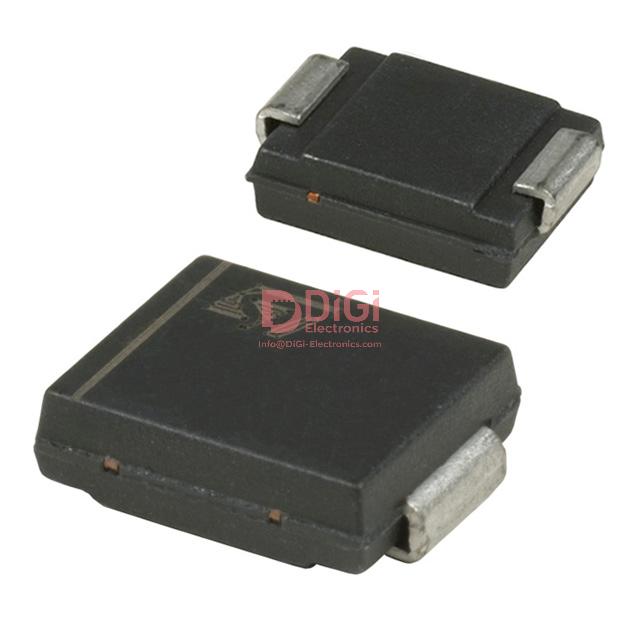
The STIEC45-30AS TVS diode from STMicroelectronics employs the JEDEC-registered SMC (DO-214AB) surface-mount package, engineered for reliability and process compatibility. This package is selected to optimize placement accuracy in automated SMT production, directly supporting high-speed pick-and-place machinery. Its form factor aligns with standard feeders and tape-and-reel systems, reducing setup times and mitigating the risk of misfeeds during assembly. Attention to the SMC footprint extends to IPC 7531-compliant land pattern recommendations, ensuring consistent solder spread and joint integrity across diverse PCB designs.
Packaging protocols adhere to EIA-481 and IEC 60286-3 standards, encompassing carrier tape geometry, reel dimensions, and precise polarity orientation data. This facilitates efficient reel tracking and minimizes handling errors during inventory and board population. Integration into existing supply chain systems is seamless, further assisted by ECOPACK® grade material selection to exceed environmental and regulatory benchmarks without compromising mechanical stability or reflow performance.
Soldering process guidance references IPC/JEDEC J-STD-020 profiles, equipping assemblers to calibrate thermal cycles for peak yield and to prevent component shift during the liquidus phase. The diode’s thermal mass is balanced for controlled heat absorption, minimizing susceptibility to warpage or tombstoning—conditions occasionally observed when reflow parameters are suboptimal with large pad geometries. Real-world deployment tests confirm the underlying mechanical robustness and repeatability of alignment across high-volume production runs, reducing post-solder inspection anomalies and lowering rework ratios.
A subtle but crucial aspect lies in the interplay between package structure and pick-and-place detectability. The SMC format’s distinct body outline, combined with manufacturer-provided orientation markers, reliably synchronizes automated optical inspection and placement verification. This design philosophy ultimately minimizes cumulative variances in densely populated layouts and supports traceability measures crucial to modern quality frameworks.
From a procurement perspective, the standardized packaging and compatibility certifications expedite qualification cycles and streamline cross-site logistics. The device’s integration into multi-vendor BOMs leverages its documentation and regulatory transparency, lowering onboarding hurdles encountered during rapid prototyping phases within distributed engineering teams.
In synthesis, the STIEC45-30AS series demonstrates tightly coupled mechanical, packaging, and environmental strategies that extend benefits from the factory floor to the quality assurance domain. Its architecture reflects an implicit convergence of manufacturability, logistical efficiency, and regulatory alignment—essential for sustaining reliability and cost-effectiveness in highly automated industrial contexts.
Application scenarios and engineering considerations – STIEC45-30AS STMicroelectronics TVS Diode Series
The STIEC45-30AS TVS diode leverages advanced planar fabrication techniques to deliver high junction reliability and minimal leakage current, attributes that directly translate to robust performance in environments experiencing frequent surge events. Underlying its suitability for DC power rail protection is its capacity to withstand and dissipate voltage transients inherent in the operational context of server infrastructure, telecom base stations, and industrial control modules. By aligning design parameters with IEC surge immunity requirements, the device maintains operational integrity in systems governed by stringent reliability standards.
The device's architecture directly supports compliance with IEC 61000-4-4 electrical fast transient (EFT) regulations, ensuring survivability against pulse group noise commonly encountered in industrial settings. When deploying within SMPS units and automation controllers, the transient response characteristics mitigate risk to sensitive downstream electronics, a crucial factor in environments requiring continuous uptime and data integrity. Such deployment scenarios frequently necessitate careful coordination between protection circuit sizing and PCB design. Ensuring the STIEC45-30AS is mounted with sufficient copper area beneath its leads is pivotal to dissipating surge energy, preventing thermal hotspots, and preserving the diode’s rated surge handling capabilities. Experience has shown that suboptimal PCB thermal design can precipitate device derating or failure, underscoring the need for simulation-driven copper area allocation during layout optimization.
Integrating the STIEC45-30AS within protective networks mandates attention to both electrical specifications and real-world stress profiles. The device's clamping voltage and peak pulse current ratings should be balanced with anticipated surge amplitudes and frequencies, particularly in installations demanding compliance with ETS EN 300 386 electromagnetic compatibility (EMC) norms. Layered network topologies may combine this diode with coordinated filtering and isolation strategies, amplifying system-level resilience to both differential and common-mode disturbances. In practice, embedding these diodes at distributed locations along the power rail delivers improved overall system immunity, a design philosophy that exploits redundancy and proximity to vulnerable nodes. The integration of such protective elements, when paired with disciplined PCB thermal management and regulatory alignment, ultimately enables high-reliability deployment across mission-critical computing and communications infrastructures.
Potential equivalent/replacement models – STIEC45-30AS STMicroelectronics TVS Diode Series
The STIEC45-30AS series from STMicroelectronics addresses high-current surge suppression at the 30 V level in SMC footprint applications, making it a staple for robust circuit protection in industrial and power systems. The underlying mechanism relies on precise avalanche breakdown behavior, enabling rapid clamping during voltage transients. Engineers often need to evaluate device equivalence within and beyond the STMicroelectronics catalog to optimize bill-of-materials flexibility and supply chain stability.
A granular comparison starts with the device’s functional polarity and stand-off voltage. The STIEC45-30AS, a unidirectional TVS diode, is ideal when surge polarity is predictable. Applications handling AC line disturbances or reversible signal lines may benefit from bidirectional counterparts, such as the STIEC45-xxACS series. These devices maintain core parameters—like peak pulse current ratings and low clamping voltage—while accommodating opposing surge polarities. Across the STIEC45-xxAS unidirectional series, varying stand-off voltages (24 VWM to 33 VWM) provide tailored response options, allowing selection for precise circuit voltage tolerances and maximizing safety margins under transient events.
In practical evaluation, attention extends beyond datasheet thresholds. Real-world deployments expose diodes to variable thermal environments, mechanical stress during reflow, and non-ideal surge shapes. Subtle differences in leadframe geometry, die attach materials, and thermal resistances between manufacturers can impact pulse-withstand capability and long-term reliability. Several observations support choosing parts not only for electrical compliance but also for evidence of successful field operation in environments matching the intended application—such as telecommunications, automotive modules, or industrial controls with severe lightning or ESD exposure.
When seeking equivalents from other reputable manufacturers in the SMC package, critical qualification parameters include surge current ratings in relation to IEC 61000-4-5, response time, and minimal leakage characteristics. However, regulatory or sourcing shifts can make secondary sourcing a necessity. Here, the package’s mechanical interchangeability streamlines board-level substitution, provided parasitic capacitance and inductance remain within acceptable margins for signal integrity.
Recent field experience suggests that comprehensive qualification testing—including pulse endurance under maximum rated load and repeated cycling—uncovers divergences in robustness not visible from catalog specifications alone. It is thus prudent to treat datasheet figures as initial screening criteria, supplementing them with small-batch trials under simulated operational stresses for critical design-ins. A multi-vendor sourcing strategy, validated by this layer of qualification, can insulate circuit reliability from supply chain disruptions while meeting evolving system demands and regulatory mandates.
In summary, effective cross-selection in TVS diodes for SMC footprints should layer core electrical and packaging compatibility with in-depth consideration of application-specific endurance. Prioritizing validated surge robustness and verifying true equivalence in the intended environment delivers the highest assurance in transient protection design.
Conclusion
The STIEC45-30AS series from STMicroelectronics introduces significant advancements in transient voltage suppression for DC power rail applications. At the core, the device integrates high-pulse-current capability—handling surge events with incisive efficiency due to its precise clamping characteristics. The component's planar construction in SMC (Surface-Mounted Ceramic) packaging fosters low leakage levels, which is critical for minimizing quiescent currents in high-density board designs and helps reduce long-term system power losses.
A deep examination reveals robust conformity with international surge and ESD protection standards, a requisite for projects requiring global safety approvals or cross-market deployment. The series consistently demonstrates stable electrothermal behavior, with minimal derating even under repetitive high-current pulses and elevated ambient temperatures—an imperative consideration for systems exposed to variable field conditions or unreliable power environments.
One key aspect is its integration into automated manufacturing pipelines. The SMC footprint aligns with contemporary pick-and-place machinery, streamlining large-scale SMT processes while improving final-test yields due to the package's mechanical resilience and coplanarity. This results in lower defect rates during reflow soldering cycles, a critical metric in production environments targeting zero-defect methodologies.
In operational use, the planar TVS structure exhibits reduced parasitic inductance, directly enhancing performance during fast rise-time transient events. Solution architects benefit from this property when designing protection for high-frequency or data-sensitive power distribution networks, as it preserves signal fidelity and reduces electromagnetic interference. This device architecture also supports stackability and straightforward parallelization for increased energy handling, an often-overlooked value lever for designers anticipating future load expansions or mission profile changes.
Field deployments in communication infrastructure, industrial automation controllers, and ruggedized field instrumentation repeatedly illustrate the diode's reliability. Its consistent behavior under multiple surge assaults makes it preferable over legacy protection schemes, which frequently fail due to thermal runaway or insufficient surge margin.
When benchmarking power rail protection options, positioning the STIEC45-30AS as a reference point yields immediate clarity in device selection phases. Not only do its electrical attributes serve stringent performance thresholds, but its manufacturability aligns seamlessly with modern lean engineering workflows. Moreover, its design flexibility accommodates both greenfield projects and the retrofitting of legacy platforms facing increased regulatory or application stress.
Holistically, the STIEC45-30AS series encapsulates a blend of mature fabrication technology, standards-oriented robustness, and application-adaptive features, providing a design anchor for critical protection layers in next-generation electronic systems.


