 >
>


Product overview: STCS2SPR LED driver IC by STMicroelectronics
The STCS2SPR LED driver IC embodies an advanced approach to linear constant current control, centered on precision regulation and system-level integration. Its architecture leverages a high-gain linear regulation loop that maintains stable LED current regardless of supply fluctuations or component variability. With a wide input range from 4.5V to 40V, the device adapts seamlessly to variable bus voltages encountered in automotive and industrial environments, minimizing derating and the need for auxiliary circuitry. The capability to regulate currents up to 2A in a single channel streamlines layout decisions for dense LED arrays, enabling high-brightness operation while minimizing parasitic effects due to routing.
A distinguishing feature of the STCS2SPR is its consolidation of drive, protection, and diagnostics into a unified IC. Integrated over-temperature and over-current safeguarding eliminate external protection components, reducing PCB complexity and device count. Diagnostic functions facilitate intelligent fault reporting and system monitoring, supporting advanced lighting designs where system feedback and rapid response are critical for safety or quality control. The device’s PowerSO-10 package enhances thermal management through optimized heat spreading, allowing reliable high-current operation in constrained enclosures typical of automotive clusters or appliance control boards.
From a design perspective, the linear topology chosen enables exceptionally low output noise and flicker-free dimming, avoiding electromagnetic interference issues commonly associated with switched-mode drivers. Practically, this translates to improved visual comfort and compliance with stringent EMC regulations, especially relevant in automotive LED applications where noise and transient suppression are paramount. During prototyping, experience demonstrates that the STCS2SPR reduces calibration iterations compared to discrete solutions, owing to its inherent current accuracy and repeatable thermal performance. This accelerates time-to-market and lowers overall development risk.
The single-channel configuration offers granular current control for each LED segment, supporting architectures where individual addressability or fail-safe isolation is required. In multi-channel implementations, parallel placement simplifies scalability without inter-channel cross-talk, optimizing both control and serviceability. For low-voltage lighting or appliance scenarios, the robustness of the input range allows direct interfacing with diverse power rails, reducing the burden of intermediate conversion and enhancing overall system efficiency.
STCS2SPR’s approach illustrates a trend toward highly integrated analog solutions that meet ruggedness, reliability, and simplicity requirements in modern lighting designs. The architecture expresses a preference for deterministic performance over blind pursuit of compactness or efficiency, embodying a pragmatic balance suited to mission-critical environments. This mindset, focusing on comprehensive integration and measurable engineering outcomes, is the core strength distinguishing the STCS2SPR in both specification and practical deployment.
Key features and core benefits of the STCS2SPR
Key attributes of the STCS2SPR center on its robust adaptability to a wide spectrum of supply voltages, accommodating inputs from 4.5V up to 40V. This flexibility directly addresses common scenarios where input rails fluctuate or where legacy and modern supply domains must coexist. Its low dropout voltage—registering under 0.5V at full load—ensures efficient regulation even when the differential between input and output narrows, a critical feature in energy-sensitive installations as well as in battery-powered or backup supply circuits. This trait permits seamless operation under conditions where maximizing energy transfer and minimizing thermal dissipation are paramount.
Precise current regulation stands at the core of its functional value. The output current is externally programmable by a single resistor, streamlining design iterations and expanding compatibility across multiple LED or load types. The controller maintains current accuracy within ±10% up to 2A, ensuring consistent performance for both standard and demanding applications, such as industrial machine vision, automotive lighting systems, and architectural luminaires. In these environments, maintaining luminous efficacy and color stability is closely tied to the regulator's precision, making such tight tolerance advantageous for long-term system reliability.
The advanced PWM dimming interface is engineered for straightforward integration—accepting logic-level signals to modulate output current with high temporal fidelity. This facilitates smooth brightness control, crucial for human-centric lighting, dynamic displays, and adaptive signaling. It also minimizes flicker and mitigates EMI concerns by enabling modulation frequencies well beyond perceptible limits, thus accommodating regulatory and performance-driven constraints.
Diagnostics and protective functions are embedded within the device architecture. The built-in load disconnection detection independently monitors output integrity, rapidly signaling faults such as open-circuited LEDs or wiring errors. This accelerates debugging and heightens safety without resorting to complex external monitoring circuits. The shutdown input further empowers designers to implement deterministic power sequencing, thermal management, or system-level protection strategies—often a requirement in mission-critical electronic assemblies.
Fabricated using a BiCMOS process, the STCS2SPR leverages the speed and low power benefits of CMOS alongside the superior drive capacity and noise immunity of bipolar devices. This hybrid approach yields a regulator tuned for both accurate analog control and resilient digital interfacing, reducing susceptibility to transients and ensuring robust performance across temperature gradients typical in field-deployed systems.
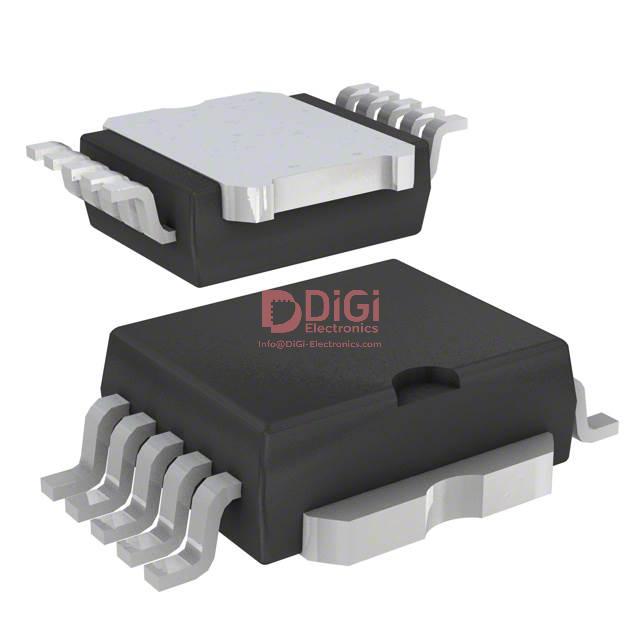
Thermal performance is significantly reinforced by the PowerSO-10 package with its exposed bottom pad. Direct thermal coupling to the PCB enhances heat dissipation efficiency, enabling sustainable operation at elevated currents while minimizing derating in compact enclosures. For densely packed luminaires or sealed modules where airflow is limited, such packaging can make the difference between continuous-rated operation and early lifetime failures due to overheating.
The STCS2SPR, by integrating these engineering-driven optimizations, addresses nuanced design challenges inevitably faced in high-reliability lighting and power delivery applications. Its architectural depth—spanning broad input compatibility, precision, diagnostics, and robust packaging—establishes it as an enabling platform for both standard and advanced designs, implicitly reducing time-to-market and futureproofing against evolving system requirements.
Electrical and thermal performance of the STCS2SPR
The STCS2SPR demonstrates integrated electrical and thermal control mechanisms, positioning it as an efficient driver for current-sensitive loads, particularly high-power LEDs. The supply voltage range of 4.5V to 40V establishes broad compatibility across industrial and automotive environments, accommodating typical system voltage fluctuations without functional compromise. A key feature is its output current regulation capacity, supporting up to 2A, which is precisely tunable using an external low-value resistor. This design enables granular adjustment, allowing circuit designers to optimize LED performance for uniform brightness and extended lifetime. The current regulation circuit leverages a nominal 100mV feedback reference, engineered for low offset and high stability, which minimizes drift and maintains control accuracy during dynamic operating conditions.
Dropout voltage is minimized, with values as low as 0.12V at 100mA and 0.58V at 2A, facilitating deployment in scenarios with reduced voltage headroom—such as battery-powered platforms or multi-string configurations where cumulative voltage drop affects system efficiency. Low quiescent current further reduces static power losses, a critical parameter in compact or densely populated LED arrays for architectural or automotive lighting. The device's thermal performance is directly influenced by its PowerSO-10 package, which offers efficient heat spreading. However, maximizing thermal robustness requires deliberate PCB design: wide copper areas beneath and around the package substantially lower junction-to-ambient resistance, while strategically oriented vias enhance vertical heat flow. Employing external heatsinks, when feasible, amplifies thermal dissipation, permitting sustained operation at higher junction temperatures without degrading performance.
Real-world deployment has shown that the STCS2SPR maintains stable output over extended duty cycles and within harsh thermal gradients, provided that PCB thermal management guidelines are adhered to. In practical applications, such as high-density LED signage or automotive daytime running lights, consistent regulation and minimal dropout translate directly to improved luminous efficacy and reduced thermal stress. Designing with the STCS2SPR demands careful analysis of environmental load profiles, including transient thermal spikes and supply ripple, to ensure all layers of electrical and thermal protection are fully leveraged. Notably, the balance between electrical efficiency and thermal optimization—rooted in component placement, copper geometries, and resistor selection—proves more impactful in long-term reliability than nominal datasheet metrics alone. These collective insights inform best practices, urging designers to evaluate not only electrical parameters but also the physical integration of the device within the overall thermal ecosystem.
Pin configuration and functional descriptions for STCS2SPR
The STCS2SPR leverages a 10-lead PowerSO package, with its pin allocation targeting both robust power driving capability and meticulous current regulation for high-reliability LED applications. VCC serves as the primary supply input, requiring local decoupling to minimize voltage ripples impacting internal analog blocks. The PWM input, tailored for direct connection to logic-level controllers, enables high-resolution dimming through analog filtering of the applied PWM signal. Dimming linearity improves noticeably when this input remains low impedance and the trace length is minimized to suppress both crosstalk and timing skew.
The EN pin offers direct on/off switching. By driving EN with a rapid signal edge, turn-on and turn-off propagation is tightly controlled, preventing unwanted glitches prevalent in noise-prone environments. Integrating a modest RC filter on this line can mitigate false triggering in industrial signal environments, where EMI is a recurrent challenge.
The chip’s DRAIN and SOURCE terminals are internally bonded to a robust power MOSFET. Dimensioning the PCB copper pours serving these pins is critical, as voltage drop and excessive self-heating degrade both efficiency and long-term reliability. In practice, placing the current-setting resistor as close as possible to the SOURCE and GND minimizes ground potential differences—a tactic that eliminates measurement artifacts in constant current regulation.
Feedback (FB) inputs the voltage developed over the current-sense resistor, forming a closed-loop feedback control to guarantee precise current regardless of the input voltage or load variance. Maintaining a Kelvin (force-sense) layout for FB increases measurement accuracy, especially when driving high-brightness LEDs where even minor current deviation manifests as visible brightness anomalies or color shifts.
The DISC pin, configured as an open-drain diagnostic output, acts as a system-level safeguard. When an LED string is interrupted or disconnected, DISC promptly signals fault detection to external controllers. Low-frequency polling on this output suffices for most topologies, and integrating it into supervisory logic enhances system-level resilience without cumbersome diagnostics.
Strategic grounding (GND) forms the foundation for noise immunity and thermal performance. The exposed thermal pad, if soldered to a continuous ground plane with via stitching, significantly improves junction-to-case thermal resistance. Practical deployment often leverages multiple heat-spreading vias and a dedicated thermal island under the device footprint, maintaining device temperature within specification even at maximum output current.
Adopting this comprehensive pin strategy delivers both electrical isolation and EMI suppression, critical in dense automotive or industrial control boards. Optimizing trace layout for high-current paths, limiting loop area, and segregating analog and power grounds translate directly to lower EMI emissions and extended component lifetime. The STCS2SPR’s pin design, exploited to its full potential, empowers design engineers to achieve both power density and reliability in advanced LED driving applications.
Operating modes and control interfaces in the STCS2SPR
Operating modes and control interfaces in the STCS2SPR reveal nuanced design strategies enabling adaptable LED current control and efficient power management. The core current regulation mechanism leverages an external resistor interfaced between the SOURCE and GND pins. The IC’s integrated control loop stabilizes the voltage drop across this resistor, establishing a precise, predictable current path. This architecture eliminates the discrepancies often introduced by temperature coefficient or device variability, allowing for straightforward calculation and fine-tuning of LED drive current. Selection of the resistor value, therefore, becomes a critical parameter to match brightness requirements and thermal constraints, a method routinely applied in advanced LED array layouts.
The PWM input extends dimming functionality by enabling high-speed current modulation. This signal directly gates the internal driver, responding without perceptible lag or parasitic transient effects. Real-world usage demonstrates that STCS2SPR handles rapid transitions efficiently, supporting scenarios where fluid light level adjustments are required such as in architectural installations, automotive signaling, or adaptive display backlighting. The IC’s ability to process fast PWM cycles promotes flicker-free illumination even at low duty cycles, ensuring stable output and consistent visual quality.
In power-sensitive applications, the EN pin offers decisive control over system states. Driving this pin logic-low initiates a true low-power shutdown, cutting output and minimizing quiescent current. Deploying this feature strategically in power sequencing routines or sleep modes allows designers to achieve ultra-low standby consumption, an essential advantage in battery-powered or always-on control nodes. The pin’s response characteristics support easy integration with programmatic wake/sleep events, as observed in designs where system longevity depends on efficient idle behavior.
Collectively, the interface flexibility and precise control mechanisms provided by the STCS2SPR enable robust current regulation and user-driven dimming, seamlessly adapting to varied operational contexts. Its layered control approach underscores the importance of integrating hardware-level precision with adaptable external signal handling, a principle that drives reliability and versatility in contemporary LED management solutions.
Protection, diagnostic, and fault reporting in the STCS2SPR
Protection mechanisms within the STCS2SPR integrate multiple layers that support robust power subsystem design. At the core, thermal shutdown activates when the junction reaches 155°C, with a 25°C hysteresis band to prevent oscillatory behavior upon cooling. This approach ensures sustained device integrity during transient overloads or ventilation failures, effectively isolating the circuit from catastrophic thermal events. In practical deployment, such a mechanism maintains operational continuity by allowing automated restart only after sufficient cooldown, minimizing the risk of repeated stress and long-term degradation.
The load disconnection flag (DISC), designed as an open-drain output, enables direct interface with system controllers or diagnostic modules for real-time fault detection. This flag asserts when the load—typically an LED chain or other current-driven devices—is disconnected or fails. This facility streamlines system-level monitoring, enhancing fault localization and allowing prompt mitigation strategies. In automotive lighting architectures, the DISC output supports predictive maintenance models, reducing downtime and supporting closed-loop diagnostic feedback within ECUs.
Reverse polarity protection is implemented to shield the STCS2SPR against wiring errors and unexpected supply inversions. This feature preserves both the device and neighboring components from damage, further contributing to high MTBF figures demanded in industrial and automotive sectors. Complementing this, the built-in ESD resilience reaching ±2kV HBM increases immunity against static discharge events during assembly or servicing. Combined with robust input logic levels, these protections optimize compatibility across a diverse range of digital control platforms and varying environmental conditions.
Engineering practice indicates that integrating these protection and diagnostic features expedites qualification of systems for safety standards such as ISO 26262 or IEC 61508. During field trials, the deterministic response of the thermal shutdown demonstrated reliable fault containment, allowing uninterrupted operation under variable ambient temperatures typical in outdoor applications. The load disconnection signaling proved valuable in modular systems, where distributed diagnostics are necessary for adaptive reconfiguration and system-wide alert propagation.
The layered approach employed by the STCS2SPR exemplifies a shift towards intelligent power management, where protection integrates seamlessly with self-diagnostic reporting. Such architecture enables designers to prioritize functional safety without compromising performance margins. The synthesis of robust field protections and versatile fault reporting aligns with modern trends in distributed electronics, where system resilience and predictive maintenance drive the adoption of advanced protection strategies. This design philosophy not only mitigates risks but also leverages the diagnostic feedback to inform system optimization, establishing new benchmarks in reliable power subsystem engineering.
Typical applications of the STCS2SPR in engineering scenarios
The STCS2SPR embodies a highly specialized current regulation architecture, optimized for deployment in distributed, low-voltage lighting systems and compact electronic interfaces. At its core, the device implements a precision constant-current driver, finely tuned to preserve LED performance in conditions characterized by dynamic input voltage profiles. The robust regulation circumvents the typical pitfalls of voltage sag and surge, particularly within vehicular electrical networks, where cold-cranking or alternator load fluctuations can drive battery rails from sub-6V up to 24V. Integrated diagnostic circuitry continuously monitors load connectivity and status, triggering alerts upstream in event of disconnects or abnormal conditions. This real-time lighting failure notification mechanism establishes a critical layer of functional safety, aligning with modern automotive and appliance system requirements for reliability and networked self-reporting.
In practice, the utility of STCS2SPR becomes apparent when assessing the luminous consistency across automotive LED domains, spanning interior ambient modules, DRLs, and exterior signaling assemblies. The driver’s tight current regulation removes the need for complex external compensation networks, simplifying PCB design and component selection while supporting thermal and lifetime management objectives for high-density LED arrays. During field deployment, immediate improvements surface as steady luminance regardless of ignition cycles or auxiliary voltage draws. PWM-based dimming further enhances adaptability, affording seamless transition between daytime and nighttime operational states. This modulation technique is especially advantageous for dashboards and cluster displays, where user-centric visibility must be preserved amid rapidly varying ambient light.
Residential and commercial installations benefit similarly from the STCS2SPR’s capacity to normalize output under local power anomalies, such as brownouts or transient overvoltages. The device’s compact form enables integration into constrained spaces—common in LED undercabinet strips, shelf displays, or embedded signage. Strategic application allows facilities to realize extended system uptime and reduced replacement frequency by protecting LEDs from thermal stress induced by erratic line conditions.
A notable engineering insight emerges in the load disconnect detection system. By actively surveilling circuit continuity, it supports both fast troubleshooting and remote maintenance workflows. When integrated in a CAN-networked automotive environment, for example, immediate node-level reporting of a failed LED or wiring fault underpins predictive service strategies, minimizing downtime and improving the overall operational envelope.
From a design perspective, leveraging the STCS2SPR means engineers can optimize for rapid prototyping and scalable production, benefitting from minimized BOM complexity, improved thermal management, and streamlined safety validation. The device’s holistic approach to current regulation and system diagnostics elevates both user experience and system reliability, positioning it as a cornerstone component in modern lighting and display ecosystems.
Package information and mechanical considerations for the STCS2SPR
Package selection for the STCS2SPR significantly affects system reliability and performance, particularly under high-current conditions. The PowerSO-10 exposed pad package provides optimal thermal conduction paths by directly coupling the silicon die to the PCB through a large central pad. This configuration minimizes the thermal bottleneck between junction and ambient, a critical parameter in sustaining device operation at elevated power densities.
Implementing the recommended PCB layout is fundamental for achieving low thermal resistance. Careful placement of thermal vias underneath the exposed pad channels heat rapidly to internal PCB layers or to external copper planes, distributing thermal load efficiently. Multi-layer boards with solid copper fills further enhance heat spreading, with thicker layers or larger planes reducing localized hotspots around the device. Where the application demands even greater dissipation, integration of external heatsinks coupled to the PCB or device maximizes cooling without introducing significant assembly complexity.
Surface mount assembly processes must account for precise solder paste deposition and controlled reflow profiles to ensure optimal thermal interface formation under the exposed pad. Inadequate solder coverage or voiding at the pad can substantially increase the case-to-ambient resistance, thus undermining thermal management strategies. Reliability data from real-world deployments show that consistently applying manufacturer guidelines for pad dimensions and stencil designs leads to a measurable reduction in device failures related to thermal overstress.
High-current designs often face trade-offs between board footprint and thermal performance. Experience demonstrates that investing in a robust thermal design upfront—through dense via arrays and strategic copper distribution—not only extends device longevity but provides margin against unpredictable load conditions or ambient temperature excursions. In challenging form factors, dissipation constraints can be mitigated by incrementally optimizing both package interface and PCB layer stackup, rather than disproportionately scaling external heatsinking.
Overall, effective use of the PowerSO-10 package involves layered engineering: understanding package-level thermal paths, executing precise PCB layouts with advanced thermal features, and validating assembly processes to mitigate real-world variances. This approach yields resilient power solutions that maintain safety margins across varied operating environments, reflecting a holistic view of power device integration where mechanical, thermal, and electrical domains converge.
Potential equivalent/replacement models for the STCS2SPR
Identifying equivalent or replacement models for the STCS2SPR requires a methodical approach anchored in both specification matching and application context. The search should prioritize devices classified as single-channel linear LED drivers, offering an input voltage range compatible with project requirements—typically extending from low voltages (5V) up to 60V or beyond. Output current capability must meet or exceed 2A, with precise current regulation facilitated through external resistor selection or integrated digital control. Sophisticated PWM dimming functionality is essential for applications demanding accurate light output modulation.
Underlying electronic mechanisms shape device efficacy. Linear drivers dissipate excess voltage as heat, making thermal management integral. Variations in internal circuitry influence both efficiency and reliability; drivers incorporating built-in thermal shutdown and fault diagnostics mitigate risks in critical deployments, such as automotive lighting or industrial displays. Pinout conformity is equally crucial: mismatches often result in complex board redesigns, impacting both engineering time and supply chain continuity. Diagnostic capabilities, such as open/short LED fault reporting, increase system robustness, especially where maintenance intervals are minimal.
Package selection cannot be overlooked. Engineers must match not only the physical footprint but also ensure the replacement device’s heatsinking options and soldering compatibility. Devices from STMicroelectronics, including derivatives of STCS2SPR, or industry comparables from Infineon, NXP, or Texas Instruments, may address these criteria, but nuanced electrical performance must be validated through datasheet cross-referencing and bench testing. Consideration of transient response, startup behavior, and EMI susceptibility frequently reveals subtleties not apparent from basic specification tables.
In practical design cycles, emphasis on thorough prototyping ensures transition feasibility between models. Substitutes that initially appear equivalent may exhibit performance drift under extended operation or variable loads. Experience suggests pre-emptively conducting thermal profiling and load-frequency tests exposes potential bottlenecks before integration into end products. Strategic alignment of pinout and thermal characteristics streamlines transition, while attention to variant-specific features—such as analog vs. digital dimming modes—enables tailored application optimization.
With increased system integration and diversified LED architectures, driver selection is less about mere specification parity and more about synergy with broader system demands. Devices that feature programmable current control, enhanced diagnostics, and adaptive thermal regulation elevate reliability and simplify long-term maintenance. This layered approach to equivalence evaluation, moving beyond parameter matching into holistic system fit, consistently produces superior engineering outcomes.
Conclusion
Selecting the STCS2SPR for LED current regulation leverages a combination of precise linear current control, advanced dimming capabilities, and integrated system monitoring. At its core, the device implements a monolithic two-channel linear current regulator architecture that supports independent, high-accuracy current settings across multiple LED strings. The embedded closed-loop control ensures consistent output regardless of fluctuations in input voltage, addressing a critical challenge in maintaining uniform luminance in tightly regulated environments.
Thermal management is handled through active protection mechanisms that respond directly to junction temperature, mitigating the risk of performance degradation due to prolonged exposure to high ambient conditions. Due to the low standby power and intelligent current regulation, designers can deploy dense LED arrays without complex heatsinking or derating strategies, thus streamlining enclosure and PCB layouts. During prototyping, the STCS2SPR’s single-package format and minimal external component count notably simplify both schematic development and board revision cycles, directly resulting in faster time-to-market and fewer design iterations.
Versatility in dimming is achieved via analog and PWM inputs, supporting both gradual and rapid transitions—a key requirement for applications such as adaptive automotive systems and ambient home lighting where both user-driven and automated control coexist. System diagnostics are integrated natively through fault reporting and LED status pins, enabling real-time feedback in safety-critical environments. These diagnostic pathways allow for predictive maintenance approaches, wherein system-level monitoring can flag abnormal string behavior before visible failure occurs, increasing operational uptime.
Procurement and engineering teams benefit from the reduced bill of materials and single-source reliability, as the STCS2SPR replaces discrete driver and protection circuits with a unified platform. Component selection and supply chain management are simplified, addressing logistical risks commonly associated with multi-vendor solutions. Experienced practitioners note that the encapsulated regulator’s tolerance for diverse operating conditions facilitates cross-platform reuse, minimizing redesign when shifting between automotive, appliance, and architectural lighting contexts.
A distinctive advantage lies in the STCS2SPR’s adaptability to unforeseen requirements, such as regulatory changes or new user interface features, owing to its programmable interface and dignified response to diagnostics. This capacity to accommodate evolving industry standards and emergent system demands is not only an operational necessity but also a strategic differentiator for engineering teams committed to forward-compatible design. The device's deployment elevates system reliability and efficiency, reinforcing the value proposition for next-generation LED platforms in demanding real-world applications.