>
>


Product Overview: STA310 STMicroelectronics Audio Decoder
The STA310 from STMicroelectronics exemplifies an advanced platform for multistandard audio decoding, engineered for integration within digital audio systems requiring high channel-density and broad format compatibility. Central to its architecture is the MMDSP+ core, a specialized digital signal processor optimized for intensive real-time audio tasks. This core operates as the computational nucleus, enabling efficient parallel processing of complex audio decoding algorithms. Its ability to handle both compressed and uncompressed streams, such as Dolby Digital, DTS, MPEG, and PCM, underlines the chip’s adaptability to rapidly evolving codec standards.
A 6+2 channel configuration reflects consideration for both discrete surround output and flexible auxiliary channel routing, accommodating modern requirements like 5.1 surround with independent stereo or subwoofer channels. Internally, the architecture merges decoding, PCM mixing, dynamic range control, and bass management within a unified processing flow, minimizing system latency and enhancing synchronization with video subsystems. By eliminating the requirement for external DRAM, the STA310 reduces BOM complexity and power consumption, while improving signal integrity by minimizing high-speed memory interfaces on the PCB. This DRAM-less design strategy leverages tightly coupled on-chip memory blocks, engineered for deterministic throughput across all supported audio standards.
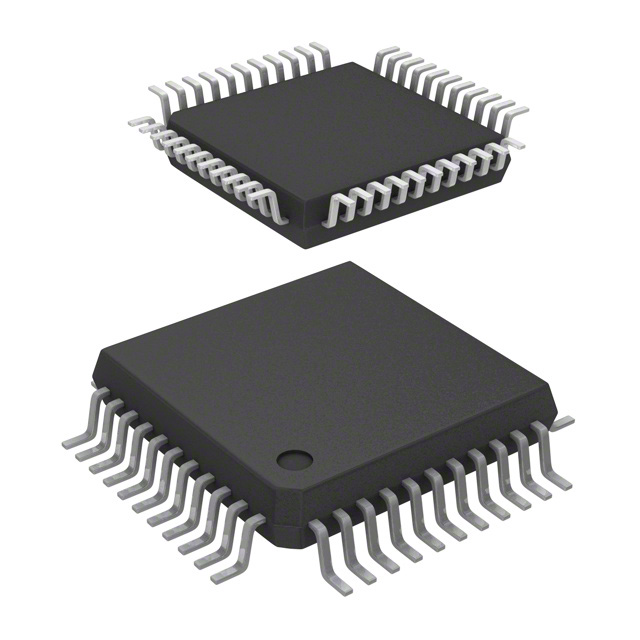
Application scenarios range from high-fidelity DVD and Blu-ray players, to set-top boxes, game consoles, multimedia PCs, and AV receivers. In these deployments, the STA310’s high integration level materially simplifies board layout, especially when situated within the constraints of a compact 80-TQFP (14x14mm) footprint. Notably, power and ground pin layout within this package facilitates straightforward star-grounding, which can significantly suppress EMI at higher signal processing loads.
One observed advantage in practical deployment is the stability of clock synchronization between the STA310 and external audio DACs, owing to the chip’s precise bit clock output and recovery mechanisms. This ensures low-jitter data handoff, contributing to cleaner analog reproduction, especially in multichannel settings. The programmable interface affords granular control over routing, EQ, and volume parameters, allowing integrators to tailor response curves according to target acoustic environments.
A distinctive insight emerges from optimizing the STA310’s programmability: system designers benefit from the ability to implement custom post-processing code, enabling enhanced features such as room correction, output delay compensation, or user-specific sound profiles. This goes beyond standard fixed-function decoders and bridges the flexibility gap between dedicated audio DSPs and highly configurable SoCs.
From an engineering reliability perspective, the robust ESD tolerance and thermal management characteristics permit dense population on mixed-signal boards alongside HDMI transceivers and RF modules without cross-coupling artifacts. The peripheral interface set readily supports industry-standard control protocols, smoothing system integration with microcontrollers or network processors within smart home or professional AV installations.
Taken as a platform, the STA310 not only streamlines system design for contemporary multimedia devices but also anticipates the need for scalability and rapid adaptation to future audio standards. Emphasis on internal resource allocation, efficient dataflow-oriented design, and configurability positions the device as a strategic solution for long-lifecycle consumer audio electronics.
STA310 Functional Architecture and Data Flow
The STA310 functional architecture is constructed around a programmable MMDSP+ digital signal processor, optimized for real-time multimedia workloads. The core is supplemented by domain-specific hardware accelerators, designed to offload demanding operations such as bitstream depacking and IEC-compliant data formatting. This hybrid approach consolidates programmable flexibility with deterministic, high-bandwidth data manipulation, aligning with stringent audio processing requirements across embedded and consumer domains.
Audio data ingress is managed through diversified input interfaces, supporting industry-standard formats and offering robust compatibility. Incoming data is staged in high-speed buffers and subjected to a parsing mechanism that efficiently demultiplexes streams, extracting audio elementary streams with minimal processing delay. This demultiplexing stage operates under precise resource allocation, leveraging hardware threading to maintain sustained throughput even under bursty input conditions—a practice refined through empirical tuning of buffer sizes and scheduling strategies to optimize bandwidth utilization without introducing latency spikes.
Once elementary streams are isolated, audio frames traverse a multistage pipeline centered on three primary functions: format parsing, main decoding, and post-processing. Each stage is modular, mapped to dedicated functional blocks within the signal path, and orchestrated via dynamically programmable configuration registers. This fine-tuned register control enables on-the-fly reconfiguration, permitting seamless transitions across different audio codecs and post-processing enhancements, and reducing reinitialization overhead during format switches—a feature leveraged in scenarios with rapidly changing content types.
Parallelization is intrinsic to the STA310 data flow strategy. Independent DMA channels and discrete processing units enable simultaneous playback and recording, effectively decoupling data streams for full-duplex operation. The architecture also supports selective stream synchronization and prioritization, facilitating complex use cases such as live audio mixing or time-aligned multichannel capture. System designers can exploit this to integrate advanced features, like elastic audio buffering for jitter compensation or adaptive resampling, directly within the real-time processing path with negligible impact on overall latency.
The defining insight is the architectural synergy between flexible DSP execution and tightly-coupled hardware offload. By partitioning compute-intensive yet repetitive tasks to dedicated accelerators, the core's cycles are reserved for adaptive or application-specific logic. This partitioning has proven effective in deployments demanding both deterministic low-latency response and runtime configurability—for example, in automotive infotainment or professional audio equipment. Practical deployment recommends maintaining a rigorous separation of concerns in firmware design: allocate non-deterministic, variable-latency functions to the programmable DSP, while channeling fixed-pattern, heavily parallelizable workloads into hardware blocks. This layered resource management is key to sustaining audio signal fidelity under high load and enables extensibility without architectural rework as audio codec standards evolve.
Supported Audio Standards and Format Handling in STA310
The STA310’s architecture is engineered for comprehensive audio format compatibility, integrating both legacy and advanced audio technologies. Its decoder pipeline encompasses hardware-accelerated support for Dolby Digital (AC-3), allowing native 5.1-channel decoding with seamless transition between multiple dynamic range compression modes such as Line, RF, and Custom A/D profiles. The inclusion of karaoke and dual-mono operation modes is managed through flexible stream parsing and selective bit allocation, ensuring signal integrity while adapting to varying entertainment contexts such as vocal muting or audience participation features.
On the MPEG side, the STA310’s multi-layer decoding capabilities cover MPEG-1 Layers I/II, MPEG-2 Layer II, and MPEG Layer III (MP3), facilitating compatibility across broadcast, legacy media, and streaming applications. The design handles up to 6 discrete audio channels with precise inter-channel synchronization. Internal buffering and error-resilient bitstream demultiplexing provide robust performance in environments where input streams may suffer jitter or packet loss, a scenario frequently observed in digital TV and legacy disc-based playback systems.
For high-fidelity audio processing, STA310 delivers full-spectrum DVD Audio and MLP (Meridian Lossless Packing) decoding, accommodating 6-channel, 24-bit signals at sample rates as high as 192kHz. The device’s DSP core leverages lossless decoding algorithms alongside high-resolution conversion paths, minimizing distortion—a requirement for audiophile-grade playback. Uncompressed Linear PCM is equally well supported, with a full 8-channel matrix and 24-bit/192kHz throughput, which positions the STA310 for use in premium AV receivers or studio monitors, where lossless workflow integration is mandatory.
STA310 also addresses legacy surround solutions through Pro Logic functions. Integrated downmixing ensures backward compatibility with stereo systems, while a dedicated 2-to-4 channel upmix mode enables the recreation of surround effects from stereo sources. Customizable karaoke and effects processing modules utilize embedded DSP resources for real-time audio manipulation, supporting diverse use cases such as source fading, vocal removal, or party mode audio tuning. These features are enabled with minimal processing latency, which is critical in interactive entertainment systems or live sound environments.
On a system integration level, STA310’s handling of S/PDIF and IEC-61937 frame structures is automated, with built-in bitstream autodetection routines especially tuned for quicker lock-in with a variety of consumer transport devices. Format selection and stream routing are controlled through a programmable register interface, granting engineers fine-grained access to stream properties, decode paths, and output assignment. This register-level configurability allows dynamic reconfiguration to accommodate sources ranging from gaming consoles to set-top boxes and networked media players, enhancing overall system flexibility.
The design philosophy of the STA310 emphasizes a modular approach to codec integration, abstracting complex format handling while maximizing user control. This reduces firmware design cycles and simplifies support for emerging or custom audio formats, ensuring long-term viability in fast-evolving multimedia platforms. The nuanced balance between fixed hardware blocks and software-configurable parameters is a distinguishing characteristic, enabling reliable operation without sacrificing adaptability—a key consideration in embedded audio solutions where future-proofing and field upgrades are increasingly demanded.
Input, Output, and Control Interfaces of STA310
Input, output, and control interfaces in the STA310 are designed to facilitate seamless integration and robust functionality across diverse digital audio environments. Data input versatility forms the backbone of system adaptability. The device supports serial formats such as I²S and SPDIF/IEC-61937, connecting directly with industry-standard audio transports and allowing transmission of both linear PCM and encoded bitstreams. For scenarios requiring concurrent audio processing, a secondary, independent I²S input streamlines configurations for complex mixing tasks, such as karaoke or dual-source setups. Parallel input capabilities, shared with the control bus, minimize pin requirements while maintaining high-throughput data ingress when needed.
Output architecture is engineered to handle simultaneous multi-channel requirements efficiently. Three dedicated PCM output highways—mapped for front left/right, center/subwoofer, and surround channels—facilitate low-latency transfers to discrete amplifier stages or downstream DSP. The availability of a separate SPDIF/IEC-61937 output enables flexible digital transmission of either uncompressed PCM or encoded surround formats, bridging consumer and professional audio systems without conversion bottlenecks.
Control interface selection addresses a broad range of system topologies. Hardware-configurable switching between I²C slave (up to 400kHz, 7-bit addressing) and an 8-bit parallel host interface ensures compatibility with both microcontroller-driven and FPGA-centric architectures. Programmable register sets behind each mode deliver granular control over device functions, supporting application-specific handshaking patterns and ensuring reliable multi-device management on shared buses. During integration, deploying the I²C mode in multi-master audio systems has proven valuable for minimizing contention while maintaining deterministic control flow, whereas the parallel interface excels in high-speed configuration environments where setup time is critical.
Interrupt handling within the STA310 further elevates reliability and responsiveness. Maskable, programmable interrupts accompanied by dedicated IRQ pins offer precise event-driven synchronization, vital for error management and real-time status monitoring. In field deployments where low-latency fault signaling is required, the IRQ infrastructure delivers actionable feedback, preventing cascading failures in tightly coupled audio pipelines.
Electrically, 3V-capable I/O pads streamline adaptation to a wide range of logic domains, simplifying integration with both advanced low-voltage SoCs and legacy 5V-tolerant peripherals. Level-matching headaches are reduced, enabling rapid prototyping and shortening time-to-market for new designs.
Key to maximizing STA310 integration efficiency is leveraging its modular, interface-driven approach. Careful mapping of input formats to output channels, combined with agile control interface assignment, allows tailoring of solutions for anything from compact home theater receivers to professional-grade mixing consoles. The dedicated interrupts and robust error signaling mechanisms inform design choices that prioritize system uptime and manageability, aligning with an engineering perspective favoring scalable, maintainable architectures.
STA310 Processing Pipeline: Decoding and Post-Processing Features
The STA310’s processing pipeline embodies a modular flow enabling robust management of multichannel audio streams, beginning with an optimized parsing stage. Stream synchronization leverages precise packet boundary detection and identifier-based selection, ensuring that only relevant audio streams are forwarded to subsequent stages. This filtration minimizes upstream computational demands in multi-source environments and enhances system reliability in dynamic routing scenarios.
Main decoding utilizes highly adaptable channel mapping and downmix logic, with registers permitting both static and on-the-fly reconfiguration. The engine accommodates layouts from mono through 5.1, maintaining phase alignment and minimizing crosstalk. Internally, programmable matrices allow custom mappings, a significant asset in installations requiring non-standard speaker configurations. Downmixing algorithms are designed with fixed-point arithmetic for deterministic performance, even under resource constraints, yielding transparent fold-down results for stereo or legacy playback systems.
Post-decoding options introduce granularity to audio conditioning. DC filtering and deemphasis can be independently enabled, suitable for legacy content sources prone to bias or specific analog mastering profiles. The downsampling mechanism, typically scaling from 96kHz to 48kHz, implements alias-suppression filters with adjustable coefficients, ensuring preserved clarity while adapting to output hardware constraints. Pro Logic decoding stages are implemented as modular inserts, offering seamless integration without introducing pipeline latency—a critical property in synchronous audio/video systems.
Bass management is handled through flexible redirection and extraction units, directly programmable to accommodate a range of speaker topologies from simple 2.1 to discrete multi-zone architectures. The system supports dynamic reallocation of bass content, optimizing low-frequency delivery through dedicated subwoofer paths. Adaptive crossover points can be set per installation, addressing differing satellite capabilities. Practical use demonstrates the importance of verifying filter slopes and group delay alignment, as misconfiguration can introduce low-frequency smearing in time-coherent setups.
Level control integrates a master volume stage with per-channel balance resolution. The architecture supports granular step sizes, and individual gain registers mitigate channel-tracking errors, enabling smooth fades and accurate surround balance adjustments. Real-time changes incur no perceptible artifacts, attributed to ramped coefficient updating and dithering strategies—beneficial in applications demanding live mixing or automated volume shifts.
Additional post-processing features reinforce adaptability. Integrated karaoke modes provide vocal attenuation and pitch modification, benefiting entertainment applications, while white and pink noise generation functions facilitate streamlined speaker calibration and diagnostics. Custom user behaviors can be encoded to on-chip RAM, enabling rapid prototyping and iterative deployment without firmware recompilation. This design philosophy prioritizes both predictable audio path operation and field-upgradable flexibility.
A layered approach combining well-defined hardware primitives with software-driven programmability is central to the STA310's engineering value. Such an architecture supports broad class-leading compatibility, extensible feature growth, and reliable performance in evolving deployment landscapes. Strategic selection and sequencing of these post-processing modules underpin system robustness, with practical experience highlighting the importance of configuration discipline to exploit the processor's full potential.
Advanced Features: Audio/Video Synchronization, Interrupts, and Error Management in STA310
Audio and video synchronization in STA310 leverages an integrated cascade of hardware mechanisms, key among them precise presentation time stamp (PTS) detection. This tight timestamping occurs directly on-chip, minimizing jitter and drift when aligning decoded frames with external video signals. PTS triggers configurable interrupts that actuate synchronization logic and initiate frame comparison routines, ensuring output samples consistently map to the intended playback timeline. When latency variations arise—due to fluctuating input rates or decoder stalls—programmable frame skipping or repeating supports fine-grained real-time compensation, keeping AV streams perceptually synchronized without visible artifacts. Adjustment parameters are accessible via register sets, allowing application-specific tuning for various broadcast standards or streaming environments.
Interrupt architecture in STA310 is engineered for granular event supervision. Decoding processes generate differentiated interrupt vectors for error states, synchronization changes, and latency deviation. Each interrupt can be prioritized and masked via dedicated control blocks, enabling informed triage of system events based on application criticality. Recovery procedures are autonomously invoked for transient anomalies, with soft-mute gating preventing audio glitches while the system realigns. This layered response mitigates service disruption and accelerates error clearing. For conditions classified as critical—such as persistent excessive latency or cyclic redundancy check (CRC) mismatches—the STA310 escalates status to the host interface. Status flags, reflecting detailed error metadata, facilitate external diagnostic routines and prompt operator intervention if automated correction is insufficient.
Internal error management within STA310 combines fast fault isolation with adaptive recovery. Most common decoding errors—buffer underruns, parser anomalies, misaligned frame boundaries—are detected preemptively and resolved in hardware, preserving downstream data integrity. Soft-mute with auto-recovery isolates affected segments and restores output upon normalization, maintaining continuous playback without audible impact. Experience demonstrates the value of over-provisioned interrupt paths for handling burst error scenarios in high-throughput applications, requiring system designers to analyze and configure event handling thresholds tailored to each deployment context.
As a key insight, the effectiveness of STA310 in AV pipeline integration is closely tied to its synchronization feedback mechanisms and detailed error telemetry. Clear partitioning of error classes between hardware-managed and host-visible pathways supports robust operation, especially in environments demanding sub-frame latency and high resilience. When configuring STA310, careful calibration of frame adjustment logic and interrupt gating maximizes synchronization while minimizing false positives, ensuring predictable response under variable decoding conditions. This modularity facilitates seamless adaptability to diverse AV protocols and segment architectures, making STA310 well-suited for demanding digital broadcasting and multi-channel streaming solutions.
Output Configurations and Application-Specific Settings in STA310
Output configurations within the STA310 architecture are engineered for high adaptability across heterogeneous audio deployment scenarios. At the core, the PCM output stage provides flexible bit depth settings at 16, 18, 20, or 24 bits, supporting industry-standard data formats such as I²S and Sony mode. The programmable bit and word clock polarity, combined with customizable channel mapping, underpin seamless interoperability with both conventional stereo outputs and matrix-driven surround decoders, including Pro Logic-compatible systems. This configurability enables precise alignment with downstream DAC requirements, minimizing the risk of miscommunication or timing mismatches during physical integration.
Attenuation and scaling features are critical for output optimization. The STA310 implements channel-wise and global volume controls, allowing fine-grained adaptation of signal amplitude to match distinct output hardware. Output rounding and flexible quantization schemes are essential to ensure high-fidelity reproduction and artifact suppression, especially in cases where legacy DACs with limited bit resolution are present. These parameters are directly addressable via register-level settings, streamlining adaptation for platforms requiring dynamic range headroom management, such as automotive infotainment or multi-room audio nodes.
S/PDIF and IEC-61937 outputs are designed with both consumer and professional use cases in mind. Dedicated hardware blocks govern the generation of structured digital audio streams, incorporating adjustable category codes, status bits, and support for both uncompressed PCM and raw encoded bitstreams (e.g., Dolby Digital, DTS passthrough). These features are indispensable for seamless integration with AV receivers or transmission across long optical or coaxial links where digital transparency is mandatory. Practical deployment exhibits the benefit of hardware-level status control, which mitigates interoperability challenges encountered in complex audio switching matrices or distributed home theater networks.
Application-specific functionality extends the STA310’s role beyond simple decoding. The device supports simultaneous stream management, a necessity for use cases involving concurrent playback and audio capture or monitoring. Intelligent channel delay compensation, tunable up to 35ms, addresses phase alignment in multizone or large-venue audio, ensuring spatial coherence regardless of physical speaker placement disparities. Signal conditioning, such as programmable pink noise generation, assists in calibration and acoustic verification workflows, accelerating system commission in demanding field environments.
Real-world integration demonstrates that hardware flexibility at the output interface expedites time-to-market, especially when end systems must pivot between consumer and professional feature sets. The modularity and attention to protocol compliance embodied in the STA310 design effectively future-proof devices against downstream changes in transmission standards or device interconnect strategies. This emphasis on granular control and forward-compatible engineering forms the cornerstone of robust, high-fidelity embedded audio solutions, laying a scalable pathway for evolving multimedia system requirements.
Power, Clocking, Package, and Key Electrical Characteristics of STA310
The STA310 integrates dual supply rails—2.5V for the core and 3V dedicated to I/O—enabling differentiated power domains tailored for optimized logic signal interfacing while minimizing overall consumption. This architecture isolates noise-sensitive internal operations from external voltage fluctuations, fortifying signal integrity under varying load conditions. The separation accommodates lower voltage swings at high frequencies within the core, permitting enhanced switching performance and reduced static power dissipation. In practical deployment, this dual-rail strategy simplifies board-level design for mixed-voltage systems, reducing the need for additional level shifters and ensuring compatibility with other contemporary digital audio devices.
Clock generation within the STA310 leverages on-chip system and fractional audio PLLs, which supply distinct clocking for internal DSP engines, DAC outputs, and bit/word clock domains. The fractional PLL design supports fine-grained frequency synthesis, crucial for maintaining low-jitter clock signals across diverse audio sample rates. Host-configurable dividers facilitate rapid adaptation to changing stream formats, with settings programmable through software interfaces following device reset. The flexible clock management infrastructure allows robust synchronization with external masters or fully autonomous operation using the internal references. During evaluation, adaptive configurations of clock dividers have proven valuable for minimizing latency in dynamic streaming environments, thus maintaining precise audio timing during mode transitions and mitigating issues such as metastability or cross-domain skew.
The STA310’s packaging adopts the 80-TQFP (Thin Quad Flat Package) standard, optimizing the balance between feature-rich interconnectivity and compact footprint essential for high-density PCB layout. The package supports efficient heat dissipation through optimized leadframe geometry, while the moderate pin count streamlines signal routing and minimizes parasitic effects, which may otherwise compromise high-speed signal fidelity. Actual prototyping exercises with TQFP-footprinted devices suggest notable reductions in layer count relative to BGA alternatives, directly translating to decreased board complexity and lower assembly costs, with improved manufacturability in constrained form factors.
Key electrical characteristics—including input/output threshold margins, output drive capabilities, and ESD robustness—play pivotal roles in ensuring resilient operation across variable supply rails and environmental stressors. In interfacing scenarios, configurable I/O tolerances permit seamless interoperation with legacy and next-generation audio subsystems, while intrinsic protection circuitry mitigates common failure mechanisms. This versatility is reflected in sustained performance even under suboptimal board conditions such as inductive noise or extended trace lengths, where the STA310 demonstrates stable throughput and error-free signal distribution.
The optimal combination of advanced power domains, flexible clocking schemes, and practical packaging in the STA310 converges to address the nuanced demands of modern audio processing hardware. This integrated approach not only simplifies system integration but also anticipates interoperability and reliability imperatives, lending itself to scalable application in both consumer and professional audio solutions. The design principles evident in STA310’s architecture exemplify a forward-looking stance—where power, clock, and package coalesce to support versatility without compromising on system performance or manufacturing efficiency.
Typical Engineering Use Cases for STA310
Typical engineering deployments for the STA310 center on high-fidelity audio systems where multistandard, multichannel audio decoding must be achieved with constrained memory footprints—the absence of external DRAM being a key differentiator. Underlying the STA310’s effectiveness is its robust hardware codec engine, supporting simultaneous decoding of mainstream audio formats such as Dolby Digital, DTS, and MPEG, enabling seamless handling of complex content streams. Internal architecture leverages register-based system control, granting granular parameter access, rapid reconfiguration, and minimal latency in pipeline adaptation—all of which streamline intricate system integration across diverse product lines.
In the domain of optical media devices—specifically, DVD and Blu-ray player main boards—the STA310 facilitates the decoding of multi-format discs and real-time processing of S/PDIF digital input. This approach enables consistent playback quality and format versatility, while the device’s architecture allows direct connectivity to microcontrollers over I²C/SPI interfaces, promoting simplified schematic design and firmware modularity. Engineering experience confirms that, during new product development cycles, the STA310’s codec abstraction layer minimizes the need for format-specific firmware updates, allowing resources to be allocated elsewhere without compromising time-to-market objectives.
For HDTV receivers and set-top boxes, the STA310 manages the complex requirements of delivering both analog speaker output and unaltered digital streams for pass-through scenarios via HDMI or S/PDIF. Built-in multichannel mixing logic and dynamic downmixing resources streamline compliance with broadcast standards and user-configured audio paths. This versatility is reflected in deployment scenarios requiring fast input source switching, where the register-based control dramatically reduces reinitialization times; such responsiveness is critical in competitive consumer electronics markets.
In multichannel karaoke systems, the STA310’s dedicated effects pipelines and support for multiple simultaneous input streams enable high-performance mixing, vocal processing, and effects insertion with low system overhead. Practical integration involves leveraging its direct-digital-connection support (ADC input paths combined with flexible clocking schemes) to minimize analog crosstalk and latency—key considerations for professional-grade audio gear. Its architecture permits transparent adaptation to changing event loads, facilitating scalable designs ranging from entry-level consumer units to commercial installations.
Home theater amplifiers utilize the STA310 for advanced bass management and cinema-grade surround processing. The device’s multiband crossover filters, combined with per-channel delay and gain calibration, ensure accurate spatial imaging and customizable listening environments. The register map structure allows real-time adjustment to tuning parameters throughout field deployment, which proves useful for product lines offering remote configuration or automated room correction features.
From a development perspective, the STA310’s integration inherently reduces firmware maintenance overhead thanks to its comprehensive codec library and hardware-managed multistream capabilities. This synergy between hardware architecture and accessible control surfaces not only optimizes engineering resource allocation but also allows for rapid iteration and deployment of new audio features without introducing instability into legacy functions. Consequently, the STA310 remains an anchor platform for engineering teams focusing on scalable, robust, and time-efficient audio processing solutions across evolving A/V applications.
Key Configuration Registers and Programming Overview for STA310
At the core of the STA310’s versatility lies a comprehensive set of configuration registers, each purpose-built to provide granular control over audio processing and system integration. The STREAMSEL and DECODESEL registers underpin the dynamic stream selection mechanism, enabling the device to route multiple audio streams flexibly, which proves essential in environments with varied source types and format switching. Dedicated codec control registers—handling compression mode selection, downmix operations, and dynamic range adjustments—enable precise DSP parameter tuning, ensuring optimal compatibility with both legacy and modern audio content.
Input interface configuration employs the CAN_SETUP and SIN_SETUP registers, which define channel assignment and serial input parameters. Correct initialization of these registers is crucial during system bring-up to guarantee stable communication with upstream codecs or receivers. Implementation experience shows that auditing these values at every boot phase minimizes input synchronization errors, especially when input sources might change or include jitter.
For output path control, OCFG, PCMCONF, and PCMDIVIDER regulate output format structuring, scaling coefficients, and timing granularity. These registers empower audio engineers to map PCM data precisely, accommodate S/PDIF standards, and tune output latency without disturbing core processing paths. In practice, iterative refinement of PCMDIVIDER is often necessary during integration, as misalignment with downstream D/A converters can cause artifacting or muting. Deploying test routines that sweep divider values can quickly expose optimal timing windows for different output configurations.
System stability and diagnostics depend on robust use of interrupt mask and error/status registers. These not only allow selective event handling—such as buffer underrun warnings or stream decoding faults—but also support efficient real-time debugging. Implementing an exception log that records all non-maskable interrupt events across several operational cycles substantially accelerates root-cause analysis in multiplexed audio chains, where failures are otherwise hard to isolate.
Clocking architecture uses PLL control and divider registers to establish the fundamental timing framework for all streaming operations. By dynamically adjusting PLL multipliers and output dividers, the STA310 maintains audio rate fidelity across a variety of reference clock sources. Precision in these settings is critical; inaccurate programming often manifests first as intermittent noise or dropouts under high channel load. Integrating frequency drift measurement and automatic register recalibration into the main system loop can optimize long-run stability in fluctuating temperature or voltage environments.
The register-centric architecture of the STA310 exemplifies a design philosophy prioritizing adaptability and modularity. These low-level controls facilitate real-time adaptation to new audio standards, interface formats, and evolving use cases—effectively future-proofing deployment against hardware obsolescence and reducing non-recurring engineering overhead. The key insight here is that rigorous configuration register management, supported by systematic runtime validation, directly translates to increased system resilience and extended product lifecycle in demanding audio applications.
Potential Equivalent/Replacement Models for STA310
When considering alternatives to the STA310 audio processor, engineering analysis must begin with a granular comparison of architectural capabilities and compatibility with the intended application framework. The STA311 and STA312 series from STMicroelectronics provide a logical evolutionary path when requirements expand toward advanced programmable DSP functionality or broader codec adaptability. These successors leverage integrated DSP engines, enabling custom-filter blocks, parametric equalizers, and dynamic range processing via firmware. This is particularly valuable in audio applications where real-time signal conditioning or proprietary effects are mandated, and where iterative tuning speeds up system bring-up.
Texas Instruments’ TAS5508 series introduces distinct advantages for multichannel environments through robust audio PWM processing. These processors natively support high-fidelity digital-to-analog conversion with digital audio decoding and advanced output signal management for multi-speaker configurations. Their architecture facilitates seamless integration in both automotive infotainment and home theater amplifiers, where tight synchronization across channels and nuanced parameter adjustment are non-negotiable. The wide voltage and I/O interfacing options streamline board-level matchmaking, ensuring backward-compatibility without sacrificing latency or dynamic range.
Cirrus Logic’s CS49300 family addresses another segment by focusing on multichannel audio decode engines, supporting extensive codec libraries and complex audio streams. The inclusion of licensed algorithms and flexible codec upgradability makes these processors a preferred choice for AV receivers and media gateways targeting evolving media standards. Here, modular firmware updates allow products to track codec market shifts without redesigning hardware, minimizing lifecycle cost.
Analog Devices’ ADSP-21xx-based platforms stand apart through firmware programmability and scalable computational resources. These processors drive sophisticated, software-defined audio workflows where processing headroom, low deterministic latency, and custom algorithm deployment become critical. Practical deployment reveals that integrating these flexible processors can significantly accelerate feature migration in pro-audio mixers and adaptive noise cancellation solutions. Their mature development ecosystem lowers integration risk and enables rapid adaptation to shifting design goals.
Prioritizing selection criteria requires systematic mapping of codec compatibility, digital interface requirements—such as I²C for register-level control or SPI for high-speed streaming—package constraints, and the target product’s system complexity. In practice, early evaluation of software-support tools, maturity of reference designs, and vendor track record often influences decisions as much as raw technical features. A strategic perspective acknowledges that the optimal replacement sometimes entails architectural shifts, not just device swapping, and that balancing roadmap longevity with immediate performance yields superior end results. Within such a selection process, the interplay of firmware extensibility, silicon integration, and ecosystem support continually shapes enduring, field-proven solutions.
Conclusion
The STMicroelectronics STA310 addresses the complex requirements of multichannel audio decoding through a tightly integrated architecture that consolidates core digital processing and I/O management. Central to its platform is a pipeline optimized for real-time stream decoding, leveraging specialized DSP cores that handle high-throughput workloads without incurring latency penalties. This integration eliminates dependence on external memory modules for code or data buffering, which both streamlines board layouts and reduces overall BOM complexity—a benefit noticeable in high-density consumer products and automotive audio nodes.
The programmable register interface, exposed through a well-documented address map, offers granular control over system behavior. Engineers can rapidly iterate on custom audio processing routines, reconfigure channel assignments, or tweak decoding parameters to suit distinct acoustic environments. The register flexibility ensures the device can scale across applications, supporting standards from Dolby to DTS, as well as emerging formats, provided firmware resources are kept current with evolving codec specifications. Implementations in professional studio monitors and multi-zone home cinema receivers demonstrate that the STA310 readily accommodates advanced user control regimes and dynamic signal routing, greatly expanding system configurability.
Selection against competing ICs frequently hinges on interface compatibility, processing overhead, and future-proofing. The STA310 provides multi-standard inputs and outputs, facilitating straightforward migration to newer audio standards or integration into existing platforms. Its broad deployment history affirms stability and support, minimizing design risk for long-lifecycle products. Integrators benefit from a mature toolchain, extensive reference firmware, and cumulative field data, which together promote faster development cycles and easier troubleshooting.
Market adoption indicates that the STA310 maintains relevance as audio standards evolve. Its architecture avoids obsolescence by combining extensible control with robust native performance. Application experience, including low-failure rates in mass-production runs and sustained firmware update support, underscores its suitability for both reinvigorating legacy product lines and launching innovative, feature-rich new designs. The versatility found in its design philosophy stands out, showing that careful IC selection—centered on extendibility, processing integrity, and integration scope—remains critical to iterative advancement in digital audio systems.