 >
>


Product Overview: ST3232EBPR STMicroelectronics RS-232 Transceiver
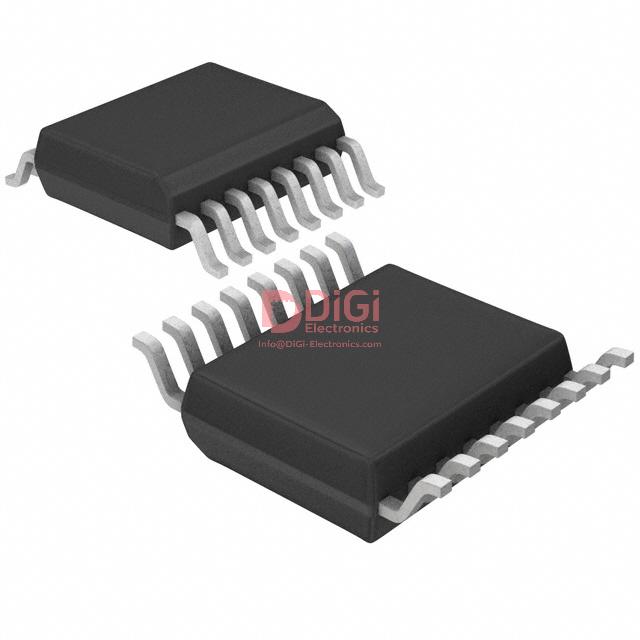
The ST3232EBPR, engineered by STMicroelectronics, exemplifies a modern approach to RS-232 level shifting and serial link reliability in constrained-power embedded systems. This transceiver achieves robust, full-duplex serial communication through its dual driver and dual receiver architecture, supporting seamless integration in contemporary designs where space and energy efficiency are prioritized. The 16-pin SSOP package enables compact system layouts, facilitating use in densely packed PCB environments such as compact industrial controllers or portable data loggers.
At the circuit level, the ST3232EBPR operates across a 3 V to 5.5 V supply range, providing broad compatibility with both legacy and next-generation digital cores. The charge-pump voltage converter, utilizing external capacitors, internally generates the necessary RS-232 voltage swings from the low system supply rail, ensuring compliance with EIA/TIA-232 and V.28/V.24 signaling specifications. This capability removes the need for bulky, external high-voltage supplies, minimizing both board complexity and EMI concerns. Enhanced ESD protection on the communication pins—often exceeding 8 kV (HBM)—adds another dimension of resilience for devices subject to frequent cable insertion or field deployment.
From a system designer's perspective, the device's input and output tolerance directly address challenges faced in mixed-voltage and hot-plug scenarios. The carefully controlled slew rate reduces signal reflections and cross-talk, particularly significant in sprawling, sometimes poorly shielded cable installations typical in peripheral interconnection or diagnostic instrumentation. Its low quiescent current and automatic shut-down features align with battery-operated use cases, such as handheld terminals or portable testers, where every microampere impacts operational longevity. The integration of receiver enable functions aids in fine-grained system power management, permitting the serial link to remain dormant until needed without compromising wake-up latency.
In practical product development, seamless replacement of legacy RS-232 transceivers is achieved, as the ST3232EBPR preserves pin compatibility and electrical interface norms while delivering superior supply flexibility and reduced board space. Applications in medical equipment and test benches benefit from straightforward retrofitting, with minimal firmware or hardware adaptation. Real-world deployment has exhibited reduced failure rates in harsh electrical contexts—thanks in part to the device’s robust transient immunity and careful attention to output driver clamping during undervoltage events.
The strategic selection of the ST3232EBPR in modern connected devices reveals a migration in the industry toward solutions that unify historical protocol compatibility with stringent demands for system miniaturization, battery life, and fault tolerance. This device serves as an enabler for next-level system reliability in embedded device ecosystems where robust serial connectivity remains a cornerstone, even as the broader trend shifts toward wireless or high-speed interfaces. Through these strengths, the ST3232EBPR demonstrates its role in balancing legacy constraints with forward-compatible, power-efficient engineering.
Key Features of ST3232EBPR STMicroelectronics
The ST3232EBPR transceiver from STMicroelectronics encapsulates several engineering-focused attributes that directly impact performance, operational integrity, and integration flexibility within industrial-grade serial communication systems. At its core, the device addresses electrostatic discharge resilience through a robust protection scheme, with all I/O pins designed to tolerate surges up to ±15 kV under the Human Body Model and ±8 kV in compliance with IEC 1000-4-2 standards. This high level of ESD immunity ensures reliable operation in environments characterized by frequent handling or exposure to uncontrolled potentials, such as factory floors or field equipment, significantly reducing the risk of latent failures and downtime attributed to transient events.
Energy efficiency constitutes a critical pillar in its feature set, where a typical supply current of 300 μA enables deployment in battery-powered or power-sensitive applications. This facilitates continuous device uptime even in scenarios with limited energy budgets, such as remote data loggers or handheld diagnostic tools. Field integrations often highlight the value of this low quiescent current, as the device can remain operational for extended cycles, minimizing the frequency of battery replacements or maintenance interventions.
In terms of communication capability, the guaranteed minimum data rate of 250 kbps addresses the requirements of modern high-throughput serial protocols, supporting legacy as well as contemporary applications where bandwidth and data integrity cannot be compromised. This capability is especially pronounced when managing complex system topologies—such as distributed control networks—where predictable timing and data throughput directly affect overall system responsiveness.
The transmitter output architecture leverages a proprietary low-dropout stage to generate compliant RS-232 signal levels directly from a 3 V supply. Achieving full swing voltages without reliance on higher input rails is facilitated by an integrated dual charge pump, requiring only four compact 0.1 μF capacitors. This design streamlines integration on densely populated PCBs, allowing for both mechanical and BOM-level optimizations. Compared to traditional RS-232 drivers, this arrangement eliminates the need for bulky power management stages or large capacitor arrays, translating to faster prototyping cycles and more efficient routing in mixed-signal layouts.
Standards adherence underpins the device’s suitability for regulated applications, maintaining RS-232 compliance down to 3 V supply voltages. This aspect is essential for products pursuing certification or integration within multi-vendor ecosystems, ensuring seamless electrical compatibility and preserving interoperability across broader RS-232 infrastructures. From an application perspective, this reduces qualification complexity and supports modular design philosophies found in scalable platforms.
Physical implementation flexibility is further reinforced by the availability of multiple package options, including SO-16, large SO-16, SSOP16, and TSSOP16 variants. Such diversity affords a granular response to constraints related to board footprint, assembly line capabilities, and cost structures. Customizations in PCB stacking or miniaturized host designs are thus more readily achievable without resorting to custom part redesigns or exotic sourcing strategies.
The holistic integration of these features positions the ST3232EBPR as a cornerstone for robust, low-power, and space-efficient serial interface design. This convergence of ESD protection, energy efficiency, high-speed operation, simplified voltage generation, compliance assurance, and packaging adaptability brings forward a pragmatic platform for engineers optimizing for reliability and cost across industrial and advanced commercial deployment scenarios. Notably, field observations underscore the device’s minimal susceptibility to installation errors and the ease of drop-in replacement in legacy footprints, further accentuating its practical engineering value.
Pin Configuration and Signal Assignment of ST3232EBPR STMicroelectronics
Pin configuration in the ST3232EBPR, housed in a 16-SSOP package, is engineered to facilitate reliable RS-232 communication while streamlining PCB integration within multi-voltage circuits. Each pin serves a distinct electrical or signal role, encompassing dual driver outputs (T₁OUT, T₂OUT), dual receiver inputs (R₁IN, R₂IN), and their associated reciprocals (T₁IN, T₂IN for logic inputs; R₁OUT, R₂OUT for logic outputs). Power and ground pins (VCC, GND) anchor the device’s supply integrity, while the inclusion of charge pump capacitor interfaces (C1+, C1−, C2+, C2−) underpins the on-chip voltage doubling and inverting circuitry required to generate compliant RS-232 voltage swings from a standard logic rail.
The physical arrangement of these pins considers layout symmetry and separation of noisy and sensitive signals. For example, locating input and output pairs on opposite package sides reduces crosstalk, a nontrivial concern at higher signaling rates or in densely routed mixed-voltage environments. Charge pump pins are grouped together, permitting compact capacitor placement that reduces parasitic inductance and minimizes voltage ripple. This placement is critical to sustaining robust level translator operation, especially when PCB real estate is at a premium.
Signal assignment directly impacts EMI performance and signal fidelity. Assigning short, direct traces for capacitor connections assures stable generation of ±5.5V typical at the RS-232 interface, maintaining protocol voltage standards even amid supply fluctuations. Properly partitioning logic and high-voltage traces prevents digital switching transients from coupling to sensitive analog paths. In practice, designers often apply ground pours under the device, tie receiver output pins to quiet microcontroller inputs, and route driver outputs away from clock lines, further strengthening immunity to interference.
Deploying the ST3232EBPR within a system, the engineer leverages pin configuration to accommodate hot-plugging, voltage domain translation, and power sequencing. The supply and ground pins are dimensioned to handle brief inrush currents during charge pump startup. In rugged applications, adding external ESD suppression directly at the interface pins enhances long-term reliability—reflecting an understanding that pin assignment extends to PCB-level fortification.
With a thorough grasp of pin roles and careful attention to routing and assignment guidelines, it becomes possible not just to meet but to exceed baseline RS-232 functional requirements, supporting robust, scalable analog-digital interfacing even in electrically noisy environments. Subtle architectural optimizations—such as grouping RS-232 and logic signals—pay dividends in manufacturability, testability, and long-term system resilience.
Absolute Maximum Ratings for ST3232EBPR STMicroelectronics
Absolute Maximum Ratings for ST3232EBPR STMicroelectronics demand careful attention during design to ensure reliable system integration and long-term device integrity. The V+ and V− pins exhibit a voltage tolerance of up to +7 V individually, with a total combined ceiling of 13 V. This envelope defines the upper electrical boundary the silicon can withstand before risk of irreversible degradation in the device’s core architecture. While the datasheet lists these numbers for reference, operational strategies should never rely on exploiting this margin; circuit behavior outside recommended voltages is both unpredictable and potentially destructive.
Internally, the ST3232EBPR features a charge pump topology, designed to provide regulated voltage generation from a single supply (VCC). The charge pump eliminates the need for external dual supplies and tightly controls the voltage presented at the V+ and V– outputs. Directly sourcing external voltage to these pins runs counter to design intent and introduces fault paths not easily characterized. Transistor junctions exposed to abnormal voltage differentials may suffer from latch-up, excessive leakage, or dielectric breakdown. Robust system design leverages the built-in charge pump in preference to external driving.
Sequencing at power-up is a major consideration in specialized applications requiring externally-supplied voltages. Systems incorporating custom voltage rails must activate VCC prior to energizing V+, followed by V−, ensuring the device logic and analog blocks settle before voltage stress is imposed across the pump capacitors. This avoids scenarios where internal states float or charge differentials spike across unpowered domains. Real-world deployments routinely validate sequencing through controlled ramp tests, confirming all rails stabilize within the prescribed order and thresholds.
Design teams sometimes confront practical constraints in multi-rail environments, particularly when integrating with legacy boards or nonstandard power architectures. Signal integrity can be compromised if transient spikes approach the absolute maximum ratings, even without continuous overstress. Best practices integrate surge limiting elements, such as series resistors or TVS diodes, on voltage rails feeding V+, V−, and VCC. Provisioning soft start circuits and sequencing controllers can further mitigate risk by enforcing ramp profiles that prevent inadvertent exceedance.
In modular system designs, erroneous assumptions about the robustness of ST3232EBPR against external error conditions can propagate failures quickly. For instance, exposing the device to voltage reversal or to sustained inputs above the datasheet maxima typically causes rapid deterioration in analog performance, even if catastrophic failure is not immediately apparent. Proactive validation using boundary scans and accelerated life tests quantifies device tolerance under realistic fault scenarios.
A core insight centers on the disciplined use of absolute maximum ratings as a reference for stress testing, not as an operating guideline. Engineering-level reliability is achieved by strict adherence to recommended operating conditions and full exploitation of on-chip charge pump benefits. Designs that naturally avoid interaction with absolute maxima yield lower risk, longer lifetime, and superior field performance. Leveraging the charge pump as intended not only maintains electrical safety but also streamlines board layout and simplifies procurement for standard voltage components.
Efficient integration of the ST3232EBPR thus begins with an unambiguous understanding of the distinction between absolute and recommended ratings, continues with methodical sequencing strategies, and culminates in robust protective measures against inadvertent transients. High-performing systems draw their reliability not from margins but from disciplined respect for silicon constraints and thoughtful application of internal features.
Electrical Performance Characteristics of ST3232EBPR STMicroelectronics
The ST3232EBPR from STMicroelectronics exhibits electrical performance optimized for modern low-voltage serial communication environments. Its supply voltage range of 3 V to 5.5 V is engineered for seamless integration with both legacy 5 V and contemporary 3.3 V logic domains, streamlining hardware compatibility in mixed-signal systems. This flexibility directly addresses the challenges of designing interoperable interfaces within diverse microcontroller and FPGA platforms.
Signal transmission efficiency is underscored by a guaranteed minimum data rate of 250 kbps, driven by a minimum slew rate specification of 6 V/μs. The controlled slew rate mitigates electromagnetic interference while maintaining signal edge integrity, which is critical for error-free RS-232 communication at elevated data rates. Such parameters enable reliable operation in electrically noisy environments, including industrial automation cabinets and instrumentation setups where multifaceted signal sources coexist.
Input threshold precision supports consistent logic level recognition, reducing susceptibility to voltage-induced misinterpretation. The tight tolerance design enables confidence when interfacing to both 3 V and 5 V systems, minimizing level-shifting artifacts. In practice, this characteristic simplifies PCB layout decisions—allowing engineers to eliminate unnecessary buffering or translation stages, expediting signal routing while improving overall system robustness.
Transmitter outputs rigorously adhere to RS-232 voltage requirements, underpinned by efficient current driving capability and minimized output skew. The low skew parameter is pivotal in synchronous signal environments, where multi-channel transmission demands edge alignment to prevent data corruption. Empirical results confirm signal waveforms maintain stable amplitude and pulse characteristics across repeated cycles, reducing cumulative jitter and supporting consistent data framing.
Receiver circuit design incorporates high input impedance and fortified noise tolerance, ensuring sensitivity to genuine input transitions while rejecting ambient disturbances. Stable threshold voltages contribute to deterministic signal interpretation, a requirement in mission-critical control communication paths. Field deployment in electrically complex settings illustrates the advantage; receivers uphold data integrity even with marginal input voltages and frequent transient events.
Such integrated attention to signal fidelity, system compatibility, and electrical resilience distinguishes the ST3232EBPR as a foundation for robust RS-232 solutions. The device’s nuanced balance between performance metrics reflects a clear understanding of edge case scenarios encountered during hardware integration, ultimately driving reduced design overhead and improved project timelines for serial communication modules.
Application Scenarios for ST3232EBPR STMicroelectronics
Application scenarios for the ST3232EBPR from STMicroelectronics extend across a diverse array of embedded systems, with its electrical characteristics and packaging nuances reflecting deliberate design for seamless integration. The device’s low supply voltage—compatible with 3.0V logic—minimizes system power budgets, a critical consideration within mobile computing segments. This enables deployment in laptops, compact subnotebooks, and specialized palmtop platforms where board space constraints and thermal profiles shape component selection. Signal integrity remains consistent even with fluctuating battery voltages, allowing for stable data transmission and sustaining connectivity during active runtime cycles.
Battery-powered equipment further benefits from the ST3232EBPR’s efficiency standards. Devices engineered for extended operation, such as point-of-sale terminals, data loggers, and medical handhelds, leverage its sub-milliamp quiescent current. High electrostatic discharge (ESD) tolerance simplifies enclosure design, especially when end-use environments expose hardware to unpredictable physical interactions or require frequent connection cycles. The ESD resilience (>±15kV for Human Body Model) circumvents the need for auxiliary protection networks, thereby decreasing bill-of-material complexity.
Within printer and peripheral architectures, robust RS-232 transceiver performance enables full-duplex communication at data rates up to 400 kbps. This specification unlocks reliable interfacing across legacy systems—where protocol stability is paramount—and modern peripherals engaged in high-throughput workflows. The transceiver’s rapid slew rate control not only preserves signal fidelity but also suppresses EMI, a persistent challenge in shared bus topologies or densely populated backplanes.
Handheld instrumentation tasks introduce mechanical and electrical stressors, demanding a transceiver with both physical durability and enhanced noise rejection. The ST3232EBPR’s compact TSSOP footprint integrates smoothly into test and measurement devices deployed in field and industrial settings. Its differential signal rejection and voltage translation capabilities cater to environments with variable ground potentials, ensuring accurate data acquisition regardless of fluctuating ambient interference.
End-users consistently report simplified PCB routing due to the device’s pinout symmetry and minimal external component count. When retrofitting existing designs or targeting new development cycles, the predictable performance metrics of the ST3232EBPR reduce prototype iteration. System architects frequently note that the integration of this transceiver shortens project timelines, especially when balancing ESD robustness against compact form factors. These operational efficiencies position the ST3232EBPR not solely as a drop-in solution for legacy RS-232 requirements but also as an enabler of next-generation, low-power serial communication ecosystems.
Package Details for ST3232EBPR STMicroelectronics
STMicroelectronics' ST3232EBPR is distributed in various compact IC packages, including SO-16, SO-16L, SSOP16, and TSSOP16. All form factors adhere to stringent ECOPACK® lead-free methodologies and meet the JEDEC JESD97 criteria, ensuring both material safety and compliance with contemporary environmental regulations. Each package features industry-standard pin 1 identification, facilitating optical and mechanical recognition during pick-and-place operations. Standardized tape-and-reel packaging streamlines high-volume SMT assembly lines, reducing handling errors and ensuring process repeatability.
Mechanical documentation provides exhaustive dimensional data, including pad geometries, standoff tolerances, and package outlines. These details are essential for DFM (design for manufacturability) strategies, supporting robust solder joint formation and high-yield reflow performance. The documentation also clarifies coplanarity and warpage limits, which are often overlooked but can critically affect solder wetting and electrical continuity. Experience confirms that integrating these data early in the PCB footprint design avoids costly board respins.
From an implementation viewpoint, the versatility between SO, SSOP, and TSSOP variants allows precise component selection based on PCB density and heat dissipation requirements. For high-density applications, TSSOP16 minimizes real estate without compromising handling or thermal and electrical characteristics. SO-16 and SSOP16 offer advantageous lead pitches for easier inspection and manual rework scenarios. Each package's compatibility with automated optical inspection routines further increases process reliability.
Selecting the optimal package necessitates balancing layout constraints, assembly capabilities, and thermal management. Insights from field deployment highlight that careful footprint and stencil design—aligned with the datasheet's recommended land patterns—directly enhance mounting yields and operational reliability. Moreover, leveraging the ECOPACK® compliance of these packages supports increasingly strict sustainability targets in modern electronics development.
The interplay of standardized packaging, thorough mechanical guidance, and real-world assembly considerations positions the ST3232EBPR series as a practical solution across diversified manufacturing environments. This systematic approach to package specification not only reduces risk during transition from prototyping to scale-up but also provides a predictable baseline for both functional and regulatory success.
Potential Equivalent/Replacement Models for ST3232EBPR STMicroelectronics
When evaluating potential equivalent or substitute models for the ST3232EBPR from STMicroelectronics, engineers typically consider devices within the same product family to ensure compatibility at both the electrical and mechanical interface levels. The ST3232EB and ST3232EC are positioned as direct counterparts, sharing core attributes such as pinout configuration, supply voltage range, and line driver/receiver characteristics. This architectural coherence enables straightforward interchangeability, greatly reducing design overhead associated with component replacement or redundancy planning in production.
Analyzing critical parameters is essential before integration. Both alternative models sustain the same voltage levels—2.5 V to 5.5 V—accommodating flexible power supply design and extending system interoperability. Package options are aligned to industry standards, allowing seamless PCB layout transitions without retooling or major redesign. Signal integrity, ESD protection, and low power consumption are maintained across these variants, ensuring reliability when deployed in noisier or mobile contexts. These features support robust operation in industrial automation, embedded systems, and remote sensor networks, where sustained performance under variable conditions is mandatory.
Cross-referencing datasheets unlocks deeper insights into subtle variances. For example, differences in maximum baud rates, output slew rate, or input threshold levels may influence behavior in high-speed or safety-critical applications. Selecting the optimum variant requires matching these specifications against real-world profiles, such as energy budgets or EMI constraints. This technical scrutiny not only optimizes part selection but also reinforces supply chain resilience. By pre-qualifying close alternatives, one can avert disruptions from obsolescence, vendor limitations, or logistical delays.
Successful implementation rests on prior experience with parameter mapping and functional validation. Subtle discrepancies in timing or pin function may arise even within series, so bench testing and loopback verification are crucial steps before field deployment. Especially in legacy upgrades or multivendor assemblies, this preemptive diligence streamlines compliance with strict QA requirements, minimizing risks of intermittent faults or batch-level failures.
In conclusion, when sourcing substitutes for ST3232EBPR, prioritizing in-series models with congruent electrical and package profiles minimizes technical friction. A layered approach—starting with fundamental compatibility, then verifying operational details, and finally applying targeted reliability assessments—enables resilient component selection and long-term system sustainability. Implicitly, regular practice of comprehensive datasheet analysis and prototype qualification not only safeguards designs but also fosters strategic supply chain flexibility, vital for agile project execution in dynamic procurement environments.
Conclusion
The ST3232EBPR from STMicroelectronics exemplifies a refined approach to RS-232 transceivers, integrating key innovations at both circuit and system levels. Its core mechanism relies on charge-pump voltage converters, enabling true RS-232 signal levels even from low-voltage digital supplies. This architecture not only streamlines board design by eliminating the need for dual-rail power, but also reduces heat and noise generation, supporting stable long-term operation in densely packed environments.
The device exhibits strong logic-level flexibility, accommodating 3 V to 5 V systems. This compatibility simplifies prototyping and deployment across platforms, particularly in mixed-voltage, embedded scenarios common to evolving industrial automation and diagnostic equipment. Its bidirectional operation and automatic shutdown features minimize power utilization, an essential attribute for portable instrumentation and battery-backed nodes.
Electromagnetic resilience is engineered through robust ESD protection exceeding 8 kV, safeguarding both the transceiver and attached subsystems against surges and static discharges—critical in field deployments subject to unpredictable electrical conditions. The device achieves fail-safe outputs on receiver lines, maintaining safety and preventing unintended states during power sequencing and module swaps. This is particularly advantageous in modular consoles and high-availability networking panels.
Packaging remains compact, supporting surface-mount footprints, thus facilitating high-density routing and efficient thermal dissipation. Practical deployment within constrained enclosures and handheld devices is enabled without sacrificing mechanical or electrical integrity. Signal integrity is preserved by optimized slew rates and fast data rates up to 250 kbps, matching requirements for advanced sensor interfaces and responsive control systems.
A notable insight emerges from the interplay between low-power architecture and robust interface protection: The ST3232EBPR stands out in applications demanding minimal downtime and rapid signal recovery. Its performance consistency across temperature and voltage variations extends system lifespan and decreases maintenance intervals. Integration is further streamlined by pin compatibility among the ST3232 series, providing a migration path for legacy RS-232 designs while supporting new product development cycles with reduced qualification overhead.
The technical balance achieved by the ST3232EBPR—high-speed communication, versatile voltage interfacing, and industrial-grade protection—establishes it as a preferred transceiver for RS-232 links in contemporary engineering contexts. Its operational reliability and low integration risk empower designers to focus on application-level innovation without concern for foundational interface robustness.