LMX321ICT >
LMX321ICT
STMicroelectronics
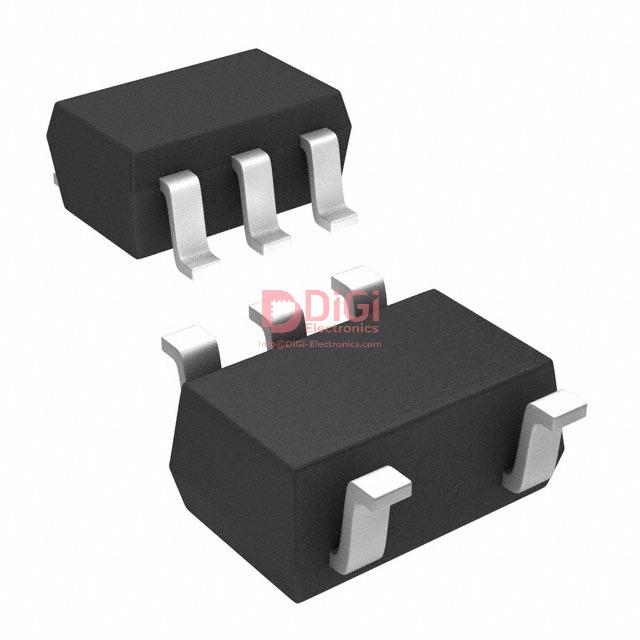
IC OPAMP GP 1 CIRCUIT SC70-5
38368 Pcs New Original In Stock
General Purpose Amplifier 1 Circuit Rail-to-Rail SC-70-5
Request Quote (Ships tomorrow)
*Quantity
Minimum 1
LMX321ICT STMicroelectronics
5.0 / 5.0 - (325 Ratings)

LMX321ICT

Product Overview

12876792

DiGi Electronics Part Number

LMX321ICT-DG
LMX321ICT

Description

IC OPAMP GP 1 CIRCUIT SC70-5

Inventory

38368 Pcs New Original In Stock
General Purpose Amplifier 1 Circuit Rail-to-Rail SC-70-5
Quantity
Minimum 1

Purchase and inquiry

Quality Assurance

365 - Day Quality Guarantee - Every part fully backed.

90 - Day Refund or Exchange - Defective parts? No hassle.

Limited Stock, Order Now - Get reliable parts without worry.

Global Shipping & Secure Packaging

Worldwide Delivery in 3-5 Business Days

100% ESD Anti-Static Packaging

Real-Time Tracking for Every Order

Secure & Flexible Payment

Credit Card, VISA, MasterCard, PayPal, Western Union, Telegraphic Transfer(T/T) and more

All payments encrypted for security

In Stock (All prices are in USD)
  • QTY Target Price Total Price
  • 1 0.5245 0.5245
  • 10 0.5115 5.1150
  • 30 0.5027 15.0810
  • 100 0.4940 49.4000
Better Price by Online RFQ.
Request Quote (Ships tomorrow)
* Quantity
Minimum 1
(*) is mandatory
We'll get back to you within 24 hours

LMX321ICT Technical Specifications

Category Linear, Amplifiers, Instrumentation, Op Amps, Buffer Amps

Manufacturer STMicroelectronics

Packaging Tape & Reel (TR)

Series -

Product Status Active

Amplifier Type General Purpose

Number of Circuits 1

Output Type Rail-to-Rail

Slew Rate 0.7V/µs

Gain Bandwidth Product 1.3 MHz

Current - Input Bias 27 nA

Voltage - Input Offset 4 mV

Current - Supply 130µA

Current - Output / Channel 70 mA

Voltage - Supply Span (Min) 2.3 V

Voltage - Supply Span (Max) 5.5 V

Operating Temperature -40°C ~ 125°C

Mounting Type Surface Mount

Package / Case 5-TSSOP, SC-70-5, SOT-353

Supplier Device Package SC-70-5

Base Product Number LMX321

Datasheet & Documents

HTML Datasheet

LMX321ICT-DG

Environmental & Export Classification

RoHS Status ROHS3 Compliant
Moisture Sensitivity Level (MSL) 1 (Unlimited)
REACH Status REACH Unaffected
ECCN EAR99
HTSUS 8542.33.0001

Additional Information

Other Names
497-13036-6
-497-13036-6
497-13036-1
497-13036-2
-497-13036-2
-497-13036-1
Standard Package
3,000

Alternative Parts

PART NUMBER
MANUFACTURER
QUANTITY AVAILABLE
DiGi PART NUMBER
UNIT PRICE
SUBSTITUTE TYPE
LMV321AP5X
onsemi
93788
LMV321AP5X-DG
0.4140
Similar
MIC860BC5-TR
Microchip Technology
918
MIC860BC5-TR-DG
0.4140
MFR Recommended
MAX4400AXK-T
Analog Devices Inc./Maxim Integrated
5073
MAX4400AXK-T-DG
0.4140
MFR Recommended
MIC860YC5-TR
Microchip Technology
2124
MIC860YC5-TR-DG
0.4140
MFR Recommended
MIC861YC5-TR
Microchip Technology
500181
MIC861YC5-TR-DG
0.4140
MFR Recommended

Reviews

5.0/5.0-(Show up to 5 Ratings)
Riviè***éleste
December 02, 2025
5.0
J'apprécie énormément l'utilisation d'emballages respectueux de l'environnement, cela reflète une vraie responsabilité sociale.
Rayon***oleil
December 02, 2025
5.0
Grâce à leur livraison ultra rapide, j’ai pu profiter de mes achats dès le lendemain.
Infin***Dreams
December 02, 2025
5.0
Their delivery times are consistently quick, making procurement hassle-free.
Publish Evalution
* Product Rating
(Normal/Preferably/Outstanding, default 5 stars)
* Evalution Message
Please enter your review message.
Please post honest comments and do not post ilegal comments.

Frequently Asked Questions (FAQ)

Can the LMX321ICT be used in low-voltage battery-powered sensor applications where supply voltage drops to 2.4V, and how does it maintain rail-to-rail output performance under these conditions?

Yes, the LMX321ICT is well-suited for low-voltage battery-powered sensor applications operating down to 2.3V, as specified in its supply voltage range. Its rail-to-rail output stage ensures maximum dynamic range even at low voltages, allowing signals to swing within about 10 mV of each supply rail under light loads. For reliable performance, ensure the load impedance is ≥10 kΩ to minimize output saturation effects. Also, monitor input common-mode range limitations: while the output is rail-to-rail, the input common-mode range includes the negative rail but not the positive supply, so inputs must stay at least 1V below V+ to avoid phase reversal or distortion. This makes the LMX321ICT ideal for single-supply systems like portable health sensors or IoT nodes using coin-cell or Li-ion batteries.

What are the stability risks when driving capacitive loads with the LMX321ICT, and how can I prevent oscillation in PCB layout?

The LMX321ICT can become unstable when directly driving capacitive loads above 100 pF due to phase margin reduction, leading to ringing or oscillation. This is a common issue in long trace runs or when buffering ADC inputs. To mitigate this, use a small series resistor (22–100 Ω) between the amplifier output and the capacitive load to isolate the capacitance and improve phase margin. Additionally, minimize PCB trace capacitance by reducing length and avoiding parallel routing over ground planes. Avoid placing decoupling capacitors directly at the output; instead, place them near power pins. For loads >1 nF, consider using a voltage follower with an isolation resistor or a unity-gain stable amplifier with higher drive capability, though the LMX321ICT’s 70 mA output current helps dampen moderate capacitive effects if properly isolated.

How does the LMX321ICT compare to the TLV2461IDBVR in terms of power consumption and noise for a precision analog front-end design?

The LMX321ICT draws only 130 µA typical supply current, making it more power-efficient than the TLV2461IDBVR, which consumes around 210 µA. Both are rail-to-rail output amplifiers, but the LMX321ICT offers superior input bias current (27 nA vs. ~150 pA for the TLV2461), though the latter has significantly lower voltage noise (11 nV/√Hz vs. ~50 nV/√Hz estimated for LMX321ICT based on its 1.3 MHz GBW). For precision low-frequency sensor conditioning (e.g., strain gauges), the TLV2461IDBVR may offer better noise performance, but for ultra-low power, moderate accuracy systems like smoke detectors or wearable sensors, the LMX321ICT provides a better trade-off. Additionally, the LMX321ICT's wider temperature range (−40°C to 125°C) suits automotive and industrial environments where reliability under thermal stress is critical.

Is the SC-70-5 package of the LMX321ICT suitable for automated assembly, and what PCB layout practices prevent soldering defects?

Yes, the SC-70-5 package of the LMX321ICT is suitable for automated SMT assembly, especially given its MSL-1 rating, which allows indefinite exposure to ambient conditions before soldering. However, due to its small footprint and 0.5mm pin pitch, careful PCB design is essential. Use solder mask-defined pads with 0.2–0.3mm solder mask dams to prevent bridging. Include thermal relief for the center pad if present, though the SC-70-5 typically lacks an exposed thermal pad. Ensure accurate stencil aperture design (0.4mm × 0.2mm) to control solder volume and avoid tombstoning. Inspect profiled reflow settings: peak temperature should not exceed 260°C for more than 30 seconds. Avoid hand soldering due to high risk of shorting adjacent pins; use rework stations with precision nozzles if needed.

Can the LMX321ICT replace the MCP6001 in existing designs, and what design adjustments are required to ensure compatibility?

The LMX321ICT can generally replace the MCP6001 in low-power, general-purpose applications, as both are single-supply, rail-to-rail output op-amps with similar GBW (1.3 MHz vs. 1 MHz) and supply ranges (2.3–5.5V vs. 1.8–6.0V). However, key differences require attention: the LMX321ICT has higher input offset voltage (4 mV vs. 1.5 mV max for MCP6001), which may affect precision DC accuracy in gain stages. Also, the MCP6001 has slightly better ESD protection (±4 kV HBM vs. unspecified for LMX321ICT). To ensure compatibility, verify that your application can tolerate the higher offset—consider adding external offset trimming or AC-coupling if necessary. Confirm pin compatibility: both are in SC-70-5 packages with identical pinouts (input+, input−, output, V−, V+). Finally, ensure bypassing with a 100 nF ceramic capacitor close to V+ to maintain PSRR and stability, as with the MCP6001.

Quality Assurance (QC)

DiGi ensures the quality and authenticity of every electronic component through professional inspections and batch sampling, guaranteeing reliable sourcing, stable performance, and compliance with technical specifications, helping customers reduce supply chain risks and confidently use components in production.

Quality Assurance
Counterfeit and defect prevention

Counterfeit and defect prevention

Comprehensive screening to identify counterfeit, refurbished, or defective components, ensuring only authentic and compliant parts are delivered.

Visual and packaging inspection

Visual and packaging inspection

Electrical performance verification

Verification of component appearance, markings, date codes, packaging integrity, and label consistency to ensure traceability and conformity.

Life and reliability evaluation

DiGi Certification
Blogs & Posts
LMX321ICT CAD Models
productDetail
Please log in first.
No account yet? Register