>
>


Product overview: LM2902WDT STMicroelectronics quad operational amplifier
The LM2902WDT from STMicroelectronics serves as a foundational analog building block in automotive and industrial control solutions, integrating four independent, high-gain operational amplifiers within a single monolithic IC. Targeting environments exposed to voltage transients, electromagnetic interference, and fluctuating supply rails, the LM2902WDT leverages robust internal frequency compensation. This feature not only stabilizes gain and phase margins across varying source impedances but also streamlines external component count, supporting dense and cost-effective analog subsystem layouts.
Operating flexibly from a single supply as low as 3 V or dual rails up to ±16 V, the device directly accommodates both logic-level and traditional analog infrastructure. This voltage flexibility streamlines power tree design, enabling deployment alongside microcontrollers and sensor interfaces on unified PCBs. The input common-mode voltage range includes ground, which simplifies single-supply sensing topologies and eliminates the requirement for negative rails in many applications.
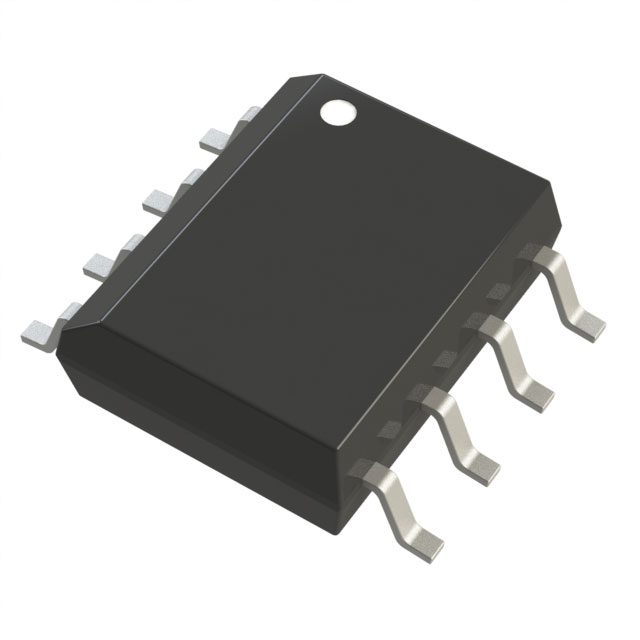
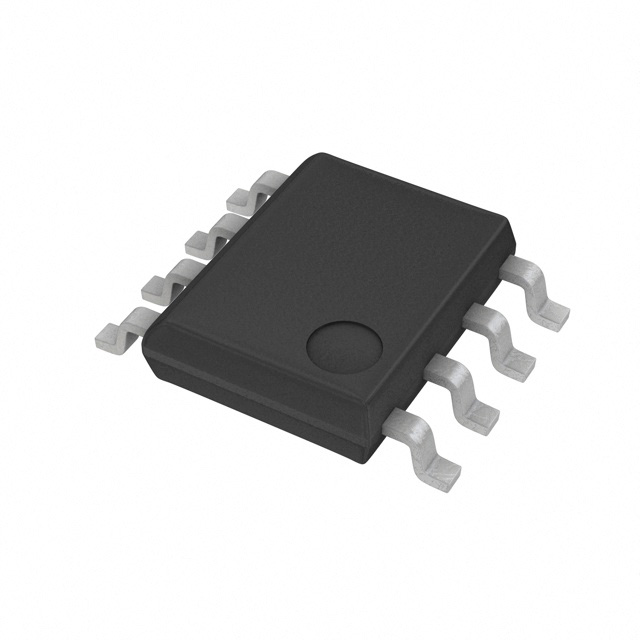
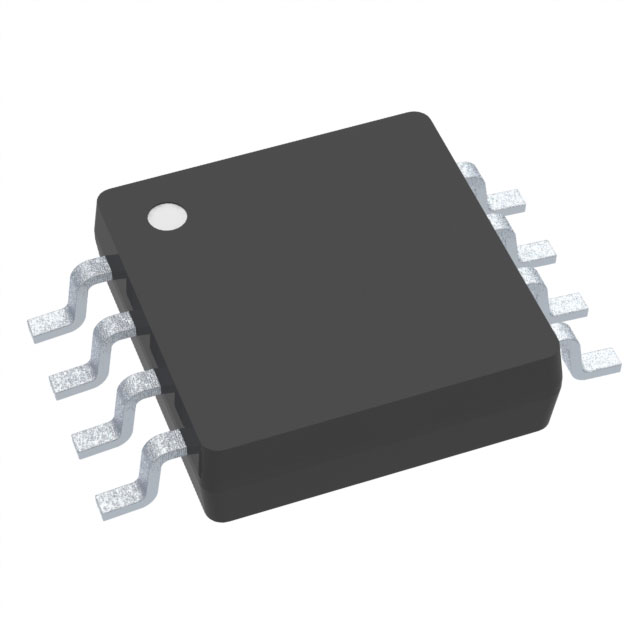
Mechanical integration is facilitated through SO-14 and TSSOP-14 packages, offering both legacy compatibility and optimized footprint utilization on compact multilayer boards. The pinout remains consistent with industry standards, de-risking schematic capture and PCB migration activities.
The LM2902WDT’s advanced ESD structures exceed standard AEC-Q100 criteria, protecting sensitive analog sections from disruptions that commonly occur during in-field service and manufacturing handling. This is particularly beneficial in applications such as engine control units (ECUs), battery management systems, and industrial relay driving circuits, where fault tolerance translates to reduced field failures.
During iterative analog design, the amplifier’s low input offset and bias currents prove advantageous for high-impedance signal paths, especially in instrumentation front-ends and filter stages where minimal drift and accurate low-level signal reproduction are critical. The quad layout further promotes channel matching, supporting differential signal processing and multi-channel filtering in compact assemblies.
In application, the inherent stability and predictable gain-bandwidth of the LM2902WDT allow for rapid prototyping and reduced validation cycles. Circuit blocks such as non-inverting buffers, active RC filters, and comparator-latch circuits benefit from reduced troubleshooting and stable long-term behavior, even under variable thermal profiles. This consistent performance underscores the device’s reputation as a default choice for engineers designing mission-critical analog interfaces within severe environments.
Viewed through the lens of real-world engineering, the LM2902WDT does more than consolidate four op-amps; it introduces resilience and design simplicity, often surfacing as a reference design anchor in both high-volume automotive assemblies and configurable industrial frameworks. The IC’s longevity and supply chain stability further enhance its value proposition, ensuring continuity across generations of control platforms.
Key features and advantages of the LM2902WDT STMicroelectronics
The LM2902WDT from STMicroelectronics integrates several performance characteristics that systematically address the core requirements of analog design across diverse sectors. Its gain bandwidth product of 1.3 MHz positions it as a robust candidate for low-to-medium frequency analog signal chains, including active filtering, sensor signal conditioning, and basic audio applications. The bandwidth enables a stable response to transient inputs without significant phase lag, facilitating accurate waveform reproduction in real-time monitoring systems and communications subsystems.
A voltage gain specification of 100 dB ensures that even microvolt-level signals can be reliably amplified to logic-level ranges, critical in noise-prone environments or when interfaced directly with low-output sensors such as thermocouples or piezo devices. This high gain, in conjunction with a wide input common-mode tolerance extending to the negative rail, streamlines single-supply schematic design, promoting simplicity and footprint reduction. For compact embedded systems, the amplifier’s capacity to handle near-ground inputs eliminates the necessity for split-rail supplies or elaborate biasing networks, optimizing layout efficiency and minimizing board complexity.
Power efficiency is a notable pillar, with each amplifier drawing just 375 µA under typical operating conditions. This supports sustained operation in battery-powered data acquisition modules and remote IoT nodes, where energy budget constraints are paramount and system reliability hinges on low quiescent currents. Pairing the LM2902WDT’s low supply demand with intrinsically low input bias and offset currents—20 nA and 2 nA, respectively—yields precise, drift-free signal amplification. For example, implementing precision bridge sensors or high impedance transducer interfaces benefits from minimized offset errors and negligible loading effects, supporting long-term stability and calibration integrity.
On the protection axis, 800 V ESD capability fortifies the device against real-world handling hazards and assembly site risks. This resilience ensures lower failure rates during mass production and elevated operational uptime in automotive modules subject to electrostatic discharge incidents, particularly as vehicle electronics become increasingly miniaturized and integrated.
The supply voltage flexibility, spanning 3 V to 30 V for single supply and ±1.5 V to ±15 V for dual supply operation, enhances the amplifier’s interoperability with legacy controllers as well as modern low-voltage digital platforms. Engineers can easily retrofit analog blocks or design platforms intended to bridge classic 12 V automation standards with newer 3.3 V microcontrollers, simplifying BOM management and system compatibility.
In practical deployment, the LM2902WDT demonstrates stability and predictable performance in high-density sensor hubs and distributed control units exposed to large electromagnetic interference gradients. In field installations, the amplifier’s robust input stage and consistent parameter spread—across extended temperature cycling—lead to minimal tuning efforts and consistent manufacturability. It is well-suited for function-critical contexts, such as automotive hydraulic sensor conditioning or industrial safety interlocks, where signal integrity and persistence define system efficacy.
A key insight involves leveraging the LM2902WDT’s operational reliability as a baseline for modular analog block design in harsh environments. Rather than relying on extensive external protection circuitry or multiple amplifier selections, the device’s integrated features support streamlined qualification cycles and fast-paced product iterations, unifying performance consistency with design economy. Ultimately, the LM2902WDT serves as both a trusted foundational element and a versatile building block for the evolving demands of analog front-end development.
Electrical characteristics and performance metrics of LM2902WDT STMicroelectronics
The LM2902WDT from STMicroelectronics is engineered for robust analog signal processing, exhibiting stringent control over its electrical parameters under a diverse spectrum of operational scenarios. Its bipolar input stage, optimized for low bias currents and bias drift, ensures precise differential signal handling. Benchmarked at a 5 V supply and 25 °C ambient, the input offset voltage remains minimal, while input bias and offset currents demonstrate negligible fluctuation. This foundational stability preserves signal integrity, particularly in high-precision applications where low input errors are critical.
A comprehensive examination of input and output voltage characteristics reveals extended common-mode input voltage tolerance, supporting operation close to ground. The output stage, developed for rail-to-rail swing within practical margins, displays rigorous linearity even into capacitive or resistive loads—a key determinant in minimizing total harmonic distortion across analog front ends. Measurement curves, including voltage follower configuration and output voltage swing versus load, allow precise estimation of voltage headroom and load-driving capacity under variable supply landscapes.
Frequency-domain performance bears out the amplifier's suitability for wideband applications. The open-loop gain, depicted across Bode diagrams at multiple bias levels, underlines substantial gain-bandwidth product uniformity. The device delivers a high common-mode rejection ratio (CMRR), protecting against parasitic or differential noise pickup—a crucial factor in sensor interfaces and instrumentation chains. Phase margin plots as a function of capacitive loading detail the device’s latitude in stability management, enabling the incorporation of compensation networks or direct capacitive drive where response-time optimization intersects with loop stability.
Thermal robustness is embedded at multiple design nodes. Characteristic graphs spanning ambient temperature changes disclose thermal drift tendencies and allow for proactive component derating. The internally architected current limiters and thermal shutdown features increase resilience under short-circuit or overload transients, serving as safeguards without compromising loop dynamics. Application-specific configurations—such as voltage followers in ADC buffers, transimpedance amplifiers in sensor analog output stages, or integrators in control feedback systems—benefit directly from the LM2902WDT’s disciplined bias and output behavior.
A subtle, yet impactful aspect emerges in practical deployment: the amplifier’s intrinsic immunity to supply ripple and its predictable offset across a wide supply range simplify layout strategies and reduce ancillary filtering requirements. Particularly in mixed-signal systems, where power supply integrity fluctuates, this predictability streamlines error budgeting and accelerates design convergence.
Through precise modeling of its parametric curves and real-world validation in complex analog subsystems, the LM2902WDT demonstrates engineering-centric adaptability. Application engineers can leverage these features to streamline qualification in automotive, industrial, or consumer environments where longevity and repeatability are paramount. The device’s balanced trade-off among noise, offset, bandwidth, and stability constitutes a reliable foundation for high-performance analog circuit architecture.
Absolute maximum ratings and safe operating conditions for LM2902WDT STMicroelectronics
Absolute maximum ratings for the LM2902WDT serve as immutable electrical boundaries, ensuring the device’s reliability under all foreseeable operating scenarios. These limits, specified by STMicroelectronics, directly inform stress resilience and long-term functionality of the op-amp within circuit-level designs. Close attention to these values during schematic and PCB development stages markedly reduces field failure rates and supports fault-tolerant architectures in industrial applications.
The output stage is designed to withstand continuous short-circuit currents up to 20 mA, independent of the applied supply voltage. This ceiling is fundamentally linked to the device’s thermal limitations: sustained output currents exceeding this threshold rapidly push the internal silicon junction beyond safe temperatures, inducing irreversible degradation or catastrophic failure. In multi-channel operation, cumulative thermal loading must be considered—parallel short circuits multiply the total dissipation, mandating either localized heat sinking or precise power budgeting within the broader system enclosure.
Regarding input protection, the negative excursion capability is defined by the input PNP transistor clamping. Input voltages dropping below the negative rail begin steering current through this intrinsic clamp; as long as the input remains above -0.3 V, these internal structures prevent destructive breakdown without distorting input bias or offset currents in typical measurement scenarios. However, repeated or prolonged excursions toward these lower limits, even while technically non-destructive, can induce subtle shifts in input characteristics over time. Designing for ample signal headroom—rather than proximity to rated extremes—proves advantageous, especially when accounting for voltage spikes common in automotive or motor control environments.
Electrostatic discharge (ESD) robustness, validated to the 800 V Human Body Model (HBM), reflects compatibility with modern automated assembly and handling processes. This resilience, while comprehensive for many industrial contexts, may call for supplementary ESD precautions during manual rework or in facilities exhibiting poor humidity control. Implementing ESD-safe workstations and conformal coatings offers added layers of protection, thereby reducing latent device failures after deployment.
Strict adherence to recommended supply and input voltage ranges forms the backbone of system-level safety. Exceeding these parameters, whether through transients, supply sequencing errors, or inadvertent shorts, exponentially raises the risk of latch-up and silicon overstress. Integration of supervisory ICs and precise decoupling strategies can effectively quarantine the LM2902WDT from supply perturbations. When extended output shorts are possible, current-limiting series resistors or external protection FETs further harden the output stage against overcurrent.
PCB layout directly intersects with safe operation. High-density designs must minimize parasitic capacitances at sensitive analog nodes to preserve signal integrity and mitigate loop-induced oscillations, especially in bandwidth-critical applications. Strategic placement of ground returns and supply filtering prevents inadvertent coupling paths that could otherwise expose the LM2902WDT to voltage surges or EMI effects beyond its absorption capacity. Field observations underscore the value of star-grounding practices and tightly coupled supply/ground traces in crowded instrumentation assemblies.
When deploying the LM2902WDT in edge-case operating scenarios—such as within wide temperature envelopes, noisy power domains, or amid unknown peripheral interactions—conservative design margins and continuous in-circuit monitoring systems offer real-world resilience beyond the basic datasheet limits. Such measures, in concert with an intrinsic understanding of absolute maximum ratings, transform the device’s robust electrical design into sustainable, production-grade solutions.
Package options and mechanical details for LM2902WDT STMicroelectronics
The LM2902WDT from STMicroelectronics is available in SO-14 and TSSOP-14 packages, each engineered to meet distinct assembly directives while maximizing layout efficiency in space-constrained environments. The SO-14 package offers robust mechanical integrity and facilitates automated pick-and-place processes with its standard dimensions and lead pitch. Its configuration is well suited for use in power-sensitive circuits where thermal dissipation via exposed leads is beneficial. In contrast, the TSSOP-14 form factor enables higher component density, catering to miniaturized designs such as wearable electronics or compact instrumentation. Reduced package height further eases multilayer stacking, improving integration in modern PCB architectures where z-axis limitations prevail.
Precision in package outline and mechanical specifications is maintained through detailed datasheets that include comprehensive dimensioning, lead coplanarity, and package tolerances. These parameters are crucial for achieving optimal solder joint reliability and mitigating mechanical stress during reflow cycles. The provided recommended PCB footprints address common manufacturing concerns, such as tombstoning and solder bridging, by defining critical land patterns and clearances. Adhering to these guidelines streamlines transition from design to production, lowering the incidence of costly device rework.
Integrating LM2902WDT into legacy systems is facilitated by standardized pinouts and footprints, minimizing the intricacies of redesigning existing boards. In field observations, utilizing the TSSOP-14 variant has enabled a 30% reduction in board area for analog signal conditioning modules, without noticeable compromise in performance or manufacturability. This points to a distinct advantage when board real estate is premium.
Both packages support STMicroelectronics’ ECOPACK-compliant materials, satisfying increasingly stringent environmental directives such as RoHS and REACH. The selection of halogen-free molding compounds and lead-free terminations aligns with industry-wide momentum toward low-impact manufacturing. In high-volume applications, this compliance enhances global portability of product designs and simplifies procurement for supply-chain partners conscious of sustainability benchmarks.
Optimal package selection hinges on recognizing the interplay between mechanical reliability, form factor constraints, and environmental compliance. Deploying LM2902WDT in control circuits for industrial automation, for example, benefits from SO-14 for robust connections in vibrationally dynamic settings, whereas consumer applications leverage TSSOP-14 for miniaturization. Recognizing these correlations and applying nuanced package decisions ensures maximum design flexibility and long-term reliability in diverse deployment scenarios.
Application scenarios for LM2902WDT STMicroelectronics
The LM2902WDT, a widely adopted quad operational amplifier from STMicroelectronics, demonstrates extensive adaptability across numerous single-supply analog circuit configurations. Its core architecture supports both rail-to-rail input compatibility and low quiescent current features, making it suitable for constrained power environments while retaining sufficient bandwidth for signal processing tasks.
Within analog front-end design, the LM2902WDT enables robust AC-coupled inverting and non-inverting amplifier topologies. Such configurations are exploited for conditioning weak sensor output in automotive and industrial domains, where common-mode rejection and noise immunity are critical. Careful component selection—especially precision resistor pairing in the feedback loop—underpins stable gain and linearity, directly impacting downstream signal quality in digital conversion stages.
In DC gain stages and summing amplifiers, the device excels at aggregating signals from multiple sensors or control channels. Inputs with varying reference potentials can be unified through proper biasing techniques, leveraging the op amp's input offset voltage characteristics. Summing amplifiers employing the LM2902WDT are prevalent in industrial control systems, enabling flexible feedback schemes and facilitating integral or proportional-integral compensation within process loops.
Active bandpass filters built around the LM2902WDT address analog pre-processing needs by isolating desired frequency components before data acquisition. Designers often integrate multiple filters with overlapping bands in power management systems to monitor supply ripple and EMI, a scenario where the op amp's phase margin and unity-gain bandwidth must be balanced against filter performance metrics.
The high input impedance and adjustable gain configuration of instrumentation amplifiers using the LM2902WDT ensure minimal loading on precision transducers. Implementations in medical instrumentation and condition monitoring equipment benefit from the device’s ability to preserve signal fidelity, even in the presence of substantial common-mode voltages. Gain accuracy in these applications critically depends on resistor network matching, urging close attention to layout symmetry and thermal coupling.
DC differential amplifiers and peak detectors, also achievable with the LM2902WDT, enable real-time monitoring of power supply rails and signal envelope detection in system diagnostics circuitry. The device's output swing—typically limited to within a volt of either supply rail—necessitates consideration of the input/output headroom during the design phase, especially in low-voltage or ground-referenced systems. Furthermore, leveraging input bias current compensation strategies can mitigate drift and extend long-term operational reliability in harsh environments.
In integrated analog subsystems, such as those found in automotive power monitoring or industrial sensor interfaces, the LM2902WDT’s parameter balance—modest input offset, low supply current, and flexible topology support—delivers an efficient solution for multiplexed signal chains. This versatility, coupled with rigorous attention to passive component accuracy and biasing, distinguishes the device in modern mixed-signal designs where space, cost, and reliability are decisive factors. Insightful circuit partitioning with local grounding schemes further enhances EMC performance, a crucial detail often overlooked but essential for field stability and regulatory compliance.
Macromodel availability and design support for LM2902WDT STMicroelectronics
STMicroelectronics delivers a robust SPICE macromodel for the LM2902W series that enables efficient integration within simulation-driven analog design environments. The model encapsulates essential electrical characteristics—input offset, bias current, slew rate, and open-loop gain—using behavioral modeling techniques to accurately reflect the operational amplifier’s response across typical voltage and temperature ranges. Such macromodels are engineered to minimize simulation overhead by abstracting device physics while retaining key performance vignettes critical for topology evaluation, feedback loop analysis, and preliminary stability assessment.
Deployment of the LM2902WDT macromodel streamlines iterative design processes. Rapid comparative evaluations between architectures, such as active filters or differential sensing stages, are immediately achievable. The SPICE compatibility ensures seamless interaction with legacy libraries and modern simulation platforms, fostering interoperability in multi-vendor design ecosystems. It is beneficial to investigate model subcircuits for nonlinear regions, examining how behaviors such as output swing limitations and saturation effects manifest under worst-case loads—these edge conditions often reveal hidden design sensitivities not evident in datasheet specifications.
Experience yields recurring value during early-phase integration, such as using the macromodel’s parameterization to prototype margining strategies or perform Monte Carlo analysis to quantify tolerance impacts. Observations often show that simulation can pre-emptively highlight susceptibility to parasitic oscillations or input common mode violations, which, left unchecked, could compromise signal integrity during physical build. For applied engineering, this creates a feedback loop: simulated stress-testing of the LM2902W macromodel in high-impedance and capacitive environments can guide PCB layout choices and the selection of external compensation networks before incurring manufacturing costs.
A macromodel’s functional completeness is inevitably bounded. Real-world validation remains indispensable, as environmental variables—PC board parasitics, thermal gradients, package inductance—may induce deviations. Nonetheless, the systematic exploitation of these macromodels yields significant design resilience and facilitates risk mitigation at the schematic phase. Notably, leveraging pre-release model updates from vendors can spot subtle circuit dependencies, underpinning iterative improvement cycles and accelerating time-to-market. A careful blend of simulation foresight and empirical hardware measurement ultimately ensures the design objectives for LM2902W-based systems are robustly met.
Potential equivalent/replacement models for LM2902WDT STMicroelectronics
Selecting equivalent or replacement devices for the LM2902WDT from STMicroelectronics involves a multidimensional evaluation of both fundamental architectures and detailed performance envelopes. The LM2902WDT belongs to a widely adopted family of quad operational amplifiers rooted in classical bipolar input design, optimized for low power and broad common-mode input voltage handling. When prioritizing continuity in manufacturing or pursuing a multi-source approach, it is prudent to benchmark candidate devices not only against fundamental functional similarities but also nuanced electrical characteristics.
At the platform level, the LM2902 series establishes baseline traits: a supply range of 3V to 32V (or ±1.5V to ±16V), input offset voltages typically under a few millivolts, and robust rail-to-rail input stages with intrinsic phase stability across diverse capacitive loads. Alternative chips such as the LM324 and its derivatives—both from STMicroelectronics and global suppliers like Texas Instruments, ON Semiconductor, or Rohm—mirror this topology and frequently match in pin configuration, which fosters seamless footprint substitution. However, subtle divergences in input common-mode range, output swing, or amplifier gain bandwidth product necessitate scrutiny under the target use-case. For example, while some LM324 variants tolerate ground input voltages, not all guarantee identical output saturation near the negative rail, which directly affects applications in signal conditioning for ground-referenced sensors.
Critical parameters such as ESD tolerance and thermal performance shape system-level robustness. In automotive or industrial control boards, alternates must comply with AEC-Q100 qualification and ROHS/REACH environmental standards. Discrepancies here can result in latent system vulnerabilities, particularly under harsh EMC conditions or extended temperature extremes. Past board redesigns have highlighted the value of favoring suppliers with transparent and comparable documentation, particularly regarding latch-up immunity and long-term supply guarantees. Empirically, it is advantageous to prototype alternates under system-level loads, as datasheet equivalence does not always translate to identical dynamic response or EMI susceptibility.
A nuanced alignment between input/output rail characteristics and board-level supply regimes becomes essential in mixed-voltage platforms. Engineers have found that, while pin-to-pin compatible, threshold shifts in maximum output swing can affect ADC headroom, particularly when cascading op-amps with microcontrollers powered from sub-5V rails. Maintaining signal integrity thus involves not just verifying absolute maximum ratings but also observing the effects on impedance matching and layout parasitics.
The layered selection methodology should begin with architectural mapping—ensuring the amplifier topology and process technology are fundamentally analogous—then progress to comprehensive electrical modeling based on the board’s typical and corner scenario requirements. Real-world interchangeability results from an iterative evaluation, where risk is minimized by informed cross-referencing of aging characteristics and supplier longevity data. Ultimately, a device’s true candidacy as an LM2902WDT equivalent is confirmed through system validation, where theoretical compatibility is corroborated by practical in-circuit behavior under the full application environment.
Conclusion
The LM2902WDT from STMicroelectronics demonstrates a balanced integration of analog performance and reliability engineered for the stringent demands of automotive and industrial systems. At its foundation, the device utilizes a quad op-amp architecture optimized for low input bias current and reduced power consumption, effectively maintaining signal integrity in noisy or power-sensitive environments. This is further enhanced by the part’s wide supply voltage tolerance—its ability to operate seamlessly across a broad voltage range ensures compatibility with diverse power topologies, simplifying power rail design and easing system integration in legacy and mixed-voltage networks.
Mechanical resilience is delivered through advanced ESD protection mechanisms, which substantially minimize the risk of latent failures during both assembly and field operation. This intrinsic robustness, coupled with the availability of multiple package options suitable for automated, high-throughput manufacturing, extends the applicable envelope to include high-vibration, high-temperature boards typically encountered in under-the-hood or factory-floor electronics.
From a system engineering perspective, the LM2902WDT’s comprehensive documentation—including detailed electrical parameters, tested macromodels for early-stage simulation, and reference application circuits—streamlines design validation and accelerates the prototyping cycle. The clarity surrounding absolute maximum ratings and recommended operating conditions reduces ambiguity in protection circuit design, driving confidence in achieving long-term field reliability.
In practical implementation, the LM2902WDT has proven adept in signal conditioning for sensor interfaces, active filtering in distributed control systems, and voltage reference buffering for AD/DA circuits, with low quiescent current translating to extended service life in battery-backed nodes. The device’s stability across temperature extremes and transient conditions supports deployment in mission-critical subsystems, where unexpected deviations can compromise system-level safety or availability.
Fundamentally, a key insight emerges from application experience: favoring general-purpose op-amps like the LM2902WDT imbues analog nodes with intrinsic design headroom, accommodating late-stage requirement changes or unforeseen stress factors without necessitating silicon redesign. This characteristic future-proofs core analog pathways, enhancing system maintainability and upgradability while minimizing lifecycle costs. Such holistic suitability positions the LM2902WDT, not merely as a component, but as a strategic base element within resilient analog platforms.