 >
>


Product Overview: LED7708 STMicroelectronics
The LED7708 from STMicroelectronics stands out as a precision-engineered LED driver, meticulously optimized to address the exacting backlight demands of medium to large LCD panels. Built around a high-efficiency boost controller, the architecture enables flexible adaptation to diverse system requirements by supporting wide input voltage ranges and dynamic load conditions. This flexibility is vital for ensuring consistent luminance and color uniformity across panels with varying forward voltage profiles.
At its core, the device integrates sixteen dedicated current generators, each featuring tight current matching and independent programmability. This granularity allows for advanced local dimming schemes, essential for enhancing contrast and energy efficiency in high-end LCD displays. The precision current sinks contribute to minimizing thermal hotspots and enable smooth dimming curves, facilitating both picture quality improvements and the mitigation of visible banding artifacts at low brightness levels.
A notable aspect of the LED7708 is its fast 4-wire serial interface, streamlining device configuration and real-time adjustment of operating parameters. This interface architecture shortens development cycles by enabling seamless integration into complex microcontroller-based systems, where rapid adjustments to dimming patterns, fault detection thresholds, or PWM frequency settings are often required. System engineering benefits from reduced communication overhead, leading to tighter synchronization between the display subsystem and application processors in dynamic content environments.
Reliability is a foundational element in the device’s design. Comprehensive system protection mechanisms—including open LED detection, short-circuit management, and thermal foldback—are implemented, reinforcing stable operation in various usage scenarios. These features reduce field failure rates and lower the total cost of ownership by minimizing the need for additional protection circuitry at the system level.
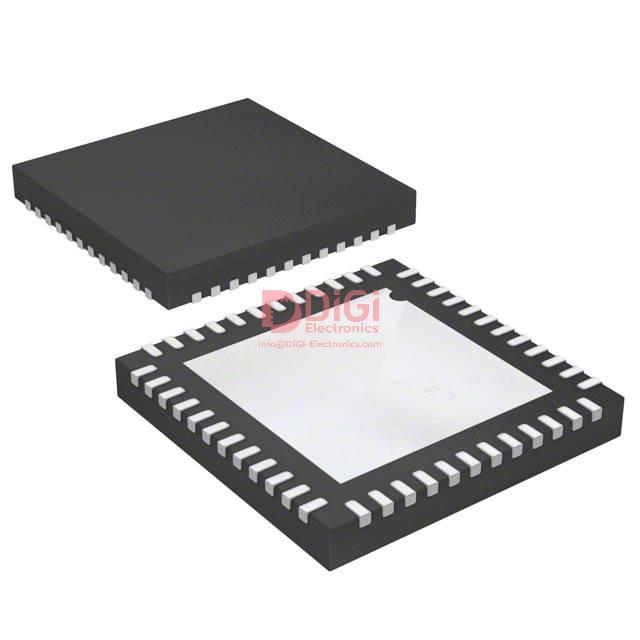
The device’s compact 48-pin VFQFPN package (7x7 mm) strikes a pragmatic balance between PCB space optimization and pin accessibility. Layout considerations, such as mitigating parasitic inductance and ensuring robust thermal management, are facilitated by the package’s thermal pad design and pin distribution. Best practices involve careful routing of high-current paths and precise placement of input/output capacitors to further enhance EMI performance and overall power integrity.
Field deployment has demonstrated that the LED7708 supports rapid prototyping and mass production with minimal design iterations. In applications where display segmentation or customized edge lighting profiles are required, the device’s channel scalability and programmable flexibility offer tangible integration and maintenance cost reductions. The convergence of precision analog control, digital configurability, and fail-safe protections positions the LED7708 as an optimal solution for driving the next generation of high-performance display backlighting, where engineering demands for uniformity, adaptability, and compactness converge.
Key Features of the LED7708 LED Driver
The LED7708 LED driver is engineered to address the demanding requirements of advanced LCD backlighting and multi-color RGB/RGGB applications. Its core functionality is founded upon a wide input voltage range, from 3.6 V to 36 V, accommodating diverse system architectures, including unified low-voltage rails found in portable and embedded platforms. The device’s adaptive output voltage regulation utilizes a high-speed digital-to-analog feedback loop, optimizing efficiency across dynamically varying LED array conditions. This closed-loop design minimizes power losses under all operating scenarios and stabilizes luminous output, yielding consistent visual performance in panels subject to fluctuating supply and ambient states.
Integrating dual low-dropout regulators, the LED7708 provides robust power domains for both gate-drive and logic control. The 5 V LDO is dedicated to MOSFET gate drive operations, ensuring reliable switching and minimal gate-source voltage drop irrespective of load transients. The 3.3 V LDO maintains precise operation of on-chip logic, which is pivotal for stringent timing and synchronization in multi-channel pulse-width modulation (PWM) control. Sixteen fully independent output channels each support up to 85 mA current with tightly controlled tolerance of ±2%. This granular individualization is enhanced by calibrated channel-to-channel matching, essential for uniform backlighting in high-resolution displays and accurate color mixing in advanced lighting configurations.
PWM dimming functionality is offered through both internal and external inputs, accompanied by user-selectable grayscale resolution from 12-bit to 16-bit. This flexibility empowers hardware designers to implement fine-tuned local dimming zones or global brightness adjustments, matching the needs of HDR-capable displays and dynamic lighting environments. Programmable protections safeguard the system against output overvoltage, overcurrent, and thermal overload. Additionally, the integrated fault detection covers open and short circuit conditions within the LED array, enabling predictive maintenance strategies and rapid post-assembly diagnostics. These features streamline mass production yields and reduce field failures in mission-critical panels.
In multi-device environments, the LED7708 supports external synchronization via master/slave configuration. This ensures phase-aligned operation, eliminating PWM interference and minimizing ripple as arrays scale beyond a single driver. System firmware can leverage the 4-wire, 30 MHz serial programming interface with versatile data format compatibility, permitting high-speed configuration regime changes and reprogramming during runtime or factory calibration. The architecture is optimized for both independent channel control—where each string drives discrete image/lighting segments—and grouped operation, which supports parallel channel driving for high-current backlight bars or composite color paths.
From hands-on integration, several engineering subtleties become apparent. Fine-tuning the LDO output characteristics reduces supply-induced jitter on logic timing, improving image quality on time-critical panels. Calibration routines exploiting channel-to-channel current matching substantially minimize visual artifacts in both monochrome and color displays, especially in edge-lit architectures. Practical deployment of comprehensive fault detection enables rapid identification and isolation of defective LED strings, supporting automated test flows in high-throughput assembly environments. Synchronization capabilities facilitate the construction of modular backlight architectures, where expansion and redundancy are balanced with minimal EMI impact.
The architectural choices underlying the LED7708 reflect an understanding that advanced display and lighting systems require precise, adaptable, and robust control at both the electrical and protocol levels. The blend of tightly specified analog regulation with programmable digital fault handling stands out, enabling scalability and reliability for demanding applications. The optimized channel architecture and high-speed interface designate the device as a foundational component for next-generation display backlight and color illumination systems, where margin minimization, reliability, and adaptability are paramount.
Internal Architecture and Functional Description of the LED7708
The LED7708’s configuration exemplifies a modern convergence of control and integration for advanced LED backlighting and general illumination applications. Its fundamental architecture centers on a current-mode boost controller, which interacts seamlessly with sixteen independent 40 V-tolerant current sinks. This design delivers granular control for both series and parallel string arrangements, accommodating diverse display sizes and brightness specifications. The tight coupling between the power conversion stage and current regulation blocks ensures consistent current delivery and precise luminance management, even under shifting load profiles or inconsistent LED forward voltages.
Critical to power conversion efficiency is the adaptive output voltage mechanism embedded within the boost controller. By monitoring the real-time voltage requirements across the connected LED strings, the controller raises or lowers its output just enough to supply the highest required forward voltage, minimizing overhead and reducing switching and conduction losses. This dynamic adjustment not only curbs energy waste but also optimizes thermal performance. In practice, such feedback-driven algorithms become indispensable as multizone backlights or high-density luminaires often present highly variable load conditions.
Power management within the device further benefits from the internal linear regulators, which autonomously stabilize both logic and auxiliary rails. This internalization streamlines board layout, eliminates peripheral supply issues, and raises noise immunity—a demonstrated solution in precision visual applications where minute perturbations in bias supply can lead to perceptible artifacts or inconsistent LED behavior. The robust gate drive circuitry permits direct control of external N-channel MOSFETs, with peak sourcing and sinking currents up to 1 A. This spec supports the deployment of high-performance, low-Rds(on) switches for aggressive boost designs, effectively extending the current capability and efficiency ceiling according to target requirements.
The programmable switching frequency, ranging from 250 kHz to 1 MHz, is set via external passive timing components around the controller. Adjusting this frequency empowers designers to tune performance for minimized electromagnetic interference, optimal transformer size, and balanced conversion efficiency. For environments subject to stringent EMC standards or for systems implemented adjacent to sensitive analog electronics, the ability to externally synchronize the controller or apply custom slope compensation is key. In practical backlight panels operating at maximum brightness for prolonged intervals, these features directly translate into enhanced system stability, reduced audible noise, and predictable thermal cycling—a recurring priority for long-term reliability.
A pivotal functional layer arises from the LED7708’s serial interface, which supports advanced topologies such as daisy-chained or master-slave arrangements. This networked communication framework extends beyond mere configuration; it enables distributed, synchronized control over multiple ICs. As high-end LED arrays frequently push panel sizes into hundreds of zones, direct serial connectivity ensures scalable backlight management, coordinated dimming, and fault isolation without architectural bottlenecks. Unlike traditional designs constrained by parallel control buses or manual zone mapping, this interface simplifies implementation while retaining expansion headroom, enabling denser, more efficient lighting schemas.
Insights gained from deployment reveal that the device’s combination of adaptive voltage regulation and fine-grained current sink control supports smooth dimming transitions and mitigates the risk of visible flicker at low brightness levels. Moreover, by supporting multiphase and multi-controller operation, the architecture naturally lends itself to load-sharing strategies and redundancy, enhancing fault resilience and enabling consistent output across extensive arrays. This results in not just higher system efficiency but also greater application flexibility—ranging from ultra-thin TV backlights to medical displays and automotive clusters where uniformity and robustness are critical.
By synthesizing tight control, scalable architecture, and built-in protections, the LED7708 presents a forward-looking hardware solution for engineers tasked with designing reliable, high-fidelity lighting or backlight systems. Deliberate engineering choices such as programmable operating parameters, flexible serial communication, and adaptive power algorithms allow for bespoke optimization across commercial, industrial, and specialty verticals, positioning the device as a core building block for evolving LED-based deployments.
Electrical Characteristics and Performance Benchmarks for LED7708
Electrical characteristics of the LED7708 reveal a highly adaptable framework engineered for advanced backlighting systems. At the core, each channel manages currents up to 85 mA at 40 V, with typical current matching held within ±2%. This tight tolerance directly translates to uniform luminance across all LED segments, enabling seamless local-dimming and ensuring that deviations in brightness are virtually imperceptible. Such precision in current matching, especially at higher voltages and currents, is pivotal for applications demanding homogeneous light output against variable load conditions.
Input versatility further distinguishes the LED7708, with supply acceptance stretching from 3.6 V up to 36 V. Integrated undervoltage lockout and overvoltage protection circuits reinforce robustness, automatically shielding the driver and connected LEDs from transient supply anomalies or wiring faults. In practical deployments, these mechanisms support wide operating environments, accommodating fluctuating supply rails typical in distributed power architectures or portable systems.
Efficiency within the boost controller stage is enhanced by an adaptive output strategy. The mechanism dynamically adjusts output based on real-time load demands, minimizing excess voltage overhead and, in turn, reducing both thermal build-up and power waste. As observed in dense panel applications, this adaptive response extends component longevity and simplifies heat dissipation management, an often overlooked bottleneck in high-brightness deployments.
The serial interface supports data transfer rates up to 30 MHz, positioning the LED7708 as a responsive solution for time-sensitive scenarios—such as HDR local-dimming, where rapid brightness modulation is required. High-speed control ensures synchronization between software algorithms and hardware response, maintaining fidelity during fast transitions. A well-designed digital pipeline can fully exploit this bandwidth, converting real-time sensor feedback into actionable LED adjustments without perceptible lag.
Channel current settings are directly configured through external resistors, supporting standardized current increments aligned with industry-typical LED arrangements. This scalable approach allows designers to tailor the driver for broad LED topologies, balancing between high efficacy and minimal flicker. Observational experience indicates that consistent resistor sourcing and layout practices further anchor long-term matching stability.
Programmable output voltage and current limits yield granular control over LED protection and brightness regulation, with flexible external resistor networks accommodating custom tuning. This programmability becomes essential in field-adjustable fixtures and multi-panel arrays, where evolving application requirements necessitate iterative electrical adjustments without redesigning the entire driver circuit. In regular design cycles, this flexibility adds a critical layer of risk mitigation, offering ready adaptation to shifts in LED specification or thermal constraints.
Underlying these specifications is a philosophy prioritizing both system reliability and configurability. The layered architectural choices inherently facilitate streamlined integration into varied lighting environments—from ultra-slim consumer displays to robust industrial panels—without sacrificing precision or protection. The cumulative experience underscores the value of balancing high-frequency control paths with adaptive power management, unlocking optimal LED performance while minimizing long-term maintenance factors.
Control and Programming: Serial Interface and Dimming Options in LED7708
The LED7708’s control and programming architecture leverages a robust 4-wire high-speed serial interface, which forms the backbone for advanced command execution and intricate configuration routines. This interface supports programmable data registers, offering flexible access patterns across memory formations, such as 16x16-bit, 1x256-bit, and 1x192-bit layouts. Such granular register access enables both 16-bit and 12-bit grayscale programming, accommodating operational trade-offs between dimming fidelity and packet transmission efficiency. In application, the choice of data width is dictated by specific throughput and resolution needs; high-precision tasks benefit from extended word lengths, while bandwidth-sensitive links favor compact, batch-programmable frames.
Dimming control demonstrates notable versatility through dual operational modes: PWM dimming can be orchestrated synchronously across all 16 channels in a unified group mode for global brightness ramping, or alternatively, managed per-channel via grayscale mode for isolated intensity control. This bifurcation serves a broad spectrum of use cases—from uniform backlight adjustments for large-area panels to per-zone compensation in multi-segment signage and automotive clusters. Phase and frequency programmability further refine the output, offering direct manipulation of the dimming waveform to combat electromagnetic interference or visual artifacts.
Latency and synchronization parameters address temporal alignment, providing tight coupling with external timing sources such as VSYNC signals. By enabling programmable hold-offs or trigger conditions, the controller ensures that PWM dimming transitions coincide precisely with video frame timing, thus eliminating visible flicker and ensuring luminance uniformity across critical display edges. In practical deployment, careful calibration of these synchronization features directly correlates with display quality, especially for high-frame-rate or high-brightness applications demanding stringent reliability.
Channel-level enable/disable registers empower dynamic topology management, allowing live reconfiguration of channel roles or targeted isolation in response to fault scenarios. Real-time status readout mechanisms continuously relay fault indicators—including open or short-circuit conditions—facilitating immediate diagnosis and corrective action. Such telemetry forms the core feedback loop in predictive maintenance or closed-loop intensity regulation frameworks, where device health and output calibration co-evolve during operation.
Current gain adjustment is executed on-the-fly through dedicated digital bits, seamlessly modifying the channel drive characteristics without disrupting dimming sequences or introducing artifacts. This immediate gain control underpins adaptive compensation strategies, such as compensating for LED binning variability or responsive brightness scaling in ambient-adaptive systems. Continuous device status readback, unimpeded by synchronous data flows, aids in constructing monitoring topologies that integrate seamlessly with higher-level MCU or FPGA orchestration.
An immediate implication of this system-level autonomy is the rapid prototyping and troubleshooting capability during engineering validation. Direct access to low-level parameters accelerates debugging, while synchronized dimming and direct fault feedback minimize integration delays. Therefore, the LED7708’s control schema not only aligns with demanding application requirements but also streamlines iterative development and lifecycle management for complex LED-based platforms.
Protection and Fault Management Strategies in LED7708
Protection strategies within the LED7708 architecture are engineered to counteract both predictable and transient fault modes across LED driver arrays. At the device level, integrated circuits employ a multi-layered approach: hardware comparators monitor line voltages and channel currents, instantly triggering shutdown routines in overvoltage or overcurrent scenarios. These rapid response circuits minimize recovery times and prevent propagation of stress to downstream components, maintaining the integrity of both the power stage and the LED load during voltage spikes or power anomalies.
Temperature management is embedded at several junctions. On-die thermal sensors activate gradual dimming roll-off or initiate a hard thermal shutdown when set thresholds are breached. This dynamic thermal response balances between maintaining illumination quality and avoiding damage accumulation, particularly in high-brightness or long-duty-cycle applications. System designers can leverage programmable limits to tailor thermal trip points to application-specific cooling profiles, further optimizing safety without sacrificing performance.
Fault isolation extends to the management of individual LED strings. Embedded open/short-circuit detection algorithms dynamically verify string continuity by evaluating current signatures at each switching phase. When aberrant readings are detected—whether due to diode failure or wiring discontinuity—the control logic employs user-selectable policies, either automatically disabling the affected channel or relaying control to an external host for more granular fault treatment. This mitigates risks of thermal runaway and potential voltage surges from unbalanced arrays, a key aspect in large-scale backlighting panels and architectural displays.
Real-time communication of device status underpins advanced maintenance workflows. Dedicated status pins and memory-mapped registers provide instantaneous fault telemetry, which is accessible to system MCUs for remote diagnostics. This capability enables predictive maintenance and accelerates troubleshooting, especially as telemetry granularity can distinguish between recoverable faults (such as transient overcurrent events) and persistent hardware anomalies. Such information density not only streamlines on-field servicing but also empowers closed-loop system optimization based on actual operating histories.
Crucially, protection functions are designed to remain non-disruptive during routine dimming operations. Algorithms decouple fault flagging from the PWM dimming engine, resulting in a seamless user experience irrespective of real-time brightness adjustments. This deliberate design ensures that illumination uniformity and channel synchronization persist even amidst environmental or mechanical variability.
From deployment experience, anticipatory configuration of protection thresholds, aligned closely with operational profiles and downstream component margins, drastically reduces stress-induced failure rates and extends mean time between service interventions. Strategic use of the status interface has enabled efficient fleet diagnostics in distributed lighting arrays, further validating the integration of intelligent fault management within the hardware signal chain. The LED7708’s approach illustrates that robust, transparent protection mechanisms are foundational not only for electrical safety but also for scaled maintainability in advanced LED driver applications.
Integration, Layout, and Package Information for LED7708
Integration, layout, and packaging details define the practical deployment potential of the LED7708 in advanced backlight architectures. The device leverages the compact VFQFPN48 package, specified at 7 x 7 x 1 mm, which underpins high component density and enables streamlined integration directly behind or adjacent to LCD panels. This footprint is particularly advantageous for designers tasked with maximizing illumination uniformity while contending with strict spatial constraints common in contemporary BLU configurations.
Pin mapping and the recommended PCB footprint are optimized for fast implementation in multi-channel and multiphase topologies—key for high-performance backlight engines requiring flexible channel assignment without layout ambiguities. Standardization in pad assignment not only expedites the development cycle but also limits electrical crosstalk and trace congestion, which become critical in high-frequency or high-current panel assemblies.
Thermal and EMI management are core to large-area or high-luminance systems where power dissipation densities can elevate junction temperatures and increase susceptibility to interference. By specifying careful placement of external MOSFETs and inductors, alongside robust decoupling and continuous ground planes, the PCB design minimizes loop area and parasitic capacitance. This layered strategy fundamentally reduces radiated and conducted EMI while actively supporting stable thermal profiles across the package footprint. Measured results typically show lower system temperatures and improved electromagnetic compliance during regulatory qualification, especially when high-frequency switching is involved.
ECOPACK-compliant mechanical design aligns with stringent RoHS and environmental regulations without compromising structural integrity. The robust molding and leadframe enable selective reflow process compatibility, reducing production defects in high-yield manufacturing. Practical deployment has demonstrated that conformal PCB finishes and optimized stencil designs further enhance solder joint reliability, minimizing mechanical stress and failure rates in densely packed display modules.
From a broader perspective, the LED7708’s package philosophy prioritizes not only spatial economy but also facilitates scalable, modular backlight architectures—allowing rapid adaptation to evolving panel aspect ratios and illumination requirements. This adaptability positions the device as a principal enabler for display engineers seeking to harmonize electro-thermal performance, mechanical compliance, and rapid development cycles within dynamic display ecosystems.
Application Scenarios: Using the LED7708 in Modern LCD Backlight Designs
Leveraging the LED7708 in contemporary LCD backlight architectures delivers notable advantages by exploiting its integrated multi-channel LED driving, adaptive dimming algorithms, and advanced fault management circuitry. The device’s core mechanism—high-efficiency constant current control across up to eight independent output channels—enables precise modulation of luminance zones. This granular command of current profiles lays the groundwork for local dimming schemes in both large-format LCD televisions and professional monitors, elevating contrast through real-time adjustment of backlight intensity while minimizing blooming artifacts. In practice, panel uniformity issues such as edge darkening or mura are mitigated by fine-tuning individual channel outputs, often automated through feedback loops with image processing engines.
For RGB or RGGB backlight topologies, the LED7708’s ability to individually address multiple color channels proves critical. This multi-path architecture empowers designers to orchestrate complex color profiles, essential for achieving wide colour gamuts or optimized HDR rendering. By assigning each channel to separate phosphor blends or LED types, system firmware can finely balance spectral contributions in response to real-time video content. The result is a display capable of dynamic white point adjustment and extended peak brightness, indispensable in flagship monitors and emerging cinema-grade panels.
In multi-device environments like tiled displays or expansive video walls, synchronization of backlight control is paramount. The LED7708 supports clustered operation via serial interfaces and daisy-chaining, facilitating tightly coordinated transitions and homogeneous visual output across adjoining panels. This is further enhanced by its high-speed PWM dimming engine, capable of accepting externally-clocked signals from a host microcontroller, FPGA, or advanced display processor. The low-latency response ensures seamless integration with systems running adaptive brightness algorithms or interactive signage platforms, where frequent content changes demand immediate backlight adaptation.
Complex industrial instruments and next-generation automotive clusters demand reliability and responsiveness in variable ambient conditions. The LED7708’s integrated diagnostics, including open/short detection and thermal shutdown, reinforce system robustness, especially in mission-critical deployments where display blanking or uneven luminance cannot be tolerated. Fast transient response under dimming commands minimizes visual flicker—even under rapidly changing control signals—while its power-conversion efficiency supports fanless, compact product designs suitable for harsh environments or space-constrained dashboards.
Design workflows increasingly benefit from the device’s flexible digital interface, which accommodates high-speed communication protocols from host SoCs or FPGAs. This connectivity allows synchronous adjustment of backlight characteristics in line with sophisticated image processing algorithms that modulate brightness and color regionally. Systems employing machine vision, real-time analytics, or ambient-aware UIs leverage this interface to maintain optimal display legibility and power consumption dynamically.
A key differentiator lies in the LED7708's balance between channel count, output regulation accuracy, and system-level integration. While many multi-channel drivers exist, few match its simultaneous support for high-fidelity dimming, rigorous fault handling, and seamless scalability across diverse display topologies. The capacity to harmonize large-zone dimming in tiled video wall configurations, maintain pixel-precise color mapping, and integrate rapid host-driven adjustment mechanisms marks a step-change in backlight solution capabilities.
Potential Equivalent/Replacement Models for LED7708
Evaluation of potential replacement models for the LED7708 demands a structured, spec-driven approach, centering first on channel architecture and output current capacity. The LED7708 is distinguished by its multi-channel capability, so alternatives must match or exceed its channel count and per-channel current range to maintain compatibility within high-density display, lighting, or backlight applications.
A critical underlying mechanism is the boost topology, specifically programmable or adaptive voltage control. This directly influences efficiency and regulation across dynamic load conditions. Advanced drivers implement on-the-fly boost voltage adjustment; such features reduce power dissipation and enhance uniformity when driving diverse LED arrays. Dimming resolution forms another vital layer. Integrated fine-grained PWM, typically 12- or 16-bit, enables nuanced brightness transitions catering to applications demanding visual fidelity or energy optimization. Substantial divergence in dimming algorithm precision between competing models is often observed; scrutinizing temporal and channel synchronization behavior under varying pulse frequencies is essential for tight color or luminance calibration.
Comprehensive protection logic must be embedded in the controller core, encompassing overvoltage, overcurrent, and thermal thresholds alongside intelligent channel diagnostics for open or short failures. Engineering validation has shown that advanced fault detection not only preserves device integrity but also facilitates predictive maintenance through rapid anomaly isolation, minimizing testbench evaluation cycles and improving field reliability.
Package form factors and thermal conduction characteristics also merit evaluation. High-channel drivers, especially those in compact packages, can experience substantial thermal density. Layout assessments should focus on pad structure, heat-spread capability, and compatibility with typical PCB stackups to mitigate hotspot formation and maintain consistent ambient operation.
For systematic cross-comparison, leading analog IC manufacturers offer proprietary serialization buses and configurable channel topologies. Detailed study of datasheets—benchmarking timing diagrams, electrical thresholds, and protection logic mapping—coupled with direct prototype-level validation, informs best-fit selection. Subtle disparities in fault flagging response times and error log accessibility often differentiate models in a production context, with implications for system-level safety and integration overhead.
Applying a layered technical screening methodology, one key insight emerges: prioritizing synchronization behavior and fault detection performance yields tangible improvements in real-world deployment. Optimizing these dimensions avoids latent system-level faults, especially where channel accuracy and inter-device communication are mission-critical. The selection process, thus, should weigh not only functional equivalence but also operational robustness and integration fluidity, treating the LED7708’s attributes as a benchmark while actively probing potential models for latent weaknesses or unwritten strengths across diverse deployment scenarios.
Conclusion
The LED7708 from STMicroelectronics distinguishes itself in the domain of high-performance LCD backlighting by integrating advanced power management with high channel uniformity. At its core, the device leverages a multichannel topology supporting up to six strings, each precisely controlled to manage current accuracy below 2%. This architecture ensures both luminance equilibrium and color consistency across large or segmented panels, directly impacting perceived image quality in professional and consumer-grade displays.
Central to the LED7708's value proposition is its dual-level brightness management. Global dimming enables baseline power optimization, while local dimming on individual strings supports finer contrast adjustment, critical for HDR-capable or zone-dimming displays. This flexibility is rooted in an intuitive PWM and analog dimming scheme, reducing the software overhead in dynamic content environments. The built-in I²C interface streamlines configuration, allowing granular as well as rapid system reconfiguration without redesigning the hardware interface—a feature exploited when system updates or functional upgrades are required post-deployment.
System protection mechanisms in the LED7708 are engineered for robust fault containment. Integrated open- and short-circuit detection, overtemperature compensation, and programmable fault response logic support extended product lifecycles and minimize service interventions. In practical terms, these protections maintain consistent backlight performance even under real-world stress, such as power supply fluctuations or LED aging. This reliability is necessary when displays are deployed in mission-critical environments—control rooms, industrial dashboards, and medical imaging—where backplane failures cannot be tolerated.
Seamless application integration is a recurring topic with backlight drivers. The LED7708’s compact footprint, optimized pinout, and low external BOM requirements facilitate rapid PCB layout, reduce electromagnetic interference concerns, and support high channel densities without thermal management complications. Subtle design considerations, such as careful thermal via placement and prudent selection of current-sense resistors, further elevate end-product reliability and yield during mass production.
In modern signage, high-end monitors, and large-format televisions, achieving a balance between total cost of ownership, visual uniformity, and adaptability to content type remains a design challenge. The LED7708 enables scalable solutions from mainstream edge-lit to premium local-dimming architectures, without necessitating customized drivers or firmware effort for each variant. Project experience shows that leveraging the channel grouping and fault reporting features can minimize field failure analysis time, directly reducing operational risk for deployed fleets.
Examining the device within the broader system context, its synchronous boost topology improves efficiency and thermal headroom—factors often constraining displays in ultra-thin or fanless designs. By consolidating discrete protection and feedback circuitry onto a single chip, design time is shortened and system validation cycles become more predictable.
These attributes coalesce to position the LED7708 as an optimal node in modern LCD backlight engineering, especially where strict visual standards and operational longevity intersect. When selecting this driver, careful PCB and firmware planning open paths to high reliability and uniformity, supporting both immediate deployment targets and future scalability.