 >
>


Product overview: LED7707 by STMicroelectronics
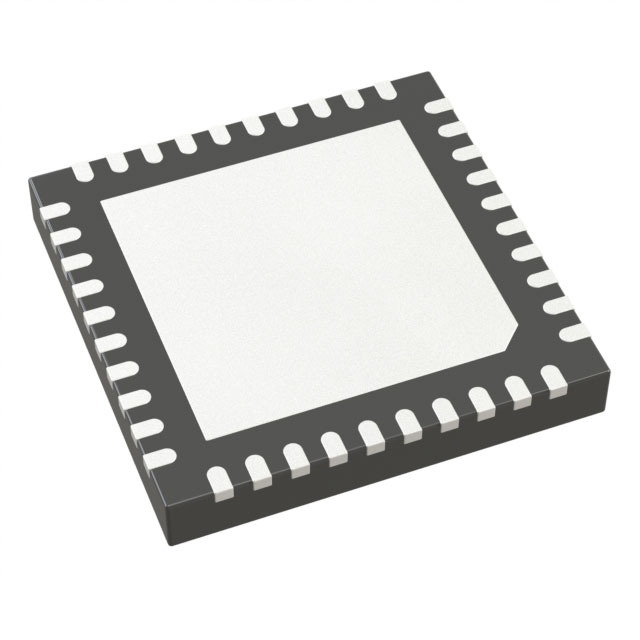
The LED7707 from STMicroelectronics exemplifies a specialized approach to LCD panel backlighting by integrating both power conversion and current regulation into a single, compact 4x4 mm VFQFPN package. At its core lies a synchronous boost converter tailored to efficiently elevate lower supply voltages to levels suitable for high-brightness LED operation. This architecture minimizes external component count, reduces PCB footprint, and streamlines system design without sacrificing performance.
Engineered to control up to six independent LED strings, the device leverages programmable linear current generators to ensure precise current matching. This uniformity across the strings mitigates luminance non-uniformity and color shift, common challenges in multi-string configurations. The granularity of dimming—achieved via PWM input or analog control—enables artifacts-free brightness transitions essential for premium display quality in applications ranging from consumer televisions to professional monitors. This level of control supports both high static contrast ratios and dynamic dimming schemes—an important feature in applications subject to rapid content changes.
An extensive input voltage range confers flexibility in adapting to varying system power domains, facilitating direct interface with battery-powered architectures as well as fixed supply rails found in televisions and large displays. In scenarios such as automotive displays, where supply transients and brownout events are prevalent, the wide voltage tolerance prevents performance degradation and increases design robustness.
Integrated protection circuitry, including output overvoltage, overcurrent, and thermal shutdown, ensures failsafe operation in the presence of fault conditions. The programmable nature of fault thresholds and feedback behavior simplifies system protection coordination and can reduce the risk of panel or LED failure. This feature is critical in environments requiring high reliability and minimal maintenance.
On a system level, the combination of high-output efficiency and reduced electromagnetic interference—attributes achieved through optimal switching operation and careful layout—translates directly to lower power dissipation and improved system thermal management. In field deployments, the reduced need for thermal derating or additional cooling hardware engenders greater design flexibility and cost optimization.
Applications spanning portable displays, industrial instrumentation, and large-format public information systems benefit from the LED7707’s balance of integration, controllability, and protection. In rapid development cycles, the device’s onboard diagnostic feedback streamlines troubleshooting and board bring-up, supporting faster time-to-market and simplified production testing.
A nuanced consideration emerges in scenarios involving extended string counts or custom light guide architectures. Here, the device’s scalability—facilitated by its programmable current sinks and parallel operation capabilities—addresses non-standard topology requirements without loss of efficiency or control fidelity.
Optimizing the interplay between boost regulation and multi-string current management, the LED7707 provides a robust, adaptable engine for tackling increasingly complex backlight challenges while supporting system-level objectives such as ultra-thin designs, aggressive energy targets, and high optical uniformity.
Key features and benefits of the LED7707
The LED7707 integrates a high-voltage boost converter capable of handling input ranges from 4.5 V to 36 V, making it suitable for both automotive and industrial lighting environments, as well as a wide spectrum of logic-powered systems. Its output capability extends to 36 V, directly enabling the drive of up to ten white LEDs per string without sacrificing voltage headroom or system flexibility. This efficiency is achieved via an architecture engineered for both high-load scenarios and precise light regulation.
Each of the six current-sink channels, configurable up to 85 mA with stringent ±2% current-matching accuracy, directly addresses display uniformity challenges. Reliable channel balancing is critical for applications such as large-scale backlights or high-resolution lighting arrays, where even slight mismatches would otherwise introduce visible banding or color shift across the active surface. This accuracy is underpinned by high-precision internal reference circuits and low-tolerance analog current mirrors, greatly reducing calibration overhead and troubleshooting time during late development stages.
Switching frequency configurability from 250 kHz to 1 MHz, combined with support for external clock synchronization, ensures designers can target optimal trade-offs between efficiency, EMI performance, and solution footprint. At lower frequencies, designers benefit from diminished switching losses in high-current conditions, while at higher frequencies, input/output filter sizes are minimized—directly impacting space-constrained designs like instrumentation or dashboard illumination. External sync further mitigates interfering harmonics in multi-converter systems, preserving signal integrity and compliance margins during EMC certification.
System robustness is fortified by multi-layered protection features: overvoltage protection guards both LEDs and system power stages against line transients or feedback failures; programmable soft-start smooths initial current inrush, mitigating voltage dips on shared rails; overcurrent sensing limits downstream thermal stress on PCB traces and connector interfaces; and internal thermal shutdown provides last-resort coverage under abnormal fault states. These protections are tightly integrated, minimizing the need for ancillary supervisory ICs and streamlining both PCB layout and schematic complexity in repeated design patterns.
An additional integrated LDO regulator supplies a stable 5 V auxiliary rail, which simplifies the powering of microcontrollers, logic gates, or sensor interfaces commonly collocated in complete lighting subsystems. This reduces dependence on external power distribution tracks, further shrinking total BOM cost and assembly time. In practical deployments, such integration proves critical for supporting modular and scalable platforms, where secondary loads evolve across product generations without risking system requalification.
A distinctive advantage emerges from the LED7707’s optimal channel count, driving six independent strings. This configuration meets a sweet spot in panel and cluster-based LED applications, where parallel redundancy and failure tolerance improve service lifespans. By maintaining a hardware-level balance between performance and integration density, the device supports extensibility—whether incrementally scaling up panel sizes or engineering cross-compatible variants across product lines.
Ultimately, the LED7707 combines tight analog control, systemic EMI mitigation, and built-in protections to address core pain points in high-performance LED driving. Such an architecture enables both accelerated prototyping loops and reliable field deployments, positioning it not only as a building block but also as a proven reference for robust multi-channel LED applications.
Applications of the LED7707 in modern electronics
The LED7707 serves as an advanced driver solution tailored to the stringent demands of high-efficiency LED backlighting circuits. At its core, the device leverages a step-up current mode PWM controller architecture, enabling precise regulation of LED currents while supporting wide input voltage ranges. This design excels in handling large arrays of high-brightness LEDs, which are fundamental to modern LCD displays in monitors, televisions, and portable electronics.
Optimizing energy conversion and thermal characteristics remains critical as panel densities increase and bezels shrink. The LED7707’s high integration density—including features such as built-in MOSFET drivers, fast fault detection, adjustable current regulation, and seamless PWM dimming—delivers streamlined board layouts while minimizing passive component count. Its adaptive feedback mechanisms monitor the voltage across each string, preventing overvoltage and mitigating single-LED open or short events. Such robust protection strategies ensure panel reliability under diverse operational stressors, such as rapid temperature shifts or power cycling.
The capability for smooth, high-resolution dimming stands out as a practical solution for realizing deep contrast ratios in display technologies. The controller’s high-frequency operation supports low-amplitude ripple on the output, which is essential for flicker-free visual experiences, especially in professional and medical imaging where artifacts are unacceptable. In tightly integrated backlight units, precise current matching across channels directly translates to uniform illumination, reducing the risk of color shift or brightness gradients—even as panels grow thinner or ambilight features become standard.
In space-constrained devices such as PDAs and navigation panels, where power supply headroom and thermal dissipation are constrained, the LED7707’s low quiescent currents, integrated soft-start, and fault diagnostics collectively simplify power sequencing and reduce heat spots. These design attributes facilitate the construction of lighter, more robust devices that maintain long operational lifetimes, even when subjected to repeated ambient illumination adjustments. Deploying the LED7707 in these scenarios demonstrates its ability to bridge the crucial gap between power efficiency and consistent optical performance.
A nuanced insight: As panel technology evolves toward mini-LED and increasingly granular backlight zoning, the system-level flexibility offered by controllers like the LED7707 grows more important. Its architecture is well-positioned to scale with higher channel counts and unconventional form factors, supporting both legacy applications and emerging standards. An engineering-driven approach to selecting, tuning, and integrating the LED7707 yields not only superior brightness and efficiency metrics but also establishes a future-ready foundation for advanced interactive display systems.
Internal architecture and operation principles of the LED7707
The LED7707 integrates specialized circuitry for high-efficiency LED backlight control, structured around a dual-functional system. Its foundational components are a boost converter and a multi-string current driver, operating in concert to provide reliable and precise illumination across diverse display platforms.
The boost converter uses a constant-frequency, peak current-mode control loop, optimized for swift responsiveness and stability under variable load and input conditions. This topology compares instantaneous inductor current to a preset threshold every cycle, which enables fast correction in transient scenarios and helps mitigate subharmonic oscillation—a critical requirement when driving multiple parallel LEDs. The control logic dynamically senses the forward voltage on each connected LED string, designating the highest voltage requirement as the reference for output regulation. By aligning the boost output to the most demanding string, the architecture guarantees sufficient voltage headroom, preventing undervoltage conditions across the display and maintaining uniform brightness.
Current regulation for individual LED strings is implemented via integrated current-generation channels, each governed by external sense resistors. This approach allows for tight bin-to-bin matching and mitigates the risk of color shift or brightness non-uniformity that often plagues parallel-driven LED assemblies. Adjustment through external resistors offers flexibility, supporting varied current ratings to suit different LED packages and application profiles. During deployment, calibrating the sense resistors yields fine-tuned control of chromaticity and brightness, which has proven invaluable for achieving factory-level consistency in mass production environments.
Further, the internal synchronization options facilitate both independent and multi-chip arrangements. Designers can link multiple LED7707 devices to operate in a phase-locked manner, minimizing electromagnetic interference (EMI) when numerous channels are required for high-resolution displays. The synchronous capability streamlines EMI management and enables power stage scalability while maintaining predictable switching patterns across larger distributed networks.
The LED7707 architecture shows particular strength in handling backlight systems requiring robust, fault-tolerant design. Protection mechanisms—such as open/short LED detection and programmable undervoltage lockout—safeguard both the LEDs and the converter, contributing to high system uptime and longevity. In practice, employing these features during custom design iterations allows rapid resolution of reliability concerns, especially when adapting solutions to unforgiving environmental conditions.
At a system level, the synergy between peak current-mode control and precision multi-string current drivers distinguishes the LED7707 from conventional solutions. By separating voltage and current regulation tasks, the device streamlines complex design phases, simplifies debugging, and accelerates qualification cycles. Engineering analysis consistently demonstrates reduced design risk and lower noise emissions, even in electrically noisy environments like industrial or automotive instrumentation clusters.
In summary, the LED7707’s architecture exemplifies a layered approach to efficient, scalable, and reliable LED backlight control. Its core mechanisms and flexible interfaces offer clear advantages in both prototyping phases and production ramp-up, validating a strategy that favors modularity, precision, and resilience in demanding illumination applications.
Boost converter section: Control, protection, and flexibility in the LED7707
The boost converter core within the LED7707 leverages advanced control architectures to achieve adaptive performance, reliability, and compatibility. Underpinning this adaptability is a programmable switching frequency, dynamically configurable from 250 kHz to 1 MHz. This wide adjustment range enables engineers to optimize for both conversion efficiency and EMC constraints depending on use-case requirements, whether prioritizing minimal switching losses or reducing radiated emissions in sensitive environments. The flexibility of selecting operating frequency also assists in aligning noise profiles with system-level filters or avoiding interference with adjacent circuitry.
External synchronization support further expands integration possibilities within multi-IC or complex embedded lighting systems. By accepting synchronization pulses, the LED7707 can phase-align its switching events with a central clock or among multiple devices. This coordinated timing reduces beat frequencies, lessens cumulative EMI impact, and facilitates consistent, artifact-free dimming across parallel channels – critical in large display backlight matrices or industrial lighting arrays. Effective synchronization enhances not just noise performance but system diagnostics and modularity.
Startup management employs a precision soft-start routine. This mechanism gradually ramps output voltage through controlled slope shaping, sharply limiting inrush currents and eliminating risk of output overshoot. Such controlled ramp-up prevents voltage stress on downstream LEDs and associated ceramics, which otherwise might face reliability degradation from transient overvoltages. Through empirical tuning, the soft-start can be tailored to varying load capacitances or thermal sensitivities, allowing seamless deployment regardless of topology.
Overvoltage protection is engineered with adjustable thresholds, directly defending downstream semiconductors and optics from exposure to voltage transients. Fine threshold control ensures safe operation across diverse LED binning and forward-voltage distributions, supporting both high-power and low-voltage diode arrays. This adaptability is particularly effective in dynamic environments where input conditions or thermal profiles may shift throughout the product lifecycle.
The programmable current limitation function provides a further layer of passive component protection at the boost stage. By setting precise current ceilings, designers can prevent excess stress on inductors and sense resistors, mitigating the risk of saturation or thermal drift in prolonged high-load operation. With real-time tunability, system resilience against unexpected fault conditions is remarkably enhanced, supporting robust field reliability.
Thermal safety mechanisms are deeply integrated; onboard thermal monitoring automatically suspends power conversion during abnormal temperature rise. This autonomous shutdown averts catastrophic failures stemming from sustained overloads or compromised heatsinking. After temperature normalization, automatic recovery ensures continuity without external intervention. Layered protection strategies operating in tandem have demonstrated measurable reductions in downtime in demanding field deployments, confirming the necessity of such robust responses in mission-critical applications.
Across diverse lighting projects, the LED7707 boost converter’s holistic approach to control and protection directly translates into tangible system benefits: fine efficiency tuning, precise multi-device coordination, and steadfast safeguarding of all system layers. Notably, such a unified protection and flexibility framework mitigates both anticipated and emergent risks—enhancing lifetime reliability and supporting application-specific customization within constrained engineering schedules. The architecture embodies a strategic synthesis of programmability and protection, setting a reference point for adaptive power conversion design in LED driver technology.
Backlight driver section and dimming capabilities of the LED7707
The backlight driver section of the LED7707 exemplifies a precisely engineered architecture for multi-channel LED control. Six independently programmable current sinks form the basis for granular management of backlight intensity across diverse display panels. Each channel sustains up to 85 mA, with the bias current tightly regulated by an external resistor. This approach enables flexible scaling for various panel specifications, accommodating different LED forward voltage drops and luminosity requirements. Engineers can select resistor values to balance lifetime, energy consumption, and brightness uniformity, facilitating rapid prototyping and iterative adjustments during system calibration.
Dimming operations are handled via hardware PWM input at the DIM pin, offering modulation depth down to a 1% duty cycle at 1 kHz. The driver supports minimum on-times as short as 10 microseconds, which is significant for eliminating perceptible flicker across wide dimming ranges. This fine temporal resolution in brightness control allows precise matching of ambient lighting conditions or image content, especially in displays subjected to dynamic lighting environments. The ability for each row to be independently programmed is particularly crucial for local dimming implementations and HDR panels, where contrast ratio and energy efficiency are maximized through zonal control of illumination.
Parallel configuration of current sinks broadens the operational envelope. By combining two or more outputs, aggregate drive capability rises to accommodate LEDs in higher-power arrays. In high-brightness industrial or outdoor display applications, this parallelization enables robust illumination without loss of individual channel control granularity. In practice, designers can iterate quickly, tying multiple sources to a single LED string and monitoring thermal behavior and current distribution to maintain reliability. Effective thermal management and careful PCB layout are necessary as aggregate currents rise; strategic layout with low-resistance traces and calculated heat dissipation pathways should be prioritized.
Underlying these capabilities is the LED7707’s emphasis on system flexibility and scalability. By coordinating current regulation via passive components and exposing PWM dimming control at system level, the device positions itself for easy integration with advanced display controllers or firmware-driven adaptive dimming algorithms. Experiences from deployment in automotive, industrial, and consumer panels show consistent results when feedback-driven control loops are implemented—achieving both highly responsive brightness modulation and minimal artifacts across variable environmental conditions.
A standout insight in leveraging the LED7707 lies in its support for low-latency dimming transitions and current precision. This combination not only unlocks high-fidelity visual output but also aligns with trends toward finer spatial and temporal brightness modulation in next-generation displays. Modular current sink architecture and flexible dimming interfaces empower designers to drive innovation at the system level while maintaining robust hardware reliability.
Fault management and diagnostic functions in the LED7707
The LED7707 employs advanced fault management protocols that ensure resilient operation in complex backlighting topologies. At its core, the device integrates dual-mode fault detection circuits optimized for both open and short-circuit events within the LED arrays. Detection sensitivity and response characteristics are dynamically adjustable through the MODE pin, allowing tailored adaptation to diverse panel designs and system resilience requirements. The open-collector FAULT output acts as a configurable interface, supporting seamless communication with upstream controllers, external monitoring modules, or visual notification logic—providing high flexibility in integration strategies across embedded and consumer display architectures.
Underlying these mechanisms, the device leverages real-time current and voltage monitoring at each output channel. Fault isolation routines, executed at the comparator level, permit the selective bypassing of compromised LED strings. For scenarios prioritizing uninterrupted service, this architecture enables continued illumination on healthy rows, while defective channels are deactivated to prevent cascading failures or thermal runaway. Conversely, critical safety or performance contexts may dictate an immediate whole-system shutdown, a mode that is natively supported to protect both circuitry and downstream applications. These multifaceted response pathways allow engineers to reconcile stringent reliability standards with practical operational needs.
From installation through field servicing, embedded diagnostics streamline troubleshooting efforts. The capacity for rapid fault localization due to the segmented output structure not only reduces MTTR (Mean Time to Repair) but also supports preventative maintenance workflows in high-uptime environments. Application experience suggests that the FAULT signaling method mitigates ambiguity during remote system checks—for example, by driving an appropriately designed status dashboard, actionable insights are surfaced without manual inspection. This approach shortens decision cycles and promotes faster asset recovery, especially in mission-critical visual subsystems.
A close consideration of real-world deployment illustrates the value of adaptable fault strategy. In distributed lighting controls used across irregular backplane geometries, selective row exclusion typically preserves overall display uniformity and minimizes impact on user experience, while maintaining compliance with system protection criteria. This selective approach, when complemented by systematic logging of events to the host controller, fortifies root cause analysis and supports iterative optimization. Central to robust backlight system engineering is the premise that diagnostics are not merely a repair tool but an integral aspect of lifecycle support and continuous reliability monitoring.
The architecture embodied in the LED7707 reflects a convergence of hardware-level vigilance and system-wide communication, which, in aggregate, elevates both maintainability and long-term functional safety—key metrics for professional-grade illumination platforms. By treating fault management as a configurable system asset rather than a rigid protection layer, design teams unlock nuanced trade-offs between display quality, risk containment, and overall infrastructure health.
Design and component selection for optimal LED7707 performance
Selecting and configuring peripheral components for the LED7707 demands attention to electrical characteristics and dynamic interactions that emerge at the system level. Inductor specification significantly influences transient behavior, efficiency, and electromagnetic compatibility. Empirical analysis identifies 6.8 μH as a stable value for 660 kHz switching, minimizing both saturation and core losses while containing ripple current within accepted thresholds. The magnetic core mix, winding geometry, and rated temperature rise must be evaluated to prevent efficiency degradation during extended high-load operation; compact shielded designs tend to yield lower radiated emissions, a non-trivial factor for stringent EMI compliance.
Capacitor arrays form the backbone of input and output power integrity. The selection favors low-ESR ceramic MLCCs—two 4.7 μF devices on the output rail effectively suppress voltage ripple and resonant spikes. These components’ actual capacitance at operating voltage should be verified due to high-voltage bias effects, common especially in Class II or III ceramic materials. In high-brightness applications, minimizing impedance across the power path translates into more precise current regulation and enhanced lifetime for LEDs. For the input capacitor bank, careful layout to limit parasitic inductance demonstrates observable improvements in converter stability under step load conditions.
The efficiency ceiling is also dictated by the choice of flywheel diode. Schottky devices with adequate reverse voltage margin and low forward drop mitigate switching losses and thermal buildup. Field-personalized diode selection, factoring real-world thermal profiles and measured voltage spikes at turn-off, helps avoid premature device failure and sustains high efficiency during peak current events. Oversizing for anticipated ambient temperature elevation ensures robust field performance, especially in enclosed luminaires or fanless environments.
Setting current thresholds through RILIM and BILIM resistors necessitates precision. Data-driven calculations, referencing datasheet-provided equations, should be verified with bench measurements to account for PCB thermal gradients and resistor tolerance spread. Conservative derating in critical lighting scenarios is advisable; experience reveals that over-tight current limits may trigger nuisance shutdowns during rapid line disturbances, adversely impacting system availability. Thus, balancing protection with operational headroom is key, and using precision metal-film types yields improved stability across varying operating conditions.
Layering component choices with application context—considering power density, ambient thermal flow, electromagnetic environment, and reliability targets—creates a framework for enduring performance. Iterative bench validation, combined with real-time monitoring, enables swift adaptation of component parameters for diverse LED layouts. Integration of these strategies fosters a system design that fully leverages the capabilities of the LED7707, achieving optimized luminous output, reliability, and regulatory compliance.
PCB layout considerations for the LED7707
When designing PCBs for the LED7707, foundational electrical separation and trace optimization play a pivotal role in driving system efficiency and reliability. The strategic isolation of signal and power ground planes is fundamental for mitigating coupling between high-frequency control circuits and noisy, high-current power loops. Such segregation not only reduces ground bounce but also suppresses differential-mode interference that can disrupt feedback integrity. Placing the star ground node close to the device’s exposed pad further anchors current returns, streamlining EMC performance and enabling accurate sense threshold management.
Attention to current path geometry is paramount. Compressing high-current traces in both length and width limits impedance and voltage drop, directly impacting output current matching. Wider traces minimize resistive heating, while shorter routes containing switching currents restrict loop area, significantly curtailing radiated and conducted EMI. The inclusion of thermal vias underneath the exposed pad, spaced and sized to match device dissipation characteristics, ensures efficient heat transfer to underlying planes or heat sinks. This multi-layer copper integration manages junction temperature under full-load conditions, maintaining the LED7707 within its optimal thermal profile and prolonging substrate durability.
Placement of noise-sensitive elements such as compensation networks and feedback circuitry requires nuanced consideration. Locating these components close to their respective pins—particularly those linked to the error amplifier and the protective threshold set points—minimizes trace inductance and capacitance, sharply reducing susceptibility to both conducted and radiated noise. Short direct paths not only safeguard loop compensation fidelity but also reinforce transient response, preventing oscillation or undershoot that might manifest under dynamic load conditions. The spatial arrangement should always prioritize the feedback and compensation chain, shielding them from power switching transients through deliberate routing and grounded copper fill.
Experienced deployment reveals that judicious grounding and proximity-based component layout are determinative in achieving precise current matching among parallel LED strings—especially in applications leveraging multi-channel backlight architectures. Implementations reflecting these design judgments see reduced hot spots and voltage offsets, superior thermal uniformity, and tighter additive noise control across the visible spectrum. Their stability under transient and continuous states highlights the intrinsic link between PCB layout discipline and system-level performance of the LED7707.
Advanced application scenarios, such as large-format LCD backlighting, benefit from a layout approach grounded in minimizing parasitic elements, maximizing thermal pathways, and ensuring uncompromised signal clarity. The practice of iterative prototyping and layout simulation validates initial design hypotheses, informing subtle adjustments such as via placement and copper pour topologies for further noise abatement and heat spreading. Ultimately, meticulous attention to PCB detail emerges not merely as a recommendation, but as a requisite for unlocking the full electrical and thermal potential of the LED7707 in demanding environments.
Potential equivalent/replacement models for the LED7707
When considering alternatives to the LED7707 for multi-channel LED driver applications, attention must be given to integrated architectures that offer step-up (boost) conversion combined with current control for high-brightness LEDs. The principal technical requirements revolve around channel count optimization, current regulation accuracy, and robust protective circuitry. Comparable devices such as the Texas Instruments TPS61169, ON Semiconductor NCL30160, and Analog Devices LT3596 exemplify this class of solutions, each employing distinct strategies suited to various LED system topologies.
The TPS61169 incorporates six channels and supports PWM dimming, facilitating fine control over brightness levels for dynamic lighting scenarios. Its integrated feedback mechanisms enable tight current regulation—essential for uniform illumination across large arrays, such as in backlit displays or architectural lighting. Field deployments often reveal that its built-in thermal and fault protection mechanisms significantly enhance system reliability, reducing the need for external circuitry and streamlining PCB design. The device’s package options, compact yet thermally efficient, further simplify integration into constrained spaces.
ON Semiconductor’s NCL30160 differs by focusing on flexible boost controller operation. While not providing multiple independent outputs natively, it offers adaptable topology for custom channel expansion. Practitioners designing retrofittable or modular light engines often leverage this architecture for maximizing voltage overhead while maintaining finely tuned current profiles. Its analog dimming option is favored in applications demanding silent operation or where PWM-induced electromagnetic interference must be minimized. The controller’s undervoltage lockout and open LED detection features deliver additional safeguards in environments with variable power sources or susceptible to wiring faults.
Analog Devices’ LT3596 stands out by delivering four channels with up to 60-V capability, targeting demanding edge-lit panel, signage, or automotive cluster applications. Precision current matching across channels is achieved using advanced control loops, which minimizes perceptible brightness mismatch—a critical factor in professional-grade installations. Experience from high-reliability projects highlights the value of its programmable fault response modes, enabling rapid intervention for thermal or short-circuit anomalies via system firmware or supervisory MCU input. The device’s QFN package with thermal pad provides enhanced heat dissipation, a common necessity in dense luminaire designs.
Selection across such solutions requires a layered approach: First, match the system voltage and total current requirements to the IC’s capabilities. Second, assess the granularity of dimming (such as PWM frequency range or analog modulation characteristics) in the context of display flicker sensitivity or ambient light adaptation. Third, scrutinize current matching and channel independence—particularly for applications where color uniformity and brightness consistency are critical. Fourth, mechanical constraints and board layout also determine feasible package choices; designers often find that high-density packages with ample thermal paths simplify overall integration.
A nuanced insight is that trade-offs between integrated features and customizability should steer decision-making. Highly featured ICs reduce bill-of-materials complexity but may impose limits on special-purpose light sequencing or fault recovery schemes. Conversely, modular controllers like the NCL30160 grant flexibility but demand careful external component selection and layout validation.
In deployment, iterative prototyping with candidate ICs is instrumental for detecting subtle performance differences not apparent in datasheets, such as start-up behavior, EMI susceptibility, or compatibility with varying LED types. Success hinges on aligning device parameters not only with nominal specs but with actual application constraints and reliability expectations. This layered selection strategy is effective for achieving optimal balance between functionality, footprint, and long-term maintainability in advanced LED systems.
Conclusion
The LED7707 integrates a synchronous boost converter architecture, enabling effective voltage elevation required for multi-string LED backlight arrays in advanced LCD devices. At its core, the converter leverages high-efficiency switching and optimized feedback topology, ensuring precise power delivery across variable input conditions. This efficiency directly addresses power density constraints in modern display chassis, reducing thermal overhead and simplifying thermal management strategies at the system level.
Multi-channel support expands design flexibility, accommodating up to six independently controlled strings. This feature proves essential when balancing brightness uniformity across wide-format panels and maximizing luminance in compact, high-resolution units. The device’s current matching circuits, realized through precision analog sensing and digital trimming, achieve sub-2% string-to-string consistency, thus mitigating spatial brightness artifacts—a persistent concern in premium consumer and professional displays. This granular control augments both visual performance and manufacturing yield, as less panel selection and calibration are required during production.
Advanced dimming capabilities demonstrate the device’s adaptability to diverse application requirements. Analog and PWM dimming interfaces allow designers to tune brightness for ambient light compensation, power savings, and enhanced dynamic image rendering. The built-in linear and logarithmic response profiles simplify integration with host microcontrollers, supporting smooth fade transitions and accurate color temperature modulation in HDR displays. Integration of a wide dimming ratio range further enables UI designers and product engineers to craft user experiences in environments with highly variable lighting.
The LED7707 incorporates exhaustive fault protection mechanisms—overcurrent, overvoltage, string failure, and thermal shutdown—embedded within independent diagnostic blocks. These features not only protect critical system components but also reduce qualification burden by satisfying standard EMC and safety regulatory demands out of the box. The self-monitoring functions, paired with real-time telemetry outputs, provide actionable diagnostics for proactive maintenance and in-field support, minimizing downtime in professional signage and mission-critical control rooms.
Application versatility remains a core strength. The device scales naturally from flagship televisions and gaming monitors to compact instrument dashboards, making it a top pick for OEMs seeking a unified platform across product families. Its minimal external BOM and highly programmable control pins allow for rapid prototyping and cost-controlled iterations, particularly valuable in compressed development cycles. Detailed reference designs and simulation models supplied by the manufacturer expedite validation and compliance testing, enabling engineering teams to confidently deploy products to market.
In practical scenarios, the LED7707’s high channel count and robust fault management facilitate reliable multitier display stacks in automotive and medical equipment, where uptime and performance consistency are paramount. The part’s ability to tolerate wide voltage swings and survive transient faults has proven crucial in environments susceptible to supply disturbances, such as industrial automation displays. Embedded engineers frequently utilize the built-in debugging aids to swiftly localize faults during system integration, streamlining time-to-market outcomes and reinforcing end-user confidence.
By converging efficient power conversion, precise control granularity, extensive safety coverage, and design adaptability, the LED7707 establishes itself as a reference-grade solution for contemporary LCD backlighting. The underlying architecture offers headroom for future advancements, such as energy optimization and adaptive image rendering. In procurement and engineering evaluations, this device merits close analysis for its balance between technical capability and implementation practicality, supporting both innovation and risk mitigation within the competitive display electronics sector.