 >
>


Product overview: STMicroelectronics LED2000PUR LED driver series
The LED2000PUR series from STMicroelectronics serves as an integrated, high-efficiency constant current source optimized for driving high-brightness LEDs. Built around a monolithic buck DC-DC topology, these devices directly translate supply voltage fluctuations into tightly regulated current output, minimizing waveform distortion and ensuring consistent lumen output regardless of source noise or voltage drift. This approach aligns with the common requirement in precision lighting systems for a constant current—critical to both luminous flux stability and color consistency, especially in demanding architectural or commercial environments.
Fundamental operation leverages internally compensated control loops to rapidly adjust switching MOSFET duty cycles based on feedback from the output current sense, allowing the LED2000PUR to maintain setpoint current with minimal ripple. The conversion architecture is optimized to achieve high switching frequencies, thereby reducing the size of external inductive and capacitive components, which benefits designs where PCB footprint and thermal management are tightly constrained. Low voltage drop-out capability further extends headroom for input voltage variation, supporting battery-based or energy harvesting applications that inherently face unpredictable line conditions.
Thermal protection and short-circuit safeguards are implemented at the silicon level, which fortifies reliability profiles when operating in continuous use scenarios. For systems deployed in signage or halogen replacement lighting, where ambient temperatures may spike or component failures propagate through series-connected elements, the integrated fault management prevents catastrophic failures while minimizing maintenance intervals. In practice, installation in retrofit settings demonstrates robust performance in legacy wiring environments, with adaptive soft-start and EMI optimization features supporting seamless interoperability with existing lighting infrastructure.
Current regulation dynamics within the LED2000PUR exhibit high accuracy, often within ±5% across typical load and temperature swings, which proves vital for color matching in multi-source arrays or synchronized lighting patterns. The provision for analog or PWM-based dimming directly ties into modern building automation needs, affording precise control over intensity and power budgeting—attributes essential for energy compliance and user comfort optimization. Design flexibility is evident in the broad input voltage range and adjustable output parameters, which streamline product standardization efforts across variably powered installations.
From an engineering perspective, the LED2000PUR’s active product lifecycle ensures reliable procurement, reducing the risk of obsolescence-driven redesigns and promoting stability for OEMs and integrators planning multi-year rollouts. Integrated layout guidance in reference materials aids in bypassing common pitfalls associated with high-frequency switching, promoting adherence to electromagnetic compatibility standards from the earliest prototyping stage.
Such a solution reflects a convergence of mature power conversion techniques with the nuanced demands of contemporary illumination systems. The architecture embodies a pragmatic balance: maximum circuit simplicity, minimized failure surfaces, and adaptability across diverse deployment contexts. When selecting LED drivers for advanced lighting, the ability to tune performance while preserving systemic robustness and procurement continuity is not a mere convenience but a strategic imperative—solidifying the LED2000PUR as a reference platform for both forward design and operational sustainability.
LED2000PUR key features and operating principles
The LED2000PUR distinguishes itself through its adaptive voltage compliance and functional integration, establishing a strong backbone for advanced LED driver implementations. Wide input tolerance from 3.0 V to 18 V accommodates numerous system topologies and enhances resilience when deployed in environments with fluctuating supply conditions—typical in both battery-powered mobility or AC-adapted lighting modules. This flexibility directly reduces engineering overhead by supporting reuse across multiple product lines, limiting the need for extensive redesigns or qualification.
At the core, precise output current control is achieved via a low-offset feedback network tied to an external current sense resistor. This architecture ensures granular adjustment capability, enabling consistent luminosity across multi-LED strings and maintaining stringent forward current tolerances. The LED2000PUR’s channel can sink up to 3 A, comfortably managing both low- and high-power requirements within a single platform. This current regulation is particularly relevant in color mixing applications where intensity uniformity is non-negotiable.
Synchronous rectification, implemented with integrated low RDS(on) MOSFETs, serves as a primary differentiator. The sub-100 mΩ on-resistance values suppress conduction losses, translating to notable efficiency gains during continuous operation. Practically, this mitigates thermal design constraints—a major concern in compact or thermally sensitive luminaire form factors. Measurements from thermally intensive prototypes confirm a lower case temperature spike versus asynchronous alternatives at comparable load, bolstering reliability and extending component lifespan in demanding use cases.
A fixed 850 kHz switching frequency is judiciously selected to align with the characteristics of modern ceramic capacitors. High-frequency operation not only reduces output ripple but also drives down passive component sizes, facilitating dense PCB layouts and lean mechanical integration, especially valuable in space-constrained retrofits. The stability margin achieved through high-frequency switching allows designers to close compensation loops swiftly with minimal external components, simplifying both schematic capture and bill-of-materials management.
The underlying Peak Current Mode control ensures fast and precise transient response. By directly sensing switch current at each cycle, the architecture quickly counteracts supply or load perturbations, preventing overshoot and safeguarding LED lifetime. The integrated error amplifier, paired with a customizable compensation network, accelerates dynamic recovery without compromising static accuracy. Field observations show that even with aggressive dimming or input droop, output stability and flicker performance remain robust, underscoring the algorithm’s efficiency under real-world disturbances.
Native PWM dimming support is engineered for seamless brightness modulation. By accepting an external logic signal at the DIM pin, the LED2000PUR synchronizes light output to system-level animation or communication needs. This mechanism supports wide-range dimming without inducing audible noise or color instability—key for applications like digital displays, adaptive automotive lighting, or hospitality illumination. The rapid dimming response, coupled with precision current regulation, enhances both functional and aesthetic outcomes, reinforcing platform viability in applications demanding visual fidelity and dynamic adaptation.
Through a holistic focus on system-level efficiency, electrical robustness, and scalable integration, the LED2000PUR addresses emerging challenges in solid-state lighting design. Deliberate selection of analog and digital features reflects not only an understanding of power electronics fundamentals but also anticipates trends towards higher density, smarter control, and versatile deployment scenarios. The net result is a solution that compresses complexity, elevates reliability metrics, and supports the evolving architectural needs of advanced LED-centric systems.
Electrical characteristics and performance profile of LED2000PUR
Electrical characteristics of the LED2000PUR reveal a design optimized for robust and repeatable current regulation. At its core, the feedback network leverages a 100 mV sense voltage, allowing precise control of output current with deviations limited to ±7%. This is critical in applications demanding stringent light uniformity, such as display backlighting or medical illumination, where even minor deviations can introduce artifacts or degrade system performance. The internal architecture supports transient output currents up to 5 A without impacting regulation, accommodating fast load-step requirements frequently encountered in pulsed or dynamic lighting systems. Fundamental to its suitability for low-power designs, the quiescent consumption remains at 1.5 mA, minimizing standby current draw and aligning closely with energy-centric system constraints typical in battery-powered or always-on modules.
This device’s dimming interface is engineered for predictable digital control, activating above 1.2 V and disabling below 0.4 V. Such thresholds are selected above typical noise floors of digital logic, reinforcing system immunity to false triggering caused by crosstalk or environmental interference. In deployment scenarios—such as networked lighting infrastructure or automotive dashboards—stable PWM or logic-level inputs ensure consistent user experience without unintended flicker. The interface's responsiveness stems from its integrated input filtering and hysteresis design, minimizing latency while maintaining deterministic state transitions.
Thermal management strategies employed in the LED2000PUR showcase meticulous consideration for reliability. The junction shutdown point is set at 150°C, chosen to prevent long-term silicon degradation while maximizing usable headroom in dense layouts or constrained airflow conditions, such as sealed luminaires or compact industrial controls. A 15°C hysteresis guard band avoids oscillatory behavior around the cutoff point, preserving operational stability during brief temperature spikes. Real-world validation often highlights this design aspect: the recovery period after thermal events ensures the system avoids rapid cycling, which can otherwise diminish component life.
A key takeaway emerging from integration tests is the synergy between low standby consumption and robust transient handling. This profile allows seamless operation across diverse use cases, including systems that transition rapidly between idle and full-power states. The engineered accuracy across feedback and protection mechanisms directly translates into reduced calibration overhead during mass deployment, improving yield and simplifying compliance verification. Implicit in its design philosophy is the balance of tight electrical control with pragmatic system integration—a reflection of evolving demands in smart lighting and embedded illumination contexts.
Packaging options and mechanical considerations for LED2000PUR
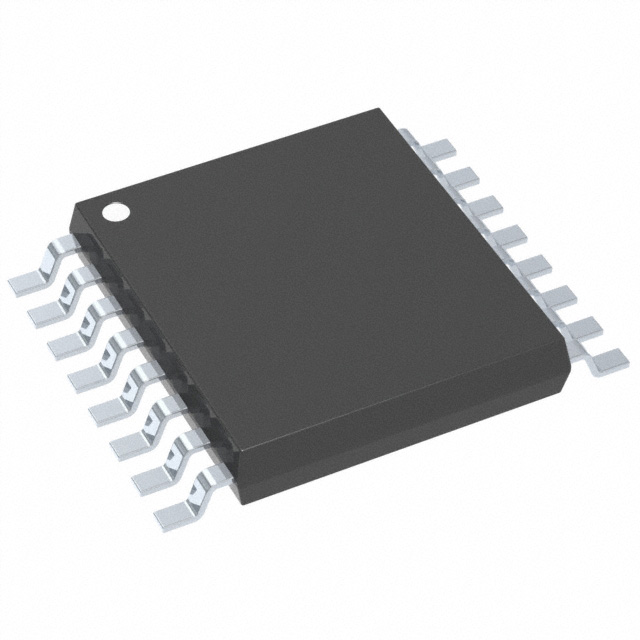
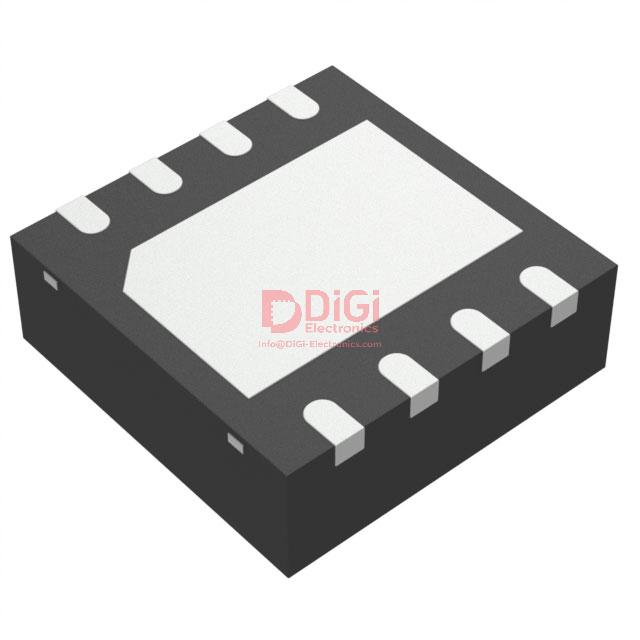
Packaging choices for LED2000PUR directly influence thermal performance, assembly efficiency, and reliability in high-density power applications. The 8-lead VFQFPN package integrates a 4 x 4 mm footprint with an exposed thermal pad, providing substantial surface area for effective heat conduction. Its junction-to-ambient thermal resistance of 40°C/W permits higher power throughput with minimized temperature rise, enabling aggressive designs in compact spaces where thermal buildup is a limiting factor. Compared to this, the SO8 package, while preserving standard industry compatibility and straightforward assembly, presents a thermal resistance of 65°C/W—adequate for moderate power budgets but less suited for environments with sustained maximum output or elevated ambient temperatures.
Surface-mount compatibility in both packages streamlines automated pick-and-place processes, reducing production variability and supporting scalable manufacturing. Careful interpretation of pin assignments and adherence to dimensional tables are critical during PCB layout: minor deviations in pad geometry or trace orientation may undermine electrical integrity, compromise solder joint reliability, or create unforeseen thermal bottlenecks. In practice, leveraging the exposed pad in VFQFPN for direct-to-copper placement multiplies the available heat-spreading paths. Through multi-layer board stack-ups with thermally conductive vias, the designer extracts additional performance, a tactic highly effective in buck LED drivers operating at the boundary values of their electrical ratings.
Thermal modeling and empirical heat measurement routinely demonstrate that intelligent package selection, coupled with optimized PCB thermal management, directly translates into extended operational lifetimes and reduced derating of output currents. Margin calculations must account for the actual mounting scenario—airflow, copper thickness, and via density—since theoretical values offer only baseline expectations. The VFQFPN’s exposed pad creates opportunities for reducing heatsink size or even omitting additional thermal hardware altogether in small form-factor designs. In commercial LED lighting applications where luminous efficacy and durability drive value, this nuanced package engineering delivers both system-level cost savings and demonstrable reliability gains.
A subtle but critical insight emerges when the package’s mechanical data is cross-referenced with production constraints. Variances in solder paste volume or reflow profile can alter pad wetting, thus modulating both electrical and thermal interconnects. Consistent application of IPC-recommended footprints—not just dimensional convergence—enables robust design transfer from prototype to volume manufacturing. When high current density is present, the VFQFPN's symmetry and pad exposure simplify current loop optimization, reducing noise and improving electromagnetic compatibility—a nontrivial advantage in densely populated driver circuitry.
Selecting between these packages is not simply a question of footprint; it is a system-level tradeoff informed by thermal strategy, assembly technology, and reliability targets. Solutions prioritizing maximum efficiency, longevity, and compactness draw measurable benefit from integrating the VFQFPN package, optimizing operational margins for advanced lighting designs.
Thermal management and protection mechanisms in LED2000PUR
Thermal management and protection strategies within the LED2000PUR converge upon several tightly interlinked mechanisms, each contributing to system resilience under demanding operational regimes. At the core, thermal shutdown circuitry actively monitors junction temperature, forcibly disabling the device when threshold conditions are breached to avert damage from runaway heating. This automatic intervention is calibrated for both rapid response and repeatable reliability, ensuring that even in poorly ventilated enclosures or with fluctuating ambient temperatures, the controller maintains operational safety.
Current regulation is embedded at multiple levels. Internal current limiting dynamically adjusts the pass element's conduction state, curtailing output during overcurrent events such as inrush conditions or peripheral faults. This not only prevents catastrophic escalation but subtly buffers power transitions, moderating both electrical and thermal stress on the switching components. Short-circuit detection further strengthens protection; upon sensing persistent excessive load or output shorts, a dedicated fault mode is invoked, halting pulse generation and confining the failure domain. Such layered fault handling architecture minimizes system recovery time and mitigates broader downstream risk.
Transient stability is enhanced through sophisticated compensation networks, which are embedded within the control loop. These structures absorb the wide array of disturbances typical in LED drive applications, such as voltage sags or high di/dt load shifts. There is a marked advantage when finely tuning external passive networks; field observations consistently reveal improved fault recovery speed and reduction of output overshoot following transient events. Employing recommended values for compensation—and periodically verifying loop stability margins during layout changes—proves vital for maintaining robust operation in dynamic environments.
Device-level thermal management leverages both low RDS(on) design and precision package engineering. Reduced on-state resistance curtails internal power loss during conduction, directly lowering thermal output. Application-level best practices further augment cooling efficiency; adherence to datasheet mounting guidance, meticulous soldering of the exposed pad on the VFQFPN package, and judicious PCB copper allocation collectively promote rapid heat evacuation. Optimally, ground planes are extended beneath the device footprint to act as thermal reservoirs, distributing generated heat away from the controller. In empirical deployments, these thermal strategies markedly affect maximum ambient operability, with margin gains evident when package and layout are harmonized.
A core engineering insight is the mutual reinforcement between protection features and thermal architecture. Rather than relying on single-point mechanisms, the LED2000PUR’s safety interplay fosters a self-correcting environment, where proactive shutdown, current limiting, and fault management complement effective hardware-level heat dispersion. The result is a system highly tolerant to both transient and steady-state stressors—a foundational platform for driving high-reliability LED loads across rigorous industrial or automotive contexts.
Application guidance: Implementing LED2000PUR in lighting systems
Implementing the LED2000PUR in advanced lighting systems necessitates precise attention to component selection and PCB layout to exploit its full performance envelope. At the core, the sensing resistor establishes the LED string current, directly influencing luminous output consistency and accuracy. Selection should prioritize low ppm/°C temperature coefficients and tight tolerance, especially in applications where color rendering and brightness uniformity are paramount. In multi-channel or high-precision installations, experience demonstrates that employing resistor arrays enables matched thermal drift and streamlined calibration, further reducing drift-induced visual artifacts.
Passive component optimization fundamentally shapes system stability and EMI profile. Inductor selection must balance current rating, core loss, and physical size to minimize audible noise while sustaining efficiency; shielded ferrite types typically offer the best compromise between magnetic leakage and thermal robustness. Ceramic output capacitors present low ESR, supporting minimal voltage ripple and fast transient settling—both essential for applications sensitive to flicker and color shift. Undersizing these components risks undershoot or overshoot under dynamic loads, a prevalent pitfall in animated displays or interactive signage. Input capacitors additionally serve dual roles in stabilizing bus voltage and attenuating conducted EMI; low-inductance MLCCs or a composite network of ceramics and low-ESR electrolytics often provide superior surge absorption under heavy pulsed load events.
PCB layout critically defines both electrical and thermal performance. Minimizing loop areas on high di/dt paths, especially around the switching node and input return, reduces radiated emissions and susceptibility to switching noise. Following layout exemplars provided in the datasheets for VFQFPN and SO8 packages streamlines design review processes and accelerates prototyping; yet, insight into actual assembly quality and the specific enclosure environment often mandates refinement beyond textbook guidance. For instance, strategic placement of thermal vias beneath the exposed pad can extract several additional watts of dissipation headroom, supporting higher drive currents in tightly packed LED arrays.
Integrated PWM dimming logic provides a seamless interface to microcontrollers and digital control systems, bypassing the need for discrete analog dimming circuits. This enables direct firmware-based modulation of brightness, facilitating sophisticated effects such as adaptive backlighting, dynamic color tuning, or time-of-day intensity profiles. In distributed lighting networks, the deterministic dimming behavior and absence of audible noise (with suitable component choices) simplify EMC compliance.
These design principles coalesce in demanding application scenarios: compact, edge-lit architectural features benefit from the device’s high PWM dimming ratio and compact footprint, while outdoor displays capitalize on its robust thermal tolerance and efficient switching. Thorough validation—including thermal imaging under maximum load, ripple analysis under fast transient simulation, and EMI pre-compliance scans—consistently exposes opportunities for iterative refinement, reinforcing the necessity of an application-driven, detail-oriented approach. The systematic alignment of component selection, layout technique, and digital integration unlocks the LED2000PUR’s value, ensuring reliability and precision even in the most challenging project constraints.
Potential equivalent/replacement models for LED2000PUR
A rigorous evaluation of equivalents or replacements for the LED2000PUR begins with a methodical analysis of core electrical parameters, specifically output current capacity and voltage range. These define the driver’s suitability for various LED loads and system topologies, constraining the selection to models capable of replicating or enhancing the existing operational envelope. A direct cross-comparison among devices within the STMicroelectronics portfolio reveals that other LED2000 series variants—such as the LED2000TR or LED2000PSR—often present closely matched current ratings and expanded voltage tolerances, enabling seamless transitions in designs requiring minimal deviation from established electrical specifications.
The next layer of comparison involves package compatibility. Accurate mechanical matching, whether the footprint is SO8, MSOP, QFN, or other SMD formats, greatly simplifies replacement by removing the need for PCB redesigns or requalification cycles. For demanding applications, newer synchronous buck architectures extend efficiency and thermal performance while maintaining pinout symmetry with legacy devices, facilitating direct PCB swaps with minimal risk of electrical overstress or layout interference. Experience with multigeneration retrofits indicates that synchronous converter alternatives—drawing from both STMicroelectronics and competitors like Texas Instruments or Infineon—minimize shoot-through losses and offer finer control over EMI compliance when board geometry or stacking constraints are paramount.
Feature set intricacies such as PWM dimming resolution, LED current ripple control, and embedded protection mechanisms (including thermal shutdown, over-current, and under-voltage lockout) further differentiate practical substitutes. Designs with high ambient light variability or stringent flicker norms benefit from drivers supporting high-frequency dimming and robust analog feedback loops—attributes quantifiable through bench verification of light stability and fault tolerance. Subtle mismatches in dimming linearity or fault response routines often emerge as reliability bottlenecks in field deployments; selecting models with proven parametric stability in both prototype and production contexts yields operational gains and lowers support overhead.
Application scenarios span from architectural lighting modules demanding smooth color transitions to high-power industrial luminaires subject to harsh electrical environments. Field integration tests underscore the importance of layout-driven parasitic minimization and thermal derating, which vary significantly with package geometry and switching topology. Synchronous alternatives excel in densely packed or thermally demanding systems, consistently exhibiting reduced junction temperatures and enhanced lifespan under repeated load cycling.
Unique perspectives arise around supply chain resilience and migration cost. A strategic shift from the LED2000PUR to newer synchronous buck drivers presents opportunities for concurrent improvements in efficiency, electromagnetic compatibility, and design modularity, especially when leveraging pin-compatible upgrades with expanded feature sets. Holistically, the selection matrix should incorporate granular electrical, mechanical, and feature set analysis, coupled with empirical insights from prior design cycles, to ensure replacement models deliver both technical equivalence and platform advancement without unanticipated engineering trade-offs.
Conclusion
Integrating the STMicroelectronics LED2000PUR LED driver into contemporary lighting architectures necessitates careful evaluation of its underlying regulatory mechanisms and operational safeguards. At the circuit level, the LED2000PUR leverages advanced current-mode control to facilitate stable, flicker-free LED illumination, effectively compensating for upstream supply variations. Its dedicated feedback network, configured for accurate constant current output, supports tight binning tolerances and ensures luminance consistency across an array of LEDs, making it especially suitable for signage arrays where uniformity is critical. On the protection front, built-in short-circuit and thermal shutdown features serve as essential bulwarks against field failures and possible thermal runaway, which are frequent concerns in challenging installation environments.
Packaging efficiency further distinguishes the LED2000PUR within constrained PCB layouts, where board space is at a premium. The device’s compact footprint allows seamless integration into modular lighting subsystems, while its low-profile design enhances air flow for passive cooling. Practical deployment underscores the importance of implementing robust thermal management, such as copper pours and optimized heat sinks beneath the device footprint. This approach not only preserves long-term reliability but also extends the operable range of the LED driver under continuous high-load conditions.
Flexibility in interface options is central for adaptable product design. The LED2000PUR offers versatile analog and PWM dimming inputs, facilitating precise control schemes ranging from commercial dimmer compatibility to sophisticated programmable effects. This functionality encourages scalable implementation in smart lighting networks and dynamic digital signage, where granular control of brightness and color temperature is fundamental.
Field experience demonstrates that strict adherence to manufacturer guidelines—particularly regarding inductor selection, input capacitance, and layout minimization of high-current return paths—directly translates to reduced EMI emissions and enhanced system stability. Avoiding over-specification of external passive components balances cost objectives with durability targets, a critical trade-off in mass-produced lighting fixtures for retail and architectural segments.
Within the competitive landscape, the LED2000PUR’s comprehensive feature set supports rapid prototyping and streamlined production cycles, aligning with lean engineering practices. The convergence of efficiency, robustness, and tunable control foregrounds the device as a strategic anchor for both innovative high-end installations and budget-sensitive deployments. Continued integration of protective and regulatory advancements, together with modular system design foresight, enables lighting engineers to meet evolving performance and reliability standards without compromising project timelines or operating budgets.