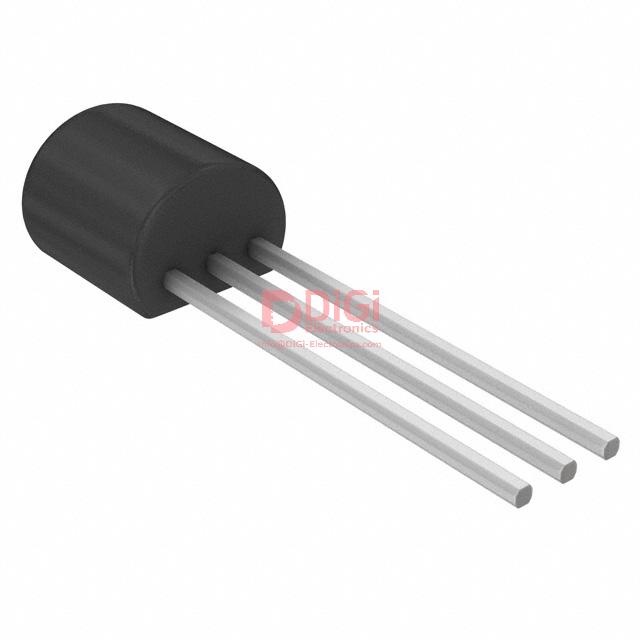
LE80CZ >
LE80CZ
STMicroelectronics
IC REG LINEAR 8V 100MA TO92-3
2342 Pcs New Original In Stock
Linear Voltage Regulator IC Positive Fixed 1 Output 100mA TO-92-3
Request Quote (Ships tomorrow)
*Quantity
Minimum 1
LE80CZ STMicroelectronics
5.0 / 5.0 - (246 Ratings)

LE80CZ

Product Overview

8173204

DiGi Electronics Part Number

LE80CZ-DG
LE80CZ

Description

IC REG LINEAR 8V 100MA TO92-3

Inventory

2342 Pcs New Original In Stock
Linear Voltage Regulator IC Positive Fixed 1 Output 100mA TO-92-3
Quantity
Minimum 1

Purchase and inquiry

Quality Assurance

365 - Day Quality Guarantee - Every part fully backed.

90 - Day Refund or Exchange - Defective parts? No hassle.

Limited Stock, Order Now - Get reliable parts without worry.

Global Shipping & Secure Packaging

Worldwide Delivery in 3-5 Business Days

100% ESD Anti-Static Packaging

Real-Time Tracking for Every Order

Secure & Flexible Payment

Credit Card, VISA, MasterCard, PayPal, Western Union, Telegraphic Transfer(T/T) and more

All payments encrypted for security

Request Quote (Ships tomorrow)
* Quantity
Minimum 1
(*) is mandatory
We'll get back to you within 24 hours

LE80CZ Technical Specifications

Category Power Management (PMIC), Voltage Regulators - Linear, Low Drop Out (LDO) Regulators

Manufacturer STMicroelectronics

Packaging -

Series -

Product Status Obsolete

Output Configuration Positive

Output Type Fixed

Number of Regulators 1

Voltage - Input (Max) 18V

Voltage - Output (Min/Fixed) 8V

Voltage - Output (Max) -

Voltage Dropout (Max) 0.5V @ 100mA

Current - Output 100mA

Current - Quiescent (Iq) 1.6 mA

Current - Supply (Max) 3.6 mA

PSRR 72dB ~ 57dB (120Hz ~ 10kHz)

Control Features -

Protection Features Over Current, Over Temperature

Operating Temperature -40°C ~ 125°C

Mounting Type Through Hole

Package / Case TO-226-3, TO-92-3 (TO-226AA)

Supplier Device Package TO-92-3

Base Product Number LE80

Datasheet & Documents

HTML Datasheet

LE80CZ-DG

Environmental & Export Classification

RoHS Status ROHS3 Compliant
Moisture Sensitivity Level (MSL) 1 (Unlimited)
REACH Status REACH Unaffected
ECCN EAR99
HTSUS 8542.39.0001

Additional Information

Standard Package
2,500

Reviews

5.0/5.0-(Show up to 5 Ratings)
산***식처
December 02, 2025
5.0
문제 발생 시 빠른 해결책 제시가 인상적입니다.
Murm***DeMer
December 02, 2025
5.0
Ils offrent une gamme étendue tout en assurant un traitement précis et rapide de chaque commande.
Infini***ourney
December 02, 2025
5.0
Their support team goes above and beyond to ensure customer satisfaction.
Evolv***dGrow
December 02, 2025
5.0
DiGi Electronics offers reliable shipping and excellent customer care after the sale.
Velv***ortex
December 02, 2025
5.0
Their dedicated after-sales team ensures peace of mind for customers.
Dre***Nest
December 02, 2025
5.0
Fast shipping and a professional attitude make DiGi Electronics a top choice.
Sk***und
December 02, 2025
5.0
Transparent pricing policies make their shopping experience very satisfying.
Charm***Smile
December 02, 2025
5.0
DiGi Electronics provides exceptional quality that surpasses many competitors.
Publish Evalution
* Product Rating
(Normal/Preferably/Outstanding, default 5 stars)
* Evalution Message
Please enter your review message.
Please post honest comments and do not post ilegal comments.

Frequently Asked Questions (FAQ)

Can the LE80CZ be safely replaced with the LM7808 in a 12V input, 8V output application requiring 80mA load current, and what are the key risks in doing so?

While the LM7808 is a common 8V linear regulator, direct replacement of the LE80CZ requires careful evaluation. The LE80CZ has a lower quiescent current (1.6 mA vs. ~5 mA for LM7808) and superior PSRR (72dB at 120Hz), making it better for noise-sensitive analog circuits. However, the LM7808 typically supports higher output current (1A vs. 100mA), which may seem advantageous—but over-specifying can lead to poorer transient response and unnecessary thermal stress if not heatsinked properly. Crucially, the LE80CZ’s maximum input voltage is 18V; at 12V input, both devices operate within spec, but the LM7808’s higher dropout voltage (~2V vs. 0.5V for LE80CZ) increases power dissipation significantly at light loads. If your design prioritizes efficiency and low noise under 100mA, sticking with the LE80CZ or finding a modern equivalent like the MCP1700T-8002E/TT is safer. Always verify pin compatibility—TO-92 packages differ across manufacturers.

What are the hidden thermal risks when using the LE80CZ in a sealed enclosure with ambient temperatures up to 60°C and continuous 90mA load?

The LE80CZ in TO-92 packaging has limited thermal dissipation capability. At 90mA load with a 12V input (4V dropout), power dissipation is 0.36W. In a sealed enclosure at 60°C ambient, the junction temperature can exceed 125°C due to the TO-92’s high thermal resistance (≈150°C/W junction-to-ambient). This approaches the absolute maximum rating and risks thermal shutdown or long-term reliability degradation. To mitigate, ensure adequate airflow or add a small heatsink. Alternatively, consider derating the output current or switching to a more thermally robust package like SOT-89 if board space allows. Always perform thermal imaging or empirical testing under worst-case conditions—don’t rely solely on datasheet derating curves, which assume ideal PCB layout.

Is the LE80CZ suitable for battery-powered IoT sensor nodes where quiescent current and dropout voltage are critical, and how does it compare to modern LDOs like the TPS7A08?

The LE80CZ is suboptimal for modern low-power IoT applications despite its low 1.6 mA quiescent current. Its 0.5V dropout at 100mA means a 9V minimum input for stable 8V output—problematic as batteries discharge below this threshold. In contrast, the TPS7A08 from Texas Instruments offers 350mV dropout at 80mA and only 330nA quiescent current, extending battery life significantly. Additionally, the LE80CZ lacks enable/shutdown functionality, preventing power gating during sleep modes. While the LE80CZ may suffice in legacy designs with stable supply rails, new designs should migrate to ultra-low-Iq LDOs. If redesign isn’t feasible, consider adding a pre-regulator or boost converter to maintain headroom, but this increases BOM cost and complexity.

How do I ensure long-term reliability of the LE80CZ given its obsolete status, and what authentic sourcing strategies should I use to avoid counterfeit parts?

Since the LE80CZ is marked obsolete by STMicroelectronics, long-term supply chain risk is high. Relying on brokers without authorized distribution channels increases exposure to counterfeit or relabeled components. To ensure authenticity, source only from ST-authorized distributors or trusted independent distributors with traceability (e.g., Digi-Key, Mouser, or Verical). Verify RoHS3 compliance and MSL-1 rating to avoid moisture-related failures during assembly. Consider qualifying a drop-in replacement now—such as the NCP718 or AP7381—even if continuing to use LE80CZ in current builds. Maintain a last-time-buy inventory based on projected EOL demand, and document revision-controlled substitution plans to avoid field failures due to undetected parametric drift in gray-market parts.

Can the LE80CZ be used in automotive 12V systems with load dump transients up to 40V, and what protection circuitry is required to prevent failure?

The LE80CZ’s absolute maximum input voltage is 18V, making it unsuitable for direct use in automotive environments where load dump can exceed 40V. Even brief exposure risks catastrophic failure. To protect the LE80CZ, a transient voltage suppressor (TVS) diode rated for ISO 7637-2 pulses (e.g., SMAJ15A) must be placed at the input, followed by a series resistor (10–22Ω, 1W) and bulk capacitor (≥100µF) to limit inrush and clamp energy. Alternatively, use a pre-regulator like the LDOA5V from ST or a buck converter to step down the input below 16V before feeding the LE80CZ. Without such protection, field returns due to latent damage from voltage spikes are likely. Always validate the complete power chain with ISO 16750-2 pulse testing if targeting automotive qualification.

Quality Assurance (QC)

DiGi ensures the quality and authenticity of every electronic component through professional inspections and batch sampling, guaranteeing reliable sourcing, stable performance, and compliance with technical specifications, helping customers reduce supply chain risks and confidently use components in production.

Quality Assurance
Counterfeit and defect prevention

Counterfeit and defect prevention

Comprehensive screening to identify counterfeit, refurbished, or defective components, ensuring only authentic and compliant parts are delivered.

Visual and packaging inspection

Visual and packaging inspection

Electrical performance verification

Verification of component appearance, markings, date codes, packaging integrity, and label consistency to ensure traceability and conformity.

Life and reliability evaluation

DiGi Certification
Blogs & Posts
LE80CZ CAD Models
productDetail
Please log in first.
No account yet? Register