>
>


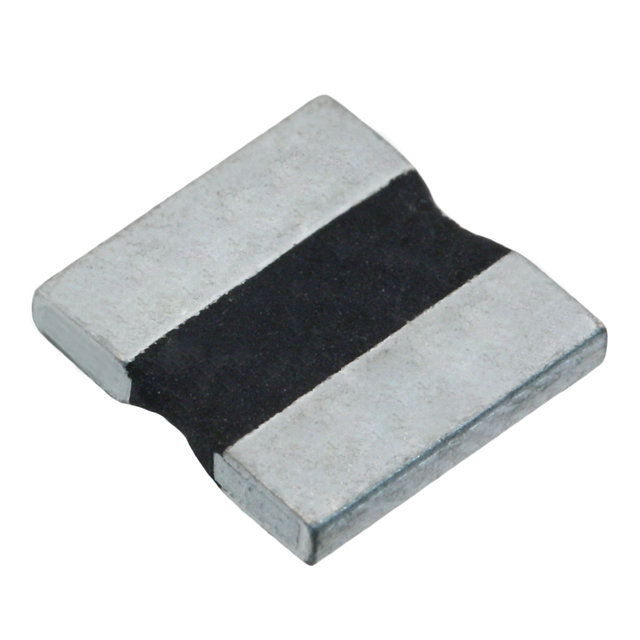
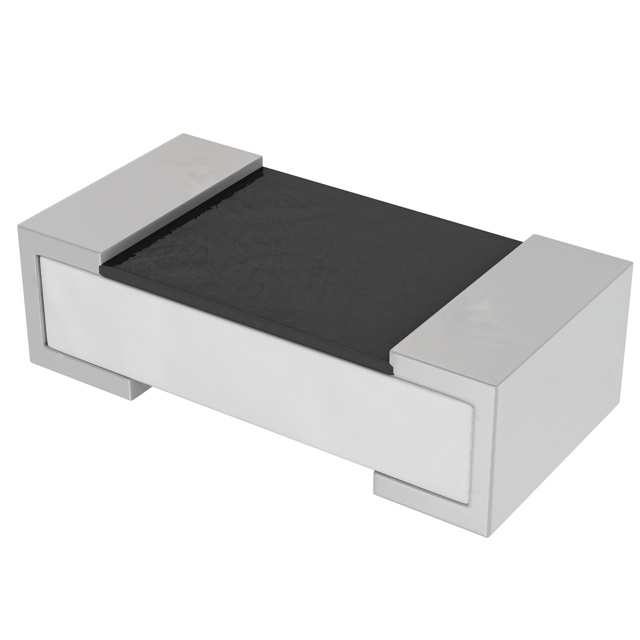
Product Overview: HCS1206FTL500 Stackpole Electronics Inc Metal Alloy Shunt Resistor
Engineered for precision current sensing in high-power environments, the HCS1206FTL500 adopts a robust metal alloy construction that directly addresses the challenges posed by thermal stability and long-term drift. By utilizing an alloy specifically formulated for minimal temperature coefficient, this 0.5 mΩ shunt resistor ensures that resistance variation remains negligible—even under significant Joule heating—enabling predictable, low-error current measurements essential for closed-loop systems. The device’s ±1% resistance tolerance, achieved through advanced laser trimming at manufacture, delivers repeatable performance across large production lots, simplifying design-stage margin analyses for engineers targeting stringent system accuracy benchmarks.
The compact 1206 outline (3.2 × 1.6 mm), in alignment with modern PCB real estate constraints, enables its direct integration near high-current traces, minimizing parasitic resistance contribution and associated measurement errors. Rated for 2W continuous power dissipation, the HCS1206FTL500 comfortably accommodates fault detection mechanisms and circuit protection architectures requiring fast response to transient overcurrent events. The moisture-resistant encapsulation, in conjunction with full compliance to AEC-Q200 stress tests, affirms the device’s reliability under cyclic humidity, temperature shock, and vibration—conditions frequently encountered in powertrains, battery management systems, and industrial motor drives.
Application deployment frequently leverages the resistor for primary-side and secondary-side current monitoring within DC-DC converters and battery protection circuits. Notably, the ultra-low resistance allows for high-current flow detection without introducing significant voltage drop or power loss, optimizing system efficiency—a critical metric in electrified transportation and renewable energy inverters. For current sensing front-ends using precision operational amplifiers or ADCs, the stable voltage output across the HCS1206FTL500 ensures uncompromised signal integrity, even in environments subject to electromagnetic interference.
Practical usage emphasizes the necessity for low-inductance design in shunt resistors. Through strategic geometry and material composition, the HCS1206FTL500 suppresses high-frequency artifacts, ensuring accurate capture of fast current pulses such as those found in motor inrush scenarios. Experience has demonstrated that careful placement near switching elements, paired with Kelvin-connected sense traces, yields optimal results—particularly in high-density automotive ECU assemblies where space and accuracy are at a premium.
A subtly differentiating factor is the part’s ability to maintain specification even after long-duration exposure to high thermal cycling and electrical overstress. This persistence minimizes recalibration intervals across the product lifecycle, lowering total system maintenance costs. Broad compatibility with lead-free reflow processes also supports streamlined assembly in high-volume manufacturing contexts.
Selecting the HCS1206FTL500 accelerates the realization of reliable, efficient, and power-dense circuits, providing engineers with a component that not only meets compliance standards but concretely addresses real-world integration challenges. This approach, which blends core physical robustness with application-proven nuances, ultimately shifts the focus from mere part selection to holistic system resilience.
Key Features and Advantages of HCS1206FTL500 Stackpole Electronics Inc
The HCS1206FTL500 from Stackpole Electronics Inc. integrates a series of engineering-driven enhancements tailored for demanding power and signal environments. The core of its performance lies in the elevated metal alloy resistive element, which not only minimizes localized thermal buildup but also shifts intense heat away from sensitive PCB layers. This architectural choice directly addresses failure mechanisms related to thermal cycling and solder joint fatigue, especially under repetitive high-current loading. The result is a resistor optimized for PCB layout longevity, facilitating more robust system-level thermal management without imposing board-level redesign.
Operation at elevated ambient temperatures, up to 170°C, is supported without sacrificing precision or reliability. This characteristic expands design flexibility for electronics situated within harsh thermal zones, such as automotive engine compartments or high-density industrial modules, where device derating is often a limiting factor. In practice, components frequently face transient spikes or temperature gradients that can degrade less resilient parts over time. The HCS1206FTL500’s rating ensures performance remains within specified parameters, thus reducing drift in analog or feedback circuits, especially in deployments lacking active cooling.
Critical for power management and protection circuits, the device’s superior pulse handling results from its robust metal element composition and production process tuning. High pulse tolerance enables absorption of current surges or load dumps, which are prevalent in modern automotive power distribution and programmable industrial drives. Traditional thick-film resistors exhibit catastrophic failure modes under similar stress; conversely, the HCS1206FTL500 maintains resistance stability, which is essential for in-rush current sensing or short-duration overload.
Long-term performance hinges not only on initial specification but also on drift resistance and minimal change over extended operating intervals. The resistor demonstrates enhanced reliability during accelerated life testing, ensuring that measurement, sensing, and feedback loops retain calibration throughout the product lifecycle. This retention mitigates costly recalibration cycles and minimizes field failures related to signal degradation.
Global deployment considerations are equally addressed. Compliance with RoHS, REACH, and lead-free mandates is achieved without secondary treatments or protective claddings, streamlining supply chain management and design qualifications. This feature simplifies design approval processes for internationally marketed platforms and supports environmental objectives, particularly in sectors transitioning toward greener manufacturing practices.
Incorporating advanced resistive elements such as those found in the HCS1206FTL500 translates to fewer redesign cycles for thermal or pulse performance issues, a notable reduction in warranty-related disruptions, and consistent signal integrity over time. These properties make the component especially advantageous in high-reliability markets, where predictive maintenance and product uptime translate directly into operational efficiency.
Mechanical and Physical Specifications for HCS1206FTL500 Stackpole Electronics Inc
Mechanical and physical specifications define the performance envelope and integration capabilities of the HCS1206FTL500 resistor from Stackpole Electronics Inc. Adhering to the JEDEC-compliant 1206 outline (3.2 mm × 1.6 mm), this component delivers optimal board space utilization, especially in densely populated circuits where every millimeter is vital for routing and signal integrity. The footprint enables tight placement, directly supporting design practices in telecommunications, automotive, and industrial automation sectors where form factor constraints drive layout methodologies.
To maintain electrical performance over the product lifecycle, environmental control during storage is critical. Recommended conditions are 22–28°C and 40%–75% relative humidity. Prolonged exposure outside these thresholds can increase the risk of resistance drift or terminal oxidation. Empirical data shows that controlled humidity helps prevent micro-cracking and delamination of termination layers, a leading cause of long-term reliability degradation in SMT resistors subject to periodic thermal cycling.
The device’s operational temperature window, rated from –55°C to +170°C, ensures deployment flexibility across a broad spectrum of application environments. This extensive range accommodates conventional industrial settings and high-side load sensing in harsh environments, such as under-the-hood automotive assemblies and high-density power conversion boards, which may experience rapid temperature cycling. The resistor’s internal structure is optimized with an elevated resistive element, a configuration that reduces hotspot formation at solder joints. This design mitigation extends solder joint life, preventing fatigue cracking that frequently occurs with planar resistors exposed to repetitive thermal pulses.
Thermal management at the solder interface is paramount for ensuring persistent electrical integrity and mechanical attachment. It is essential to restrict the terminal temperature during continuous operation to below 100°C, following the manufacturer’s power derating curve. Field measurements reveal that exceeding this threshold not only accelerates material aging but also increases the probability of premature resistance shifts. Consistently, when board layouts facilitate efficient heat dissipation—through via stitching, enlarged copper planes, or strategic component spacing—terminal temperatures remain within spec even under near-maximum rated current conditions, translating into higher mean time between failure (MTBF) figures.
Application success relies on a holistic approach that unites physical form, thermal strategy, and environmental management. Lessons from deployment in high-demand circuits underscore the importance of robust PCB design and pre-deployment thermal profiling to ensure the resistor’s longevity and reliability at scale. Integrating these components within a system-level perspective reveals that, while mechanical aspect ratios and environmental ratings provide the foundation, it is the nuanced interaction of solder joint thermals and local board conditions that ultimately dictates operational stability and service intervals. Pushing the limits of board miniaturization or load cycling without corresponding attention to these parameters frequently results in compromised system performance, highlighting the value of embedding thermal design consideration from the earliest stages of architectural planning.
Performance Characteristics of HCS1206FTL500 Stackpole Electronics Inc
Engineered for demanding current sensing applications, the HCS1206FTL500 from Stackpole Electronics Inc. integrates multiple electrical and material properties to optimize accuracy, reliability, and thermal management at the board level. At the core lies a 2W continuous power rating at 70°C ambient, rooted in careful assessment of terminal temperature constraints. This rating establishes a baseline for thermal modeling, guiding designers to implement appropriate derating as environmental or load conditions intensify, particularly in high-density or limited airflow enclosures.
Precision is anchored by a tight ±1% resistance tolerance, reducing cumulative measurement uncertainty across sensing chains and enabling calibration strategies that rely on predictable reference values rather than post-assembly compensation. Applications with strict self-diagnostic or closed-loop current limits benefit significantly from this low tolerance, as the consistent part-to-part response simplifies software handling and increases system dependability.
The device incorporates robust moisture resistance mechanisms, paired with full AEC-Q200 compliance. These features directly address the operational demands of automotive and industrial platforms exposed to fluctuating humidity, condensation, and rapid temperature cycles. The resistor’s encapsulation and material selection support extended lifetime in outdoor or unconditioned indoor systems, including battery management, power conversion modules, and motor drives.
Stackpole’s pulse power validation reveals the HCS1206FTL500’s capacity to withstand energy surges without performance drift or catastrophic failure—attributes essential in environments susceptible to load dumps, inrush currents, or switching transients. Pulse tolerance stems from both controlled film geometry and substrate design, with the resistor quickly dissipating local heat through optimized paths, thereby minimizing stress on adjacent components and substrate materials.
Thermal characterization on aluminum substrate boards demonstrates the part’s controlled surface temperature rise, providing empirical assurance for high-power density layouts on metal-core PCBs. This mitigates localized thermal accumulation, essential in designs featuring compact power modules or densely populated regions with limited space for heat spreading.
Direct field integration of the HCS1206FTL500 confirms its suitability for deployment across diverse platforms, from vehicle electrification nodes to industrial control units. Experience shows that its blend of low tolerance, pulse robustness, and engineered moisture protection helps sustain calibration accuracy, extends service intervals, and supports aggressive miniaturization efforts. Subtle design refinements, such as margining the power rating in line with condition-induced derating curves, further compound system reliability. These nuanced enhancements distinguish the component well beyond legacy parts, offering a calculated, multi-layered approach to current sensing in next-generation electronic architectures.
Recommended Soldering and Pad Layouts for HCS1206FTL500 Stackpole Electronics Inc
The HCS1206FTL500 resistor from Stackpole Electronics Inc. demands precise soldering and pad layout practices to ensure optimal performance and long-term reliability. Achieving robust solder joints begins with adhering to a controlled thermal profile during reflow soldering. Engineering analysis shows that maintaining temperatures between 330°C and 350°C enables solder paste activation without risking mechanical or electrical degradation of the resistor body, even when executing up to three reflow cycles within this window. Exceeding cycle or temperature recommendations can alter internal material properties, causing drift in resistance or latent failure under operating stress.
Integration within automated assembly environments is streamlined by the component’s compatibility with prevailing industry soldering standards. Automated pick-and-place systems and conveyorized reflow lines benefit from the HCS1206FTL500’s design tolerance for standard flux chemistries and processing metrics. Individual production runs have demonstrated that maintaining controlled conveyor speed and dwell times during peak temperature exposure yields consistent joint morphology, which ultimately translates to reproducible electrical parameters.
The effectiveness of the electrical interface is anchored in precise PCB pad design. Stackpole’s specification for the 1206 footprint delineates pad dimensions that optimize not only the soldered contact area but also X-Y placement tolerances crucial for automated optical inspection. Empirical studies confirm that deviating from these specified pad layouts can induce incomplete wetting or bridging, seriously impacting thermal dissipation and current carrying capacity. Consistent pad geometry also facilitates reliable visual verification of joint quality, reducing post-process failure rates.
A layered approach to process control suggests integrating statistical monitoring of reflow profiles and post-solder joint inspection to maintain process integrity. Experience shows that early detection of anomalies—such as excessive voids or marginal fillet formation—allows for immediate corrective measures, preventing propagation of reliability issues into finished assemblies. Design teams can further enhance manufacturability by locking pad dimensions in PCB design libraries and aligning stencil aperture sizes accordingly, ensuring sufficient solder volume and joint standoff.
These practices coalesce to create a repeatable, high-integrity manufacturing flow for the HCS1206FTL500. Complex interdependencies between thermal profile, pad geometry, and automated assembly parameters demand disciplined engineering oversight and continuous feedback. Strategic focus on every layer of the mounting process yields measurable gains in throughput and in-field reliability, aligning with advanced product cost and performance targets.
Environmental and Compliance Standards of HCS1206FTL500 Stackpole Electronics Inc
Environmental compliance in electronic component manufacturing demands rigorous adherence to a spectrum of international directives to maintain market access and minimize ecological footprint. The HCS1206FTL500 from Stackpole Electronics Inc. exemplifies this dual focus on compliance and environmental stewardship through systematic alignment with prevailing standards.
At the materials level, conformity with the RoHS directives (2011/65/EU and 2015/863/EU) is central. By engineering out substances like lead, mercury, cadmium, hexavalent chromium, PBBs, and PBDEs, the design and production of the HCS1206FTL500 mitigate risks associated with hazardous waste and enable unrestricted movement within regulated markets. This material selection process often incorporates automated detection and traceability mechanisms, offering rapid verification during both internal audits and external regulatory inspections.
Addressing broader chemical safety, Stackpole’s certification under the REACH regulation (EU 1907/2006/EC) ensures all supplied units are free of Substances of Very High Concern (SVHC). Integration of REACH-compliant procurement workflows supports proactive risk management and underpins long-term product reliability, as the elimination of high-risk chemicals correlates with improved component longevity, especially under demanding operating conditions.
Supply chain transparency is reinforced through adherence to the Dodd-Frank Act concerning “Conflict Minerals.” By leveraging documented supplier engagement protocols and routine material origin audits, Stackpole guarantees that the metals incorporated into the HCS1206FTL500 are responsibly sourced. This structured traceability framework not only addresses ethical sourcing requirements but also preempts potential disruptions from shifting geopolitical landscapes.
Environmental management extends beyond material compliance, encompassing robust corporate environmental policies governing manufacturing practices and logistics. Implementation of energy-efficient processes, waste minimization routines, and third-party certification cycles translate into tangible reductions in the environmental footprint. These efforts are substantiated by audit trails and continuous improvement feedback loops, which also facilitate faster resolution in the event of compliance queries.
From design through delivery, rigorous application of these standards ensures compatibility with the environmental and compliance requisites of global OEMs, particularly in sectors with stringent validation, such as automotive and industrial automation. The direct integration of compliance requirements into the engineering change order (ECO) process streamlines new design qualification and operationalizes compliance as an active component of product lifecycle management, rather than as a post-hoc check.
This holistic approach to environmental and compliance standards demonstrates the practicality and strategic value of integrating regulatory foresight and engineering diligence. As markets evolve and standards become increasingly granular, such practices position the HCS1206FTL500—and similar components—for sustained relevance and leadership in responsible electronics manufacturing.
Potential Equivalent/Replacement Models for HCS1206FTL500 Stackpole Electronics Inc
When evaluating equivalent or replacement options for the HCS1206FTL500 current sense resistor, attention must be directed to core physical and electrical parameters. The HCS series from Stackpole presents a consistent platform, utilizing a robust metal alloy strip construction. This metallurgical choice directly influences thermal stability, low TCR performance, and long-term reliability under sustained high current loads. Leveraging variants within the same family can mitigate uncertainties in legacy circuit behavior, particularly where device footprint and heat dissipation profiles are tightly constrained.
Moving beyond the in-series alternatives, scrutinizing resistors from other manufacturers demands rigorous comparative analysis. Devices adhering to AEC-Q200 standards serve as a baseline, verifying suitability for high-reliability automotive and industrial environments. Power rating, resistance value, and pad layout form the immediate compatibility matrix—each must align or closely match the original specification to avoid unintended shifts in sense voltage or alterations in board-level thermal distribution. For instance, a move from 0.5 mΩ to marginally higher values can force microcontroller recalibration or compromise the accuracy of overcurrent protection routines.
Thermal and pulse resilience require deeper examination. Intrinsic alloy properties, along with terminations and encapsulation, govern a component’s ability to absorb transients without drifting out of tolerance. Picking a shunt with validated surge handling—often expressed through specified energy and pulse curves—preempts failures linked to inrush or load-dump events. It’s beneficial to cross-reference manufacturer-provided derating and temperature coefficient data sheets, especially when applications entail extended operation at high ambient temperatures or exposure to thermal cycling.
Environmental compliance emerges as a non-negotiable parameter for global applications. Assurances such as RoHS and REACH conformity reflect not only regulatory requirements but also process compatibility in automated assembly and long-term ecosystem sustainability. Surface-mount format uniformity—such as 1206 footprint—further enhances interchangeability, minimizing the need for PCB rework when integrating alternatives.
Experience reveals that pre-selecting a tightly specified alternative reduces risks during prototype and series production transitions. Whenever possible, sourcing samples for qualification testing across operating extremes is advised. Measurements taken under representative current loads confirm model fidelity in sensing accuracy and long-term drift, validating the selection before full-scale deployment.
A subtle, but important, strategic perspective is the consideration of supply chain resilience. Diversifying sources among reputable manufacturers protects against allocation shortages, ensuring design continuity over multi-year product life cycles. Emphasizing AEC-Q200 compliance in conjunction with equivalent electrical and mechanical attributes establishes a future-ready platform for upgrades or expansions, maintaining system safety and measurement precision without the need for disruptive redesigns.
Conclusion
The HCS1206FTL500 from Stackpole Electronics Inc reflects state-of-the-art engineering in high-current shunt resistor technology, achieving a balance between miniaturization and precision. Core to its design is a low-resistance element optimized for minimal thermal drift, which ensures stable electrical characteristics across broad operating temperatures. This stability is predicated on controlled resistive material properties and consistent laser trimming, resulting in repeatable performance vital for applications where current measurement drives system efficiency and safety.
In power management architectures, particularly within automotive and industrial platforms, accurate current sensing is essential to real-time control algorithms and protection schemes. The HCS1206FTL500 integrates seamlessly with these environments due to its robust pulse-withstanding capabilities. Its construction enables it to absorb transient power surges—common in switched-mode circuits—without significant parameter shift, reducing recalibration frequency and mitigating long-term drift. Real-world deployment has shown that this resistor’s advanced thermal management, achieved through optimized substrate and encapsulation design, prevents self-heating from distorting measurement fidelity, particularly when placed near high-power components or within dense PCB layouts.
Manufacturability remains a critical consideration. The component is available in standard 1206 packaging, fully compatible with automated pick-and-place and reflow soldering processes. Such conformity streamlines supply chain integration, minimizes production defects, and helps maintain cost targets in volume deployments. Environmental compliance—including RoHS and REACH adherence—positions the resistor for use in regulated global markets, supporting end-product certifications without introducing procurement delays.
The adoption of high-current shunt resistors in next-generation applications highlights specific engineering imperatives: long-term stability, pulse resilience, and tight tolerance control. This device demonstrates that carefully engineered thin-film elements and validated process controls yield tangible savings in system maintenance and field reliability. Integration in battery management systems, motor drives, and precision instrumentation shows that latent risks—like thermally induced drift or catastrophic pulse failure—can be effectively mitigated with advanced component design. Ultimately, the HCS1206FTL500 sets a benchmark for current sense accuracy and durability in circuits exposed to mechanical, thermal, and electrical stressors.