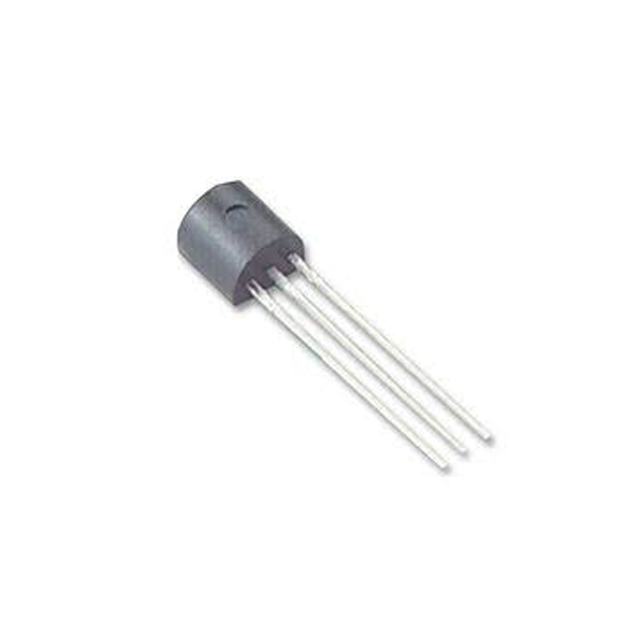
2N5321 >
2N5321
Solid State Inc.
TRANS NPN 50V 2A TO39
2481 Pcs New Original In Stock
Bipolar (BJT) Transistor NPN 50 V 2 A 1 W Through Hole TO-39
Request Quote (Ships tomorrow)
*Quantity
Minimum 1
2N5321 Solid State Inc.
5.0 / 5.0 - (317 Ratings)

2N5321

Product Overview

12964154

DiGi Electronics Part Number

2N5321-DG

Manufacturer

Solid State Inc.
2N5321

Description

TRANS NPN 50V 2A TO39

Inventory

2481 Pcs New Original In Stock
Bipolar (BJT) Transistor NPN 50 V 2 A 1 W Through Hole TO-39
Quantity
Minimum 1

Purchase and inquiry

Quality Assurance

365 - Day Quality Guarantee - Every part fully backed.

90 - Day Refund or Exchange - Defective parts? No hassle.

Limited Stock, Order Now - Get reliable parts without worry.

Global Shipping & Secure Packaging

Worldwide Delivery in 3-5 Business Days

100% ESD Anti-Static Packaging

Real-Time Tracking for Every Order

Secure & Flexible Payment

Credit Card, VISA, MasterCard, PayPal, Western Union, Telegraphic Transfer(T/T) and more

All payments encrypted for security

In Stock (All prices are in USD)
  • QTY Target Price Total Price
  • 1 1.8477 1.8477
  • 200 0.7371 147.4200
  • 500 0.7126 356.3000
  • 1000 0.7011 701.1000
Better Price by Online RFQ.
Request Quote (Ships tomorrow)
* Quantity
Minimum 1
(*) is mandatory
We'll get back to you within 24 hours

2N5321 Technical Specifications

Category Transistors, Bipolar (BJT), Single Bipolar Transistors

Manufacturer Manufacturers

Packaging Bulk

Series -

Product Status Active

Transistor Type NPN

Current - Collector (Ic) (Max) 2 A

Voltage - Collector Emitter Breakdown (Max) 50 V

Vce Saturation (Max) @ Ib, Ic 800mV @ 50mA, 500mA

Current - Collector Cutoff (Max) 5mA

DC Current Gain (hFE) (Min) @ Ic, Vce 30 @ 500mA, 4V

Power - Max 1 W

Frequency - Transition -

Operating Temperature -65°C ~ 200°C (TJ)

Mounting Type Through Hole

Package / Case TO-205AD, TO-39-3 Metal Can

Supplier Device Package TO-39

Datasheet & Documents

HTML Datasheet

2N5321-DG

Environmental & Export Classification

RoHS Status ROHS3 Compliant
Moisture Sensitivity Level (MSL) 1 (Unlimited)
REACH Status Vendor Undefined
ECCN EAR99
HTSUS 8541.10.0080

Additional Information

Other Names
2383-2N5321
Standard Package
10

Reviews

5.0/5.0-(Show up to 5 Ratings)
Voie***este
December 02, 2025
5.0
Je suis ravi des prix et de la vitesse de livraison, merci DiGi Electronics.
かぜ***やき
December 02, 2025
5.0
コスト面の透明性と物流の正確さに感謝しています。非常に信頼しています。
Silen***rizon
December 02, 2025
5.0
I feel confident purchasing from DiGi Electronics knowing their products are dependable.
Radi***Rays
December 02, 2025
5.0
Their customer service makes me want to come back again and again.
Drea***tcher
December 02, 2025
5.0
The emphasis on packaging quality gives us confidence in their shipments.
Publish Evalution
* Product Rating
(Normal/Preferably/Outstanding, default 5 stars)
* Evalution Message
Please enter your review message.
Please post honest comments and do not post ilegal comments.

Frequently Asked Questions (FAQ)

When designing in the 2N5321, what thermal considerations should be addressed to avoid overheating in a 1W continuous operation at elevated ambient temperatures?

When operating the 2N5321 near its 1W maximum power dissipation, especially in high ambient temperatures (e.g., >75°C), ensure adequate PCB copper pour or external heatsinking despite its TO-39 metal can package. Without a heatsink, thermal resistance (junction-to-ambient) can exceed 300°C/W, risking junction temperatures above the 200°C max rating. Use forced air or derate power by at least 50% above 100°C ambient to maintain reliability. Monitor temperature with a thermal model or prototype measurement under worst-case load and bias conditions.

Can the 2N5321 be used as a direct replacement for the 2N2222A in a high-current switching application, and what design risks should be evaluated?

While the 2N5321 can handle higher current (2A vs. 600mA) and voltage (50V vs. 40V) than the 2N2222A, it is not a direct drop-in replacement due to differing gain profiles and TO-39 vs. TO-92 packaging. The 2N5321 has a lower guaranteed hFE (30 min @ 500mA) compared to many 2N2222A variants (hFE >100), which may require increased base drive current. Verify saturation in switching applications with Ib ≥ Ic/10, and confirm mechanical fit and PCB layout compatibility due to the larger metal can package.

How does the 2N5321 perform in high-frequency switching circuits, and what are the limitations compared to modern switching transistors like the MMBT2222?

The 2N5321 lacks a specified transition frequency (fT) in its datasheet, indicating it is optimized for linear or low-frequency switching (<100 kHz), not high-speed applications. In contrast, the MMBT2222 has an fT around 300 MHz, making it far superior for fast switching. Use the 2N5321 only in audio amplifiers, relay drivers, or low-speed power control where switching losses are manageable. For PWM or SMPS designs above 50 kHz, consider modern BJTs or MOSFETs to avoid excessive heat and switching inefficiency.

What are the risks of using the 2N5321 in a parallel transistor configuration for higher current loads, and how can imbalance be prevented?

Paralleling 2N5321 transistors introduces risks of current hogging due to negative temperature coefficient of Vbe and manufacturing variance in hFE. Since one device may conduct more current and self-heat, thermal runaway can occur even with matched units. To mitigate, use individual emitter resistors (e.g., 0.1–0.5 Ω), closely thermally couple devices, and ensure identical PCB trace lengths. Prefer a single higher-rated transistor or a dedicated power Darlington if available. The 2N5321 was not designed for paralleling, so this approach requires careful prototyping and thermal monitoring.

In safety-critical or industrial applications, how reliable is the 2N5321 over temperature extremes, and what long-term failure mechanisms should be considered?

The 2N5321 supports an extended operating junction temperature range (-65°C to 200°C), making it suitable for harsh environments, but long-term reliability depends on stress mitigation. Key failure mechanisms include bond wire fatigue due to thermal cycling, moisture ingress (though packaged in hermetic metal TO-39), and parameter drift at elevated temperatures. To enhance reliability, operate below 150°C TJ, avoid rapid thermal transients, and conformally coat assemblies in humid environments. Prefer the 2N5321 over plastic-packaged BJTs where long life and thermal stability are critical, but validate performance in environmental stress testing.

Quality Assurance (QC)

DiGi ensures the quality and authenticity of every electronic component through professional inspections and batch sampling, guaranteeing reliable sourcing, stable performance, and compliance with technical specifications, helping customers reduce supply chain risks and confidently use components in production.

Quality Assurance
Counterfeit and defect prevention

Counterfeit and defect prevention

Comprehensive screening to identify counterfeit, refurbished, or defective components, ensuring only authentic and compliant parts are delivered.

Visual and packaging inspection

Visual and packaging inspection

Electrical performance verification

Verification of component appearance, markings, date codes, packaging integrity, and label consistency to ensure traceability and conformity.

Life and reliability evaluation

DiGi Certification
Blogs & Posts
2N5321 CAD Models
productDetail
Please log in first.
No account yet? Register