SI3500-A-GM >
SI3500-A-GM
Skyworks Solutions Inc.
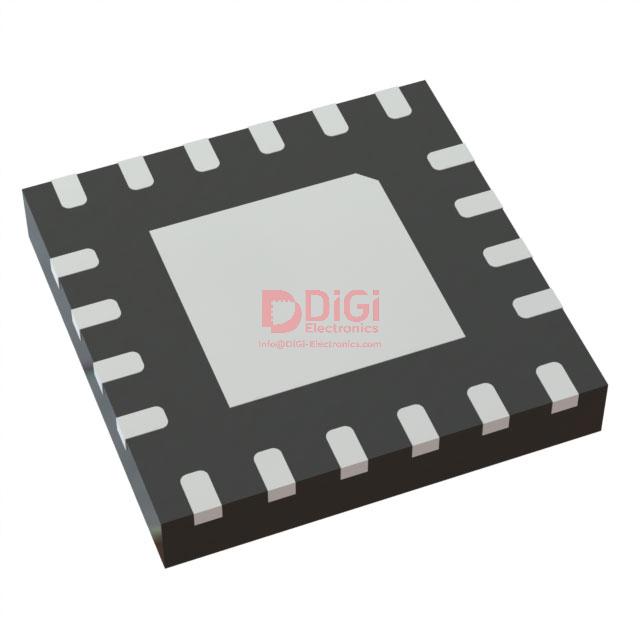
IC REG BUCK ADJ 400MA 20QFN
2114 Pcs New Original In Stock
Buck Switching Regulator IC Positive, Isolation Capable Adjustable 1.8V 1 Output 400mA 20-VQFN Exposed Pad
Request Quote (Ships tomorrow)
*Quantity
Minimum 1
SI3500-A-GM Skyworks Solutions Inc.
5.0 / 5.0 - (498 Ratings)

SI3500-A-GM

Product Overview

8006105

DiGi Electronics Part Number

SI3500-A-GM-DG
SI3500-A-GM

Description

IC REG BUCK ADJ 400MA 20QFN

Inventory

2114 Pcs New Original In Stock
Buck Switching Regulator IC Positive, Isolation Capable Adjustable 1.8V 1 Output 400mA 20-VQFN Exposed Pad
Quantity
Minimum 1

Purchase and inquiry

Quality Assurance

365 - Day Quality Guarantee - Every part fully backed.

90 - Day Refund or Exchange - Defective parts? No hassle.

Limited Stock, Order Now - Get reliable parts without worry.

Global Shipping & Secure Packaging

Worldwide Delivery in 3-5 Business Days

100% ESD Anti-Static Packaging

Real-Time Tracking for Every Order

Secure & Flexible Payment

Credit Card, VISA, MasterCard, PayPal, Western Union, Telegraphic Transfer(T/T) and more

All payments encrypted for security

Request Quote (Ships tomorrow)
* Quantity
Minimum 1
(*) is mandatory
We'll get back to you within 24 hours

SI3500-A-GM Technical Specifications

Category Power Management (PMIC), Voltage Regulators - DC DC Switching Regulators

Manufacturer Skyworks Solutions

Packaging -

Series -

Product Status Obsolete

Function Step-Down

Output Configuration Positive, Isolation Capable

Topology Buck

Output Type Adjustable

Number of Outputs 1

Voltage - Input (Min) 42V

Voltage - Input (Max) 57V

Voltage - Output (Min/Fixed) 1.8V

Voltage - Output (Max) 12V

Current - Output 400mA

Frequency - Switching 350kHz

Synchronous Rectifier No

Operating Temperature -40°C ~ 85°C (TA)

Mounting Type Surface Mount

Package / Case 20-VQFN Exposed Pad

Supplier Device Package 20-QFN (5x5)

Base Product Number SI3500

Datasheet & Documents

HTML Datasheet

SI3500-A-GM-DG

Environmental & Export Classification

Moisture Sensitivity Level (MSL) 3 (168 Hours)
ECCN EAR99
HTSUS 8542.39.0001

Additional Information

Other Names
336-1844-5
SI3500AGM
Standard Package
60

Reviews

5.0/5.0-(Show up to 5 Ratings)
초***길
December 02, 2025
5.0
돈이 아깝지 않은 만족스러운 구매 경험입니다.
Lili***acher
December 02, 2025
5.0
Die freundliche und engagierte Kundenbetreuung von DiGi Electronics schafft ein vertrauensvolles Geschäftsklima.
Meer***lick
December 02, 2025
5.0
Die Website ist sehr übersichtlich, was den Bestellprozess vereinfacht.
NorthernL***tsJourney
December 02, 2025
5.0
Customer service was proactive in checking on my satisfaction post-purchase.
Vel***Rain
December 02, 2025
5.0
The website's search filter options are very helpful in narrowing down choices.
Publish Evalution
* Product Rating
(Normal/Preferably/Outstanding, default 5 stars)
* Evalution Message
Please enter your review message.
Please post honest comments and do not post ilegal comments.

Frequently Asked Questions (FAQ)

Can the SI3500-A-GM be safely replaced with a modern buck regulator like the TPS54360 in a 48V industrial power supply design, and what are the key risks in doing so?

Replacing the obsolete SI3500-A-GM with the TPS54360 requires careful evaluation of input voltage compatibility, thermal performance, and control loop stability. While the TPS54360 supports up to 60V input and offers higher efficiency, it uses a different feedback architecture and requires external compensation—unlike the SI3500-A-GM’s internal compensation. This introduces risk in transient response and EMI behavior, especially in noise-sensitive industrial environments. Additionally, the TPS54360 lacks the SI3500-A-GM’s isolation-capable output configuration, which may affect grounding strategies in floating output applications. Always validate layout parasitics and perform full load-step testing before deployment.

What are the critical layout considerations when designing a PCB with the SI3500-A-GM to avoid thermal shutdown or premature failure in a high-ambient-temperature enclosure?

The SI3500-A-GM’s 20-VQFN exposed pad package relies heavily on proper PCB thermal management. Inadequate copper area under the thermal pad or insufficient via stitching can cause localized hotspots, triggering thermal shutdown even below the 85°C ambient rating. To mitigate this, use a minimum of nine 0.3mm thermal vias connected to an internal ground plane, and extend the top-layer copper pour beyond the package footprint. Avoid placing high-impedance analog traces near the switching node (LX pin), as the 350kHz switching frequency can couple noise into feedback circuits. Thermal imaging during prototype validation is strongly recommended, especially in enclosed systems with limited airflow.

Is it safe to operate the SI3500-A-GM near its maximum input voltage (57V) in a telecom application with frequent voltage surges, and how does this impact long-term reliability?

Operating the SI3500-A-GM continuously near its 57V absolute maximum input voltage significantly increases stress on internal MOSFETs and increases the risk of latent failures due to voltage transients common in telecom power systems (e.g., from inductive loads or lightning-induced surges). Although the part is rated for 57V, Skyworks typically derates such devices to 80% of max in rugged applications—meaning 45.6V is a safer long-term ceiling. For surge-prone environments, add a TVS diode (e.g., SMAJ58A) at the input and consider a pre-regulator stage. Continuous operation at 57V may also accelerate electromigration in the die, reducing MTBF despite appearing functional during initial testing.

How does the absence of synchronous rectification in the SI3500-A-GM affect efficiency and heat dissipation compared to newer alternatives like the LM5164, and when might this become a design-limiting factor?

The SI3500-A-GM uses an asynchronous buck topology, which results in higher conduction losses through the external Schottky diode during the freewheeling phase—especially at low output voltages (e.g., 1.8V) and light loads. This leads to efficiency drops of 10–15% compared to synchronous alternatives like the LM5164, which integrates a low-RDS(on) MOSFET for rectification. In battery-powered or thermally constrained systems, this inefficiency translates directly into increased junction temperature and reduced runtime. If your design requires >85% efficiency at 400mA load or operates in ambient temperatures above 70°C, the SI3500-A-GM may not meet thermal targets without aggressive heatsinking, making a synchronous replacement necessary despite its obsolescence.

Can the SI3500-A-GM be used in a redundant power architecture where two regulators share a common load, and what isolation or current-sharing mechanisms are required to prevent backfeeding?

The SI3500-A-GM is not designed for direct parallel operation due to lack of current-sharing control and precise output voltage matching. Attempting to connect two SI3500-A-GM outputs together without isolation can cause one regulator to source current into the other during startup or transient conditions, leading to reverse current flow and potential damage—even though the part is labeled 'isolation capable,' this refers to output referencing, not backfeed protection. To implement redundancy, use ORing diodes (e.g., SBRT5U40P1) at each output or adopt active ideal diode controllers. Alternatively, consider a modern PMIC with built-in load-sharing features. Without such measures, unequal feedback thresholds (±2% typical) will cause significant current imbalance, overloading one device and compromising system reliability.

Quality Assurance (QC)

DiGi ensures the quality and authenticity of every electronic component through professional inspections and batch sampling, guaranteeing reliable sourcing, stable performance, and compliance with technical specifications, helping customers reduce supply chain risks and confidently use components in production.

Quality Assurance
Counterfeit and defect prevention

Counterfeit and defect prevention

Comprehensive screening to identify counterfeit, refurbished, or defective components, ensuring only authentic and compliant parts are delivered.

Visual and packaging inspection

Visual and packaging inspection

Electrical performance verification

Verification of component appearance, markings, date codes, packaging integrity, and label consistency to ensure traceability and conformity.

Life and reliability evaluation

DiGi Certification
Blogs & Posts
SI3500-A-GM CAD Models
productDetail
Please log in first.
No account yet? Register