>
>


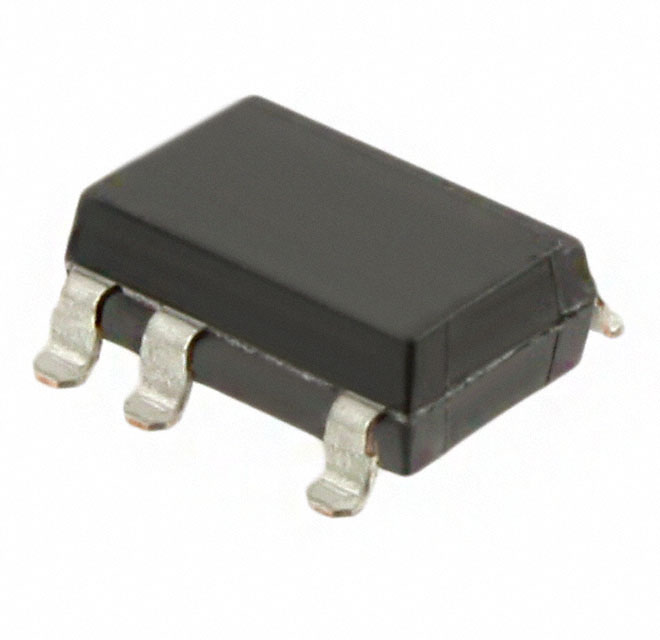
Product overview of the Sharp S202SE2 Series SSR relay
The Sharp S202SE2 Series SSR relay is engineered as a high-performance solution for AC load switching in applications demanding long-term reliability, robust insulation, and minimal maintenance. This series leverages a tightly integrated optoelectronic architecture: at its core, an advanced infrared emitting diode interfaces directly with a highly sensitive Phototriac detector, forming an optical gate that ensures galvanic isolation between the control and output stages. This isolation is reinforced to exceed regulatory safety requirements, making the device suitable for use in systems where operator and equipment protection is paramount.
The SPST-NO configuration, rated for 80V to 240V AC operation and supporting continuous load currents up to 8A, addresses the demands of modern automation environments. The S202SE2 utilizes a high-efficiency output Triac capable of fast, reliable switching with negligible mechanical wear, thereby eliminating contact bounce and heat-related degradation common in electromechanical relays. This architectural choice significantly extends operational life and ensures repeatable switching behavior under dynamic load profiles.
From a control perspective, the low signal current requirement at the input permits easy interfacing with microcontrollers, PLCs, or digital logic circuits, simplifying system integration in isolated switching applications. Consistent optical triggering further minimizes the risk of false actuations due to electrical noise or voltage surges—a recurring challenge in industrial process environments. Experienced designers recognize that deploying the S202SE2 in densely packed control panels can reduce panel footprint and system complexity, particularly where multiple AC circuits must be reliably isolated and managed.
Thermal management is optimized by the relay’s low on-state voltage drop, keeping device temperature within safe operating limits even under full load, while the absence of moving parts enhances reliability in high-vibration or maintenance-averse settings. In HVAC, motor control, lighting automation, or smart distribution boards, the S202SE2 displays adaptability, excelling where switching performance and electrical separation are non-negotiable.
Notably, the inherent advantages of solid-state switching—such as arc-free operation and silent performance—address typical deployment constraints in noise-sensitive or hazardous environments, reinforcing the SSR’s viability for next-generation industrial and commercial infrastructure. Employing solutions like the S202SE2 Series, engineers find a strategic balance between safety compliance, design flexibility, and system durability. The result is a relay platform not only defined by robust underlying mechanisms but also by an application versatility that sets a new standard for solid-state switching reliability.
Key features of Sharp S202SE2 Series SSR relay
The S202SE2 Series Solid State Relay (SSR) integrates advanced features specifically engineered for reliable AC power control in industrial and commercial environments. At the core of its operation lies zero-cross detection, which ensures load switching coincides precisely with the point where the AC envelope crosses zero volts. By constraining turn-on and turn-off events to these zero-cross points—supported up to a trigger voltage of 35V—switching transients and surge currents are minimized. This mechanism greatly reduces conducted and radiated electrical noise, significantly enhancing electromagnetic compatibility (EMC) in densely instrumented or noise-sensitive environments.
The relay’s architecture employs a high-voltage triac output stage, capable of withstanding repetitive peak off-state voltages up to 600V. This margin provides reliable protection against voltage spikes commonly originating from inductive or switching loads. The 3.0kV RMS isolation between input and output further underpins operational safety, enabling the relay’s use in circuits requiring strict galvanic separation—an essential requirement where operator safety and equipment integrity are mission critical. The integration of reinforced internal insulation, with a minimum 0.4mm creepage and clearance, meets stringent regulatory expectations, ensuring continuous performance even under pollution degree 2 conditions or when subjected to overvoltage transients.
Mechanical integration is streamlined by the compact 4-pin SIP form factor, facilitating high-density board layouts where real estate is at a premium. Installation flexibility is provided through a dedicated screw hole for heat sink mounting. In thermal management for SSRs, maintaining a low thermal resistance path between relay and sink is vital to prevent premature component aging or unexpected derating under full load; the S202SE2 design accommodates standard heat sinks, and field practice demonstrates reliable operation in fan-cooled as well as passively ventilated enclosures.
Material and safety compliance are addressed through the adoption of lead-free, RoHS-conforming terminals and a resin package that meets UL 94V-0 flammability standards. For applications such as smart metering, HVAC control modules, or vending mechanisms—where fire safety, regulatory alignment, and total cost of ownership are heavily scrutinized—this level of package ruggedness provides critical risk mitigation.
A recurring insight from deployment scenarios highlights the series’ robust switching behavior not only with purely resistive loads, but also with moderate inductive or lamp loads where the zero-cross function demonstrates notable benefits by reducing voltage spikes on the power line and diminishing the likelihood of accidental relay latch-up. This reliability, paired with simplified installation and broad regulatory compliance, positions the S202SE2 Series as a preferred solution for next-generation AC load switching modules demanding compactness, safety, and longevity under varied electrical and environmental stresses.
Regulatory compliance and agency approvals for Sharp S202SE2 Series SSR relay
In engineering contexts where reliability, user safety, and regulatory alignment are mandatory, the approval landscape directly shapes component choices. The Sharp S202SE2 Series SSR relay exemplifies this intersection by delivering multi-layered certification coverage. UL508 recognition asserts conformity for industrial control equipment, confirming electrical safety mechanisms within circuits that often see variable loading and transient conditions. This is particularly pertinent in automation panels, where relays undertake frequent switching and present failure points if isolation or creepage distances fall short. CSA 22.2 No.14 approval extends this scope, validating compatibility with North American equipment requirements, which often prioritize flame resistance and robust housing integrity. The relay’s compliance ensures seamless cross-border deployment without protracted retesting or technical amendments, facilitating rapid prototyping and regulatory submissions.
The added TüV EN60950 certification for reinforced insulation merits particular attention. It guarantees resilience against hazardous voltages by imposing stringent dielectric strength criteria, essential for applications interfacing directly with AC mains or sensitive signal pathways. Through this reinforced insulation, the S202SE2 effectively mitigates risk of electrical shock, supporting layered safety architectures within mission-critical embedded systems. In panel installations or distributed I/O racks, the relay’s isolation parameters enable tight integration with low-voltage logic while maintaining operational boundaries required for fail-safe environments.
Material science considerations further strengthen the relay’s suitability. The UL94V-0 flame rating is a core asset where thermal stress or abnormal conditions could initiate combustion. Devices packaged with this class of housing maintain structural integrity during overload events, preventing fire propagation and safeguarding adjacent circuitry. Teams integrating the S202SE2 find that this property reduces the necessity for auxiliary flame barriers or redundant safety relays, elevating mechanical simplicity.
From procurement to field deployment, certifications embedded in the S202SE2 architecture facilitate traceability and audit compliance. Projects leveraging standardized component sets benefit from simplified documentation workflows and reduced approval cycles during design reviews. Furthermore, such comprehensive regulatory alignment tends to lower risk premiums in insurance assessments and unlock access to tightly regulated market segments.
One nuanced insight is the relay’s contribution to modular design strategies. By embodying regulatory attributes at the component level, the S202SE2 enables scalable architectures across product families, ensuring uniformity in safety profile. This intrinsic compliance not only accelerates certification of finished assemblies, but also supports agile iterations when specifications evolve under market or legislative change.
In practice, selection of the S202SE2 frequently pivots on industry experience where regulatory exceptions led to costly redesigns. Leveraging pre-certified modules ensures predictable integration, streamlining failure mode analysis and boundary condition validation in often resource-constrained engineering timelines. The pragmatic value of this relay therefore extends far beyond technical datasheets, forming a bedrock for risk management and sustainable product development.
Detailed technical specifications of Sharp S202SE2 Series SSR relay
The Sharp S202SE2 Series SSR relay serves as a core component in demanding automation environments, engineered for high reliability under adverse electrical and thermal conditions. Its maximum RMS on-state current capacity of 8A, coupled with an instantaneous surge endurance of 80A for a single cycle, underpins suitability for actuating loads with inrush characteristics such as solenoid valves, heaters, and inductive motors. The relay accommodates both 45 Hz and 65 Hz grid frequencies, ensuring broad compatibility within international industrial infrastructures, where grid fluctuations are not uncommon.
The wide operational temperature envelope, extending from −25°C to +100°C, permits deployment across a spectrum of applications, including outdoor junction boxes, compact control panels, and process environments experiencing significant thermal variations. The robust isolation rating of 3.0kV RMS protects system logic from high-voltage transients, streamlining compliance with stringent safety norms in factory automation, medical, or test equipment scenarios.
Voltage-handling features demonstrate the relay’s capacity for high-voltage switching. With a repetitive peak off-state voltage (VDRM) of 600V, the device reliably gates AC lines without risk of early breakdown, even in locations subject to voltage spikes or unstable supply. The electro-optical interface, characterized by a forward input voltage of typically 1.2V at 20mA, enables integration with low-voltage control circuitry, including microcontroller-based PLCs or sensor gateways. The fast switching response—turn-on and turn-off times as low as 9.3ms—and minimal holding/trigger currents facilitate precise state management and reduce on-board power budgets.
Practical deployment highlights several nuances. For instance, efficient thermal management, achieved through adequate PCB copper pours and strategic mounting, directly influences long-term stability at higher ambient operating ranges. Engineers leveraging the relay in high-cycle count systems benefit from the solid-state architecture, which eliminates mechanical wear and sharply reduces maintenance intervals in comparison to electromechanical alternatives.
While the relay’s non-compliance with RoHS directives requires careful attention in regulated markets, its MSL 1 classification streamlines inventory logistics—no countermeasures against humidity-induced degradation are necessary, simplifying supply chain protocols. There is a marked advantage in reliability-focused design, where the device’s comprehensive isolation, voltage, and current ratings allow for margin-rich system layouts, lowering field failure rates.
Integration is further enhanced by the relay’s compatibility with standard signal levels and by predictable switching profiles, which reduce code complexity during firmware phase design. This convergence of robust hardware attributes and straightforward interface logic distinguishes the S202SE2 Series in advanced control architectures, supporting optimal uptime and maintenance-free performance even in electrically noisy or thermally challenging installations.
Model variants and package options within the Sharp S202SE2 Series SSR relay
The Sharp S202SE2 Series SSR relay targets diverse manufacturing environments through a robust range of model variants and packaging configurations, engineered for adaptability and compliance. The standard offering employs traditional lead solder plating, well-suited for conventional assembly lines where tin-lead soldering processes dominate. In parallel, the S202SE2F variant addresses lead-free manufacturing mandates by utilizing RoHS-compliant terminal plating, ensuring seamless integration into eco-conscious or regulatory-driven production streams. Each option maintains a 4-pin SIP footprint, enabling straightforward drop-in replacement or design interchangeability across PCB layouts, regardless of the chosen assembly methodology.
From a mechanical and electrical interface perspective, the approximately 19.6mm length and 6.3g mass of these devices support denser PCB population, enabling their application in high-density control modules or compact form-factor subsystems. The SIP (Single Inline Package) design not only simplifies automated placement during SMT or through-hole assembly but also enhances reliability in repetitive thermal cycling environments. The physical configuration incorporates practical features for rapid heat sink attachment, a necessary consideration in applications requiring extended load cycling or where thermal dissipation is a primary constraint. This nuanced attention to thermal management at the component level directly influences operational longevity and field reliability, particularly in industrial, HVAC, or instrumentation panels.
All model variants adhere to EN60950 requirements for reinforced insulation, a specification critical for designers addressing elevated safety standards in power control circuits. This compliance eliminates the bottleneck of secondary insulation verification at the end-product level and accelerates product approvals, simplifying global deployment. The embedded insulation capability also streamlines risk analysis, allowing engineers to confidently deploy these relays in systems where operator and equipment isolation is paramount.
Iterative field deployment has demonstrated that explicit package and terminal optioning accelerates both prototype and mass production readiness. Engineering teams can rapidly alternate between leaded and lead-free models in pilot runs without redesign or supply chain disruption, leveraging the standardized SIP platform. Furthermore, heat sink optimization—taking advantage of the relay’s mounting features—directly translates to predictable de-rating and modeling, expediting thermal validation cycles. Reliability investigations reveal a direct correlation between component form factor, thermal path efficiency, and operational stability, reinforcing the value of these design provisions.
In summary, the S202SE2 Series exemplifies how granular, thoughtful engineering at the packaging and terminal level delivers clear advantages throughout the design, manufacturing, and operational lifecycle. The blend of regulatory compliance, mechanical versatility, and support for modern assembly practices positions the series as a cornerstone component for next-generation relay applications.
Internal construction and engineering details of Sharp S202SE2 Series SSR relay
The internal architecture of the Sharp S202SE2 Series SSR relay demonstrates a deliberate focus on signal isolation and switching reliability. The device centers on the optoelectronic coupling between an infrared emitting diode (IRED) and a Phototriac detector. By integrating these elements within a single airtight housing, the relay achieves galvanic isolation between control and load circuits, a critical factor for mitigating ground loops and protecting sensitive microcontroller I/O from high-voltage transients. The optical signal path, optimized for minimal propagation delay, delivers rapid switching capabilities essential for both precision power control and seamless integration in complex automation sequences.
The output switching topology employs a Triac configured for zero-cross detection and commutation. This design ensures the main power device only switches when the AC line voltage passes through zero, significantly attenuating both conducted and radiated electromagnetic interference. Such an approach helps preserve system integrity in densely packed PCBs and eliminates the need for additional EMI suppression components in many use cases. Moreover, zero-cross operation reduces inrush current events that can otherwise degrade the lifetime of both the relay and connected loads.
Mechanical and safety design receives careful attention in the SIP package, which maintains a minimum creepage and clearance distance of 0.4mm between input and output tracks. This physical separation, in combination with the robust encapsulation, ensures compliance with international isolation standards and supports use in appliances subject to regulatory scrutiny, such as industrial automation controllers and advanced HVAC systems. The clearly defined through-hole terminals enhance mounting reliability and allow automated soldering processes to achieve consistent, low-resistance joints. In practical deployment, the compact footprint streamlines routing in space-constrained PCBs, enabling designers to cluster multiple relays for high-density multi-channel switching without compromising safety margins.
Real-world application frequently highlights the relay’s compatibility with both logic-level driver circuits and demanding AC load environments. Experience shows that the precise actuation offered by the internal opto-triac interface is well-suited for fast-reacting control systems, such as motor speed regulation or phase angle control in dimming circuits. An enduring insight is that the inherent solid-state design, free of mechanical contacts, substantially reduces maintenance intervals and enhances long-term reliability in applications where mechanical relays historically fail due to arcing or contact fatigue.
Taken together, the internal design philosophy of the S202SE2 SSR relay emphasizes coherent integration of optical, semiconductor, and package-level engineering. This approach directly addresses the practical challenges of modern AC switching: isolation, EMI reduction, mechanical robustness, and densely integrated layouts. Such characteristics position the relay as a robust solution in automated power control domains, particularly where operational uptime, predictable behavior, and adherence to safety guidelines are paramount.
Design considerations for application of Sharp S202SE2 Series SSR relay
The robust integration of the Sharp S202SE2 Series solid state relay (SSR) within an AC switching subsystem demands careful attention to several technical thresholds and environmental factors. At the input interface, the precise delivery of a trigger current in the 16–24 mA range is fundamental for reliable SSR activation; undershooting this window introduces risk of incomplete or erratic relay operation, particularly in noise-prone control circuits. Consistency in the control signal—both in amplitude and waveform integrity—directly impacts relay responsiveness. When designing driver stages, current-limiting resistors and input buffers can reinforce operational stability, especially in multi-relay arrays or microcontroller-based control systems.
At the load interface, the relay demonstrates optimal switching performance for AC voltages spanning 80–240 V. Operating outside this voltage envelope often impairs Triac performance, resulting in less efficient switching and possible overheating. Interfacing SSRs with purely resistive loads typically poses minimal complication; however, the presence of inductive components, such as solenoids or AC motors, necessitates a mitigation strategy for capacitive coupling and transient voltages. The rapid voltage transitions, or high dV/dt events common with inductive switching, can inadvertently trigger the output Triac. Implementation of a snubber network—using 0.022 μF and 47 Ω as baseline values—not only suppresses these surges but also extends relay lifespan and enhances EMI compliance. Closer physical placement of the snubber and varistor elements relative to the Triac output pins ensures minimal parasitic inductance, maximizing protective efficacy during transient suppression.
Thermal management forms a pivotal axis for high-load or elevated-temperature deployment environments. The S202SE2 Series SSR, though characterized by minimal on-state voltage drop, still dissipates enough heat at high current density to warrant robust thermal design. Employing a dedicated heat sink, anchored with M3 screws at a calibrated 0.3–0.5 Nm torque, provides a dual safeguard: optimizing the conduction path for heat removal while preserving structural integrity in the mounting assembly. Use of high-dielectric-strength insulation sheets between the relay and heat sink introduces the necessary electrical isolation in systems with strict safety or regulatory constraints, particularly where chassis grounds are involved.
The switching topology embedded in the S202SE2—a zero-cross detection mechanism—suits most applications where load currents are in phase with the voltage waveform. However, this topology reveals limitations in systems with significant phase disparity, as observed in power factor corrected or heavily reactive industrial loads. In such scenarios, the relay may fail to initiate or terminate conduction at the intended transition points, prompting errors in power delivery or control logic. In these instances, selection of a non-zero cross SSR (such as the S202SE1 Series) circumvents this constraint, affording load switching at arbitrary waveform points and accommodating broader system topologies.
Deployment experience repeatedly validates the importance of concise PCB layout and low-inductance connections for all SSR peripheral elements; this practice reduces transients and preserves signal fidelity. Additionally, attention to the mechanical mounting—maintaining recommended torque and surface cleanliness—mitigates the risks of thermal runaway and mechanical fatigue, especially during extended duty cycles or in vibratory settings. Through careful synthesis of these design layers, the S202SE2 Series SSR reliably delivers high-integrity AC load control tailored to industrial, building automation, and instrumentation environments, especially where regulatory compliance and long-term operational stability are essential imperatives.
Potential equivalent/replacement models for Sharp S202SE2 Series SSR relay
With the obsolescence of the Sharp S202SE2 Series SSR relay, the search for effective replacement strategies requires a precise understanding of both technical specifications and operational contexts. The S202SE2, as a solid-state relay (SSR) with SPST-NO configuration and optically isolated input, performed reliably in a range of industrial and automation applications. However, supply chain continuity and compliance mandates now necessitate a methodical approach to identifying suitable alternatives.
A foundational step involves mapping the S202SE2’s core electrical characteristics—input trigger current, on-state load current, operating voltage range, and zero-cross or non-zero-cross switching behavior—against available SSRs. Within Sharp’s portfolio, the S202SE1 Series emerges as a primary candidate due to its similar PCB footprint and electrical profile. Particularly, the non-zero-cross versions align closely with circuit demands involving phase control and non-resistive loads. Nevertheless, subtle differences in input opto-driver design, turn-on time, and surge withstand capacity require full validation through bench testing to preempt integration issues.
Broadening the candidate base, paralleling these specs with SSRs from Omron, Panasonic, and Crydom is effective. These manufacturers offer robustly certified devices, often exceeding Sharp’s legacy isolation voltages and providing advanced diagnostics or integrated snubber circuits. Cross-referencing agency approvals (UL, VDE, CSA) and ensuring continued regulatory compliance is a critical checkpoint. In migration scenarios, differences in pinout orientation and heat dissipation profiles call for layout reviews and thermal modeling, particularly when upgrading to relays with higher transient immunity or derating requirements. Consistent relay drive circuit design—including sufficient input margin for opto-isolated gates—safeguards against misfires under varying line conditions.
Practical experiences reveal that field substitutions can expose hidden dependencies, such as relay conduction losses impacting thermally sensitive subassemblies or differences in EMI emission profiles requiring filter re-tuning. A proactive engineering approach integrates pre-qualification in both laboratory and pilot runs, with data-driven monitoring during initial deployment. Drawing from these iterative assessments, the system’s operational integrity remains uncompromised, and certification paths remain uninterrupted.
Targeted selection of replacement relays, supported by rigorous analysis and staged integration, transforms the obsolescence risk into an opportunity for lifecycle extension and system enhancement. By anchoring component choices in both electrical compatibility and the evolving certification landscape, designs benefit from increased resilience and readiness for future regulatory shifts.
Conclusion
The Sharp S202SE2 Series SSR relay exemplifies a well-engineered approach to solid-state switching for high-voltage AC loads. At its core, this series leverages optical isolation and a phototriac driver architecture to achieve galvanic isolation, effectively eliminating mechanical wear and arcing common to electromechanical counterparts. Reinforced insulation ratings, together with compliance to globally recognized safety standards such as UL and VDE, position the S202SE2 as a robust component for safety-critical installations where both logic-to-load isolation and regulatory acceptance are paramount.
The package options, including variations in pin layout and case form factor, accommodate a spectrum of assembly techniques, from high-density surface mount to conventional through-hole PCB designs. This flexibility integrates smoothly with automated production lines and supports lifecycle maintenance strategies where socketed relays or direct-solder installations must coexist. The ability to select among these variants contributes to reduced board real estate, streamlined thermal management, and lower parasitic path inductance—factors that gain prominence as switching speeds and circuit complexity increase in automation frameworks.
From a performance perspective, the S202SE2 delivers consistent load switching across a broad temperature range, resisting degradation from repeated switching spikes or harsh environmental conditions. Specified zero-cross turn-on further suppresses inrush current and electromagnetic interference, simplifying compliance with system-level EMC requirements. Load capacities in the range of 8–16A AC accommodate both resistive and moderate inductive loads, which aligns particularly well with distributed control architectures in HVAC, industrial lighting, and process automation. However, the discontinued status of this series prompts a rigorous cross-examination of alternative relays not only on electrical characteristics but also lifecycle support, second sourcing, and supply chain resilience.
Integrating such SSRs, attention should be directed to PCB layout best practices—such as maintaining adequate creepage and clearance distances, implementing snubber circuits where necessary, and optimizing heat sinking pathways to avoid localized thermal stress. Experience underscores the necessity of validating SSR drive circuitry under full-load conditions, as inappropriate gate triggering, insufficient isolation distances, or inadequate derating often manifest as early failures. Moreover, system qualification involving surge and voltage withstand testing is essential to preempt latent insulation breakdowns in mission-critical deployments.
Navigating replacement selection, an analytical approach grounded in parametric matching and field reliability data offers clear advantages. Rather than a descriptor-level search, a metrics-focused assessment—encompassing insulation coordination, dv/dt immunity, and package thermals—ensures drop-in compatibility and minimizes risk during product evolution cycles. Additionally, maintaining flexibility through approval of multiple sources and revisiting BoM strategies enhances resilience in dynamic supply landscapes.
A subtle yet significant insight emerges in the role such SSR platforms play as benchmarks for future developments: their blend of mature technology, documented field performance, and compliance pedigree often sets the reference point for emerging solid-state relay solutions. In evolving automation environments, leveraging these benchmarks alongside rigorous application analysis supports the deployment of dependable, maintainable AC load switching infrastructures, ultimately driving operational reliability and safety in the broader electrical system context.