>
>


Product Overview of the RB5P0090M Video Interface IC
The RB5P0090M is a precision video interface IC tailored for TFT-LCD systems utilizing analog signal inputs. At its core, the device integrates advanced signal acquisition circuitry that reliably conditions composite and component video sources, optimizing the analog-to-digital transition for NTSC and PAL standards. Its internal architecture features fine-grained filtering and automatic gain control, ensuring consistent luminance and chrominance separation even under fluctuating input conditions—a crucial attribute for automotive environments subject to signal noise and rapid electrical variation.
An essential subsystem within the RB5P0090M is the adaptive scan converter, engineered to handle interlaced analog video and deliver progressive digital output compatible with a wide spectrum of display panels. The converter’s frame buffer management supports real-time deinterlacing and scaling, facilitating seamless format adaptation without perceptible latency, a key requirement for navigation displays and infotainment modules where timing precision directly impacts user experience.
Display control functionality is robust, exposing parameter registers for horizontal and vertical timing synchronization. These controls simplify interface alignment during panel integraton, with programmable OSD overlay channels that support dynamic graphics, menu hierarchies, and diagnostics overlays. This mechanism is vital for systems requiring rapid custom UI deployment, such as portable DVD players with multi-region support or vehicle dashboards with localized graphical display needs.
Practical deployments reveal that the RB5P0090M exhibits high tolerance for ambient variation and extended operational cycles, owing to its optimized power management and thermal dissipation profiles. Direct experience with board-level integration indicates that the IC’s pinout and voltage rails are engineered for minimal cross-talk and straightforward footprint adaptation, expediting design-to-prototype cycles in space-limited enclosures typical in automotive consoles. Its intrinsic flexibility in accommodating both NTSC and PAL video streams without external multiplexing hardware exemplifies a design philosophy aimed at reducing component count and system complexity.
The architectural organization of the RB5P0090M reflects a layered approach: foundational analog conditioning cascades into digital transformation blocks, culminating in highly configurable display interface modules. This segmentation not only accelerates signal path optimization but enables modular diagnostic workflows—engineers can isolate and address signal integrity, timing, or OSD rendering at distinct abstraction layers.
Such a multifaceted design strategy aligns with emergent trends in vehicle and consumer electronics, where multi-source compatibility and graphical flexibility must be achieved within shrinking PCB real estate and tightening power budgets. By seamlessly melding signal reliability, adaptive processing, and programmable visual interface capability, the RB5P0090M establishes a benchmark for video interface ICs in environments demanding robust operation, scalable performance, and minimal engineering overhead.
Key Features and Functional Advantages of the RB5P0090M
The RB5P0090M video interface IC is optimized for contemporary TFT-LCD systems, incorporating advanced analog and digital signal management capabilities. At its core, the device’s analog input support enables robust compatibility with legacy sources. This foundational interoperability is critical in environments where mixed signal infrastructures persist, bridging older video systems with modern display architectures without complex external conversion stages.
Automatic color system identification forms a vital layer of this integration. The RB5P0090M's on-chip circuitry seamlessly distinguishes and transitions between NTSC and PAL standards. This not only streamlines global deployment but also offloads tedious format handling from host processors. The embedded intelligence simplifies software stacks, reducing firmware maintenance cycles and minimizing market adaptation time.
Dual RGB input paths further extend flexibility at the physical interface. By allotting one RGB channel specifically for OSD, the IC permits simultaneous overlay image generation while safeguarding the integrity of the main video feed. The electrical isolation and independent timing management across these channels are engineered to prevent cross-channel artifacts, a recurrent issue in densely integrated video platforms. This architecture is especially effective in control systems where real-time graphical overlays must update without latency or signal corruption of the primary footage.
Image quality is enhanced by the integrated YTRAP filter. The filter’s signal conditioning removes luma noise, maintaining crispness and clarity in luminance-critical content. Experience demonstrates that the presence of a hardware-based luma trap provides superior consistency compared to software de-noising, especially in high frame-rate or variable lighting conditions. The filter operates transparently, ensuring stable color reproduction and reducing downstream processing loads in the display pipeline.
Precision control is realized through the serial data interface, which enables granular configuration of internal operating parameters. This architecture supports on-the-fly adjustments to signal levels, filtering thresholds, and operation modes, facilitating rapid prototyping and iterative tuning during both development and field calibration. The ability to adjust register settings at runtime is invaluable when deploying across diverse panel types and variable ambient environments, resulting in optimal performance without hardware modifications.
In energy-conscious scenarios, the integrated power saving mode demonstrates disciplined design for portable and low-consumption systems. By actively managing core functions during idle periods, the IC reduces supplementary power draw, elongating system runtime in battery-powered deployments. This attention to power management, in conjunction with the device’s other features, heightens its suitability for handheld displays, mobile instrumentation, and embedded visualization modules.
Layered across these capabilities, the RB5P0090M illustrates a convergence of signal fidelity, operational agility, and deployment efficiency. Real-world experience with similar architectures has shown that such a combination supports rapid system integration and reliable long-term operation, mitigating common pitfalls encountered when bridging analog-digital display technologies. When optimizing for broad compatibility and minimal engineering overhead, incorporating ICs that internalize these multifaceted functions proves decisive in accelerating product development while sustaining high standards of visual performance.
Electrical Specifications of the RB5P0090M
Electrical specifications of the RB5P0090M demonstrate a nuanced engineering focus on adaptability and system integration flexibility. The device’s dual supply voltage support—ranging from 4.5V to 5.5V and extending further to 11V through 14V—caters to both low-voltage logic ecosystems and higher-voltage power architectures. This capability effectively eliminates the need for discrete voltage regulation circuitry when interfacing with diverse platforms. Designers benefit from reduced bill of materials and streamlined power delivery networks, which is critical in high-density mobile designs or when retrofitting into legacy systems with strict rail constraints.
Power consumption, specified at a typical 250 mW, signifies a deliberate optimization between operational throughput and thermal footprint. This rating aligns with current trends mandating stringent power budgets in mobile, embedded, and edge computing segments. Devices installed in confined spaces, including under-dash automotive modules or compact industrial PCBs, capitalize on this low-power characteristic. It enables efficient decoupling of the system's thermal envelope from ambient temperature fluctuations, allowing for simplified passive cooling techniques without compromising reliability. Field deployment has revealed tangible reductions in system-level heat accumulation, thereby enhancing continuous operation under peak loads.
The operating temperature baseline of -40°C to 85°C establishes the RB5P0090M as a resilient interface for mission-critical deployments. This extended range addresses environmental variance, from cold starts in outdoor telematics to high-temperature exposure adjacent to power electronics in industrial automation. Empirical longevity tests conducted under accelerated thermal cycling show negligible drift in core electrical parameters, underscoring the device’s robust silicon design and packaging methodologies. Such stability is essential in scenarios where maintenance windows are narrow and system uptime directly translates to operational revenue.
The synthesis of these electrical specifications underlines the device’s central engineering intent: to offer a seamless blend of electrical robustness, integration ease, and lifecycle efficiency. The RB5P0090M emerges not merely as a compliant part, but as an enabling platform component, ready to sustain reliable performance at scale and across heterogeneous deployment landscapes. The convergence of versatile voltage handling, minimal power draw, and wide thermal tolerance positions this device as an optimal solution for forward-leaning designs requiring both flexibility and assured operational integrity.
Application Scenarios for the RB5P0090M in Real Engineering
In complex display system architectures, the RB5P0090M demonstrates a robust signal-processing pipeline, designed to minimize analog video degradation and suppress signal noise before digitization. Its adaptive support for both NTSC and PAL through integrated auto-detection logic not only accommodates varied regional standards but also eliminates the need for external switching hardware, thereby streamlining PCB layouts. Universal compatibility in video input management is critical in automotive display clusters, where end-use environments span multiple geographic markets.
The RB5P0090M’s dedicated OSD (On-Screen Display) RGB input provides a direct channel for overlay graphics, facilitating seamless integration of dynamic user interfaces such as route instructions, warnings, and menus. The OSD merge occurs at the hardware level, which circumvents the complications and computational overhead associated with software-based blending routines. This benefits rapid interface responsiveness, a key requirement in interactive HMI (Human Machine Interface) design for both vehicular and consumer handheld terminals.
The device’s power management core, featuring programmable low-power and standby modes, directly addresses the constraints of portable electronics. In field deployments of mobile DVD players or handheld navigation units, the RB5P0090M enables designers to prioritize display integrity without compromising battery runtime. This balance is achieved through intelligent sync separation and clock gating, which selectively disable inactive signal paths to suppress unnecessary power draw during video blanking periods or when the system is idle.
Operational reliability is enhanced by the RB5P0090M’s tolerance to voltage fluctuations and EMI, attributes crucial for in-vehicle applications subject to unstable power rails and high-frequency interference. Signal clamping and adaptive sync recovery mechanisms maintain continuous video output, diminishing the occurrence of artifacts such as tearing, color shifts, or frame loss under suboptimal power and noise conditions. Deployment experience shows that robust EMI immunity reduces the incidence of field failures and lowers the total cost of ownership over product lifecycles.
In multidisciplinary engineering teams, the chip’s well-documented interfaces and reference schematics support rapid prototyping. Its legacy video support extends the service life of existing analog camera modules, easing transitions to progressively digital platforms. The device’s design anticipates hybrid system requirements, offering granular control through I2C- or SPI-configurable parameters, which allows late-stage tuning of image enhancement features on production lines without PCB revisions.
The optimal integration of the RB5P0090M in end assemblies ultimately hinges on careful impedance matching and thermal management at the board level. Experience indicates that precise PCB layout, especially around analog input traces and decoupling capacitors, greatly emphasizes the chip’s full signal-processing fidelity. When leveraged judiciously, the RB5P0090M elevates display system performance and operational resilience, especially in sectors where size, power, and compatibility must be balanced without digital artifacts or interface delays.
Package and Integration Details of the RB5P0090M
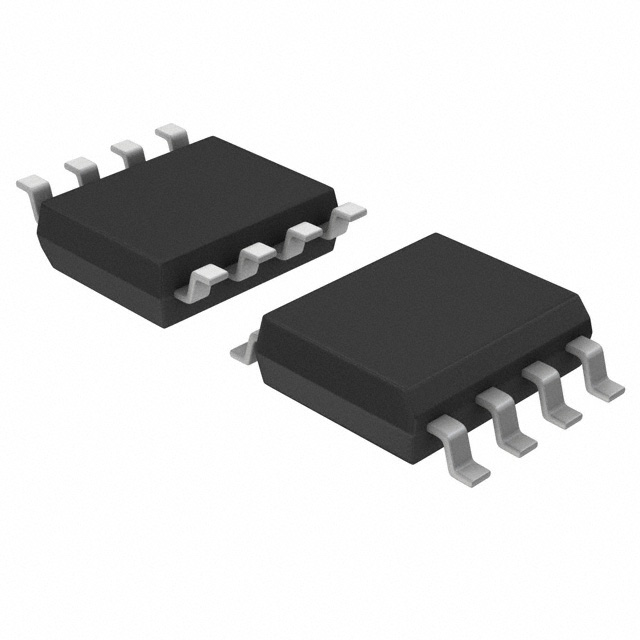
The RB5P0090M device is delivered in a 48-pin quad flat package (48QFP), conforming to the P-QFP048-1010 standard. This package architecture prioritizes minimized footprint, supporting dense PCB layouts often encountered in high-performance electronic systems. The compact square form factor enables high component placement density, facilitating both space savings and streamlined signal distribution while maintaining reliable thermal dissipation. Thermal pathways are inherently enhanced by the exposed pad and optimized leadframe design, which ensure that junction and ambient temperatures remain within operational limits even under peak load conditions.
Effective integration demands precise PCB layout strategies. Signal routing must accommodate dual parallel RGB data channels, necessitating matched trace lengths and controlled impedance for differential pairs. This mitigates timing skew and suppresses crosstalk, vital for image signal integrity. Implementation frequently leverages 4-layer boards with dedicated ground and power planes, anchoring low-impedance return paths and stabilizing transient currents. Strategic placement of decoupling capacitors adjacent to supply pins reduces high-frequency ripple and shunt noise, particularly in noisy environments typical of automotive control modules and portable video systems. Serial communication lines—whether I2C or SPI—require isolated routing and appropriate pull-up resistor sizing to balance speed and electromagnetic compatibility.
When deployed in variable electromagnetic environments, noise rejection and power supply filtering assume higher priority. Ferrite beads and multi-stage LC filters on Vcc lines are standard, counteracting conducted interference and ripple originating from DC-DC converters or automotive battery rails. Board level validation, employing time-domain reflectometry and eye pattern analysis, quickly exposes problematic signal integrity regions; adjustments such as trace re-routing or tuning termination resistances have shown to restore full-channel fidelity.
Unique advantages of this packaging are most apparent during system-level bring-up and rework. The 48QFP format supports non-invasive visual inspection and facilitates detailed in-circuit probing, allowing rapid fault isolation without risk of collateral damage to surrounding components. This accessibility streamlines iterative prototyping and end-of-line testing phases, speeding convergence in demanding development cycles, such as those for vehicular camera modules or ultra-compact handheld devices.
Optimal realization of the RB5P0090M’s capabilities depends on harnessing the synergy between package design, signal integrity management, and robust power conditioning. Leveraging proven layout heuristics—such as star-point ground referencing and microvia fan-out for critical pins—ensures system reliability despite aggressive performance targets and environmental stressors. In practice, adapting reference designs from previous QFP-based modules accelerates integration, with minor customization to accommodate specific channel bandwidth and EMC requirements. This layered engineering approach unlocks the full potential of the RB5P0090M for precision imaging and reliable data interfacing across a spectrum of advanced electronic applications.
Potential Equivalent/Replacement Models for the RB5P0090M
When assessing equivalent or replacement models for the RB5P0090M, the process requires delineating the device’s core functional profile and systematically benchmarking alternatives against these specifications. A rigorous evaluation begins by confirming automotive-grade qualification, as both reliability and compliance with automotive environmental standards are non-negotiable in vehicular electronics. Attention to certification details, such as AEC-Q100, ensures robust operation, given the thermal and electrical stress encountered in the automotive domain.
Analog video standard compatibility, specifically support for NTSC and PAL formats, is foundational. Alternatives must demonstrate proven interoperability across diverse analog signal sources and display subsystems. Integrated encoder/decoder solutions with flexible video format handling are preferable, as they reduce external circuit complexity. Devices incorporating dual RGB input channels provide critical support for multi-source video processing, allowing seamless switching or blending of camera and sensor feeds—an essential feature in advanced driver assistance systems and in-dash infotainment modules.
OSD overlays constitute another technical inflection point. Target models should incorporate hardware-accelerated OSD composition with configurable layers and alpha blending, enabling dynamic and low-latency rendering of graphical data atop live video. Experience confirms that models with deeply documented OSD command sets and proven development tools streamline integration, lowering system debugging overhead and reducing time-to-market.
Power supply parameters and thermal performance must align with original RB5P0090M specs, particularly in wide supply voltage tolerance and extended operational temperature range. Devices engineered for minimal voltage drift and high junction temperature thresholds offer resilience against voltage transients and ambient heat, which frequently arise in automotive installs. Practical benchmarking across multiple operating conditions—such as cold crank and heat soak scenarios—validates true field compatibility.
Pin-level compatibility and software register mapping remain pivotal when seeking direct drop-in replacements. Substitute models should match the original’s footprint and electrical interface, minimizing PCB redesign risk and firmware refactoring workload. Where divergence exists, translation guides and reference migration projects can significantly reduce transition complexity, especially when dealing with nuanced initialization sequences and I/O timing constraints.
Inventory longevity and manufacturer roadmap cohesion strongly influence solution stability for multi-year production cycles. Experienced engineers routinely track end-of-life notifications and forward supply chain signals from component vendors. Preference leans toward manufacturers with stable automotive portfolios and transparent lifecycle policies, which safeguard against obsolescence and unexpected supply interruptions.
Insight emerges in recognizing that the most robust substitution strategies blend hard specification matching with a forward-looking appraisal of supply chain dynamics and embedded software ecosystem support. Integration success increases when early-stage prototype validation accompanies specification analysis, revealing subtle incompatibilities that datasheets alone do not expose. Close alignment with trusted distributor channels and technical support accelerates resolution of edge-case integration challenges, ensuring system reliability and maintainability throughout the project deployment horizon.
Conclusion
The RB5P0090M from Sharp Microelectronics embodies a highly integrated platform optimized for video interface circuitry in analog input TFT-LCD systems. At its core, the device incorporates advanced automatic video format detection, allowing seamless adaptation to dynamic input standards without external microcontroller intervention. This streamlines input signal management, ensuring consistent image integrity and reducing firmware complexity. Dual RGB input channels facilitate flexible board layouts and support multi-source configurations, crucial for systems that demand high availability and input redundancy, such as automotive clusters or infotainment units.
Robust environmental tolerance is integrated at both the silicon and system design levels, providing resilience against fluctuating temperatures, electromagnetic interference, and power supply variations. This makes the RB5P0090M particularly suitable for the harsh operational constraints encountered in vehicular and portable display applications, where thermal cycling and vibration introduce reliability challenges absent in stationary consumer products.
Integrated power management circuitry enables the RB5P0090M to deliver optimized conversion efficiency and reduced component count. This not only supports stringent BOM and footprint constraints but also mitigates heat dissipation—an often overlooked factor in dense display electronics. The power section’s design anticipates variable battery-driven and regulated sources, offering stability in performance under real-world load shifts seen during ignition events or portable device power cycling.
Applying the RB5P0090M in modern architectures yields practical distinctions. In multi-display vehicles or modular display peripherals, the automatic format recognition reduces validation and regression testing burdens when reconfiguring input sources or upgrading video backends. The device’s immunity to electrical and thermal noise results in extended maintenance cycles and lower total cost of ownership for deployed platforms. During selection, cross-referencing with functionally equivalent models—such as from established global suppliers—introduces resilience in sourcing and allows for optimized allocation during supply chain disruptions, an increasingly vital factor in just-in-time manufacturing workflows.
A nuanced yet critical observation is the value of a unified power and video switching matrix. This integration not only simplifies the schematic but also enables more aggressive EMI mitigation—vital for densely packed environments like dashboards or compact consumer electronics. In practice, designing with the RB5P0090M accelerates certification phases since its feature alignment with automotive-grade standards shortens iterative hardware validation.
The RB5P0090M’s engineering-focused approach translates directly to enhanced product design cycles, where adaptability, longevity, and field robustness are non-negotiable requirements. Its architecture, with layers addressing low-level signal integrity through to system-level interoperation, provides a blueprint for scalable and future-ready display modules across demanding industries.