 >
>


Product Overview: PC849 Optoisolator by Sharp Microelectronics
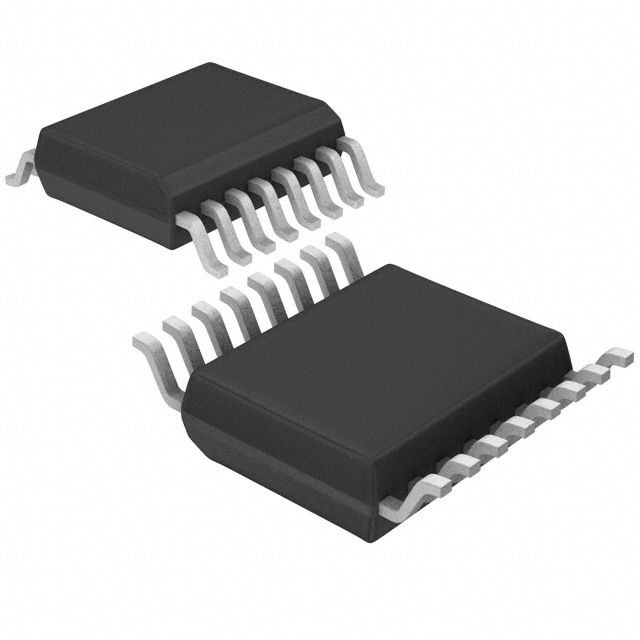
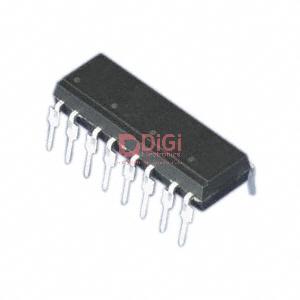
The PC849, developed by Sharp Microelectronics, embodies a four-channel optoisolation solution leveraging phototransistor technology to address the stringent isolation and signal transmission requirements prevalent in modern electronic architectures. The device's core architecture integrates four independent light-emitting diodes (LEDs) optically coupled to four phototransistors, all encapsulated within a compact 16-pin dual in-line package. This configuration enables simultaneous, discrete isolation across multiple signal paths, minimizing channel-to-channel interference while maintaining the integrity of transmitted signals.
At the fundamental level, the PC849 achieves galvanic isolation by transforming input electrical signals into optical pulses via internal LEDs. These optical signals are received and converted back into electrical signals on the output side by integrated phototransistors, ensuring complete electrical separation between input and output domains. The 5,000 Vrms isolation voltage rating underscores the device’s capability to withstand and suppress high-voltage transients, significantly reducing the risk of cross-domain conduction, latch-up, or insulation failure—a frequent concern in high-density or mixed-voltage system deployments.
From an application standpoint, the multi-channel design of the PC849 streamlines board layout in scenarios where space and isolation density are at a premium—such as multi-phase motor drives, programmable logic controllers, or high-voltage monitoring systems. The compact DIP16 package directly supports straightforward through-hole assembly processes, ensuring mechanical robustness and simplifying prototyping or field repair operations. In practice, deploying the PC849 enhances noise immunity in digital communication channels, particularly where ground loops or common-mode voltage disturbances threaten functional reliability and long-term device durability.
The device’s high common-mode transient immunity and fast switching response enable effective isolation in both low-speed logic interfaces and moderate-speed data transmission applications. This feature set becomes integral in configurations such as microcontroller-to-power stage signal chains, where digital logic on the controller side must be faithfully transmitted to potentially noisy, high-voltage environments without degradation or propagation of hazardous voltages. By embedding optically independent channels within a single package, designers mitigate timing skew and maintain consistent signal delays across parallel lines—supporting synchronized control logic without the risk of crosstalk.
A nuanced aspect of the PC849’s utility lies in its direct transistor output, facilitating straightforward interfacing with both TTL and CMOS logic levels. This versatility accelerates integration into a wide array of electronic platforms, reducing the need for additional level-shifting or buffering circuitry. Additionally, the device’s robust insulation design and thermal performance allow sustained operation in challenging industrial environments where wide temperature variations and conductive debris can compromise lesser isolation techniques.
In systems demanding both compact design and uncompromised isolation, the PC849 advances operational reliability and layout efficiency through its balanced integration of isolation rating, channel density, and signal fidelity. By shifting critical isolation tasks from discrete implementations to an integrated four-channel device, overall design complexity and assembly variability are lowered, elevating system-level noise resilience and simplifying certification workflows for safety standards such as UL and IEC. These factors collectively point to the strategic value of multi-channel optoisolators like the PC849 as core building blocks for the next generation of robust, scalable electronic platforms.
Key Features and Functional Specifications of the PC849
The PC849 stands out as a compact, four-channel phototransistor optocoupler engineered for efficient galvanic isolation in dense, multi-line signal environments. Its quad-channel topology enables simultaneous isolation and bidirectional transfer of up to four logic-level signals per package, significantly optimizing both PCB footprint and component count. This architectural choice is particularly advantageous in systems such as PLC input modules, industrial communication interfaces, and microcontroller-driven I/O expansions, where signal density must be balanced against isolation integrity.
The integral phototransistor output channel offers seamless connectivity with standard TTL, CMOS, or LVCMOS logic families. Direct interfacing is enabled by the consistent, gate-drive-compatible output swing, reducing the need for signal conditioning or extra interface stages. This feature accelerates design iteration and shortens development cycles in environments constrained by tight timelines and evolving system requirements.
A defining parameter of the PC849 is its 5,000 Vrms isolation voltage, achieved through robust internal construction, optimized creepage, and clearance distances. This level of isolation effectively mitigates risks associated with high-transient voltage surges, cross-domain ground loops, and inter-system interference typical in industrial or mixed-voltage platforms. Such electrical isolation enhances both functional safety and long-term reliability, supporting compliance with stringent standards in applications spanning from process automation to energy metering.
Physically, the standardized 16-pin dual-in-line package (DIP) streamlines integration into both legacy and new system designs. The DIP form factor aligns with automated through-hole soldering processes and can also be adapted for socket-mount scenarios. This mechanical compatibility expedites prototyping and supports maintainability—critical when retrofitting or scaling systems in the field, especially under strict lifecycle management constraints.
Attention to electrical consistency further distinguishes the PC849. Tight channel-to-channel current transfer ratio (CTR) matching and low CTR drift over ambient temperature swings sustain output uniformity, which proves essential in precision signal monitoring or multi-channel feedback loops. Such reliability is sustained by controlled optical coupling and carefully matched internal amplifier geometry. The device’s operational temperature range supports both commercial and industrial environmental demands, ensuring predictable performance regardless of deployment zone, from climate-controlled panels to factory floor installations exposed to variable stressors.
From a system integration perspective, the reduction in board-level signal routing and potential for simultaneous four-channel transmission translates directly into simplified EMC considerations and increased throughput per square millimeter of PCB area. These improvements yield measurable gains during both schematic design and real-world board layout, minimizing crosstalk and error rates without resorting to expansive multilayer or shielded designs. The elevated integration density and robust isolation converge to support cost-effective, scalable solutions for complex signal multiplexing tasks—especially where electrical robustness and channel uniformity underpin system stability.
In application, it is evident that judicious component selection—specifically, choosing phototransistor-based optocouplers with matched channel characteristics and guaranteed isolation ratings—can decisively influence final system performance, reliability, and maintainability. The PC849 embodies this synthesis, serving as both an isolation barrier and a functional enabler in high-density environments where precision, safety, and board economy are paramount.
Typical Applications and Use Cases for the PC849
The PC849 optocoupler delivers robust multi-channel signal isolation essential for interfacing low-voltage control logic with high-voltage or noisy environments. Its four-channel configuration supports simultaneous isolation of multiple signal lines, promoting compact system architectures without trade-offs in channel density or electrical integrity. This capability enables precise separation between critical control electronics and hazardous power domains, mitigating risks of unintended current flow or voltage surges that would otherwise compromise system stability and device safety.
Within programmable logic controllers (PLCs), the PC849 streamlines isolation of sensor inputs and actuator outputs, enhancing modularity and fault tolerance. The device’s high isolation voltage specification ensures secure demarcation between field sensors, which may operate in electrically hostile settings, and the more sensitive internal logic circuits. By integrating multi-channel isolation into a single package, the PC849 optimizes board layout, reduces component count, and supports diagnostic accessibility while maintaining stringent safety margins.
Power conversion systems such as switch-mode power supplies and inverter topologies utilize the PC849 to sustain reliable boundaries between user-touchable controls and high-energy switching elements. In these scenarios, rapid switching transients and common-mode noise pose significant challenges to signal fidelity; the optocoupler’s robust design absorbs electrical disturbances, preserving signal waveform integrity and supporting regulatory compliance for isolation standards.
Medical equipment leverages the PC849 in signal chains where patient isolation is mandated, such as between monitoring probes and control units. Here, the device’s consistent isolation performance under varying transient conditions strengthens system resilience against erratic ground potentials and electromagnetic interference. In automotive applications, isolation in battery management systems and power electronics modules protects low-voltage digital control from high-voltage traction circuits and harsh noise profiles.
Field observations suggest that the PC849’s reliable performance in distributed I/O panels and control cabinets reduces field maintenance intervals. Troubleshooting complex systems with channel-dense optoisolators typically reveals lower vulnerability to cross-channel leakage and differential mode failures, validating the architecture's selection for environments where uptime and operator safety are paramount. Furthermore, experience shows that leveraging multi-channel isolation simplifies firmware update processes for output modules, as direct high-voltage interaction is fully contained.
A key insight is that integrating isolation at the signal path layer rather than at the physical interconnection points yields greater flexibility in evolving system topologies. By accommodating a wide range of voltage classes and signal types, the PC849 supports future-proofing against increasingly stringent isolation requirements, underlining its role not just as a protective measure but also as an enabler of scalable, reliable designs in high-density control and instrumentation platforms.
Advantages of Integrating the PC849 in System Designs
Integrating the PC849 in system architectures leverages multi-channel optocoupling within a single, standardized DIP (Dual In-line Package) enclosure; this configuration immediately lowers the bill of materials through consolidation of four channels per device. With fewer discrete optoelectronic components and reduced soldering points, assembly lines benefit from shorter process cycles and error risk diminishes at the production stage. During field servicing and prototyping, standardized pinouts and mechanical form factors streamline replacement procedures, ensuring low downtime and easy retrofitting. The encapsulation integrity also enhances protection against handling-induced failures in high-turnover environments.
The intrinsic 5000 Vrms isolation barrier exemplifies robust galvanic separation between control and power domains, supporting safe interfacing in systems demanding compliance with medical, industrial, or automotive isolation codes. This electrical robustness not only mitigates propagation of transient voltage spikes but also augments functional safety layers against cross-domain interference, which is critical in mixed-signal or high-voltage installations. When deployed in inverter designs, motor controllers, or data acquisition units, designers can satisfy regulatory standards while maximizing operational reliability—often observing longer intervals between fault events in production fleets.
The wide operating voltage and temperature envelope of the PC849 (for example, input triggers from standard microcontroller logic levels and output drive up to TTL/CMOS) amplifies deployment versatility. This compatibility streamlines design tasks related to input stage conditioning and output interfacing. Flexible input current ranges allow fine-tuning for system-specific EMI constraints without necessitating additional buffer circuitry. Systems benefit in environments with fluctuating thermal conditions, such as outdoor telecom cabinets, where predictable turn-on characteristics and margin against component derating translate to higher field performance consistency.
Inventory management gains from consolidation efforts, as fewer part variants need to be tracked across multi-project portfolios. Cross-referencing is simplified due to broad industry acceptance of the PC849 footprint, allowing procurement teams to maintain just-in-time stock levels without supply chain complexity. Field implementations demonstrate lower rates of procurement bottlenecks and reduced cross-site configuration errors—especially where rapid deployments or subsequent design iterations are required.
Advanced usage demonstrates that leveraging the PC849's multi-channel integration not only simplifies PCB layouts but also enables tighter logic path routing, minimizing propagation delay and enhancing signal integrity in noise-sensitive applications. Systems previously constrained by isolation challenges in mixed-signal environments have realized more deterministic timing and improved fault diagnostics scalability. Applied in industrial automation nodes, the consolidated optocoupler module can be directly interfaced with programmable logic controllers, facilitating modular expansion with minimal hardware redesign.
By approaching component selection from a multi-dimensional perspective—considering not only price and channel count but also long-term maintainability, regulatory headroom, and physical compatibility—designers ensure resilience in systems scaling from prototyped lab demonstrators to commercial deployments. The implicit cascade of benefits underscores that selecting the PC849 is less about immediate cost savings and more about unlocking stable, scalable, and future-proof platform advantages necessary for sustained engineering outcomes.
Potential Equivalent/Replacement Models for the PC849
Evaluating alternative models for the PC849 demands a systematic approach anchored in both electrical and mechanical compatibility. At the device level, the underlying mechanism for interchangeability centers on the optoisolator’s architecture—specifically, the arrangement of phototransistors and diodes across multiple channels. Careful attention must be given to isolation voltage values, typically rated at 2500 Vrms or higher, and current transfer ratio (CTR) performance over the targeted input current range. These characteristics govern signal integrity and insulation effectiveness, particularly in applications exposed to voltage transients or noise.
Manufacturers like Toshiba, ON Semiconductor, and Vishay offer competitive multi-channel optocouplers. Equivalent devices often replicate the four-channel configuration, maintaining parity in CTR curves while providing comparable or enhanced thermal stability. Package conformity is paramount: alternatives must match the 16-DIP form factor to ensure drop-in PCB placement without redesign, thereby minimizing disruption to established workflows or assembly lines. Socketed and soldered footprints should be verified on the datasheet level, with 3D models confirming mechanical interchangeability.
Expanding beyond baseline parameters, long-term reliability stems from rigorous lifecycle management and manufacturer reputation. Optoisolators are frequently embedded in automation, measurement systems, and inverter controls where operational life extends over a decade. Devices certified to recognized standards (UL, VDE, CSA) offer institutional assurance in compliance-intensive environments. Product longevity—reflected in published end-of-life notices and backward-compatibility guarantees—should be weighed against the risk of supply discontinuities.
Subtle distinctions emerge in real-world deployments. For example, models with enhanced CTR linearity under low drive currents can mitigate timing jitter in data acquisition cards. Devices supporting elevated creepage and clearance distances are vital for power electronics with strict regulatory constraints. Flexible sourcing strategies have shown merit in reducing downtime risks, particularly when global supply chains encounter shortages or obsolescence events.
Intelligent specification of replacement PC849 models involves a multilayered evaluation: matching electromechanical properties, certifying reliability credentials, and forecasting supply chain resilience. This approach anticipates downstream integration challenges and positions design choices for sustained performance within evolving operational landscapes.
Conclusion
The Sharp Microelectronics PC849 optoisolator establishes a refined approach to galvanic isolation within densely integrated electronic architectures. Utilizing four independent channels, the device leverages phototransistor-based isolation to simultaneously maintain both signal fidelity and electrical separation up to 5,000 Vrms—an insulation rating suitable for fast transients and noisy environments typical in industrial automation, medical instrumentation, and power conversion circuits.
At its core, the PC849 relies on optoelectronic coupling, where input LEDs transmit information securely across a non-conductive barrier to paired phototransistors. This principle avoids ground loops and suppresses common-mode spikes, directly enhancing system immunity against surges and electromagnetic interference. Multiple channels allow streamlined PCB layouts, reducing the volume and complexity often seen in discrete isolation topologies. Its 16-DIP standard package aligns with established footprints, facilitating automated assembly, simplifying replacements, and enabling straightforward multi-source procurement strategies—a vital consideration when lifecycle planning for long-running products.
Deployments across high-voltage control logic, sensor interfaces, and gate driver isolation capitalizes on the PC849’s robust insulation. Its ability to handle wide input and output voltages without breakdown increases both safety margins and failure tolerance. Thermal drift management and stable CTR (current transfer ratio) performance under variable load conditions enable accurate communication in SPI, UART, or digital relay systems. Medical diagnostic instruments benefit from these attributes when routing patient-side signals into processing electronics, where uncompromised isolation is mandatory.
From experience, integrating the PC849 with closely matched emitter and receiver biasing improves responsiveness in high-speed signaling environments. Selection criteria often prioritize not just isolation rating, but also channel-to-channel crosstalk suppression and package-level reliability under frequent temperature cycling. Supply continuity is strengthened by diversifying inventory with functionally equivalent optoisolators, such as those from Toshiba or Everlight, while ensuring identical package and pinout standards to avoid costly requalification.
Ultimately, component choice for isolation intersects technical merit with real-world maintainability. The PC849’s combination of channel count, specification consistency, and manufacturability creates a foundation for resilient, scalable systems. Prioritizing signal integrity, electrical safety, and supply robustness in tandem supports sustained performance as application environments—and compliance requirements—evolve.