>
>


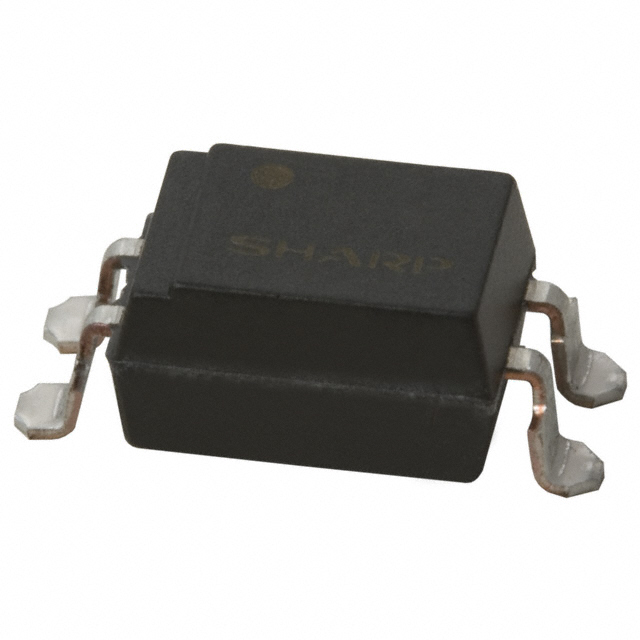
Product overview of Sharp Microelectronics PC817X series
The Sharp Microelectronics PC817X series is an optoisolator optimized for robust and dependable signal isolation in electronic systems. At its core, the device integrates an infrared LED on the input side with a phototransistor output, forming a galvanically isolated transmission path. This internal architecture eliminates direct electrical continuity between the driving and receiving circuits, ensuring that high-voltage transients or ground loop disturbances on the input side do not propagate downstream. Such isolation is validated by its 5,000 Vrms isolation voltage rating, surpassing basic safety and EMC requirements in challenging operating environments.
Electrical noise suppression forms a significant aspect of the PC817X’s design philosophy. By encapsulating the optoelectronic pair in a molded 4-pin Dual Inline Package (DIP), circuit designers reduce susceptibility to board-level interference and crosstalk. When implemented in digital interface lines—such as microcontroller inputs interfacing with AC line-powered systems—this arrangement mitigates the risk of spurious triggering from environmental noise, a key consideration in industrial automation or consumer appliance designs where electromagnetic interference is endemic. The package’s compact footprint also facilitates easy integration onto high-density printed circuit boards, promoting modular system topologies.
In application, the PC817X series demonstrates versatility across low- to medium-speed switching and signaling scenarios. For example, driving relay coils from embedded digital outputs benefits from this optoisolator’s rapid response and consistent isolation characteristics. Similarly, feedback circuits in switch-mode power supplies leverage the device’s stable phototransistor output to enable precise regulation without compromising control-side safety. Deployment data indicates these optocouplers sustain isolation reliability under repeated switching cycles, even when subjected to voltage spikes or minor PCB contaminants—testament to their material selection and encapsulation quality.
Critical system protection strategies benefit inherently from the PC817X’s operational model. The optoisolator obviates the need for complex, multi-stage physical barriers or discrete isolation transformers, thus reducing BOM complexity and layout constraints. The device’s proven track record in circuit insulation underscores its practical appeal, particularly in cases where space constraints demand both electrical separation and high integration density.
From an engineering perspective, effective utilization involves matching forward input current and output load parameters to the optoisolator’s recommended operating points for predictable transfer characteristics. In practice, employing external base resistors on the phototransistor output side permits adjustment of response speed and output linearity, addressing application-specific signaling margins.
Overall, the PC817X series serves as a fundamental isolation component, addressing both electrical safety and signal integrity in modern circuitry; its adoption reflects a balance of performance, implementation simplicity, and robust design heritage.
Key features and technical specifications of PC817X
The PC817X series optocouplers deliver a focused set of features that streamline signal isolation in embedded and industrial applications. At the core lies a high input-to-output isolation voltage, rated at 5,000 Vrms. This robust isolation barrier efficiently mitigates ground potential differences and suppresses noise coupling, significantly enhancing system-level safety and signal fidelity. This characteristic becomes particularly advantageous in environments prone to transient voltages, where the need for reliable electrical separation is non-negotiable.
The single-channel format, paired with a standard 4-pin Dual Inline Package (DIP), serves design efficiency on multiple fronts. The compact housing facilitates high-density PCB layouts, reducing board real estate requirements in modular designs. Standard footprint compatibility accelerates layout and prototyping phases, lowering iteration cycles for product development. When retrofitting legacy boards or undertaking rapid system upgrades, the mechanical interchangeability of the PC817X removes barriers associated with custom socketing or specialized assembly workflows.
The use of a transistor output stage presents compatibility with conventional logic families. Open-collector configuration allows for versatile load interfacing, supporting both TTL and CMOS input thresholds through straightforward pull-up arrangements. This trait simplifies interfacing tasks and makes direct connection to microcontrollers or digital I/O lines feasible without the need for additional signal conditioning. The predictable and well-documented electrical characteristics further ease signal timing analysis, particularly in multi-stage switching networks.
Drawing from practical deployment, the PC817X’s wide availability and cost-effective profile have made it a staple in power supply feedback circuitry, microprocessor input isolation, and industrial automation control relays. Its resilience against electrical noise, paired with abundant design collateral, supports robust lifecycle management and rapid fault diagnosis in the field. The balance between performance and simplicity means that system complexity remains contained even as functional safety and reliability requirements escalate.
A nuanced advantage of the PC817X is its enduring supply continuity, a result of its mature design and widespread industry adoption. As component obsolescence continues to challenge maintenance operations, selecting an optocoupler from such an established lineage reduces long-term risk. In environments where compliance with international safety standards is essential, the high insulation voltage and consistent datasheet performance of the PC817X streamline the certification process, particularly for equipment subject to stringent regulatory oversight.
By tightly coupling strong isolation, mechanical familiarity, and output flexibility, the PC817X aligns optimization of cost, safety, and design simplicity. Its feature set strategically addresses the recurring trade-offs in optoelectronic signal isolation, making it well suited for both new developments and iterative upgrades in the context of industrial and embedded engineering.
Internal structure and working principle of PC817X
The internal architecture of the PC817X is fundamentally an optoelectronic isolation system, composed of a high-efficiency infrared emitter diode paired with a planar silicon phototransistor. This component-level integration is encapsulated in a light-tight package that ensures minimal external interference and maximized signal integrity. When a current is applied to the LED on the input side, its emission spectrum—precisely matched for the phototransistor’s spectral sensitivity—enables consistent optical transmission. The amount of emitted light is proportionally tied to the input drive current, resulting in a linearly modulated response at the output stage under typical operating conditions.
Electrically, the input and output stages are galvanically decoupled, with an isolation voltage usually rated above several kilovolts. This separation is achieved through the physical air gap and optically transparent insulating layer, which blocks fault currents, surges, and ground potential differences. Such isolation underpins PC817X deployment in power management circuits, industrial sensor interfaces, and data communication systems where signal fidelity is critical and electrical hazards must be mitigated.
The phototransistor operates as a current-controlled device, translating incident photon flux into a collector-to-emitter current. This current can be directly processed by logic-level circuitry or further amplified, depending on the application requirements. The device demonstrates fast switching characteristics—typically, propagation delays remain within a few microseconds, permitting use in PWM (Pulse Width Modulation) feedback loops, switched-mode power supplies, and microcontroller I/O isolation. The inherent simplicity of the input circuitry, which generally consists of a current-limiting resistor in series with the LED, reduces design overhead, while the output circuit can be configured in open collector or common emitter for maximum interface versatility.
In hands-on deployment, engineers leverage the PC817X for robust signal transmission across different ground references, especially in noisy industrial environments. For example, a well-matched input resistor optimizes LED drive efficiency, balancing CTR (Current Transfer Ratio) and thermal stability. On the output side, proper pull-up resistor selection and attention to load capacitance enhance signal edges and suppress undesired oscillations. Another practical insight involves managing the CTR aging effect, where regular recalibration ensures long-term circuit reliability. These considerations become pivotal in densely-packed PCBs, where minimizing susceptibility to EMI and preventing crosstalk are ongoing challenges.
A unique attribute of the PC817X and similar optocouplers is their ability to bridge analog and digital domains without redesign across platforms, supporting seamless migration from TTL to modern CMOS logic. The architecture’s flexibility extends to bidirectional communication when paired with suitable circuit topologies, such as push-pull stages for transceiver applications. This adaptability, paired with strong isolation metrics and straightforward interface requirements, makes the PC817X a strategic asset for safeguarding low-voltage logic against high-voltage domains, facilitating both rapid prototyping and long-term field reliability in embedded system designs.
Typical application scenarios for PC817X
PC817X optoisolators are integral components in designs requiring robust galvanic isolation, particularly where digital logic and power circuitry must coexist without direct electrical coupling. At the core, the device leverages optical coupling—an LED paired with a phototransistor—enabling signal transmission across electrically isolated domains. This architecture not only blocks noise and voltage spikes from propagating but also allows seamless integration with sensitive microcontroller inputs or analog front-ends.
In switch mode power supply (SMPS) topologies, the PC817X provides a reliable communication bridge between high-voltage switching stages and low-level digital control logic. Its rapid response characteristics and isolation voltage ratings safeguard microcontroller units, preserving system stability in the face of transient events; implementation often involves feedback loops for voltage regulation, where optoisolation eliminates ground loops that could compromise regulation accuracy. Iterative tuning of drive currents and load resistances can further optimize signal fidelity and isolation integrity within densely packed power sections.
Industrial automation environments present additional complexities, such as frequent electromagnetic interference and strict regulatory demands for functional safety. Here, the PC817X serves as an isolation buffer when driving relays or interfacing field sensors with programmable logic controllers (PLCs). Careful attention to input threshold levels and output drive strengths ensures compatibility across diverse relay coil types and sensor standards. Experience demonstrates that deploying these optoisolators in distributed control cabinets mitigates cross-channel interference, reduces maintenance frequency, and increases overall uptime.
In consumer electronic systems, the need to isolate user-accessible interfaces from hazardous mains voltages underpins safe product design. The PC817X facilitates separation of touch panels, switch arrays, or display drivers from power conversion blocks, minimizing risk during normal use or under fault conditions. Empirical testing in low-profile device enclosures validates the component’s efficacy, especially where space constraints challenge PCB layout and require compact optoisolators with consistent performance.
Signal transfer between disparate voltage domains is a recurrent requirement in mixed-signal designs, such as communication modules or battery management systems. Deploying PC817X optoisolators enables data exchange between low-voltage control circuits and high-voltage monitoring channels without risking damage to precision analog stages. Strategic placement, combined with evaluation of propagation delay and common-mode rejection, allows engineers to synthesize circuit topologies that are both robust and responsive.
A nuanced perspective recognizes the importance of device matching and consideration of temperature coefficients in tightly regulated isolation paths. Over multiple development cycles, incorporating these factors yields designs resilient to environmental shifts and manufacturing variances. The versatility of PC817X optoisolators not only enhances electrical safety but also streamlines diagnostic and maintenance processes, resulting in systems that are scalable, reliable, and future-proof.
Benefits and limitations of adopting PC817X in electronic systems
The integration of the PC817X optoisolator within electronic systems leverages optoelectronic isolation to decouple potentially disruptive high-voltage domains from sensitive low-level logic. At the core, the PC817X employs an IR LED and phototransistor pair, forming a galvanically isolated channel that transmits digital signals across an air gap, blocking transient surges and ground potential differences. This mechanism ensures bidirectional immunity—protecting control circuits from load-side spikes while similarly shielding output devices from controller-side anomalies. Such robust isolation proves critical in industrial automation, power supply feedback, and microcontroller interfacing where errant voltages or EMI could compromise logic reliability.
The device’s ability to standardize logic-level interfacing minimizes complexity in circuit design, as the input side naturally accommodates TTL and CMOS levels typical in embedded projects. The 5kV isolation withstands substantial transients common in relay drive circuits and AC mains monitoring, reducing the necessity for additional surge protection elements. This simplicity translates to higher design throughput and fewer PCB errors during prototyping.
DIP packaging facilitates rapid prototyping and reliable through-hole mounting—a valued trait in educational platforms, legacy system maintenance, and in scenarios where wave soldering predominates. The tactile nature of DIP components aids in error tracing and manual assembly adjustments, aligning with iterative development flows.
Despite these strengths, the PC817X’s architectural decisions impose specific trade-offs. The single-channel format increases component count in multi-channel signal isolation, incrementally raising PCB real estate and assembly overhead. In scaling up, designers might encounter increased parasitic effects and layout congestion, particularly in high-density signal paths or space-constrained modules. Moreover, the DIP form factor diverges from current industry preferences for automated, compact surface-mount assemblies. Integration into densely populated boards or mass-manufacturing pipelines favors SOIC, SMD, or integrated multi-channel isolation solutions, underscoring the PC817X’s limited suitability in miniaturized, high-throughput environments.
Another practical consideration involves switching speed and current transfer ratio (CTR) consistency. The PC817X, while effective for casual digital interfacing, may fall short in high-frequency or precision analog contexts where propagation delay and CTR variance become limiting factors. For high-speed data acquisition or pulse-width modulation isolating, optoisolators featuring optimized response times and tighter tolerance control emerge as preferred alternatives.
Field application frequently reveals that the true value proposition of the PC817X lies in its accessibility and predictability within moderate-complexity systems rather than cutting-edge miniaturized electronics. Its deployment streamlines prototyping and maintenance, accelerates proof-of-concept cycles, and fosters robust design in mixed-voltage or harsh electrical environments—provided that density, speed, and multi-channel scalability requirements remain within its operational envelope. Ultimately, judicious selection of the PC817X rests on reconciling project-specific isolation needs with footprint, integration, and performance constraints, highlighting a nuanced balance between established reliability and evolving demands in electronic design.
Potential equivalent/replacement models for PC817X
Selecting appropriate substitutes for the PC817X optoisolator necessitates a rigorous assessment of key device characteristics to maintain both circuit integrity and reliable operation. Fundamental equivalence requires a match of isolation voltage capabilities across the signal and power domains. A threshold of 2.5 kV to 5 kV isolation is typically standard for the PC817X series and its close competitors, ensuring robust protection against voltage transients in industrial and consumer systems.
Current Transfer Ratio (CTR) regulation remains a crucial discriminator. Engineers targeting direct plugin replacements must verify not only nominal CTR values—frequently ranging from 50% to 600% depending on selection—but also temperature dependence and batch consistency. Variations in CTR can substantially alter input-to-output signal fidelity, especially in feedback or sensing environments, where predictable response curves are mandatory.
Output configuration, namely phototransistor type and its polarity, must permit seamless integration into the intended circuit topology. Optoisolators such as the Toshiba TLP521 and Lite-On LTV-817 generally maintain the dual inline (DIP-4) footprint and single transistor output, minimizing layout adjustments. Furthermore, timing parameters such as turn-on and turn-off delay should be cross-verified, particularly in high-speed switching scenarios or precision pulse detection.
Manufacturing process insights highlight that long-term reliability under continuous electrical stress and ambient temperature cycling is often determined by proprietary advances in wafer passivation and LED die attachment methods. Devices from Toshiba and Lite-On have demonstrated stable operation when exposed to repeated thermal excursions between -30°C and +85°C, typically encountered in industrial enclosures or power-control cabinets.
An effective qualification process incorporates accelerated aging and signal integrity benchmarking, leveraging parametric sweeps of both input current and collector-emitter voltage. In practice, migrating from PC817X to TLP521 or LTV-817 has provided comparable isolation margins and transfer efficiency, with deviations falling within the tolerances designated in IEC and UL component standards. Strategic adoption of these equivalents can simplify inventory management while mitigating supply chain constraints, particularly in legacy equipment support.
Designers attuned to nuanced performance differences often fine-tune base resistance or incorporate supplementary feedback paths during substitution to maintain response symmetry. Proactive review of manufacturer reliability documentation and cross-reference databases streamlines the selection and qualification workflow, ensuring robust end-system operation despite varying global component availability.
Conclusion
The Sharp Microelectronics PC817X series serves as a robust signal isolator, engineered for environments where galvanic isolation is paramount to circuit integrity and operator safety. Utilizing an optoelectronic coupling mechanism, the PC817X achieves high isolation voltage ratings that surpass conventional mechanical relays, effectively minimizing both the risk of ground loops and cross-domain interference. Its integration of a phototransistor output within a compact, standardized DIP package facilitates streamlined PCB layouts and simplifies installation in densely populated assemblies.
At the device level, key features such as low input current requirements and enhanced response times allow precise interfacing with both microcontrollers and high-speed signal lines. The wide operating temperature range supports deployment in climates subject to thermal variation, maintaining stable performance parameters under load and over time. In practice, when replacing legacy isolation components in industrial automation modules, the PC817X’s compatibility with existing footprints and driving circuitry noticeably accelerates retrofitting cycles without necessitating significant design overhaul.
Adherence to international certifications underpins the component’s suitability for products destined for global markets. The PC817X exhibits superior common-mode transient immunity, reducing susceptibility to voltage spikes induced by switching loads or electromagnetic disturbances—an essential attribute for motor drives, power supplies, and measurement systems operating in electrically noisy environments.
Sourcing strategies benefit from the extensive ecosystem surrounding this series. Modern inventory systems, supported by broad distributor networks, ensure reliable availability even in high demand periods. Direct equivalency with major alternatives guarantees design resilience, enabling seamless BOM substitution and multi-vendor procurement strategies—a central tactic for maintaining lifecycle support in long-term production or service contracts.
By focusing on consistent quality, predictable supply chains, and flexible circuit integration, the PC817X becomes a foundational component for signal isolation in industrial, medical, and consumer electronics, where risk mitigation and compliance are nonnegotiable. Its enduring market presence reflects a design philosophy rooted in stable operation and configurational adaptability, providing engineers with both technical confidence and strategic assurance.