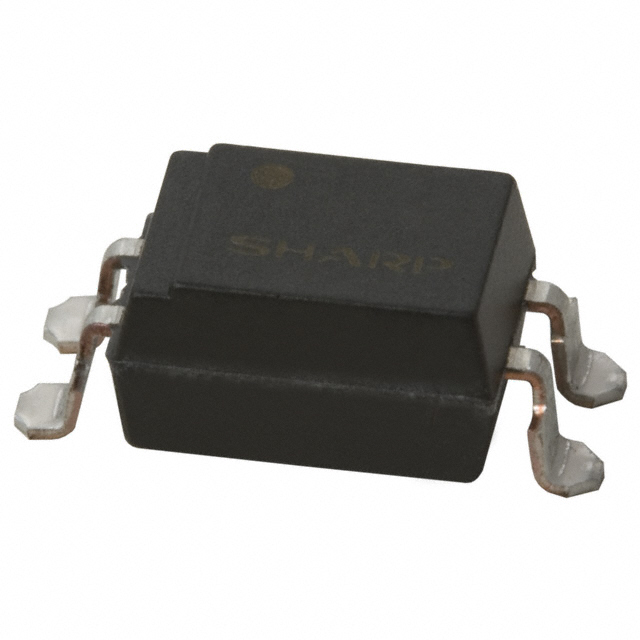
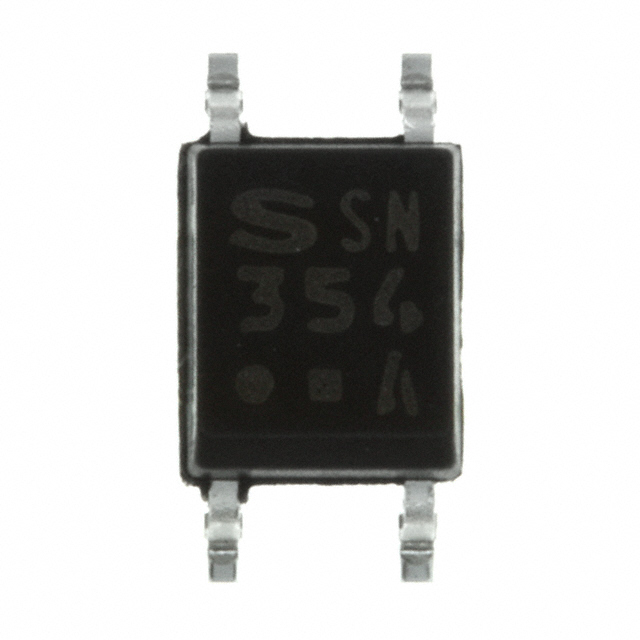
PC3Q410NIP0F >
PC3Q410NIP0F
Sharp Microelectronics
OPTOISO 2.5KV 4CH TRANS 16SOIC
3207 Pcs New Original In Stock
Optoisolator Transistor Output 2500Vrms 4 Channel 16-Mini-Flat
Request Quote (Ships tomorrow)
*Quantity
Minimum 1
PC3Q410NIP0F Sharp Microelectronics
5.0 / 5.0 - (207 Ratings)

PC3Q410NIP0F

Product Overview

7929693

DiGi Electronics Part Number

PC3Q410NIP0F-DG
PC3Q410NIP0F

Description

OPTOISO 2.5KV 4CH TRANS 16SOIC

Inventory

3207 Pcs New Original In Stock
Optoisolator Transistor Output 2500Vrms 4 Channel 16-Mini-Flat
Quantity
Minimum 1

Purchase and inquiry

Quality Assurance

365 - Day Quality Guarantee - Every part fully backed.

90 - Day Refund or Exchange - Defective parts? No hassle.

Limited Stock, Order Now - Get reliable parts without worry.

Global Shipping & Secure Packaging

Worldwide Delivery in 3-5 Business Days

100% ESD Anti-Static Packaging

Real-Time Tracking for Every Order

Secure & Flexible Payment

Credit Card, VISA, MasterCard, PayPal, Western Union, Telegraphic Transfer(T/T) and more

All payments encrypted for security

Request Quote (Ships tomorrow)
* Quantity
Minimum 1
(*) is mandatory
We'll get back to you within 24 hours

PC3Q410NIP0F Technical Specifications

Category Optoisolators, Transistor, Photovoltaic Output Optoisolators

Manufacturer Sharp Microelectronics

Packaging -

Series -

Product Status Obsolete

Number of Channels 4

Voltage - Isolation 2500Vrms

Current Transfer Ratio (Min) 50% @ 500µA

Current Transfer Ratio (Max) 400% @ 500µA

Turn On / Turn Off Time (Typ) -

Rise / Fall Time (Typ) 4µs, 3µs

Input Type AC, DC

Output Type Transistor

Voltage - Output (Max) 80V

Current - Output / Channel 50mA

Voltage - Forward (Vf) (Typ) 1.2V

Current - DC Forward (If) (Max) 10 mA

Vce Saturation (Max) 200mV

Operating Temperature -30°C ~ 100°C

Mounting Type Surface Mount

Package / Case 16-SOIC (0.173", 4.40mm Width)

Supplier Device Package 16-Mini-Flat

Datasheet & Documents

HTML Datasheet

PC3Q410NIP0F-DG

Environmental & Export Classification

Moisture Sensitivity Level (MSL) 1 (Unlimited)
ECCN EAR99
HTSUS 8541.49.8000

Additional Information

Other Names
425-2117-1
425-2117-2
Standard Package
1,000

Alternative Parts

PART NUMBER
MANUFACTURER
QUANTITY AVAILABLE
DiGi PART NUMBER
UNIT PRICE
SUBSTITUTE TYPE
TCMT4600T0
Vishay Semiconductor Opto Division
6511
TCMT4600T0-DG
0.7606
Similar
TCMT4600
Vishay Semiconductor Opto Division
24029
TCMT4600-DG
0.0076
Similar
TCMT4606
Vishay Semiconductor Opto Division
8605
TCMT4606-DG
0.7812
Similar

Reviews

5.0/5.0-(Show up to 5 Ratings)
Be***Vie
December 02, 2025
5.0
Le service de livraison est très efficace, mes commandes arrivent toujours à l’heure.
Rege***sser
December 02, 2025
5.0
Ich bin sehr zufrieden mit der zügigen Lieferung und dem freundlichen Support.
Bold***lorer
December 02, 2025
5.0
The speed of delivery and helpful customer service exceeded my expectations.
Hope***Heart
December 02, 2025
5.0
They exhibit strong inventory control, ensuring consistent product availability.
Hap***ibes
December 02, 2025
5.0
Impressed by how quickly DiGi Electronics shipped my order—truly reliable.
Everla***ngLight
December 02, 2025
5.0
The affordability of DiGi Electronics products makes it my go-to choice for tech needs.
Ambe***isper
December 02, 2025
5.0
Their efficient logistics system guarantees our orders arrive when they’re supposed to, without delays.
Pure***sion
December 02, 2025
5.0
The company’s after-sales support is quick to respond and always resolves my issues efficiently.
Lus***bes
December 02, 2025
5.0
Their commitment to product consistency means I can trust that each item will meet the same high standards I expect.
Dawn***neer
December 02, 2025
5.0
Their pricing is very economical, making tech shopping stress-free.
Publish Evalution
* Product Rating
(Normal/Preferably/Outstanding, default 5 stars)
* Evalution Message
Please enter your review message.
Please post honest comments and do not post ilegal comments.

Frequently Asked Questions (FAQ)

Can I use the PC3Q410NIP0F to replace a failed TCMT4600 in a 24V industrial control interface, and what design risks should I consider given its obsolete status?

While the PC3Q410NIP0F is electrically compatible with the TCMT4600 in terms of isolation voltage (2.5kV), output current (50mA), and package footprint (16-SOIC), its obsolete status introduces long-term supply chain risks. You may face sudden end-of-life notifications or price volatility. Additionally, although both support DC input, the PC3Q410NIP0F has a wider CTR range (50–400% vs. tighter binning on newer parts), which could affect signal margin in precision feedback loops. If replacing, validate timing performance (4µs rise / 3µs fall) against your switching frequency, and consider qualifying a second-source alternative like the TCMT4606 for future designs to mitigate obsolescence risk.

What are the thermal and layout considerations when using all four channels of the PC3Q410NIP0F simultaneously in a compact PCB design near a heat-generating microcontroller?

Operating all four channels of the PC3Q410NIP0F at or near the 50mA output limit increases power dissipation, especially with Vce(sat) up to 200mV—resulting in ~40mW per channel. In dense layouts near hot MCUs, localized heating can push the junction temperature beyond safe limits, particularly since the operating range tops out at 100°C. Ensure adequate copper pour under the 16-SOIC package for thermal relief, maintain >2mm clearance from heat sources, and avoid enclosing the device in conformal coating without thermal analysis. Monitor actual CTR degradation over temperature, as performance drops significantly near the upper limit, potentially requiring higher input current to maintain output drive.

Is the PC3Q410NIP0F suitable for isolating low-speed digital signals in a 48V battery management system (BMS), and how does its CTR variability impact reliability over time?

Yes, the PC3Q410NIP0F can isolate low-speed BMS signals (e.g., cell balancing control or fault flags), but its wide CTR range (50–400% @ 500µA) introduces uncertainty in long-term reliability. Over temperature cycling and operational life, CTR typically degrades by 20–30%, which may push marginal designs below the minimum threshold. For critical BMS functions, derate the expected CTR to 40% of nominal and verify that your pull-up resistor and load current still guarantee valid logic levels under worst-case conditions. Also, confirm that the 80V output rating provides sufficient headroom above your 48V rail with transients—consider TVS protection if inductive loads are present.

How does the PC3Q410NIP0F compare to the TCMT4606 for high-noise industrial environments, and what integration pitfalls should I avoid when switching?

The PC3Q410NIP0F and TCMT4606 offer similar isolation voltage and channel count, but the TCMT4606 features improved CMR (common-mode transient immunity) and tighter CTR binning, making it more robust in high-noise environments like motor drives or switch-mode power supplies. When migrating from the PC3Q410NIP0F to the TCMT4606, note that the latter may require adjusted input current due to differing forward voltage characteristics. Avoid assuming pin-to-pin compatibility without verifying enable/logic polarity and output saturation behavior. Also, the PC3Q410NIP0F’s unlimited MSL-1 rating simplifies handling, whereas newer substitutes may require bake-out procedures—factor this into your assembly process if switching.

Can I drive the PC3Q410NIP0F directly from a 3.3V GPIO without a series resistor, and what are the risks of overdriving the LED given its 10mA absolute maximum forward current?

Driving the PC3Q410NIP0F directly from a 3.3V GPIO without a current-limiting resistor is risky. With a typical forward voltage of 1.2V, the GPIO would source approximately (3.3V – 1.2V) / 0Ω → theoretically unlimited current, easily exceeding the 10mA max and damaging both the MCU and the optocoupler. Always use a series resistor (e.g., 220Ω for ~9.5mA) to limit current within safe bounds. Additionally, ensure your GPIO can sustain the required 500µA–10mA input current without voltage droop. Overdriving accelerates LED degradation, reducing CTR over time and potentially causing premature failure—especially problematic in safety-critical isolation paths where undetected weakening could compromise signal integrity.

Quality Assurance (QC)

DiGi ensures the quality and authenticity of every electronic component through professional inspections and batch sampling, guaranteeing reliable sourcing, stable performance, and compliance with technical specifications, helping customers reduce supply chain risks and confidently use components in production.

Quality Assurance
Counterfeit and defect prevention

Counterfeit and defect prevention

Comprehensive screening to identify counterfeit, refurbished, or defective components, ensuring only authentic and compliant parts are delivered.

Visual and packaging inspection

Visual and packaging inspection

Electrical performance verification

Verification of component appearance, markings, date codes, packaging integrity, and label consistency to ensure traceability and conformity.

Life and reliability evaluation

DiGi Certification
Blogs & Posts
PC3Q410NIP0F CAD Models
productDetail
Please log in first.
No account yet? Register