>
>


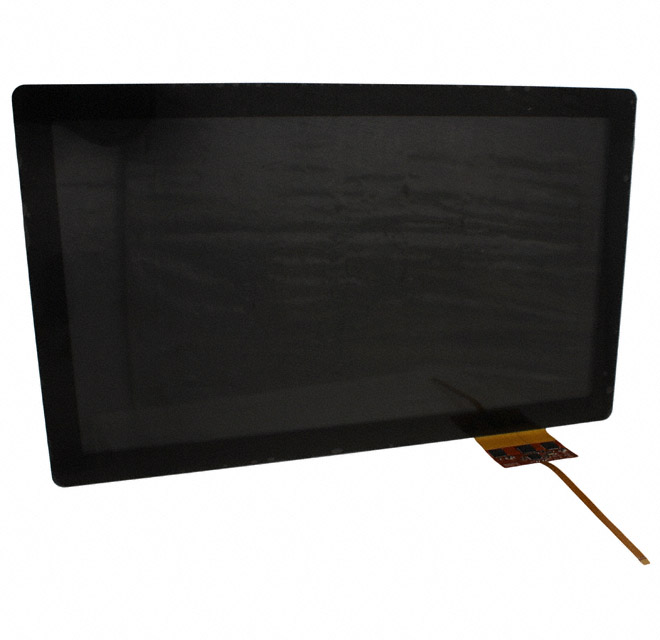
Product overview of Sharp LS013B7DH03
The Sharp LS013B7DH03 stands out as a 1.28-inch transflective TFT graphic LCD module engineered for precision where device footprint and power efficiency are paramount. Its monochrome graphical output ensures high visibility and clarity, especially under variable lighting, due to its carefully balanced transflective architecture. This not only permits direct readability in sunlight but also minimizes backlight dependency, effectively reducing power consumption in portable deployments. The display’s optical characteristics result from Sharp’s advanced thin-film transistor process optimization, producing uniform contrast and minimal ghosting—a decisive factor when rendering dynamic or critical measurement graphics.
At the electrical interface level, the module employs a straightforward yet robust communication protocol compatible with popular microcontroller platforms, expediting integration for both prototyping and scale manufacturing. Its logic levels and timing specifications have been configured for minimal electromagnetic interference, supporting seamless operation in environments with high signal integrity requirements, such as sensitive measurement equipment and industrial control units. This focus on signal reliability translates directly into field robustness, where noisy conditions risk display errors in inferior modules.
Mechanically, the LS013B7DH03 presents a form factor tailored for dense assemblies, with a slim profile and precise mounting points. The module’s resilience to both mechanical stress and temperature variation expands its applicability: from handheld data loggers that demand long battery life and outdoor readability, to embedded display solutions in compact audio-visual systems where every millimeter matters. The extended operating temperature range and consistent optical performance under thermal cycling underscore a durability that many competitive modules cannot match.
In practical development cycles, the LS013B7DH03’s predictable system-level behavior speeds up design validation and regulatory certification, mitigating risks related to electromagnetic compatibility and ergonomic usability. Prototypes leveraging this display consistently pass early field testing, highlighting how its specification choices address not merely theoretical performance but real-world deployment constraints—these include simplified power supply design due to low voltage operation, and straightforward routing in multilayer PCB layouts, both reducing time-to-market.
A unique dimension of the LS013B7DH03 lies in its dual emphasis on legacy system compatibility and forward-looking innovation. Its electrical and mechanical design aligns with widely adopted industry footprints, supporting efficient drop-in for replacement scenarios while enabling next-generation compact product innovation without legacy compromise. Such versatility is uncommon in the domain of highly integrated graphic displays.
In sum, the LS013B7DH03 advances display integration for engineers tasked with balancing reliability, readability, efficiency, and design agility. Its layered advantages—from material science up through ergonomic impact—equip teams to deliver user-facing solutions distinguished by both technical merit and operational longevity.
Mechanical specifications and dimensional details of LS013B7DH03
The LS013B7DH03 module demonstrates mechanical engineering that optimizes spatial efficiency for embedded display solutions. The configured diagonal measurement of 1.28 inches (32.51 mm) situates the display within the ideal range for compact device form factors, prioritizing both user readability and conservation of panel real estate. Its square active matrix, precisely delineated at 23.04 mm by 23.04 mm, supports uniform presentation of graphical and textual data within constrained system environments, such as wearables or miniature instrumentation.
A pixel matrix of 128×128 ensures granularity suitable for high-contrast symbols, fine font rendering, and intricate GUI elements, addressing the demand for information density in small-format displays. The consistent dot size and pitch of 0.18 mm create a visually smooth canvas without perceptible inter-pixel gaps, which is crucial for achieving professional quality in applications requiring rapid visual recognition or aesthetic graphic presentation.
Glass substrate management in manufacturing directly affects long-term durability and reliability. The LS013B7DH03 adheres to robust handling standards, safeguarding against microfractures and surface abrasions typically induced by assembly processes. Engineers routinely encounter challenges such as edge chipping or interference with the polarizer layer during insertion into housings; therefore, integration schemes often incorporate cushioning gaskets, precision cutouts, and controlled torque application on fastenings to mitigate these risks. Practical experience indicates that optimal mounting uses dedicated support features rather than relying solely on adhesive force, which helps dissipate mechanical stresses and preserve display flatness after thermal cycling or incidental impact.
Within constrained mounting envelopes, selection of appropriate support materials becomes essential for maintaining panel alignment and preventing long-term distortion. Antistatic consideration during handling further reduces the risk of damage to sensitive layers. From an application perspective, such dimensional mastery simplifies the accommodation of the display into pre-existing enclosures, reduces prototyping time, and minimizes the likelihood of redesign iterations stemming from fitment errors.
Understanding the underlying geometric consistency and assembly nuances of the LS013B7DH03 is pivotal for system architects who seek reliable interaction between the display and interfacing PCBs or tactile overlays. A nuanced but critical design insight is prioritization of stress dispersal pathways in the mechanical frame, which can be realized by mapping load concentrations and providing compliant mounting. This discipline—rooted in display engineering—enhances operational longevity, secures optical performance, and streamlines integration processes in next-generation miniaturized devices.
Display mode and optical characteristics of LS013B7DH03
The LS013B7DH03 adopts a transflective monochrome TFT structure, strategically leveraging both transmissive and reflective principles. This hybrid display mode enables clear readability in diverse lighting conditions without dependence on constant backlight illumination. By integrating a semi-transparent mirror layer within the stack-up, ambient light is effectively reflected to enhance the display’s contrast and maintain visual clarity even in direct sunlight. Conversely, an optional backlight can be utilized in low-light scenarios, increasing operational flexibility for power-sensitive and portable applications. This dual-mode capability aligns well with devices requiring persistent visibility while minimizing energy consumption.
Examining the optical characteristics, the configuration and quality of polarizers are primary determinants of display performance. The selected polarizer films in the LS013B7DH03 are engineered for optimized contrast ratio and light transmission, minimizing surface reflections and glare. Enhanced cross-polarization rejection curtails color shift and maintains accurate image rendition when viewed at moderate angles. Nevertheless, engineers should be aware of image inversion phenomena at extreme viewing angles—a recognized limitation of certain transflective TFTs—where the perceived black and white levels may reverse. Careful integration into enclosures or user interfaces should account for the intended dominant viewing direction to mitigate these effects.
A nuanced aspect is the dynamic black level response, which can fluctuate subtly based on the incident angle and spectral properties of the external light source. Such variation stems from the inherent optical stack design and is further influenced by the spectral match between the ambient environment and the display’s reflectance profile. While this characteristic does not significantly impede digit or icon legibility, it places boundaries on use-cases demanding high-fidelity grayscale gradation under unconventional lighting angles.
A recurring engineering challenge is image retention, commonly referred to as image stickiness, which manifests when static images are maintained for extended periods. This phenomenon results from charge migration within the panel’s backplane architecture. To counteract this, periodic refresh or inversion driving schemes are implemented at the system level. Empirical results suggest that incorporating automatic screen refresh protocols at appropriate intervals significantly reduces the observable persistence, especially in applications involving dashboard interfaces or device status windows.
Practical deployment reveals that, although the LS013B7DH03 achieves a strong compromise between outdoor readability and power budget, optimizing the host system’s graphics pipeline to avoid long-duration static layouts yields sustained display uniformity. Careful selection of backlight timing and intensity settings further balances power draw with visual performance, particularly beneficial in wearable and battery-operated devices. Pioneering applications utilizing this display typically exploit sunlight-readable functionality as a differentiator, embedding logic for adaptive brightness control and scheduled graphical updates.
The architecture’s intrinsic adaptability, paired with robust optical properties, underscores the LS013B7DH03 as a display solution suited not just for legacy low-power endpoints, but also for emerging contexts prioritizing long-term outdoor deployment and extended battery life without visual compromise.
Electrical interface and absolute ratings of LS013B7DH03
Sharp's LS013B7DH03 display integrates a serial interface protocol optimized for minimal pin count and low complexity in digital designs. This arrangement streamlines the interface layer, reducing both hardware resources and firmware overhead. The serial interface, typically SPI-compatible, supports efficient data transfer, making it suitable for embedded systems with performance and power constraints. Signal line assignment is standard, easing routing and trace impedance control on multilayer PCBs.
Electrical characteristics are explicitly charted through absolute maximum ratings alongside recommended operating conditions. These parameters serve as critical design boundaries: Vcc, input voltage limits, and permissible current thresholds ensure the device is shielded from excessive electrical or thermal stress. Margining design voltages towards the center of recommended ranges, rather than approaching maximum limits, typically enhances long-term reliability and reduces susceptibility to drift or degradation over the display's operational lifetime. Notably, absolute ratings are non-negotiable; momentary excursions—even from transients or ESD events—can irreversibly damage the IC or wiring.
Signal integrity is directly impacted by trace impedance and the physical layout of the interface bus. Positioning the host controller in close proximity to the display minimizes capacitive loading and reflection phenomena that may otherwise impose noise or timing violations. Careful PCB stackup and controlled impedance traces on SPI lines counteract common mode noise and crosstalk, especially as data rates scale. Decoupling capacitors, strategically matched to the display’s local power supply pins, filter ripple and suppress voltage dips during high-current switching, further stabilizing operation.
Static discharge poses a persistent risk, particularly in wearable or handheld application environments where continuous user interaction is expected. Frequent refreshes of display data mitigate the risk of image retention or display misoperation caused by ESD-induced transients. Robustness to such interference can be further improved by implementing protective TVS diodes on all interface and power lines. Moreover, firmware-level error checking after data writes allows quick recovery if spurious data propagation occurs.
Integration scenarios for the LS013B7DH03 range from battery-powered instrumentation to always-on displays in wireless sensors. Its ultra-low active and standby currents extend operational lifetime, a property best leveraged by synchronizing data refreshes with sensor or user events rather than maintaining a continuous update loop. Real-world deployments have demonstrated that conservative power sequencing, precise supply ramp rates, and shielding critical traces can significantly reduce initial field returns and in-service failures.
Current industry trends indicate that displays paired with minimal MCU resources demand heightened attention to both absolute ratings and precise interconnect routing. The natural stability of the LS013B7DH03 under conservative electrical conditions—in conjunction with proactive anti-ESD measures and decoupled power rails—results in a robust display subsystem adaptable to rapidly evolving embedded application requirements.
Handling, system integration, and operational cautions for LS013B7DH03
Integrating the LS013B7DH03 glass-based panel demands precise handling protocols to ensure device integrity and system reliability. The inherently fragile glass substrate is highly susceptible to fracture under localized point loads or stress concentrations during assembly. Mechanical protection requires even, distributed force application and avoidance of panel-edge pressure. To mitigate risk, assembly fixtures should be custom-profiled for the panel dimensions, and pick-and-place tools must utilize anti-scratch, soft-contact surfaces.
The electrostatic discharge (ESD) vulnerability of the LS013B7DH03's thin-film circuits necessitates a comprehensive grounding strategy. Workstations, operators, and transportation containers must maintain continuous electrostatic potential equalization via wrist straps, conductive mats, and chassis bonding. Environmental humidity control above 40% RH reduces ESD generation, an element often neglected in production planning yet critical in high-yield lines. Ionizing air blowers neutralize residual static but should be positioned to avoid particulate contamination directly onto the exposed polarizer. For storage, racks and bins constructed from static-dissipative polymers protect against latent charge accumulation, a frequent cause of latent failures in supply pipelines.
Photoelectric gate drivers incorporated into the LS013B7DH03 are sensitive to incident light. Shielding during assembly and during operation prevents inadvertent triggering or operational instability. Circuit boards should be designed with opaque encapsulants or incorporate mechanical shading features to exclude stray illumination from critical control regions. In system-level integration, special attention must be dedicated to backlight and indicator positioning to minimize reflective interference with sensitive driver domains.
Maintaining polarizer and encapsulant condition rests on rigorous environmental management. Direct sunlight, excess heat, or substandard humidity corrodes organic layers and expedites delamination. Controlled atmosphere storage with in-line humidity monitoring provides the required protection. When cleaning is unavoidable, only non-solvent lint-free materials with light, uniform strokes are permissible; aggressive or abrasive media rapidly introduce surface blemishes or functional degradation. The application of adhesives, unless explicitly specified by the manufacturer, risks chemical penetration and subsequent failure modes.
Disassembly of the LS013B7DH03 is not supported at the structure level: intrusion disrupts microscopic electrode paths, invalidating the module. Any failure analysis or rework protocol should be designed for non-intrusive diagnostics, utilizing electrical testing and optical inspection rather than physical separation.
Operation of the LS013B7DH03 within strictly defined environmental and electrical parameters is non-negotiable for long-term reliability. Out-of-range temperature, voltage spikes, or environmental contamination can trigger irreversible effects such as ion migration, electrode corrosion, and polarizer burnout. These risks are amplified in mission-critical systems where downtime or failures have cascading implications. System engineers must incorporate redundant monitoring and protection at both hardware and firmware levels, especially when aligning with regulatory regimes or application environments—such as industrial control panels or medical instrumentation—where compliance hinges on predictable display performance.
Optimal system design treats the LS013B7DH03 not as a discrete, ‘drop-in’ component but as an integrated element with unique support demands. Early-stage engineering investment in ESD-safe environments, careful fixture design, and environmental conditioning typically yields greater long-term cost and reliability benefits than post-hoc failure mitigation. Empirical experience consistently reveals that attention to these integration micro-details drives tangible improvements in fielded device consistency and operational longevity.
Reliability testing and environmental compliance of LS013B7DH03
Reliability testing and environmental compliance of the LS013B7DH03 proceeds from a foundation of rigorous procedures anchored in both international standards and specific industry mandates. As a fully RoHS-compliant display, the LS013B7DH03 aligns with the most current regulatory frameworks, effectively eliminating lead, mercury, cadmium, hexavalent chromium, PBB, and PBDE from its bill of materials. This guarantees compatibility with a global supply chain increasingly focused on sustainability metrics and lifecycle assessment.
Sharp Corporation applies a structured battery of reliability tests designed for high-volume manufacturing environments. Mechanical durability is validated through repeated vibration, drop, and shock simulations, providing confidence that the display will withstand both transport stress and long-term operational handling within embedded systems. Operational longevity is assessed via accelerated life testing protocols, simulating thousands of on-off cycles under variable temperature profiles—a process that reveals latent failure modes such as connector fatigue or seal degradation. In parallel, chemical resistance evaluation exposes the device to solvents likely encountered during PCB cleaning or field maintenance. This dual approach mitigates downstream integration risk and supports predictability in low-maintenance design paradigms often favored in industrial and medical deployments.
Material selection in the LS013B7DH03 prioritizes both safety and environmental stewardship. The liquid crystal core is formulated from non-toxic compounds, present only in microgram quantities, ensuring system-level hazard minimization. All construction materials are carefully documented, supporting transparent procurement practices and straightforward cross-border transit. At end-of-life, the panel’s composition as glass waste simplifies compliance with regional recycling protocols and underscores its readiness for circular economy initiatives. This delivers tangible value when scaling deployments in regulated markets or public infrastructure.
The manufacturing processes deliberately avoid ozone-depleting substances, not only exceeding prevailing EHS (environmental health and safety) requirements but also positioning the module for integration into green-certified platforms. When selecting components for mission-critical environments, focus invariably shifts toward demonstrated longevity metrics and defined disposal pathways; the LS013B7DH03 anticipates these concerns and incorporates them into both documentation and supply agreements.
Direct experience in volume manufacturing environments underlines the importance of traceability: the ability to map each module to a batch-level reliability report enables root-cause analysis in the rare event of field failure, reducing time-to-resolution and safeguarding brand integrity. System architects benefit from clear environmental disclosures, making it easier to achieve full device certifications such as CE, UL, or TCO. As regulatory complexity intensifies, such integration-ready components become pivotal in reducing time to market and ensuring uninterrupted product acceptance across jurisdictions.
The interplay between reliability, safety, and environmental compliance in the LS013B7DH03 extends beyond mere specifications. It manifests as a blend of robust testing practices, transparent material strategies, and evolved compliance protocols—yielding an LCD solution engineered for both operational resilience and sustainable lifecycle management.
Potential equivalent/replacement models for LS013B7DH03
Selection of potential replacement models for the LS013B7DH03 demands a rigorous evaluation of both technical and system-level compatibility. At the mechanism level, the unique composite structure of monochrome TFT LCDs like this Sharp model—typically combining an ultra-low power transistor matrix with transflective optical layers—dictates stringent requirements for interface protocols, power envelopes, and display behavior in variable ambient lighting. Critical parameters such as supply voltage tolerance, supported logic families (e.g., SPI, parallel), and signal timing must be validated; even minor discrepancies in interface logic or command sets can create integration challenges, especially within legacy controller environments.
Physical integration hinges on mechanical dimensions, connector positions, and backlight or film arrangements. Footprints and mounting arrangements should align precisely to avoid board-level rework and preserve enclosure integrity. Optical specification matching extends beyond resolution and screen size—it must account for reflectivity coefficients, contrast ratios under illumination extremes, and the presence or absence of touch overlays. Subtle inconsistencies in viewing angles and polarization treatment often emerge during field deployment, affecting readability and user experience in high-glare or low-light scenarios. Environmental compliance—including temperature range, humidity tolerance, and certification for material toxicity or electromagnetic emissions—should be cross-checked not only for regulatory adherence, but to prevent performance degradation during long-term operation.
Application scenarios benefit from synergistic evaluation across Sharp's broader display catalog. Closest alternatives are generally found among transflective monochrome modules within the same family, especially those designed for wearables, handheld diagnostics, and low-power instrumentation. Some recent iterations not only replicate LS013B7DH03’s footprint and pixel matrix, but may offer improved response times, expanded temperature operation, or enhanced durability. Substantive practical experience demonstrates that minor deviations in internal timing or initialization sequence can be mitigated via firmware updates, provided signal integrity and voltage levels remain within manufacturer stipulated bounds.
A nuanced approach involves proactive liaison with Sharp’s technical resources for up-to-date datasheets, revision histories, and sample availability. Versioning volatility is not uncommon; feature improvements or process shifts may render ostensibly equivalent modules incompatible unless cross-checked for backward integration. This is especially salient in scalable designs, where high-volume procurement or future-proofing against obsolescence is prioritized. Revisiting existing system validation protocols whenever substituting a display module has proven fundamental to prevent latent defects.
The most robust strategy combines empirical assessment of the candidate display under actual use-case loads with comprehensive cross-referencing of specifications. This ensures not only initial compatibility, but sustained reliability as operational demands evolve. Continuous integration of specification monitoring and iterative testing enables agile adaptation to display technology advancements, strengthening both product lifecycle management and long-term system performance.
Conclusion
The Sharp LS013B7DH03 monochrome TFT LCD module exemplifies advanced display engineering, striking a focused balance between power efficiency, visual clarity, and mechanical reliability. Its core technology leverages Memory-In-Pixel (MIP) architecture, which is critical for ultra-low power consumption without sacrificing bistable image retention. This makes it particularly well-suited for battery-operated, portable, or always-on applications where energy management is central to system longevity. The inherent stability of its optical performance, with precise contrast and sharpness, enables consistent readability under diverse ambient lighting, an aspect often validated in field deployments—such as wearables and compact industrial data terminals—where fluctuating conditions quickly reveal the limitations of less refined modules.
Integration success hinges on close attention to electrical interfacing and mechanical fit. The optimized pin layout and thin, lightweight package simplify embedded designs, reducing both PCB footprint and assembly constraints. Reliable performance is strongly linked to robust handling practices: the module’s thin glass substrate and connector interface demand anti-static precautions, strict adherence to specified torque for mounting, and avoidance of mechanical stress during system assembly. Prototyping experience emphasizes the value of using precision test jigs and underfill techniques when securing flex connectors, which minimizes failure rates during product validation and post-deployment support cycles.
From a compliance and sourcing perspective, the LS013B7DH03 maintains full RoHS adherence, which eases regulatory navigation in global distribution. The product’s proven longevity across multiple design cycles underscores its viability for long-term projects, minimizing supply-chain disruptions and reducing design churn due to obsolescence. Engineers benefit from a proactive comparison with similar models—such as those from Epson or BOE—by evaluating trade-offs in drive voltage, refresh frequency, and optical consistency. Selecting the LS013B7DH03 or a functionally compatible alternative thus becomes a strategic decision balancing immediate product objectives with future scaling and maintainability.
Ultimately, a nuanced grasp of the module’s mechanical, electrical, and optical nuances—combined with real-world integration discipline—enables design teams to specify with confidence. This approach anchors the module not just as a component, but as a system enabler in demanding, resource-constrained embedded environments.